Cullinga, Harden, Murrumburrah & Binalong Geocaching

Cullinga, Harden, Murrumburrah & Binalong Geocaching

Cullinga, Harden, Murrumburrah & Binalong Geocaching

A day spent geocaching around Cullinga, Harden, Murrumburrah & Binalong and then came home through Coolac. We headed out from home at Cootamundra at about 10.00am and were home by about 05.00pm. It was an easy day of geocaching. All up we covered around 220kms.

We left home at Cootamundra and headed in to Wallendbeen to get some of the world famous Young Cherries from Amanda’s mate at the rest stop and decided to make it a day of geocaching. Amanda got herself a 2kg box of cherries – this will be the first of many boxes of cherries she buys this season!

Cow Sculpture Out The Back of Cullinga

Cow Sculpture Out The Back of Cullinga

What Did We Find While Geocaching In The Snowy Valleys?

We found 9 of them with no DNFs! It was a really awesome day of geocaching in a particularly beautiful part of the country.

  1. Found Binalong Cemetery | GC9XQ6D
    What a beautifully kept Cemetary. TFTC
  2. Found REALLY SideTracked – Binalong | GC8JB3H
    Awesome hide TFTC
  3. Found Callin’ Five – Oh! | GCA1WCV
    Great hide took some searching but was staring us straight in the eye all the time. TFTC
  4. Found LKA Johnny Gilbert | GC5W6PC
    Always like calling in and giving our respects. Great hiding place TFTC. Gave it a favourite point.
  5. Found Guardrailicious | GCA7ETK
    TFTC
  6. Found Welcome to Harden-Murrumburrah | GC5MNVP
    Another great hide. Have never noticed that sign before. TFTC
  7. Found Udders | GC6QZD7
    Great hide and awesome sculpture. TFTC
  8. Found A Tree or not a Tree | GCARCX0
    Another great hide make sure to say howdy to the sheep. TfTC
  9. Found Tower View | GC8845C
    Great spot and awesome views TFTC
  10. Found Wallendbeen Presbyterian Church | GCB3Z62
    Great hide TFTC

A Tree Or Not A Tree Corner Of Kilrush And Old Gundagai Road

A Tree Or Not A Tree Corner Of Kilrush And Old Gundagai Road

Cullinga Mines Road Was Interesting

As part of our geocaching today we travelled along Cullinga Mines Road. Amanda and I asked ourselves why was it called Cullinga Mines Road? There was nothing obvious in the way of mines – however we know that historically there were mines in the area.

There is what is left of a church and what we thought was another church near the corner of Cullinga Road and Cullinga Mines Road. After getting home and doing a bit of research it turns out that the dilapidated of the two churches was in fact the former St John’s Anglican Church and the other “church” is possibly an abandoned hall or school. Nothing in the area gives the impression that anything substantial in the way of a village had been there however it turns out that Cullinga was a decent sized village around the beginning of the 20th century.

I found an article on Trove published in The Albury Banner and Wodonga Express on Fri 14 Dec 1900 about one of the mines and it was a fairly substantial concern.

Former St Johns Anglican Church At Cullinga NSW

Former St Johns Anglican Church At Cullinga NSW

Summary Of The Trove Article About The Most Profitable Mine In The Cullinga Field – The Christmas Gift

The Cullinga mines are located 12 miles east of Cootamundra, in an area that was once considered as a possible location for the federal capital. The region features gently rolling hills, rich farmland, and sits at a good elevation with a healthy climate. These mines have been drawing considerable interest from the mining industry.

The mining operations span across land owned by Mr Boxsell, Mr R. Faulks, Mr A. G. Keith, and Mr W. Reynolds. The workings extend for approximately four miles and are part of a gold-bearing zone that connects to the old Muttama reefs in the south and the Demondrille area to the north. Reverend Father Curran visited the area the previous week.

The most profitable mine in the Cullinga field is the Christmas Gift. This site contains an enormous gold bearing rock formation measuring 42 feet across. Mining has reached a depth of nearly 200 feet, with around 200 feet of horizontal tunnels. The mining team of Mr J. Boxsell, Mr W. Playford (who originally discovered the site), and Mr J. Ingold have processed 3,000 tons of ore. The ore has yielded more than one ounce of gold per ton, and the leftover material still contains 14 pennyweights of gold per ton. This waste material is being processed using concentrating equipment at the site. An attempt to use cyanide treatment was unsuccessful due to some component in the ore that interfered with the process.

Welcome To Murrumburrah Sign

Welcome To Murrumburrah Sign

John Gilberts Grave

We’ve checked in at John Gilberts Grave just outside of Binalong quite a few times in the past. We called in today and had another look. Not much has changed. John Gilbert was a notorious bushranger who used to hang around with Ben Hall back in the day.

Dave At John Gilberts Grave Outside Of Binalong NSW

Dave At John Gilberts Grave Outside Of Binalong NSW

Final Thoughts

While geocaching along Cullinga Mines Road we wondered why it had such an unusual name since there were no obvious signs of mining activity from the road. After finding several caches in the area and returning home we discovered through research that a thriving gold mining operation called the Christmas Gift (and a lot of other mines) once existed there in 1900. Producing over an ounce of gold per ton from a massive 42 foot wide vein.

Geocaching Near Cullinga, Harden, Murrumburrah & Binalong Photo Gallery


Pioneer Park Cootamundra Free Camping

Pioneer Park Cootamundra Free Camping

Pioneer Park Cootamundra Free Camping

Pioneer Park in Cootamundra NSW is a great little free overnight camping spot. There are toilets, BBQs and bins provided. The views over town are absolutely fantastic.

We live in Cootamundra so are quite proud of our small Riverina Town and reckon it’s absolutely awesome. The addition of free camping at Pioneer Park has been quite popular with people stopping for an overnight free camp. I drive past the camp site most days of the week and can see it from the Olympic Highway. It usually has at least two or three campers set up – often many more than this. I’ve been meaning to pull in and get some photos for quite a long time and have been waiting for a day when it was empty and that has been difficult – it’s that popular!

Pioneer Park Cootamundra Free Camping Has Great Views

Pioneer Park Cootamundra Free Camping Has Great Views

Pioneer Park Cootamundra Free Camping At A Glance

Address: Back Brawlin Road, Cootamundra NSW
GPS Coordinates: -34.6519800, 148.0095230
Toilets: Yes
Bins: Yes
BBQs: Yes
Accessibility: Caravans, Vans, Motorhomes
Cost: Free
Pet Friendly: Yes
Dump Point: Dump point is in town about 5 minutes drive from Pioneer Park
Phone: 1300 459 689
Email: info@visitcootamundra.com.au
Website: https://www.visitcootamundra.com.au/

About The Pioneer Park Cootamundra Free Campsite

The road in from the Olympic Highway is bitumen and in great condition. It’s only about 500m in off the highway. Recent drainage upgrades have improved access during all weather conditions.

It’s now an RV Friendly site. Pioneer Park allows free camping near Cootamundra NSW. It’s a great overnight camping spot for your caravan, motorhome or van. The camping area is bitumen so it’s awesome in wet weather but unfortunately not suitable for a tent. A rooftop tent would work great.

Something to keep in mind is that the camping area is not completely flat. The longer pull through bays near the toilets are the flattest – there a two or three of them. Otherwise a bit of driving around the camping are (it’s not huge) and you’ll find a spot that is level enough for an overnight stop. With the use of some levelling blocks you’ll get your caravan, van or motorhome more than level enough.

Pioneer Park in Cootamundra is really quiet reserve surrounded by a mix of open bushland and plenty of native wildlife. Surrounded by Yellow Box trees Pioneer Park is home to animals like kangaroos, echidnas and kookaburras. It’s a really popular location with walkers and birdwatchers.

Looking Across The Camping Area To The New Toilet Block

Looking Across The Camping Area To The New Toilet Block

Recent Improvements To The Pioneer Park Cootamundra Free Campsite

  • Upgraded access road and sealed car park with line marking
  • New toilet facility
  • Two picnic benches with solar lighting
  • Covered double gas BBQ
  • Two woodfired BBQs
  • Bins and seating areas
  • New park and trail signage
  • Walking and cycling track repairs and upgrades
  • Native plantings and lookout seating
  • More than $370,000 was invested through local and state funding to complete the upgrades
  • Pioneer Park is now recognised as an RV Friendly site

Summary

This is a well kept free camping area. Close proximity to town, easy to access, and has great views, toilets, BBQs and bins. The camping area is sealed, making it ideal in wet weather and pets are welcome. It’s a great free spot to stop overnight.

Woodfired BBQs And A Great Free Campsite In Pioneer Park Cootamundra NSW

Woodfired BBQs And A Great Free Campsite In Pioneer Park Cootamundra NSW

Image Gallery – Pioneer Park Free Camping In Cootamundra NSW

Dunlop Station Camping & Tour Review

Dunlop Station Camping & Tour Review

Dunlop Station Camping & Tour Review

Camping and the station tour at Dunlop Station near Louth on the Darling River Run was a fantastic experience. We camped there with friends in early October 2025. I highly recommend doing both.

Dunlop Station Camping

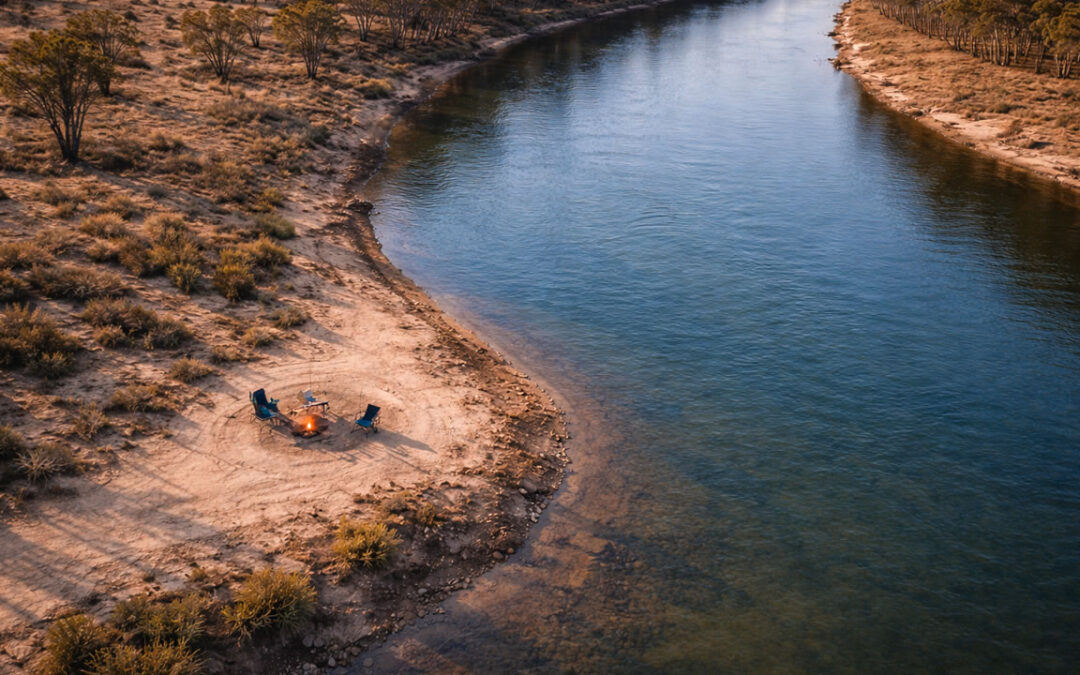
Camping at Dunlop Station was a great experience. All sites are located on the bank of the Darling River. There are toilets and hot showers available up near the shearing shed. The site we stayed on was absolutely huge with a central firepit – we had four caravans in our group and we were all spread out. We could have fitted at least another half a dozen easily. Access to the site was easy.

We were met at the gate by one of our hosts and they led us out to the site and we followed them in. I think the drive was about three kilometres from the homestead so you got the feeling of being the only ones there.

Campsite At Dunlop Station

Campsite At Dunlop Station

Dunlop Station Camping At A Glance

Address: 10045 Toorale Rd, Louth NSW 2840
GPS Coordinates: -30.6336422, 145.0160746
Amenities: Showers & Toilets Across Near The Shearing Shed
Accessibility: Caravans, Camper Trailers, Vans, Tents
Cost: $20 per night
Bookings: Required
Pet Friendly: Yes
Phone: 0458472698
Email: kjchandler2@bigpond.com
Website: https://www.dunlopstation.com/

Dunlop Station Camping Facilities

The campsites are suitable for caravans, fifth wheelers, camper trailers, motorhomes, campervans and tents. Sites are pull-in / drive-through style with a flat loose dirt/gravel surface.

The campsites are all unpowered with no electrical, water or grey water / black water. There is zero tv reception but hey you’re in the middle of the outback! Also keep in mind that generators are not permitted.

Fires are allowed and all sites that we saw had a nicely constructed firepit. As mentioned earlier the firepit for ours was located right in the middle of the camping area so worked great for us. As an added bonus there was a good sized pile of firewood already cut for us and stacked alongside the firepit. We had fires both nights and there was more than enough wood provided. We were told that if the wood provided wasn’t enough that we were allowed to cut some more from anything that was dead on the ground – there was plenty but we didn’t need it.

I highly recommend Dunlop Station camping. If you ever get the chance to camp at Dunlop Station for a night or two then do it.

Great Central Firepit With Firewood Provided

Great Central Firepit With Firewood Provided

Dunlop Station Tour

Morning Tea

The tour of Dunlop Station kicked off with morning tea at 11am so us and the mates we were travelling with all met up at the homestead. The tour is really popular and besides us and our mates there were a LOT of other people going on the tour. Some were camping at Dunlop Station and quite a few had called in for the day just to do the tour.

Morning tea was great, scones, biscuits, slices, assorted cakes and tea and coffee. The scones were particularly nice. I was expecting the usual jam and cream on them however instead there was a kind of tomato chutney. I never thought I’d have scones and chutney however they go together so well I’ll be having them that way again!

History Of Dunlop Station

After morning tea Kim the owner of the property gave us a very detailed talk on the history of the property and its original owner and some of the subsequent owners. Kim also gave us a lot of history about Dunlop Station and its position in the general scheme of original outback station properties. After the talk we were allowed to walk through the main homestead. It’s actually where she and her daughter live.

They’ve worked incredibly hard to restore it. When they first arrived some doors wouldn’t even open because the rooms were so full of stuff. It sounds as if the last owners prior to Kim were old school hoarders of epic proportions. There was very little electricity or running water and the place was overrun with rats. After years of hard and careful work the homestead looks wonderful now. The wide verandah that wraps around three sides is awesome and offers a nice place to sit during the heat of the day.

Overhead Shearing Gear Inside Dunlop Station Shearing Shed

Overhead Shearing Gear Inside Dunlop Station Shearing Shed

The Old Store

From the house it was a quick walk to the old Store which is packed with collectables and old items from the past. Dunlop Station was huge in its day – a million acres with 12 cooks and 100 shearers working the property. River steamers used to dock right at the station’s wharf to collect wool. That’s all finished now. When the railway reached Bourke, the river steamers couldn’t compete anymore. Then dams were built on the Darling to hold water all year, which stopped the river being reliable for boats.

Dunlop Station Shearing Shed

From the store we drove out to the shearing shed. It’s big. It’s very impressive. Kim gave us a great talk on the historic significance of the 45 stand shearing shed on Dunlop Station. It’s been undergoing a lot of remedial maintenance work in recent years and it’s great to see that such a great shed is going to be available to the public to view into the future.

Tours At Dunlop Station At A Glance

  • Morning Tea 11am
  • Tours commence at 11:30 am Tours Run Tues, Wed, Thu, Fri, Sat & Sun
  • Tour the Dunlop Homestead, Store and Shearing Shed.
  • Large Groups Welcome.
  • Cost: $25 per person

Dunlop Station Highlights

  • Homestead dates back to the 1880s
  • 881ha of land on the Darling River
  • Dunlop Stations shearing shed is Australias first to use mechanical shears

The First To Use Mechanical Shears

Dunlop Station used to cover a million acres and had a shearing shed with 45 stands. This shed made history as the first to use mechanical shears.

Frederick York Wolseley was born in Ireland in 1837 and came to Australia in 1854. He was an inventor who started working on a sheep shearing machine around 1868. By 1872 he had a working model that could shear at least part of a sheep’s fleece. After making improvements and working with others, his machine was shown across eastern Australia and New Zealand in 1887-88. In 1888, Samuel McCaughey’s shed at Dunlop became the first to complete an entire shearing using machines. That same year eighteen other sheds started using the invention too. See Kim I WAS listening!

Kim Giving Us The Rundown On The Station Tour

Kim Giving Us The Rundown On The Station Tour

Swimming At Dunlop Station

Some of us went for a swim in the Darling River. Access to the river from most of the campsites is very steep – the banks of the Darling River seem to be like this wherever we’ve visited the river. The owner Kim told us that the best place to go for a swim at Dunlop Station was out at the “wheelchair” campsite.

When they took over the property in one spot down by the river they found an old wheelchair, so of course when they were setting up the camping areas that one became the wheelchair camp! You can’t miss the campsite. There is still a really old wheelchair marking the entrance to it!

Access to the river from this campsite was still a bit tricky but it was more than doable. The water was still a bit on the chilly side however the day was hot so it was very refreshing. The river was running quite fast so we didn’t venture out too far from the bank.

How To Contact Dunlop station

“Dunlop” Station
10045 Toorale Rd
Louth NSW 2840

Tel: 0458472698
Email: kjchandler2@bigpond.com

How To Get To Dunlop Station By Car

From Bourke NSW
Head south on the Louth Road for about 99km to Louth. At Louth cross the river and drive a few kays to the T-intersection. At the intersecvtion turn left on to Toorale Road. Dunlop Station is about 15km from Louth.

From Wilcannia NSW
Travel to Tilpa on West Tilpa Road. It’s about 130km. From Tilpa drive east on Toorale Road through to Dunlop Station.

Wrapping Up

Dunlop Station is a brilliant spot to visit on the Darling River. The camping is excellent with huge riverside sites, proper facilities and free firewood. The $20 per night price is great value. The station tour is well worth doing too – Kim’s knowledge of the property’s history is fascinating and seeing Australia’s first mechanical shearing shed is pretty special. Morning tea was delicious. I particularly liked the scones with tomato chutney! If you’re passing through Louth, definitely stop at Dunlop Station for a night or two. It’s a memorable outback experience that gives you a real taste of station life and history.

Photo Gallery – October 2025

Wanaaring Free Camping On The Paroo River NSW

Wanaaring Free Camping On The Paroo River NSW

Wanaaring Free Camping On The Paroo River NSW

Wanaaring free camping on the Paroo River with toilets and showers. We camped here with mates and found it to be absolutely awesome.

We have recently spent a night at Wanaaring free camping on the Paroo River in outback NSW with a group of mates. It’s a really great free campsite with toilets and showers only a short walk away. We camped at the Wanaaring free camp in early October 2025.

Wanaaring Free Camping

Wanaaring Free Camping

About Wanaaring Free Camping On The Paroo River

You’ll find the Wanaaring free camp across the road from the closed down Wanaaring Pub. It’s a shame the Wanaaring Pub was closed as I’d have loved to have had a beer there.

There’s a donation box next to the shower and toilet block with proceeds going to the local Wanaaring Rural Fire Service. Nobody in our group used the toilets or showers but we had a look and they were very clean and well put together. We all chucked in a donation in the box to say thank you for access to the campsite.

The free campsite at Wanaaring has enough room for up to ten vans depending upon how close you like to be to your neighbours. Considering the location of Wanaaring NSW I couldn’t see the free campsite at Wanaaring being overly crowded at any time. It’s dog friendly which is an added bonus.

Address: Wanaaring, New South Wales
GPS Coordinates: -29.7032740, 144.1504620
Amenities: Showers & Toilets Across The Rd (Donation)
Accessibility: Caravans, Camper Trailers, Vans
Cost: Free
Pet Friendly: Yes

Free Camping At Wanaaring NSW On The Paroo River

Free Camping At Wanaaring NSW On The Paroo River

How To Access The Free Camping Area At Wanaaring NSW

A levee bank has been built across Bourke-Milparinka Rd to protect the town from flooding. They have put road closed signs in place making the campground not easily accessible. However it is accessible. I turned onto Hebden St. The RFS with toilets/showers beside it is to the left on Hedben St. Turn left onto a dirt track that’ll take you around the back of the RFS. This will bring you back onto Bourke-Milparinka Rd (turn right onto it). There’s a small blue camping sign on your left after turning onto Bourke-Milparinka Rd. Keep right of the blue sign as that track is a much easier way to get into the camping area. Of course we took the track to the left and had a hard time getting in. It was only after managing to get in that we saw the easier track.

It’s a good idea to pull up in front of the abandoned Wanaaring Hotel and walk across the road and up onto the levee bank. You can easily see the camping area from there as well as how to access the Wanaaring free camping area. If you get a bit lost or can’t find the camping area ask a local and they’ll set you straight.

Wanaaring General Store And Caravan Park

If you aren’t into free camping then the Wanaaring General Store & Caravan Park is nice and clean and offers sites with power and water as well as unpowered sites.

Before leaving town we called into the Wanaaring General Store. We all fuelled up and we all bought some souvenirs. I got myself a nice Wanaaring number plate to add to my growing collection. We also had bacon and egg rolls. I’d previously read reviews on how good the food was here but I was surprised when I got my roll, it was big, it was fat and it was juicy! Absolutely magnificent doesn’t begin to describe just how good it was.

Getting To Wanaaring NSW – Cut Line Road conditions

We travelled through to Wanaaring from Tibooburra on the Cut Line and found the road to be in really good condition in early October 2025. A lot of it looked to have been graded quite recently.

Driving The Cut Line Between Tibooburra And Wanaaring NSW October 2025

Driving The Cut Line Between Tibooburra And Wanaaring NSW October 2025

Summary

Wanaaring has a free riverside campsite on the Paroo River in outback NSW. Located across the road from the closed pub. The site accommodates up to ten vans, is dog friendly, and features clean toilets and showers with a donation box supporting the local Rural Fire Service.

Wanaaring Road Cut Line Road Conditions Sign

Wanaaring Road Cut Line Road Conditions Sign

Oodnadatta Pink Roadhouse Camping And Caravan Park

Oodnadatta Pink Roadhouse Camping And Caravan Park

Oodnadatta Pink Roadhouse Camping And Caravan Park

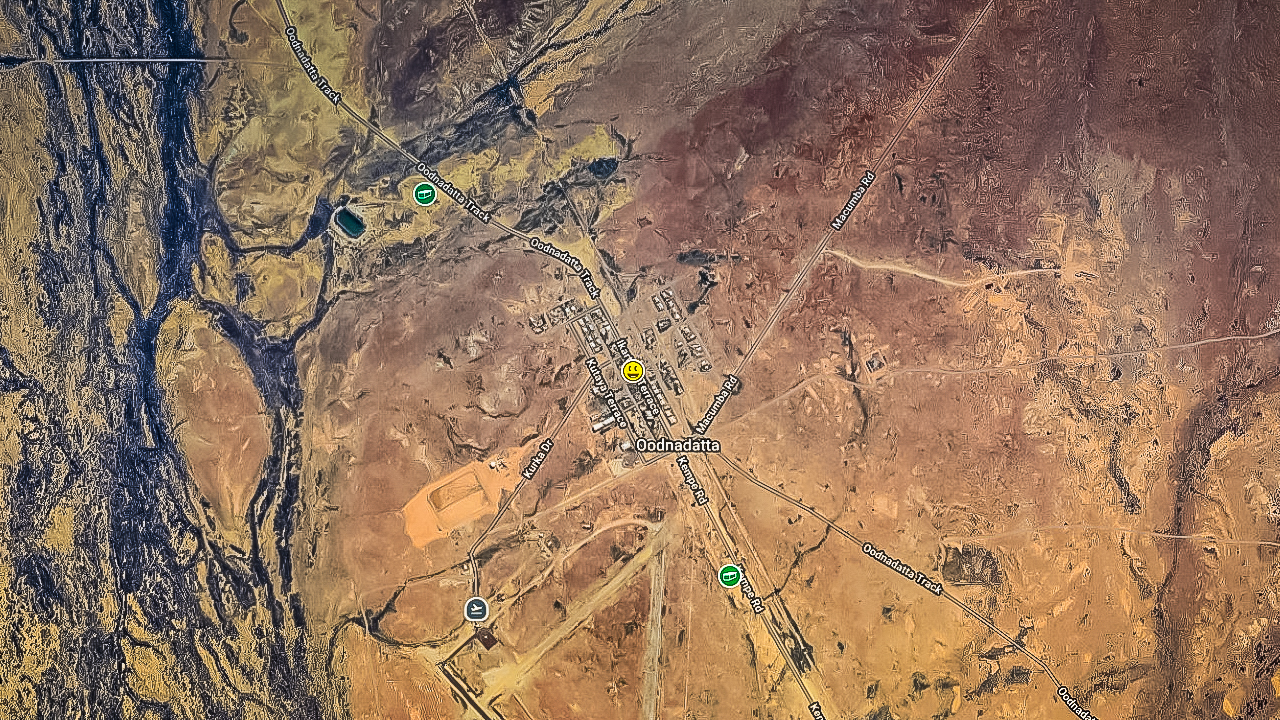
The Pink Roadhouse at Oodnadatta has been serving visitors to the region for decades. It’s a great overnight stop for caravans and campers tackling the Oodnadatta Track. Located behind the pink roadhouse the camping and caravan park has all the basics you need.

Pink Roadhouse Camping & Caravan Park Location And Info At A Glance

Cost: About $35 per night powered and $20 per night unpowered. Varies depending upon season.
Type: Caravan Park / Paid Campground
Location: -27.549235°, 135.447553°
Distance From Marree: 406km
Distance From Oodnadatta: 0km
Distance From Marla: 254km

Accommodation Options At The Pink Roadhouse Camping & Caravan Park

The Pink Roadhouse Camping and Caravan Park has powered and unpowered sites. They also have a limited range of cabins available ranging from basic to not so basic (still a bit basic).

Pink Roadhouse Oodnadatta

Pink Roadhouse Oodnadatta

Facilities

Amenities are a mixed bag – some are new and some show their age. The newer shower and laundry block is excellent, with clean facilities that are a welcome sight after long days on rough roads. Pro tip: use the showers next to the laundry block as they’re the newest and cleanest.

The camp kitchen provides a decent space to prepare meals, though it’s seen better days. Water is available from taps around the site for filling bottles and jerry cans, with desalinated water available out the front. Tank water can be filled at the shared tap on the back fence.

The Roadhouse Experience

The Pink Roadhouse itself is part of the experience. It’s weathered but functional, stocking fuel, groceries, and a good range of essentials. The general store covers most needs with dry goods, some fresh produce, frozen meat, and the usual tourist souvenirs. Coffee is decent, and the food menu includes solid pub meals like parmas and the local Oodna Burger.

Staff are helpful and knowledgeable about local tracks and conditions – worth having a chat if you’re planning to explore further. Joe in particular is a wealth of information about surrounding tracks and points of interest.

What Works Well

  • Dogs allowed
  • Clean powered and unpowered sites
  • Knowledgeable staff for track advice
  • Well stocked store for restocking basic supplies
  • Good water quality

The Pink Roadhouse At Oodnadatta

The Pink Roadhouse At Oodnadatta

The Reality Check

This isn’t a resort – it’s a working roadhouse in the middle of nowhere. Some facilities are old and functional rather than flash. Prices reflect the remote location on the Oodnadatta Track as you’d expect. The older amenities block shows wear but remains usable.

Summary

The Pink Roadhouse serves is a reliable place to pull up for an overnight stop. It’s clean, it’s functional and has the basics of what you need. It’s an awesome place you don’t want to miss when driving along the Oodnadatta Track.

Whether restocking supplies, refuelling or you need a quick meal and a cold drink the Pink Roadhouse delivers the essentials with genuine outback hospitality.

Lake Harry Ruins Campsite – Birdsville Track

Lake Harry Ruins Campsite – Birdsville Track

Lake Harry Ruins Campsite – Birdsville Track

Lake Harry Ruins is a great free campsite on the Birdsville Track at the southern end of lake Harry. There is a lot of room, you could fit as many vans you needed here. The area is flat. If it’s windy then the best bet is to camp up close to the ruins and use it as a windbreak.

We’ve called in and had a look on a trip a few years ago. we didn’t stay as we other plans for the day but we’ve marked it in the memory banks as a “100% we’d camp there” site. There aren’t any amenities at Lake Harry Ruins Campsite but there is history in abundance. The ruins themselves are pretty small however if you go for a walk you’ll find all kinds of things to keep you interested.

Lake Harry Ruins Campsite Location And Info At A Glance

Cost: Free
Type: Free Camping
Location: Birdsville Track, Muloorina SA 5733, South Australia
GPS: -29.4342650, 138.2467820
Pet Friendly: Yes
Distance From Birdsville: 488km
Distance From Marree: 31km

Lake Harry Ruins Campsite Birdsville Track

Lake Harry Ruins Campsite Birdsville Track

So What Was Lake Harry Ruins And what Happened To It?

The site was originally used as a date palm plantation starting around 1894. There was plenty of bore water available and plenty of room for planting. Sunshine was also to be had in absolute abundance. What could go wrong? The answer to what could go wrong is anything and everything! The nearest bees to create pollination were hundreds of kilometres away so they had do do it all by hand. And the market for the dates was even further away and there was no such thing as refrigerated transport. By the time the product made it to market it was cactus! Then there was a drought around 1900. Add to this that cockatoos love eating dates. It ended up being abandoned around the time that WW1 began as there wasn’t much manpower around to keep it all going.

Summary

Lake Harry Ruins Campsite on the southern end of the Birdsville Track is a great place to camp for the night when starting the track or just before finishing it. There’s plenty of history there to keep you interested. It’s a good campsite.