How To Use a 4wd Tyre Deflator

How To Use a 4wd Tyre Deflator

How To Use a 4wd Tyre Deflator

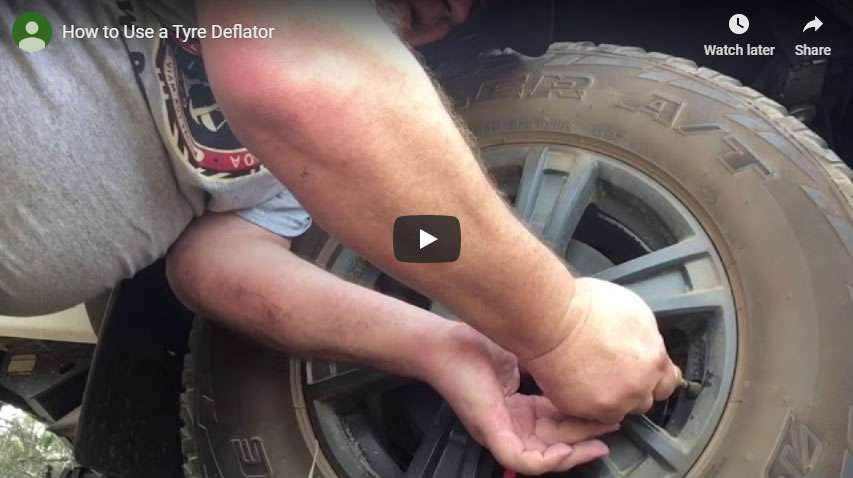
You need to know how to use a 4wd tyre deflator to lower your tyre pressure if you get out on dirt roads and sandy or muddy tracks. Watch my short video running through the basics of what you’ll need and how to get it done.

There is a technique to using a rapid tyre deflator. Here’s a quick how-to.

Identifying the Four Main Components of the Tyre Deflator

Tyre Deflator Components

  1. The first component is the gauge, use this to you take your readings.
  2. The second component is the spindle. This is the bit that threads on to the outside of your tyre valve. This component allows the valve core to be captured and allows the air release valve to slide.
  3. The third component is the valve core armature. This is a long thin steel shaft with a knob on the end. It has a valve core removal mechanism to internally remove and fasten your tyres valve core. The valve is completely captured inside the tool so there is no chance of losing it.
  4. The fourth component is the air release valve. This part slides up over the top of the spindle. This is the part that allows you to quickly release air from your tyres.

Using the Tyre Deflator – 5 steps to deflating a tyre

Step 1
Thread the spindle section onto your tyres valve stem. Make sure the threads are spinning freely and it isn’t cross threaded and your release valve is set to the closed setting (pushed towards the bottom of the tool).

Step 2
Push the valve core armature section all the way in. Gently turn it clockwise whilst seating to make sure that it connects correctly to the valve core within the valve stem. When seated the gentle rotation should stop. Gently screw the armature section in a counter clockwise direction while maintaining pressure against the valve core. This will unscrew the valve core. When the core is fully unscrewed the armature will be free to extend out of the way of the airflow from the valve.

Step 3
Now that the valve core has been removed you can check your tyre pressure with the gauge. Now, slide the air release valve back towards the top of the tool to allow air to rapidly exit. Check the pressure of your tyre often by sliding the air release valve back down towards the front to close it off.

Step 4
When the desired pressure has been reached depress the valve core armature section back in all the way. Now we just need to do the reverse of what we have done already to finish up. Turn the valve core armature counter-clockwise to reseat the valve core within the valve stem.

Step 5
Once you have tightened the valve core (don’t overtighten – just snug is ideal), check the air release valve to make sure the valve core has been put back properly. If no air escapes you can remove the spindle by unthreading it. Replace your valve caps to protect the seal from dust, sand and dirt.

Note
It’s a good idea to carry a few spare valves and dust caps. Removing and replacing the valves with the rapid tyre deflator does run the risk of damaging the valve. I have used the deflator hundreds of times and never damaged a valve, but there will always be that one time. You can get them very cheaply off eBay. Spare dust caps are a good idea, I have lost quite a few over the years. Again, they’re cheap on eBay so don’t go stealing them in your workplaces carpark!

Replacing Suburban Hot Water Anode In A Supreme Getaway

Replacing Suburban Hot Water Anode In A Supreme Getaway

Replacing Suburban Hot Water Anode In A Supreme Getaway

The Suburban Hot Water Anode in your caravan is a replaceable item. I will show you how to inspect and replace step by step. It’s an easy thing to do and it has to be done regularly.

What Is The Anode For Anyway?1. Tools & Replacement Anode2. Disconnect Water & Open A Hot Water Tap4. Place A Bucket To Catch The Water That Will Drain From Your Tank5. Remove The Anode6. Inspect Removed Anode & Determine If It Needs Replacement7. Rinse The Tank Out8. Thread Tape9. Install Suburban Hot Water Anode & Turn The Water Back On

What Is The Anode For Anyway?

The anode in the hot water heater in your caravan is actually meant to corrode away over time. Anodes are made from magnesium and they protect steel by a sacrificial electrochemical action. Magnesium is electro-negative relative to steel. When a magnesium rod is fitted to a steel tank filled with fresh water, a current will constantly flow through the water between the rod and any exposed steel area on the tank wall. The circuit is completed through the tank back to the magnesium rod. This protective current is produced by the magnesium releasing ions and this results in corrosion in the anodic area. A magnesium (the anode) corrodes instead of the steel tank (the cathode). This principle of electrolytic corrosion control is called cathodic protection. Because cathodic surfaces cannot rust, the steel tank is protected.

So now that we know a bit about anodes, let’s replace one. I generally check the anode every six months or so. It won’t usually need replacing this often, but it’s easy to check so I do.

Step 1 – Tools & Replacement Anode

The photo below shows all of the bits and pieces you will need to do the job. You don’t necessarily need the tank rinser, a hose with a decent nozzle will do an ok job but I reckon the rinser gets in to the corners and top front of the tank better. Same with the multi-fit tube spanner, if you have the correct size socket (11/16″) you can use that instead. Replacement anodes, the rinser and removal tool can all be bought online from any of the caravan spares places or sourced from any caravan shop.

Items Needed To Replace Suburban Hot Water Heater Anode

Step 2 – Disconnect Water & Open A Hot Water Tap

Before you get started you need to do a few things. Make sure your van isn’t connected to mains water, turn off your water pump and open the hot water tap to relieve any pressure in the system. If you haven’t got a pump isolater switch then just disconnect the 12v system.

Step 3 – Open The Cover To Your Suburban Hot Water Heater

Next you want to open the cover that protects your hot water heater. They’re pretty much all the same. Pull on the little toggle then turn it until it lines up with the slot and then simply lower the flap.

Replacing A Suburban Hot Water Anode Open The Cover

Replacing A Suburban Hot Water Anode Open The Cover

Step 4 – Place A Bucket To Catch The Water That Will Drain From Your Tank

A couple of tips. Make sure the water in the tank is cold as it is going to all run out. Put a bucket underneath it, about 50% of the water will go in to the bucket, the rest will just go everywhere. It’s a good idea to do it in your driveway rather than inside of your garage.

Step 5 – Remove The Anode

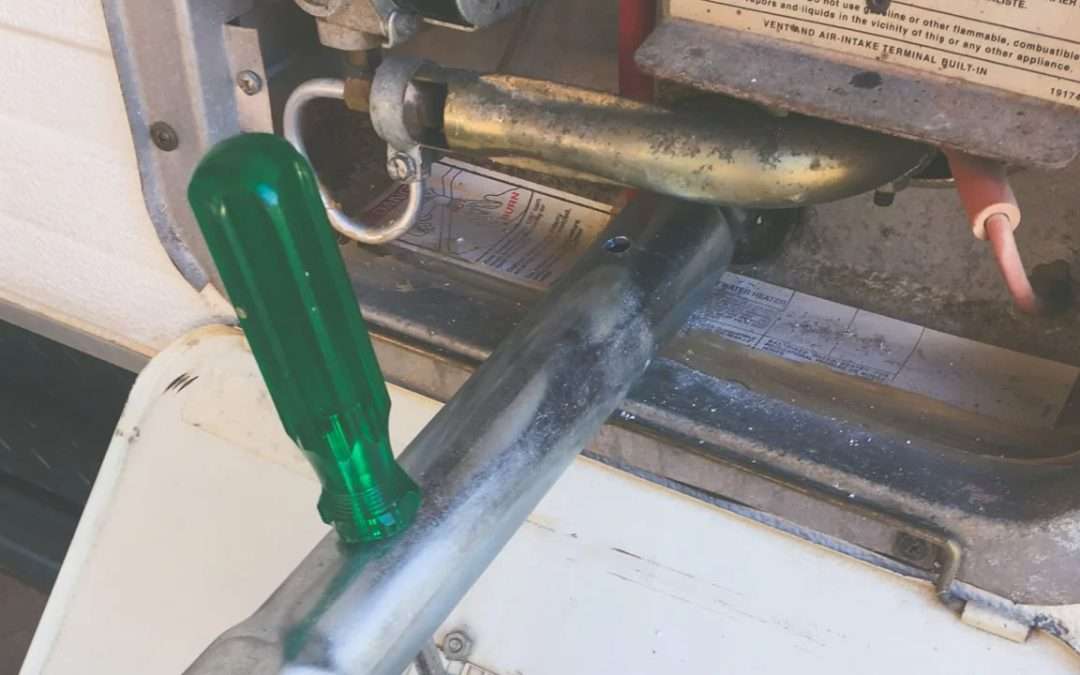
With the cover open you should be able to see the end of the anode. It will be down towards the bottom of the unit. Fit the multi-fit tube spanner and put a screwdriver or something similar through the holes in the tool to give you a bit of leverage. Turn the tool counter-clockwise and the anode will unscrew.

Closeup Of Anode And Removal Tool

Closeup Of Anode And Removal Tool

Step 6 – Inspect Removed Anode & Determine If It Needs Replacement

Once you have removed the anode have a good look at it. If it’s in pretty good condition like mine was it’s perfectly ok to re-use it. I replace mine if they are more than about 50% gone. The life you get out of them depends a bit on the quality of the water you have been using. If you are mostly using city tap water then they seem to last for well over 12 months. If you are using bore water from out bush they can be gone inside of three months. If you are using poor quality water it pays to check your anode more often.

Note the new anode is longer than the old one in the photo below. The replacement is a multi fit one – not specific to the 20 litre Suburban hot water heater. It fits fine, you just need to trim about 3cm off the end of it with a hacksaw before installing.

Old And New Anodes For Comparison

Old And New Anodes For Comparison

Step 7 – Rinse The Tank Out

Now you need to rinse all of the old bits and pieces of anode out of the tank. I use a rinsing tool as I find it does a better job than just a hose nozzle. That being said I used the hose nozzle for ages before buying the rinser thing. Work it in and out and turn it around to get up in the corners both front and back and top and bottom. Keep on going until the water runs perfectly clear. When the water is running clear squirt a bit of water around to clean up the bottom of the tank recess and also the tank cover. Wash down the side of your van while you are at it.

Rinsing Out The Tank With Rinsing Tool

Rinsing Out The Tank With Rinsing Tool

Step 8 – Thread Tape

Before refitting the old anode you need to remove the old thread tape. I just use a small screwdriver to lift it then unwind it with my fingers. Do this on the anode and also inside the thread on the tank. Remove as much of the old tape as you can without spending all day on it. After removing the old tape put on some fresh tape. About three or four winds around will be ample. Usually new anodes will come with tape already on them.

Remove Old Thread Tape And Replace With New

Remove Old Thread Tape And Replace With New

Step 9 – Install Suburban Hot Water Anode & Turn The Water Back On

Now you just need to insert the anode and using the multi-fit tube spanner tighten it up. Just nip it up tight, there’s no need to go overboard with the amount of torque you apply to it. After that you can close the cover. Turn off any taps that you have opened to relieve pressure in the tank and turn your water pump back on. You will hear the tank refilling. Wait until your tank has completely filled before turning the heater on to test.

John Guest Caravan Fittings Replacement

John Guest Caravan Fittings Replacement

John Guest Caravan Fittings Replacement

Last time we were away in the van one of the John Guest Caravan Fittings sprung a leak inside the cupboard underneath the sink. Luckily it was on the last morning just as we were getting ready to pack up and go home. I have installed a water pump isolating switch underneath one of the seats so I just turned it off before too much leaked out. It’s a good thing it didn’t happen during the night as quite a bit came out.

It was a pretty good leak. We dried everything up with some towels and once back home we put a couple of those moisture camel things in the van. Luckily no damage was done and it all dried out well.

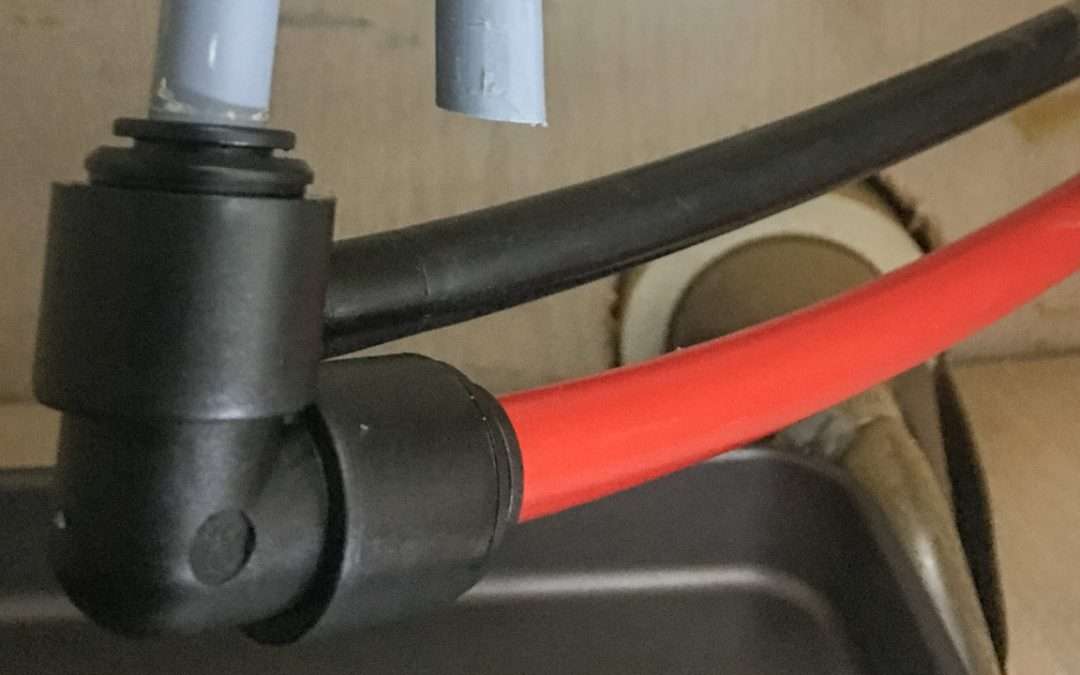
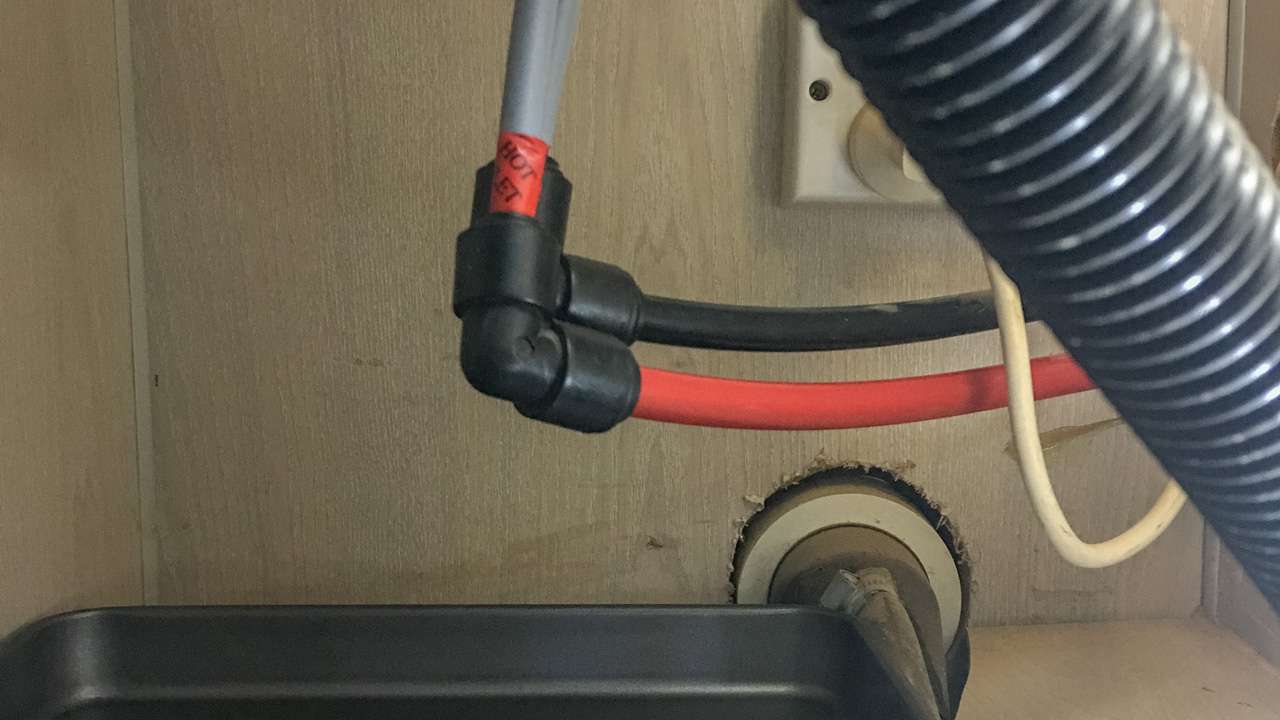
It Was The Fitting On The Hot Water Pipe To The Sink That Failed

It Was The Fitting On The Hot Water Pipe To The Sink That Failed

To test if the fitting had just come loose or if the fitting had failed I removed both the hot and cold water fittings and swapped them around and then turned the water back on. This time it was the cold water pipe that had water squirting out of it so it was definitely the fitting with the problem.

Spare John Guest Plumbing Caravan

I had been meaning to get some spare fittings as I had one let go underneath the van previously so I got online and ordered up some spare elbows, tees and some straight joiners along with a few metres of pipe. I ordered all 12mm fittings after I had put my vernier callipers on one of the pipes underneath the sink to check the size. The John Guest caravan fittings come in 10mm, 12mm and 15mm sizes. It turned out I had to order a few more spare elbows as the ones I was replacing were actually 12mm on one side and 10mm on the other. Bit of a pain in the arse but not the end of the world. The fittings work out to about $5 each if you order them online. I did buy a tee from a caravan place one time because I was in a hurry for it and that cost me $15 so it’s worthwhile getting them online if you can.

Kit of John Guest Plumbing Fitting Spares

Kit of John Guest Plumbing Fitting Spares

After the fittings arrived I grabbed a couple of elbows and went out to the van. To remove the fittings it’s very easy. You just need to press down on the little collar while pulling firmly on the pipe.

Removing John Guest Fitting

Removing John Guest Fitting

After removing the fitting I noticed that one of the pipes had been cut crookedly. The pipe has to seat firmly and squarely inside of the fitting so I trimmed it to be square. I have a tubing cutter to use for this, they cost about $10 from the plumbing section in Bunnings and make getting a square cut foolproof. Failing this a good sharp Stanley knife will also do the trick provided you take more care than whoever did the original installation did! Mind you the van is eighteen year old and probably hadn’t leaked up until now so I can’t complain too much about the original installer now can I?

Pipe Needs To Be Square On The End Not Crooked Like This One

Pipe Needs To Be Square On The End Not Crooked Like This One

To install the fittings it’s as easy as pushing it on to the pipe firmly until you feel it seat home. There’s no ‘click” or anything, it just won’t go on any further. If you want to check put a pencil mark on the pipe when it’s fitted around the collar then remove the pipe and you can visually see and measure how far it is inserted.

Why Do I Think The John Guest Caravan Fitting Failed?

The fittings underneath the sink are in the cupboard where we stored a frying pan. I reckon that travelling down the road especially on some of the corrugated stuff we have been on has bounced the frying pan up in to the fittings causing damage to one of them. I am going to install a piece of 4mm marine ply underneath the fittings in the cupboard, effectively like a little shelf to prevent the frying pan being able to bounce in to the fitting again. But then again it all could have been down to the fittings being eighteen years old!


Installing LED Lights in our Supreme Getaway Caravan

Installing LED Lights in our Supreme Getaway Caravan

Installing LED Lights in our Supreme Getaway Caravan

Replacing your caravan lights with LED lights is a simple thing to do but it makes a big difference to power consumption and light brightness and colour. I replaced all of the interior and exterior 12v caravan lighting on our van with LEDs. If you’ve got a newer caravan then you probably already have LED lights instead of the old incandescent ones.

Difficulty Factor: 2/5
Time Taken: 2 hours

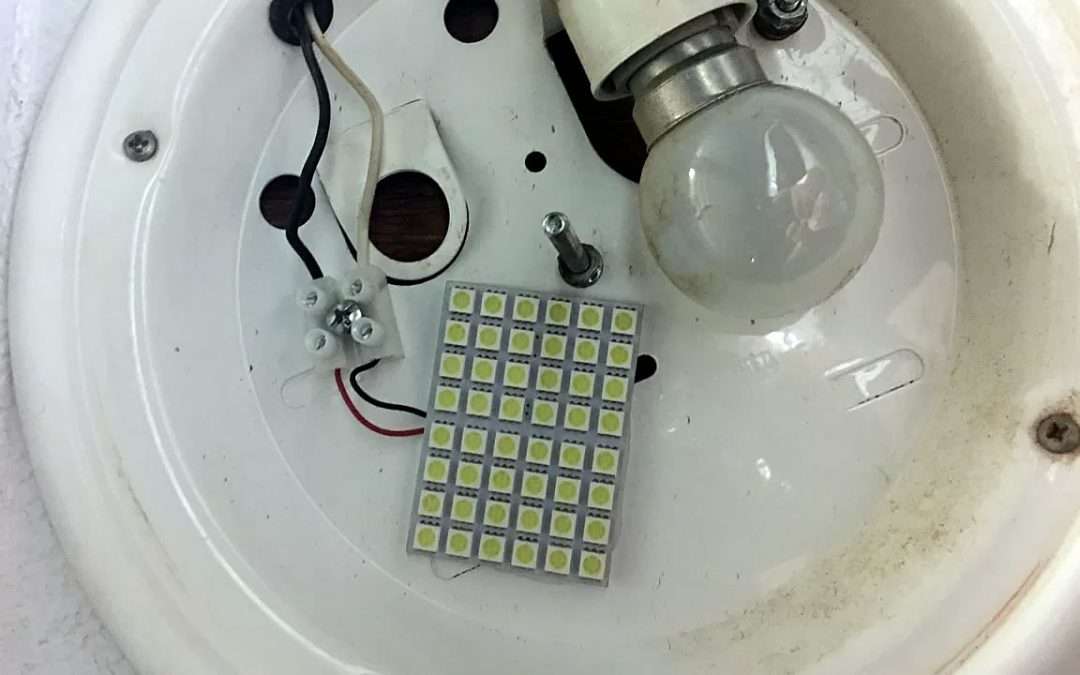
12v Incandescent Bulb Holder Being Removed And 12v Led Panel Installed

12v Incandescent Bulb Holder Being Removed And 12v Led Panel Installed

Big Power Saving With Caravan LED Lighting

Before replacing them I checked how many amps the old ones were drawing and it was 1.71 amps. After replacing I checked the LEDs and they were drawing 0.37 amps. Quite a saving if you have two or three lights on at the same time for about 6 hours or more a day. Particularly if you are camped up and have heavy cloud cover messing with your solar.

Old Incandescent Bulb vs New LED Output Comparison

Old Incandescent Bulb vs New LED Output Comparison

Cost Of Replacing Caravan LED Lighting

All up I replaced 5 x incandescent type globes at $5.69 a globe plus a halogen one where I had to swap the whole downlight for $24.99. Throw in $5.00 for a chocolate block connector. A tiny bit of silicone plus a handful of screws and the total cost was about $60.00.

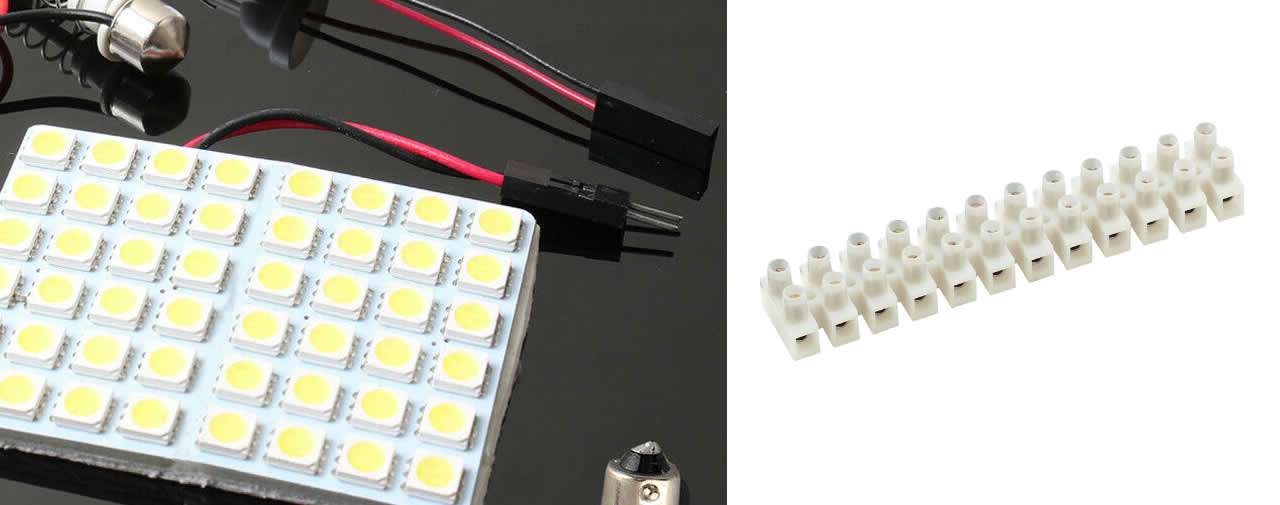
Items Purchased Off Ebay 5050 Led 48 And Chocolate Block Connector

Items Purchased Off Ebay 5050 Led 48 And Chocolate Block Connector

Joining The LED Lighting In Existing Caravan Lights

Initially I was going to solder the connections but I figured if I ever needed to replace one the choccy block would be easier to do if on the road. The choccy blocks are held in place with a screw. The LEDs are supposed to last 50,000 hours but you never know so I have a couple of spares. The little strips came with adhesive backing however the adhesive didn’t feel that sticky to me. I have used a dab of silicone to fix them in place.

Fixed In Place With a Bit of Silicone

Fixed In Place With a Bit of Silicone

LED Lighting Light Comparison

The LEDs themselves are the 5050 cool white type, if anything they are a touch brighter than the incandescent bulbs they replaced.

Old Incandescent Bulb (left) vs New LED Output (right) Comparison

Old Incandescent Bulb (left) vs New LED Output (right) Comparison

Caravan Stone Guard – Easy Fitting Instructions

Caravan Stone Guard – Easy Fitting Instructions

Caravan Stone Guard – Easy Fitting Instructions

You can prevent damage to your caravan and undercarriage by using a Caravan Stone Guard when towing your caravan. They are an efficient and easy way to protect your caravan and undercarriage from small rocks being flicked up from the front of your tow vehicle. The caravan’s front panels and undercarriage will remain as good as the day you bought it by preventing damage.

How Does A Caravan Stone Guard Work?

Caravan stone guards, or stone guards as some people call them are metal framed mesh guards designed to stop and/or deflect rocks thrown up by your towing vehicle’s tyres. The stone guard is mounted to your draw bar and spans the width of your van’s front and is high enough to protect your van from rocks thrown by the back tyres. Rubber flaps also protect the undercarriage with this stone guard.

Coast To Coast Stoneguard

Coast To Coast Stoneguard

Why We Needed A Caravan Stone Guard

We were going to do about 1500+ ks on gravel roads the following month so I thought it would be a good idea to fit something to protect the front and underneath of the van from flying rocks as well as prevent rocks bouncing off and back on to the rear of the ute.

I looked at stone stompers and I like them a lot however due to the short length of our tow hitch I couldn’t see how they would easily fit. On our old camper trailer we had a camper trailer stoneguard across the front and it worked well so I figured I’d get one of those again. Due to the narrowness of the drawbar on the front of our old Supreme Getaway none of the readily available ones would fit. I could have ordered a custom made one but that would have taken time and cost a pile of money so I decided to get one of the coast to coast ones you assemble yourself and modify the mounts to suit. It turned out great with the added bonus that it takes about 30 seconds to remove by taking out a few pins. The mounting modification means if I decide I don’t want it anymore or if we get a different van I could return it to standard in about five minutes.

Modifying and Installing the Caravan Stoneguard

The mounting points being attached to the drawbar. There is a range of different sizes in the kit to suit different drawbar sizes.

Caravan Stone Guard Original Mounting Brackets

Caravan Stone Guard Original Mounting Brackets

The two attachment plates. These bolt to the guard then get dropped in to the mounts and are secured with D pins.

Attachment Plates as Supplied in Kit

Attachment Plates as Supplied in Kit

Next up is measuring out a bit of 75mm x 5mm flat bar to connect the wider mounting points of the stoneguard to the narrower placement of the mounting points.

Checking mounting of stoneguard. Once it's cut in the middle and moved outwards it'll be fine

Checking mounting of stoneguard. Once it’s cut in the middle and moved outwards it’ll be fine

“Wings” get cut to length and bolted to top mounting brackets. Originally I was going to weld these bits together but then I thought if I use bolts then the whole thing can go back to standard if I ever need it to.

Caravan StoneGuard Wings

Caravan StoneGuard Wings

Caravan Stoneguard Mounting Wings For Narrow Drawbar

Caravan Stoneguard Mounting Wings For Narrow Drawbar

The next thing to do is to clamp the stoneguard temporarily in place so you can mark where to drill the mounting holes in the the wings.

Caravan Stone Guard Measuring Mounting Holes

Caravan Stone Guard Measuring Mounting Holes

My wife and I work in transport. The mud flaps supplied with the stoneguard were too short due to the high clearance of our Supreme Getaway so we got some old truck mudflaps off a mate. The holes in the bottom are where they had attached a metal trim strip/weight. We covered them up with some white reflectors. The holes didn’t bother me however my wife always likes things to be neat and tidy. ***Update*** The reflectors got smashed to pieces on the outback gravel roads we travelled on first trip with the stoneguard fitted. Hadn’t thought of that!

Caravan Stoneguard Truck Mudflaps

Caravan Stoneguard Truck Mudflaps

The mudflaps are bolted through the frame. Originally as supplied the flaps are just tek screwed and I wasn’t convinced of how strong that would be. I have since replaced the galvanised bolts for high tensile steel ones.

Caravan Stone GuardMudflaps Are Bolted Through The Frame

Caravan Stone GuardMudflaps Are Bolted Through The Frame

Tidying up the brackets with a bit of paint. Will stop them rusting too.

Caravan Stone Guard Painting

Caravan Stone Guard Painting

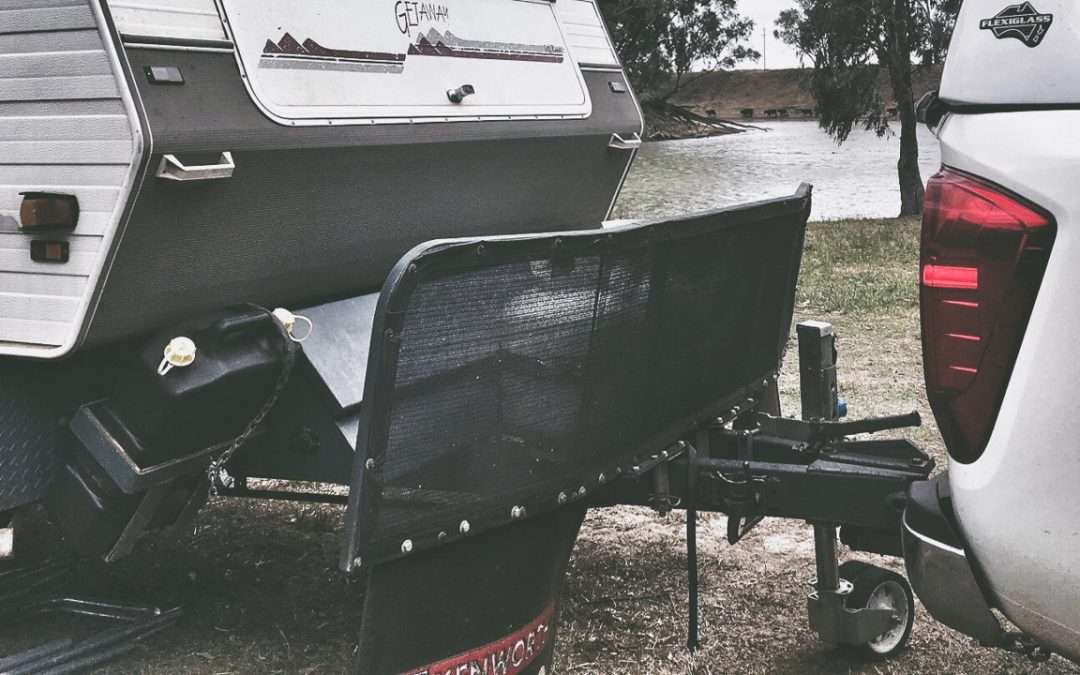
This is how it looks when all put together and mounted on the van. I was a bit worried about having sufficient turning clearance to the back of the ute however I shouldn’t have been as it all worked out fine. Plenty of room.

Caravan Stone Guard

Caravan Stone Guard

About The Coast To Coast Caravan Stoneguard We Installed

With three pre-drilled sections, the Coast To Coast caravan stone guard is flat packed and easy to install and remove.

A metal frame is fitted with tough ripstop mesh that resists rips and tears, and they bolt onto your caravan draw bar. With the included rubber mud flaps, you can also protect the undercarriage of your RV.

Features
  • Easy assembly with pre-drilled holes
  • Solid fixing – rip stop mesh is attached to the frame using screws not elastic
  • Easily removable when not required by using two R-clips (brackets can be left bolted onto you’re A-frame)
  • Pre drilled holes for easy assembly
Specifications
  • Includes: fitting instructions, 2 x extra large mud flaps
  • Suits: A-frames that are 50mm wide, 100,125 or 150mm high, and a width between both bars from 415-750mm at the point of attachment (see pictures above for more details)
  • Mesh Finish: Rip Stop Mesh
  • Frame Finish: 25mm Tube Steel
  • Finish: Black
  • Dimensions: 2310mm (W) x 500mm (H)
  • Net Weight: 16kg
Tips And Things To Consider
  • When checking you’re A-frame measurements to check fit, make sure to consider:
  • Clearance required to use your jockey wheel
  • Clearance for any gas bottles, and
  • The effect of the shield on the turning circle of your vehicle

Update

We eventually installed a StoneStomper on this caravan. We liked it so much that we have installed a second one on our new van. The thing about a StoneStomper is it protects the front of your caravan AND the rear of your tow vehicle.

Replacing Solar Panel On Supreme Getaway With 240w Panel

Replacing Solar Panel On Supreme Getaway With 240w Panel

Replacing Solar Panel On Supreme Getaway With 240w Panel

We bought a 2000 Supreme Getaway about four weeks ago and were told it had a 160w solar panel on the roof and I figured that would probably do the job. Got it home and checked the output, only 3.1 amps in good sun.

Supreme Getaway Offroad Caravan Old Solar Panel Specs

Supreme Getaway Offroad Caravan Old Solar Panel Specs

It’s had a decent (if old) controller so I thought there must be something wrong with the solar panel so I removed it. Turns out it’s a top quality panel, however it was made in 1998 and has the princely max output of 64w.

Supreme Getaway Offroad Caravan Old Solar Panel Charge Controller Photostar 30 Photocomm Inc

Supreme Getaway Offroad Caravan Old Solar Panel Charge Controller Photostar 30 Photocomm Inc

New Panels

We had a good (read expensive) set of folding Kyocera cell 240w panels we’ve been using with the camper trailer for 3 years so I removed the folding legs and handles etc and joined them in to one long panel. $60 worth of aluminium angle and sikaflex plus about 4 hours work and we now have 9 amps showing on the multimeter late in the day with the sun low in the sky.

Supreme Getaway Offroad Caravan Solar Panels

Supreme Getaway Offroad Caravan Solar Panels

Will be much better in full sun. Next up is to do something about the 12v wiring. It’s pretty awful, no breakers or fuses or anything. Tomorrow’s job that one. The old panel is going to be recycled. It’s going on top of the carport so it can keep the battery topped up while the van is under the carport and out of the sun. Just need a couple of Anderson plugs and a little 10amp regulator.