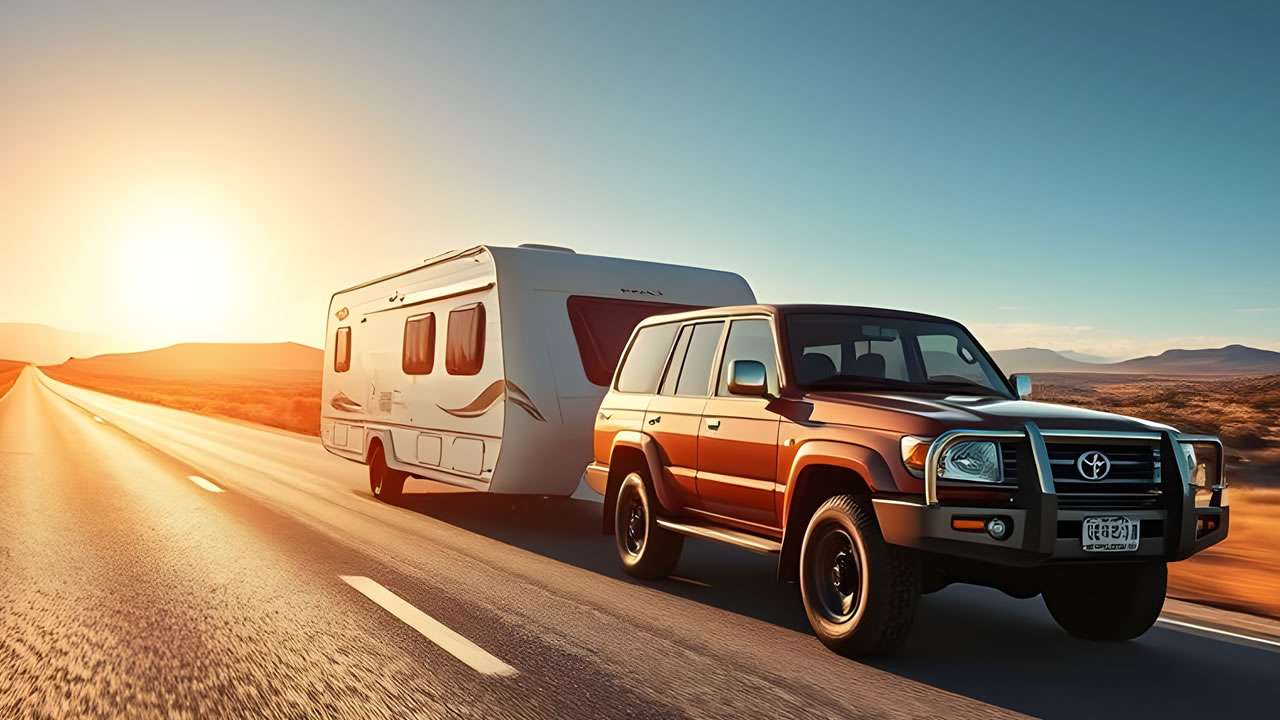
Exploring Corner Country: For Offroad Caravanners & 4WDers

Exploring Corner Country: For Offroad Caravanners & 4WDers

Exploring Corner Country: For Offroad Caravanners & 4WDers

Explore Australia’s remote Corner Country with our 4WD guide. 8-day itinerary, camping spots, iconic pubs & essential prep for offroad caravanners. Corner Country, where Queensland, New South Wales and South Australia converge, is a remote outback region steeped in history, rugged beauty and adventure.

This vast, arid landscape offers offroad caravanners and four wheel drivers a chance to disconnect, explore untouched terrain and retrace the footsteps of explorers and First Nations peoples. With its iconic landmarks, historic pubs and sprawling national parks, Corner Country is a bucket list destination for those seeking an authentic Australian outback experience.
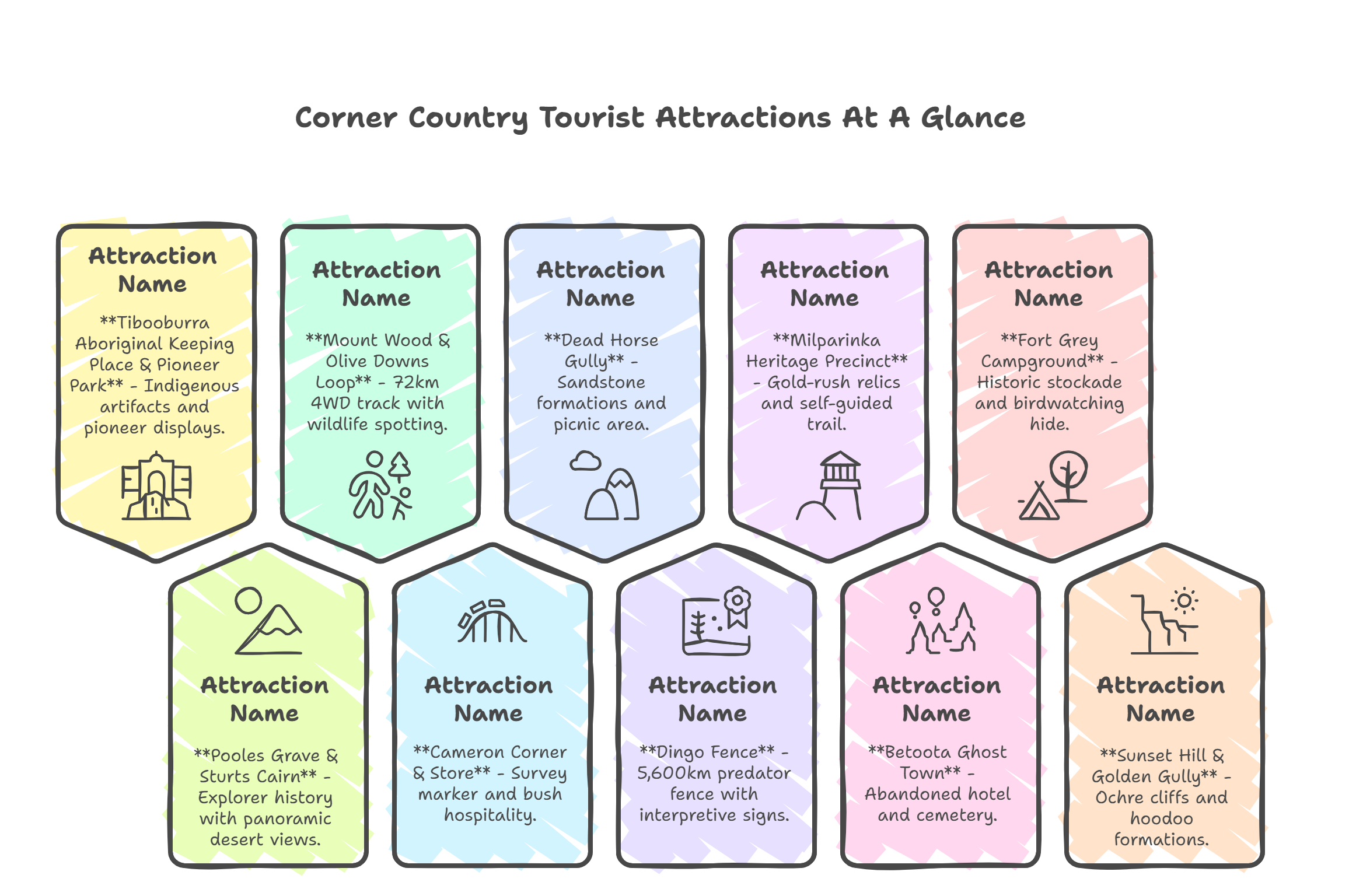
Corner Country Key Attractions At A Glance Infographic

Corner Country Key Attractions At A Glance Infographic

Key Attractions And Activities In Corner Country

Corner Country’s stark beauty and layered history provide endless opportunities for exploration. Below, we’ve expanded the list to 10 must-see attractions and activities, blending adventure, culture, and natural wonders.

1. Tibooburra Aboriginal Keeping Place and Pioneer Park

Located in the heart of Tibooburra, this dual-site attraction offers a deep dive into the region’s Indigenous and settler histories. The Aboriginal Keeping Place houses artifacts from the Wangkumara and Malyangaapa peoples, including tools, ochre paintings, and oral history recordings. Just steps away, Pioneer Park showcases early European life with restored wagons, farming equipment, and a replica slab hut.

  • Highlight: Don’t miss the “Tibooburra Madonna,” a rare 19th-century painting salvaged from a local homestead.
  • Tip: Join a guided tour (book ahead via [Visit Corner Country](https://visitcornercountry.com.au/first-nations/)) to gain insights into Dreaming stories and pastoral struggles.
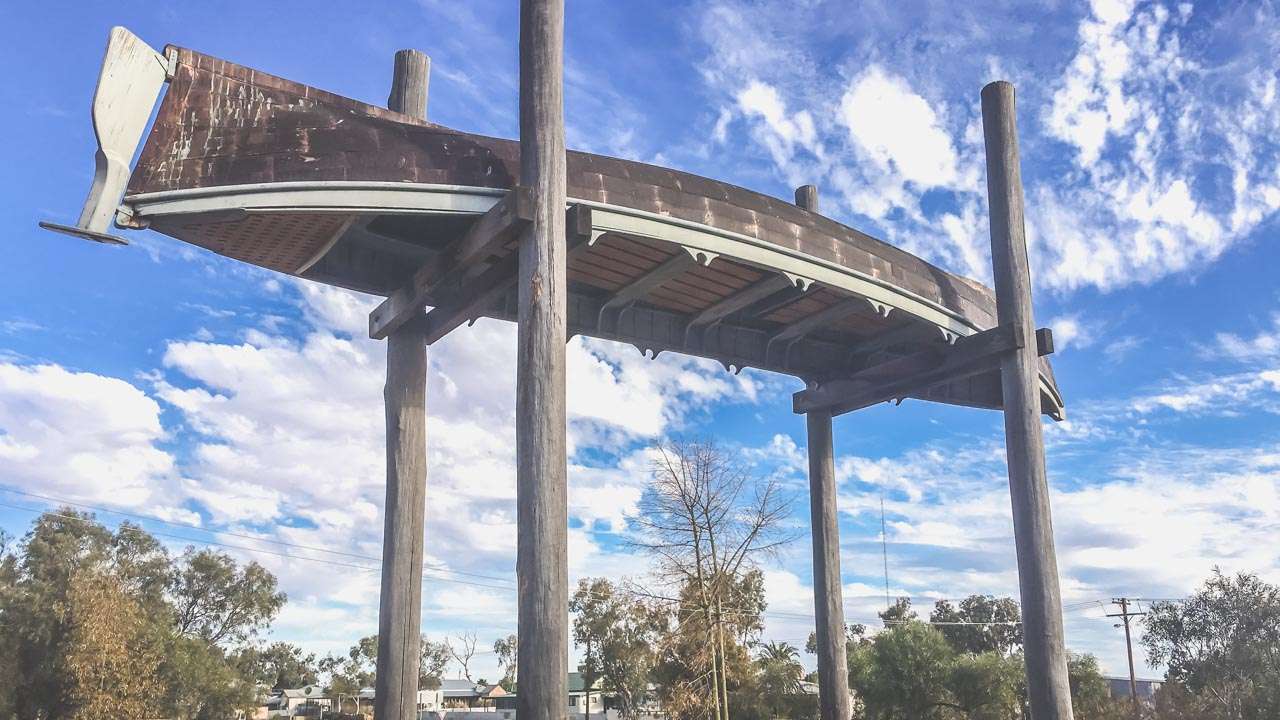
Replica Of Sturts Whaleboat At Tibooburra

Replica Of Sturts Whaleboat At Tibooburra

2. Pooles Grave and Sturts Cairn

These two historical markers near Milparinka commemorate the harsh realities of 19th-century exploration. Pooles Grave marks the burial site of a member of Charles Sturt’s 1845 expedition, while Sturts Cairn is a stone pile built by the explorer’s team during their search for inland seas.

  • Highlight: The cairn’s location on a low rise offers sweeping views of the arid plains Sturt described as “gloomy and dismal.”
  • Tip: Visit at dawn or dusk to avoid midday heat and capture dramatic lighting for photography.
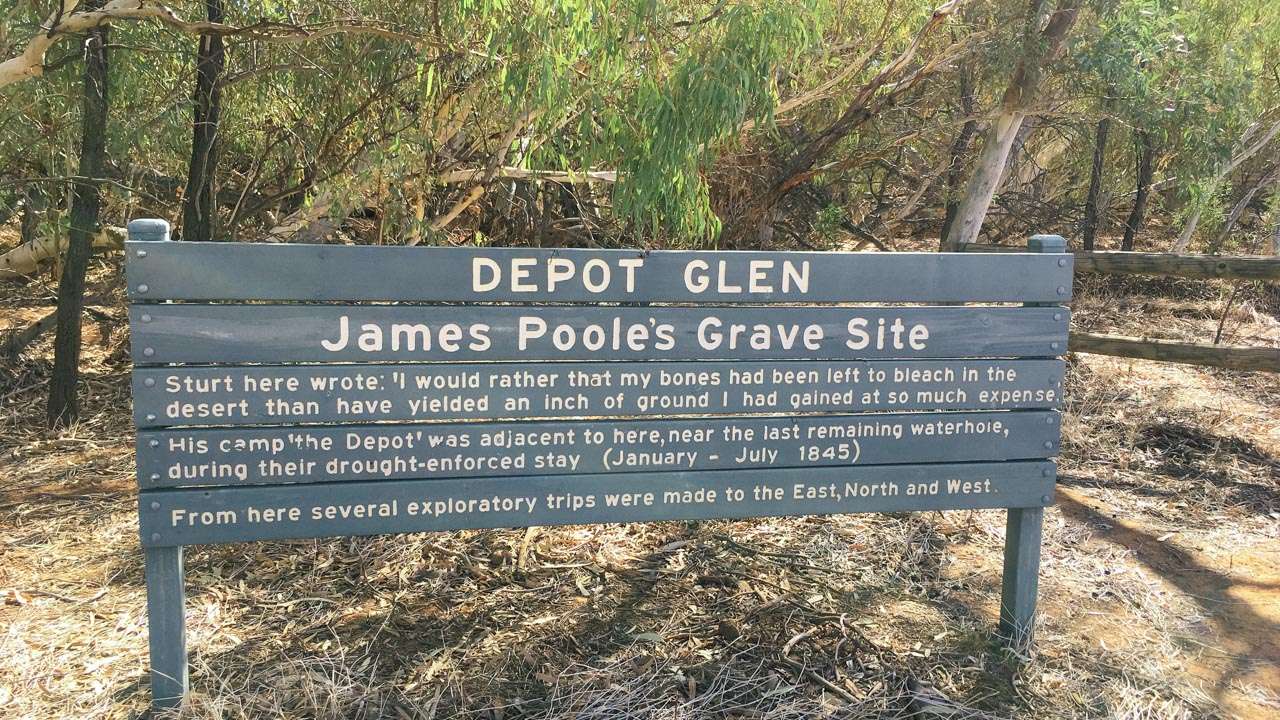
Depot Glen Near Milparinka

Depot Glen Near Milparinka

3. Mount Wood and Olive Downs Loop Roads

This 72km 4WD loop in Sturt National Park traverses rocky ridges, claypans, and wildlife-rich plains. The track passes Mount Wood Homestead, a relic of early pastoralism, and Olive Downs, where ancient river gums frame waterholes frequented by emus and kangaroos.

  • Highlight: The “Sea Lake” lookout provides a surreal vista of salt flats that shimmer like water in the distance.
  • Tip: Pack binoculars—this area is part of the Outback Birding Trail, home to Major Mitchell’s cockatoos and wedge-tailed eagles.

4. Cameron Corner and the Corner Store

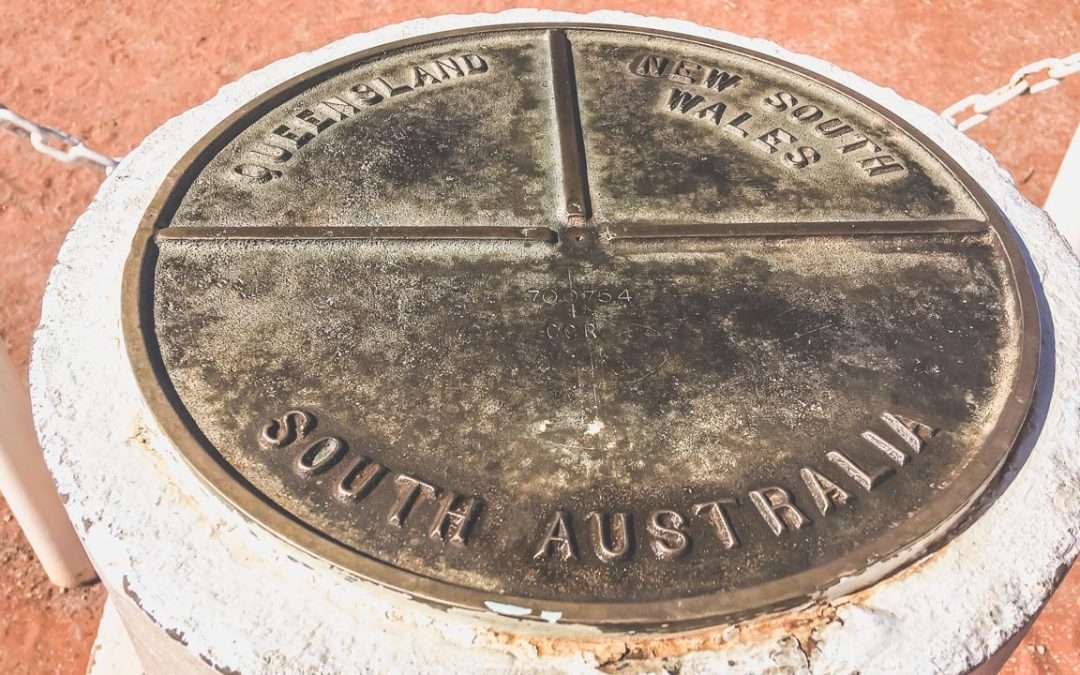
The iconic Cameron Corner marks the intersection of Queensland, New South Wales, and South Australia. Nearby, the Cameron Corner Store serves as a social hub, offering fuel, cold beers, and hearty burgers. Climb the store’s lookout tower to snap a photo of the tri-state survey marker.

  • Highlight: Chat with the store’s owner, a local legend who’s collected decades of outback tales.
  • Tip: Time your visit for the annual Cameron Corner Races (September), a quirky event blending horse races and bush humour.
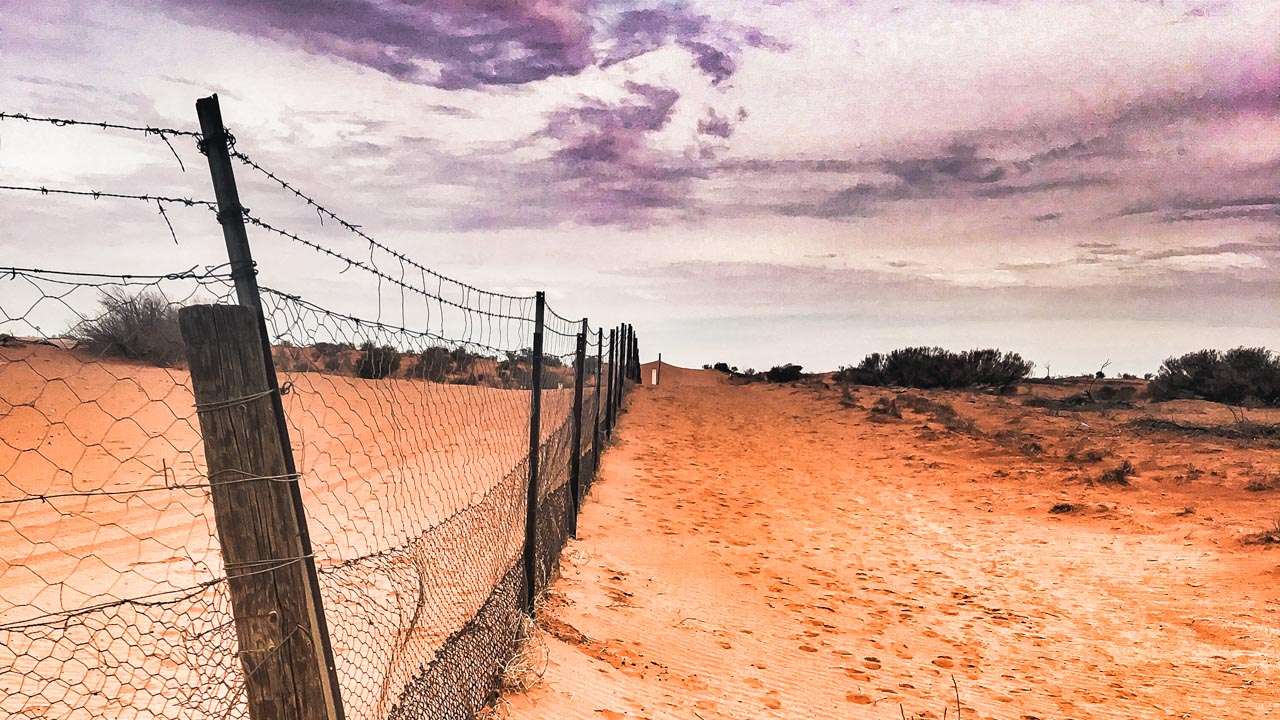
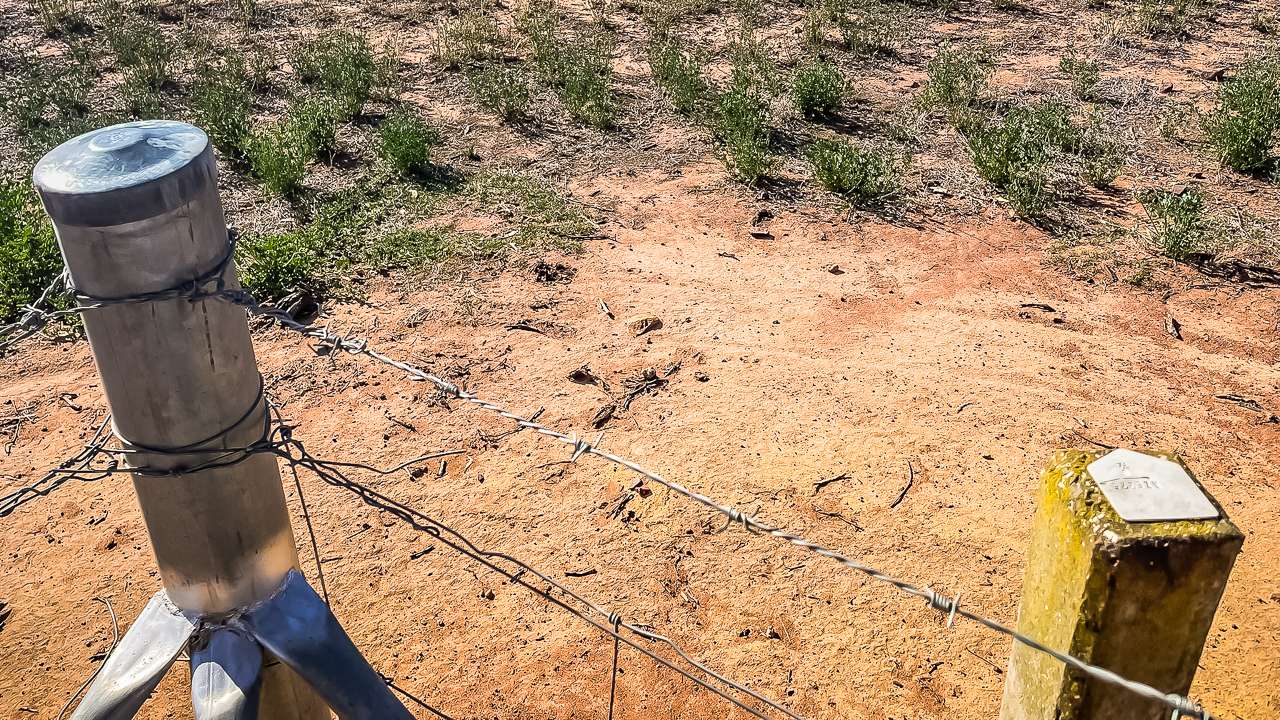
Dingo Fence At Cameron Corner

Dingo Fence At Cameron Corner

5. Dead Horse Gully

Named for the tragic fate of drought-stricken stock, this gorge near Milparinka features striking sandstone formations and fossilized marine remnants. A short walking trail winds through the gully, revealing plaques detailing its geological and pastoral history.

  • Highlight: The “Pudding Tank” rock formation, a natural sandstone dome resembling a colossal dessert.
  • Tip: Combine your visit with a stop at Sturts Depot Campground, a shaded rest spot with picnic tables.

6. Sturt National Park’s Dingo Fence

Stretching 5,600km across three states, the Dingo Fence is one of the world’s longest man-made structures. In Sturt National Park, you can drive alongside this engineering marvel, which was built in the 1880s to protect sheep from predators.

  • Highlight: The Packsaddle Roadhouse section offers interpretive signs explaining the fence’s controversial ecological impact.
  • Tip: Visit at sunset to photograph the fence’s stark lines against the outback’s fiery skies.

7. Milparinka Heritage Precinct

This open-air museum in Milparinka preserves the town’s 1880s gold-rush heyday. Explore the restored courthouse, Royal Hotel cellars, and Sturts Tree, a coolibah where the explorer allegedly carved his initials. The Heritage Walk links 20 sites via a self-guided trail.

  • Highlight: The Albert Hall displays a 19th-century wool wagon and original miner’s diaries.
  • Tip: Download the [Corner Country Stories Drive](https://www.outbackqueensland.com.au/drive/corner-country-stories-drive/) audio guide for immersive storytelling.
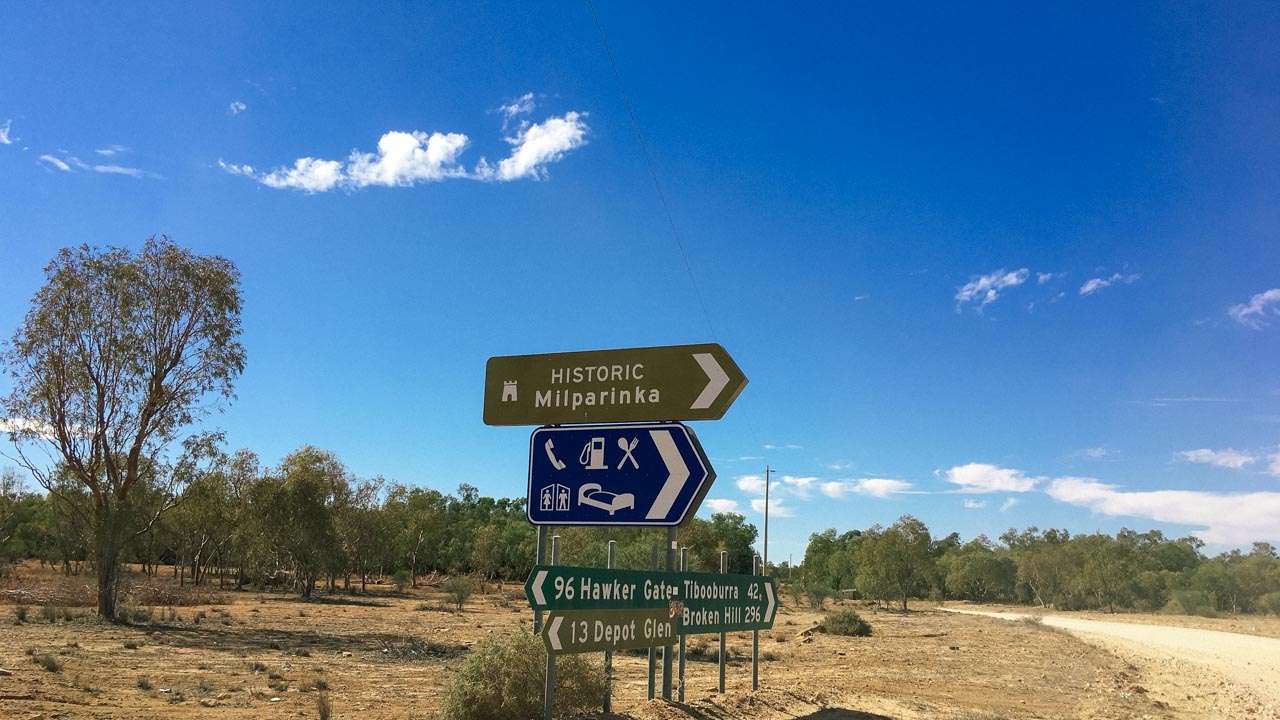
Milparinka Turnoff

Milparinka Turnoff

8. Betoota Ghost Town

Once a thriving pit stop for cattle drovers, Betoota is now a haunting collection of ruins 160km east of Birdsville. The skeletal remains of the Betoota Hotel (closed in 1997) and overgrown cemetery evoke the impermanence of outback settlements.

  • Highlight: The Betoota Racecourse, where dusty tracks and rusted signage hint at long-abandoned race days.
  • Tip: Visit in winter to avoid summer’s blistering heat and snake activity.

9. Fort Grey Campground and Historic Ruins

Nestled in Sturt National Park, Fort Grey combines camping with history. The site features the stone foundations of an 1860s stockade built to protect settlers from Indigenous resistance. Today, it offers toilets, barbecues, and shaded sites.

  • Highlight: The Fort Grey Bird Hide, a quiet spot to observe waterbirds like black swans and cormorants.
  • Tip: Use this campground as a base to explore the park’s western trails, including the Jump Up Loop.

10. Sunset Hill and Golden Gully

In Tibooburra, Sunset Hill and Golden Gully are twin attractions showcasing the region’s ochre-hued geology. Sunset Hill offers panoramic views of the town and surrounding plains, while Golden Gully is a short walk through eroded cliffs that glow amber in the late afternoon.

  • Highlight: The gully’s “Hoodoos”—tall, thin rock spires shaped by centuries of wind and rain.
  • Tip: For photographers, the best light occurs 30 minutes before sunset.

Key Attractions And Activities In Corner Country Comparison Table

Attraction Location Key Features Insider Tip
Tibooburra Aboriginal Keeping Place & Pioneer Park Tibooburra Indigenous artifacts, 19th-century pioneer displays, “Tibooburra Madonna” painting Book guided tours via Visit Corner Country
Pooles Grave & Sturts Cairn Near Milparinka Explorer history, panoramic desert views Best visited at golden hour for photography
Mount Wood & Olive Downs Loop Sturt National Park 72km 4WD track, wildlife spotting, “Sea Lake” mirage effect Bring binoculars for birdwatching
Cameron Corner & Store Tri-state border Survey marker, fuel stop, bush hospitality Time visit for September races
Dead Horse Gully Near Milparinka Sandstone formations, “Pudding Tank” dome Combine with Sturts Depot picnic
Dingo Fence Sturt National Park 5,600km predator fence, interpretive signs Sunset photography opportunity
Milparinka Heritage Precinct Milparinka Gold-rush relics, self-guided heritage trail Download audio guide
Betoota Ghost Town 160km east of Birdsville Abandoned hotel, cemetery, racecourse Winter visits recommended
Fort Grey Campground Sturt National Park Historic stockade, birdwatching hide Base for Jump Up Loop exploration
Sunset Hill & Golden Gully Tibooburra Ochre cliffs, hoodoo formations Arrive 30 mins before sunset

An 8 Day Corner Country Itinerary

This itinerary balances driving challenges, cultural immersion and opportunities to soak in the region’s stark beauty.

Days 1–2: Birdsville to Poeppel Corner

Begin in Birdsville, a quintessential outback town famed for its annual races. Tackle Big Red, the towering sand dune on the edge of the Simpson Desert, testing your 4WD skills. Camp nearby, then drive 150km west to Poeppel Corner, where three states meet. This isolated marker offers a surreal photo opportunity and a tangible connection to Australia’s surveying history.

Days 3–4: Haddon Corner to Cameron Corner

Head to Haddon Corner, another state border junction and explore the ghostly remnants of the Betoota Hotel. Continue to Cameron Corner, marked by the iconic Corner Store, where you can enjoy a cold beer and chat with locals. Camp under the stars at the nearby basic campground.

Days 5–6: Sturt National Park

Enter New South Wales and traverse Sturt National Park via the Mount Wood and Olive Downs Loop Roads. These tracks reveal dramatic mesas, wildlife and the Fort Grey Campground, a historic site with basic facilities.

Days 7–8: Milparinka to Broken Hill

Visit Milparinka, a heritage rich town showcasing 19th century outback life. Explore Sturts Depot Glenn, a vital water source for early explorers, then conclude your journey in Broken Hill, a cultural hub with art galleries and modern comforts.

Remote Area Camping In Corner Country

Camping here requires self sufficiency, but rewards with solitude and star filled skies. Below is a comparison of some of the better known camping sites in corner country.

Campground Facilities Accessibility Highlights
Fort Grey Toilets, barbecues 4WD only Historic ruins, Sturt National Park
Milparinka Caravan Park Powered sites, showers 2WD accessible Heritage precinct, pet-friendly
Cameron Corner None (bush camping) 4WD recommended Proximity to state junction marker
Big Red Campground Bush toilets, fire pits 4WD essential Sunset views over Simpson Desert
Tibooburra Caravan Park Powered sites, showers 2WD accessible Close proximity to central Tibooburra
Tibooburra Aboriginal Campground Toilets, showers, fire pits 2WD accessible Close proximity to central Tibooburra

Pubs and Hotels In Corner Country

These watering holes are lifelines for travellers, offering camaraderie and cold drinks:

  • Cameron Corner Store: Sip a beer at the “corner” of three states. The store sells basic supplies and fuel.
  • Tibooburra Family Hotel: Adorned with vibrant murals, this pub offers hearty meals and air conditioned rooms.
  • Milparinka Hotel: A restored 1880s inn with rustic charm and tales of the region’s pastoral history.
  • Tibooburra Hotel: Recently rebuilt after a fire it is a favourite of the locals.
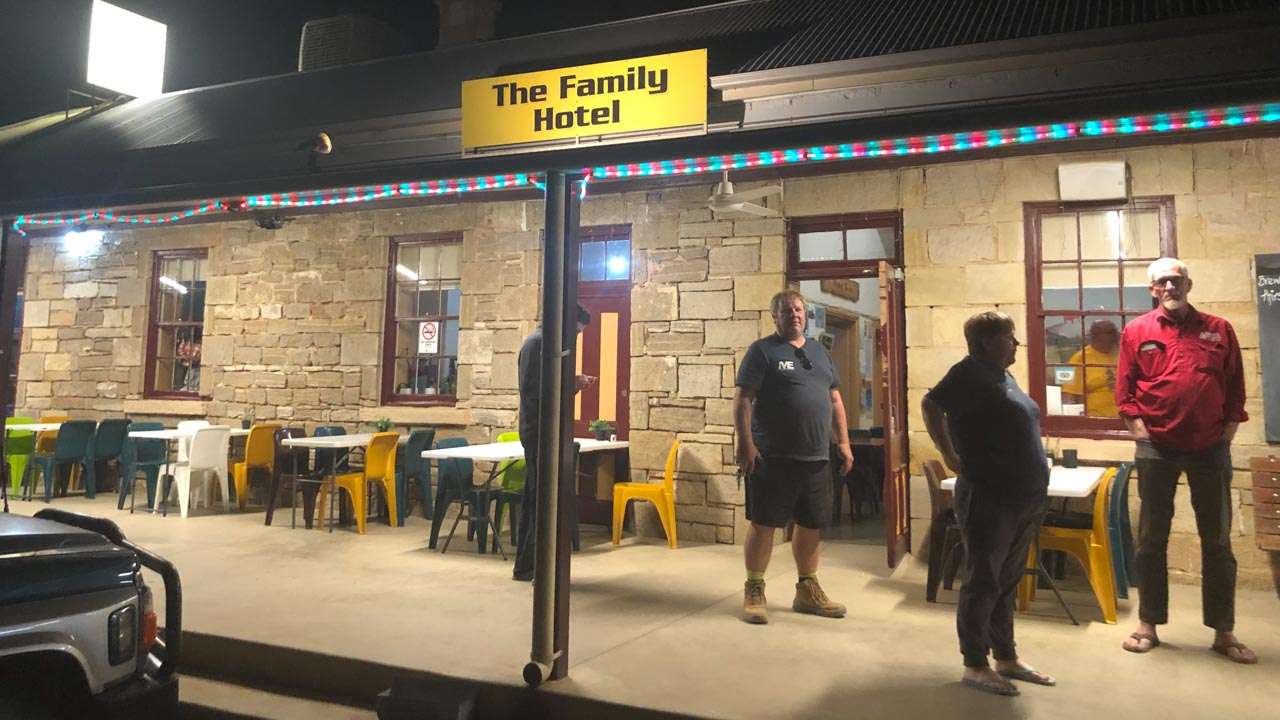
Family Hotel Tibooburra

Family Hotel Tibooburra

History Of Corner Country

Aboriginal Heritage

For millennia, the Maliangaapa, Wadigali and Wangkumara peoples thrived here, using intricate knowledge of soaks and claypans to survive. They traded tools and ochre across vast distances, leaving behind artifacts now preserved in Tibooburra’s Aboriginal Keeping Place. Learn more about their legacy via the [First Nations Cultural Guide](https://visitcornercountry.com.au/first-nations/).

European Exploration

Charles Sturt’s 1844 expedition, aiming to find an inland sea, relied on Aboriginal guides to locate water. By the 1860s, pastoralists displaced Indigenous communities, establishing sheep stations and altering the landscape. Ruins like Pooles Grave and Sturts Cairn commemorate this turbulent era.

Tips For Remote Camping:

  • Carry 40L+ of water per person and a satellite phone for emergencies.
  • Use a portable solar setup to power devices, as most sites lack electricity.
  • Respect fire bans and always leave no trace.

Vehicle And Caravan Preparation

Corner Country’s unsealed roads and extreme temperatures demand meticulous preparation:

1. Vehicle Essentials:

  • Fit all-terrain tyres (e.g., BFGoodrich KO2) and a snorkel for dusty conditions.
  • Equip a dual battery system and carry extra diesel (distances between fuel stops exceed 600km).
  • Pack recovery gear: snatch straps, Maxtrax and consider a high-lift jack.

2. Caravan Readiness:

  • Opt for offroad rated caravans with independent suspension.
  • Secure loose items with heavy-duty straps to withstand corrugations.
  • Check wheel bearings and brakes before departure.

For detailed checklists, consult the [Outback Road Trip Preparation Guide](https://theoutbackloop.com.au/travel-tips/vehicle-preparation-outback-road-trip/).

Final Tips For Travellers To Corner Country

  • Check road conditions via the [NSW National Parks Alerts](https://www.nationalparks.nsw.gov.au) page.
  • Visit in autumn or spring to avoid 45°C summer heat.
  • Support remote communities by purchasing supplies locally.

Corner Country isn’t just a destination – it’s a journey into Australia’s heart, blending challenge, history and raw beauty. With careful planning, your adventure here will be unforgettable.

6 Frequently Asked Question FAQs About Corner Country

What is the best time of year to visit Corner Country?

Aim for autumn (March - May) or spring (September - November) to avoid extreme summer heat (up to 45°C) and freezing winter nights.

Do I need a 4WD to explore Corner Country?

Yes. Unsealed roads, sand dunes like Big Red, and remote tracks require a high-clearance 4WD with all-terrain tyres and recovery gear.

Are there fuel stops in Corner Country?

Fuel is limited. Carry enough for 600-700km between stops. Key stations include Birdsville, Tibooburra, and Cameron Corner Store.

Can I camp freely in Corner Country?

Bush camping is allowed in many areas, but use designated sites (e.g., Fort Grey, Cameron Corner) for safety and minimal environmental impact.

What historical sites should I prioritise?

Don’t miss Sturts Depot Glenn, Pooles Grave, and Tibooburra’s Aboriginal Keeping Place for insights into Indigenous and European history.

How reliable is mobile phone coverage in Corner Country?
Mobile reception is extremely limited. Carry a satellite phone or emergency beacon (e.g., Garmin inReach) for critical communication. Always inform someone of your travel plans before departure.

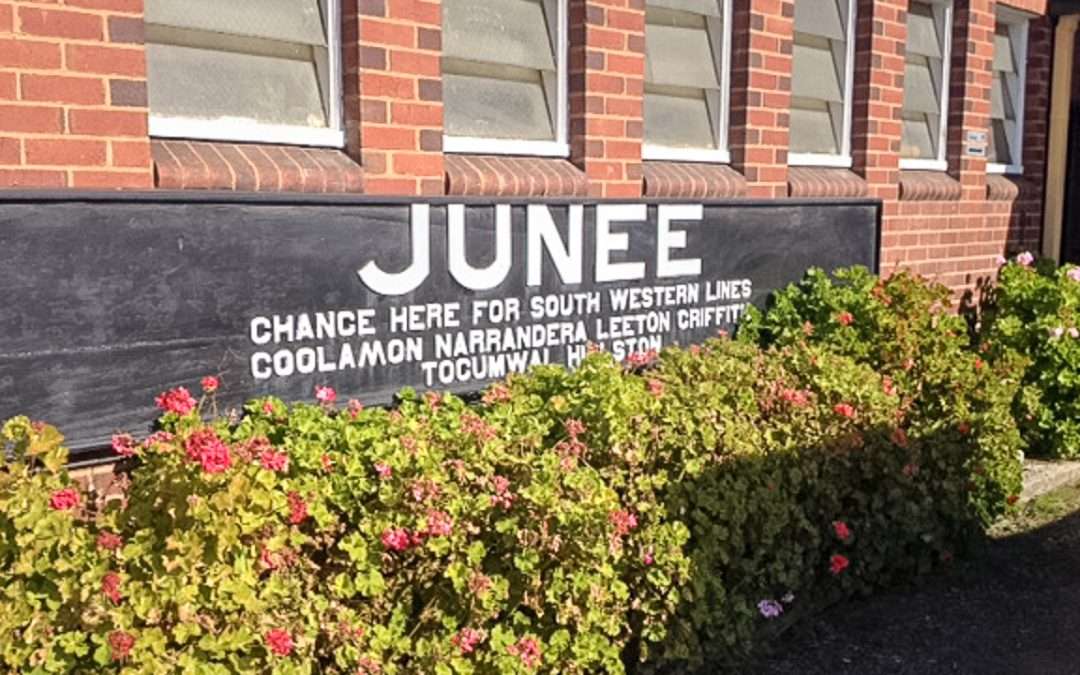
TOP 10 Things To Do In Junee: An (Almost) Locals Guide

TOP 10 Things To Do In Junee: An (Almost) Locals Guide

TOP 10 Things To Do In Junee: An (Almost) Locals Guide

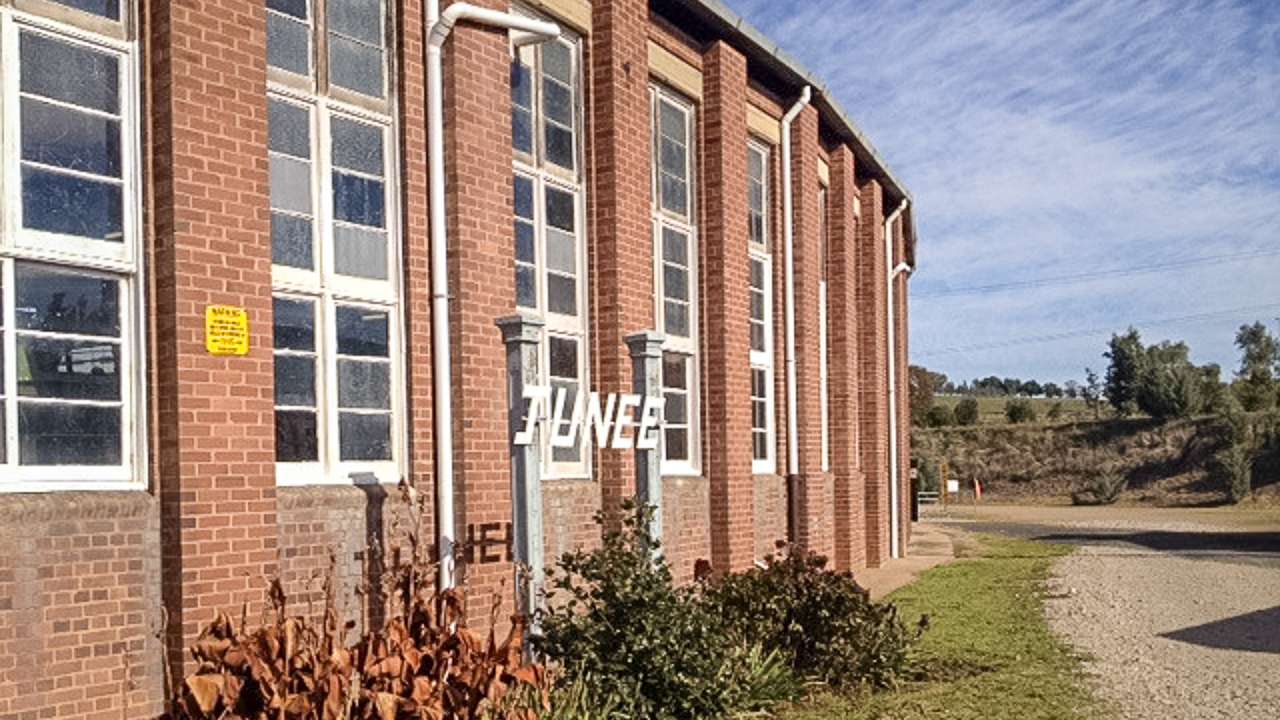
Discover Junee’s top experiences! Haunted houses, chocolate factories & secret geocaches. Explore the top 10 things to do in this historic NSW town. Your ultimate guide inside! located in the Riverina region of New South Wales, Junee is a town where history, adventure and charm collide.

As residents of nearby Cootamundra my wife Amanda and I have spent countless weekends in and around Junee. Whether you’re a history buff, a thrill seeker or a family looking for affordable fun. This guide curated through firsthand exploration will help you make the most of your visit.

Best Things To Do In Junee: Our Top 10 Picks

1. Step Back in Time at the Junee Roundhouse Museum

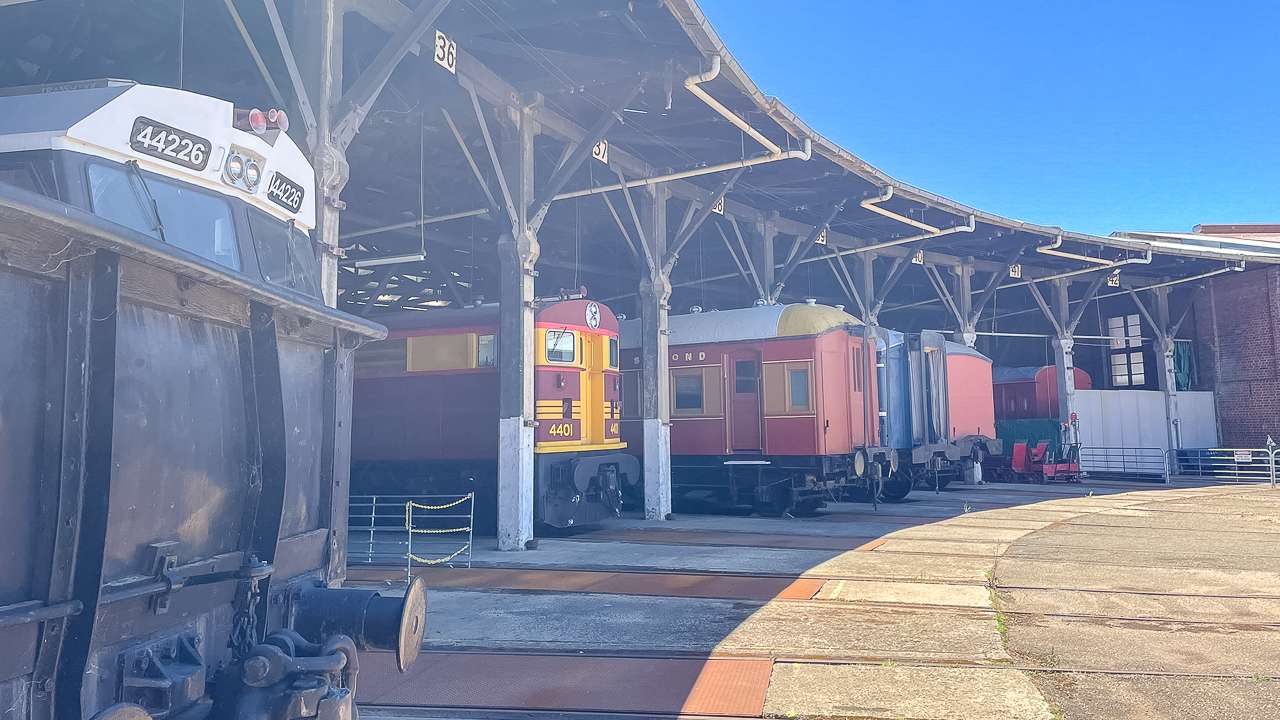
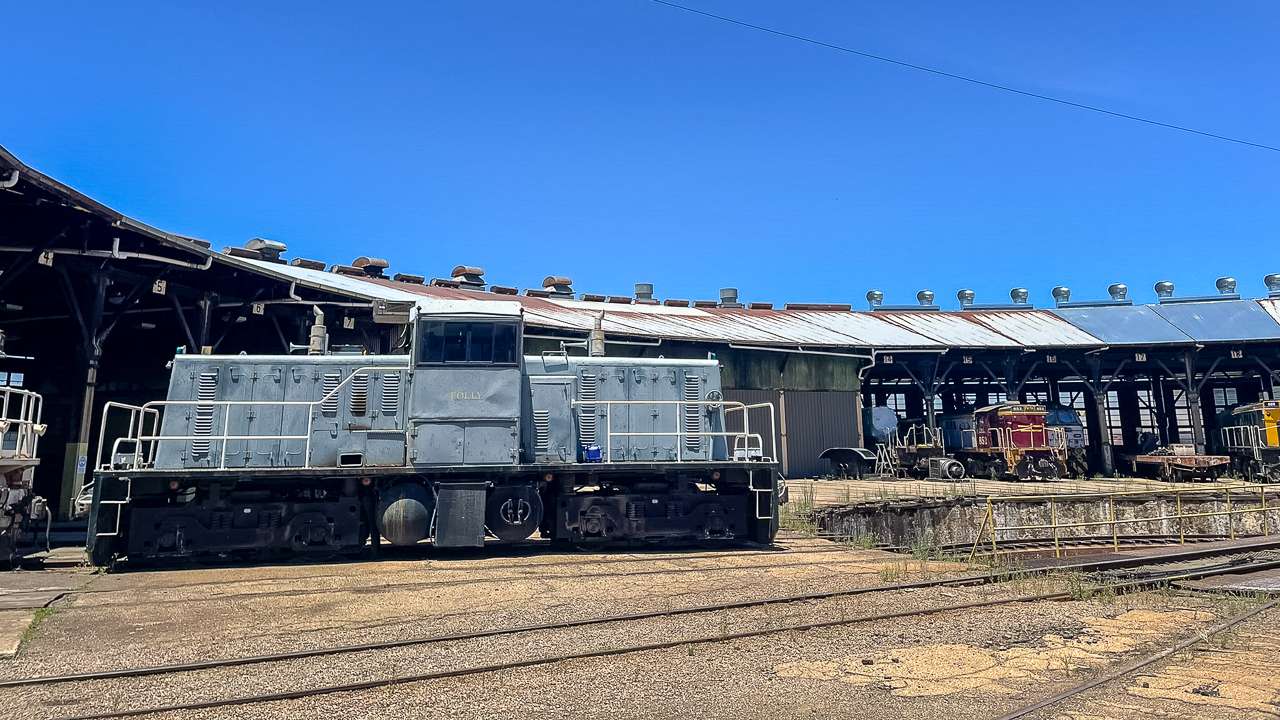
Dominating Junee’s railway heritage the Junee Roundhouse Museum is a must visit. Built in 1942, this engineering marvel features a 100 foot turntable and houses restored locomotives that once powered Australia’s rail network. Volunteers, many of whom are retired railway workers, offer insights into the site’s wartime significance and daily operations. Don’t miss the chance to watch the turntable in action – it’s one of the few still operational in the Southern Hemisphere.

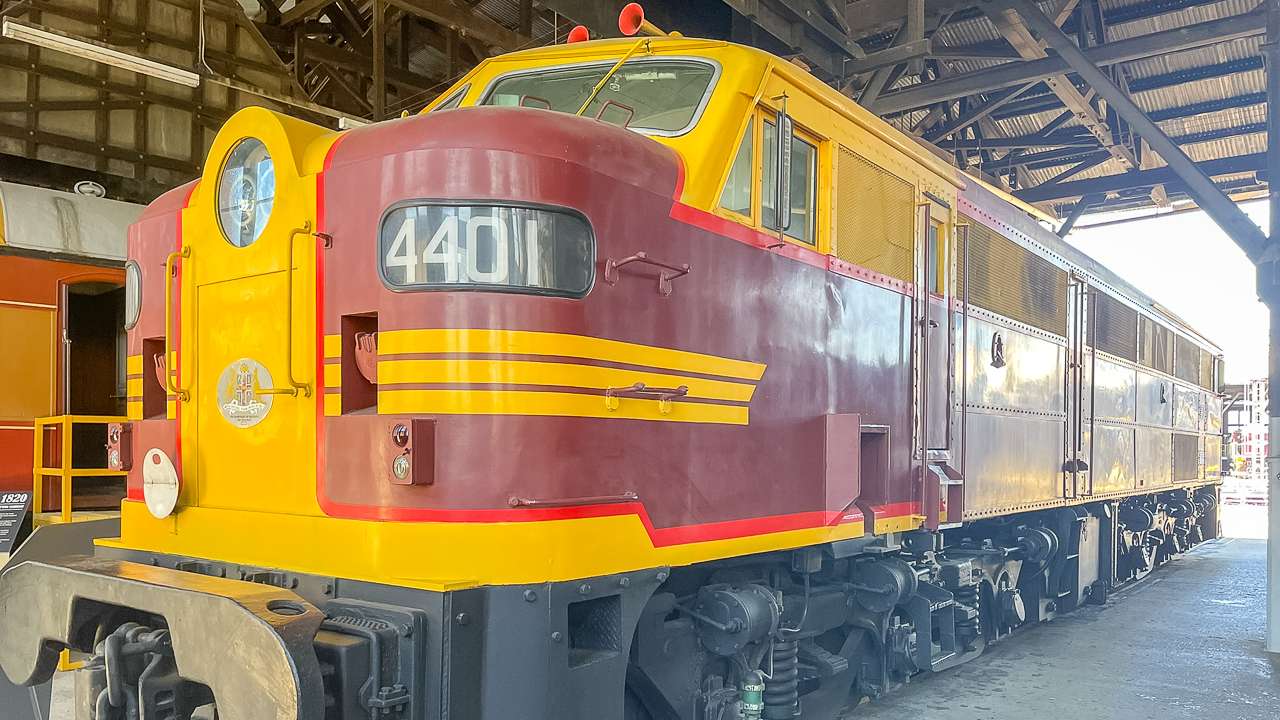
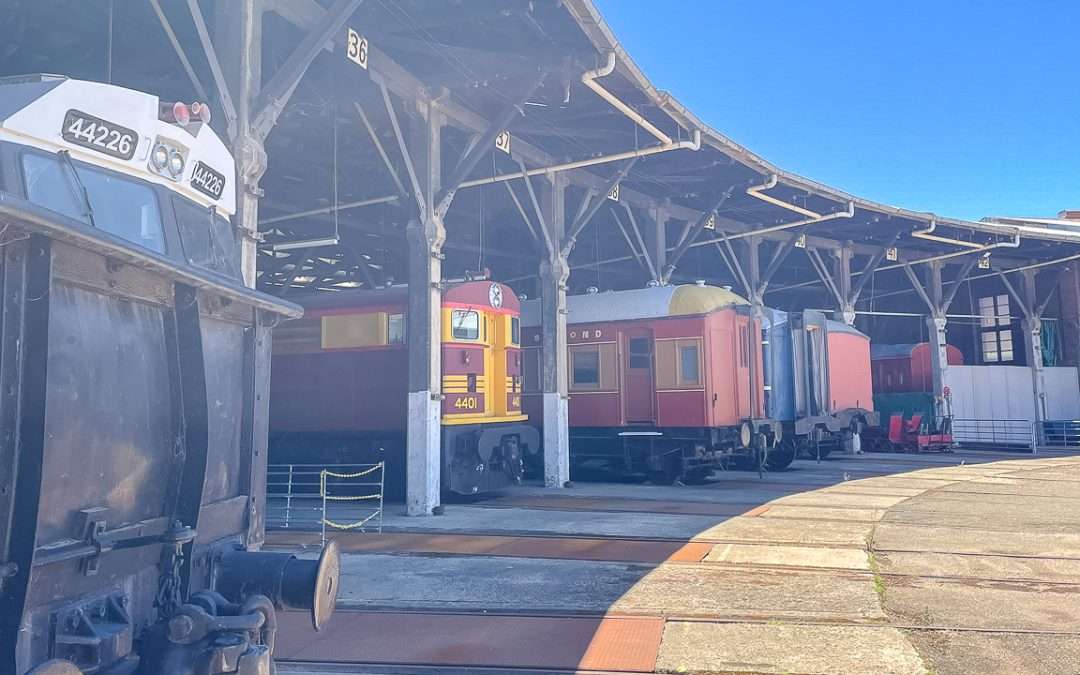
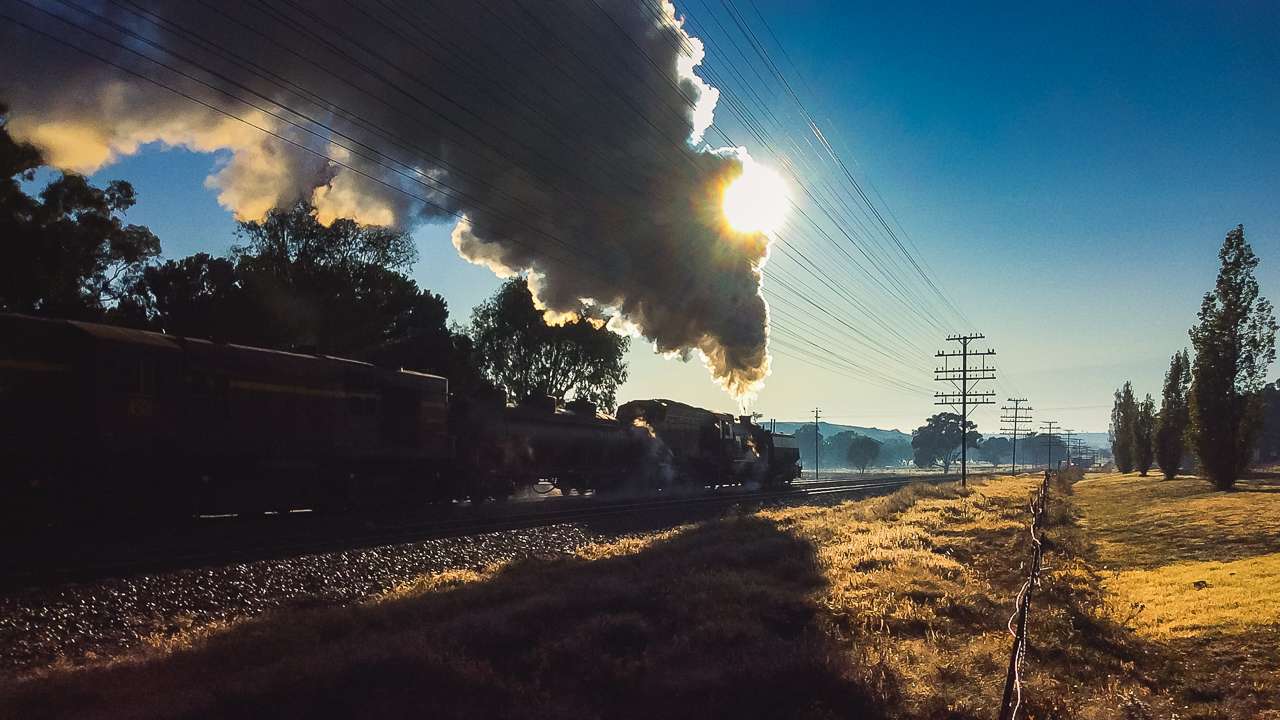
NSWGR 4401 At Junee

NSWGR 4401 At Junee

2. Brave the Haunts of Monte Cristo Homestead

Dubbed “Australia’s most haunted house,” Monte Cristo Homestead delivers spine tingling ghost tours every Saturday evening. Built in 1885, the property’s tragic history includes tales of accidental deaths and spectral sightings. Even sceptics will find the candlelit tours atmospheric, with original furnishings and a creeping sense of unease.
Note: Monte Cristo Homestead is currently closed.

3. Indulge at the Junee Licorice and Chocolate Factory

A hit with families the Junee Licorice and Chocolate Factory offers free tastings and guided tours. Watch artisans craft organic licorice and rich chocolates using traditional methods. The on-site café, The Mill Room, serves decadent desserts and coffee – perfect for refuelling after a morning of exploration.

Junee Chocolate & Licorice Factory

Junee Chocolate & Licorice Factory

4. Snap a Photo with the Ray Warren Statue

Sports fans will appreciate this bronze tribute to Ray “Rabbits” Warren, Junee’s legendary rugby league commentator. Located near the town’s main roundabout, the statue is a quirky nod to local pride and a quick stop for selfies.

5. Uncover Local History at Broadway Museum

Housed in a former department store, the Broadway Museum showcases Junee’s evolution through photographs, artefacts and wartime memorabilia. Highlights include vintage fashion displays and a recreated 19th century kitchen. Entry is free, making it ideal for budget conscious travellers.

6. Hunt for Hidden Treasures with Geocaching

For outdoor enthusiasts geocaching in Junee adds an adventurous twist to sightseeing. Using GPS coordinates, hunt for hidden caches around landmarks like the Roundhouse and Memorial Garden. Local favourites include the “Old Junee Kapooka” series, which combines history with scenic bushwalking.

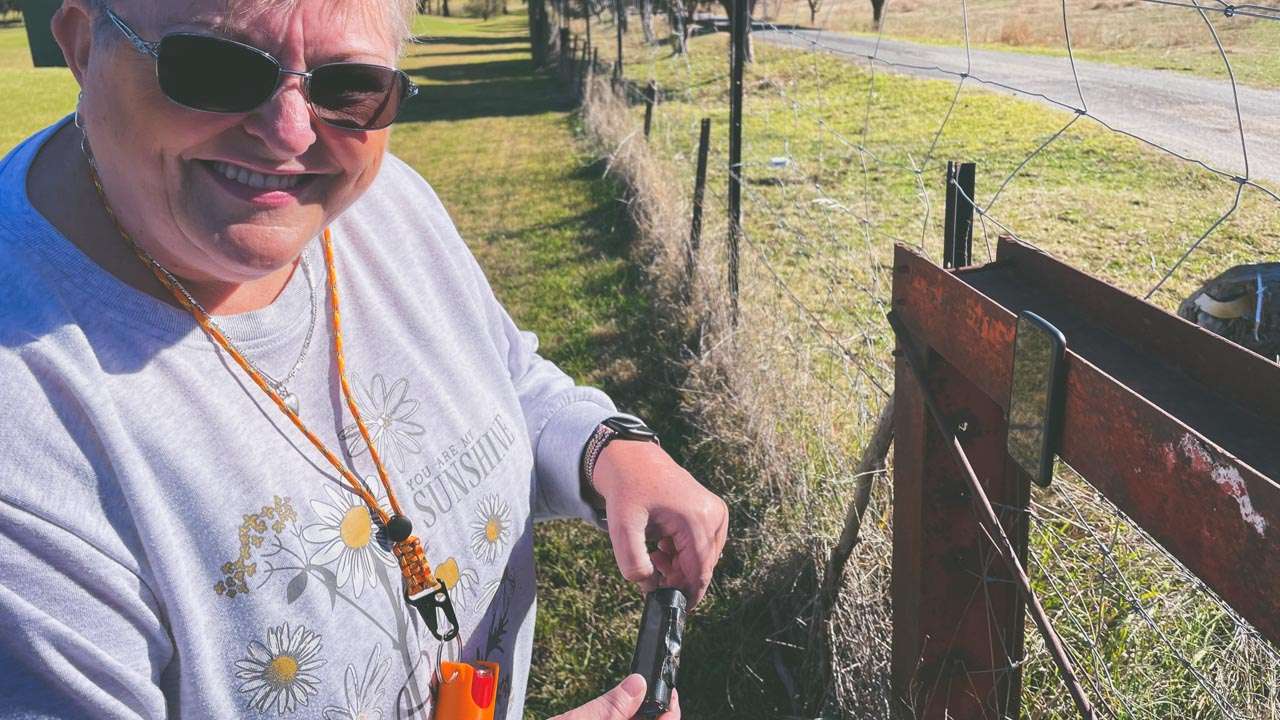
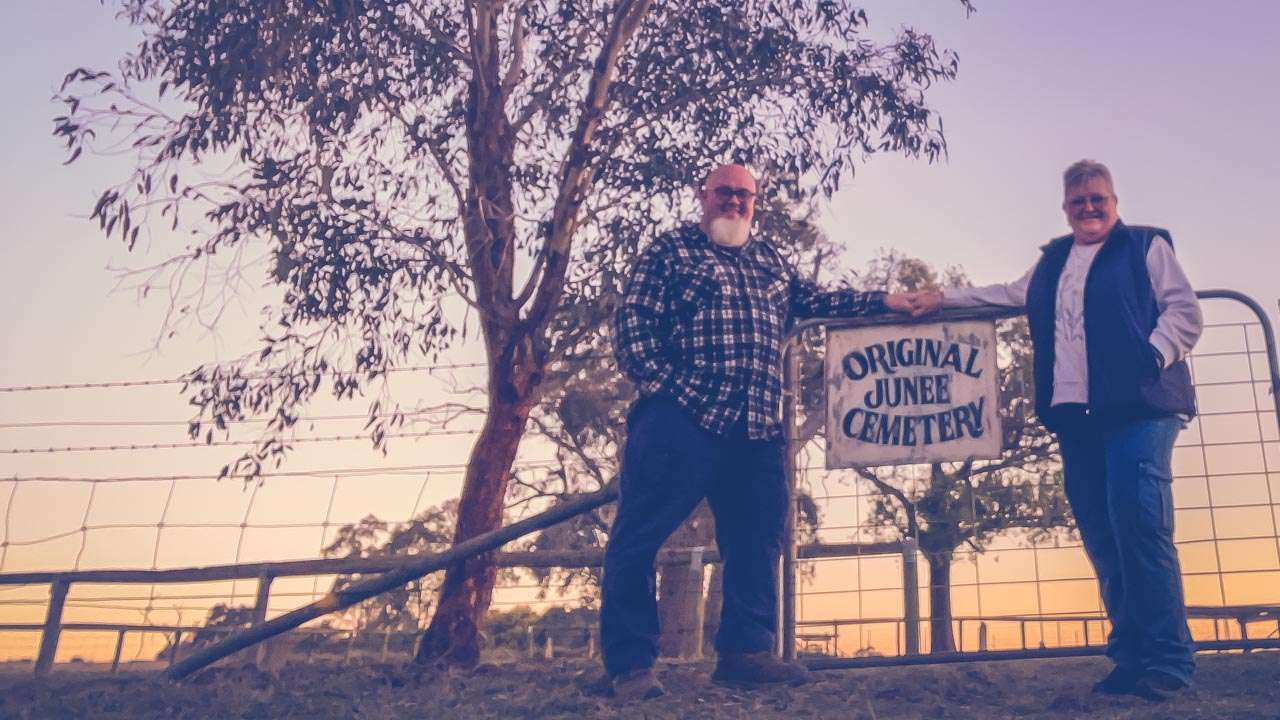
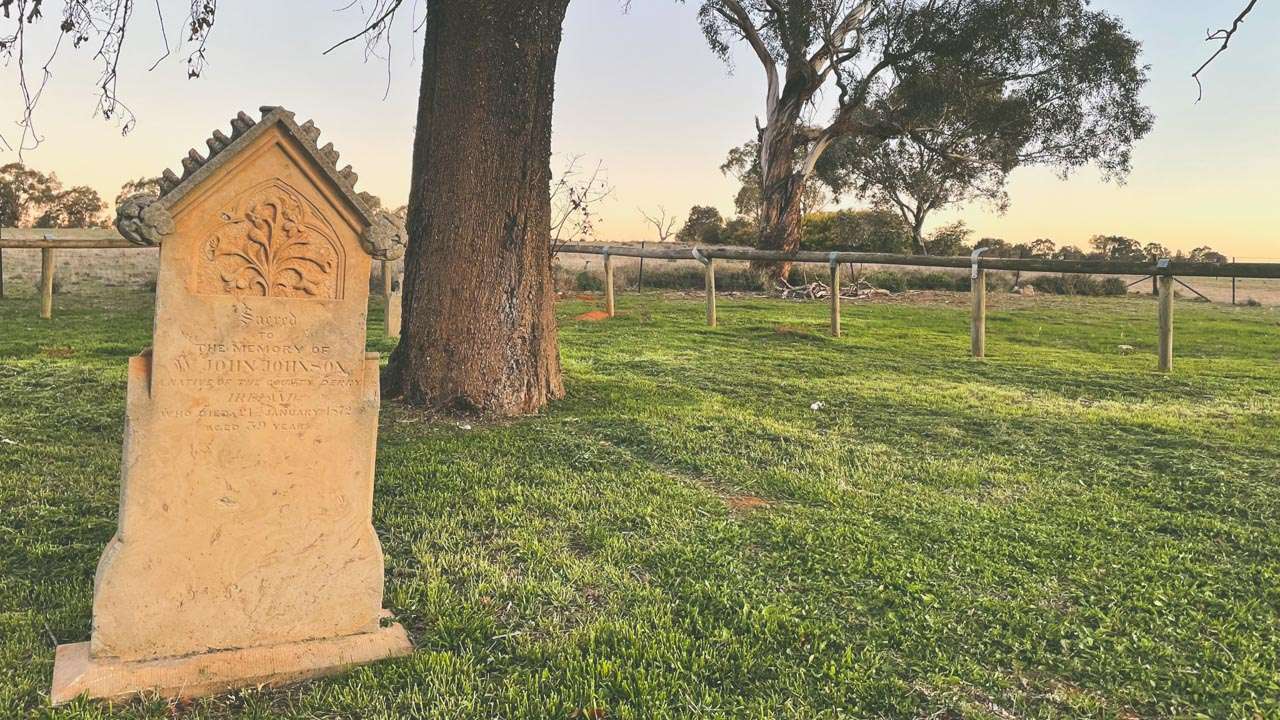
Geocache Found Near Old Junee Cemetery

Geocache Found Near Old Junee Cemetery

7. Wander Through Belmore Manor’s Gardens

This 1896 manor blends grandeur with tranquility. While the interior is privately owned, the public can stroll its manicured gardens and admire the Victorian architecture. Keep an eye out for seasonal blooms and resident peacocks.

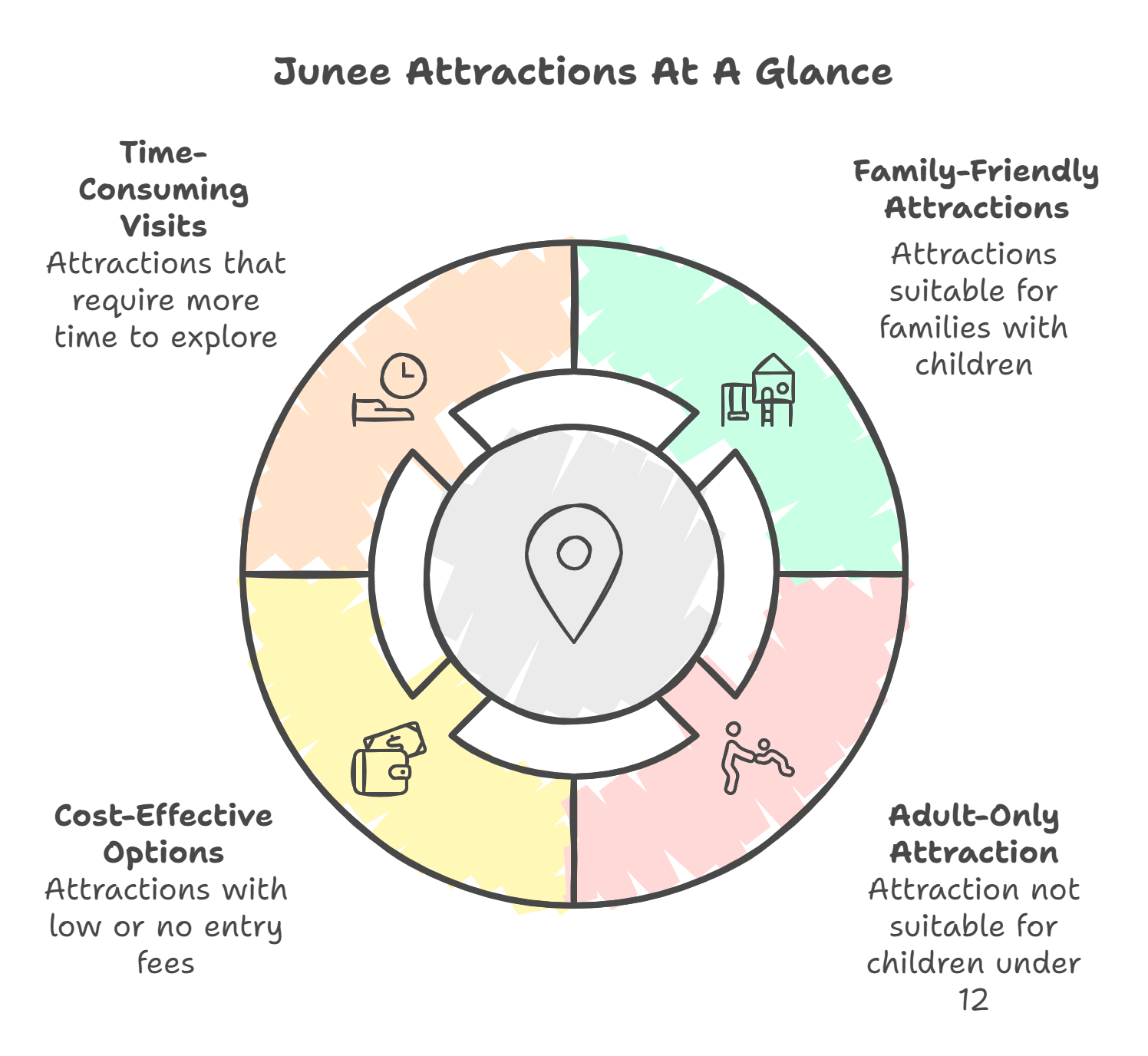
Junee Attractions At A Glance Infographic

Junee Attractions At A Glance Infographic

8. Splash Around at Junee Junction Aquatic Centre

Families love this recreational hub, which boasts a 50 metre pool, waterslides and a toddler splash zone. Pack a picnic – the adjacent park has shaded tables and barbecue facilities.

9. Reflect at Junee’s Memorial Garden

This serene space honours locals who served in World War II. The rose lined pathways and ANZAC memorial plaques offer a quiet retreat for reflection.

10. Have A Beer And A Meal At The Historic Commercial Hotel

End your day at Commercial Hotel, a pub serving hearty counter meals since 1891. Try the schnitzel or parmigiana, paired with a local ale. The rustic atmosphere and friendly staff embody Junee’s community spirit.

Junee Attractions At A Glance: A Comparison

To help prioritise your itinerary, here’s how key activities stack up:

Attraction Family Friendly? Cost (AUD) Time Needed
Junee Roundhouse Museum Yes $10 – $15 1.5 – 2 hours
Monte Cristo Homestead No (ages 12+) $25 – $35 1 hour
Licorice & Chocolate Factory Yes Free (tours $5) 1 – 2 hours
Geocaching Yes Free Flexible
Junee Junction Aquatic Centre Yes $6 – $10 2 – 3 hours

Where To Stay In Junee

Accommodation options cater to caravanners, campers and hotel seekers:

  • Commercial Hotel: (02) 6924 4224 Book here
  • Belmore Manor: (02) 6924 2222 Visit NSW
  • Junee Motor Inn: (02) 6924 1744 Website
  • The Crossing Motel: (02) 6924 3000 Website
  • Junee Caravan Park: (02) 6924 1316 Website

Where To Eat In Junee

From casual bites to hearty pub meals:

  • Junee Licorice Factory Café: (02) 6924 2933 Menu
  • Commercial Hotel Bistro: (02) 6924 4224 Commercial Hotel
  • Roundhouse Restaurant: (02) 6924 1403
  • Junee Bakery: (02) 6924 1447 Instagram

Why Junee Appeals To Caravanners And Campers

Junee’s compact size and mix of free/paid attractions make it ideal for short stays or weekend trips. The town’s railway heritage provides a unique backdrop, while geocaching and aquatic facilities cater to active travellers. Notably, its proximity to Wagga Wagga (30 minutes) and Cootamundra (40 minutes) allows easy integration into broader Riverina itineraries.

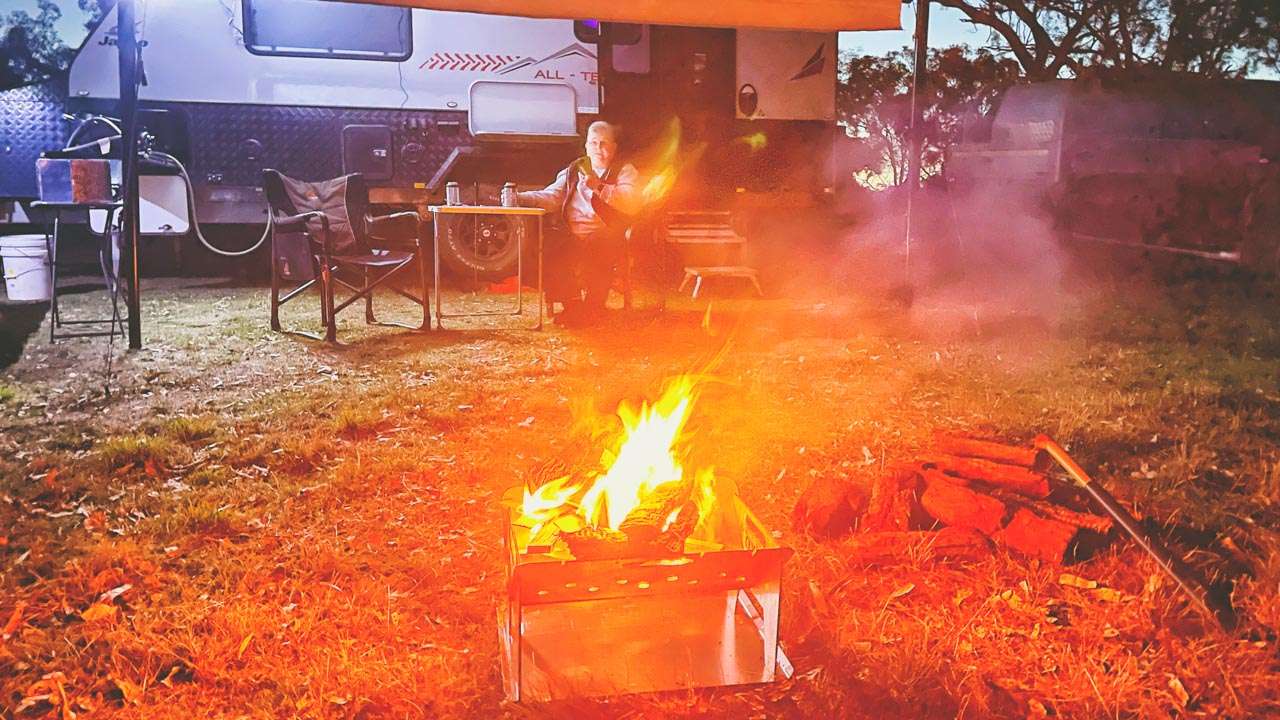
A Nice Fire While Camping At Junee Old Recreation Grounds

A Nice Fire While Camping At Junee Old Recreation Grounds

Final Thoughts On The Top 10 things To Do In Junee

Junee surprises visitors with its blend of history, quirkiness and natural beauty. Whether you’re marvelling at steam engines, hunting ghosts, or hunting geocaches, this town offers something memorable. As Amanda always says, “Junee proves you don’t need big cities for big adventures.”

Things To Do In Junee Photo Gallery

Junee Roundhouse Museum Review: A Rail Enthusiasts Heaven

Junee Roundhouse Museum Review: A Rail Enthusiasts Heaven

Junee Roundhouse Museum Review: A Rail Enthusiasts Heaven

Our review of the Junee Roundhouse Museum: Step into NSW’s railway history with steam giants, diesel engines & a working turntable. Family friendly, budget friendly, packed with stories! As residents of Cootamundra just a 40-minute drive from Junee my wife Amanda and I have made the Junee Roundhouse Museum a staple destination for out of town guests over the past five years.

Located in the heart of the Riverina region, this museum isn’t just a relic of Australia’s railway history – it’s a living tribute to the ingenuity of steam and diesel eras. Here’s our candid review of its highs, lows and why it remains a must visit for caravanners, campers and history buffs alike.

A Glimpse Into The Junee Roundhouse’s Storied Past

The Junee Roundhouse isn’t merely a museum – it’s a monument to Australia’s railway golden age. Constructed during World War II and completed in September 1947, this engineering marvel was once the largest roundhouse in the Southern Hemisphere. Designed to replace an outdated depot, its 100 foot turntable and 42 repair bays serviced steam locomotives critical to NSW’s post war infrastructure.

By the 1990s, diesel locomotives dominated the rails, rendering the roundhouse obsolete. It closed in 1993, but thanks to grassroots efforts by volunteers and rail enthusiasts, the site reopened in 1994 as a museum. Today, it balances preservation with functionality: part of the facility still maintains active diesel engines, offering visitors a rare blend of past and present.

Inside The Junee Roundhouse Museum

Inside The Junee Roundhouse Museum

What You Can Do At The Junee Roundhouse Museum

  1. Explore Historical Locomotives and Rolling Stock
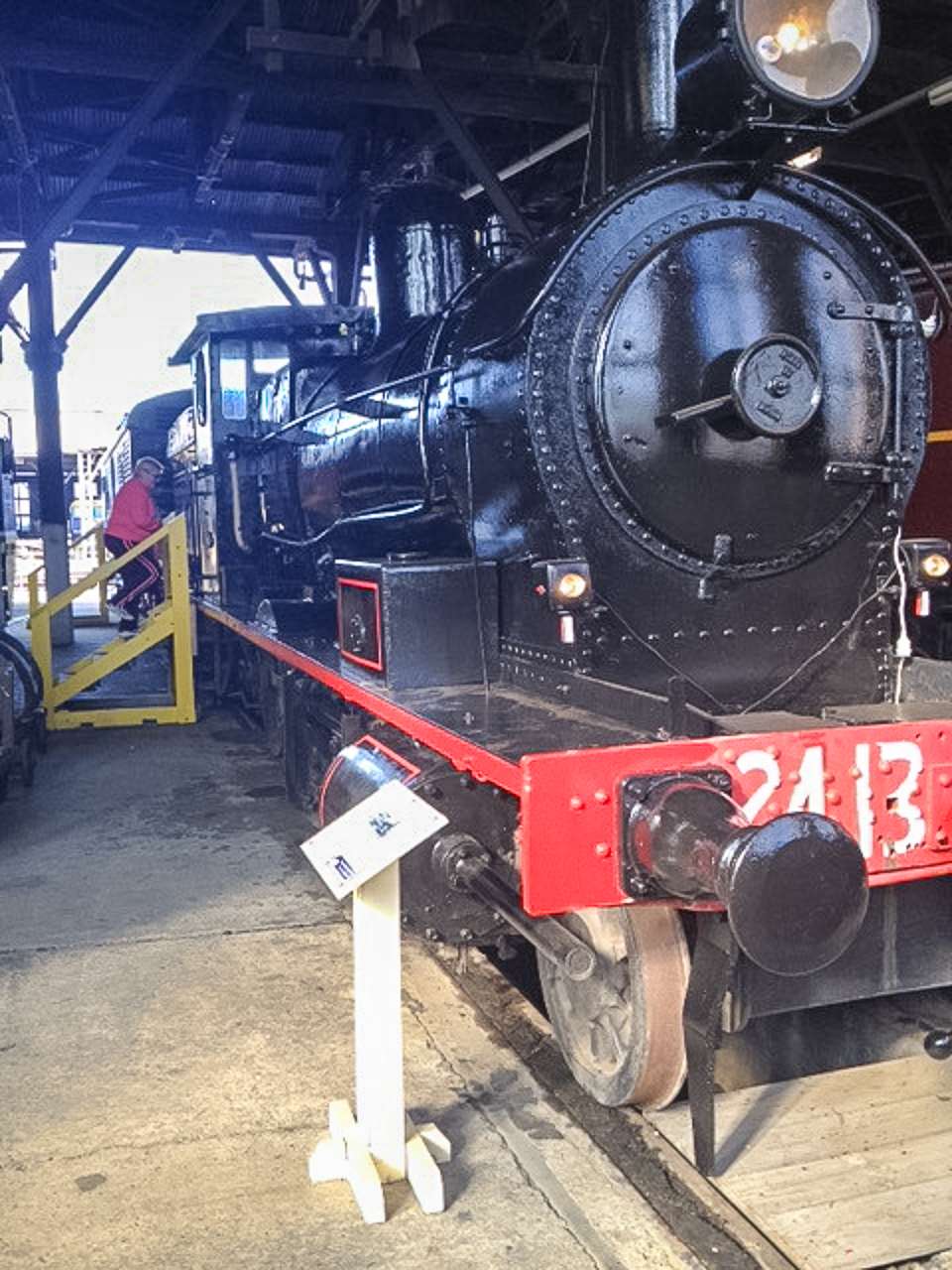
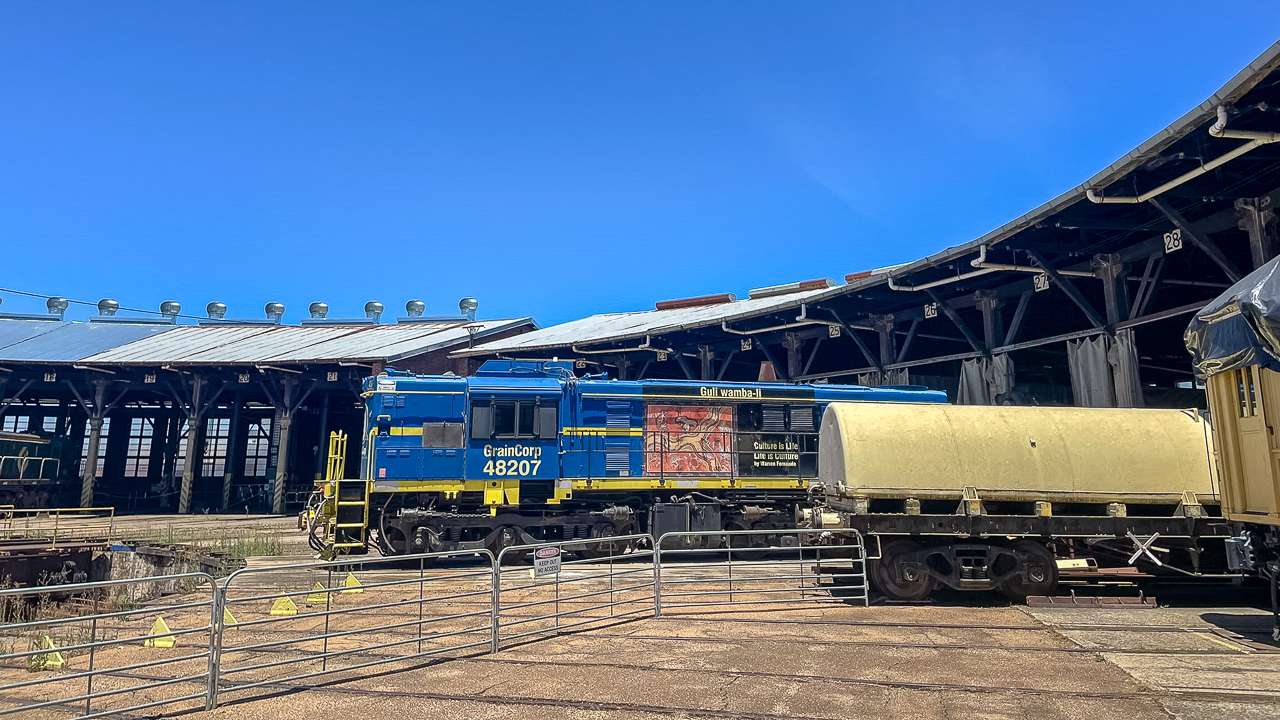
    The museum’s crown jewels are its meticulously preserved engines. Steam locomotives 2413 and 3609 stand as titans of the steam era, while diesel locomotive 4872 and U-set power cars showcase the transition to modern rail. Amanda’s personal favourite, the mail car, offers a tactile journey into 20th century communication, complete with original sorting equipment.
  2. Witness the Turntable in Action
    Few experiences match the thrill of seeing the 100 foot turntable rotate a 120 tonne locomotive. During a few of our visits, we’ve timed our trips to coincide with maintenance sessions – still conducted here for operational diesel engines. Check the museum’s web site for updates.
  3. Dive Into the Model Railway Display
    A highlight for families, the intricate model railway replicates Junee’s rail network in miniature. Kids (and adults) can operate trains via push button controls, making it a hands on crowd pleaser.
  4. Join a Guided Tour
    While self guided exploration is rewarding, the volunteer led tours unlock hidden stories. On our last visit, a guide recounted how locomotive 3609 hauled wartime supplies through the Snowy Mountains – a narrative absent from placards.

The Good Points: Why The Museum Shines

  1. Historical Authenticity
    From grease stained workshop tools to original blueprints, the museum avoids sterile displays. Climbing into the driver’s cab of locomotive 2413, you’re met with rusted levers and vintage gauges – a visceral nod to the past.
  2. Passionate Volunteers
    The volunteers, many retired railway workers, infuse tours with firsthand anecdotes. One TripAdvisor reviewer noted, “Their enthusiasm is contagious – you leave feeling like part of the rail family.”_
  3. Affordable Family Fun
    At $10 for adults and $25 for a family pass, it’s a budget friendly stop. Compare this to Sydney’s Powerhouse Museum ($15 adult entry) or the Australian Railway Historical Society ($12) and the value is clear.
  4. Active Maintenance Hub
    Unlike static museums the Junee roundhouse’s ongoing use for diesel repairs adds dynamism. We’ve watched engineers weld and test engines – an unexpected bonus for engineering buffs.

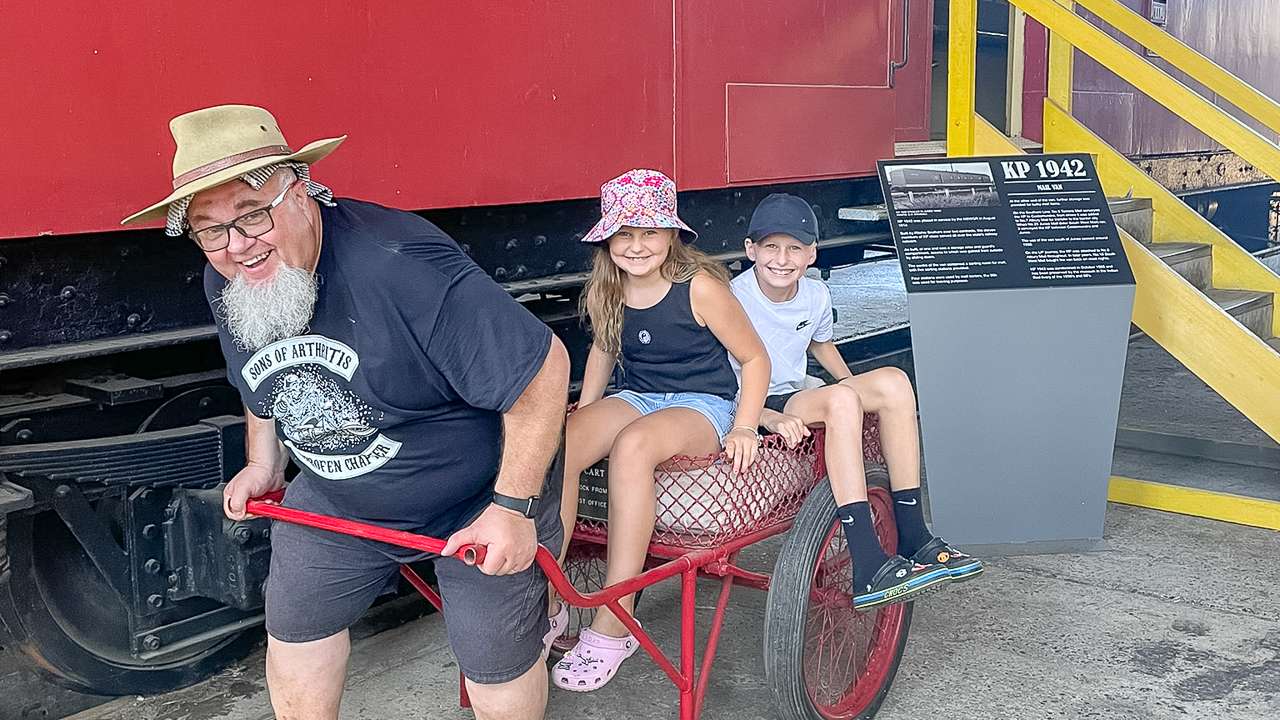
Dave Taking The Kids For A Ride At The Junee Roundhouse

Dave Taking The Kids For A Ride At The Junee Roundhouse

The Bad Points: Room For Improvement

  1. Limited Opening Hours
    Open Wednesday to Sunday (10 AM – 3 PM) so the schedule clashes with weekend road trippers and it can get a bit busy. It’s never ever over the top busy though. A Monday closure means caravanning groups arriving early in the week often miss out.
  2. Weather Woes
    The roundhouse’s open air design amplifies seasonal extremes. Summer visits demand hats and water bottles, while winter tours require jackets. As one Google Reviewer grumbled, “Loved the trains, but nearly melted in January.” As locals I can attest to the fact that yes it gets very hot at times in summer and it gets bloody cold in winter. However it is Australia, that’s how things are!
  3. Sparse Amenities
    A small kiosk sells drinks but there’s no café. Pack a picnic or head to Junee’s Licorice Factory after your visit.

Visitor Essentials: Plan Your Trip To The Junee Roundhouse

Address: 92 Harold St, Junee, NSW
Opening Hours: Wednesday – Sunday, 10 AM – 3 PM (closed public holidays).

Entry Fees:
Adult: $10
Concession: $5
Family: $25

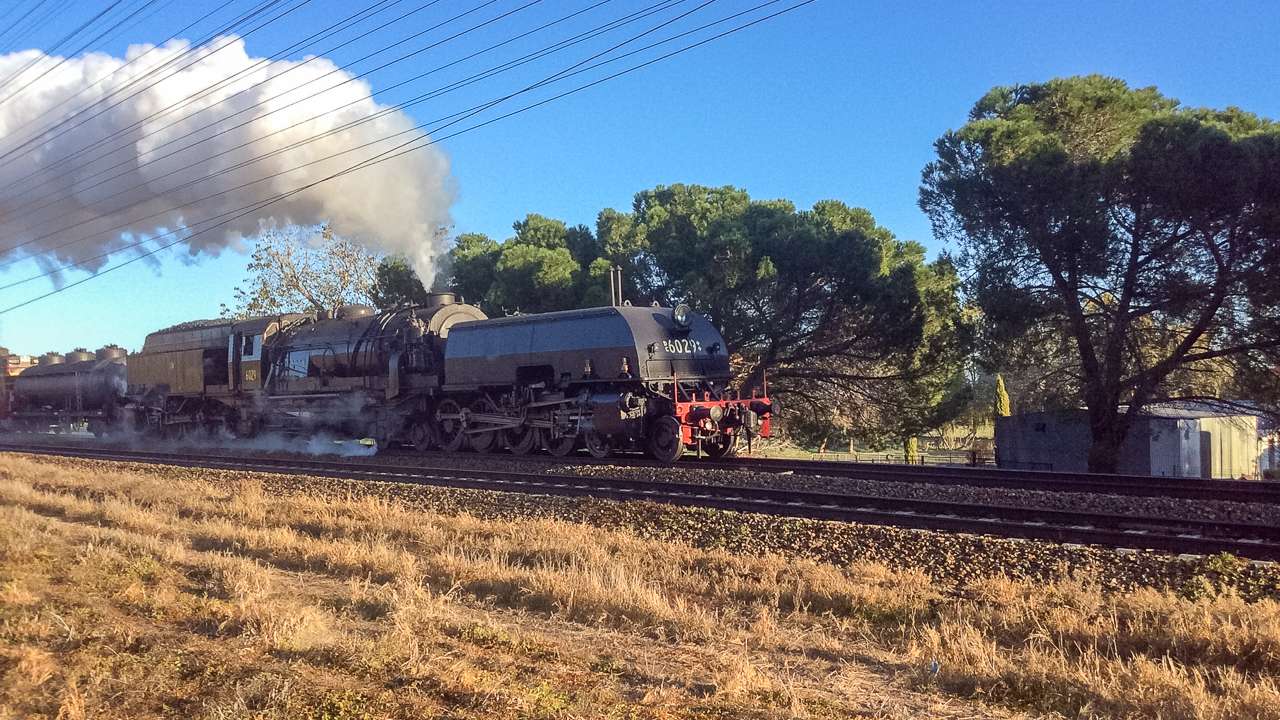
NSWGR Garratt Class Locomotive Outside Of Cootamundra

NSWGR Garratt Class Locomotive Outside Of Cootamundra

Nearby Stays

  • Junee Caravan Park: 5 minutes from the museum, with powered sites from $35/night.
  • The Railway Hotel: A heritage pub offering cozy rooms ($110/night) and hearty meals.

Historical Engines And Rolling Stock

Locomotives

The following table lists just some of the locomotives on display at the museum. There are lots more than this however the ones listed are fan favourites.

Locomotive Class/Type Year Built Historical Role
Steam Locomotive 2413 4-6-2 Pacific-class 1951 Hauled express passenger trains across NSW
Steam Locomotive 3609 2-8-2 1943 Transported freight during WWII and postwar era
Diesel Locomotive 4872 GM-EMD Model 1970s Symbolised the shift from steam to diesel power
U-set Power Cars Interurban EMU 1968 Operated on Sydney’s suburban rail network

NSWGR 4401 At Junee

NSWGR 4401 At Junee

Rolling Stock

Some of the historic rolling on display at the Junee roundhouse is listed below. There are loads more than this but the ones listed are very popular.

Rolling Stock Type Year Built Key Features
Mail Car DS 3013 Postal carriage 1940s Original sorting tables and mailbags preserved
Water Tank Wagon Refuelling wagon 1930s Used to replenish steam locomotives mid journey
Sleeping Car BSC 2541 Passenger sleeper 1950s Compact bunks, fold-down sinks and vintage upholstery

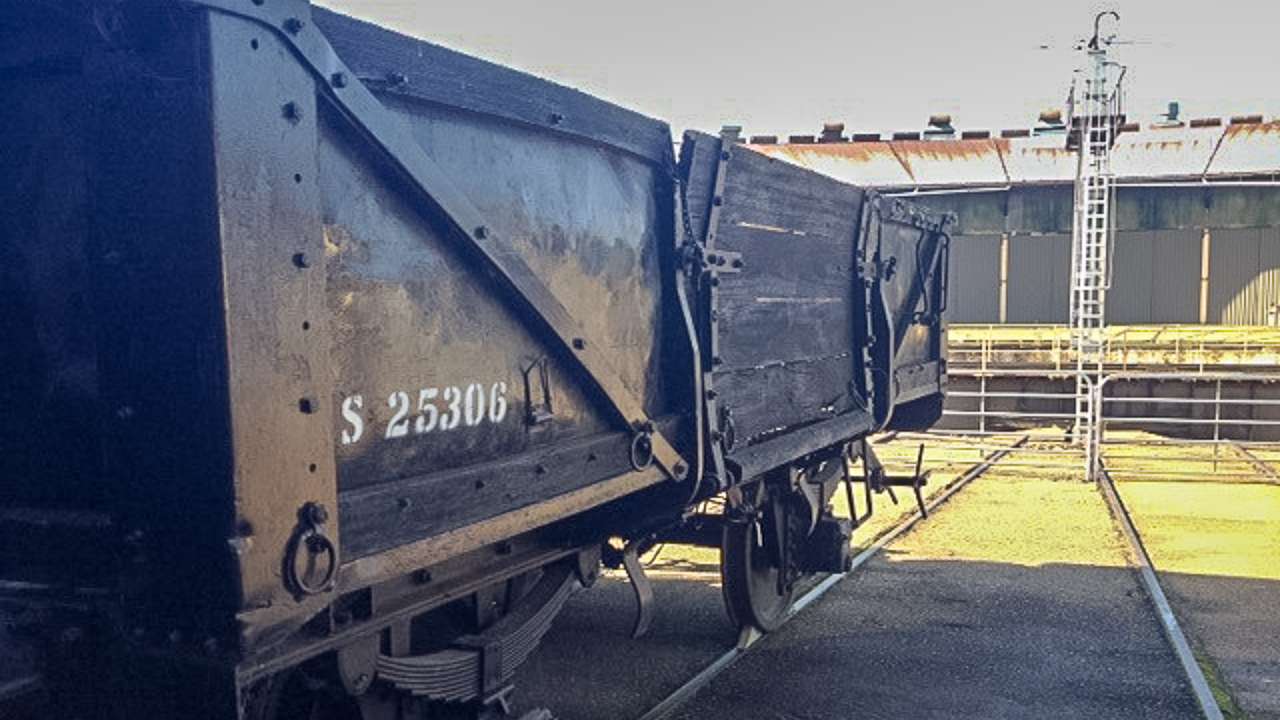
NSWGR S Class Wagon At Junee Roundhouse Museum

NSWGR S Class Wagon At Junee Roundhouse Museum

Why Junee Roundhouse Museum Matters Today

Beyond nostalgia, the museum plays a vital role in regional tourism. A 2022 report by Visit NSW highlighted its contribution to Junee’s economy, drawing 15,000 annual visitors. For caravanning families, it’s a strategic pit stop en route to Wagga Wagga or the Snowy Mountains.

Final Verdict: All Aboard for History At The Junee Roundhouse Museum

The Junee Roundhouse Museum isn’t flawless but its quirks add charm. Where else can you touch century old machinery, chat with ex-railway workers and watch a locomotive go for a spin on a turntable? For Amanda and I it’s a great example of community passion – and a reminder that history isn’t just preserved here; it’s kept alive.

Junee Roundhouse Railway Museum Photos

Junee Licorice & Chocolate Factory Review: By A Local

Junee Licorice & Chocolate Factory Review: By A Local

Junee Licorice & Chocolate Factory Review: By A Local

Discover Junee Licorice & Chocolate Factory: Organic treats, historic mill tours & great friendly dining in NSW’s Riverina. A local favourite! As residents of Cootamundra, my wife Amanda and I have made countless trips to the Junee Licorice & Chocolate Factory over the past five years.

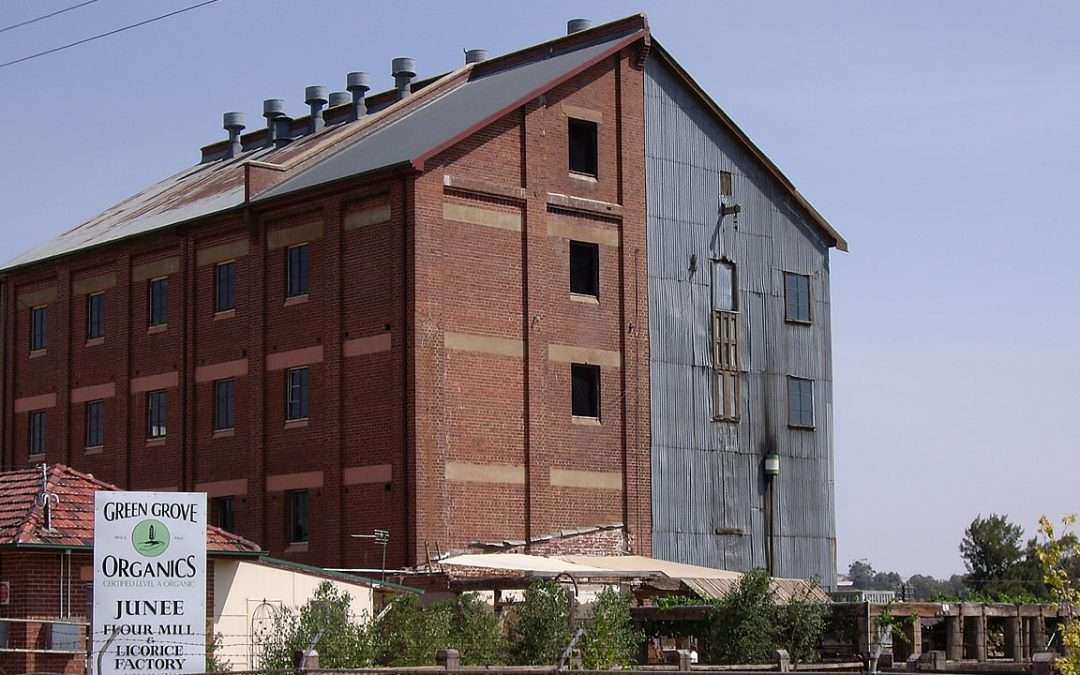
Nestled in the historic Junee Flour Mill, this iconic destination has become a staple for both locals and travellers exploring the Riverina region. We break down what makes this factory a place you have to visit – and a few quirks to keep in mind.

A Slice of History: From Flour Mill To Chocolate Haven

The Junee Licorice & Chocolate Factory occupies a building steeped in local heritage. Constructed between 1934 and 1935, the Junee Flour Mill once served as a critical hub for grain processing in southern New South Wales. After decades of decline, Neil Druce revitalised the site in 1998, transforming it into Australia’s first fully certified organic licorice and chocolate factory. Today, the mill’s industrial past blends seamlessly with its modern sweet-treat production, creating a unique backdrop for visitors.

The factory’s commitment to organic practices under its Green Grove Organics brand adds to its charm. Using Belgian style couverture chocolate and traditional licorice recipes, it’s a nod to quality that resonates with ethically minded consumers. Notably, the mill’s restoration retained original features like exposed brickwork and timber beams, which now frame the bustling café and production areas. This fusion of old and new makes the Junee Licorice & Chocolate Factory a living museum of sorts, where every corner tells a story.

Junee Chocolate & Licorice Factory

Junee Chocolate & Licorice Factory

The Good Points: Why We Keep Coming Back

1. Hands On Experiences and Educational Tours

One standout feature is the freestyle freckle making session, where guests drizzle organic chocolate over biscuits or marshmallows for just per plate. It’s a hit with kids and adults alike, offering a playful yet delicious activity.

Guided tours, running hourly from 10am to 3pm, provide a behind-the-scenes look at chocolate tempering and licorice twisting. While production visibility can vary (more on that later), the guides’ enthusiasm and knowledge – like explaining how organic wheat becomes licorice – keep the experience engaging. For caravanners, these tours are a perfect midday break, blending education with indulgence.

2. The Millroom Restaurant: More Than Just Sweets

The licensed Millroom Restaurant serves hearty breakfasts and lunches, with standout dishes like pulled lamb burgers and hot chocolates made from real melted Belgian chocolate. Live music on weekends elevates the ambiance, making it a relaxed pitstop for caravanners refuelling after a drive.

3. A Gift Shop That Celebrates Local Producers

Upstairs, the gift shop brims with local products: It’s a treasure trove of cookware items as well as reproduction antiques and that kind of thing. They also have plenty of souvenirs and we’ve yet to leave without a bag full of treats for friends back home.

4. Organic Credentials and Sustainability

As advocates for sustainable tourism, we appreciate the factory’s organic certification and zero-waste initiatives. The use of solar power and compostable packaging aligns with the values of many travellers today.

5. A Hub for Local Business Meetings

As someone who works locally, I’ve found the Junee Licorice & Chocolate Factory to be an unexpected gem for work-related lunches. The Millroom Restaurant’s relaxed yet professional atmosphere makes it ideal for hosting clients or brainstorming sessions. During one meeting, a colleague and I split the Junee Platter – a mix of local cheeses, dips and house-made licorice – while discussing projects over coffee. The free Wi-Fi and ample power outlets are a bonus for remote workers and the staff never rush you, even during peak hours.

Amanda and I have also noticed other professionals tapping into this space. On a recent visit, a group of farmers debated grain prices over lattes, while a tourism operator sketched out itineraries at a nearby table. The Junee Licorice & Chocolate Factory has quietly become a community hub where business and pleasure coexist.

The Bad Points: Room for Improvement

1. Long Wait Times at Peak Hours

While the Millroom’s food is delicious, its popularity can lead to frustrating delays. On a busy Sunday we waited over an hour for our meals – a common gripe echoed in Trip Advisor reviews. Planning an early visit or opting for takeaway coffees (which are quicker) helps sidestep the rush. The wait times have never bothered Amanda and myself as we know how good what is going to be served is and are more than willing to wait.

2. Hit-Or-Miss Production Viewing

Though the factory promises “live” production viewing through glass windows, machinery breakdowns or off-peak production days can leave little to see. One Google Review noted a motionless conveyor belt during their visit, though staff compensated with detailed explanations. To be honest though it’s just one of those things, breakdowns happen and sometimes due to production plans nothing is being made. It’s just how it is.

3. Limited Tour Availability

Tours cap at 15 people and often book out, especially during school holidays. First time visitors should reserve slots online to avoid disappointment.

Junee Licorice & Chocolate Factory: How It Compares

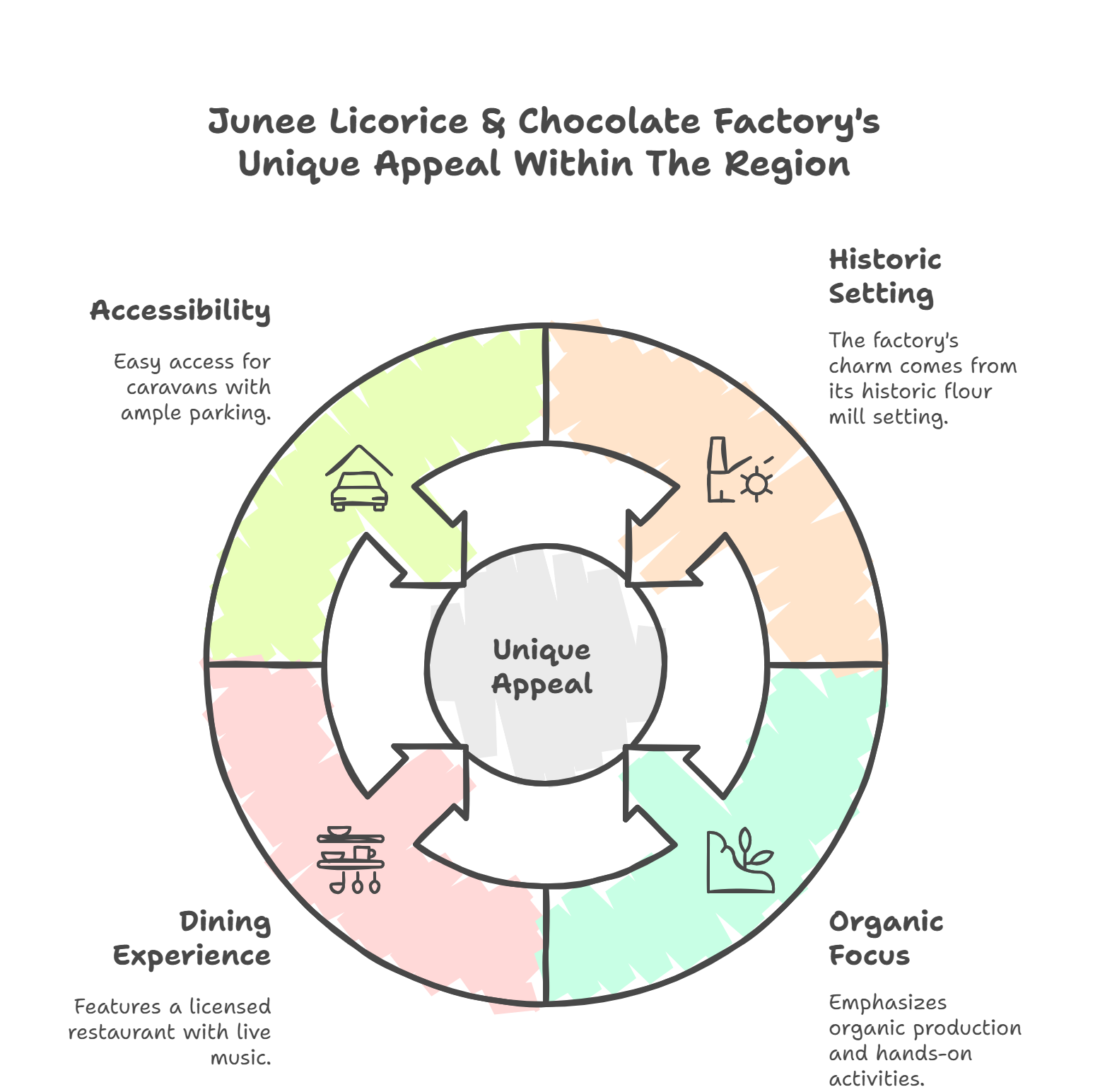
To contextualise its appeal here’s how the factory stacks up against typical regional attractions. This table highlights why the factory stands out: it combines education, sustainability and nostalgia in a way few regional stops achieve.

Feature Junee Factory Average Regional Attraction
Setting Historic flour mill with industrial charm Often generic or purpose-built
Focus Organic production + hands-on activities Passive viewing or basic tastings
Dining Licensed restaurant with live music Basic café or picnic areas
Accessibility Easy for caravans (ample parking) Variable, often limited parking

Junee Licorice Factory's Unique Appeal Within The Region

Junee Licorice Factory’s Unique Appeal Within The Region

Insights For Caravanners And Campers

For those road tripping through the Riverina, the Junee Licorice & Chocolate Factory is a strategic pitstop. Its proximity to Junee’s Bethungra Spiral and Monte Cristo Homestead makes it ideal for day itineraries. Caravan friendly parking and pet friendly outdoor seating (for coffee breaks) add to its appeal.

If you’re staying overnight consider pairing your visit with the Junee Roundhouse Museum or a stroll through the town’s heritage listed streetscapes. The factory’s central location means you’re never far from the next adventure.

A Local’s Tip: Maximising Your Visit

Having visited the Junee Licorice & Chocolate Factory for both leisure and work, here’s our advice:

  • Weekday lunches are quieter, making them perfect for meetings or relaxed meals.
  • Pre-order gifts online if you’re short on time; the staff happily set aside items for pickup.
  • Combine tours with tastings to fully appreciate the craftsmanship behind each product.

Final Thoughts: Is It Worth A Visit To The Junee Licorice & Chocolate Factory?
In our many visits, the Junee Licorice & Chocolate Factory has consistently delivered a blend of education, indulgence and regional pride. While minor issues like wait times and tour availability persist, the overall experience remains a highlight for us and our guests.

As Amanda often says: “You haven’t really been to Junee until you’ve been to the Junee licorice and chocolate factory.” I couldn’t agree more. Whether you’re a caravanner, a local, or a professional blending work with pleasure, this factory offers a uniquely Australian experience that’s as rich as its chocolate.

Junee Chocolate & Licorice Factory Don't Be Like Old Mate Outside The Entry Door When You Visit!

Junee Chocolate & Licorice Factory Don’t Be Like Old Mate Outside The Entry Door When You Visit!

Placing Some Geocaches And Geocaching At Marrar Again

Placing Some Geocaches And Geocaching At Marrar Again

Placing Some Geocaches And Geocaching At Marrar Again

Another day out geocaching at Marrar. We placed some geocaches and called in for a beer at the Junee Hotel. We headed out from home at Cootamundra at about 9.00am and didn’t get home until about 4.00pm. It was a pretty full day. All up I think we covered around 230km.

Out and about today doing some more geocaching at Marrar. Our original intention was to finish off the “RGGT” series however there was just too many of them and it was a bloody hot day so we pulled up short. We’ll have to go back again and get the rest of them. We also made a start on the “Friends” series.

We Placed Some Geocaches

We also placed four of our own. One each at,

  • Bethungra Cemetery
  • Illabo Rest Area
  • Illabo Cemetery
  • Eulolo Track End

Just waiting on approval for them all. These are the first geocaches we have placed so we aren’t sure how long the approval process will take.

One Of Our Geocache Hides

One Of Our Geocache Hides

What Did We Find Geocaching At Marrar Again?
We found 20 of them and and only had the one DNF. we gave the one we missed a real good go too. I was up the stepladder and on my hands and knees. I had the torch out and everything. We just couldn’t find it.

  1. Found RGGT #036 | GC4EBFM
    Found lying out in the open and container was damaged so we have replaced the container and placed it back where we think it originally was.
  2. Found RGGT #037 | GC4EBFV
    TFTC
  3. Found RGGT #038 | GC4EBFY
    A few spider webs attached to this one so sent the hubby in
  4. Found RGGT #039 | GC4EBG6
    Another one bites the dust TFTC
  5. Found RGGT #040 | GC4EBGB
    Great day out so far 16 and counting TFTC
  6. Found RGGT #041 | GC4EBGH
    TFTC the sheep were not happy with us visiting
  7. Found RGGT #042 | GC4EBGV
    TFTC nice easy one this was
  8. Found RGGT #043 | GC4EBPX
    Container on this one needs attention TFTC
  9. Found RGGT #044 | GC4EBQ3
    TFTC all good here
  10. Found RGGT #045 | GC4EBQC
    Another great hide TFTC
  11. Found RGGT #046 | GC4EBQH
    Another one out in the open so we replace where we thought it should’ve been
  12. Found RGGT #047 | GC4EBQQ
    Out in the open so we replace it where we thought it should go
  13. Found RGGT #048 | GC4EDBH
    Nice easy one TFTC
  14. Found RGGT #049 | GC4EDBP
    Persistence in the end won this one tftc
  15. Found Cache With A Friend | GC6ZV7K
    Tftc another easy find
  16. Found Help A Friend | GC6ZV7M
    Tftc had fallen but is back where it originally was
  17. Found Just friends | GC6ZV7R
    Another great find we are on a roll now
  18. Found Friends Laugh Together | GC6ZV7Y
    Watch out for spiders tftc
  19. Found Friends Listen | GC6ZV7Z
    Tftc great hide
  20. Found A Thank You To My Friends | GC6ZV81
    Great hide found this one yay

Geocaching At Marrar Again

Geocaching At Marrar Again

A Beer At The Junee Hotel

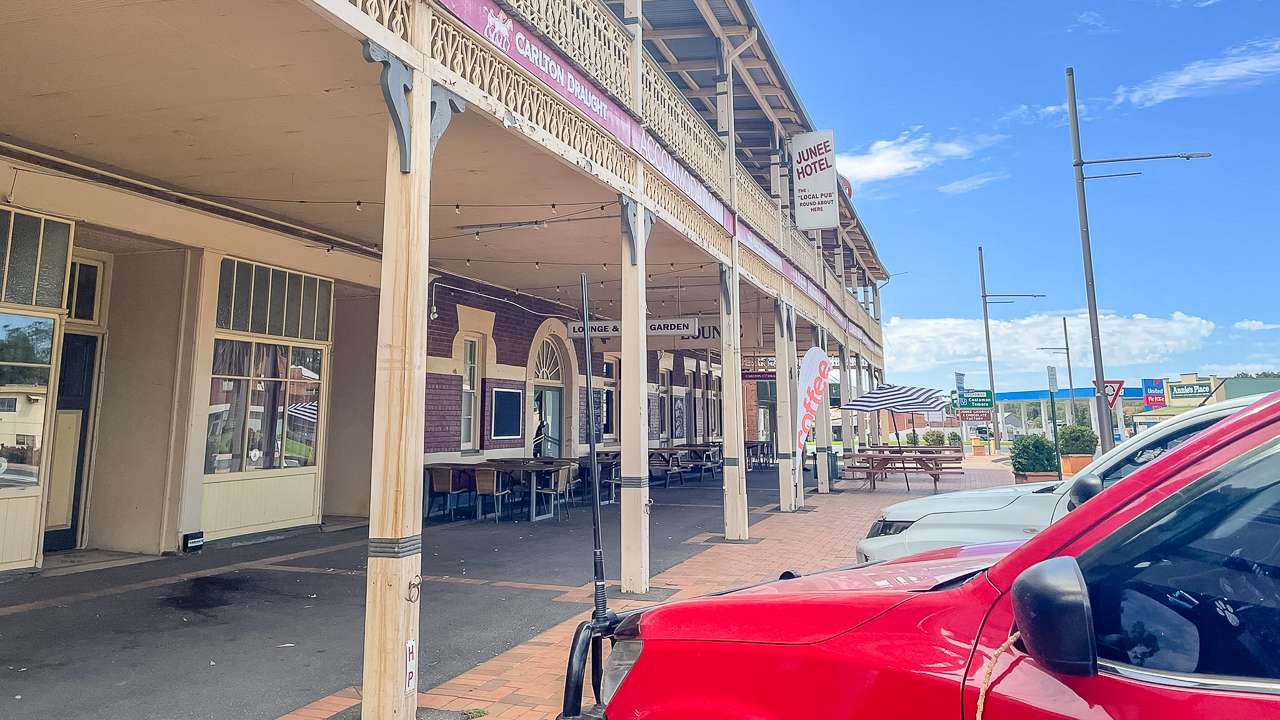
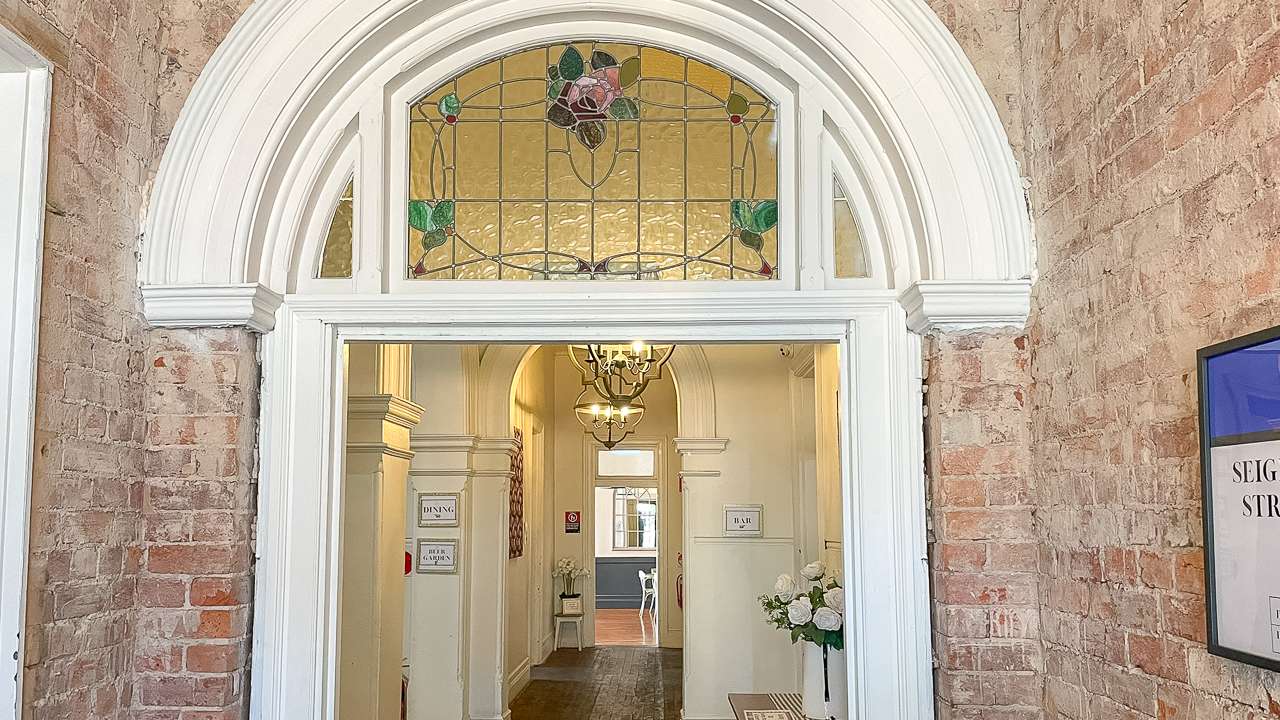
The Junee Hotel is another pub to add to our list of those that we’ve had a beer in. It’s a nice old pub and the beer was cold. Inside was really cool. The Junee Hotel has always been a landmark in the area. It was established in 1878 and has been maintained to retain its original character. It still has a lot of stained glass inside as well as what look to be the original ceilings. I’m honestly surprised that we haven’t been here before considering we live less than an hour away.

Parked Outside The Junee Hotel

Parked Outside The Junee Hotel

Geocaching At Marrar Again Photo Gallery

Road Trip From Melbourne To Adelaide: 3 Unique Itineraries

Road Trip From Melbourne To Adelaide: 3 Unique Itineraries

Road Trip From Melbourne To Adelaide: 3 Unique Itineraries

Plan your ultimate road trip from Melbourne to Adelaide with 3 unique itineraries! Explore scenic stops, free camping spots and must see highlights for caravanners and campers. Adventure awaits! Embarking on a road trip from Melbourne to Adelaide is a quintessential Australian adventure.

Whether you’re a time pressed traveller or a leisurely explorer this journey offers something for everyone. With a road trip from Melbourne to Adelaide driving distance of approximately 900 kilometres, the route is packed with scenic coastal drives, historic landmarks and natural wonders.

Below we’ve come up with three distinct itineraries – 3 days, 7 days and a 14 Day return trip. Each taking a different route to minimise location duplication. All overnight stops prioritise free or low cost camping. Absolutely perfect for caravanners and campers.

Table Of Contents

Road Trip From Melbourne To Adelaide
Key Comparisons And Insights

Itinerary Duration Route Focus Overnight Stops Best For
3 Day Express 3 Days Coastal & Mountain Free Camping Time pressed travellers
7 Day Coastal 7 Days Limestone Coast Low Cost Camping Leisurely coastal explorers
14 Day Return 14 Days Inland & Coastal Mix of Free & Paid Camping Comprehensive exploration

Key Insights On Travel Times And Distances

  1. The 3 Day itinerary is the most time efficient, covering approximately 1,097 km in total, with daily driving times ranging from 3.5 to 6 hours.
  2. The 7 Day itinerary is more relaxed, totalling around 1,143 km, with most driving days under 4 hours.
  3. The 14 Day return trip is the most comprehensive, covering roughly 2,226 km round trip, with driving times averaging 3-5 hours per day.

Each itinerary offers a unique perspective on the Melbourne to Adelaide road trip stops, ensuring you’ll find one that suits your travel style.

3 Day Express Adventure: Coastal And Mountain Highlights

This fast-paced itinerary is ideal for those short on time but eager to experience the best of Victoria’s coastline and mountains.

Day 1: Melbourne to Port Campbell (285 km)

  • Stops: Torquay, Lorne, Apollo Bay
  • Overnight: Port Campbell Recreation Reserve (free camping).

Highlights

  • Twelve Apostles: Iconic limestone stacks rising from the Southern Ocean.
  • Loch Ard Gorge: A stunning gorge with a rich shipwreck history.

Day 2: Port Campbell to Halls Gap (287 km)

  • Stops: Warrnambool, Port Fairy
  • Overnight: Plantation Campground, Grampians (free camping).

Highlights

  • Tower Hill Wildlife Reserve: A volcanic crater teeming with native wildlife.
  • Grampians National Park: Spectacular mountain ranges and waterfalls.

Day 3: Halls Gap to Adelaide (525 km)

  • Stops: Horsham, Bordertown
  • Arrival in Adelaide.

Highlights

  • Little Desert National Park: A unique arid landscape.
  • The Bend Motorsport Park: A must visit for car enthusiasts.

Alternative Stops

Bells Beach, Otway National Park, Hamilton.

Road Trip From Melbourne To Adelaide

Road Trip From Melbourne To Adelaide

3 Day Express Adventure: Coastal And Mountain Highlights At A Glance

Day Route Distance Travel Time Stops Highlights Overnight Stay
1 Melbourne to Port Campbell 285 km 3.5 hours Torquay, Lorne, Apollo Bay Twelve Apostles, Loch Ard Gorge Port Campbell Recreation Reserve (Free)
2 Port Campbell to Halls Gap 287 km 3.5 hours Warrnambool, Port Fairy Tower Hill Wildlife Reserve, Grampians Plantation Campground, Grampians (Free)
3 Halls Gap to Adelaide 525 km 6 hours Horsham, Bordertown Little Desert NP, The Bend Motorsport Arrival in Adelaide

7 Day Coastal Expedition: Exploring the Limestone Coast

This relaxed route hugs the coastline, showcasing the beauty of Victoria and South Australia’s southern shores.

Day 1: Melbourne to Apollo Bay (187 km)

  • Stops: Geelong, Anglesea
  • Overnight: Apollo Bay Recreation Reserve (low-cost camping).

Highlights

  • Great Ocean Road Memorial Arch: The gateway to this iconic drive.
  • Erskine Falls: A picturesque waterfall near Lorne.

Day 2: Apollo Bay to Port Fairy (188 km)

  • Stops: Twelve Apostles, Port Campbell
  • Overnight: Southcombe Park, Port Fairy (low-cost camping).

Highlights

  • Gibson Steps: A dramatic coastal viewpoint.
  • The Arch: A natural rock formation.

Day 3: Port Fairy to Mount Gambier (178 km)

  • Stops: Portland, Nelson
  • Overnight: Mount Gambier Central Caravan Park.

Highlights

  • Cape Bridgewater: Known for its blowholes and seal colony.
  • Glenelg River: Perfect for kayaking or fishing.

Day 4: Mount Gambier to Robe (138 km)

  • Stops: Tantanoola Caves, Millicent
  • Overnight: Long Beach Campground, Robe (free camping).

Highlights

  • Blue Lake: A stunning crater lake that changes colour seasonally.
  • Umpherston Sinkhole: A sunken garden with lush greenery.

Day 5: Robe to Victor Harbor (367 km)

  • Stops: Kingston SE, Meningie
  • Overnight: Adare Camp and Caravan Park, Victor Harbor.

Highlights

  • Cape Jaffa Lighthouse: A historic maritime landmark.
  • Coorong National Park: A haven for birdwatchers.

Day 6: Victor Harbor to McLaren Vale (44 km)

  • Stops: Port Elliot, Goolwa
  • Overnight: Moana Beach Tourist Park.

Highlights

  • Granite Island: Home to a colony of little penguins.
  • Cockle Train: A heritage steam train ride.

Day 7: McLaren Vale to Adelaide (41 km)

  • Stops: Willunga, Hallett Cove
  • Arrival in Adelaide.

Highlights

  • McLaren Vale Wineries: Sample world class wines.
  • Hallett Cove Conservation Park: Known for its geological significance.

Alternative Stops

Cape Otway, Tower Hill, Naracoorte Caves, Currency Creek.

7 Day Coastal Expedition: Exploring the Limestone Coast At A Glance

Day Route Distance Travel Time Stops Highlights Overnight Stay
1 Melbourne to Apollo Bay 187 km 2.5 hours Geelong, Anglesea Great Ocean Road Memorial Arch, Erskine Falls Apollo Bay Recreation Reserve (Low-cost)
2 Apollo Bay to Port Fairy 188 km 2.5 hours Twelve Apostles, Port Campbell Gibson Steps, The Arch Southcombe Park, Port Fairy (Low-cost)
3 Port Fairy to Mount Gambier 178 km 2 hours Portland, Nelson Cape Bridgewater, Glenelg River Mount Gambier Central Caravan Park
4 Mount Gambier to Robe 138 km 1.5 hours Tantanoola Caves, Millicent Blue Lake, Umpherston Sinkhole Long Beach Campground, Robe (Free)
5 Robe to Victor Harbor 367 km 4 hours Kingston SE, Meningie Cape Jaffa Lighthouse, Coorong NP Adare Camp and Caravan Park, Victor Harbor
6 Victor Harbor to McLaren Vale 44 km 45 minutes Port Elliot, Goolwa Granite Island, Cockle Train Moana Beach Tourist Park
7 McLaren Vale to Adelaide 41 km 40 minutes Willunga, Hallett Cove McLaren Vale Wineries, Hallett Cove CP Arrival in Adelaide

14 Day Return Trip Odyssey: Inland and Coastal Exploration

This comprehensive itinerary combines inland and coastal routes, offering a diverse experience of Victoria and South Australia.

Days 1-2: Melbourne to Grampians (260 km)

  • Stops: Ballarat, Ararat
  • Overnight: Stapylton Campground, Grampians (free camping).

Highlights

  • Sovereign Hill: A living museum of the gold rush era.
  • Grampians National Park: Hiking trails and Aboriginal rock art.

Days 3-4: Grampians to Robe (435 km)

  • Stops: Naracoorte, Penola
  • Overnight: The Pines Campground, Little Dip Conservation Park (free camping).

Highlights

  • Naracoorte Caves: A UNESCO World Heritage Site.
  • Coonawarra Wine Region: Renowned for its Cabernet Sauvignon.

Days 5-6: Robe to Victor Harbor (367 km)

  • Stops: Kingston SE, Meningie
  • Overnight: Waitpinga Campground, Newland Head Conservation Park (low-cost camping).

Highlights

  • Cape Jaffa Lighthouse: A historic maritime landmark.
  • Coorong National Park: A haven for birdwatchers.

Days 7-8: Victor Harbor to Adelaide (83 km)

  • Stops: Port Elliot, McLaren Vale
  • Overnight: Adelaide Shores Caravan Park.

Highlights

  • Granite Island: Home to a colony of little penguins.
  • McLaren Vale Wineries: Sample world-class wines.

Days 9-10: Adelaide to Mount Gambier (449 km)

  • Stops: Murray Bridge, Keith
  • Overnight: Mount Gambier Central Caravan Park.

Highlights

  • Monarto Safari Park: An open-range zoo.
  • Blue Lake: A stunning crater lake.

Days 11-12: Mount Gambier to Port Campbell (267 km)

  • Stops: Portland, Warrnambool
  • Overnight: Port Campbell Recreation Reserve (free camping).

Highlights

  • Cape Bridgewater: Known for its blowholes and seal colony.
  • Flagstaff Hill Maritime Village: A recreated 19th-century port.

Days 13-14: Port Campbell to Melbourne (285 km)

  • Stops: Apollo Bay, Lorne
  • Return to Melbourne.

Highlights

  • Twelve Apostles: Iconic limestone stacks.
  • Great Otway National Park: Lush rainforests and waterfalls.

Alternative Stops: Horsham, Bordertown, Tailem Bend, Robe, Port Fairy, Torquay.

14 Day Return Trip Odyssey: Inland and Coastal Exploration At A Glance

Day Route Distance Travel Time Stops Highlights Overnight Stay
1-2 Melbourne to Grampians 260 km 3 hours Ballarat, Ararat Sovereign Hill, Grampians NP Stapylton Campground, Grampians (Free)
3-4 Grampians to Robe 435 km 5 hours Naracoorte, Penola Naracoorte Caves, Coonawarra Wine Region The Pines Campground, Little Dip CP (Free)
5-6 Robe to Victor Harbor 367 km 4 hours Kingston SE, Meningie Cape Jaffa Lighthouse, Coorong NP Waitpinga Campground, Newland Head CP (Low-cost)
7-8 Victor Harbor to Adelaide 83 km 1 hour Port Elliot, McLaren Vale Granite Island, McLaren Vale Wineries Adelaide Shores Caravan Park
9-10 Adelaide to Mount Gambier 449 km 5 hours Murray Bridge, Keith Monarto Safari Park, Blue Lake Mount Gambier Central Caravan Park
11-12 Mount Gambier to Port Campbell 267 km 3 hours Portland, Warrnambool Cape Bridgewater, Flagstaff Hill Port Campbell Recreation Reserve (Free)
13-14 Port Campbell to Melbourne 285 km 3.5 hours Apollo Bay, Lorne Twelve Apostles, Great Otway NP Return to Melbourne

Final Thoughts On A Road Trip From Melbourne To Adelaide

A road trip from Melbourne to Adelaide is more than just a drive – it’s an opportunity to explore Australia’s diverse landscapes and rich history. Whether you choose the 3 Day express, the 7 Day coastal route, or the 14 Day odyssey, each journey promises unforgettable memories. Amanda and I have done all of these routes in parts and visited all of the places outlined. We can highly recommend it.

Remember to check campground availability, especially during peak seasons and always practice responsible camping. Happy travels!

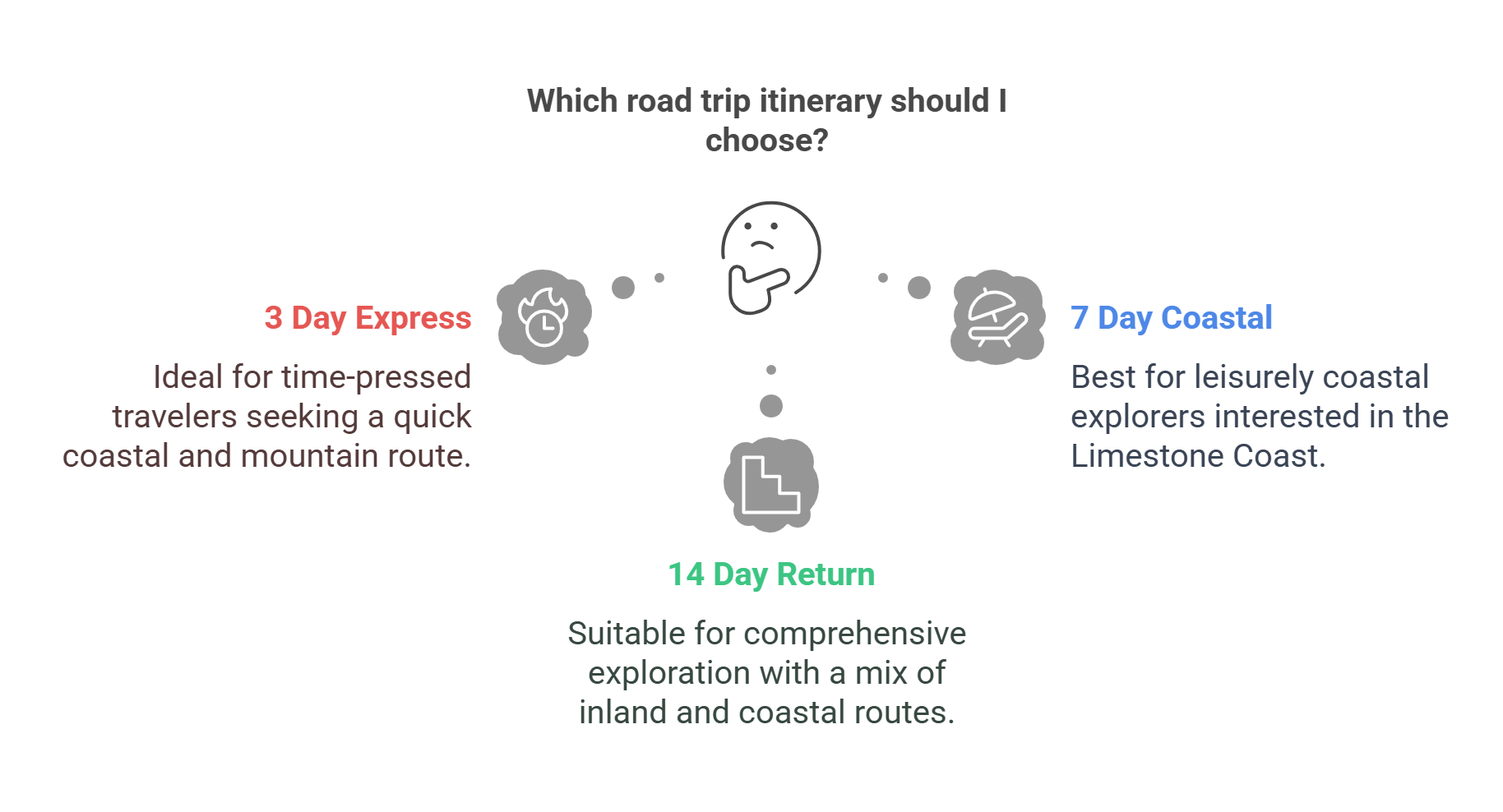
Road Trip From Melbourne To Adelaide Itinerary Decisions

Road Trip From Melbourne To Adelaide Itinerary Decisions

6 Frequently Asked Question FAQs About A Road Trip From Melbourne To Adelaide

What is the best route for a road trip from Melbourne to Adelaide?

The best route depends on your timeframe and interests. For a quick trip, take the Great Ocean Road and Grampians National Park (3-day itinerary). For a coastal adventure, explore the Limestone Coast (7-day itinerary). For a comprehensive journey, combine inland and coastal routes (14-day return trip).

How long does a road trip from Melbourne to Adelaide take?

The road trip from Melbourne to Adelaide can take anywhere from 3 days to 2 weeks, depending on your itinerary. The direct drive is about 9 hours (900 km), but exploring scenic stops and attractions will extend your travel time.

Where can I camp overnight on a road trip from Melbourne to Adelaide?

There are plenty of camping options, including free and low-cost sites. Popular stops include Port Campbell Recreation Reserve, Plantation Campground (Grampians), and Long Beach Campground (Robe). Always check availability and book in advance during peak seasons.

What are the must-see highlights on a road trip from Melbourne to Adelaide?

Key highlights include the Twelve Apostles, Grampians National Park, Blue Lake (Mount Gambier), and Coorong National Park. Each route offers unique attractions, from coastal views to historic landmarks and wildlife encounters.

Can I do a road trip from Melbourne to Adelaide on a budget?

Absolutely! Prioritise free camping sites like Port Campbell Recreation Reserve and The Pines Campground (Robe). Many attractions, such as the Twelve Apostles and Coorong National Park, are free to visit, making the road trip from Melbourne to Adelaide budget-friendly.

Is a road trip from Melbourne to Adelaide suitable for families?

Yes, the road trip from Melbourne to Adelaide is family-friendly. With stops like Tower Hill Wildlife Reserve, Granite Island, and Monarto Safari Park, there are plenty of activities for kids. Choose a relaxed itinerary, such as the 7-day coastal route, for a stress-free family adventure.