Mastering Camp Oven Cooking By Jack Absalom Cookbook

Mastering Camp Oven Cooking By Jack Absalom Cookbook

Mastering Camp Oven Cooking By Jack Absalom Cookbook

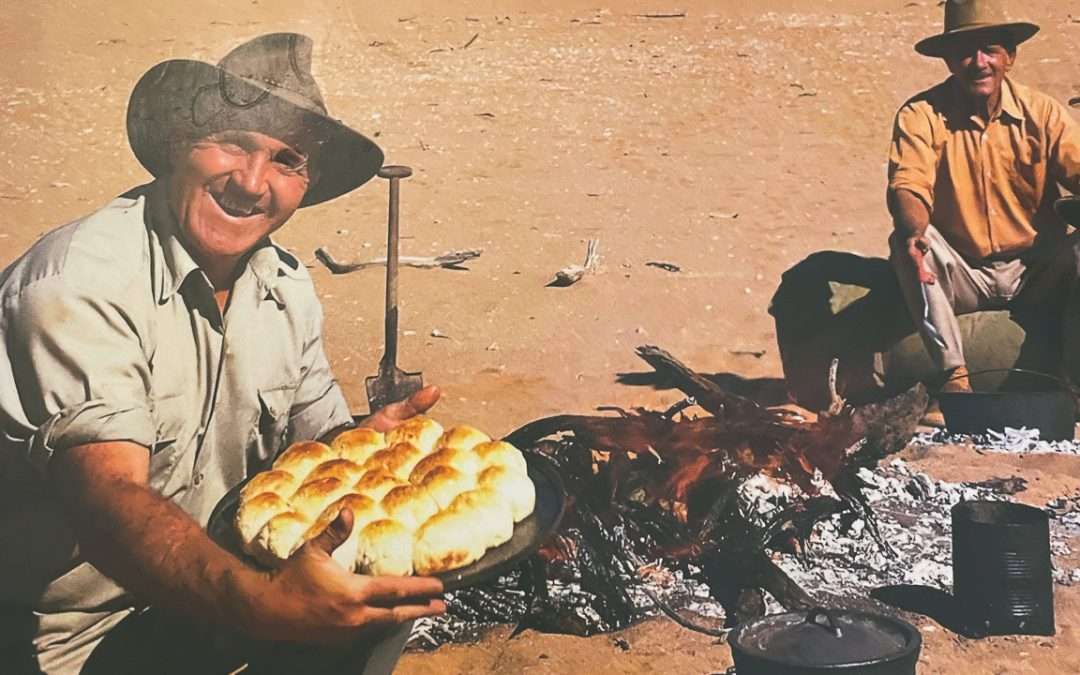
Learn from Jack Absalom the original camp oven bush cooking legend. His simple yet awesome camp oven recipes are perfect for any camping trip. If there’s one name that stands out in the world of camp oven cooking, it’s Jack Absalom. A true Aussie legend. Jack is the undisputed “OG” of camp oven cookbooks.

Jack Absalom’s book Outback Cooking in the Camp Oven has been a game changer for so many of us who love the simplicity and charm of camp oven cooking. It was more than 20 years ago when I first stumbled across his camp oven cookbook and honestly, it was this book that sparked my obsession with camp oven cooking. Jack Absalom isn’t just a name in our camp kitchen – he’s a hero and a deadset legend.
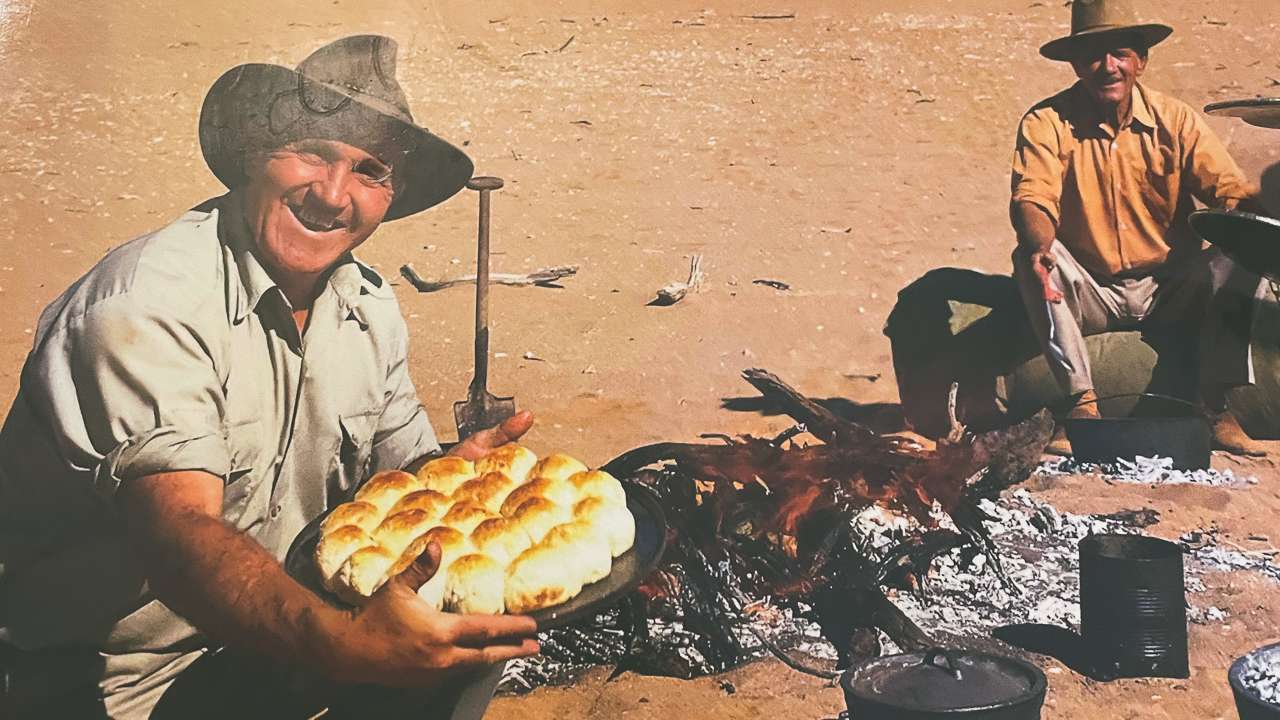
Jack And Reg Absalom Book Outback Cooking In The Camp Oven

Jack And Reg Absalom Book Outback Cooking In The Camp Oven

Who Is Jack Absalom?

Jack Absalom is as Aussie as it gets. An outback artist, author, bushman and television personality. Born in 1927 in Port Augusta, South Australia, Jack had a deep connection with the bush from an early age. He was known first and foremost for his paintings of the Australian outback. But it’s his skills in camp oven cooking that made him known to me. A household name for anyone who enjoys life on the road or a good bush tucker feed.

His travels took him all over the wild outback and it was during these journeys that he perfected the art of cooking with nothing more than a camp oven. Some basic ingredients and a fire. He taught generations of Aussies how to create meals in the most remote places. Making his book Outback Cooking in the Camp Oven the ultimate guide to mastering bush cooking.

For me Jack wasn’t just a cook. He was and still is an inspiration. The man could whip up a hearty meal with barely any ingredients all while surrounded by the harsh yet stunning Australian wilderness. No fancy kitchen gadgets, no electricity, just a hot fire and a camp oven.

How I Came Across Camp Oven Cooking By Jack Absalom’s Book

It was about 20 years ago when I first came across Jack Absalom’s book. I was looking through a used bookstore front window in Cootamundra. When I saw the cover of Outback Cooking in the Camp Oven staring back at me. I had heard about this book from someone, I can’t remember who it was now. I’d just bought a camp oven so I went in and bought it.

Up until that point cooking while camping was just something I did on a little two burner cooker. But with Jack’s easy-to-follow recipes and laid back approach I realised that cooking in the bush could be fun. From his damper recipe to a simple roast chook, Jack’s no fuss style of cooking gave me the confidence to experiment with camp ovens and eventually make it a core part of my camping.

Jack Absalom: The OG Of Camp Oven Cooking

Before there were endless YouTube tutorials and gourmet bush cooking shows there was Jack Absalom. And let me tell you no one quite does it like Jack. His charm lies in his simplicity and practicality. He didn’t need flash and flair just a well seasoned camp oven, a good fire and the basic ingredients he could carry with him. And that’s what makes him the OG of camp oven cooking.

Jack’s book isn’t filled with overly complicated techniques or fancy ingredients you can only find in specialty stores. His recipes are for the everyday Aussie, the kind of bloke or lady who wants to whip up a decent feed out in the bush without all the fuss. His style of cooking speaks to the heart of outback life: rough, rugged and hearty.

I reckon a big part of what makes Jack such a legend is his ability to connect with people. He made camp oven cooking accessible to anyone. His recipes are straightforward. His instructions are easy to follow and his attitude towards cooking is relaxed and fun. It’s like having old mate Jack by your side guiding you through every step of the way.

What Makes Outback Cooking In The Camp Oven Special?

The book isn’t just a collection of recipes it’s wisdom from a bloke who’s spent loads of time perfecting his craft. Jack not only shares recipes but also tips and tricks on how to get the most out of your camp oven. From choosing the right kind of wood for your fire to knowing when the coals are just right for baking bread Jack’s knowledge is worth its weight in gold.
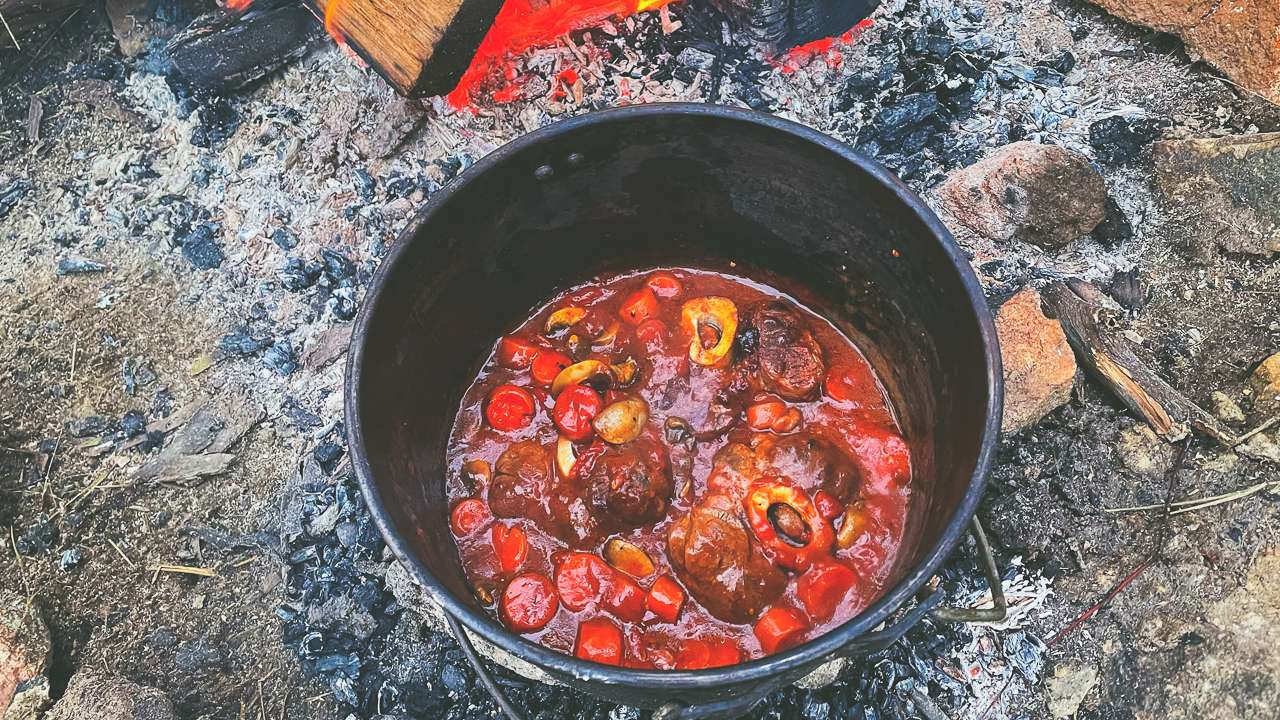
A Few Of My Favourite Recipes From The Book

One of the best parts of Outback Cooking in the Camp Oven is its variety. Whether you’re after a simple stew or something sweet to finish off the night Jack’s book has got you covered. Here are some of my favourite recipes from the book that I reckon everyone should try:

  1. Damper – You can’t talk about camp oven cooking without mentioning damper. Jack’s recipe is as classic as they come—simple ingredients, minimal fuss and maximum satisfaction.
  2. Roast Lamb – There’s nothing quite like a roast lamb cooked to perfection in a camp oven. Jack’s method ensures the meat is tender and full of flavour, with crispy skin to boot.
  3. Beef Stew – A hearty beef stew is exactly what you need on a chilly outback night. Jack’s recipe uses simple, easy-to-pack ingredients that come together in a rich, tasty stew.
  4. Curried Sausages – This is the kind of meal that brings a bit of warmth and spice to a cool night. Jack’s recipe is quick, easy and absolutely delicious.
  5. Apple Crumble – If you’ve got a bit of a sweet tooth like me, Jack’s apple crumble is a must-try. The smell alone will have everyone around the campfire drooling.

What Makes Jack A Camp Oven Legend

Over the past 20 years I’ve tried my hand at plenty of camp oven recipes but Jack’s are the ones I keep coming back to. His book is like an old mate that never lets you down. Reliable, straightforward and always there when you need it. The way he simplifies things while still making meals that taste like a bit of home. This what makes him a legend.

It’s not just about the food, though. Jack represents a way of life that resonates with anyone who’s spent time in the Aussie bush. It’s about enjoying the simple things. Being resourceful and making the most out of what you’ve got. And to me that’s what camp oven cooking is all about. Making something that’s good to eat with what you have with you.

Jack’s Legacy In Camp Oven Cooking

Even though Jack is no longer with us his legacy lives on in the kitchens (or campsites) of anyone who loves a good feed. His influence can be seen in the many camp oven cookbooks that have come after his. For me nothing quite compares to the original. Jack set the standard and to this day he remains the gold standard of bush cooking.

Conclusion

Outback Cooking in the Camp Oven by Jack Absalom is more than just a cookbook. It’s a real piece of Australian history, a slice of bush wisdom and a constant source of inspiration. Whether you’re a seasoned bush cook or a newbie to it Jack’s book is a must have. His no nonsense approach to camp oven cooking makes it easy to create delicious meals even if you’re miles away from a proper kitchen. If you’re like me and want to embrace the simplicity and charm of bush cooking do yourself a favour and grab a copy of this classic. Jack Absalom is the true hero of camp oven cooking. With his guidance you’ll be cooking up a legendary feed in the outback in no time.

So, here’s to Jack. The man, the myth, the legend. And to many more camp oven adventures ahead!
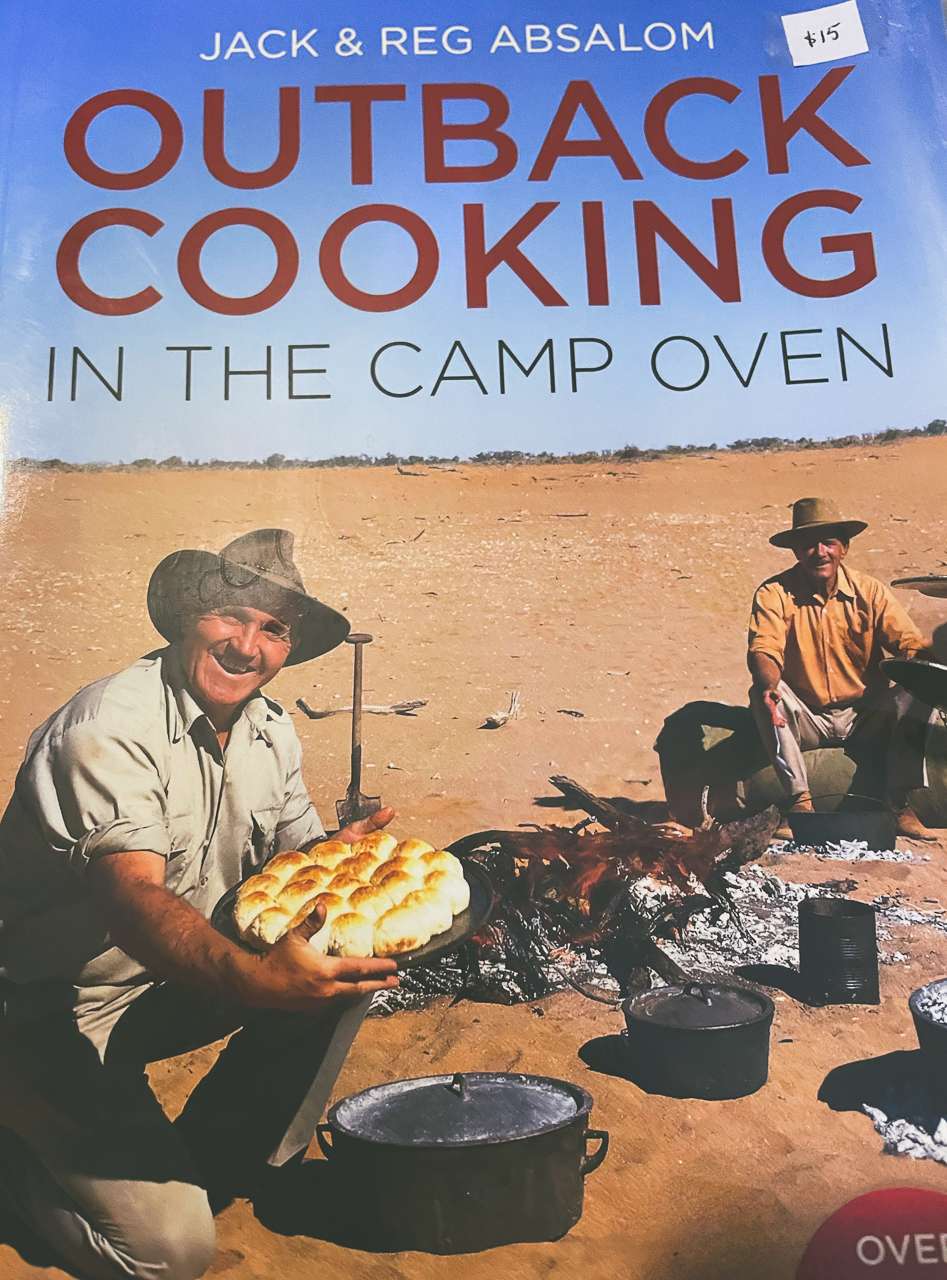
My Copy Of The Book Outback Cooking In The Camp Oven

My Copy Of The Book Outback Cooking In The Camp Oven

FAQs Frequently Asked Questions About Camp Oven Cooking By Jack Absalom’s Book

Can I use a modern oven to try Jack’s recipes?

Sure, but where’s the fun in that? The magic of Jack’s recipes is in the camp oven itself. That said, if you’re stuck at home, you can definitely adapt them for a modern oven.

What’s the best way to season a camp oven?

Jack’s book explains this perfectly. The key is to rub it down with oil and heat it up over the fire. Do this a few times, and your camp oven will be non-stick in no time!

Do I need fancy ingredients?

No way, mate. Jack’s all about using basic, accessible ingredients. That’s one of the reasons his recipes are so great—you don’t need a fancy supermarket haul to make them.

Can beginners handle camp oven cooking?

Absolutely. Jack’s book is beginner-friendly, and as long as you’re patient and follow his tips, you’ll be a pro in no time.

Where can I buy Outback Cooking in the Camp Oven?
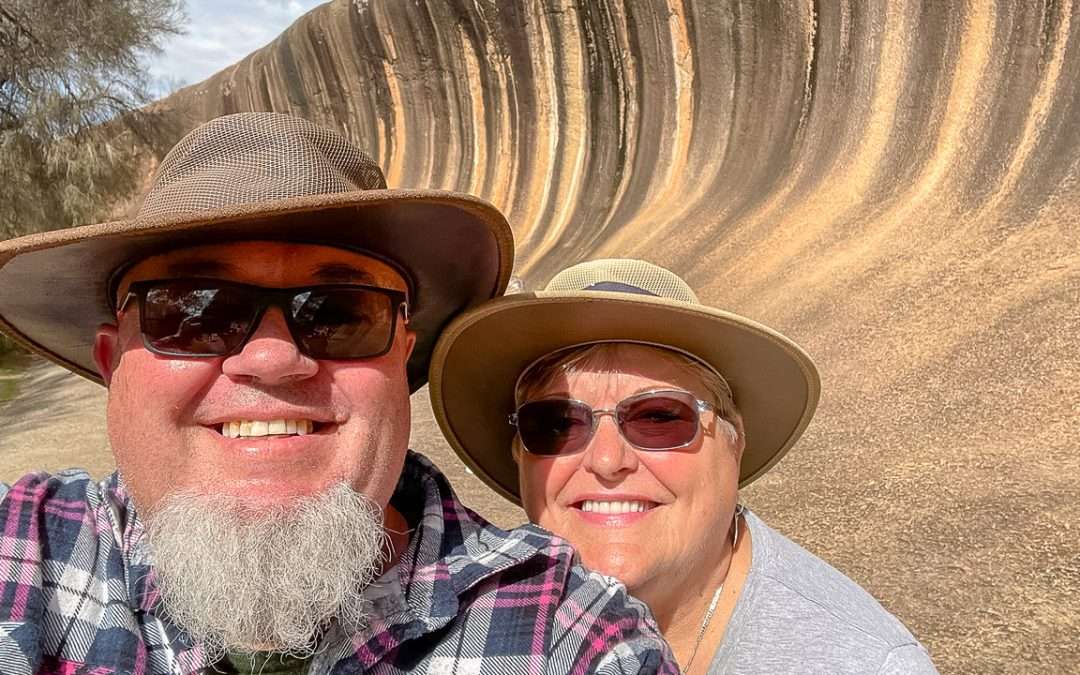
So far as I know it's no longer in print. It was sold in the thousands though so second hand copies are easy to come by.

Add Wave Rock To Your Travel Bucket List

Add Wave Rock To Your Travel Bucket List

Add Wave Rock To Your Travel Bucket List

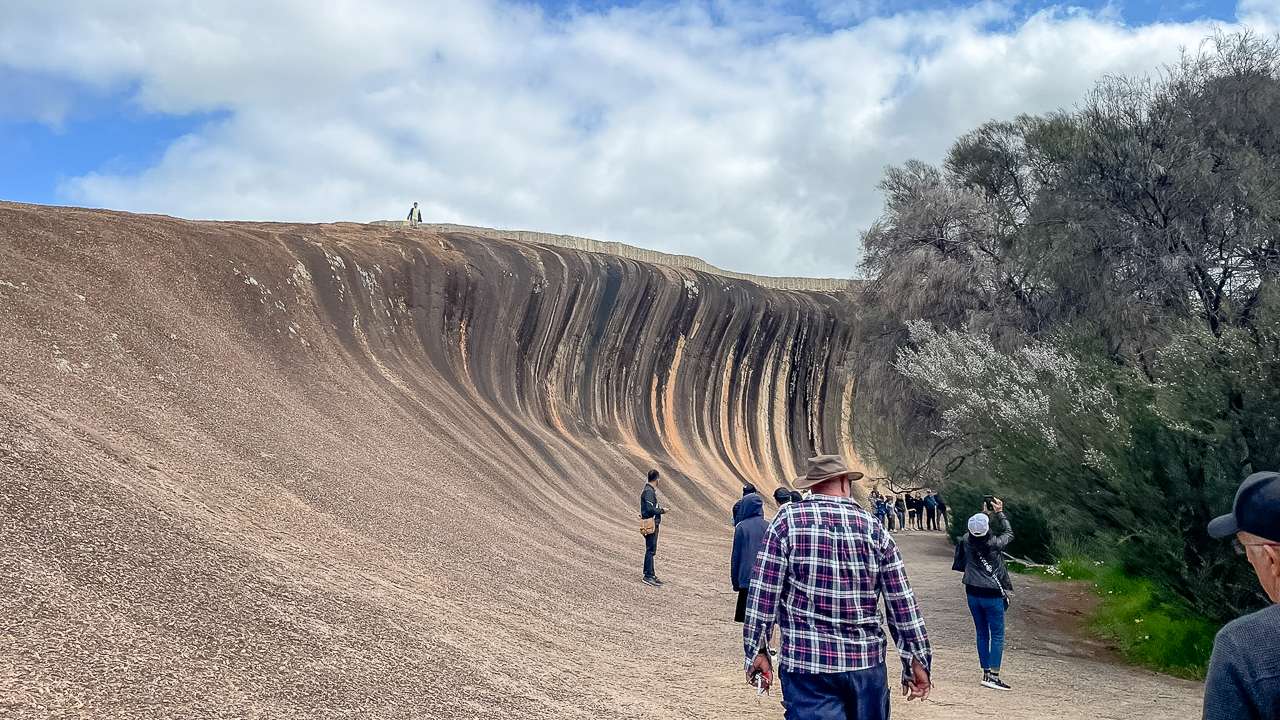
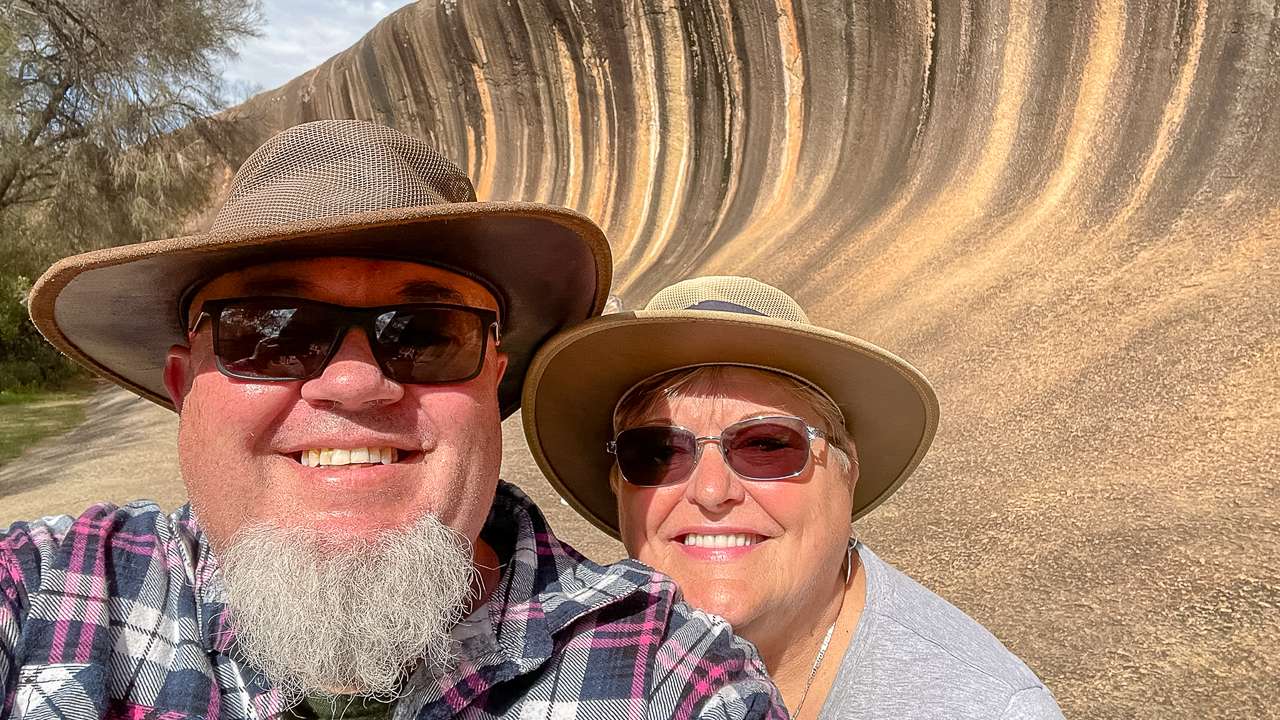
We visited Wave Rock. An awesome natural landmark in Western Australia that will leave you in awe of its beauty and history. Imagine a wave, frozen in time towering majestically in the heart of Australia’s red earth outback. That’s Wave Rock, an awe inspiring natural formation that draws travellers from all walks of life.

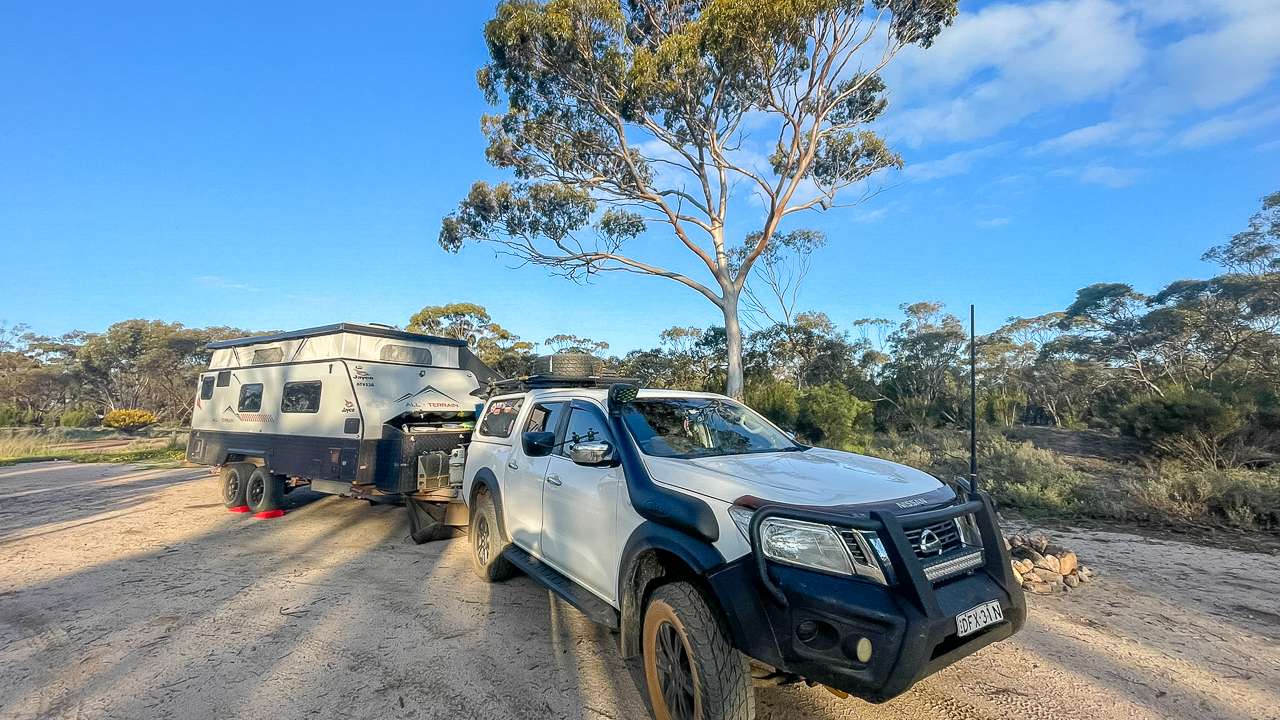
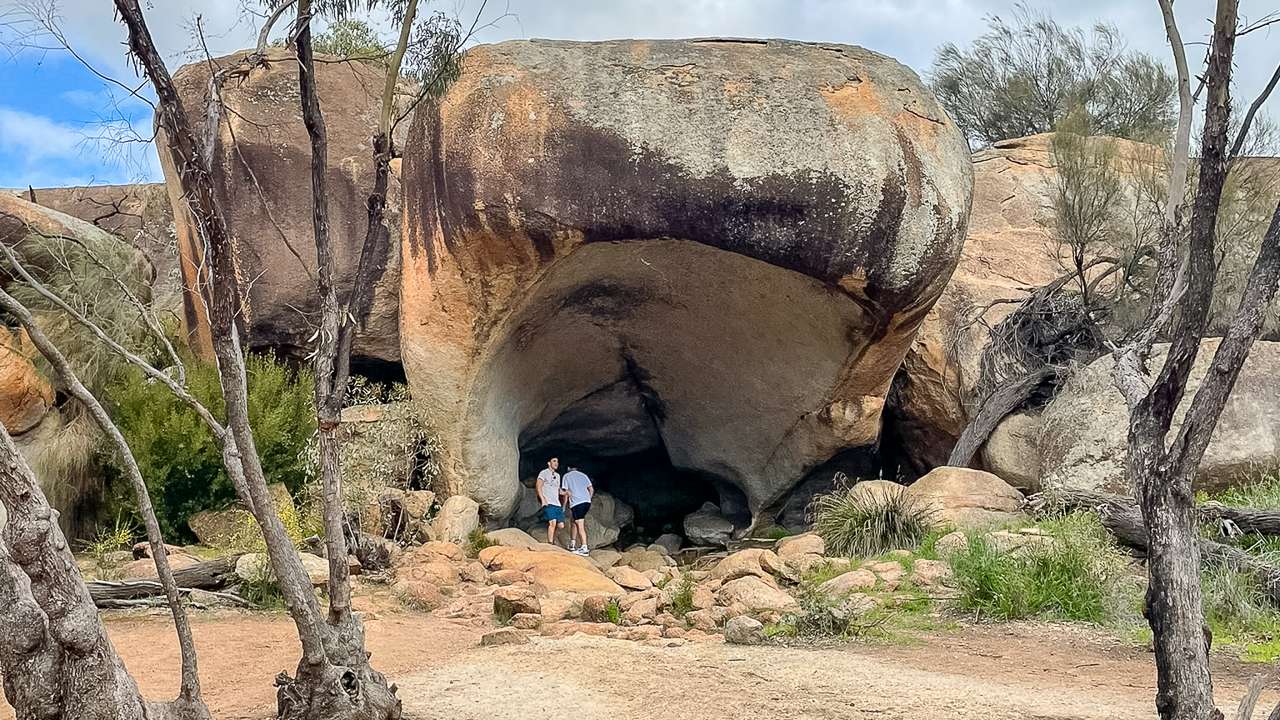
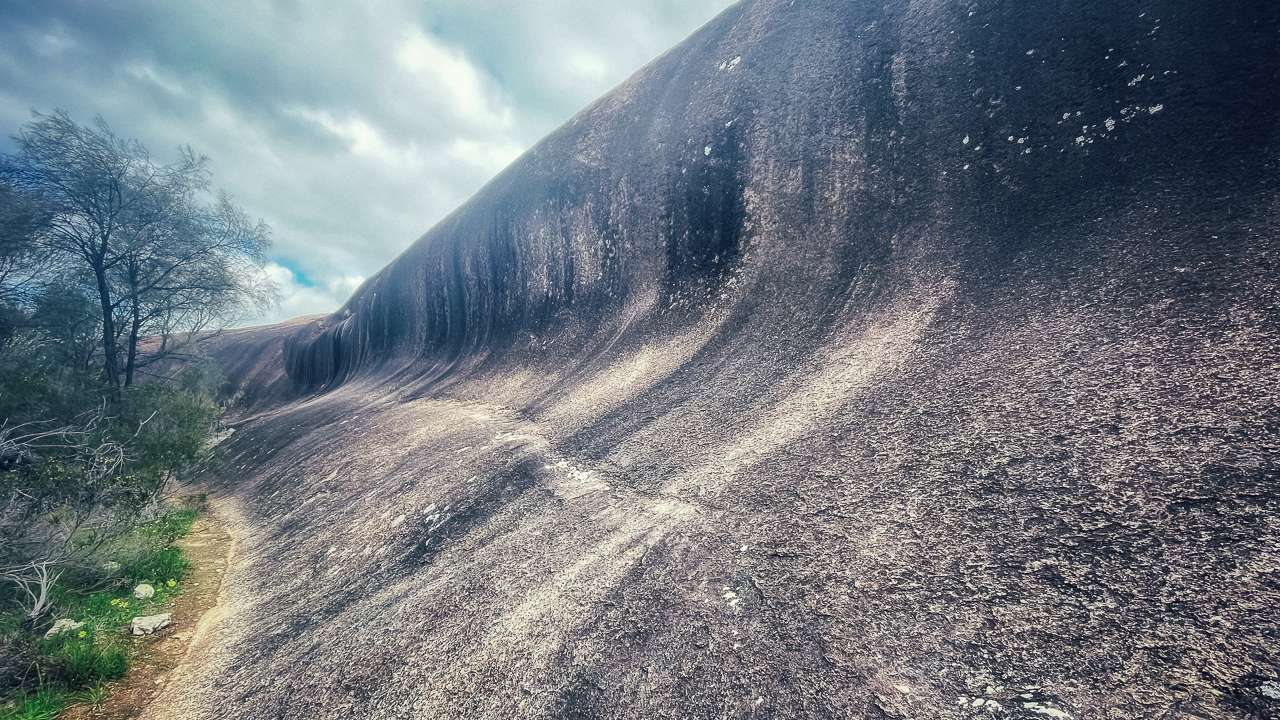
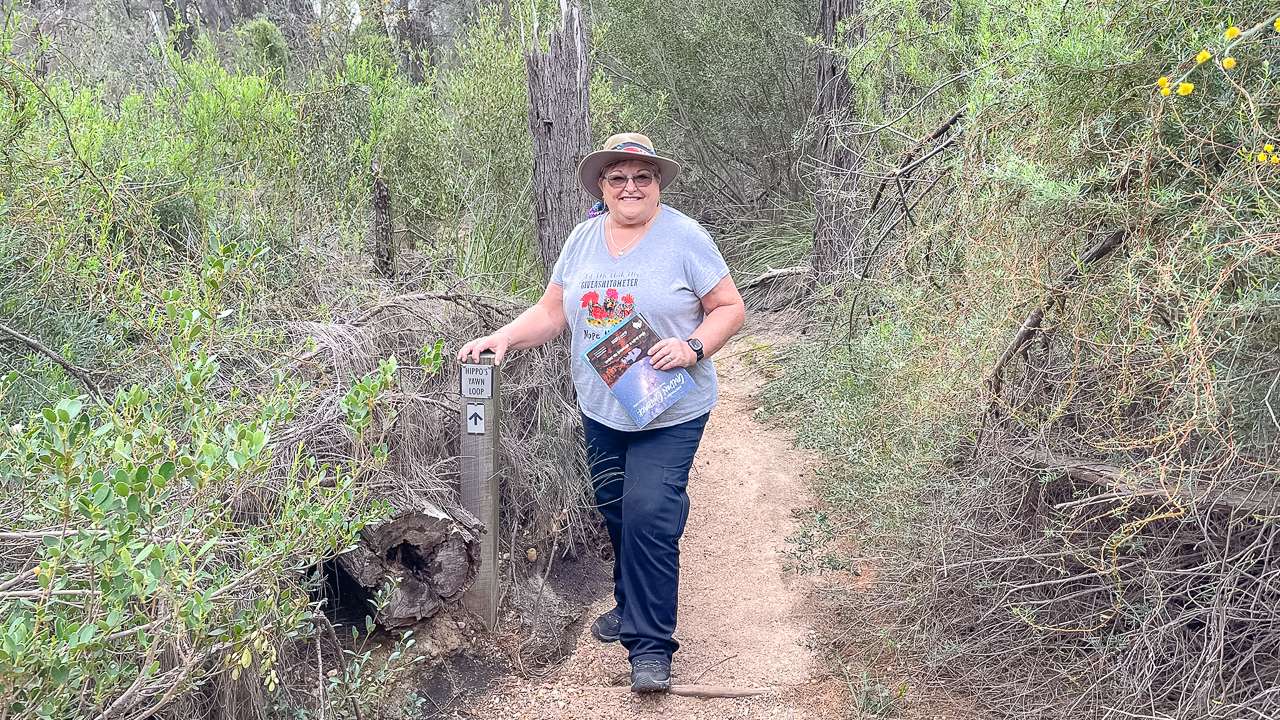
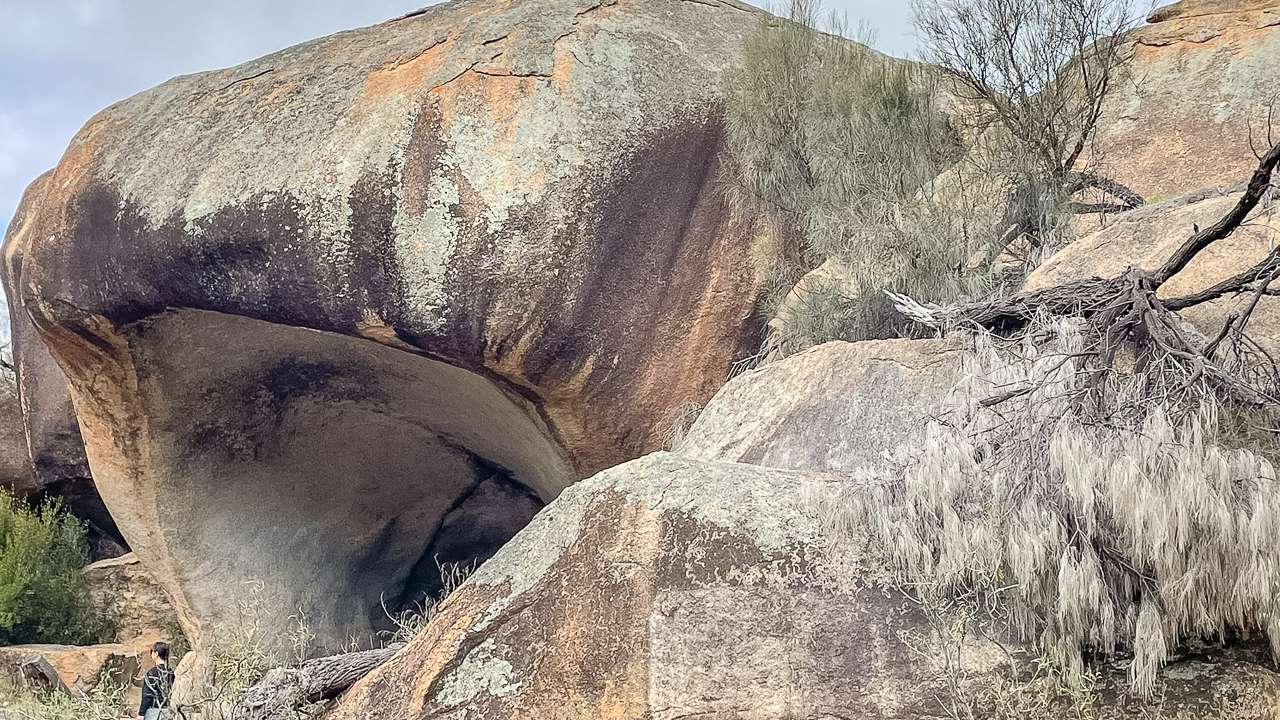
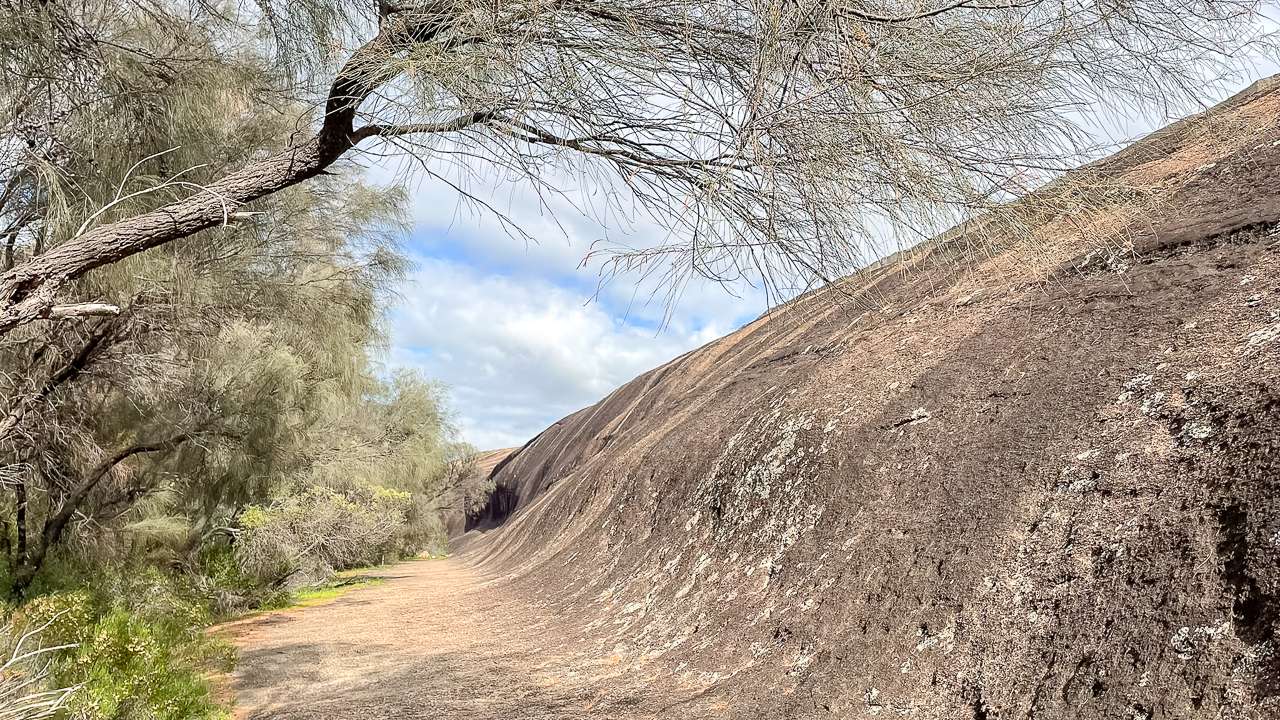
We camped up at a free camp at Holt Rock about 65 kilometres south west of Hyden WA. We drove through from Perth with a couple of stops. One stop was at Wave Rock – it’s an awesome piece of magnificence! They say the “wave” is 15m high but it seems a LOT bigger than that. We did the loop walk out to see Hippo Yawn Rock while we there and it was very interesting. We saw a load of different plants that we haven’t seen before. It’s awesome beauty coupled with a rich cultural and geological story make it a destination like no other.

Location And Accessibility

Wave Rock is nestled near the town of Hyden in Western Australia, about 340 kilometres southeast of Perth. The journey is a massive part of the adventure with scenic routes showcasing the rugged charm of the Australian bush. Road trips are the most popular way to reach it, though guided tours from Perth offer a stress free alternative.

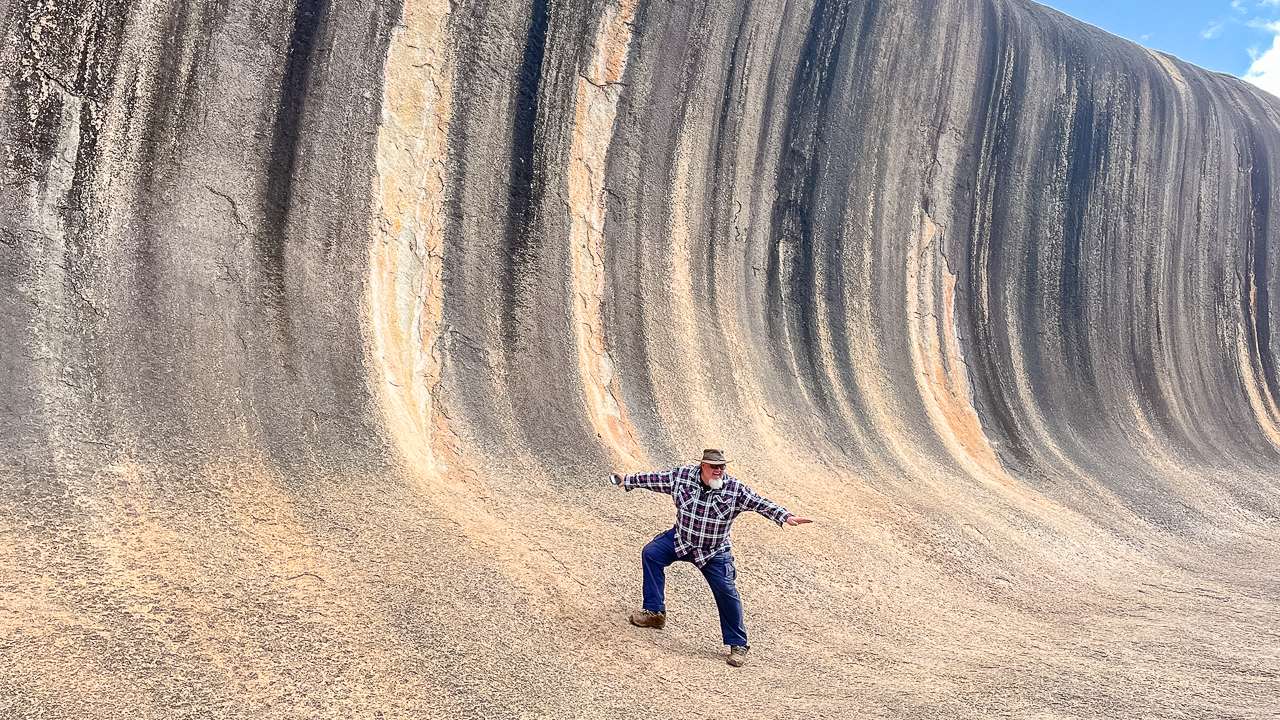
Surfing The Rock Wave Rock WA

Surfing The Rock Wave Rock WA

We Camped At Holt Rock Free Camp

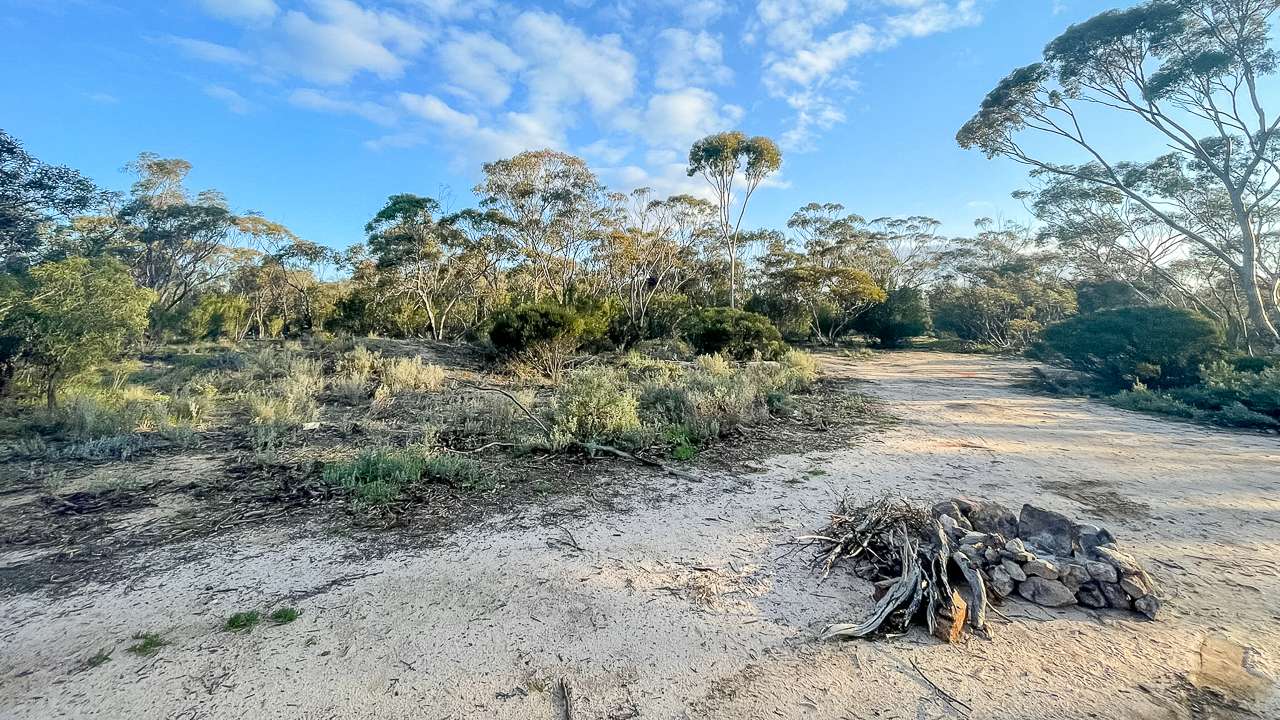
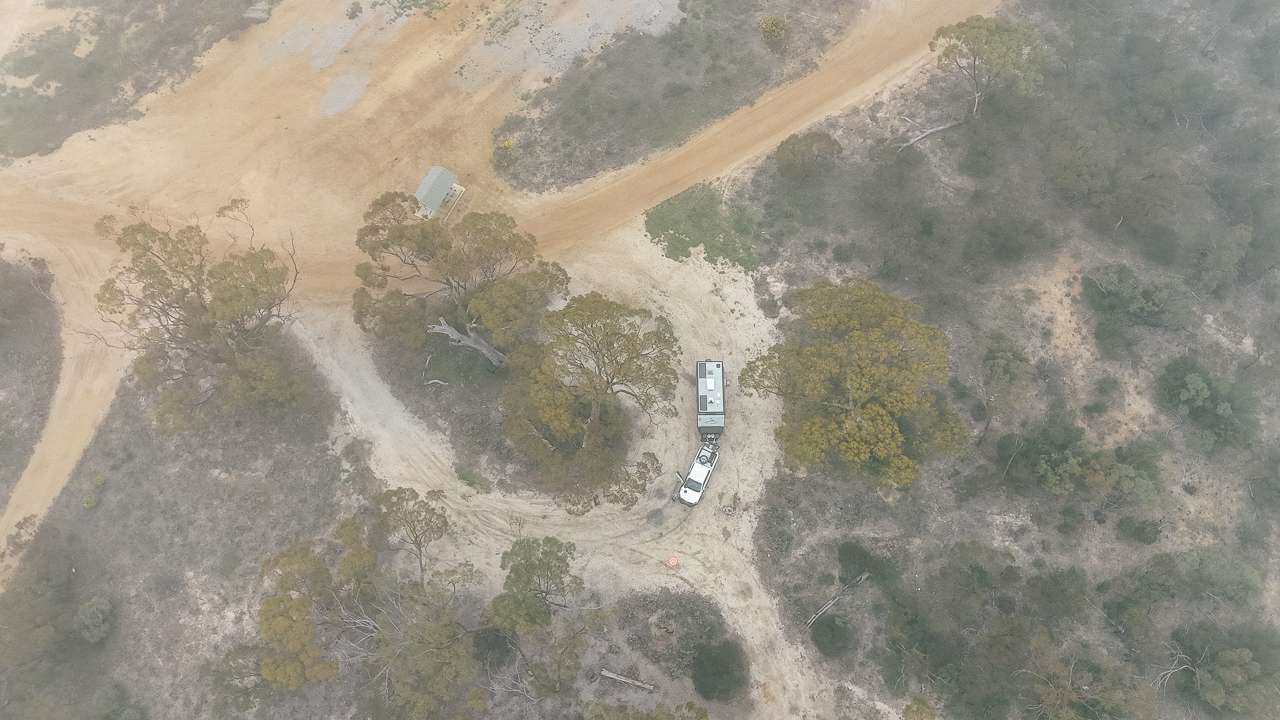
We camped at the free camping area at Holt Rock. It was nice and quiet, we only had one other caravan set up for the night but they were great and camped over on the other side of the camping area.

Tucked away in the rugged beauty of Western Australia’s Wheatbelt region Holt Rock Free Camp is a great place for travellers seeking an off the beaten path escape. This free camping spot offers a serene retreat surrounded by nature making it a perfect base for those exploring the area.

Located near the small town of Varley, Holt Rock Free Camp provides a slice of outback solitude. The camp is well suited for self contained travellers, with flat, spacious areas ideal for setting up caravans, motorhomes, or tents. While the amenities are basic, there are no powered sites or running water, the peaceful atmosphere more than makes up for it. With no urban lights to dim the view, the starry night skies here are nothing short of magical.

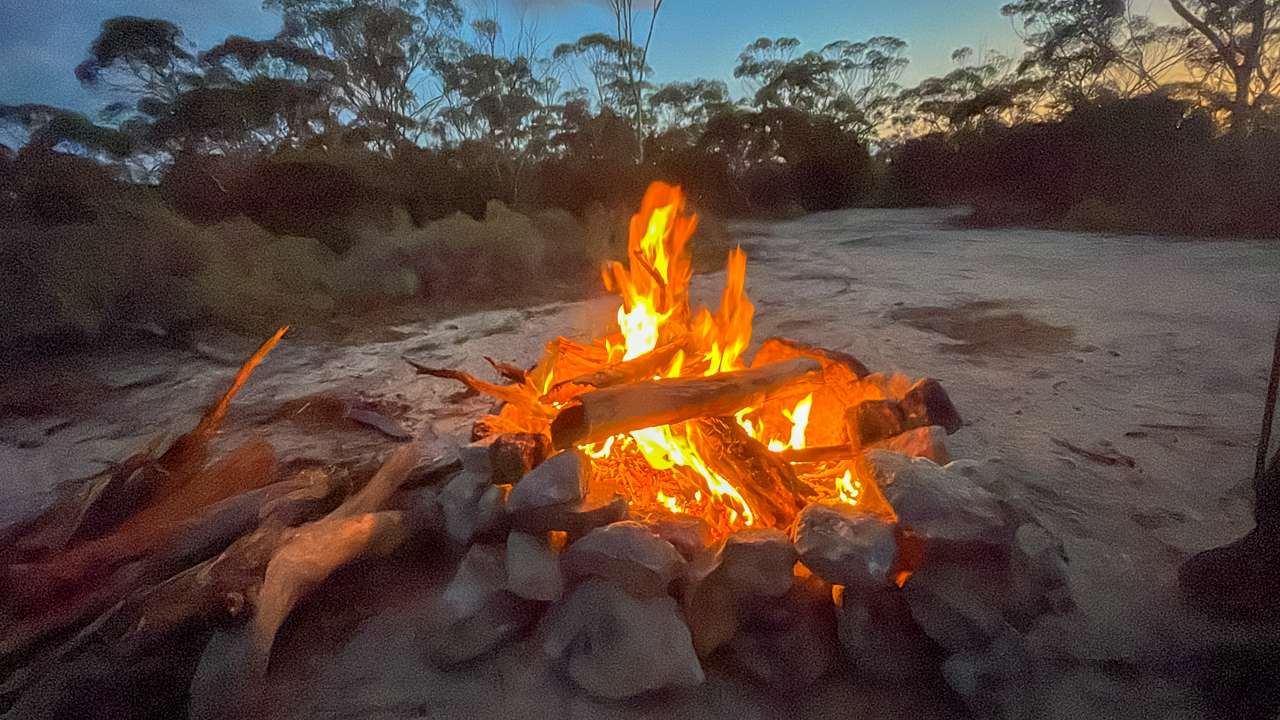
Campfire At Holt Rock Free Camping Area

Campfire At Holt Rock Free Camping Area

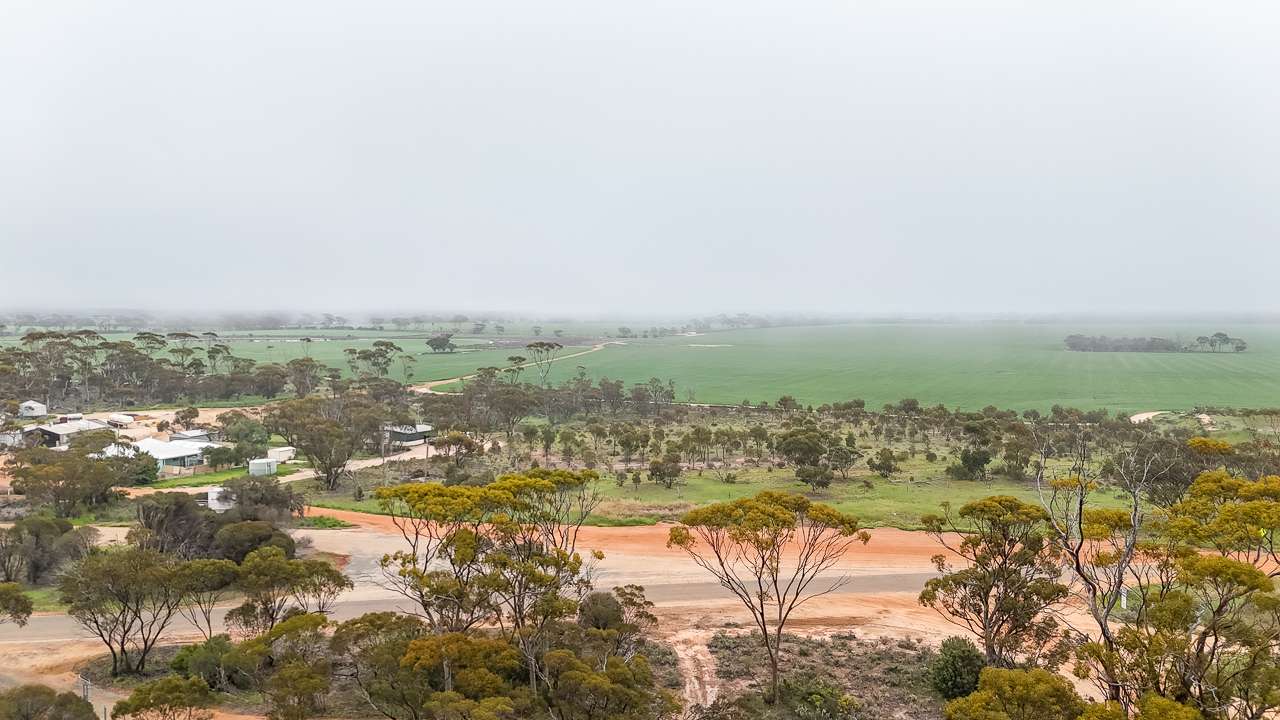
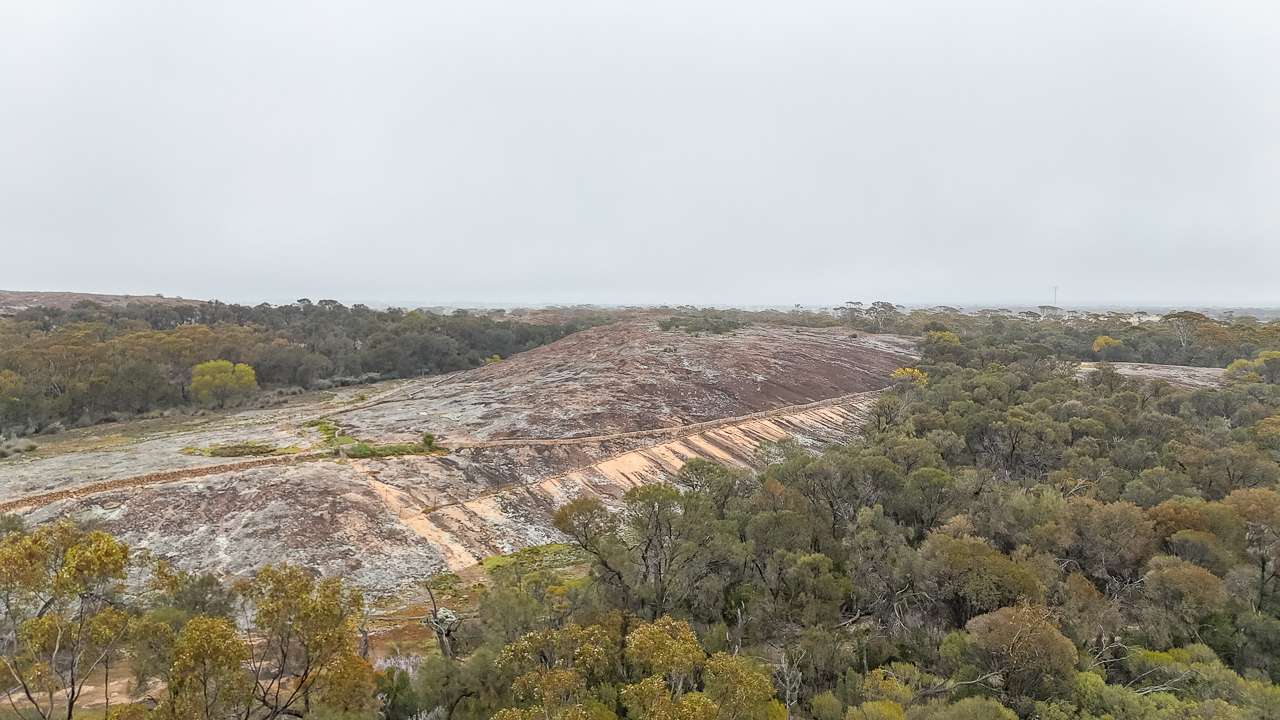
Nature lovers will find plenty to admire. The camp is named after Holt Rock, a striking granite formation just a short drive away. This ancient rock, similar to the famous Wave Rock invites exploration. Climbing to the top rewards you with panoramic views of the surrounding landscape, a patchwork of salt lakes, farmland and bushland stretching as far as the eye can see.

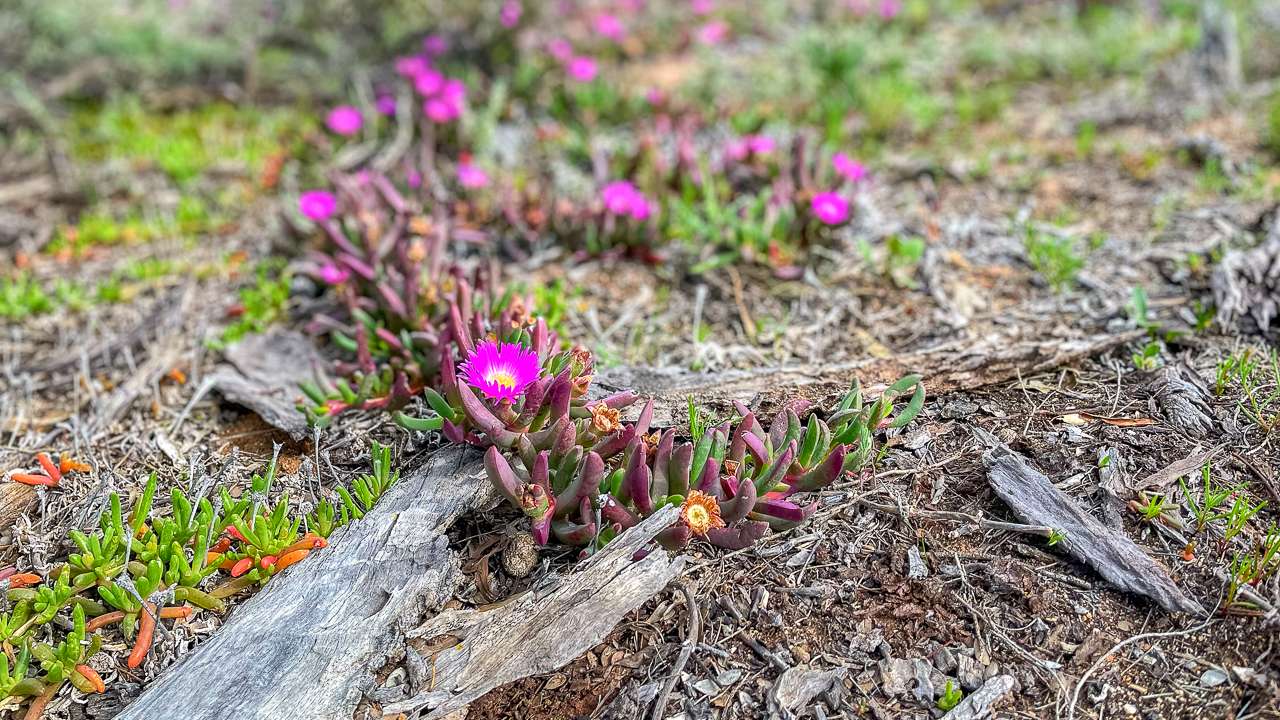
For adventurers keen to stretch their legs, walking trails around the area reveal native flora and fauna. In spring, wildflowers burst into bloom, painting the landscape with vibrant colours. Keep an eye out for kangaroos and an array of bird species that call this region home.

Wildflowers At Wave Rock WA

Wildflowers At Wave Rock WA

One of the most appealing aspects of Holt Rock Free Camp is its quiet with not much around. It’s a place where you can disconnect, unwind and soak in the Australian outback. Campfires are permitted in designated areas (when fire bans are not in effect), adding to the traditional camping experience. We brought some firewood with us however there was a bit lying around if you didn’t mind a decent walk into the bush.

The nearby Varley General Store is a handy stop for basic supplies and a friendly chat with locals. Whether you’re passing through on a broader Wheatbelt adventure or planning to stay a few days, this camp offers an authentic taste of Australia’s vast and varied landscapes.

If you’re searching for a peaceful retreat with plenty of natural beauty, Holt Rock Free Camp is a destination that delivers simplicity, solitude and unforgettable sunsets.

Travelling From Wave Rock To Holt Rock Free Camp

The journey from Wave Rock to Holt Rock Free Camp is another outback adventure that takes you through Western Australia’s breathtaking Wheatbelt region. It’s about a 90 kilometre drive which takes just over an hour. The best thing about it is it’s away from the tourist crowds, allowing you to experience the unspoiled beauty of the countryside in peace and quiet.

As you leave Wave Rock the iconic granite formation fades into your rearview mirror, replaced by endless plains dotted with salt lakes and resilient bushland. The road is sealed for much of the trip ensuring a smooth journey although some gravel adds a bit of adventure. Keep your camera handy, wildlife sightings are common, with kangaroos and emus often making an appearance.

Along the way you’ll pass through small rural communities where time seems to slow down. Stop to explore local history, grab a snack, or simply stretch your legs in the wide open spaces. The simplicity of these quiet towns is a reminder of the slower pace of life in Australia’s outback.

Arriving at Holt Rock Free Camp, you’re greeted by a peaceful haven surrounded by natural wonders. The camp is close to Holt Rock, a striking granite outcrop that invites exploration. Climbing the rock offers sweeping views of the surrounding landscape, a tapestry of farmland, salt lakes and untamed bush.

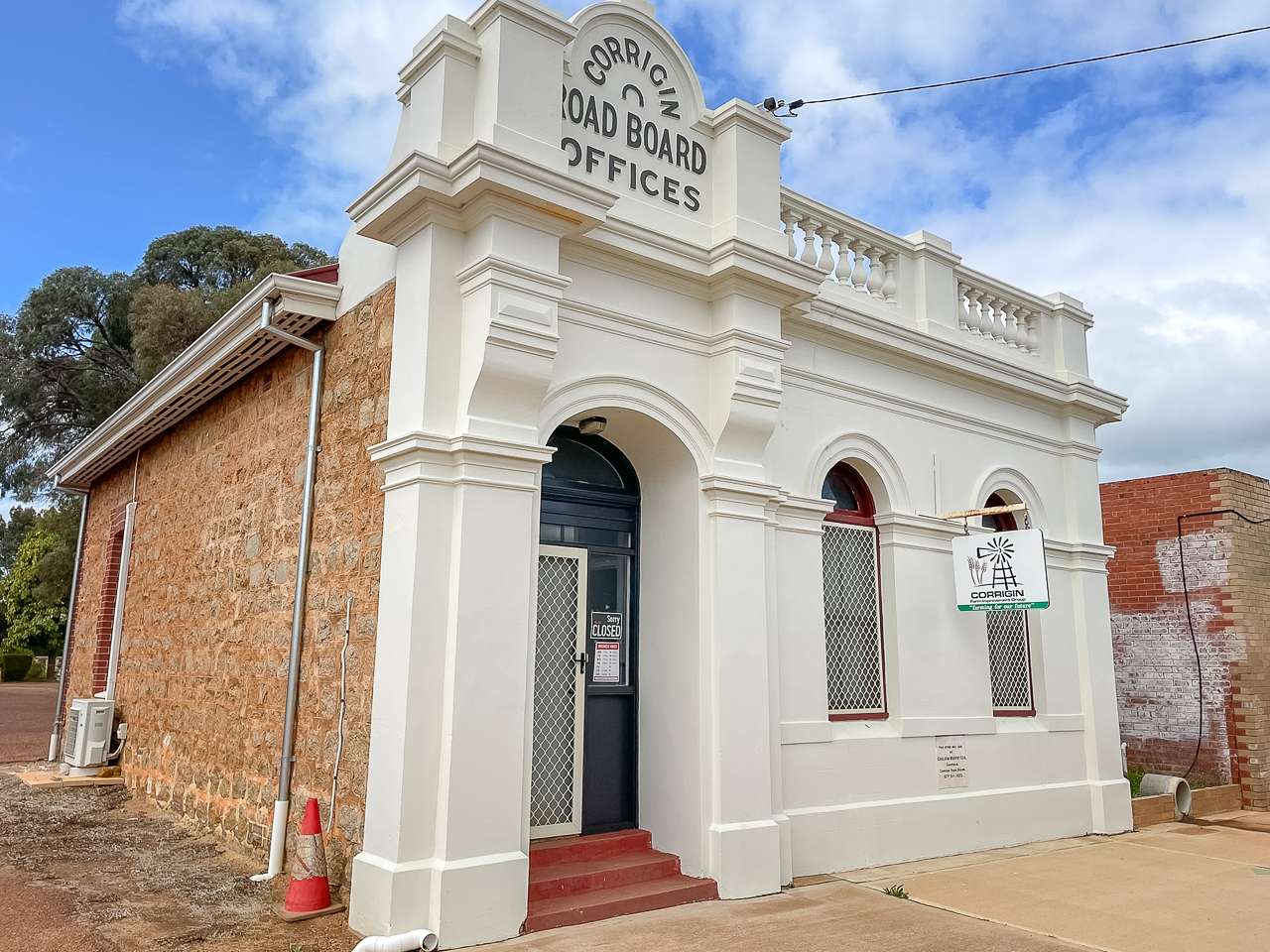
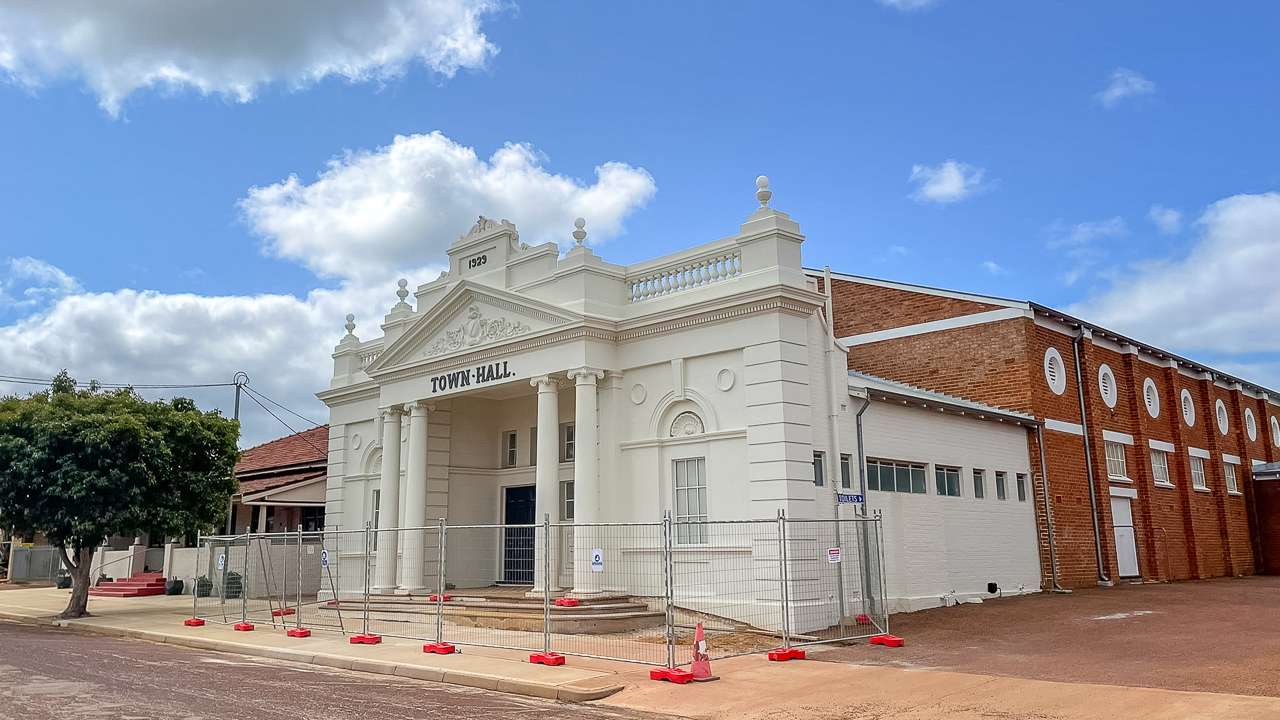
The Corrigin Road Board Offices Building

The Corrigin Road Board Offices Building

The camp itself provides flat, spacious sites perfect for self contained travellers. Its rustic charm, coupled with the spectacular star studded night skies, makes it a must visit destination.

This short journey from Wave Rock to Holt Rock Free Camp is more than a drive, it’s a chance to connect with the land, immerse yourself in nature and embrace the serene beauty of Australia’s heartland.

The Journey From Perth

Embarking on the trip from Perth to Wave Rock is more than just a drive, it’s an adventure through the heart of Western Australia’s diverse landscapes. A scenic journey of around 340 kilometres, this route offers travellers a chance to soak in the beauty of the Australian outback, discover quirky stops along the way and experience the unique charm of rural towns.

The drive typically takes around four hours, but there’s no need to rush. As you leave Perth behind, you’ll traverse open plains, salt lakes and rolling wheat fields. The ever changing scenery is a photographer’s dream, with vast horizons and striking colours that seem to shift with the sun’s position.

For those who enjoy offbeat attractions, consider detouring through Kulin to experience the Tin Horse Highway. This whimsical stretch of road features quirky, horse themed sculptures created by local artists. It’s a lighthearted stretch of road that perfectly encapsulates the creativity of regional Australia.

Further along the route you’ll come to the historic town of York. Considered to be the oldest inland settlement in Western Australia York has great historical colonial architecture, cafés and boutique shops. Stretch your legs here, wander the heritage listed streets and enjoy a bite to eat before continuing your journey.

The drive from Perth to Wave Rock also provides an excellent opportunity to learn about the region’s natural history. Salt lakes like Lake Grace or Lake King are found along the way, their pale, reflective surfaces creating an otherworldly landscape. These geological wonders remind you of the area’s ancient past.

As you leave Perth the scenery shifts once again. You drive through rolling hills and vineyards welcome as you leave the busy cityscape behind. Perth’s cosmopolitan energy feels like a world away from the quiet serenity of The Rock making the transition all the more striking.

Whether you take the direct route or wander amongst the towns and sights, the journey from Perth to Wave Rock is a great Aussie road trip. It’s not just about reaching your destination but immersing yourself in the natural and cultural treasures of Western Australia along the way.

A Geological Masterpiece

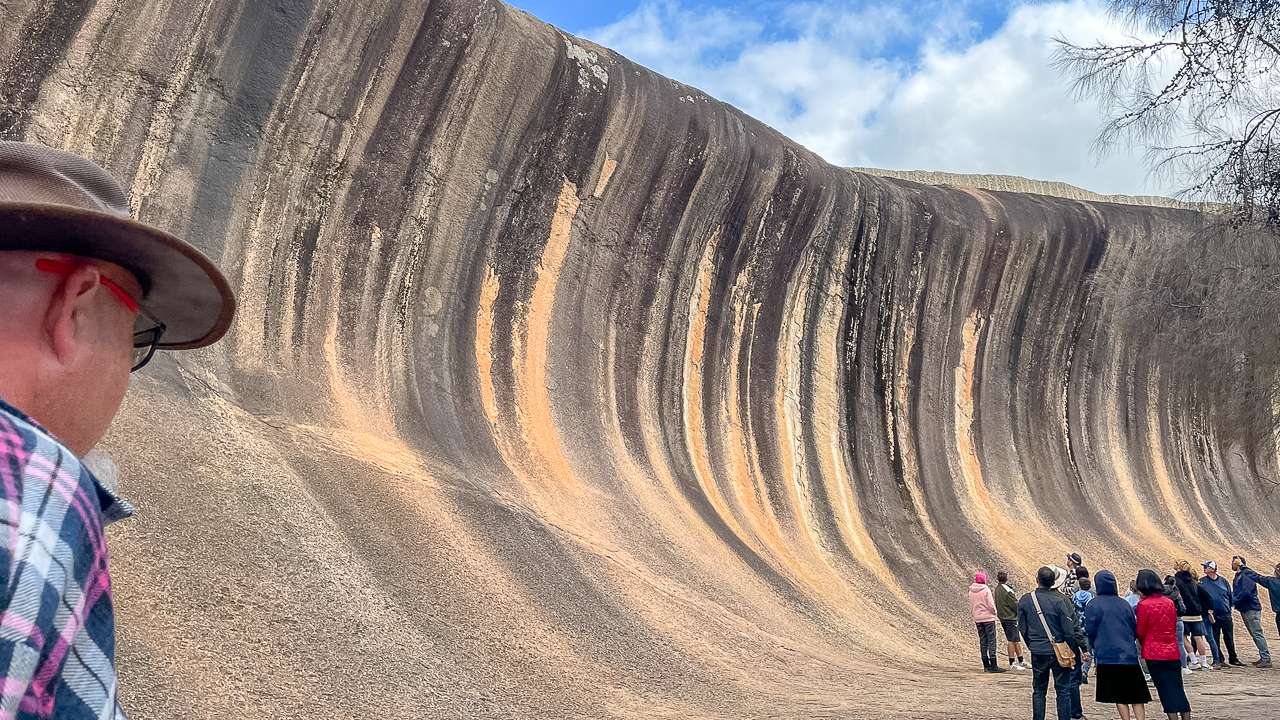
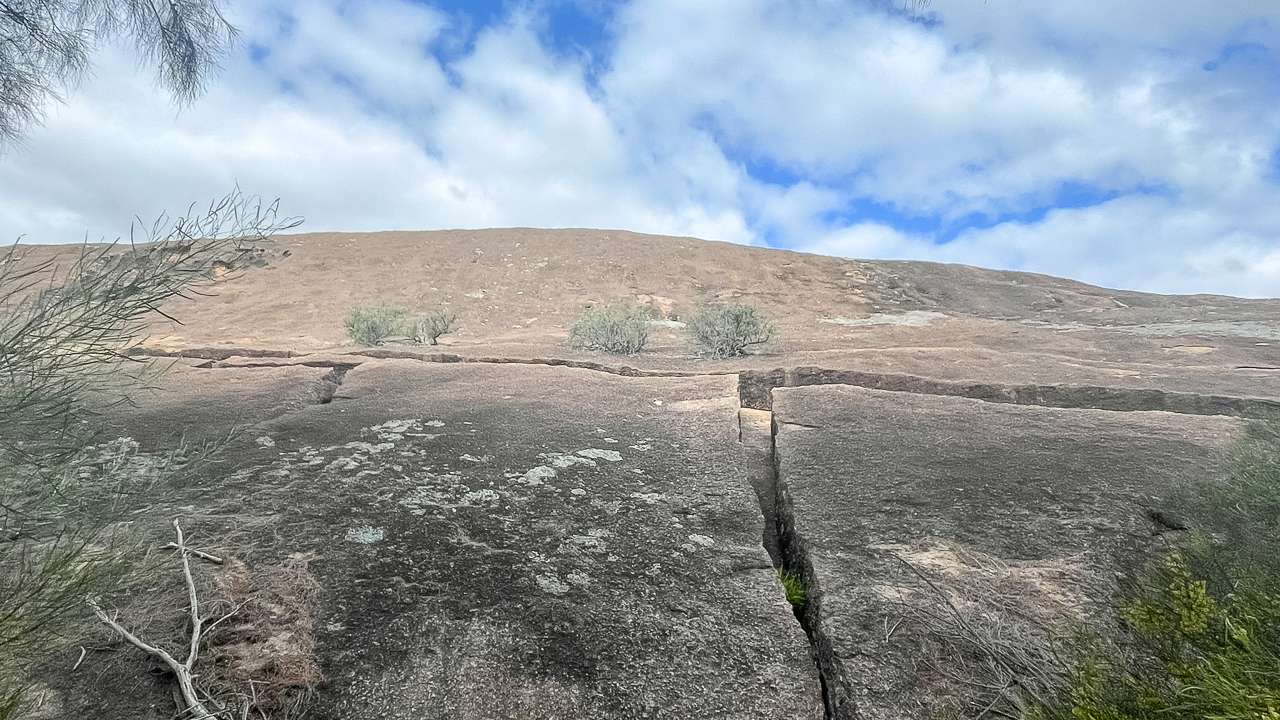
Carved over 2.7 billion years (Amanda can remember that far back or so I reckon) it is a marvel of nature’s artistry. Its vibrant hues of orange, red and grey are the result of chemical reactions between minerals and water. Standing before its 15 metre high, 110 metre long curve, you can’t help but marvel at the raw power of erosion and time.

The Science Behind The Wave Shape

Wave Rock’s iconic shape wasn’t sculpted by chance. Over millennia water trickled down its surface dissolved minerals leaving behind layers of sediment that accentuated its curve. Wind and sand got in and had a go and played their roles too. Smoothing and shaping the rock into the stunning formation we see today.

Wave Rock Near Hyden WA

Wave Rock Near Hyden WA

The Indigenous Connection

For the Noongar people, Wave Rock is sacred. Dreamtime stories tell of the rainbow serpent, a powerful spirit that shaped the land and brought life giving water. Visiting the site is not just about admiring its beauty, it’s also about honouring its deep cultural roots.

Wave Rock In Popular Culture

Wave Rock has transcended its geological origins to become a symbol of Australia’s vast landscapes. It’s been featured in films, documentaries and even international advertisements. Its surreal form inspires artists and travellers alike, solidifying its place as a cultural icon.

Exploring Beyond The Wave

The Wave Rock experience doesn’t end at the wave itself. Just a short walk away is Hippo’s Yawn, a rock formation resembling a yawning hippopotamus. Mulka’s Cave is full of indigenous folklore. It provides a look into ancient history with its eerie handprint markings.

Wave Rock Wildlife Park

The Wildlife Park is a haven for native fauna. Wander through and meet kangaroos, emus and dingoes. Conservation efforts at Wave Rock are intended to protect the region’s biodiversity while giving visitors a chance to learn about and appreciate Australia’s unique wildlife.

Seasonal Spectacles

Spring transforms the whole area into a kaleidoscope of colours, with wildflowers blanketing the landscape. Throughout the year, the weather varies from mild autumn days to scorching summer heat, so timing your visit can greatly enhance your experience.

The Flora Of The Hyden Region

From saltbush to eucalypts, the plants around Wave Rock have adapted to thrive in tough conditions. Many have medicinal or cultural significance, offering a fascinating insight into how nature and people coexist in this harsh environment.

The Fauna Of The Hyden Region

Beyond kangaroos and emus, the region teems with life. Look closely and you might spot echidnas, lizards and a dazzling array of bird species. These animals are masters of adaptation, surviving in one of the driest parts of the country.

Climbing To The Top Of Wave Rock

A short climb up Wave Rock rewards you with sweeping views of the surrounding outback. The ascent is relatively easy, but sturdy shoes and caution are advised, as the granite can be slippery.

Photographing Wave Rock

Sunrise and sunset are prime times for capturing Wave Rock’s beauty. The golden light accentuates its textures and colours, while a wide angle lens ensures you capture its full grandeur. For something different, try a close up shot of its mineral streaks.

Where To Stay: Your Guide To Wave Rock WA Accommodation

When planning a trip to the breathtaking Wave Rock in Western Australia, choosing the right place to stay is just as important as the destination itself. The good news? There’s a range of Wave Rock WA accommodation options to suit every traveller’s preference, whether you’re after a rustic camping experience or a touch of luxury.
For those who love to immerse themselves in nature, the Wave Rock Caravan Park is an unbeatable choice. Located just a stone’s throw from the iconic formation, this park offers powered and unpowered camping sites, as well as modest cabins. Staying here means you can wake up with the sun rising over the outback and enjoy uninterrupted views of the night sky.

Looking for something a bit more refined? The Wave Rock Motel in nearby Hyden combines comfort with convenience. Offering air conditioned rooms, private amenities and hearty meals at the on site café, it’s a cosy base for exploring the region. Hyden itself is a charming stopover, with local shops and galleries adding to its appeal.

For travellers who crave a unique experience, consider booking a stay at one of the region’s farmstays. These properties, scattered across the Hyden area, allow visitors to enjoy the rugged beauty of the outback while indulging in authentic rural hospitality. Some farm stays even offer opportunities to interact with livestock or sample fresh, locally produced food.

Budget conscious adventurers aren’t left out either. Backpacker style Wave Rock WA accommodation can be found in the form of shared facilities at caravan parks or modestly priced motels. These options are perfect for travellers keen to stretch their dollars while still soaking in the incredible scenery.

Holt Rock Camping Area

Holt Rock Camping Area

If privacy is a priority, self contained chalets or holiday homes around Hyden provide a homely atmosphere. Many come with fully equipped kitchens, so you can prepare meals after a day of exploring. These accommodations are ideal for families or groups looking to stay together and unwind in peace.

Regardless of where you choose to stay these accommodation options put you at the doorstep of one of Australia’s most unique landmarks. Whether under the stars or in a plush bed, you’ll find a place that feels just right for your adventure.

Eating And Drinking In Hyden

Local cafes and bakeries serve hearty meals perfect for fuelling your explorations. For a more intimate experience, pack a picnic and enjoy it in one of the scenic spots near Wave Rock.

Wave Rock Weekender Festival

Each September the Wave Rock Weekender transforms the area into a hub of music, art and community. This boutique festival brings together travellers and locals, creating a unique cultural celebration.

Environmental Challenges And Conservation

Wave Rock’s popularity has brought challenges, including erosion and waste. Conservation efforts aim to protect the site, from maintaining paths to educating visitors. Small actions like sticking to the clearly defined walking tracks make a big difference.

Planning Your Visit

Pack plenty of water, sunscreen and a hat. Essential items for the Australian outback. Plan your visit during cooler months and consider staying overnight to avoid the rush of day trippers.

Family Friendly Activities

The Rock is an excellent destination for families. Kids will love exploring the unique rock formations, spotting wildlife and learning about the area’s history through interactive exhibits.

Wave Rock: A Lasting Impression

Wave Rock isn’t just a place – it’s an experience. Standing before its grandeur, you feel connected to something ancient and enduring. It’s a memory that lingers, a reminder of the wonders our planet holds.

Hippo Yawn Rock

Hippo Yawn Rock

Wave Rock & Holt Rock Free Camping Photo Gallery

FAQs Frequently Asked Questions About Wave Rock WA

What is Wave Rock and how was it formed?

Wave Rock is a stunning natural rock formation shaped like a giant wave about to break. It was formed over millions of years through weathering and erosion of granite, creating its unique curved shape and striped patterns.

Where is Wave Rock located in Australia?

Wave Rock is located near the small town of Hyden in Western Australia, approximately 340 kilometres southeast of Perth.

What is the best time of year to visit Wave Rock?

The best time to visit Wave Rock is during spring (September to November) when the weather is mild, and the surrounding wildflowers are in full bloom.

How do I get to Wave Rock from Perth?

You can drive to Wave Rock from Perth, a journey of about 4 hours via the Brookton Highway or Great Eastern Highway. Tours are also available for those preferring guided trips.

Is there accommodation available near Wave Rock?

Yes, accommodation options include the Wave Rock Caravan Park, Wave Rock Motel in Hyden, and nearby farm stays, catering to a range of preferences and budgets.
We Visited The Pinnacles Desert: Awesome Day Trip From Perth

We Visited The Pinnacles Desert: Awesome Day Trip From Perth

We Visited The Pinnacles Desert: Awesome Day Trip From Perth

We visited the Pinnacles Desert Western Australia on day trip just 2 hours from Perth. Nambung National Park’s stunning limestone formations are as interesting as they are completely weird. When you’re visiting Western Australia, a day trip to The Pinnacles Desert is an absolute must.

Just a short two hour drive north of Perth this unique landscape is like stepping onto another planet. Imagine towering limestone formations scattered across golden sands under a big blue sky. This place truly has to be seen to be believed. So if you’re up for a little road trip hop in the car pack some snacks and let’s get going! Here’s what you need to know for a day trip to The Pinnacles plus a few things we didn’t and now do.

The Pinnacles

The Pinnacles

What Are The Pinnacles?

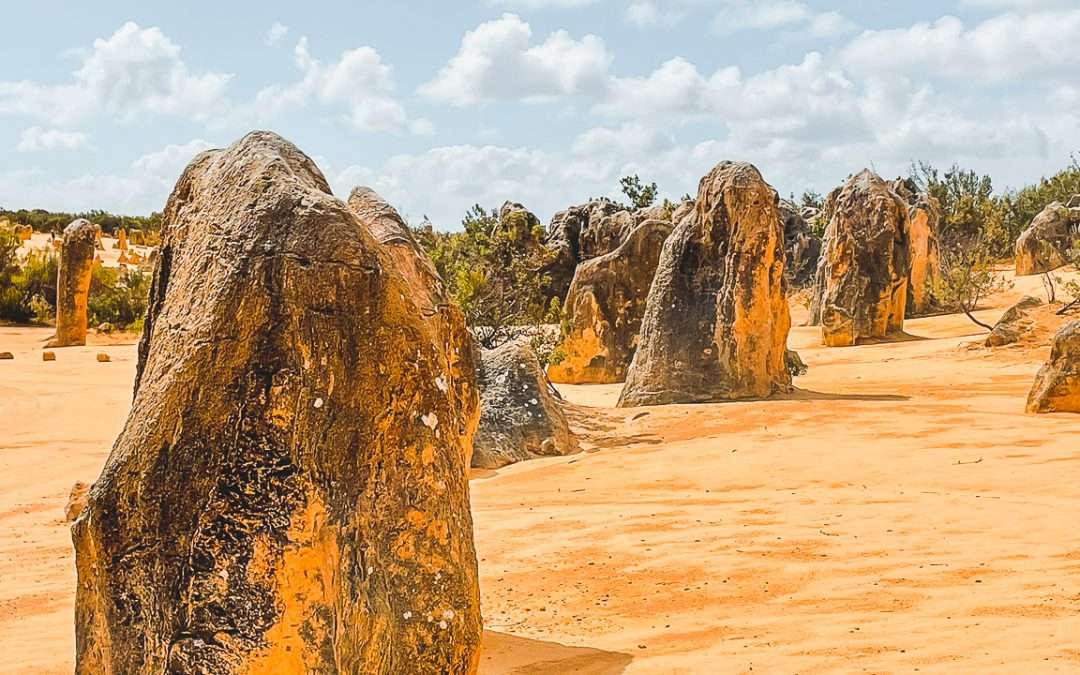
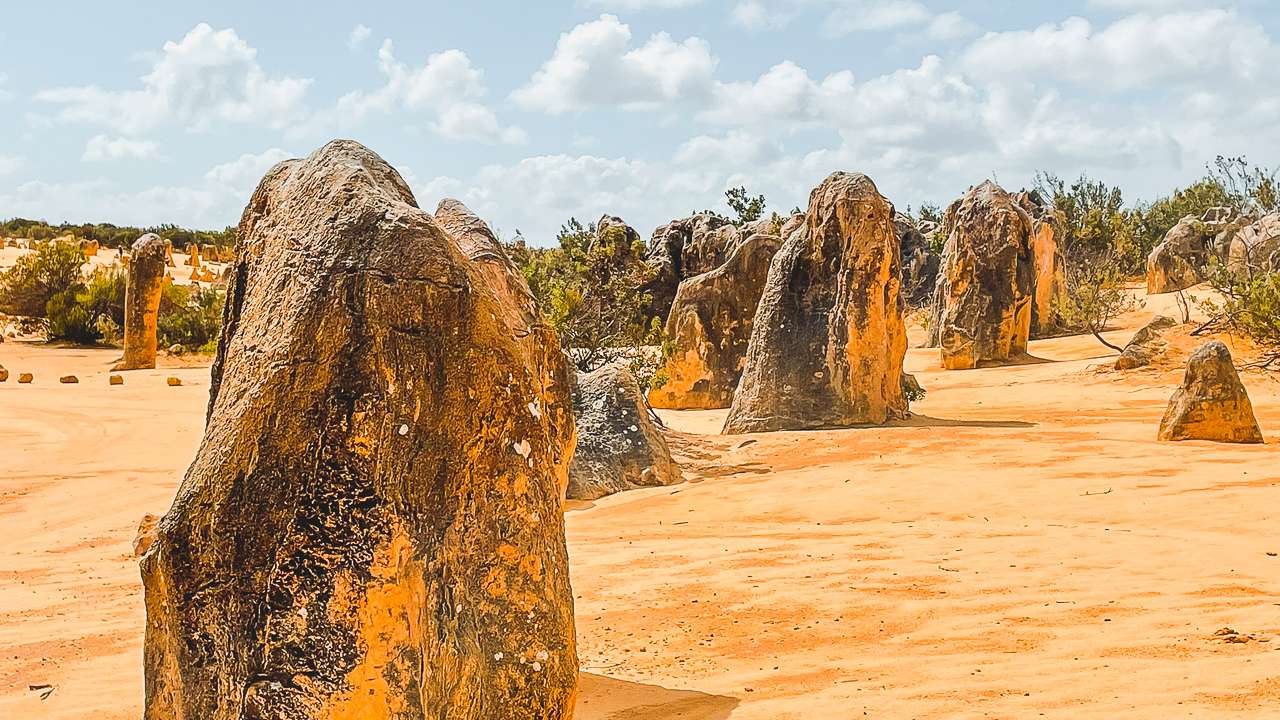
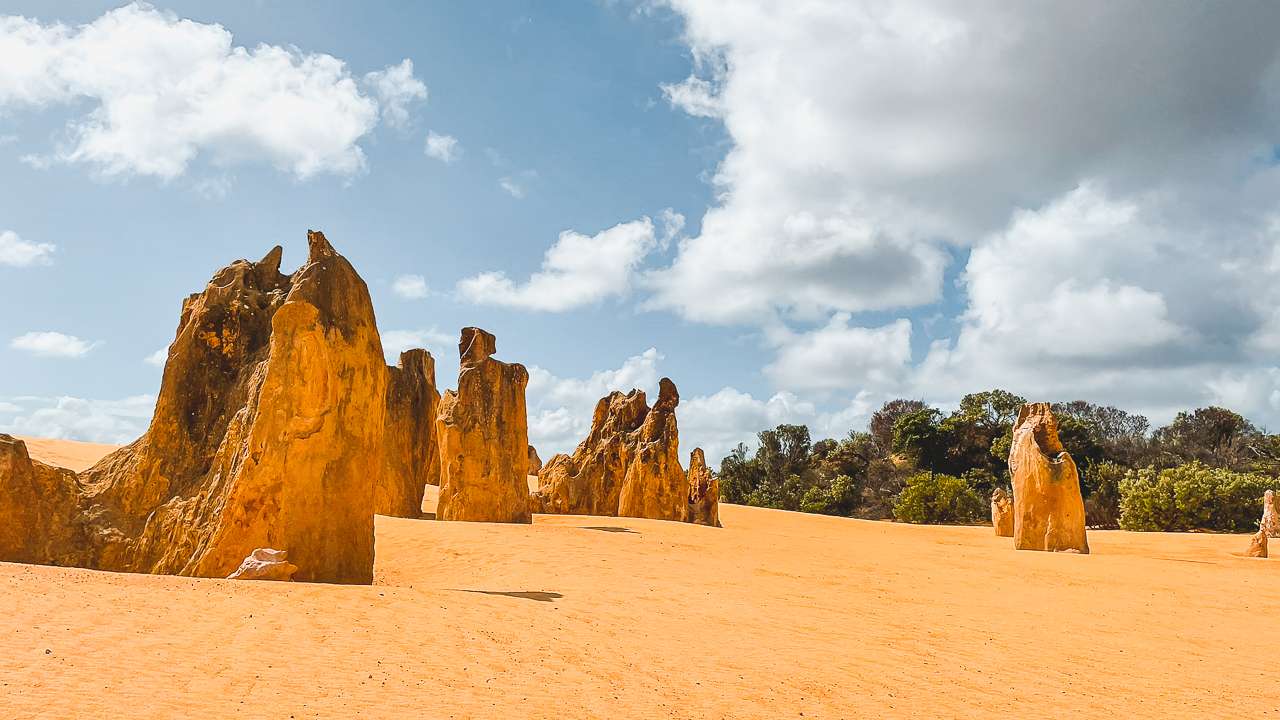
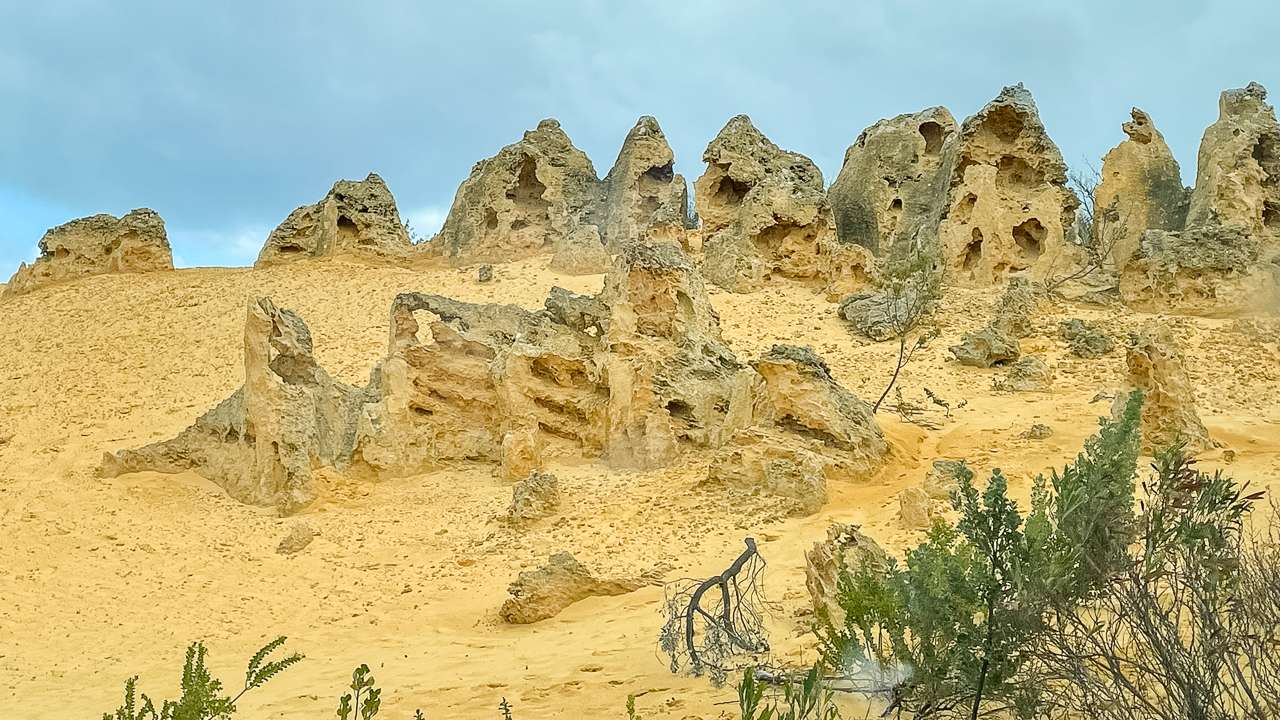
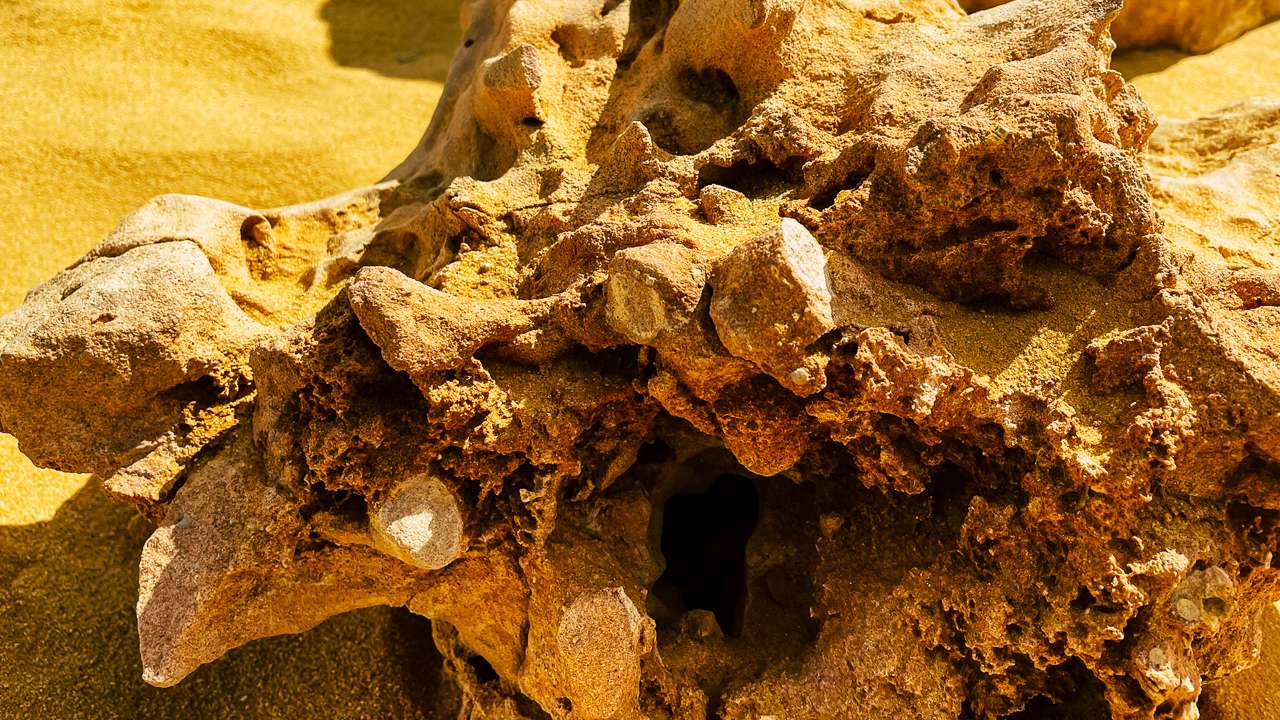
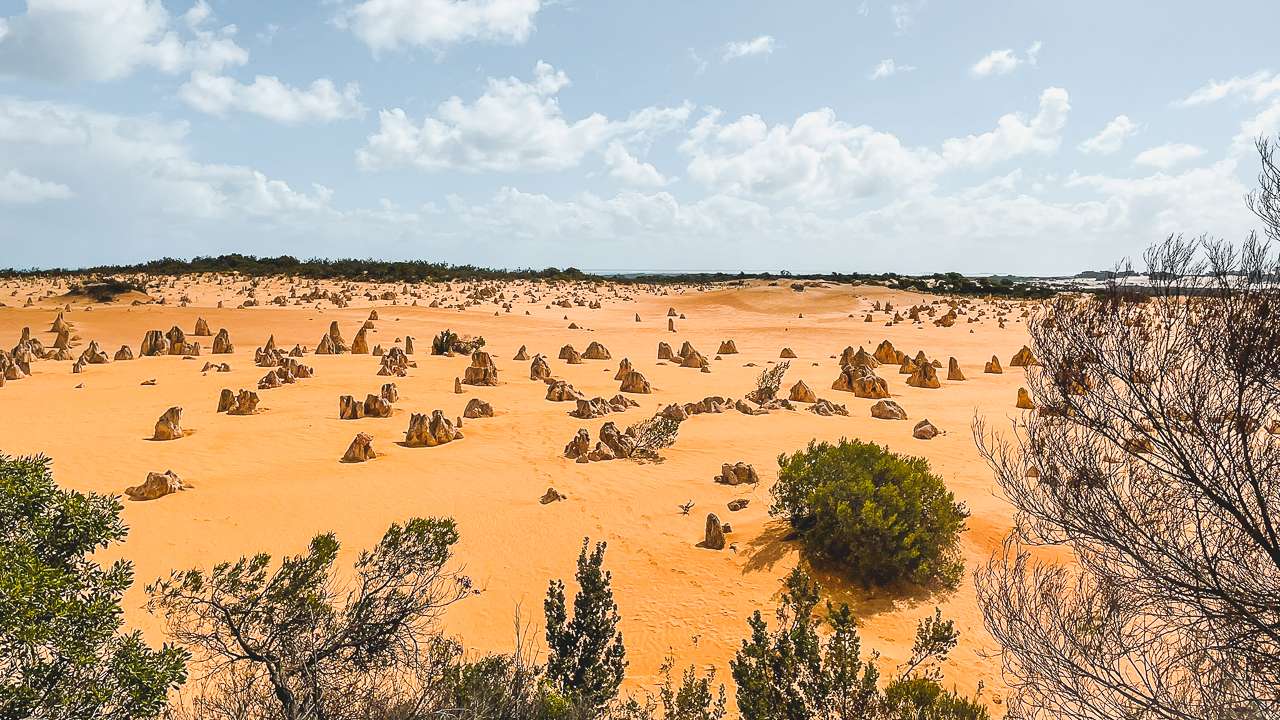
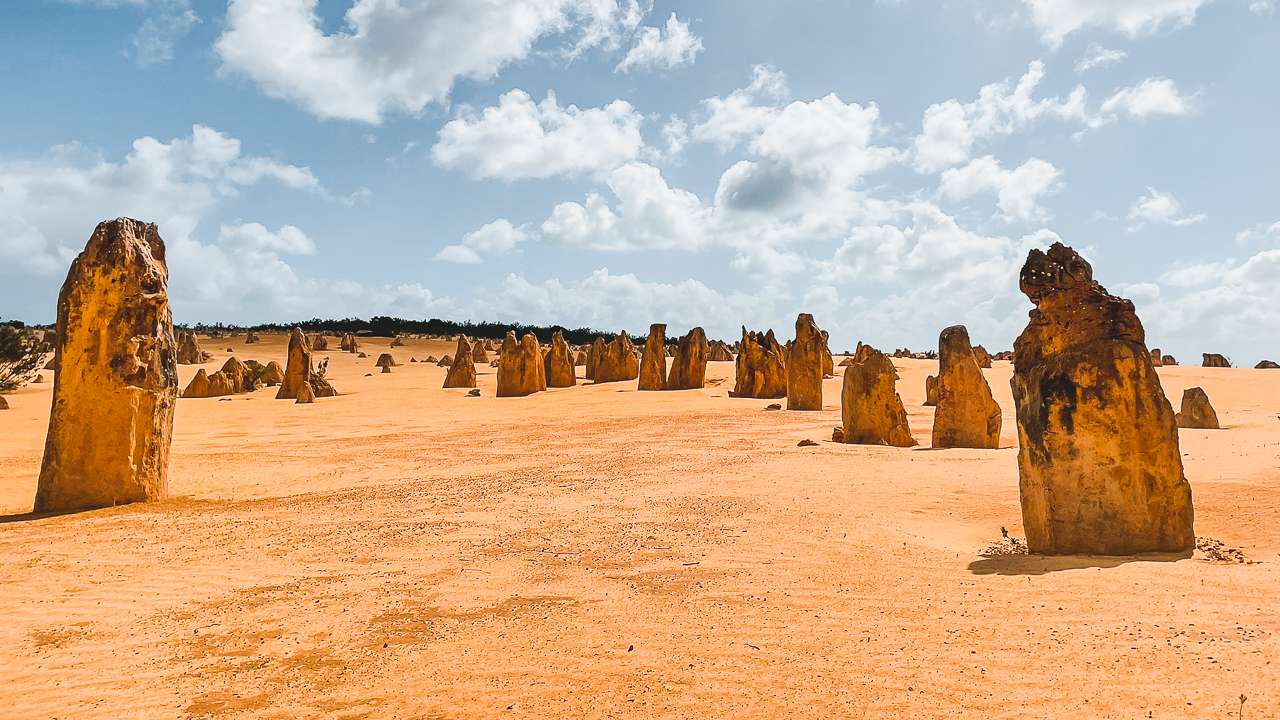
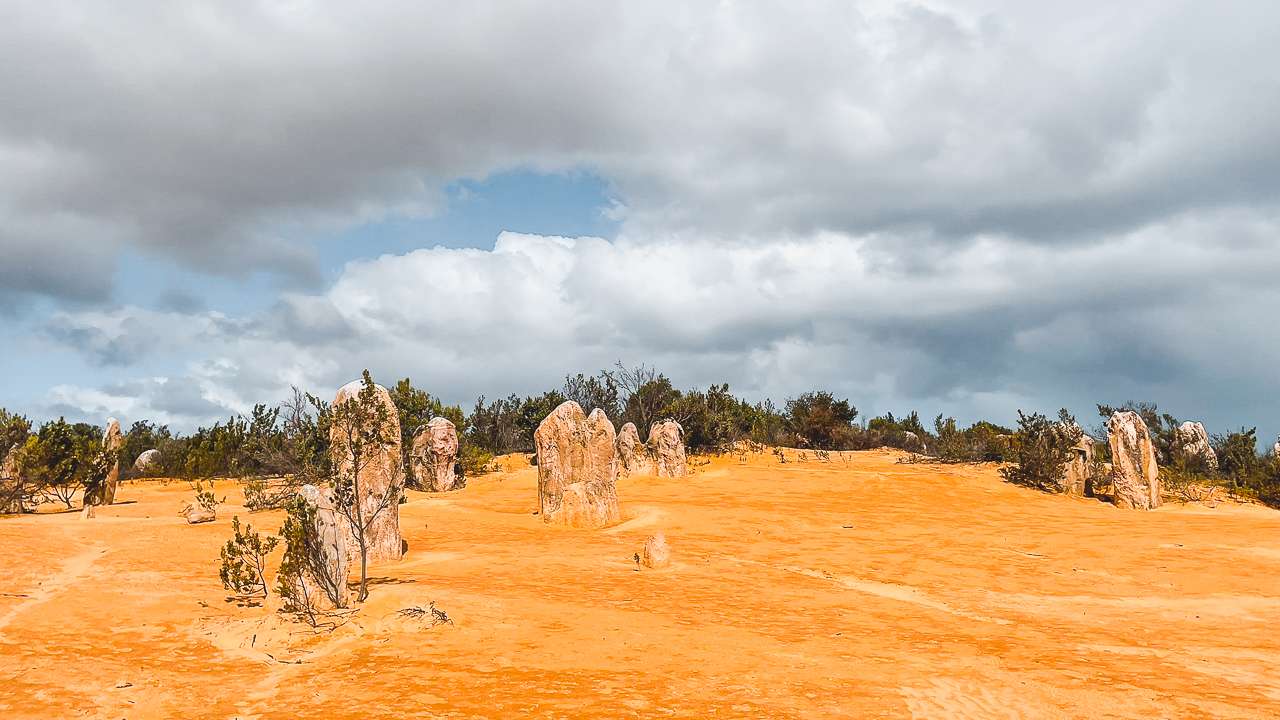
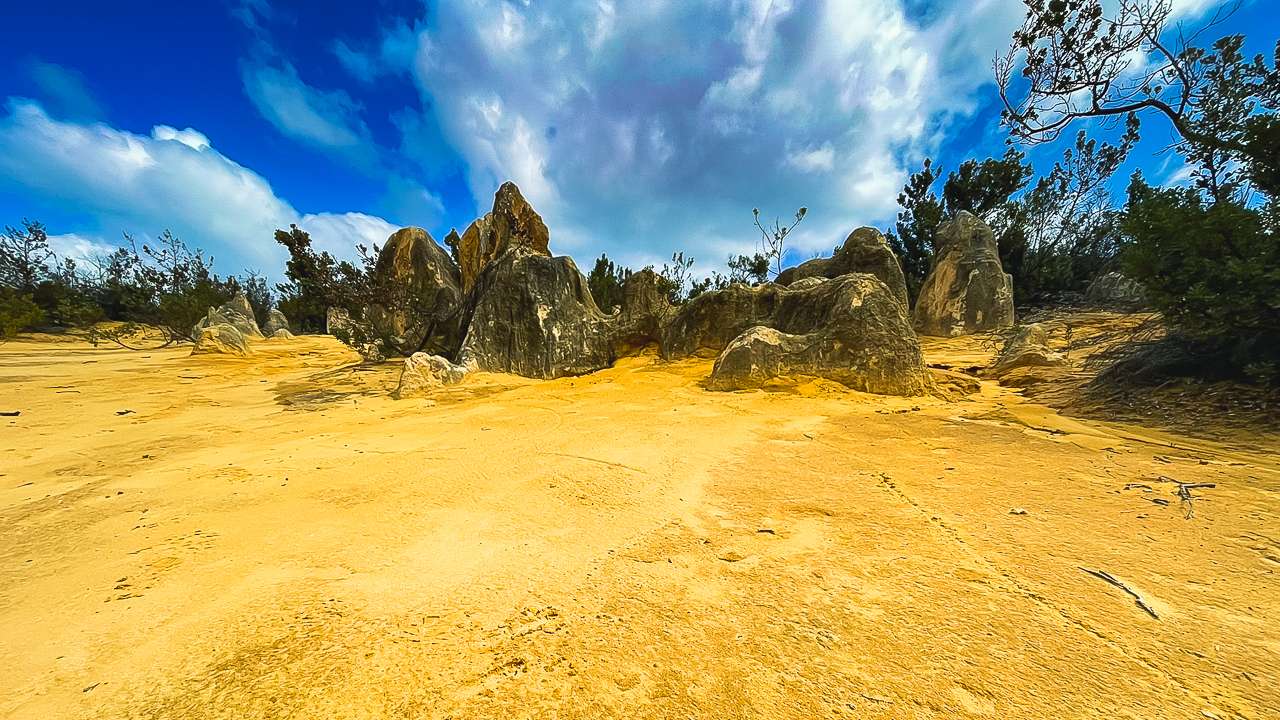
The Pinnacles Desert is a natural attraction located within Nambung National Park, around 200 kilometres north of Perth. These ancient, natural limestone formations rise out of the desert floor, some reaching up to four metres in height. Formed over millions of years the pillars are actually made from seashells. Remnants of an ancient seabed that once covered the area. Weathered by wind, sand and time they now stand as beautiful monoliths. Creating a surreal and almost otherworldly landscape.

It’s the type of spot that leaves you in awe with thousands of photo opportunities. But it’s more than just a pretty landscape it has cultural and scientific significance too. Indigenous stories link the Pinnacles to Dreamtime legends and scientists still study the formations to understand how they developed over millennia. Reading through the information boards in the visitors I got the impression that scientists aren’t completely sure how the Pinnacles formed. They have their theories but aren’t deadset sure.

Getting To The Pinnacles Desert From Perth

Getting to the Pinnacles from Perth is part of the fun. It’s roughly a two hour drive each way and you’ll travel along the scenic Indian Ocean Drive, which offers beautiful coastal views. Make sure you leave early if you want to enjoy a full day there without rushing.

Top Tip: If you’re not keen on driving there are plenty of day tour operators in Perth that can take you there and back. But honestly a self drive is a fantastic way to go. It gives you the freedom to explore at your own pace and pull over for photos whenever something catches your eye.

The Pinnacles Desert

The Pinnacles Desert

The Journey Begins: Perth to Cervantes

After leaving Perth, you’ll soon find yourself on the open road, heading north towards Cervantes, a charming coastal town that’s also the gateway to the Pinnacles. Cervantes is only about 17 kilometres from the Pinnacles, so it’s an ideal spot for a quick stop to stretch your legs, grab a bite and maybe even dip your toes in the ocean before you head inland to the desert.

There are also a few cool things to check out in Cervantes itself. There are also a few cool things to check out in Cervantes itself. If you have the time, Lake Thetis is worth a quick look. It’s one of only a few places in the world where you can see stromatolites, ancient life forms that give us a glimpse into the early history of life on Earth. They’re sort of like rock-like microbial reefs and they’re thought to be some of the oldest life forms on the planet.

We Called In At Two Rocks WA: A Great Little Village On The Coast

On the way to The Pinnacles we called in at Two Rocks for a coffee and a look around. Two Rocks in Western Australia is a top spot for a laidback day out. Only about 60 kilometres north of Perth. This little coastal town has a mix of history and beautiful scenery. Named after two prominent rocks in the ocean just offshore it’s got a fair bit of character and a few quirky sights that make it a fun place to explore.

A Quick History of Two Rocks, WA

Two Rocks started out as a quiet fishing village but gained a bit of fame in the 1970s when developer Alan Bond came up with a plan to turn it into a major tourist destination. Alan Bond might have been as dodgy as a three dollar note but I somehow manage to like the bloke despite his dodginess! He built the Yanchep Sun City project which included a marina and a massive Atlantis Marine Park.

This marine park featured dolphin shows, an underwater tunnel, and even a giant statue of King Neptune, which has become a bit of a local icon. Atlantis Marine Park drew crowds and had a good run, but it eventually shut down in the late 1980s. Now while the park may be gone King Neptune’s statue still stands proudly and has become a bit of a quirky landmark.

Things to Do in Two Rocks

Whether you’re keen for a bit of sightseeing, a dip in the ocean, or a casual feed by the sea, Two Rocks has a few top spots worth checking out.

Visit King Neptune’s Statue

You can’t visit Two Rocks without checking out this massive statue of King Neptune. Built as part of the old Atlantis Marine Park, the statue has a fair bit of character and is one of those “only in Australia” type attractions. It’s a bit kitschy but well worth a photo op. Over the years, it’s become a beloved symbol of the area, and you’ll see plenty of locals and tourists alike stopping by to snap a pic.

Relax at Two Rocks Marina

The Two Rocks Marina is a prime spot for a relaxing stroll, and if you’re a fan of fishing, it’s a great place to throw in a line. There are some beautiful ocean views here, and you might even spot a few dolphins cruising around. The marina area also has a few shops, so you can grab a bite or an ice cream while you enjoy the views.

Have a Swim or a Surf at Two Rocks Beach

The beaches around Two Rocks are quiet and stunning. They’re ideal for a bit of sunbathing, swimming, or just enjoying the coast. The waves here are usually pretty mellow, making it a good spot for beginner surfers or for just mucking around in the water. It’s also a great beach for families—there’s plenty of space to spread out, and the water’s generally safe for a dip.

Explore Yanchep National Park

While technically not in Two Rocks, Yanchep National Park is only a short drive away and is well worth a visit. You’ll find heaps of Aussie wildlife here, including koalas and kangaroos. The park has some great walking trails and even a few caves you can explore. It’s a fantastic spot to get out into nature and see a bit of the local flora and fauna.

Two Rocks may be small, but it’s got a lot of charm. With a quirky history, laid-back beaches, and that unbeatable coastal vibe, it’s the perfect little getaway from the hustle and bustle of Perth. So next time you’re up for a roadie, pack the car, bring some mates, and head up to Two Rocks for a good time by the sea.

Leeman’s Boat Landing Memorial

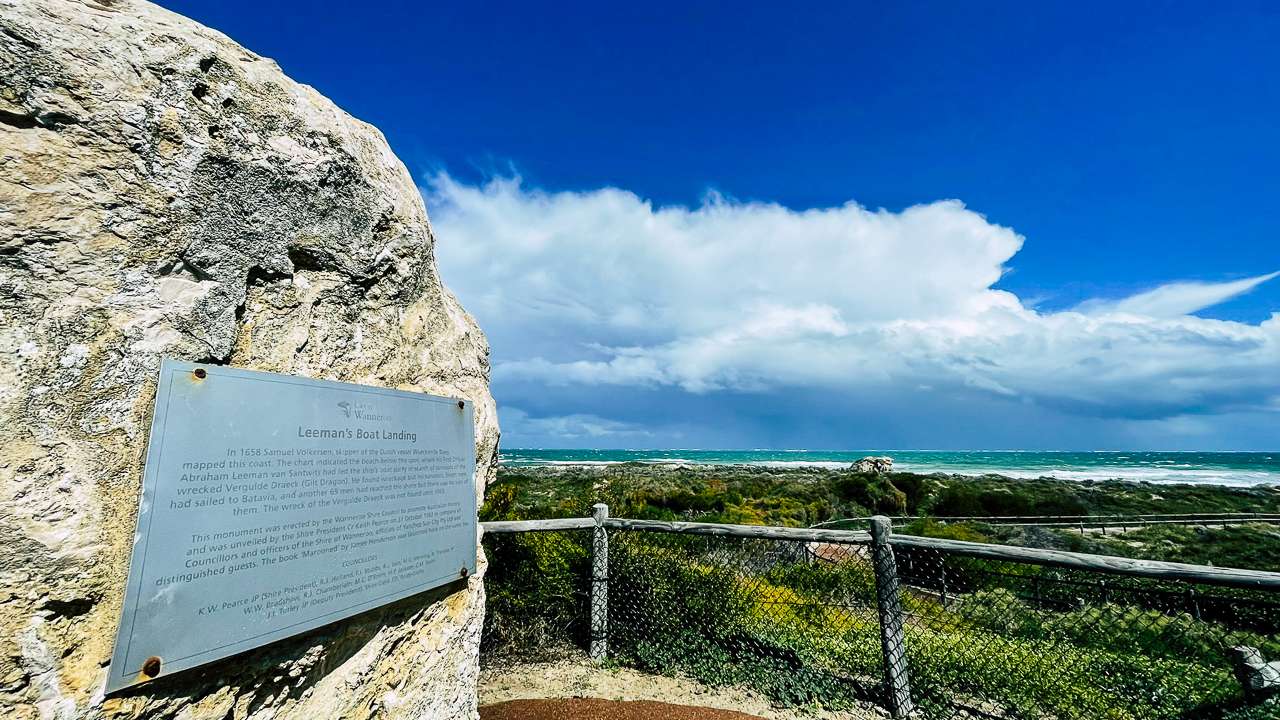
When we were at Two Rocks we called in and checked out the Leeman’s Boat Landing Memorial. It’s a simple but important tribute to the area’s history and the resilience of the people who settled there. Abraham Leeman was a Dutch sailor marooned in the area back in 1658. Part of an expedition led by the Dutch East India Company, Leeman and his crew were abandoned after their ship, the Waeckende Boey, sailed off without them.

Leeman came ashore with his men searching for survivors of the ship Vergulde Draeck. The Dutch East India Company (VOC) ship, Vergulde Draeck foundered in 1656, to the north of Two Rocks. Stranded with limited resources, Leeman eventually managed to reach Batavia (modern-day Jakarta) with only a small number of his original crew – a feat that’s still considered impressive even today.

The memorial marks the site and recognises the legacy of Leeman’s survival, as well as the area’s later development as a fishing town. It’s a great spot to pause and soak up some local history while you’re exploring Leeman’s Boat Landing. For locals and visitors alike it’s a reminder of both the town’s rugged beginnings and the spirit of adventure that still defines the area.

Leemans Boat Landing

Leemans Boat Landing

Arriving At The Pinnacles Desert

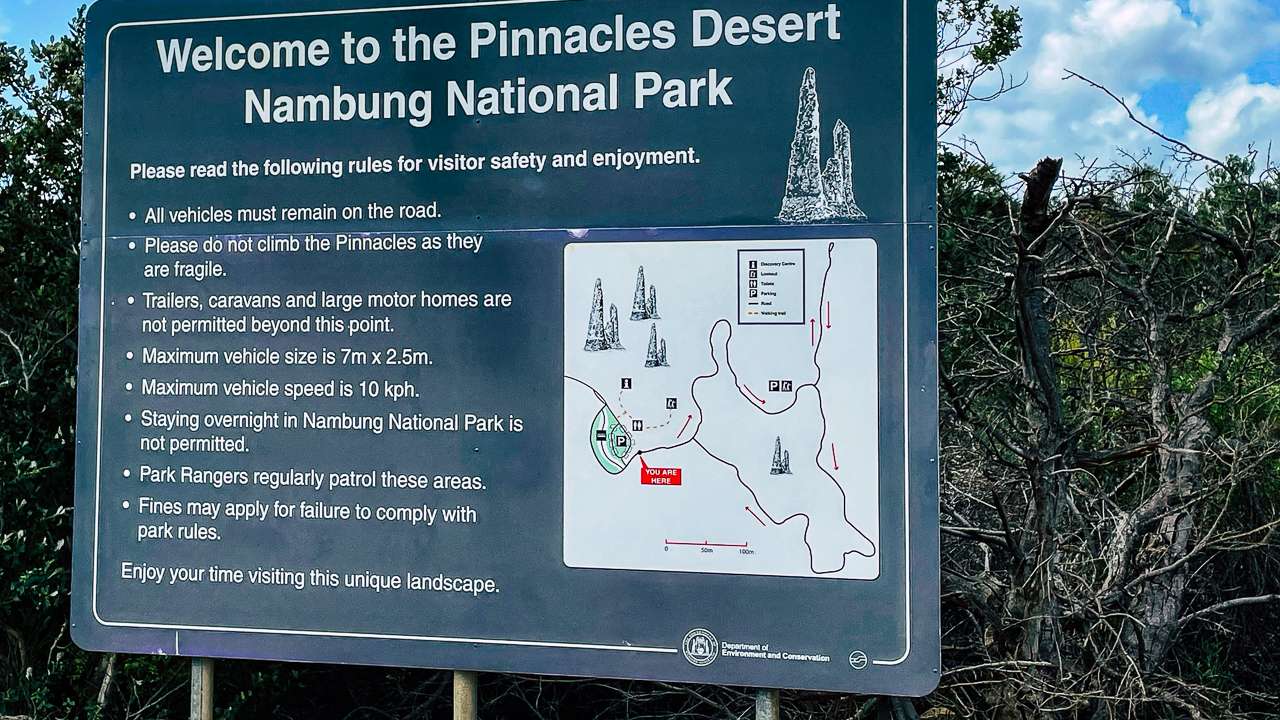
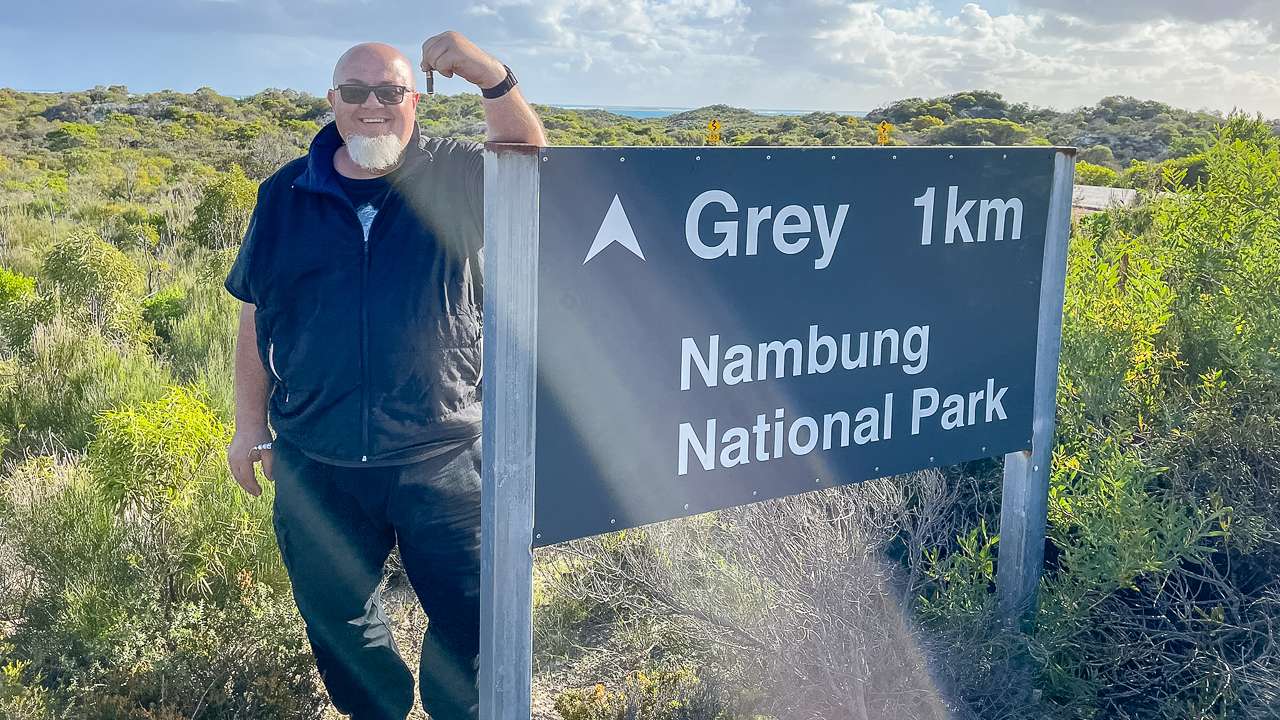
Once you enter Nambung National Park (small entrance fee applies) it’s only a short drive from the gate to the Pinnacles Desert. You can either park your car and explore on foot or take the drive through track. It’s an easy drive, we saw as many Corollas on it as we did 4WDs. The track allows you to get up close to the formations without even leaving your vehicle. However we got out and went for plenty of walks amongst the Pinnacles as you just have to. When you see them you’ll understand what I mean.

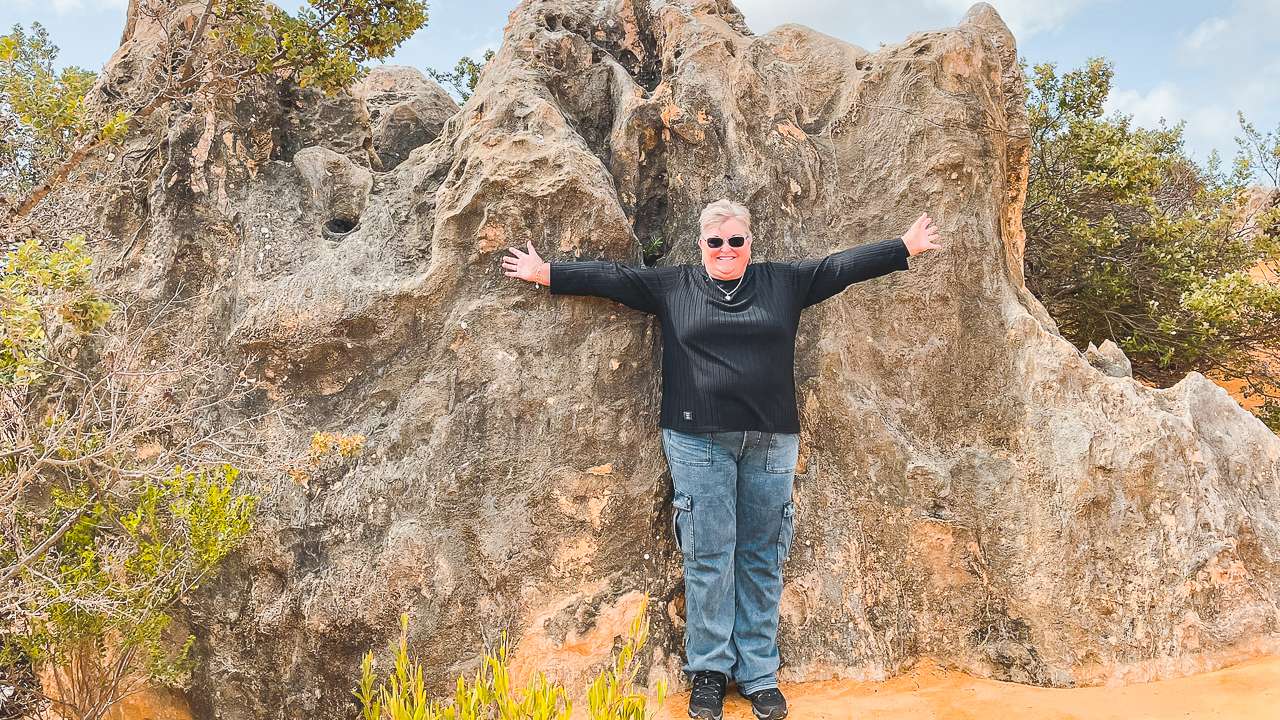
Whether you’re walking or driving, the sight of these towering limestone pillars set against a backdrop of blue sky and golden sands is truly breathtaking. It feels almost otherworldly, as though you’ve stepped onto the set of a sci-fi movie. The pinnacles rise out of the ground in all shapes and sizes and as you wander, you can let your imagination run wild. Some look like ancient towers, while others resemble strange creatures frozen in time.

Pinncacles Desert National Park Information Board

Pinncacles Desert National Park Information Board

The Perfect Time To Visit

The Pinnacles Desert is open year round, but the best time to visit depends on what kind of experience you’re after. If you want to avoid the heat, spring (September to November) is ideal. This is also the wildflower season in Western Australia and the landscape along the drive comes alive with colourful blooms. We visited in September and the weather was fantastic. About 20 degrees celsius with a breeze.

If you don’t mind a bit of warmth summer evenings offer the chance to see the Pinnacles under a blanket of stars. The desert is an official dark sky area making it perfect for stargazing.

Pinnacles In Nambung National Park

Pinnacles In Nambung National Park

What to Do at the Pinnacles Desert

You might think there’s not much to do in a desert full of limestone pillars but there’s more than enough to keep you occupied. Here are a few things that will make your visit even more memorable.

  • Drive the Pinnacles Desert Discovery Trail
    This 4-kilometre loop allows you to drive slowly around the desert. Along the way, there are several stopping points where you can get out, take photos and enjoy the formations up close.
  • Walk the Desert View Trail
    If you’re keen for a stroll, there’s a 1.5-kilometre walking trail that weaves through the Pinnacles. The walk allows you to get up close and personal with the formations and provides more opportunities to marvel at their intricate shapes.
  • Check Out the Pinnacles Desert Discovery Centre
    The Discovery Centre is a small but informative stop. It provides fascinating information on how the Pinnacles were formed, local Indigenous culture and the types of flora and fauna in the park. The building itself is magnificent. It looked like something that the famous American Architect Frank Lloyd-Wright designed. I’ve been to one of his buildings “Taliesin West” near Scottsdale Arizona and the pinnacles Discovery Centre has the same kind of feel as that.
  • Photography Galore
    Every angle of the Pinnacles offers something different. Try different times of the day for the best lighting, but sunrise and sunset provide the most dramatic lighting for photographs.
  • Picnic Among the Pinnacles
    If you’ve brought some snacks or a packed lunch, you’re in luck! There are picnic tables and restrooms near the entrance to the desert. Just be sure to keep an eye out for any cheeky crows looking to steal your lunch.
  • Geocaching
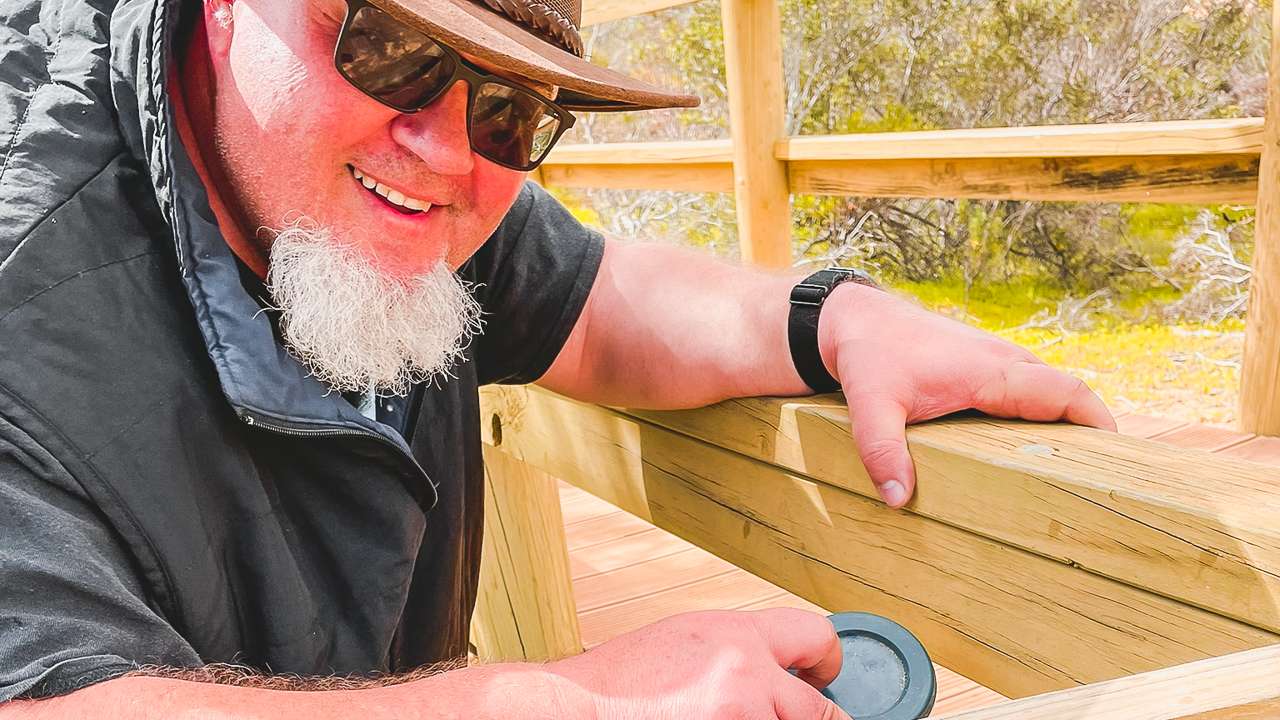
    There’s a geocache hidden within Nambung National Park out amongst the Pinnacles. We managed to find it. On the drive to the Pinnacles from Perth there are a LOT of geocaches. we pulled in found maybe half a dozen of them. If we’d had time we’d have picked up lots more.

Found A Geocache In Nambung National Park

Found A Geocache In Nambung National Park

Wildlife at Nambung National Park

Keep an eye out for wildlife while you’re here. You might spot kangaroos, emus, or even a curious echidna if you’re lucky. If you’re a bird lover, bring your binoculars—the area is home to a variety of native bird species, including galahs, cuckoos and black-shouldered kites.

Sunset and Stargazing at The Pinnacles

One of the best-kept secrets of the Pinnacles is how incredible they look at sunset. The golden hour bathes the landscape in a warm, reddish glow, transforming the pillars into shadowy silhouettes. And if you’re game to stay until dark, you’re in for a real treat: the Pinnacles is one of the best spots in Western Australia for stargazing.

Being away from the city lights, the skies here are inky black and the stars shine with unmatched clarity. If you’re there on a clear night, you’ll see constellations like the Southern Cross, as well as planets and maybe even the occasional shooting star.

Great Lunch Spot Down A 4wd Track At Hansens Bay Beach Near Cervantes WA

Great Lunch Spot Down A 4wd Track At Hansens Bay Beach Near Cervantes WA

Tips for a Great Day Trip to The Pinnacles Desert

Here are some tips to make sure your day trip to the Pinnacles is one to remember:

  • Bring Plenty of Water and Sunscreen: The desert can get hot and there isn’t much shade around.
  • Pack a Picnic or Snacks: While there are food options in Cervantes, it’s nice to have a bite to eat as you enjoy the view.
  • Start Early: Leave Perth early in the morning to get the most out of your day.
  • Wear Comfortable Shoes: You’ll likely be doing a bit of walking, so comfy footwear is a must.
  • Bring a Camera: The Pinnacles is a photographer’s paradise and you’ll want to capture every angle.
  • Respect the Wildlife and Environment: Take nothing but photos and leave nothing but footprints.

Heading Back to Perth

After a day of exploring, it’s time to make the drive back to Perth. It’s a good idea to start heading back before it gets too dark. Kangaroos are known to be more active near the road at dusk and after sunset. If you’re feeling hungry on the way home there are some great places along the way to stop for fish and chips or a pie.

By the time we got back to Perth we were feeling a mix of awe and wonder. The Pinnacles were great however the drive along the coast was also bloody magic. We were also a bit tired from all the walking we had done. The Pinnacles Desert really is one of those places that has to be seen to be believed and it’s sure to be a highlight of any trip to Western Australia.

Fish and Chips from the Lobster Shack to Hansen Bay: A Perfect Lunch in Cervantes

Before heading back to Perth we called into the Lobster shack Lobster Shack at Cervantes for some fish and chips. Known for its fresh seafood especially WA’s famous rock lobster this spot is popular with locals and visitors. But while the lobster’s definitely the star you really can’t go wrong with a classic fish and chips lunch. Crispy golden batter, a generous serve of chips and some tartare sauce – they do it right!

Lunch At Hansens Bay

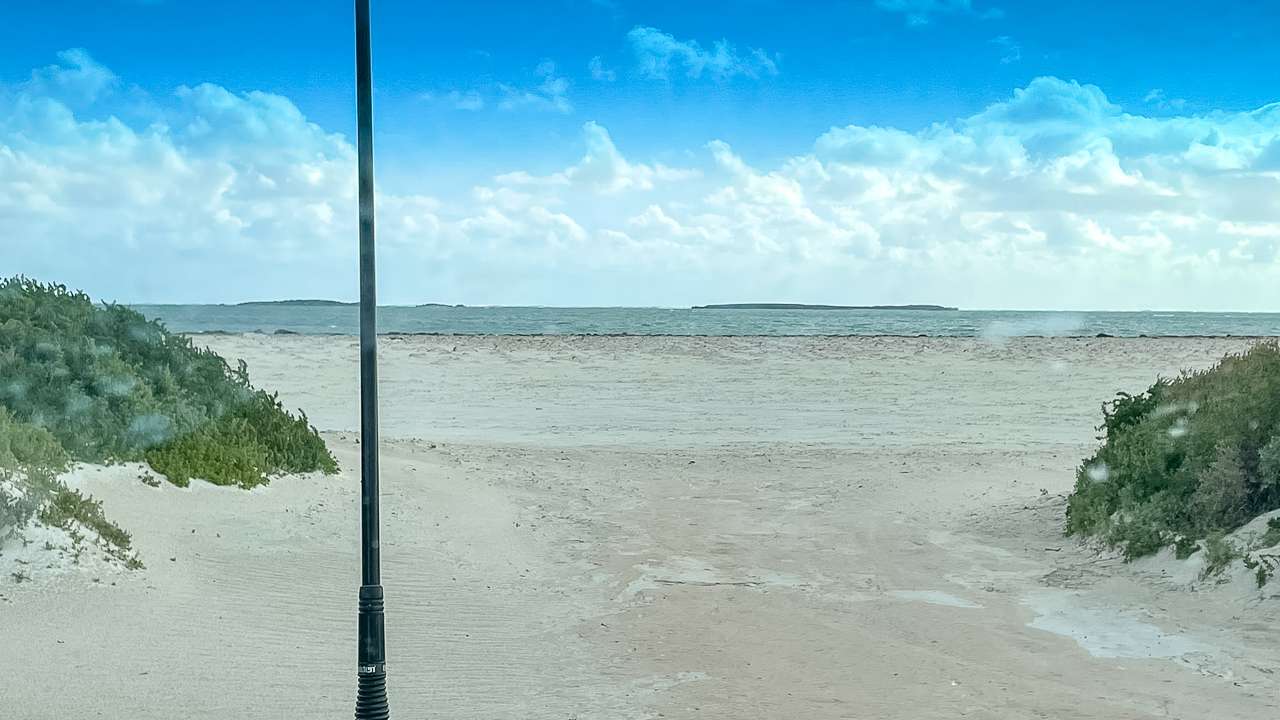
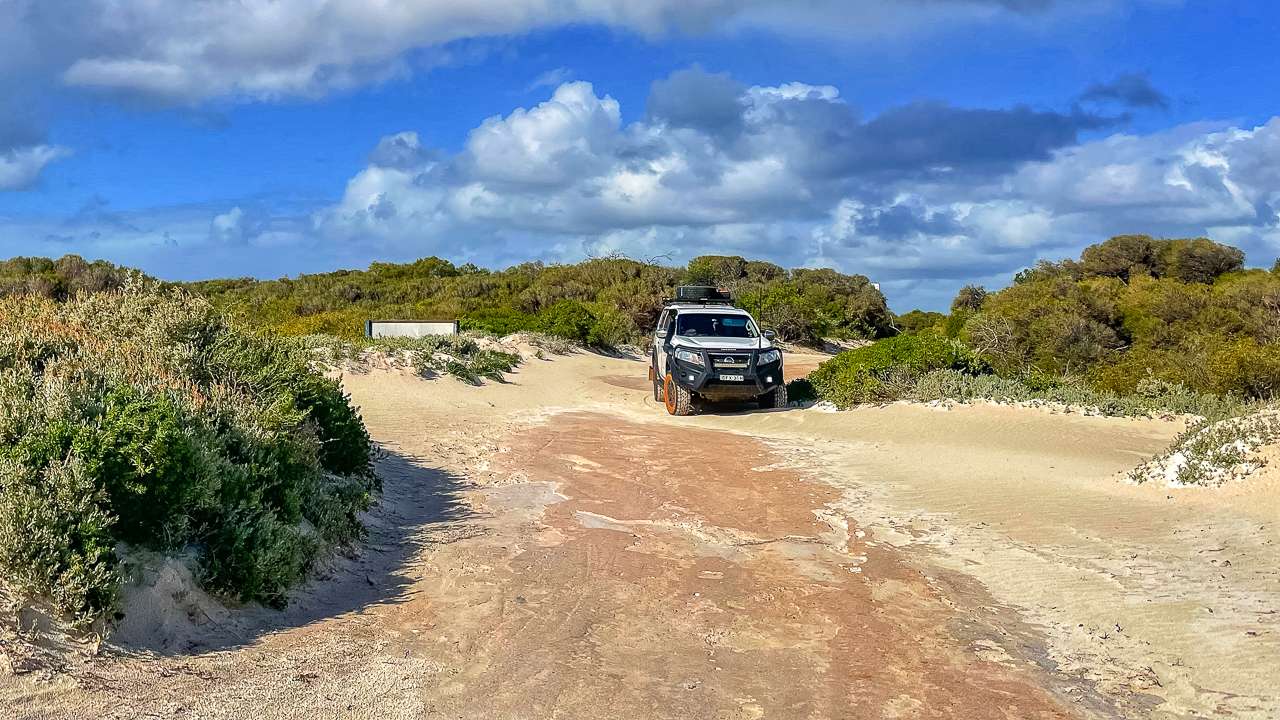
Once we had our fish and chips we went on short drive down to Hansen Bay. We went out of town a little bit and followed a dirt track for about a kilometre or so. This beautiful beach was a great place to settle in for a laid back beach lunch. The water was nice and calm but too cold in September for a swim!  There’s plenty of space to set up a picnic spot but we just sat on the tailgate of the ute as we’re all about the easy option. Watching the waves and feeling the sea breeze with a pack of fish and chips to eat? Doesn’t get much better. If you’re lucky you might even spot a few dolphins in the distance. Hansen Bay and the Lobster Shack together make for a proper Aussie lunch experience by the coast – simple, fresh, and downright tasty. Perfect for a cruisy afternoon by the sea.

Down A 4wd Track At Hansens Bay Beach Near Cervantes WA

Down A 4wd Track At Hansens Bay Beach Near Cervantes WA

Wrapping Up: A Pinnacle Experience!

A day trip to The Pinnacles Desert from Perth is one of those bucket list experiences that you’ll remember forever. Whether it’s the unique landscape, the serene atmosphere, or simply the feeling of stepping away from the hustle and bustle of the city, The Pinnacles offers a taste of the extraordinary right here in Western Australia. So next time you’re in Perth and looking for an adventure. Grab a mate, jump in the car and set off to explore this unforgettable slice of WA. It’s worth every kilometre.

Our Day Trip From Perth To The The Pinnacles Western Australia Photo Gallery

FAQs Frequently Asked Questions About The Pinnacles Western Australia

How long does it take to get to the Pinnacles from Perth?

It’s a pretty cruisy drive up the Indian Ocean Drive—takes about two hours one way if you're not dawdling. You might want to leave early to make the most of your day and get a bit of time to explore Cervantes or stop for a snack along the way. Just make sure you leave enough time to get back before it’s too dark, as roos like to pop out around dusk.

Do I need a 4WD to get around the Pinnacles Desert?

Nah, a regular car will do just fine. The Pinnacles Desert drive-through track is easy enough for any vehicle, so you don’t need to bring out the big 4WD guns. Just go slow and take it easy on the sandy path—no need to go bush bashing here!

What should I bring with me for a day trip to the Pinnacles?

Pack plenty of water, sunscreen and maybe a hat—the sun can be pretty fierce out there! Some snacks or a packed lunch will come in handy, too. And definitely bring a camera, because you’ll want to snap a few pics of this epic landscape.

Is it worth sticking around for sunset at the Pinnacles?

Absolutely! If you can, sunset at the Pinnacles is magic. The whole place glows and it’s unreal watching the colours change over the limestone spires. Plus, once it gets dark, the stargazing is top-notch since there's not much light pollution out there.

Are there any facilities at the Pinnacles?

Yep, you’ll find restrooms and a picnic area near the car park. There’s also the Pinnacles Desert Discovery Centre, which has displays on the local wildlife, Indigenous culture and how these rock formations came to be. It’s a nice little stop to learn a bit more about the area.

Can I see any Aussie wildlife while I’m there?

Definitely keep an eye out! You might spot kangaroos, emus, or even a few cheeky crows (they’re pros at stealing a sanga if you’re not careful). And if you’re into birdwatching, bring the binocs—there’s a good range of native birds to see.

We Experienced A Haunting Fremantle Gaol Night Tour & Lived!

We Experienced A Haunting Fremantle Gaol Night Tour & Lived!

We Experienced A Haunting Fremantle Gaol Night Tour & Lived!

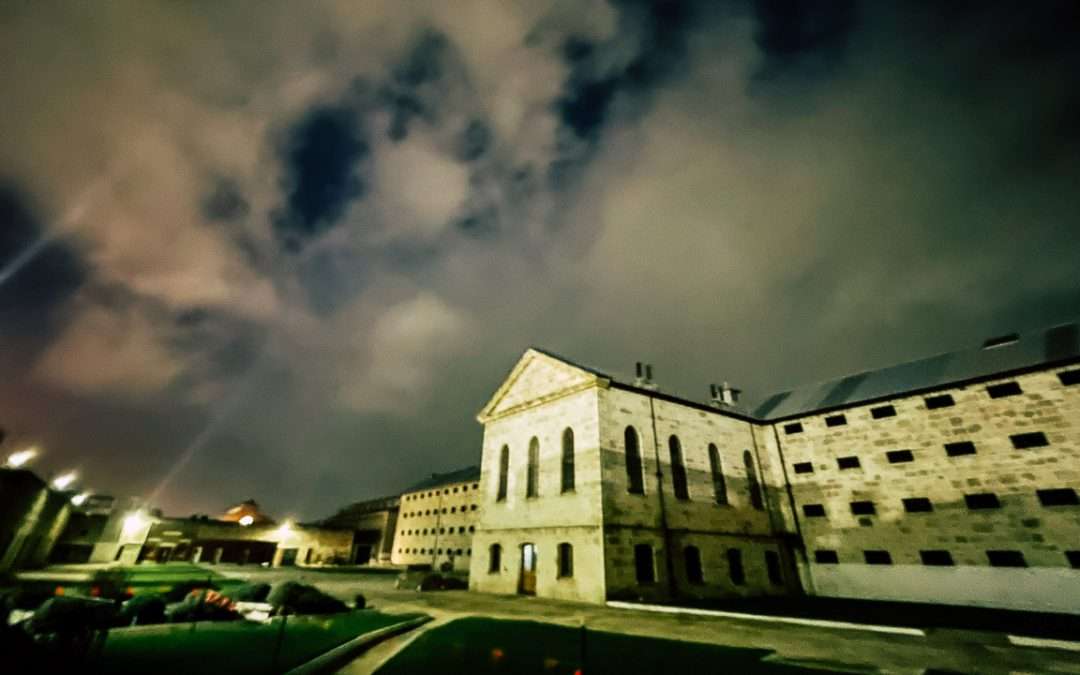
Fremantle Gaol at night is not for the faint hearted! We went on the Fremantle Prison night tour and looked into it’s scary history first hand. The Fremantle Gaol Night Tour is an unforgettable experience and a unique chance to step into the haunted halls of one of Australia’s most famous historical sites.

It’s a journey into the life and legend of Fremantle Gaol (or “Fremantle Prison” as it’s often known). You’ll feel history breathe through every cold, echoing cell. In this article, I’ll take you through what to expect from a night tour at Fremantle Gaol and why this prison holds a critical place in Australia’s past.

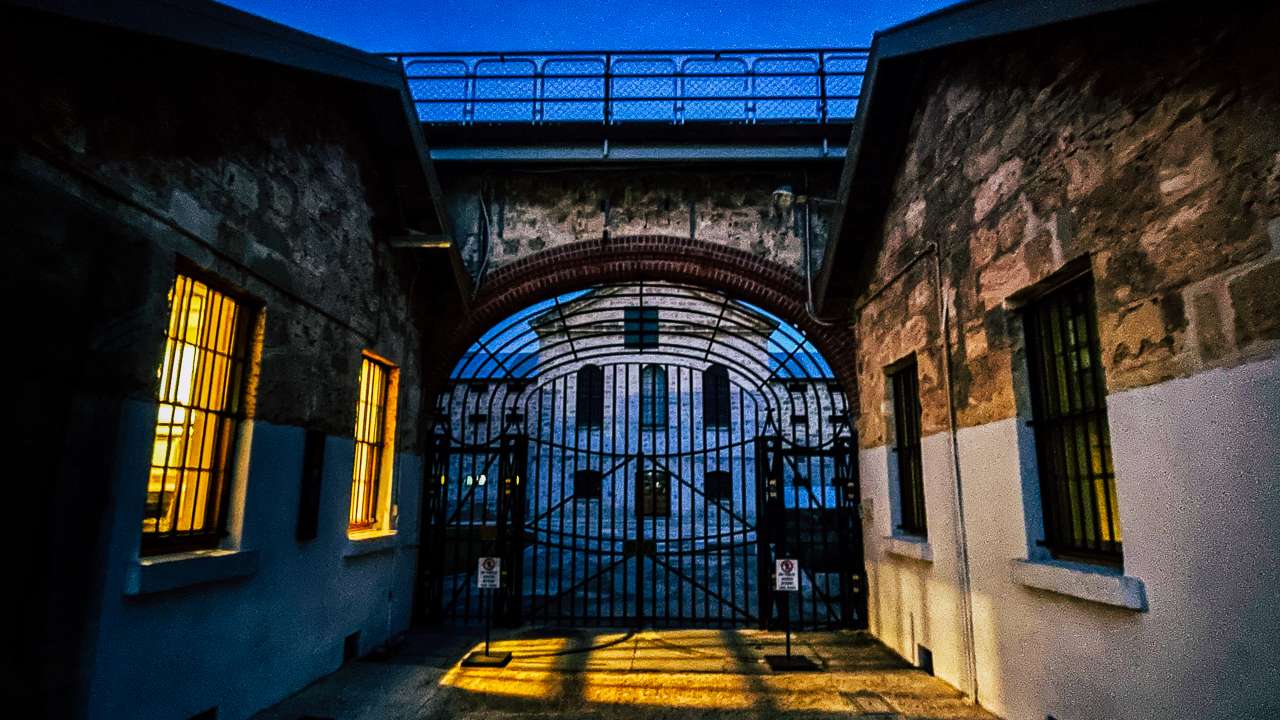
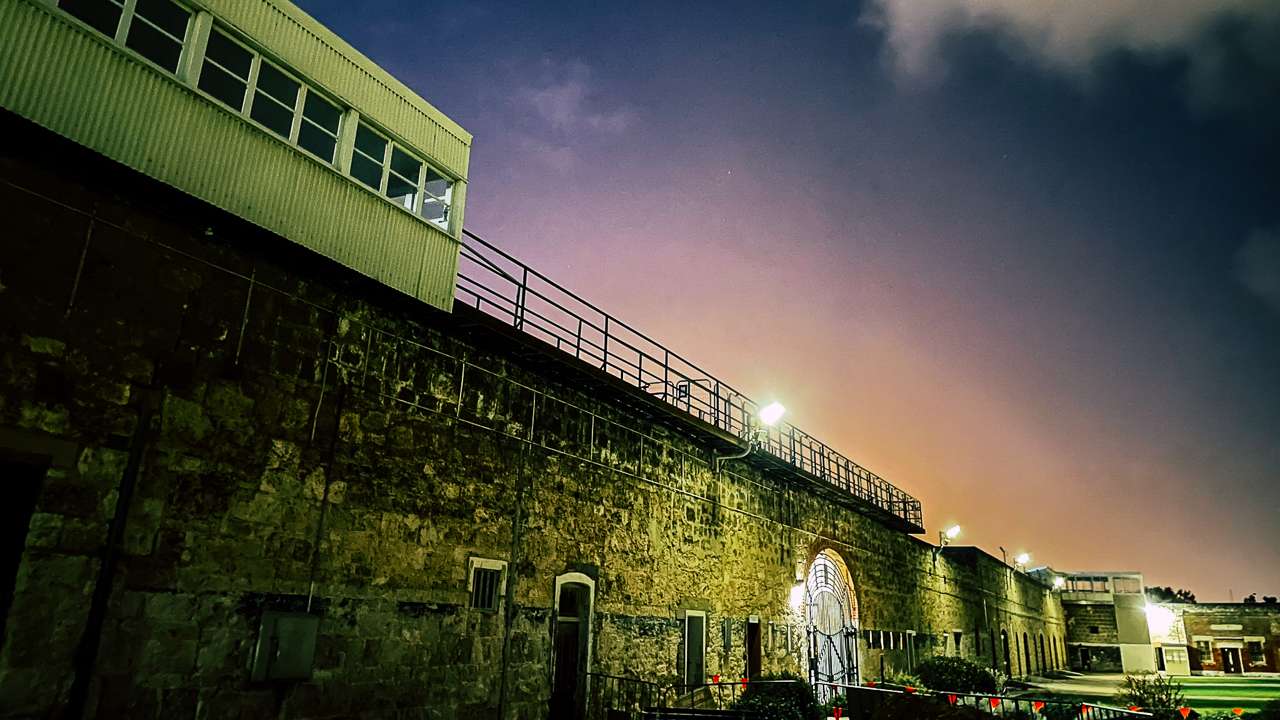
Fremantle Gaol Gates

Fremantle Gaol Gates

A Little History Of Fremantle Gaol

Constructed in the 1850s by the very convicts it was meant to confine, Fremantle Gaol stands as a grim reminder of Australia’s convict era. The British sent convicts to Western Australia between 1850 and 1868 to serve as a labour force in the young colony, helping to build roads, structures, and settlements. Fremantle Gaol was one of these projects, built almost entirely by the hard labour of men who arrived shackled to chains, under strict orders to turn rock into walls.

With its grey limestone walls and high iron gates, Fremantle Gaol became operational in 1855, housing not only convicts but later dangerous criminals from across Western Australia. It stayed as a working prison until 1991 which makes it one of the longest-operating prisons in Australian history. The gaol housed thousands of prisoners over the years, and some of its stories are truly chilling.

The prison was notorious for its harsh conditions, and many prisoners who entered Fremantle Gaol never left. During its operation, 44 men and one woman were hanged within its walls, and some say the souls of these lost people still haunt the prison today. The Fremantle Gaol has since become a UNESCO World Heritage site, preserved for its historical importance and its unique architecture.

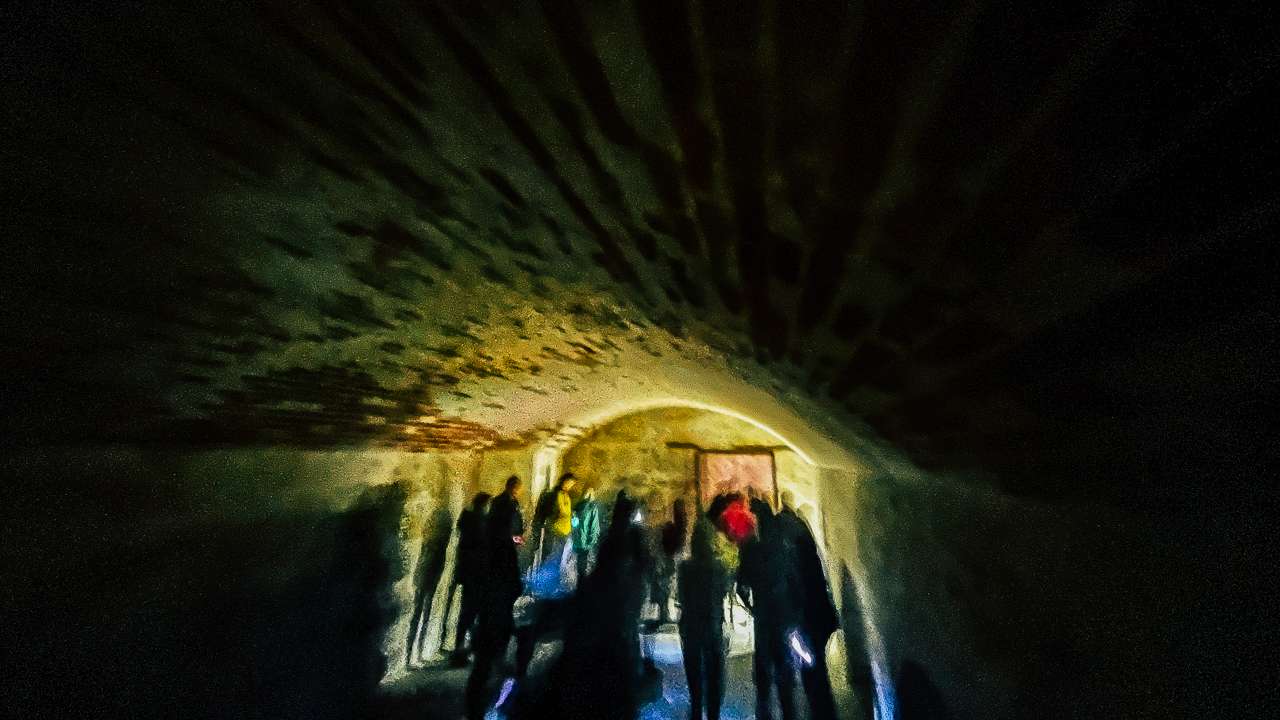
Spooky Night Tour At Fremantle Jail

Spooky Night Tour At Fremantle Jail

Getting Ready For The Fremantle Gaol Night Tour

We did the tour with our daughter Lauren and her husband Dan. They’d both done the tour before so they warmed us up with some stories of what it was going to be like. Amanda and I have been on at least a dozen night time ghost tours before so we weren’t too scared. Well, Amanda probably was she’s a bit of a wuss on the night tours!

As we gathered outside the entrance to Fremantle Gaol at dusk, there was an eerie quiet in the air. We were there for one of the gaol’s famous night tours and the energy was both exciting and unnerving. The group was a mix of tourists and locals. Some were keen to learn about the history. Some others I reckon were just hoping for a good scare. The night tour isn’t your typical sightseeing tour. It’s a chance to experience history in a very visceral way.

Our guide led us through the rules making sure we understood that this was a “look, don’t touch” kind of tour. With the sun already well set the gaol’s looming walls and the dim lights made everything look a little more sinister. We were in for a proper adventure.

Fremantle Prison Night Tour Scary Times

Fremantle Prison Night Tour Scary Times

Stepping Inside Fremantle Gaol: The Chilling Atmosphere

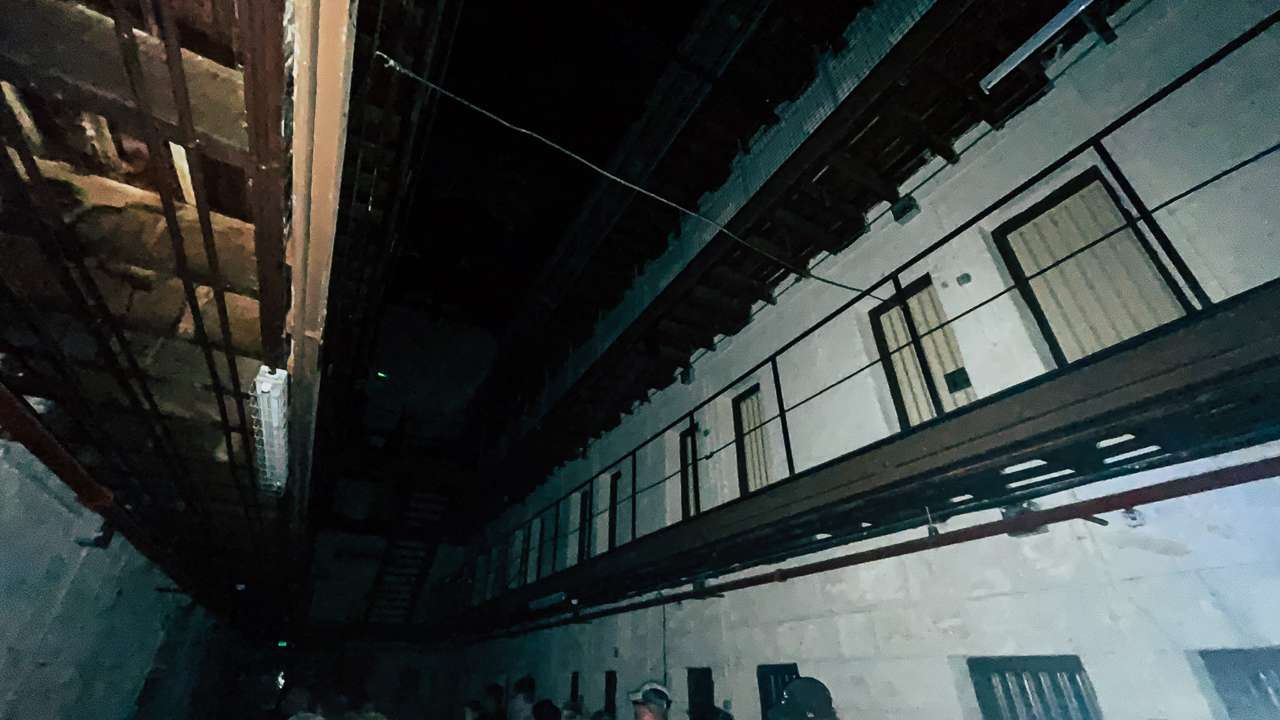
From the moment we stepped inside the atmosphere felt heavy. There’s something truly eerie about walking into a place where so much hardship and punishment took place. The flickering lights and narrow corridors enhanced the sense of claustrophobia that prisoners must have felt day after day. We entered through the main gates and walked into the main cell blocks. Our guide told us stories of former inmates from petty thieves to notorious criminals.

The guide explained that life in the gaol was nothing short of brutal. Particularly in the early days when convicts were subjected to harsh punishments for the smallest of things. They endured isolation cells, strict discipline and were put to work in backbreaking labour. These stories of hardship are a big part of what makes Fremantle Gaol such an intense experience – knowing that you’re walking through the very spaces where people lived out their final days.

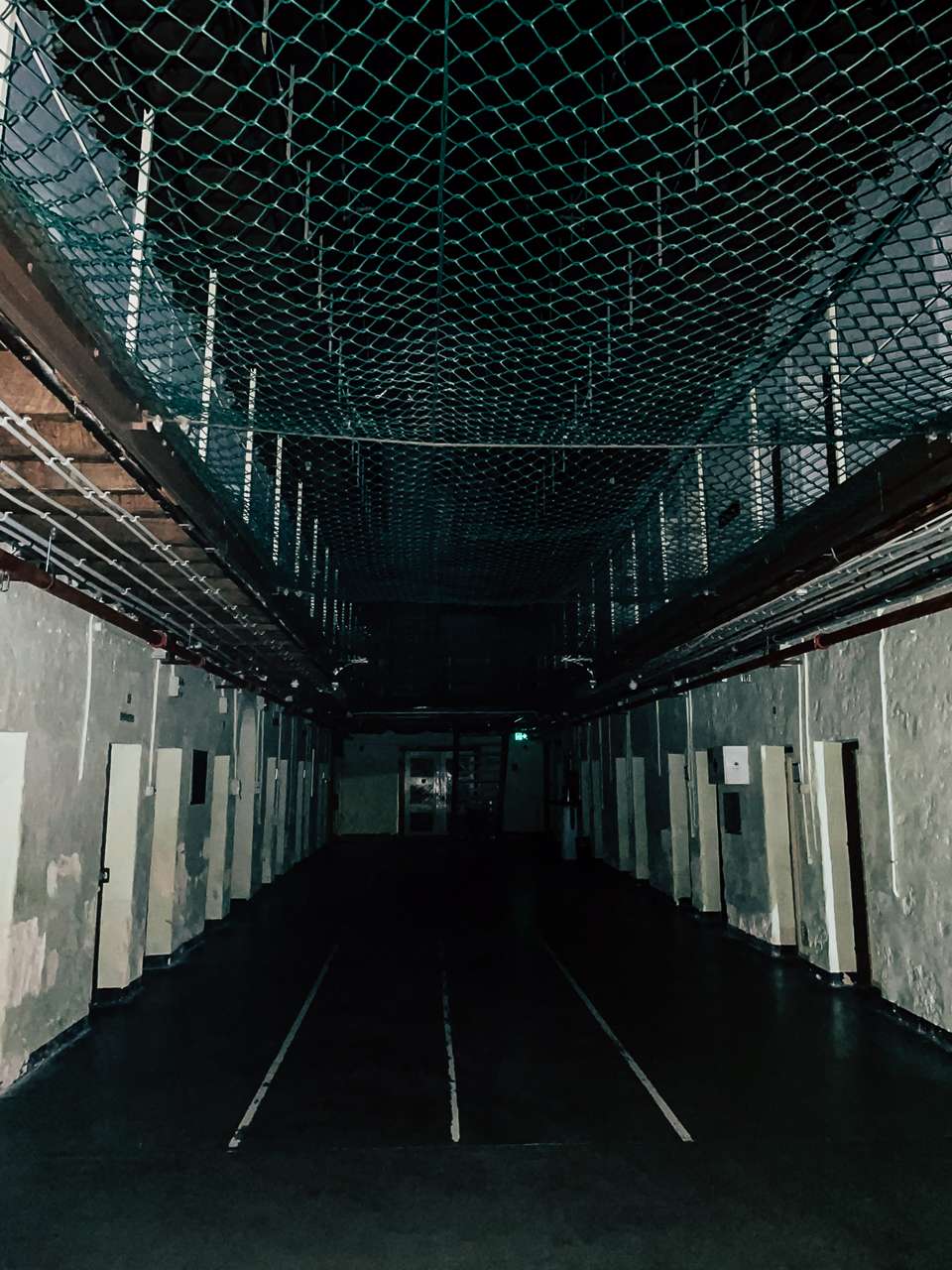
Inside Fremantle Prison Australia

Inside Fremantle Prison Australia

Fremantle Gaol Night Tour: Ghosts, Legends And Unsolved Mysteries

One of the highlights of the Fremantle Gaol Night Tour is the ghost stories. From sightings of ghostly figures in cells to disembodied whispers in the hallways this place has a reputation for being haunted. Some visitors report seeing the ghost of Moondyne Joe one of Western Australia’s most famous bushrangers. He managed to escape the gaol multiple times. Others claim to hear the footsteps of guards and prisoners long after the last inmate left.

Our guide told us about one of the gaol’s most notorious hangings – that of serial killer Eric Edgar Cooke who was executed in 1964. Cooke’s crimes were horrific and his spirit is said to linger. Some say they can still hear his whispers on quiet nights. Whether you’re a believer in the supernatural or not. It’s hard to ignore the feeling that the walls of Fremantle Gaol hold onto the stories and emotions of those who lived and died within.

Exploring the Cells And Gallows At Fremantle Prison

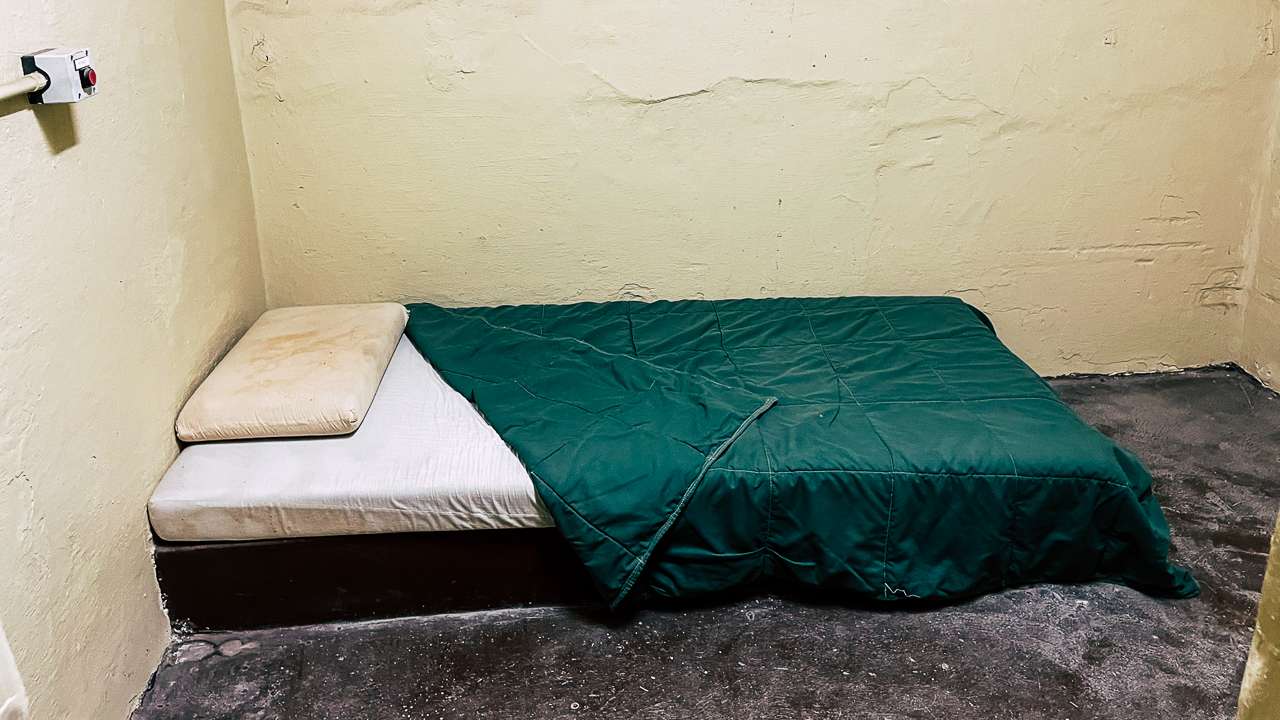
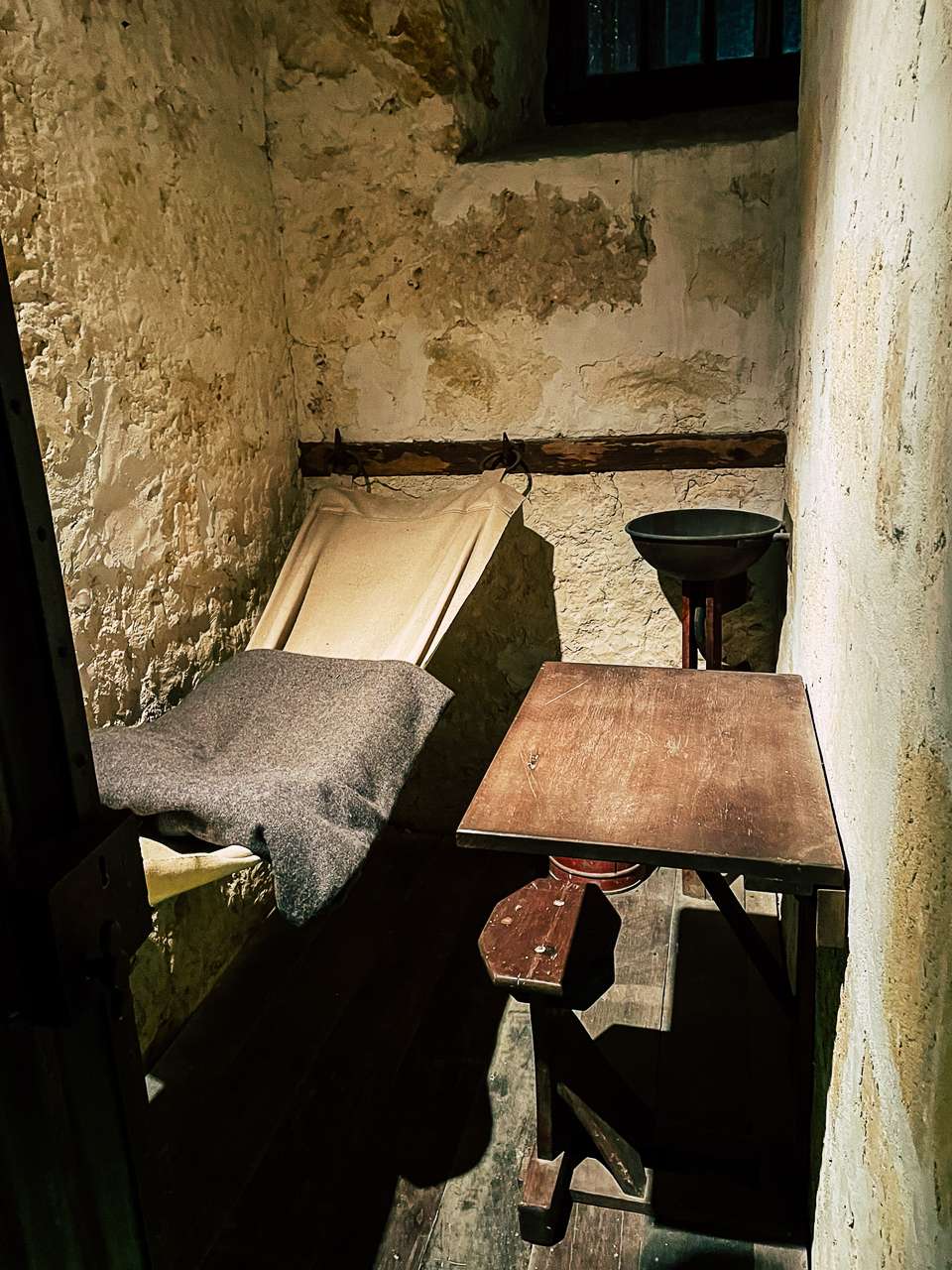
The cells in Fremantle Gaol are as narrow and sparse as you might expect. Each one has thick, cold stone walls and tiny windows letting in just enough light to remind the prisoners of the freedom they’d lost. Walking through these rooms is a humbling experience. You can almost feel the isolation that prisoners endured.

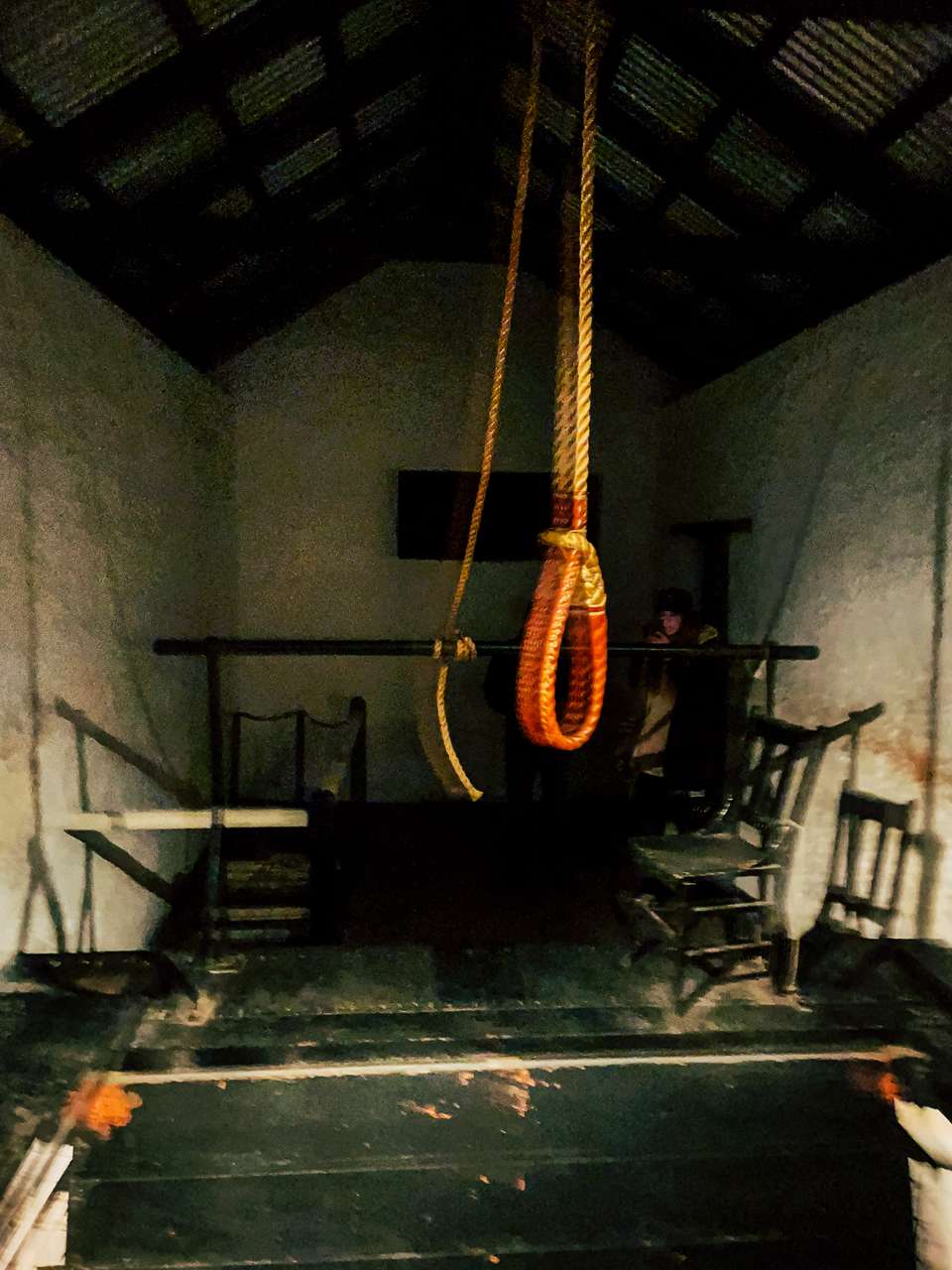
And then there’s the gallows room. The Fremantle Gaol is one of the few places in Australia where you can see a once working gallows. It’s a dark and foreboding place. As we entered, the guide explained the history of capital punishment in the prison. From 1888 to 1964 a total of 45 people were executed here. Standing near the gallows was an experience that sent chills down my spine; you can’t help but feel the weight of history in that room.

Fremantle Prison Gallows

Fremantle Prison Gallows

The History That Haunts Fremantle Gaol

The Fremantle Gaol isn’t just about ghost stories – it’s also a deeply significant site for Australian history. Many of the early convicts sent to Western Australia were Irish, Scottish, and English men who had been sentenced for relatively minor crimes, like theft and debt. But within these walls, they were treated with the same severity as the worst criminals.

The Fremantle Gaol also has a strong connection to Aboriginal history. During the Stolen Generations. Aboriginal prisoners were held at Fremantle Gaol often for petty offences. This adds a sombre layer to the gaol’s history as it becomes clear how deeply the prison impacted different communities across Western Australia.

A Night Tour Unlike Any Other

A night tour of Fremantle Gaol isn’t your everyday tourist activity. It’s a chance opportunity to step into Australia’s convict past and feel the eerie presence of history around you. The atmosphere, the stories, and the undeniable sense of something lurking around the corner all make this experience unforgettable. If you’re into history, ghost stories, or just want a good Aussie scare, this tour has it all.

Leaving Fremantle Gaol after dark I felt like I had seen a different side of Western Australia’s past. A raw, gritty side that’s often left out of the history books. Whether you’re visiting Perth, Fremantle or simply a local looking for a unique night out. The Fremantle Gaol Night Tour offers a one-of-a-kind experience you won’t soon forget. So, if you reckon you’re up for it book yourself a tour and see just how brave you really are!

Cell Inside Fremantle Gaol

Cell Inside Fremantle Gaol

Dinner Afterwards

After the tour we all went into Fremantle had dinner It was a great way to end the evening.

With Lauren At Dinner

With Lauren At Dinner

Fremantle Gaol Night Time Ghost Tour Photo Gallery


FAQs Frequently Asked Questions About The Fremantle Jail Ghost Tour

What time do the night tours start and how long do they go for?

Tours usually kick off after dark and last around 90 minutes but it's best to check the specific start time when booking.

Is it really spooky?

Absolutely! Fremantle Gaol has a creepy history and night tours are designed to give you a few good scares.

Can kids come along on the night tour?

Kids are allowed, but it’s recommended for ages 10 and up – younger kids might get a bit freaked out.

Do I need to book in advance?

Yep. Spots can fill up quickly especially on weekends so it’s a good idea to book early.

Can I bring a camera to snap a few photos?

For sure! Just remember to turn off the flash and respect other visitors who are enjoying the eerie atmosphere.

Geocaching Woodman Point WA: Great Hides Great Location!

Geocaching Woodman Point WA: Great Hides Great Location!

Geocaching Woodman Point WA: Great Hides Great Location!

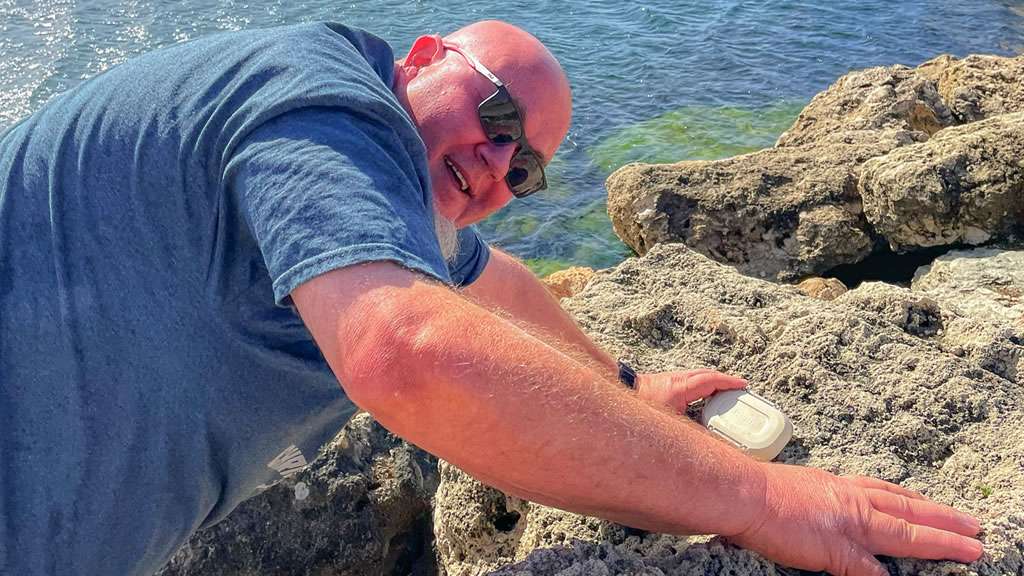
We found hidden treasures at Woodman Point WA while geocaching. It’s a perfect for geocache destination for adventurers and nature lovers alike. A day out geocaching at Woodman Point near Fremantle in WA. We located 5 of them. when we’d finished geocaching Woodman Point we visited our daughter who we hadn’t seen for ages. Had a great lunch at Brooklands Tavern.

After driving through from Kalgoorlie and setting up camp at Discovery Park Woodman Point WA the day before we were looking for something to do on a cold, wet and very windy morning before meeting up with our daughter for lunch. The answer was easy, let’s go geocaching Woodman Point! We looked up the app on our phones and found a group of them close to where we were staying.

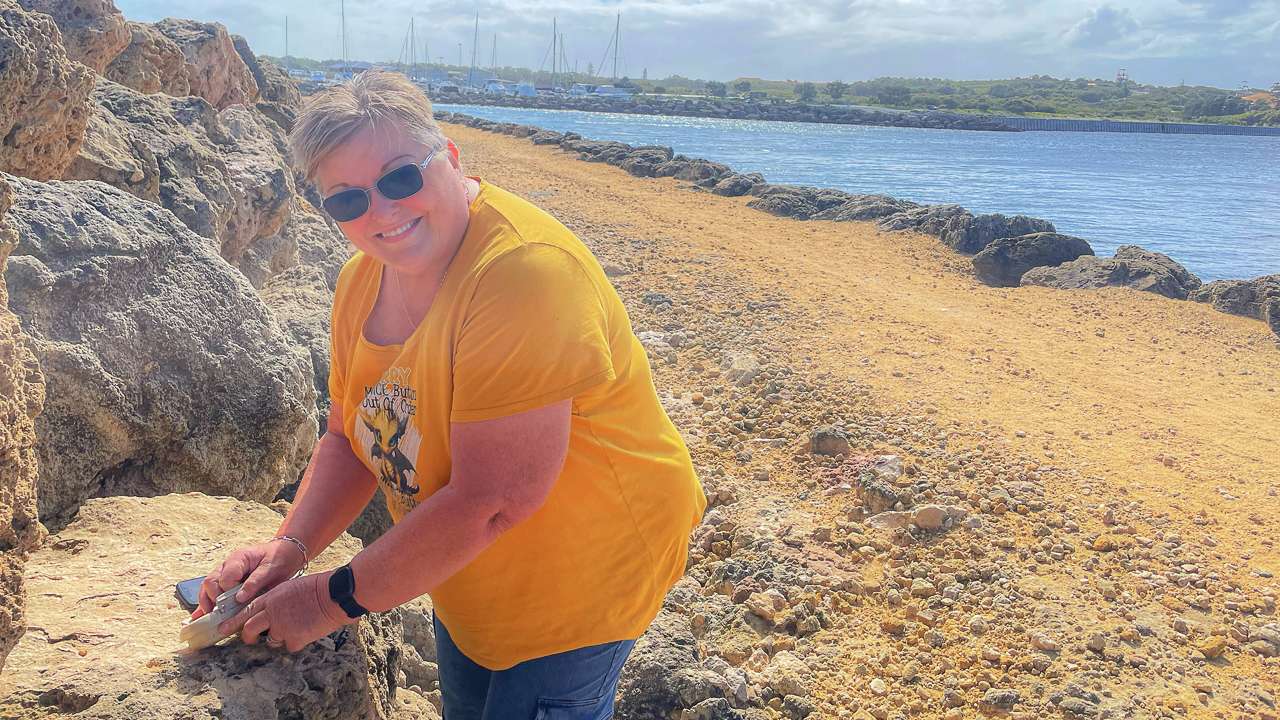
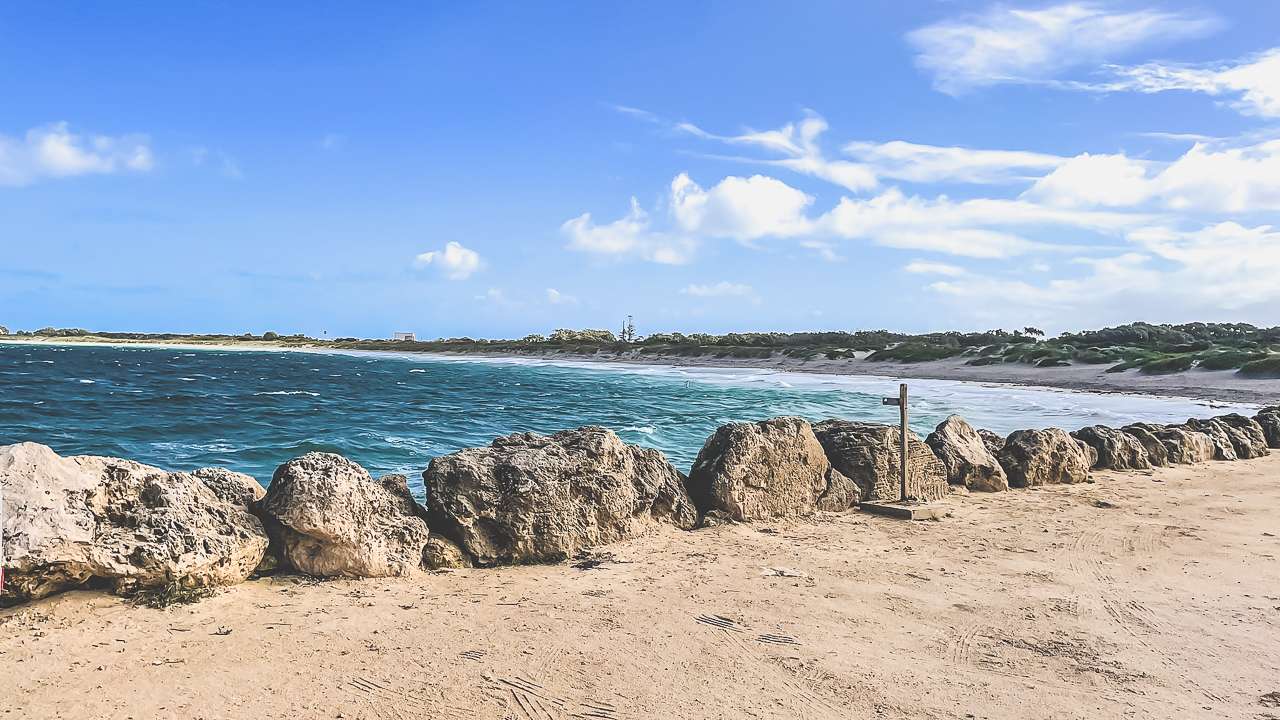
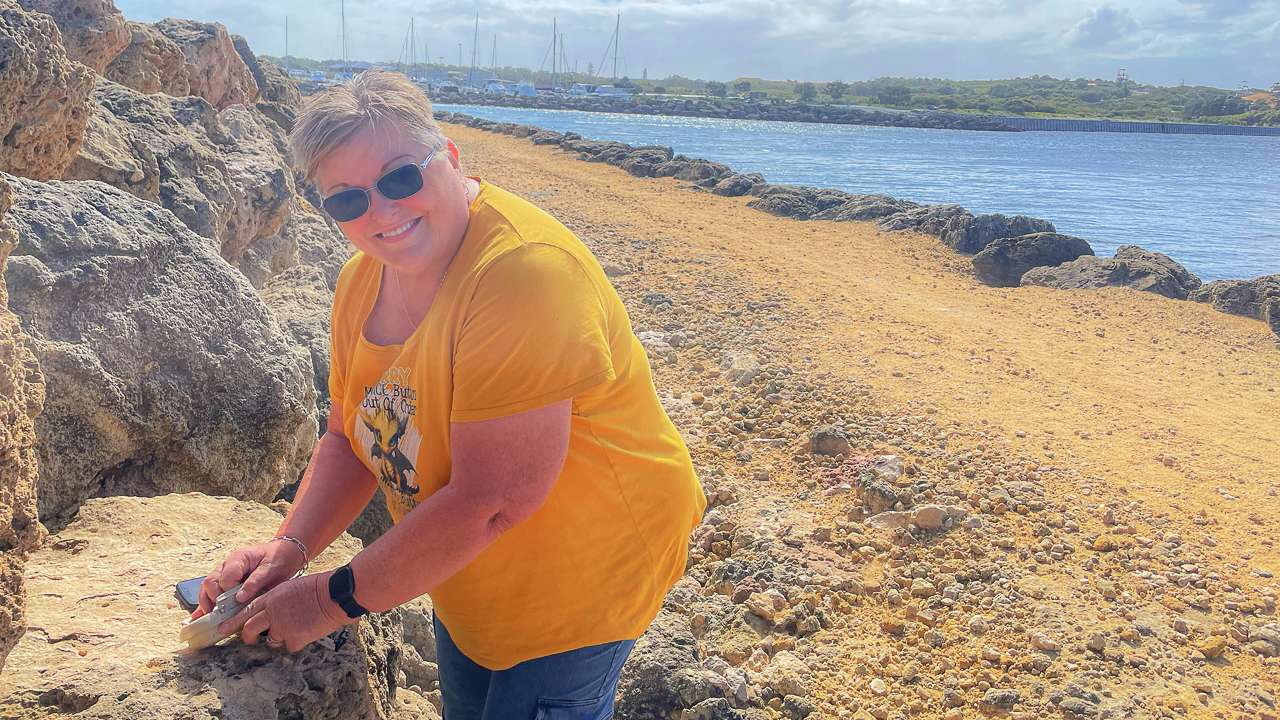
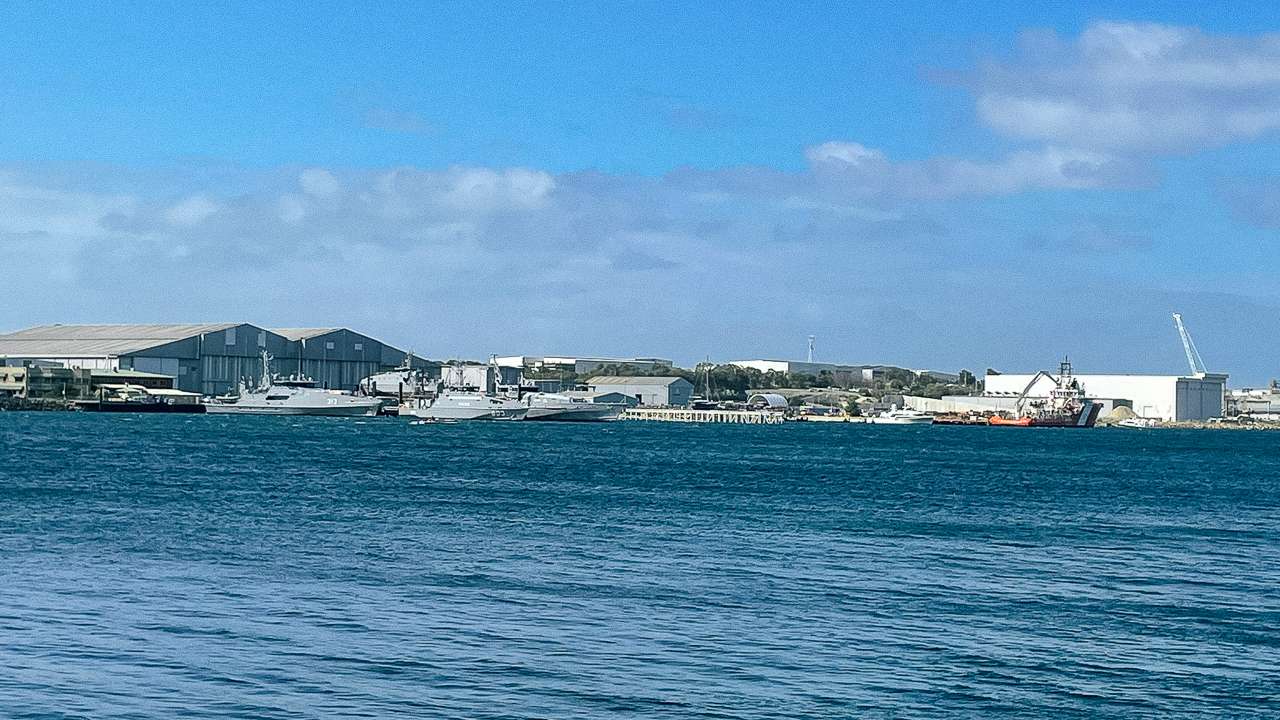
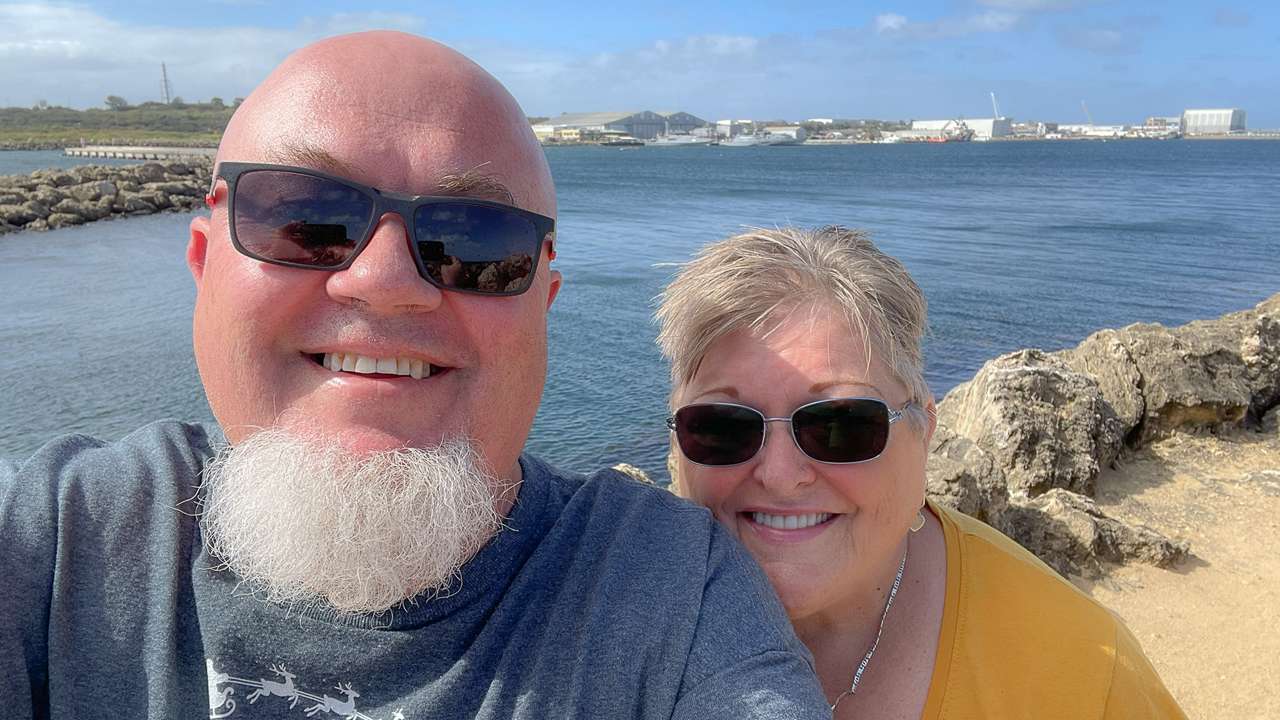
It’s an absolutely awesome location for geocaches. Views across the water to Fremantle and out to sea as you walk along a breakwall. It’s definitely or number one pick for geocaching scenery to date.

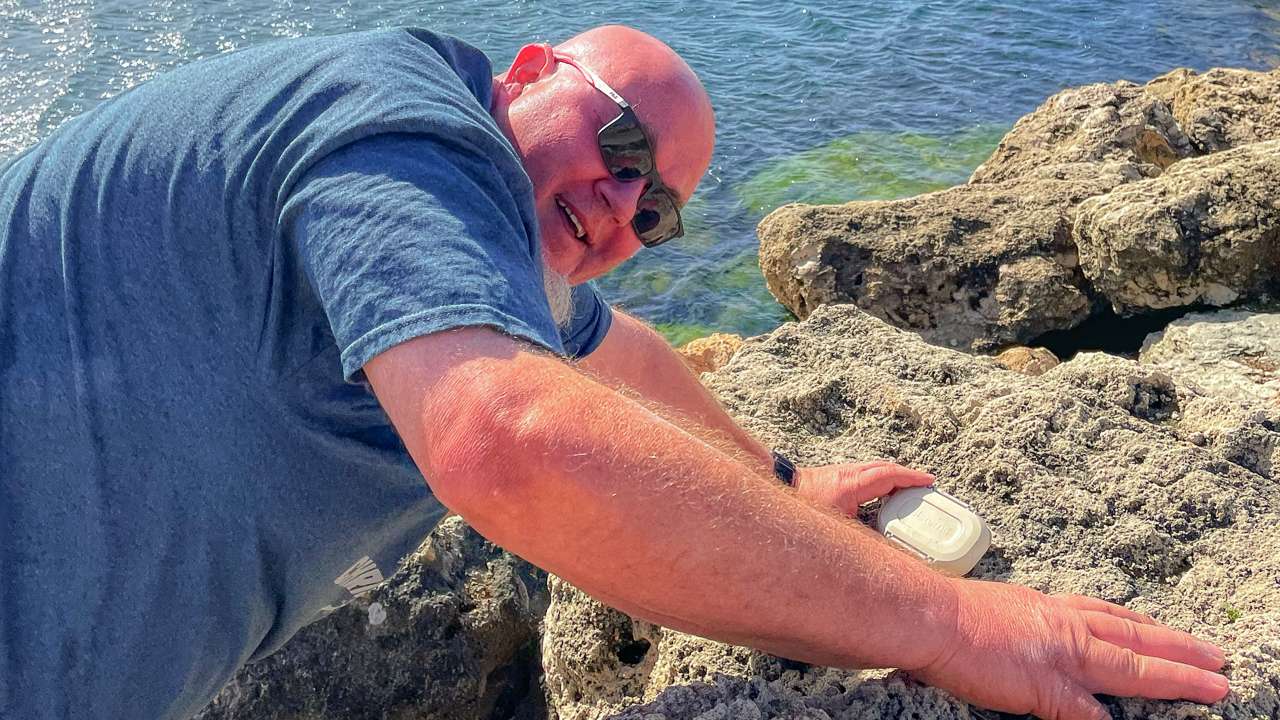
Amanda With A Geocache On The Breakwall At Woodman Point wA

Amanda With A Geocache On The Breakwall At Woodman Point wA

What Did We Find Geocaching Woodman Point WA?

The “On The Point” series is a mini series at the Woodman Point Recreation Reserve and follows one of the rock walls. Please allow approximately 30 minutes to complete the series. The walking distance from the carpark to the end of the rock wall is 1.7km.

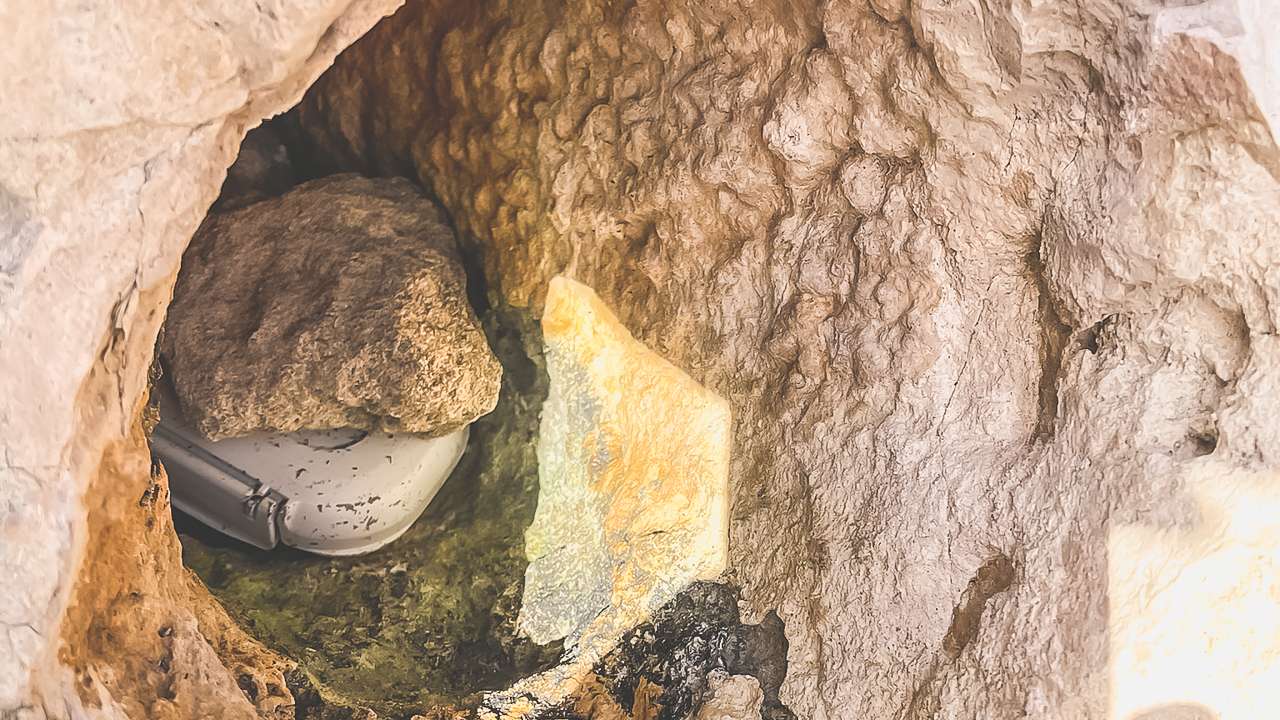
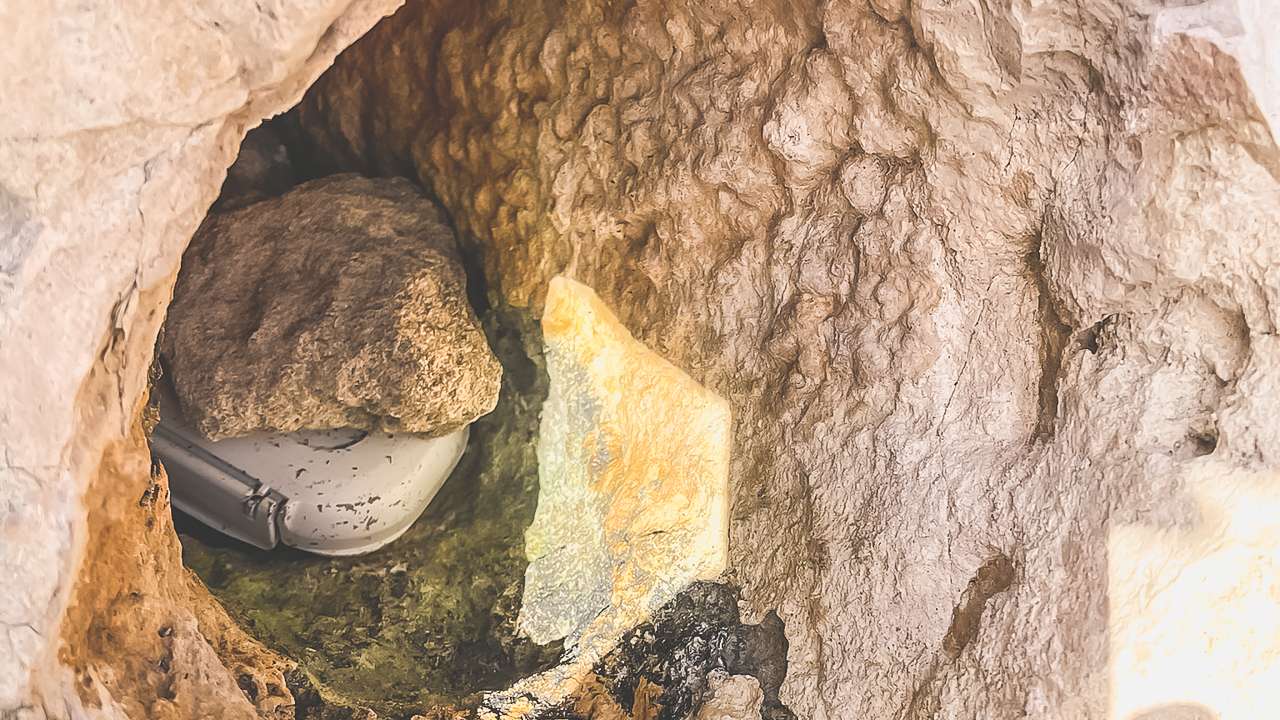
  • FOUND OTP – Getting Close | GCAHM0J
    Thankyou for these caches they were awesome
  • OTP – Getting Tired | GCAHM0N
    Another great find on a very windy day thankyou
  • OTP – Getting There | GCAHM0P
    Another great hide thankyou
  • OTP – Getting Distracted | GCAHM11
    We are all the way from NSW country and love the location.
  • OTP – Getting Started | GCAHM0W
    We were all but blown away but we found it

Woodman Point Breakwall

Woodman Point Breakwall

About Woodman Point WA: A Coastal Gem

Woodman Point located about 9 km south of Fremantle in Western Australia is a beautiful and historic coastal area. It’s a favourite spot for locals and tourists. Woodman Point sticks out into the Indian Ocean. It has easy access to the beach and stunning seaside views.

Some Woodman Point History

Woodman Point has a rich history, dating back to the early days of European settlement in Western Australia. Named after Thomas Woodman, who was an early settler, the area became significant in the 19th century. During World War I, Woodman Point played an important role as it housed a Quarantine Station that operated for many decades, particularly during times of disease outbreaks. The station was built in response to the risk of infectious diseases being brought into the state by ships. It became one of the largest quarantine stations in Australia.

Later, during World War II, Woodman Point was used as a military site, with gun batteries installed to protect the nearby port of Fremantle from potential enemy attacks. Today, remnants of the quarantine and military sites remain, giving visitors a glimpse into its fascinating past.

Things to Do at Woodman Point

  1. Geocaching: Whilst probably not the main reason people visit Woodman Point it was the thing that got us out and about on the breakwall. There are geocaches to be found in quite a few other places at Woodman Point – we just didn’t have the time to get them all.
  2. Hit the Beach: One of the main attractions of Woodman Point is its pristine beaches. Whether you’re keen for a swim, to cast a line, or just laze about in the sun, the beach here is top-notch. The sheltered waters make it great for swimming and fishing. If you’re into water sports, kayaking or paddle boarding are also popular activities.
  3. Fishing: For fishing enthusiasts, Woodman Point is well-known for its good spots. You can fish off the jetty or along the shore and locals reckon it’s a good place to catch whiting, herring and the occasional snapper. It’s a top-notch spot for a relaxing day by the water with your rod and tackle.
  4. Woodman Point Recreation Reserve: The reserve is perfect for bushwalking and picnicking. Plenty of BBQ areas, picnic spots and shaded seating, making it an ideal place for a family day out. Great for birdwatching with many bird species around.
  5. Explore Historical Sites: The old Quarantine Station buildings are still there and you can take a wander around to explore the history. It’s not only a great way to stretch your legs but also gives insight into the area’s importance in the past. There are also remains of World War II military defences scattered around, giving history buffs something to enjoy.
  6. Camping and Caravanning: There are camping and caravan facilities nearby, which makes it a great spot for an extended getaway. You can camp out under the stars and enjoy the peaceful coastal environment.

Woodman Point is a place where you can relax, soak up some sun and appreciate the coastal and historical heritage of Western Australia. Whether you’re a beach bum, history buff, or fishing fanatic, there’s a bit of something for everyone. If you’re ever near Freo, give it a go you won’t be disappointed!

Geocaching Around Woodman Point Gallery