Geocaching Around Trungley Hall, Ariah Park And Dirnaseer

Geocaching Around Trungley Hall, Ariah Park And Dirnaseer

Geocaching Around Trungley Hall, Ariah Park And Dirnaseer

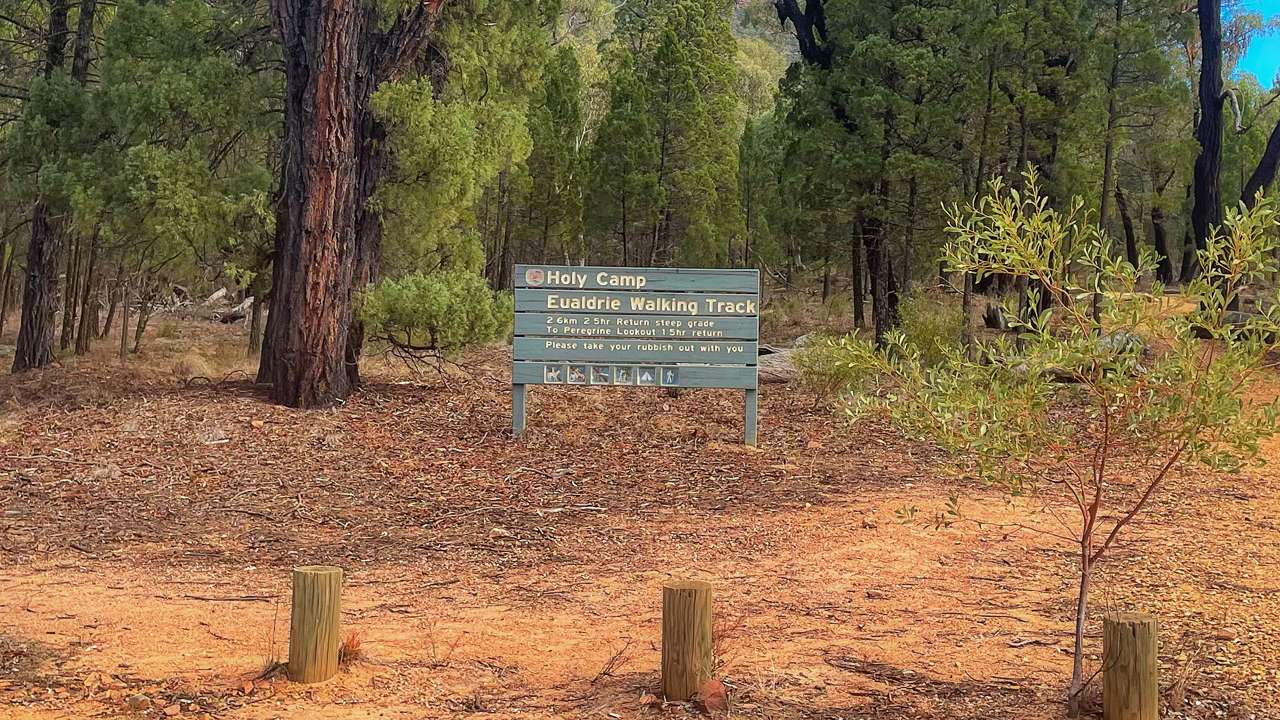
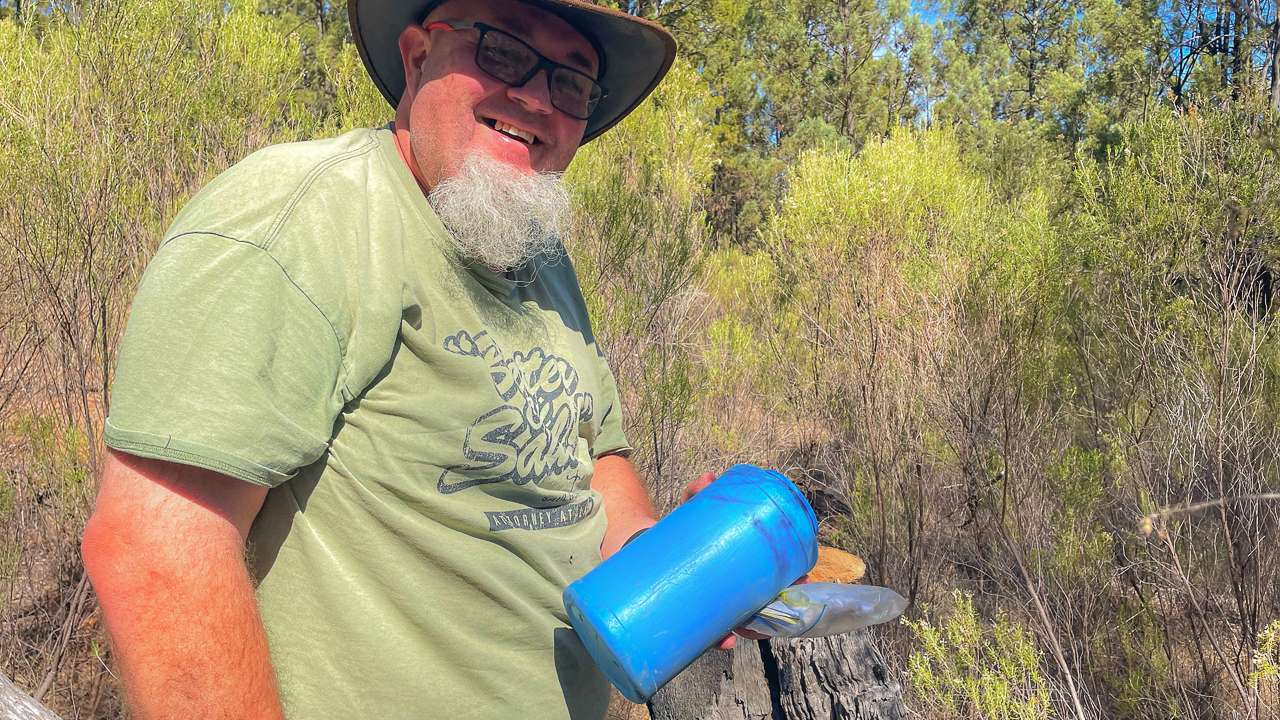
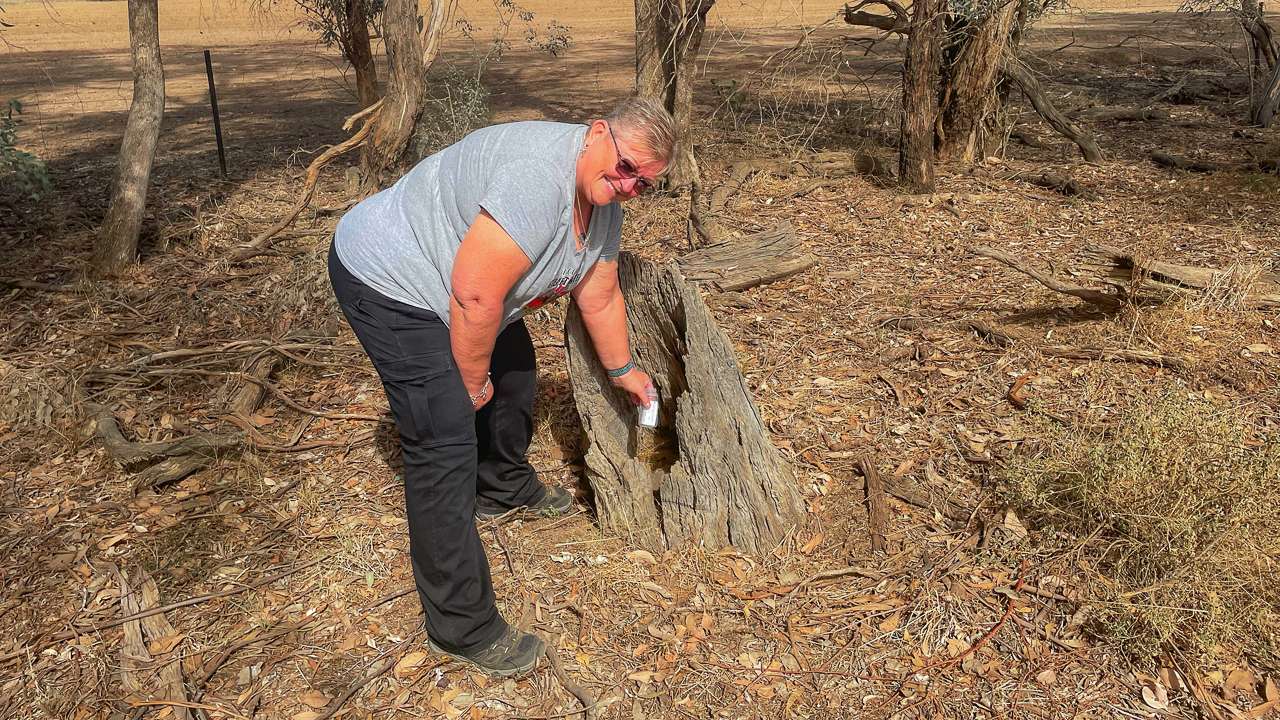
Another day out geocaching around Trungley Hall, Ariah Park and Dirnaseer. Called in for a beer at the Ariah Park Hotel. We headed out from home at Cootamundra at about 9.30am and got home early at 3.30pm as it was too hot to keep going. It was without a doubt the hottest day we’ve spent geocaching. All up we covered around 240kms.

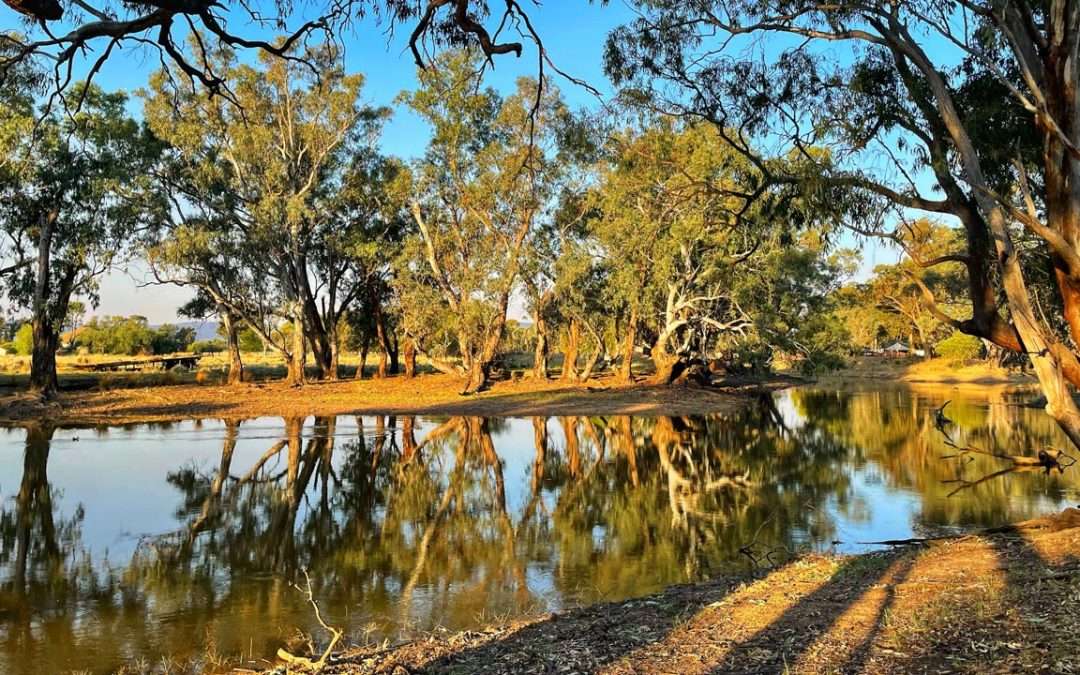
Out and about today doing some more geocaching around Trungley Hall, Ariah Park and Dirnaseer. Found 10 of them and had just the one DNF. We even managed to get one on an island out at the Ariah Park Arboretum that you normally have to paddle out to. It’s been a bit dry around here lately so the lake was empty and it was just an easy walk instead of a big paddle.

Today the temperature got up to around 38 degrees with a wind roaring out of the northwest making it feel even hotter than it was. There was a lot of dust being blown around particularly out around Dirnaseer. Near Dirnaseer the dust was so thick it was like driving in a heavy fog. All up it probably wasn’t the best day to be out geocaching but we still had a great time. Being out geocaching no matter the weather makes for a better day than sitting at home doing nothing!

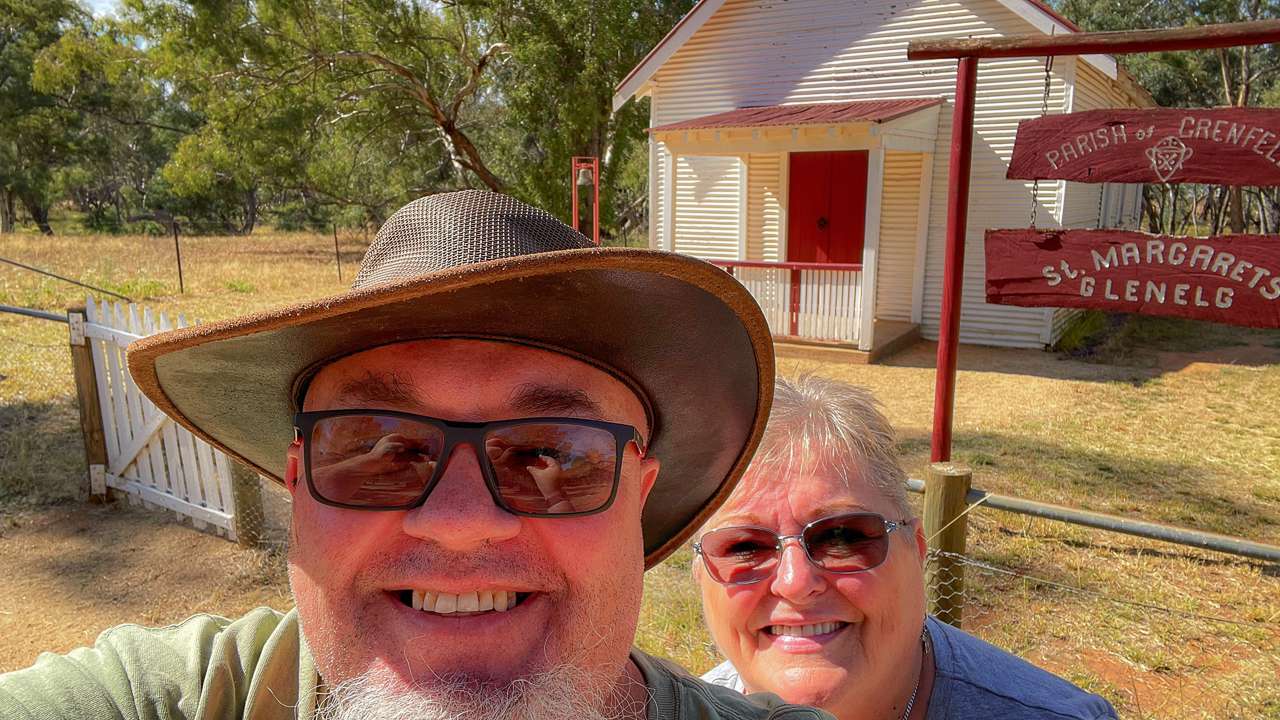
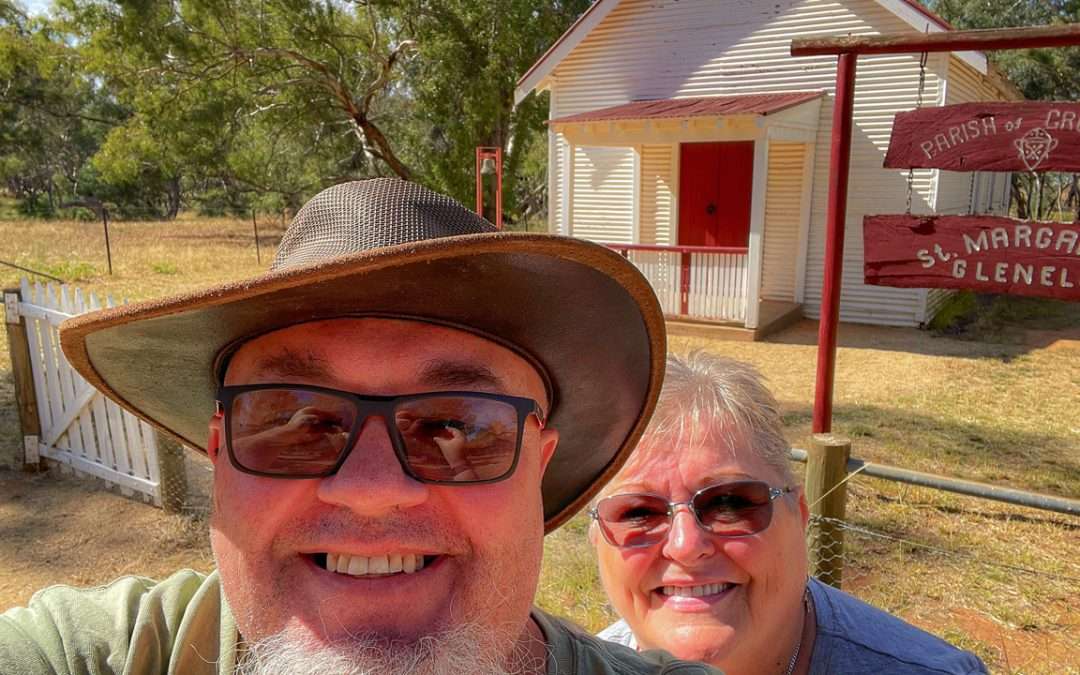
A Very Windy Day Selfie At Dirnaseer Hall

A Very Windy Day Selfie At Dirnaseer Hall

What Did We Find Geocaching Around Trungley Hall, Ariah Park And Dirnaseer NSW

  1. You Found Hello there, Coota! | GC911A4
    Great hide TFTC
  2. You Found Dirnaseer Memorial Hall | GCAYM2D
    Our last find for the day TFTC
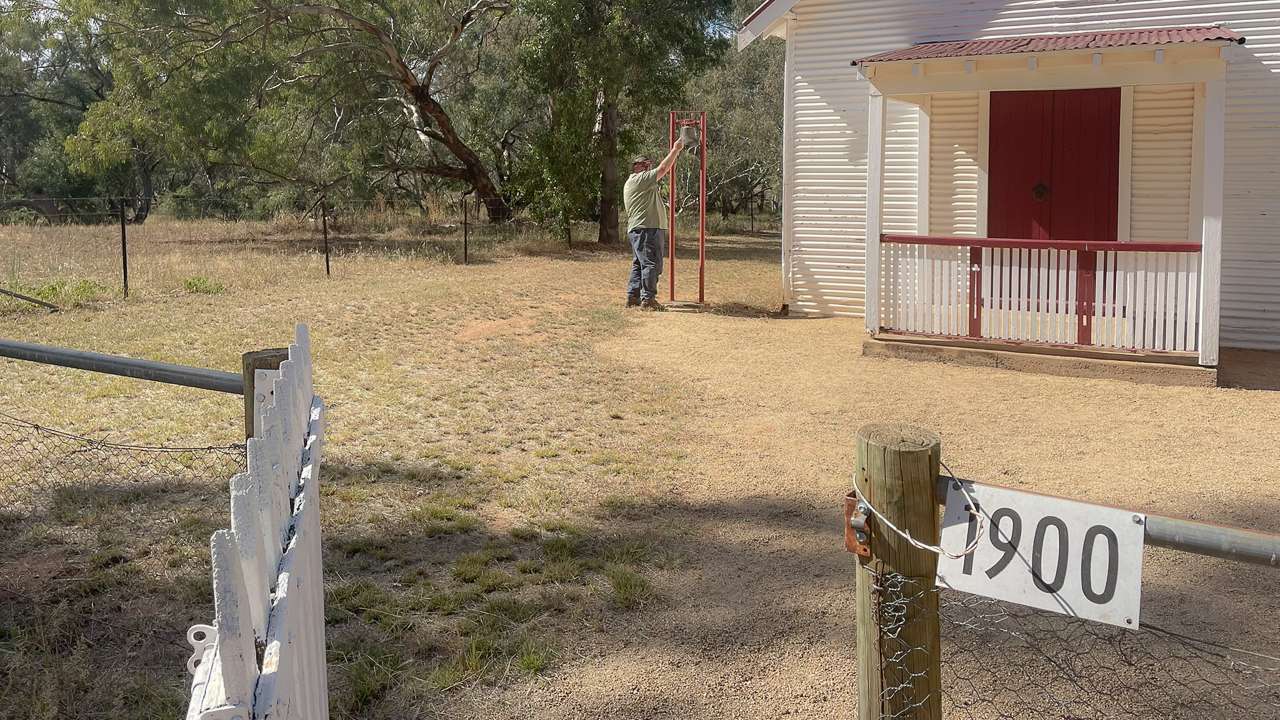
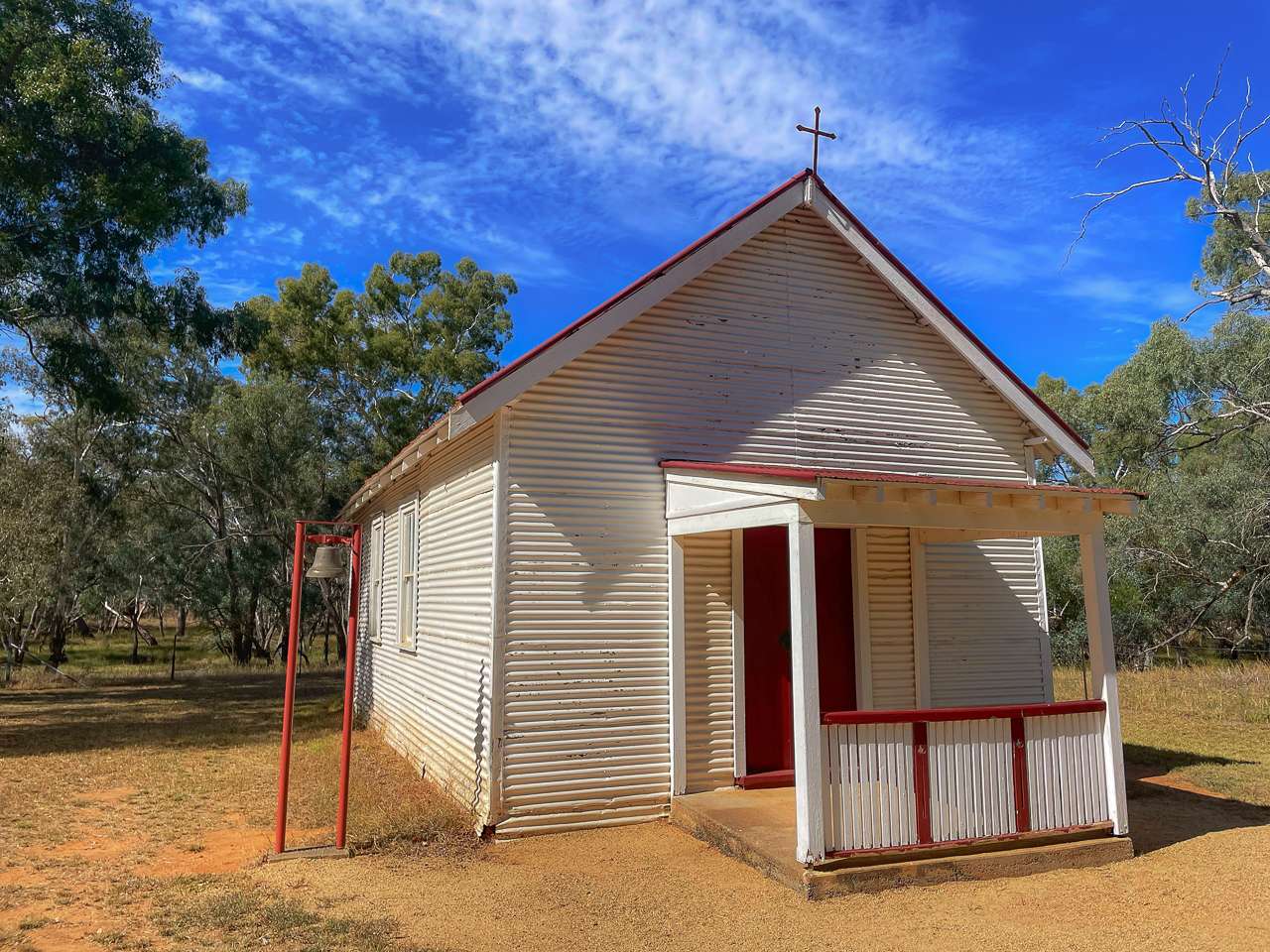
  3. You Found Dirnaseer Community Church | GCAYM31
    What a beautiful little church TFTC
  4. You Found NAR – Hidden Away | GC7WH89
    Another great hide found on the way home from Ariah park
  5. You Found The Island | GCAWDNM
    No need to swim to the island today as it is very dry. After nice walk we found the cache right where it should be
  6. You Found Lake Arbortree | GC9627Y
    Took us a while but after a bit of persistence we finally found it. TFTC
  7. You Found Ariah Park Cemetery | GC9627A
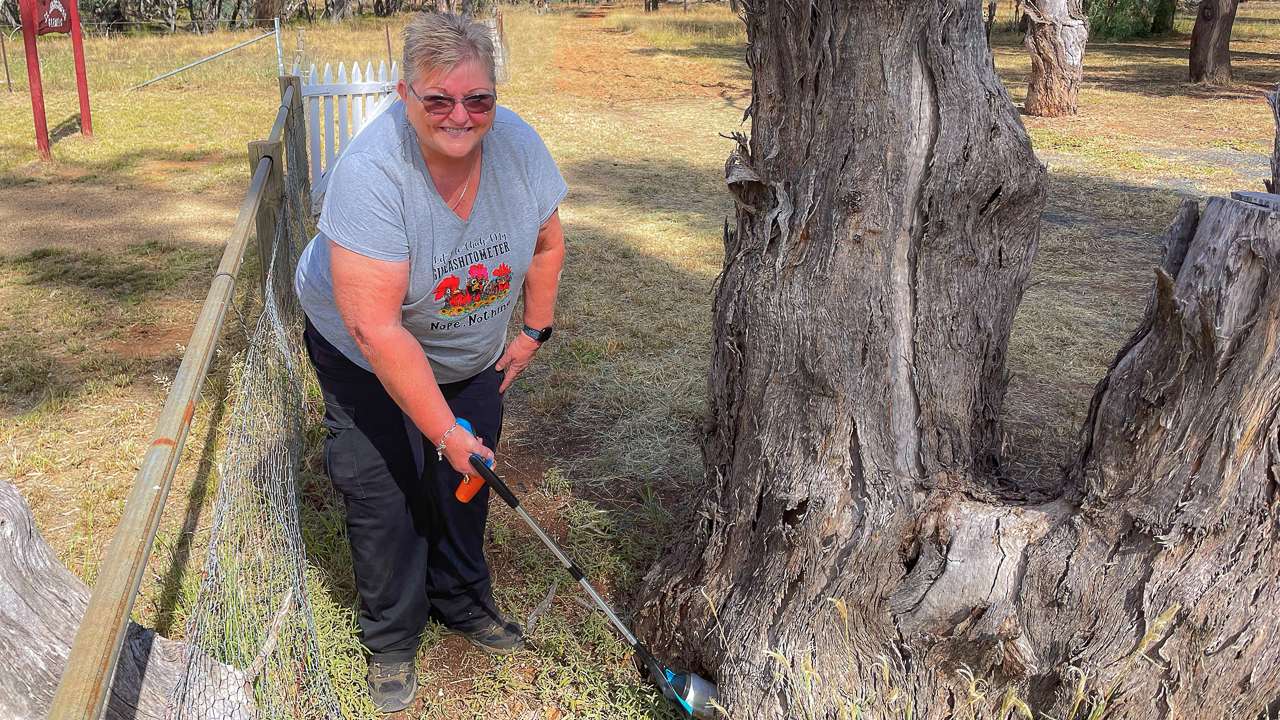
    Great hide. Plastic bag had seen better days so we have replaced it
  8. You Found Grenelle School | GCA85F5
    What a great piece of history TFTC
  9. You Didn’t Find Trungley Hall Multi | GCA85CB
    DNF
  10. You Found Trungley Hall | GC6YWB0
    Great hide TFTC
  11. You Found Temora Station | GCA85BV
    TFTC our first for the day

A Beer At The Ariah Park Hotel

The Ariah Park Hotel is another pub to add to our list of those that we’ve had a beer in. It’s a beautiful old pub and it has managed to maintain a lot of its original internal fixtures from the old days. It’s listed as having been built in 1903 so it’s a grand old lady. It was so bloody hot outside that we stayed inside the hotel long enough for a couple of beers. I had a couple of schooners of Reschs (my new favourite) and Amanda had a couple of Brookvale Union ginger beers. The ginger beers were served in some funky looking Brookvale Union schooner glasses, will have to look up to find out if you can buy them.

Ariah park Hotel

Ariah Park Hotel

The Grave Of Little Laurance McKenzie In The Ariah Park Cemetery

We visited the Ariah Park Cemetery a few years ago and when we were there we saw a little grave all on it’s own off to one side of the cemetery. It looked to be pretty lonely and a bit strange that it was off on its own. When we decided to call in there again Amanda bought some flowers and a little doll thing the day before and she placed them around his grave. The poor little fella only lived 8 months and it was really sad to see his grave away from the others. This time we noticed that someone else had placed some flowers on his grave as well so it’s great to see that people are thinking of him.

Grave Of Laurance Mckenzie In Aria Park Cemetery

Grave Of Laurance Mckenzie In Aria Park Cemetery

A Brief History Of Trungley Hall NSW

Trungley Hall is a small locality in New South Wales. It has a rich history tied to its early settlement and community life. The town’s origins can be traced back to the 19th century when it became a hub for German migrants who were attracted to the Riverina region due to free selection policies. By 1876 the area was officially known as Germantown reflecting its strong German heritage.

Trungley Hall Cemetery

The Trungley Hall Cemetery also known as Narraburra Cemetery is a significant historical site in the area. Located on Trungley Road, it contains 126 memorial records and serves as a resting place for early settlers and their descendants. The cemetery reflects the community’s multicultural roots particularly its German influence. It’s a testament to the region’s agricultural and commercial development.

While specific notable individuals buried at Trungley Hall Cemetery are not extensively documented, the cemetery is part of a broader narrative of German migration and settlement in the Riverina. August Menneke, a legendary bell-maker and blacksmith who migrated from Germany in the 1850s is one of the notable figures associated with the region. Though his burial site is not confirmed to be at Trungley Hall, his legacy is intertwined with the area’s history.

Trungley Hall’s history is also linked to local commerce, agriculture, and community activities, such as the Wilna Wattle Debating Society, which highlights the vibrant social life of early settlers. The cemetery and the town itself remain important markers of the Riverina’s cultural and historical heritage.

Going For A Look At Trungley Hall Church

Going For A Look At Trungley Hall Church

Geocaching Around Trungley Hall, Ariah Park And Dirnaseer NSW

Exploring Corner Country: For Offroad Caravanners & 4WDers

Exploring Corner Country: For Offroad Caravanners & 4WDers

Exploring Corner Country: For Offroad Caravanners & 4WDers

Explore Australia’s remote Corner Country with our 4WD guide. 8-day itinerary, camping spots, iconic pubs & essential prep for offroad caravanners. Corner Country, where Queensland, New South Wales and South Australia converge, is a remote outback region steeped in history, rugged beauty and adventure.

This vast, arid landscape offers offroad caravanners and four wheel drivers a chance to disconnect, explore untouched terrain and retrace the footsteps of explorers and First Nations peoples. With its iconic landmarks, historic pubs and sprawling national parks, Corner Country is a bucket list destination for those seeking an authentic Australian outback experience.

Corner Country Key Attractions At A Glance Infographic

Corner Country Key Attractions At A Glance Infographic

Key Attractions And Activities In Corner Country

Corner Country’s stark beauty and layered history provide endless opportunities for exploration. Below, we’ve expanded the list to 10 must-see attractions and activities, blending adventure, culture, and natural wonders.

1. Tibooburra Aboriginal Keeping Place and Pioneer Park

Located in the heart of Tibooburra, this dual-site attraction offers a deep dive into the region’s Indigenous and settler histories. The Aboriginal Keeping Place houses artifacts from the Wangkumara and Malyangaapa peoples, including tools, ochre paintings, and oral history recordings. Just steps away, Pioneer Park showcases early European life with restored wagons, farming equipment, and a replica slab hut.

  • Highlight: Don’t miss the “Tibooburra Madonna,” a rare 19th-century painting salvaged from a local homestead.
  • Tip: Join a guided tour (book ahead via [Visit Corner Country](https://visitcornercountry.com.au/first-nations/)) to gain insights into Dreaming stories and pastoral struggles.

Replica Of Sturts Whaleboat At Tibooburra

Replica Of Sturts Whaleboat At Tibooburra

2. Pooles Grave and Sturts Cairn

These two historical markers near Milparinka commemorate the harsh realities of 19th-century exploration. Pooles Grave marks the burial site of a member of Charles Sturt’s 1845 expedition, while Sturts Cairn is a stone pile built by the explorer’s team during their search for inland seas.

  • Highlight: The cairn’s location on a low rise offers sweeping views of the arid plains Sturt described as “gloomy and dismal.”
  • Tip: Visit at dawn or dusk to avoid midday heat and capture dramatic lighting for photography.

Depot Glen Near Milparinka

Depot Glen Near Milparinka

3. Mount Wood and Olive Downs Loop Roads

This 72km 4WD loop in Sturt National Park traverses rocky ridges, claypans, and wildlife-rich plains. The track passes Mount Wood Homestead, a relic of early pastoralism, and Olive Downs, where ancient river gums frame waterholes frequented by emus and kangaroos.

  • Highlight: The “Sea Lake” lookout provides a surreal vista of salt flats that shimmer like water in the distance.
  • Tip: Pack binoculars—this area is part of the Outback Birding Trail, home to Major Mitchell’s cockatoos and wedge-tailed eagles.

4. Cameron Corner and the Corner Store

The iconic Cameron Corner marks the intersection of Queensland, New South Wales, and South Australia. Nearby, the Cameron Corner Store serves as a social hub, offering fuel, cold beers, and hearty burgers. Climb the store’s lookout tower to snap a photo of the tri-state survey marker.

  • Highlight: Chat with the store’s owner, a local legend who’s collected decades of outback tales.
  • Tip: Time your visit for the annual Cameron Corner Races (September), a quirky event blending horse races and bush humour.

Dingo Fence At Cameron Corner

Dingo Fence At Cameron Corner

5. Dead Horse Gully

Named for the tragic fate of drought-stricken stock, this gorge near Milparinka features striking sandstone formations and fossilized marine remnants. A short walking trail winds through the gully, revealing plaques detailing its geological and pastoral history.

  • Highlight: The “Pudding Tank” rock formation, a natural sandstone dome resembling a colossal dessert.
  • Tip: Combine your visit with a stop at Sturts Depot Campground, a shaded rest spot with picnic tables.

6. Sturt National Park’s Dingo Fence

Stretching 5,600km across three states, the Dingo Fence is one of the world’s longest man-made structures. In Sturt National Park, you can drive alongside this engineering marvel, which was built in the 1880s to protect sheep from predators.

  • Highlight: The Packsaddle Roadhouse section offers interpretive signs explaining the fence’s controversial ecological impact.
  • Tip: Visit at sunset to photograph the fence’s stark lines against the outback’s fiery skies.

7. Milparinka Heritage Precinct

This open-air museum in Milparinka preserves the town’s 1880s gold-rush heyday. Explore the restored courthouse, Royal Hotel cellars, and Sturts Tree, a coolibah where the explorer allegedly carved his initials. The Heritage Walk links 20 sites via a self-guided trail.

  • Highlight: The Albert Hall displays a 19th-century wool wagon and original miner’s diaries.
  • Tip: Download the [Corner Country Stories Drive](https://www.outbackqueensland.com.au/drive/corner-country-stories-drive/) audio guide for immersive storytelling.

Milparinka Turnoff

Milparinka Turnoff

8. Betoota Ghost Town

Once a thriving pit stop for cattle drovers, Betoota is now a haunting collection of ruins 160km east of Birdsville. The skeletal remains of the Betoota Hotel (closed in 1997) and overgrown cemetery evoke the impermanence of outback settlements.

  • Highlight: The Betoota Racecourse, where dusty tracks and rusted signage hint at long-abandoned race days.
  • Tip: Visit in winter to avoid summer’s blistering heat and snake activity.

9. Fort Grey Campground and Historic Ruins

Nestled in Sturt National Park, Fort Grey combines camping with history. The site features the stone foundations of an 1860s stockade built to protect settlers from Indigenous resistance. Today, it offers toilets, barbecues, and shaded sites.

  • Highlight: The Fort Grey Bird Hide, a quiet spot to observe waterbirds like black swans and cormorants.
  • Tip: Use this campground as a base to explore the park’s western trails, including the Jump Up Loop.

10. Sunset Hill and Golden Gully

In Tibooburra, Sunset Hill and Golden Gully are twin attractions showcasing the region’s ochre-hued geology. Sunset Hill offers panoramic views of the town and surrounding plains, while Golden Gully is a short walk through eroded cliffs that glow amber in the late afternoon.

  • Highlight: The gully’s “Hoodoos”—tall, thin rock spires shaped by centuries of wind and rain.
  • Tip: For photographers, the best light occurs 30 minutes before sunset.

Key Attractions And Activities In Corner Country Comparison Table

Attraction Location Key Features Insider Tip
Tibooburra Aboriginal Keeping Place & Pioneer Park Tibooburra Indigenous artifacts, 19th-century pioneer displays, “Tibooburra Madonna” painting Book guided tours via Visit Corner Country
Pooles Grave & Sturts Cairn Near Milparinka Explorer history, panoramic desert views Best visited at golden hour for photography
Mount Wood & Olive Downs Loop Sturt National Park 72km 4WD track, wildlife spotting, “Sea Lake” mirage effect Bring binoculars for birdwatching
Cameron Corner & Store Tri-state border Survey marker, fuel stop, bush hospitality Time visit for September races
Dead Horse Gully Near Milparinka Sandstone formations, “Pudding Tank” dome Combine with Sturts Depot picnic
Dingo Fence Sturt National Park 5,600km predator fence, interpretive signs Sunset photography opportunity
Milparinka Heritage Precinct Milparinka Gold-rush relics, self-guided heritage trail Download audio guide
Betoota Ghost Town 160km east of Birdsville Abandoned hotel, cemetery, racecourse Winter visits recommended
Fort Grey Campground Sturt National Park Historic stockade, birdwatching hide Base for Jump Up Loop exploration
Sunset Hill & Golden Gully Tibooburra Ochre cliffs, hoodoo formations Arrive 30 mins before sunset

An 8 Day Corner Country Itinerary

This itinerary balances driving challenges, cultural immersion and opportunities to soak in the region’s stark beauty.

Days 1–2: Birdsville to Poeppel Corner

Begin in Birdsville, a quintessential outback town famed for its annual races. Tackle Big Red, the towering sand dune on the edge of the Simpson Desert, testing your 4WD skills. Camp nearby, then drive 150km west to Poeppel Corner, where three states meet. This isolated marker offers a surreal photo opportunity and a tangible connection to Australia’s surveying history.

Days 3–4: Haddon Corner to Cameron Corner

Head to Haddon Corner, another state border junction and explore the ghostly remnants of the Betoota Hotel. Continue to Cameron Corner, marked by the iconic Corner Store, where you can enjoy a cold beer and chat with locals. Camp under the stars at the nearby basic campground.

Days 5–6: Sturt National Park

Enter New South Wales and traverse Sturt National Park via the Mount Wood and Olive Downs Loop Roads. These tracks reveal dramatic mesas, wildlife and the Fort Grey Campground, a historic site with basic facilities.

Days 7–8: Milparinka to Broken Hill

Visit Milparinka, a heritage rich town showcasing 19th century outback life. Explore Sturts Depot Glenn, a vital water source for early explorers, then conclude your journey in Broken Hill, a cultural hub with art galleries and modern comforts.

Remote Area Camping In Corner Country

Camping here requires self sufficiency, but rewards with solitude and star filled skies. Below is a comparison of some of the better known camping sites in corner country.

Campground Facilities Accessibility Highlights
Fort Grey Toilets, barbecues 4WD only Historic ruins, Sturt National Park
Milparinka Caravan Park Powered sites, showers 2WD accessible Heritage precinct, pet-friendly
Cameron Corner None (bush camping) 4WD recommended Proximity to state junction marker
Big Red Campground Bush toilets, fire pits 4WD essential Sunset views over Simpson Desert
Tibooburra Caravan Park Powered sites, showers 2WD accessible Close proximity to central Tibooburra
Tibooburra Aboriginal Campground Toilets, showers, fire pits 2WD accessible Close proximity to central Tibooburra

Pubs and Hotels In Corner Country

These watering holes are lifelines for travellers, offering camaraderie and cold drinks:

  • Cameron Corner Store: Sip a beer at the “corner” of three states. The store sells basic supplies and fuel.
  • Tibooburra Family Hotel: Adorned with vibrant murals, this pub offers hearty meals and air conditioned rooms.
  • Milparinka Hotel: A restored 1880s inn with rustic charm and tales of the region’s pastoral history.
  • Tibooburra Hotel: Recently rebuilt after a fire it is a favourite of the locals.

Family Hotel Tibooburra

Family Hotel Tibooburra

History Of Corner Country

Aboriginal Heritage

For millennia, the Maliangaapa, Wadigali and Wangkumara peoples thrived here, using intricate knowledge of soaks and claypans to survive. They traded tools and ochre across vast distances, leaving behind artifacts now preserved in Tibooburra’s Aboriginal Keeping Place. Learn more about their legacy via the [First Nations Cultural Guide](https://visitcornercountry.com.au/first-nations/).

European Exploration

Charles Sturt’s 1844 expedition, aiming to find an inland sea, relied on Aboriginal guides to locate water. By the 1860s, pastoralists displaced Indigenous communities, establishing sheep stations and altering the landscape. Ruins like Pooles Grave and Sturts Cairn commemorate this turbulent era.

Tips For Remote Camping:

  • Carry 40L+ of water per person and a satellite phone for emergencies.
  • Use a portable solar setup to power devices, as most sites lack electricity.
  • Respect fire bans and always leave no trace.

Vehicle And Caravan Preparation

Corner Country’s unsealed roads and extreme temperatures demand meticulous preparation:

1. Vehicle Essentials:

  • Fit all-terrain tyres (e.g., BFGoodrich KO2) and a snorkel for dusty conditions.
  • Equip a dual battery system and carry extra diesel (distances between fuel stops exceed 600km).
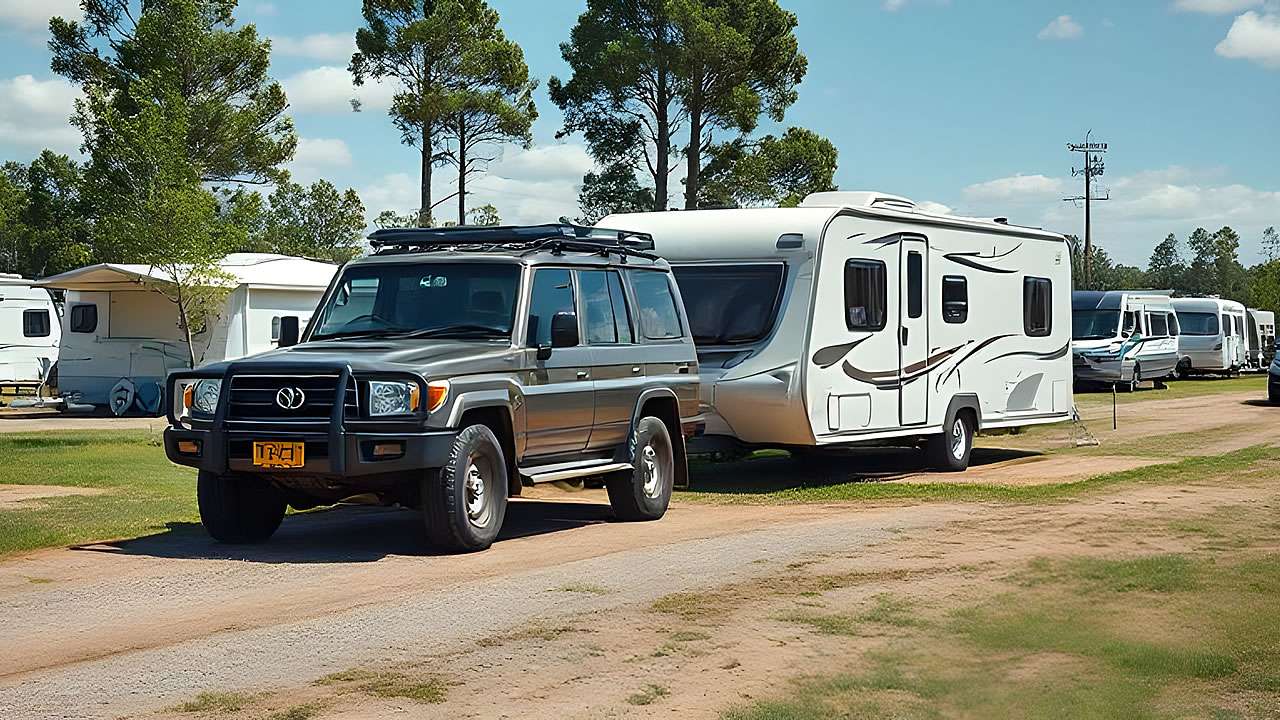
  • Pack recovery gear: snatch straps, Maxtrax and consider a high-lift jack.

2. Caravan Readiness:

  • Opt for offroad rated caravans with independent suspension.
  • Secure loose items with heavy-duty straps to withstand corrugations.
  • Check wheel bearings and brakes before departure.

For detailed checklists, consult the [Outback Road Trip Preparation Guide](https://theoutbackloop.com.au/travel-tips/vehicle-preparation-outback-road-trip/).

Final Tips For Travellers To Corner Country

  • Check road conditions via the [NSW National Parks Alerts](https://www.nationalparks.nsw.gov.au) page.
  • Visit in autumn or spring to avoid 45°C summer heat.
  • Support remote communities by purchasing supplies locally.

Corner Country isn’t just a destination – it’s a journey into Australia’s heart, blending challenge, history and raw beauty. With careful planning, your adventure here will be unforgettable.

6 Frequently Asked Question FAQs About Corner Country

What is the best time of year to visit Corner Country?

Aim for autumn (March - May) or spring (September - November) to avoid extreme summer heat (up to 45°C) and freezing winter nights.

Do I need a 4WD to explore Corner Country?

Yes. Unsealed roads, sand dunes like Big Red, and remote tracks require a high-clearance 4WD with all-terrain tyres and recovery gear.

Are there fuel stops in Corner Country?

Fuel is limited. Carry enough for 600-700km between stops. Key stations include Birdsville, Tibooburra, and Cameron Corner Store.

Can I camp freely in Corner Country?

Bush camping is allowed in many areas, but use designated sites (e.g., Fort Grey, Cameron Corner) for safety and minimal environmental impact.

What historical sites should I prioritise?

Don’t miss Sturts Depot Glenn, Pooles Grave, and Tibooburra’s Aboriginal Keeping Place for insights into Indigenous and European history.

How reliable is mobile phone coverage in Corner Country?

Mobile reception is extremely limited. Carry a satellite phone or emergency beacon (e.g., Garmin inReach) for critical communication. Always inform someone of your travel plans before departure.

TOP 10 Things To Do In Junee: An (Almost) Locals Guide

TOP 10 Things To Do In Junee: An (Almost) Locals Guide

TOP 10 Things To Do In Junee: An (Almost) Locals Guide

Discover Junee’s top experiences! Haunted houses, chocolate factories & secret geocaches. Explore the top 10 things to do in this historic NSW town. Your ultimate guide inside! located in the Riverina region of New South Wales, Junee is a town where history, adventure and charm collide.

As residents of nearby Cootamundra my wife Amanda and I have spent countless weekends in and around Junee. Whether you’re a history buff, a thrill seeker or a family looking for affordable fun. This guide curated through firsthand exploration will help you make the most of your visit.

Best Things To Do In Junee: Our Top 10 Picks

1. Step Back in Time at the Junee Roundhouse Museum

Dominating Junee’s railway heritage the Junee Roundhouse Museum is a must visit. Built in 1942, this engineering marvel features a 100 foot turntable and houses restored locomotives that once powered Australia’s rail network. Volunteers, many of whom are retired railway workers, offer insights into the site’s wartime significance and daily operations. Don’t miss the chance to watch the turntable in action – it’s one of the few still operational in the Southern Hemisphere.

NSWGR 4401 At Junee

NSWGR 4401 At Junee

2. Brave the Haunts of Monte Cristo Homestead

Dubbed “Australia’s most haunted house,” Monte Cristo Homestead delivers spine tingling ghost tours every Saturday evening. Built in 1885, the property’s tragic history includes tales of accidental deaths and spectral sightings. Even sceptics will find the candlelit tours atmospheric, with original furnishings and a creeping sense of unease.
Note: Monte Cristo Homestead is currently closed.

3. Indulge at the Junee Licorice and Chocolate Factory

A hit with families the Junee Licorice and Chocolate Factory offers free tastings and guided tours. Watch artisans craft organic licorice and rich chocolates using traditional methods. The on-site café, The Mill Room, serves decadent desserts and coffee – perfect for refuelling after a morning of exploration.

Junee Chocolate & Licorice Factory

Junee Chocolate & Licorice Factory

4. Snap a Photo with the Ray Warren Statue

Sports fans will appreciate this bronze tribute to Ray “Rabbits” Warren, Junee’s legendary rugby league commentator. Located near the town’s main roundabout, the statue is a quirky nod to local pride and a quick stop for selfies.

5. Uncover Local History at Broadway Museum

Housed in a former department store, the Broadway Museum showcases Junee’s evolution through photographs, artefacts and wartime memorabilia. Highlights include vintage fashion displays and a recreated 19th century kitchen. Entry is free, making it ideal for budget conscious travellers.

6. Hunt for Hidden Treasures with Geocaching

For outdoor enthusiasts geocaching in Junee adds an adventurous twist to sightseeing. Using GPS coordinates, hunt for hidden caches around landmarks like the Roundhouse and Memorial Garden. Local favourites include the “Old Junee Kapooka” series, which combines history with scenic bushwalking.

Geocache Found Near Old Junee Cemetery

Geocache Found Near Old Junee Cemetery

7. Wander Through Belmore Manor’s Gardens

This 1896 manor blends grandeur with tranquility. While the interior is privately owned, the public can stroll its manicured gardens and admire the Victorian architecture. Keep an eye out for seasonal blooms and resident peacocks.

Junee Attractions At A Glance Infographic

Junee Attractions At A Glance Infographic

8. Splash Around at Junee Junction Aquatic Centre

Families love this recreational hub, which boasts a 50 metre pool, waterslides and a toddler splash zone. Pack a picnic – the adjacent park has shaded tables and barbecue facilities.

9. Reflect at Junee’s Memorial Garden

This serene space honours locals who served in World War II. The rose lined pathways and ANZAC memorial plaques offer a quiet retreat for reflection.

10. Have A Beer And A Meal At The Historic Commercial Hotel

End your day at Commercial Hotel, a pub serving hearty counter meals since 1891. Try the schnitzel or parmigiana, paired with a local ale. The rustic atmosphere and friendly staff embody Junee’s community spirit.

Junee Attractions At A Glance: A Comparison

To help prioritise your itinerary, here’s how key activities stack up:

Attraction Family Friendly? Cost (AUD) Time Needed
Junee Roundhouse Museum Yes $10 – $15 1.5 – 2 hours
Monte Cristo Homestead No (ages 12+) $25 – $35 1 hour
Licorice & Chocolate Factory Yes Free (tours $5) 1 – 2 hours
Geocaching Yes Free Flexible
Junee Junction Aquatic Centre Yes $6 – $10 2 – 3 hours

Where To Stay In Junee

Accommodation options cater to caravanners, campers and hotel seekers:

  • Commercial Hotel: (02) 6924 4224 Book here
  • Belmore Manor: (02) 6924 2222 Visit NSW
  • Junee Motor Inn: (02) 6924 1744 Website
  • The Crossing Motel: (02) 6924 3000 Website
  • Junee Caravan Park: (02) 6924 1316 Website

Where To Eat In Junee

From casual bites to hearty pub meals:

  • Junee Licorice Factory Café: (02) 6924 2933 Menu
  • Commercial Hotel Bistro: (02) 6924 4224 Commercial Hotel
  • Roundhouse Restaurant: (02) 6924 1403
  • Junee Bakery: (02) 6924 1447 Instagram

Why Junee Appeals To Caravanners And Campers

Junee’s compact size and mix of free/paid attractions make it ideal for short stays or weekend trips. The town’s railway heritage provides a unique backdrop, while geocaching and aquatic facilities cater to active travellers. Notably, its proximity to Wagga Wagga (30 minutes) and Cootamundra (40 minutes) allows easy integration into broader Riverina itineraries.

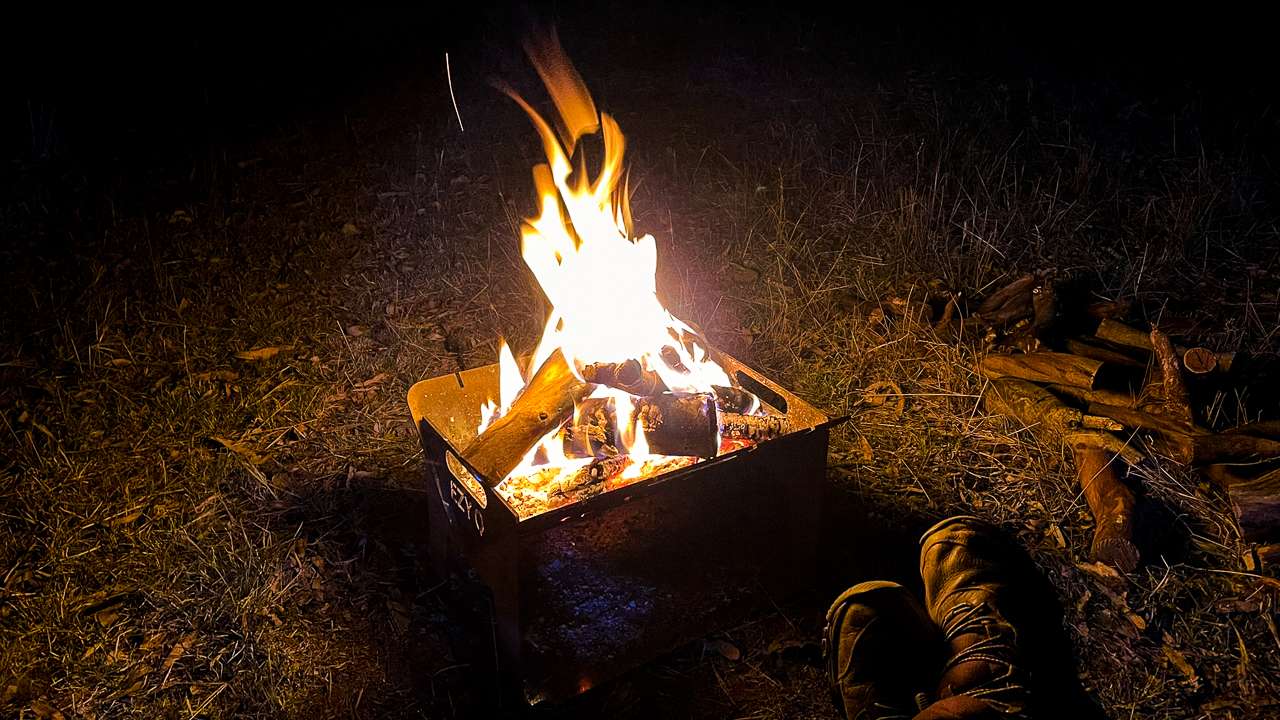
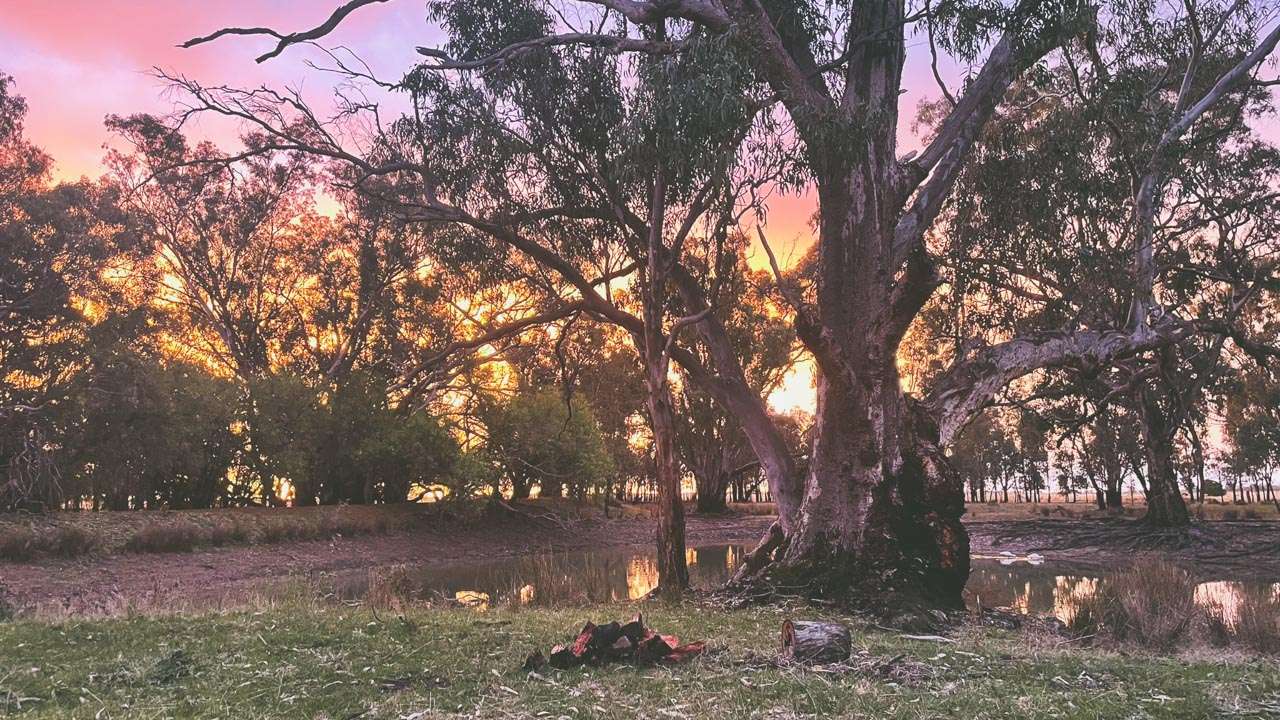
A Nice Fire While Camping At Junee Old Recreation Grounds

A Nice Fire While Camping At Junee Old Recreation Grounds

Final Thoughts On The Top 10 things To Do In Junee

Junee surprises visitors with its blend of history, quirkiness and natural beauty. Whether you’re marvelling at steam engines, hunting ghosts, or hunting geocaches, this town offers something memorable. As Amanda always says, “Junee proves you don’t need big cities for big adventures.”

Things To Do In Junee Photo Gallery

Junee Roundhouse Museum Review: A Rail Enthusiasts Heaven

Junee Roundhouse Museum Review: A Rail Enthusiasts Heaven

Junee Roundhouse Museum Review: A Rail Enthusiasts Heaven

Our review of the Junee Roundhouse Museum: Step into NSW’s railway history with steam giants, diesel engines & a working turntable. Family friendly, budget friendly, packed with stories! As residents of Cootamundra just a 40-minute drive from Junee my wife Amanda and I have made the Junee Roundhouse Museum a staple destination for out of town guests over the past five years.

Located in the heart of the Riverina region, this museum isn’t just a relic of Australia’s railway history – it’s a living tribute to the ingenuity of steam and diesel eras. Here’s our candid review of its highs, lows and why it remains a must visit for caravanners, campers and history buffs alike.

A Glimpse Into The Junee Roundhouse’s Storied Past

The Junee Roundhouse isn’t merely a museum – it’s a monument to Australia’s railway golden age. Constructed during World War II and completed in September 1947, this engineering marvel was once the largest roundhouse in the Southern Hemisphere. Designed to replace an outdated depot, its 100 foot turntable and 42 repair bays serviced steam locomotives critical to NSW’s post war infrastructure.

By the 1990s, diesel locomotives dominated the rails, rendering the roundhouse obsolete. It closed in 1993, but thanks to grassroots efforts by volunteers and rail enthusiasts, the site reopened in 1994 as a museum. Today, it balances preservation with functionality: part of the facility still maintains active diesel engines, offering visitors a rare blend of past and present.

Inside The Junee Roundhouse Museum

Inside The Junee Roundhouse Museum

What You Can Do At The Junee Roundhouse Museum

  1. Explore Historical Locomotives and Rolling Stock
    The museum’s crown jewels are its meticulously preserved engines. Steam locomotives 2413 and 3609 stand as titans of the steam era, while diesel locomotive 4872 and U-set power cars showcase the transition to modern rail. Amanda’s personal favourite, the mail car, offers a tactile journey into 20th century communication, complete with original sorting equipment.
  2. Witness the Turntable in Action
    Few experiences match the thrill of seeing the 100 foot turntable rotate a 120 tonne locomotive. During a few of our visits, we’ve timed our trips to coincide with maintenance sessions – still conducted here for operational diesel engines. Check the museum’s web site for updates.
  3. Dive Into the Model Railway Display
    A highlight for families, the intricate model railway replicates Junee’s rail network in miniature. Kids (and adults) can operate trains via push button controls, making it a hands on crowd pleaser.
  4. Join a Guided Tour
    While self guided exploration is rewarding, the volunteer led tours unlock hidden stories. On our last visit, a guide recounted how locomotive 3609 hauled wartime supplies through the Snowy Mountains – a narrative absent from placards.

The Good Points: Why The Museum Shines

  1. Historical Authenticity
    From grease stained workshop tools to original blueprints, the museum avoids sterile displays. Climbing into the driver’s cab of locomotive 2413, you’re met with rusted levers and vintage gauges – a visceral nod to the past.
  2. Passionate Volunteers
    The volunteers, many retired railway workers, infuse tours with firsthand anecdotes. One TripAdvisor reviewer noted, “Their enthusiasm is contagious – you leave feeling like part of the rail family.”_
  3. Affordable Family Fun
    At $10 for adults and $25 for a family pass, it’s a budget friendly stop. Compare this to Sydney’s Powerhouse Museum ($15 adult entry) or the Australian Railway Historical Society ($12) and the value is clear.
  4. Active Maintenance Hub
    Unlike static museums the Junee roundhouse’s ongoing use for diesel repairs adds dynamism. We’ve watched engineers weld and test engines – an unexpected bonus for engineering buffs.

Dave Taking The Kids For A Ride At The Junee Roundhouse

Dave Taking The Kids For A Ride At The Junee Roundhouse

The Bad Points: Room For Improvement

  1. Limited Opening Hours
    Open Wednesday to Sunday (10 AM – 3 PM) so the schedule clashes with weekend road trippers and it can get a bit busy. It’s never ever over the top busy though. A Monday closure means caravanning groups arriving early in the week often miss out.
  2. Weather Woes
    The roundhouse’s open air design amplifies seasonal extremes. Summer visits demand hats and water bottles, while winter tours require jackets. As one Google Reviewer grumbled, “Loved the trains, but nearly melted in January.” As locals I can attest to the fact that yes it gets very hot at times in summer and it gets bloody cold in winter. However it is Australia, that’s how things are!
  3. Sparse Amenities
    A small kiosk sells drinks but there’s no café. Pack a picnic or head to Junee’s Licorice Factory after your visit.

Visitor Essentials: Plan Your Trip To The Junee Roundhouse

Address: 92 Harold St, Junee, NSW
Opening Hours: Wednesday – Sunday, 10 AM – 3 PM (closed public holidays).

Entry Fees:
Adult: $10
Concession: $5
Family: $25

NSWGR Garratt Class Locomotive Outside Of Cootamundra

NSWGR Garratt Class Locomotive Outside Of Cootamundra

Nearby Stays

  • Junee Caravan Park: 5 minutes from the museum, with powered sites from $35/night.
  • The Railway Hotel: A heritage pub offering cozy rooms ($110/night) and hearty meals.

Historical Engines And Rolling Stock

Locomotives

The following table lists just some of the locomotives on display at the museum. There are lots more than this however the ones listed are fan favourites.

Locomotive Class/Type Year Built Historical Role
Steam Locomotive 2413 4-6-2 Pacific-class 1951 Hauled express passenger trains across NSW
Steam Locomotive 3609 2-8-2 1943 Transported freight during WWII and postwar era
Diesel Locomotive 4872 GM-EMD Model 1970s Symbolised the shift from steam to diesel power
U-set Power Cars Interurban EMU 1968 Operated on Sydney’s suburban rail network

NSWGR 4401 At Junee

NSWGR 4401 At Junee

Rolling Stock

Some of the historic rolling on display at the Junee roundhouse is listed below. There are loads more than this but the ones listed are very popular.

Rolling Stock Type Year Built Key Features
Mail Car DS 3013 Postal carriage 1940s Original sorting tables and mailbags preserved
Water Tank Wagon Refuelling wagon 1930s Used to replenish steam locomotives mid journey
Sleeping Car BSC 2541 Passenger sleeper 1950s Compact bunks, fold-down sinks and vintage upholstery

NSWGR S Class Wagon At Junee Roundhouse Museum

NSWGR S Class Wagon At Junee Roundhouse Museum

Why Junee Roundhouse Museum Matters Today

Beyond nostalgia, the museum plays a vital role in regional tourism. A 2022 report by Visit NSW highlighted its contribution to Junee’s economy, drawing 15,000 annual visitors. For caravanning families, it’s a strategic pit stop en route to Wagga Wagga or the Snowy Mountains.

Final Verdict: All Aboard for History At The Junee Roundhouse Museum

The Junee Roundhouse Museum isn’t flawless but its quirks add charm. Where else can you touch century old machinery, chat with ex-railway workers and watch a locomotive go for a spin on a turntable? For Amanda and I it’s a great example of community passion – and a reminder that history isn’t just preserved here; it’s kept alive.

Junee Roundhouse Railway Museum Photos

Junee Licorice & Chocolate Factory Review: By A Local

Junee Licorice & Chocolate Factory Review: By A Local

Junee Licorice & Chocolate Factory Review: By A Local

Discover Junee Licorice & Chocolate Factory: Organic treats, historic mill tours & great friendly dining in NSW’s Riverina. A local favourite! As residents of Cootamundra, my wife Amanda and I have made countless trips to the Junee Licorice & Chocolate Factory over the past five years.

Nestled in the historic Junee Flour Mill, this iconic destination has become a staple for both locals and travellers exploring the Riverina region. We break down what makes this factory a place you have to visit – and a few quirks to keep in mind.

A Slice of History: From Flour Mill To Chocolate Haven

The Junee Licorice & Chocolate Factory occupies a building steeped in local heritage. Constructed between 1934 and 1935, the Junee Flour Mill once served as a critical hub for grain processing in southern New South Wales. After decades of decline, Neil Druce revitalised the site in 1998, transforming it into Australia’s first fully certified organic licorice and chocolate factory. Today, the mill’s industrial past blends seamlessly with its modern sweet-treat production, creating a unique backdrop for visitors.

The factory’s commitment to organic practices under its Green Grove Organics brand adds to its charm. Using Belgian style couverture chocolate and traditional licorice recipes, it’s a nod to quality that resonates with ethically minded consumers. Notably, the mill’s restoration retained original features like exposed brickwork and timber beams, which now frame the bustling café and production areas. This fusion of old and new makes the Junee Licorice & Chocolate Factory a living museum of sorts, where every corner tells a story.

Junee Chocolate & Licorice Factory

Junee Chocolate & Licorice Factory

The Good Points: Why We Keep Coming Back

1. Hands On Experiences and Educational Tours

One standout feature is the freestyle freckle making session, where guests drizzle organic chocolate over biscuits or marshmallows for just per plate. It’s a hit with kids and adults alike, offering a playful yet delicious activity.

Guided tours, running hourly from 10am to 3pm, provide a behind-the-scenes look at chocolate tempering and licorice twisting. While production visibility can vary (more on that later), the guides’ enthusiasm and knowledge – like explaining how organic wheat becomes licorice – keep the experience engaging. For caravanners, these tours are a perfect midday break, blending education with indulgence.

2. The Millroom Restaurant: More Than Just Sweets

The licensed Millroom Restaurant serves hearty breakfasts and lunches, with standout dishes like pulled lamb burgers and hot chocolates made from real melted Belgian chocolate. Live music on weekends elevates the ambiance, making it a relaxed pitstop for caravanners refuelling after a drive.

3. A Gift Shop That Celebrates Local Producers

Upstairs, the gift shop brims with local products: It’s a treasure trove of cookware items as well as reproduction antiques and that kind of thing. They also have plenty of souvenirs and we’ve yet to leave without a bag full of treats for friends back home.

4. Organic Credentials and Sustainability

As advocates for sustainable tourism, we appreciate the factory’s organic certification and zero-waste initiatives. The use of solar power and compostable packaging aligns with the values of many travellers today.

5. A Hub for Local Business Meetings

As someone who works locally, I’ve found the Junee Licorice & Chocolate Factory to be an unexpected gem for work-related lunches. The Millroom Restaurant’s relaxed yet professional atmosphere makes it ideal for hosting clients or brainstorming sessions. During one meeting, a colleague and I split the Junee Platter – a mix of local cheeses, dips and house-made licorice – while discussing projects over coffee. The free Wi-Fi and ample power outlets are a bonus for remote workers and the staff never rush you, even during peak hours.

Amanda and I have also noticed other professionals tapping into this space. On a recent visit, a group of farmers debated grain prices over lattes, while a tourism operator sketched out itineraries at a nearby table. The Junee Licorice & Chocolate Factory has quietly become a community hub where business and pleasure coexist.

The Bad Points: Room for Improvement

1. Long Wait Times at Peak Hours

While the Millroom’s food is delicious, its popularity can lead to frustrating delays. On a busy Sunday we waited over an hour for our meals – a common gripe echoed in Trip Advisor reviews. Planning an early visit or opting for takeaway coffees (which are quicker) helps sidestep the rush. The wait times have never bothered Amanda and myself as we know how good what is going to be served is and are more than willing to wait.

2. Hit-Or-Miss Production Viewing

Though the factory promises “live” production viewing through glass windows, machinery breakdowns or off-peak production days can leave little to see. One Google Review noted a motionless conveyor belt during their visit, though staff compensated with detailed explanations. To be honest though it’s just one of those things, breakdowns happen and sometimes due to production plans nothing is being made. It’s just how it is.

3. Limited Tour Availability

Tours cap at 15 people and often book out, especially during school holidays. First time visitors should reserve slots online to avoid disappointment.

Junee Licorice & Chocolate Factory: How It Compares

To contextualise its appeal here’s how the factory stacks up against typical regional attractions. This table highlights why the factory stands out: it combines education, sustainability and nostalgia in a way few regional stops achieve.

Feature Junee Factory Average Regional Attraction
Setting Historic flour mill with industrial charm Often generic or purpose-built
Focus Organic production + hands-on activities Passive viewing or basic tastings
Dining Licensed restaurant with live music Basic café or picnic areas
Accessibility Easy for caravans (ample parking) Variable, often limited parking

Junee Licorice Factory's Unique Appeal Within The Region

Junee Licorice Factory’s Unique Appeal Within The Region

Insights For Caravanners And Campers

For those road tripping through the Riverina, the Junee Licorice & Chocolate Factory is a strategic pitstop. Its proximity to Junee’s Bethungra Spiral and Monte Cristo Homestead makes it ideal for day itineraries. Caravan friendly parking and pet friendly outdoor seating (for coffee breaks) add to its appeal.

If you’re staying overnight consider pairing your visit with the Junee Roundhouse Museum or a stroll through the town’s heritage listed streetscapes. The factory’s central location means you’re never far from the next adventure.

A Local’s Tip: Maximising Your Visit

Having visited the Junee Licorice & Chocolate Factory for both leisure and work, here’s our advice:

  • Weekday lunches are quieter, making them perfect for meetings or relaxed meals.
  • Pre-order gifts online if you’re short on time; the staff happily set aside items for pickup.
  • Combine tours with tastings to fully appreciate the craftsmanship behind each product.

Final Thoughts: Is It Worth A Visit To The Junee Licorice & Chocolate Factory?

In our many visits, the Junee Licorice & Chocolate Factory has consistently delivered a blend of education, indulgence and regional pride. While minor issues like wait times and tour availability persist, the overall experience remains a highlight for us and our guests.

As Amanda often says: “You haven’t really been to Junee until you’ve been to the Junee licorice and chocolate factory.” I couldn’t agree more. Whether you’re a caravanner, a local, or a professional blending work with pleasure, this factory offers a uniquely Australian experience that’s as rich as its chocolate.

Junee Chocolate & Licorice Factory Don't Be Like Old Mate Outside The Entry Door When You Visit!

Junee Chocolate & Licorice Factory Don’t Be Like Old Mate Outside The Entry Door When You Visit!

Caravan Underbody Protection: The Essential Guide

Caravan Underbody Protection: The Essential Guide

Caravan Underbody Protection: The Essential Guide

Caravan underbody protection safeguards your caravan against stone chips, corrosion and costly repairs. Discover DIY tips, materials and cost saving strategies for Aussie adventurers!

Australia’s vast outback, corrugated tracks and gravel roads offer caravanners unparalleled freedom. However these same elements pose a constant threat to your caravan’s underbody. From stone chips to corrosion, neglecting this critical area can lead to costly repairs and safety hazards. Consider the story of John and Maria, a couple from Brisbane whose coastal caravan trip ended abruptly when saltwater corrosion destroyed their chassis. A $15,000 repair bill later, they vowed never to overlook underbody protection again. This guide unpacks the best DIY strategies for caravan underbody protection, compares materials, analyses costs and offers long-term maintenance tips – so you can explore with confidence.

Why Caravan Underbody Protection Matters

The underbody is your caravan’s first line of defence against road debris, moisture and corrosion. According to the [Caravan Council of Australia](https://caravancouncil.com.au/), unprotected wiring, plumbing and chassis components are vulnerable to damage, which can compromise safety systems like electric brakes or freshwater tanks. A 2022 survey by [Caravan World](https://www.caravanworld.com.au/) found that 68% of owners who experienced underbody damage spent over $3,000 on repairs – a cost easily mitigated with proactive measures.

Caravan Underbody Protection Insertion Rubber Flap Protecting Plumbing Fittings

Caravan Underbody Protection Insertion Rubber Flap Protecting Plumbing Fittings

Key Caravan Underbody Protection Risks Explained

  1. Stone Strikes: Flying debris isn’t just a nuisance. A single rock can puncture a $1,500 freshwater tank or sever brake wiring, as reported in a 2023 case study by Outback Travel Australia.
  2. Corrosion: Coastal humidity and outback salt flats accelerate rust. The Australian National Transport Insurance notes that 40% of caravan insurance claims in Queensland relate to underbody corrosion.
  3. Resale Value: Visible underbody damage can deter buyers. Dealerships like Caravanland estimate a 30% price drop for caravans with unaddressed underbody issues.

Caravan Underbody Stone Protection: Materials Compared

When selecting protection, consider your travel style. Bitumen road travellers need lighter solutions, while off-road explorers require heavy duty armour. Below, we break down popular methods, their pros and cons, cost effectiveness and lifespan.

Material Pros Cons Cost (AUD) Lifespan Best For
Flexible Conduit Affordable, easy DIY install Limited sharp-object resistance $2–$5 per metre 3–5 years Wiring, plumbing
Aluminium Guards High impact resistance, customisable Requires fabrication skills $50–$200+ 10+ years Exposed fittings, tanks
Rubber Flaps Debris deflection, simple mounting May loosen on rough terrain $20–$100+ 2–4 years General stone deflection
Spray On Coating Corrosion prevention, uniform coverage Less effective against large impacts $50–$200+ (DIY kits) 5–8 years Rust-prone regions
Foam Sleeves / Pool Noodles Insulates pipes, cheap Low durability, visually bulky $3–$8 per metre 1–3 years Plumbing insulation
Polyurethane Sheets Lightweight, high abrasion resistance Difficult to shape without tools $30–$80 per sheet 5–7 years Floor protection

Caravan Stone Protection: Top DIY Solutions

1. Flexible Conduit for Wiring and Plumbing

Ideal for safeguarding electrical lines and PVC pipes, corrugated plastic conduit is a budget friendly choice. Slit tubing allows easy installation without disconnecting existing systems. However, as noted by Trader VS, it’s less effective against sharp rocks.

Implementation Tips

  • Tools Required: Cable ties, utility knife, measuring tape.
  • Time Estimate: 2–4 hours for a standard caravan.
  • Common Mistakes: Using undersized conduit (aim for 20% larger than the pipe/wire diameter).

2. Custom Aluminium or Steel Guards

For critical components like water tanks or gas lines, metal guards offer unmatched durability. While fabrication demands tools like angle grinders, forums like Caravaners Forum highlight their popularity among off-roaders.

Implementation Tips

  • Tools Required: Angle grinder, drill, rivet gun.
  • Case Study: Mick, a Grey Nomad, shares on Facebook: “After bending a chassis on the Gibb River Road, I installed 3mm steel guards. Five years later, not a dent!”

Protection Beneath Caravan

Protection Beneath Caravan

3. Rubber Mud Flaps

Heavy duty rubber flaps mounted behind wheels or along the chassis deflect stones effectively. Users on Facebook groups like “Aussie Caravan Adventures” recommend combining flaps with conduit for layered protection. Another great option is a fantastic Aussie made StoneStomper.

Implementation Tips

  • Optimal Positioning: Install flaps 10–15 cm above ground level to balance debris deflection and clearance.
  • Reinforcement: Use galvanised brackets to prevent tear offs on corrugations.

4. Spray On Underbody Coatings

Products like Raptor Coatings provide a waterproof, anti-corrosive barrier. While DIY kits are affordable, professional application ensures even coverage. A 2023 review by [Practical Caravan](https://www.practicalcaravan.com/) found spray coatings reduced road noise by 15%—a bonus for long hauls.

Implementation Tips

  • Surface Prep: Use a degreaser and wire brush to remove rust flakes.
  • Layering: Apply 3–4 thin coats instead of one thick layer to prevent drips.

5. Polyurethane Sheets for Floor Protection

A lesser known but effective option, 6mm polyurethane sheets shield the caravan floor from abrasion. Adhesive backed variants simplify installation.

Implementation Tips

  • Cutting: Use a jigsaw with a fine tooth blade for clean edges.
  • Sealing: Apply silicone sealant to sheet edges to prevent moisture ingress.

Infographic Caravan Underbody Protection Material Analysis

Infographic Caravan Underbody Protection Material Analysis

Cost Benefit Analysis: DIY vs. Professional Installation

Investing $300–$500 in materials can save thousands in repairs. For example:

  • Flexible conduit: A $50 investment protects $1,500+ in plumbing.
  • Aluminium water tank guards: A $200 setup shields a $3,000 water tank.
  • Spray coating: A $150 DIY kit prevents $2,000+ in rust repairs.

However, DIY isn’t always cheaper. Complex jobs like fabricating guards may require professional tools, costing $800+ if outsourced. Insurance providers like [Youi](https://www.youi.com.au/) also offer 5–10% premium discounts for caravans with certified underbody protection—a perk worth exploring.

Safety First: Avoiding Common Pitfalls

  1. Secure your caravan: Use axle stands rated for your caravan’s weight—never rely solely on jockey wheels.
  2. Galvanic corrosion: Match metals (e.g., stainless steel bolts with aluminium guards).
  3. Clearance checks: After installation, test ground clearance on a steep ramp or uneven surface.
  4. Ventilation: Ensure protective covers don’t block airflow to brakes or exhaust systems.

Maintenance: Extending The Life Of Your Underbody Protection

Even the best protections fail without upkeep. Follow this seasonal checklist:

Post Trip Inspection

  • Check for loose bolts, cracks, or abrasions on guards and flaps.
  • Clean mud and debris from conduits and coatings to prevent moisture traps.

Annual Deep Clean

  • Pressure wash the underbody (avoid direct spray on electrical components).
  • Reapply spray coatings every 3–5 years, depending on wear.

Corrosion Hotspots

  • Focus on weld points and bolt holes. Apply a rust converter like Penetrol at the first sign of oxidation.

Environmental Considerations: Tailoring Protection To Climate

Australia’s diverse climates demand tailored solutions:

  • Coastal Regions: Prioritise stainless steel fittings and anti corrosion sprays.
  • Outback: Opt for thick rubber flaps and metal guards to combat sharp rocks.
  • Tropical North: Use UV resistant materials to prevent sun degradation.

Expert Insights: What the Pros Say

We interviewed Dave – a mechanic at a Brisbane caravan repairer for insider tips:

  • “80% of underbody damage I see starts with poor installation. Never rush the prep work.”
  • “Composite materials like carbon-kevlar are gaining traction for high impact areas, but they’re pricey.”

Caravan Stone Protection: Long Term Strategies

Layering multiple methods yields the best results. For example:

  1. Spray coatings defend against corrosion.
  2. Rubber flaps deflect large debris.
  3. Conduit and foam sleeves protect pipes and wiring.

Protection Under Supreme Getaway Caravan

Protection Under Supreme Getaway Caravan

Case Study: A Success Story from the Simpson Desert

Karen and Tim, frequent outback travellers, shared their experience on [ExplorOz](https://www.exploroz.com.au/):

  • Challenge: Repeated stone damage to their greywater tank.
  • Solution: Installed 3mm aluminium guards and added rubber flaps.
  • Result: Zero damage after 15,000 km of outback travel.

Conclusion: Protect Your Investment, Embrace the Journey

Caravan underbody protection isn’t a luxury – it’s insurance for your caravanning lifestyle. By understanding the pros, cons and costs of each method, you can tailor a defence strategy that lets you conquer Australia’s toughest terrains without hesitation. As the saying goes in caravan circles: “Protect the bottom and the journey stays on top.”

Share your underbody protection tips in the comments or tag us in your DIY project photos on social media. Ready to start? Grab a torch and inspect your caravan’s underbody today – you might spot vulnerabilities you never knew existed!

Ultra Heavy Duty Underbody Protection On A Supreme Getaway Offroad Caravan

Ultra Heavy Duty Underbody Protection On A Supreme Getaway Offroad Caravan

Legal Disclaimer: The information provided in this blog post is for general guidance and educational purposes only. While we strive to ensure accuracy, caravan underbody protection methods and costs may vary based on individual circumstances, caravan models, and local conditions. Always consult a qualified professional or manufacturer before undertaking any modifications to your caravan. The author and publisher are not liable for any damages, injuries, or losses resulting from the use or misuse of this information. Travel safely and responsibly.