25 Campsites For Free Camping In Broken Hill

25 Campsites For Free Camping In Broken Hill

25 Campsites For Free Camping In Broken Hill

Explore Broken Hill on a budget with our free camping in Broken Hill camping guide. Learn where to stay, what to do and how to enjoy a safe stay. Broken Hill stands as an iconic outback destination that offers travellers a unique blend of mining heritage, artistic culture and breathtaking landscapes.

For caravan and camping enthusiasts seeking adventure without breaking the bank, free camping in Broken Hill provides an excellent opportunity to experience the raw beauty of Australia’s first heritage listed city. This guide explores everything you need to know about free camping in the region It has practical tips on nearby attractions making certain your outback journey is memorable for all the right reasons. With proper preparation and local knowledge, visitors can safely enjoy this historic mining town while taking advantage of the free camping opportunities in the surrounding area.

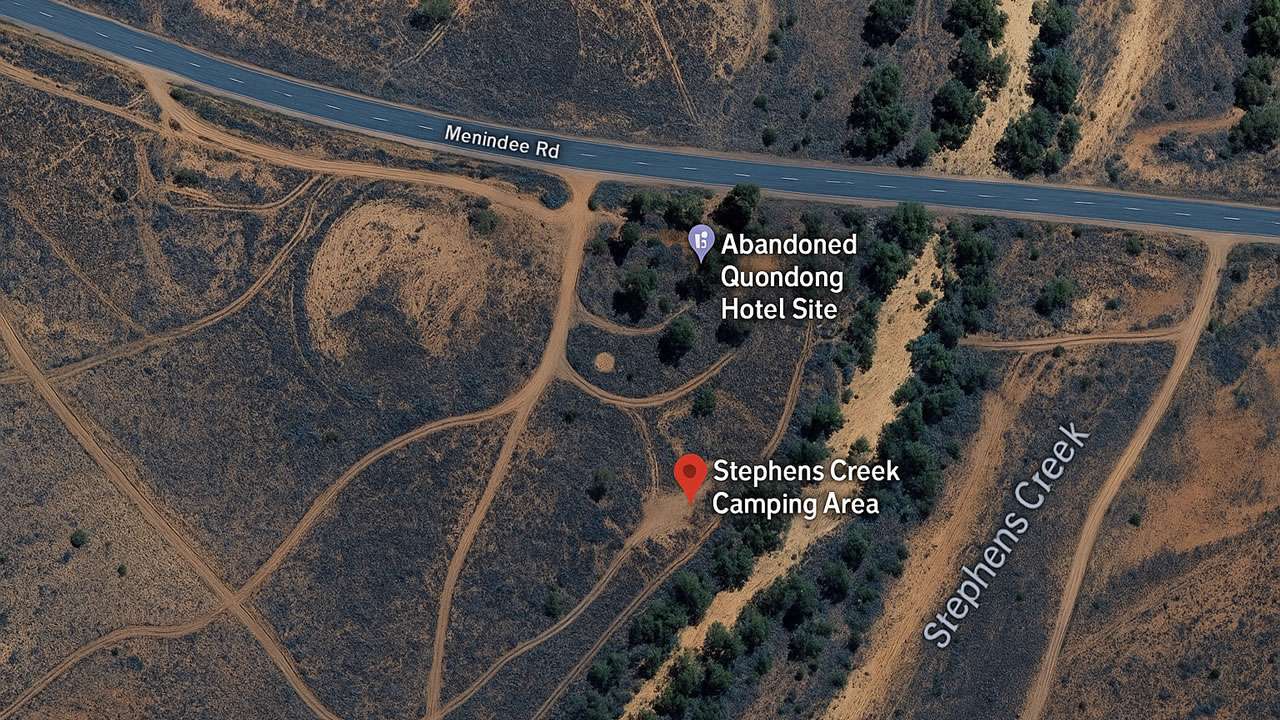
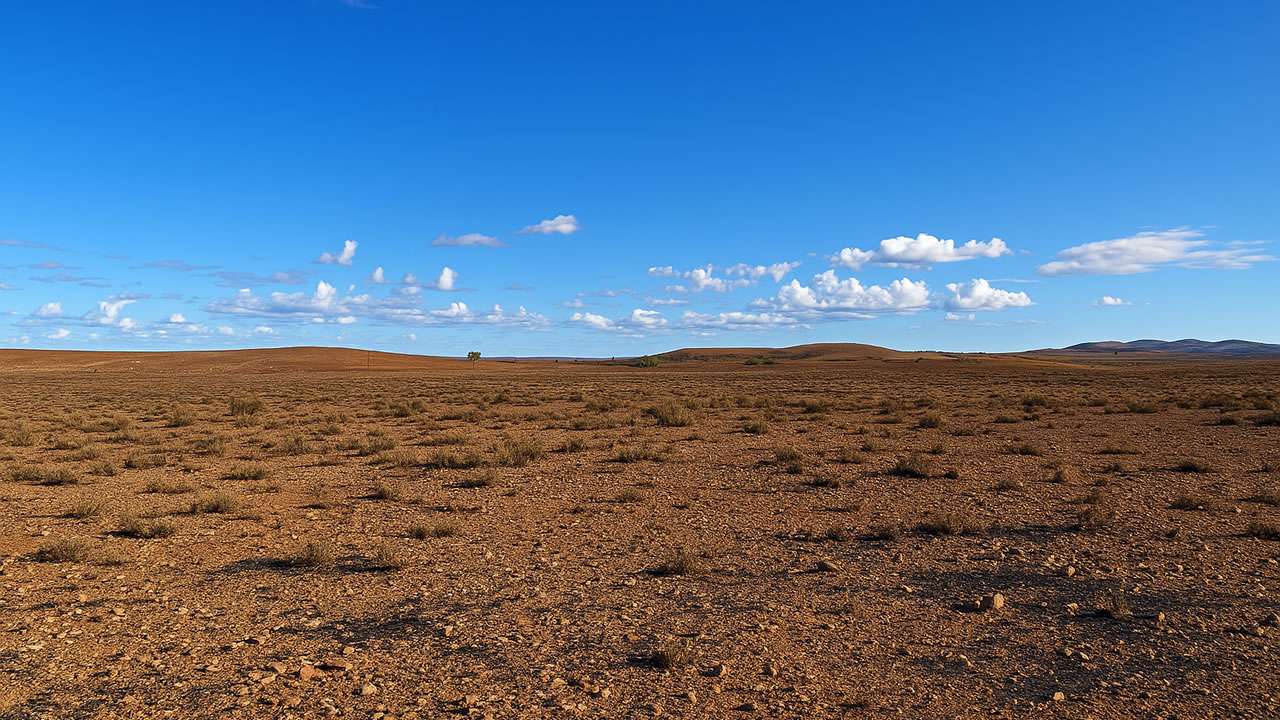
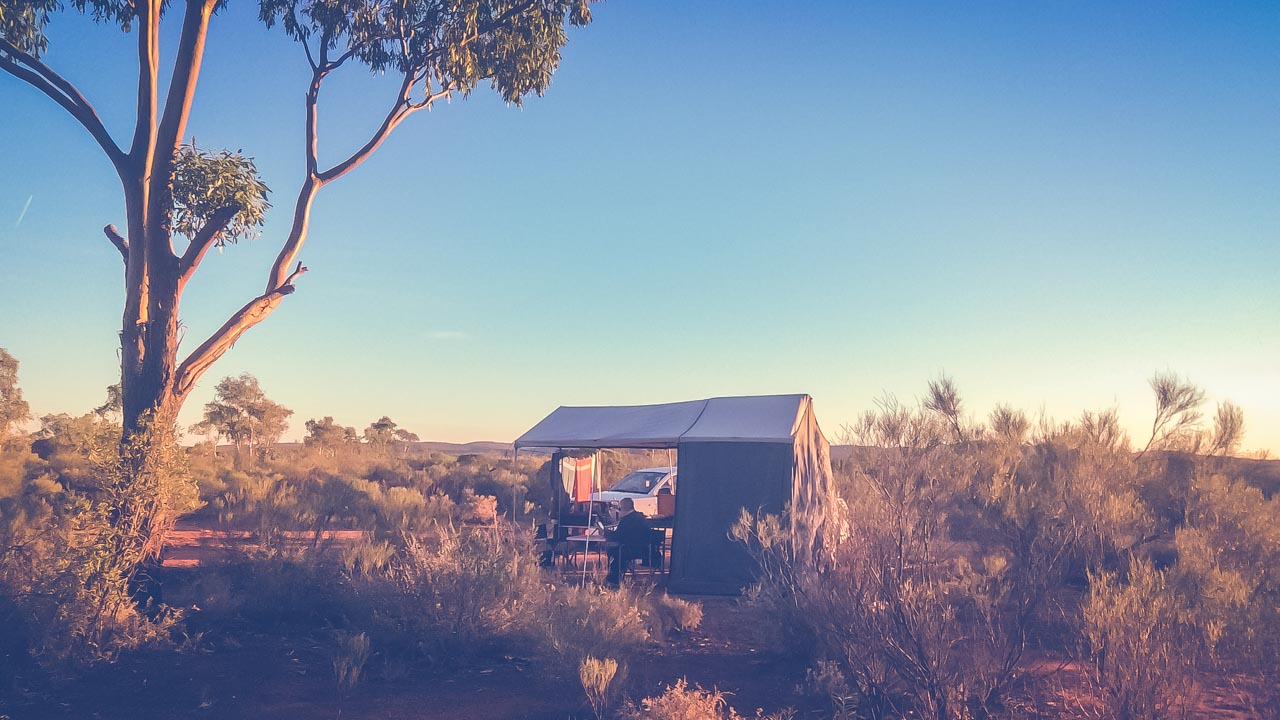
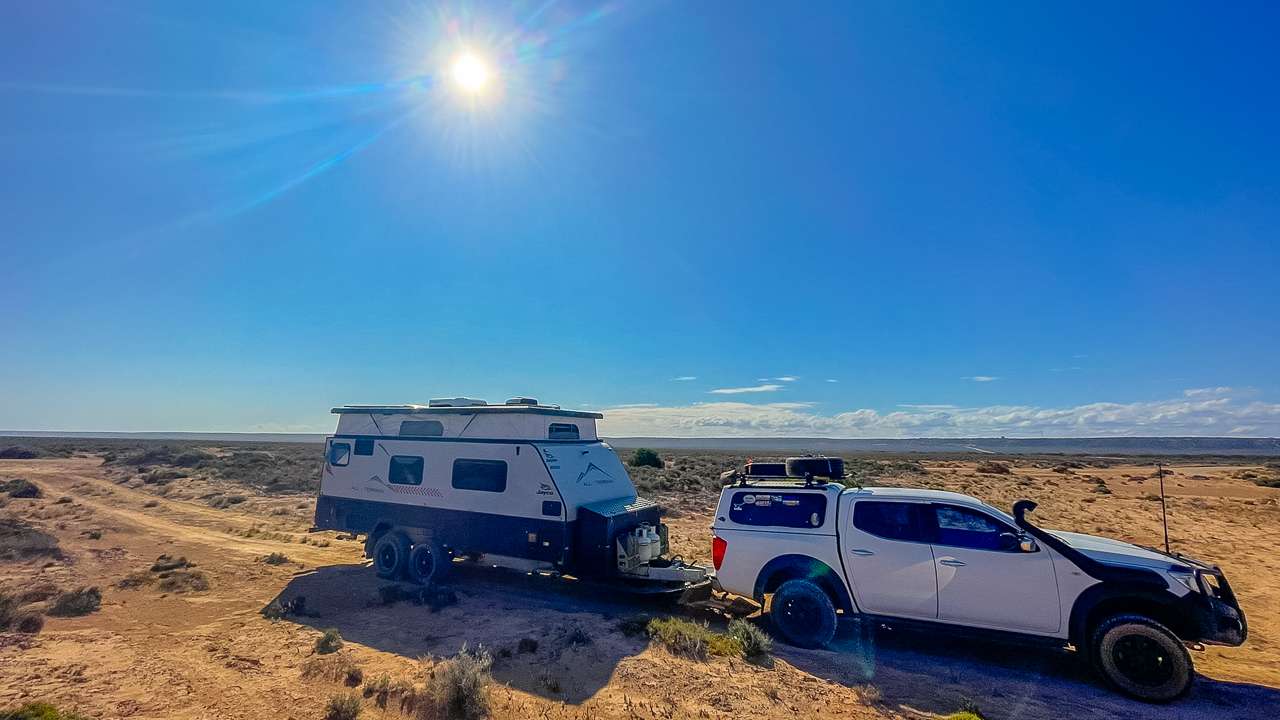
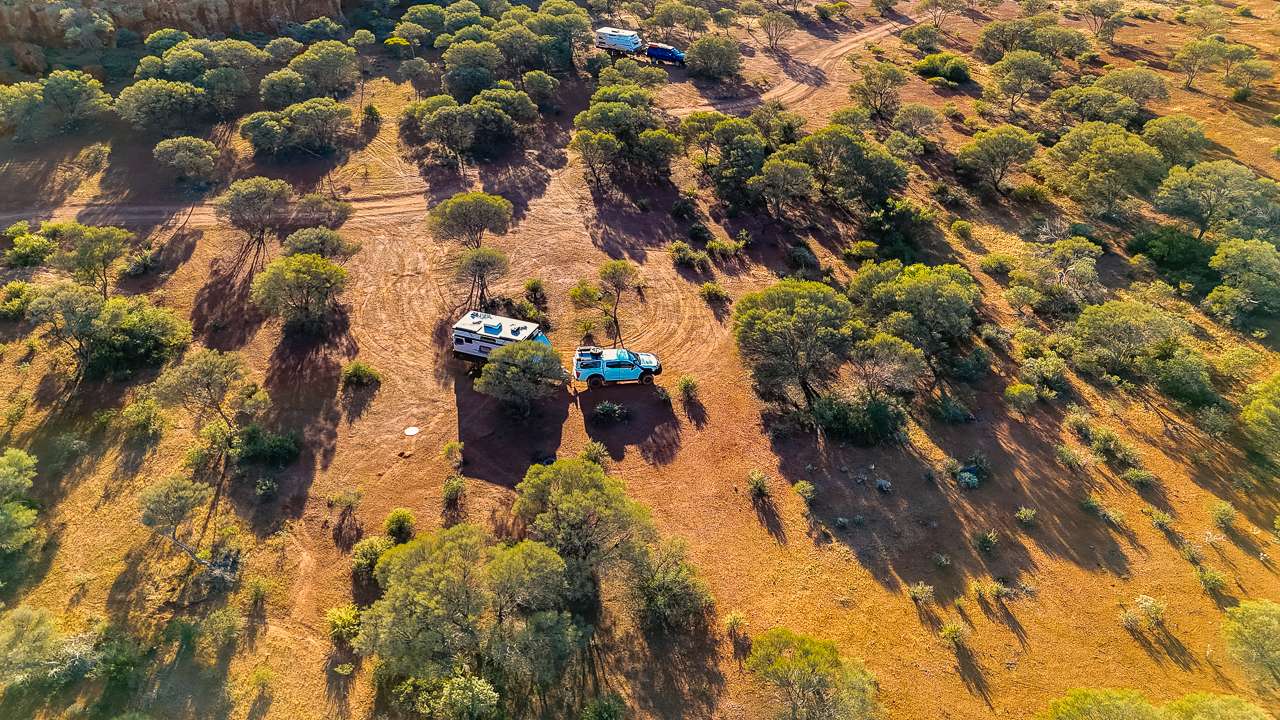
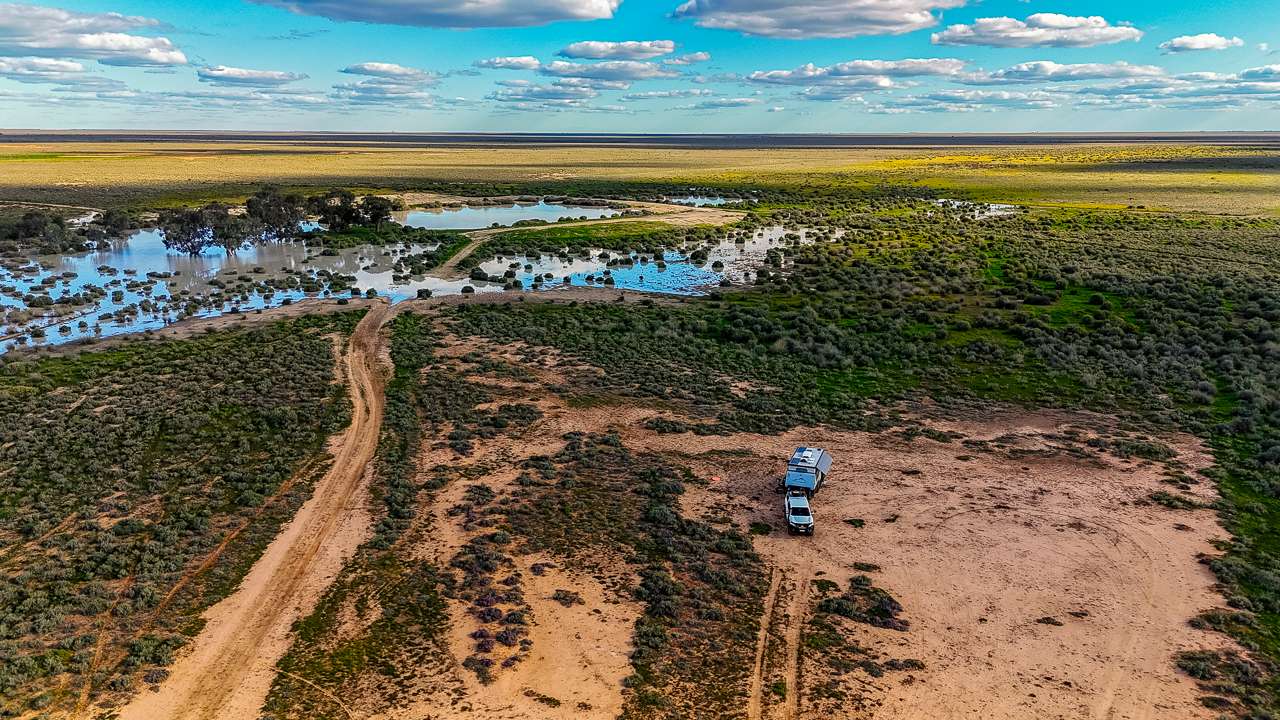
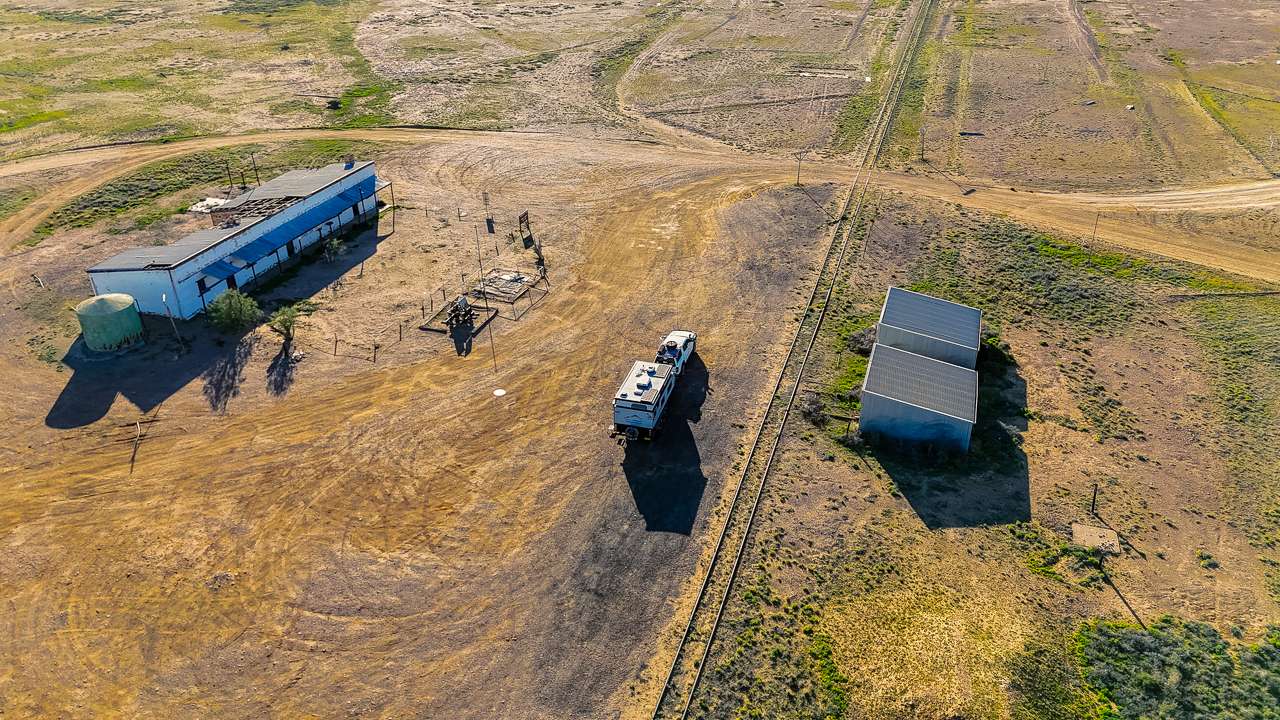
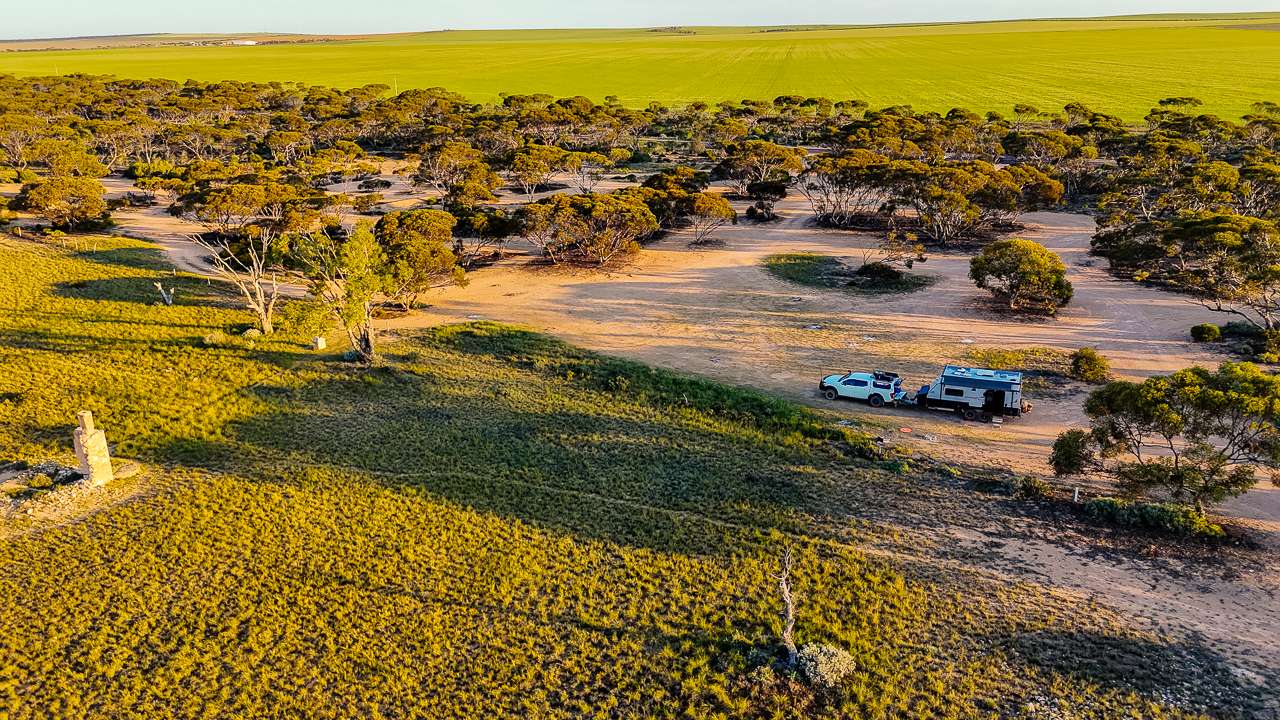
Stephens Creek Camping Area And Abandoned Quondong Hotel And Roadhouse Free Camping In Broken Hill

Stephens Creek Camping Area And Abandoned Quondong Hotel And Roadhouse Free Camping In Broken Hill

Free Camping In Broken Hill: 25 Great Campsites

If you’re planning a trip to Broken Hill and want to save on accommodation, free camping is a fantastic way to experience the outback without spending a cent. From quiet rest areas with basic facilities to peaceful bush spots surrounded by stunning landscapes, there are plenty of free camping sites around Broken Hill that suit caravans, camper trailers and tents alike. Whether you’re just passing through or staying a few days, these 25 free camping locations offer great options to rest, relax and soak up the unique Silver City vibe. Get ready to explore the best free camping spots Broken Hill has to offer!

Table Of Contents

1. Pine Creek

This is a free campground. It is dog friendly. It is accessible to RVs, camper trailers and caravans. A good solid overnight camp spot on the south side of the creek. There’s room to turn around and you could fit a couple of small to medium sized caravans. Fairly quiet, not a lot of road noise.

Type: Free Camping
Cost: Free
Location: Silvercity highway, New South Wales
GPS: -32.337660°, 141.456721° – Click To View
Pet Friendly: Yes
Distance To Broken Hill: 42km

2. Yancowinna Creek Gravel Pit

This is a free campground. It is dog friendly. It is accessible to motorbikes, RVs, camper trailers, caravans and big rigs. Camping in tents is allowed.

Type: Gravel Pit
Cost: Free
Location: Barrier Hwy, Broken Hill, New South Wales
GPS: -31.844723°, 141.948554° – Click To View
Pet Friendly: Yes
Toilets: No
Showers: No
Drinking Water: No
Distance To Broken Hill: 47km

3. Little Topar Roadhouse

Camping and 24 hour card only fuel available. This free campground offers toilets. It is dog friendly. It is accessible to RVs, caravans and big rigs. Has toilets but by all reports they aren’t overly clean.

Type: Roadhouse
Cost: Free
Location: Barrier Highway, Little Topar, New South Wales
GPS: -31.780313°, 142.227626° – Click To View
Pet Friendly: Yes
Toilets: Yes
Showers: No
Drinking Water: No
Phone: (08) 8091 9428
Fuel: Yes
Distance To Broken Hill: 75km

4. RTA Stockpile 64

This is a gravel pit suitable place for pulling a vehicle over to for the driver to rest where an overnight stay is permitted. It is dog friendly. It is accessible to RVs, camper trailers, caravans and big rigs. It has a good solid grvel surface.

Type: Gravel Pit
Cost: Free
Location: Silver City Hwy, Broken Hill, New South Wales
GPS: -32.449432°, 141.556669° – Click To View
Pet Friendly: Yes
Distance To Broken Hill: 56km

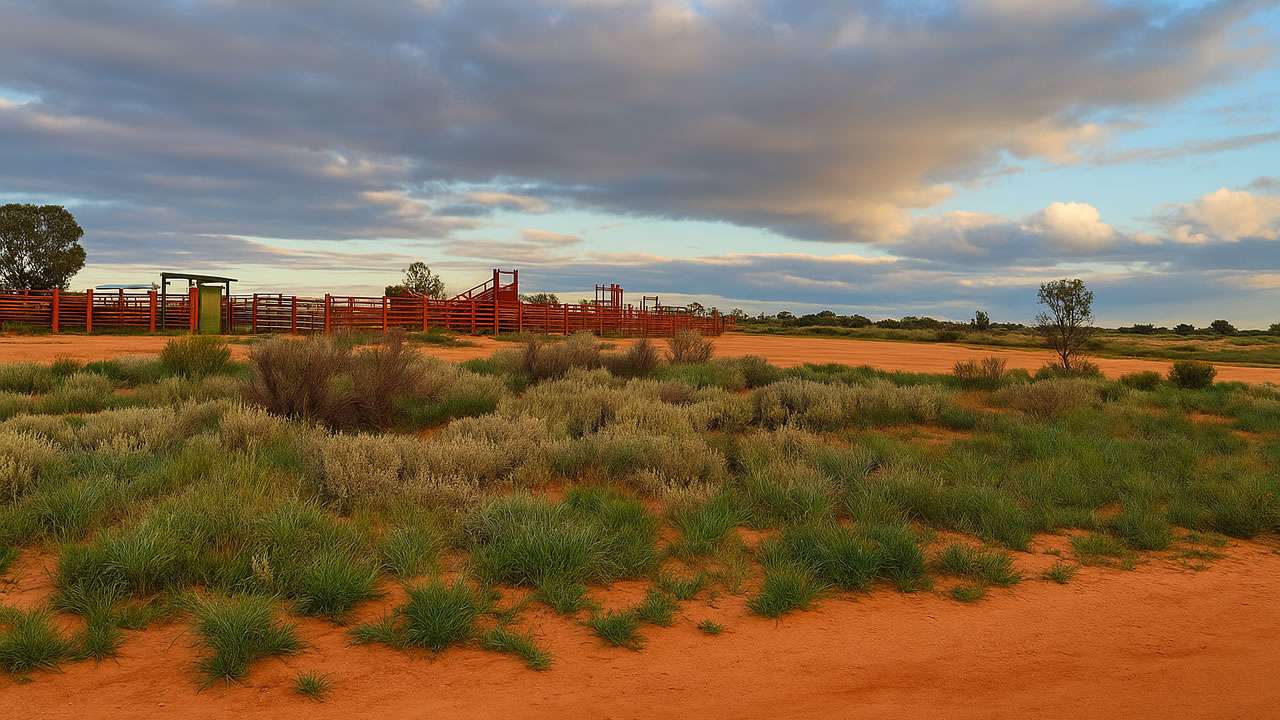
5. Broken Hill Cattle Yard At Menindee Turn Off

This is a free campground. It is dog friendly. It is accessible to RVs, camper trailers, caravans and big rigs. Turn off at the cattle yards before the dirt road it is on the right. A rock pyramid (cairn) marks the entry. No noise. A great overnight stop.

Type: Free Camping
Cost: Free
Location: Silver city highway, New South Wales
GPS: -32.623490°, 141.693503° – Click To View
Pet Friendly: Yes
Distance To Broken Hill: 72km

Broken Hill Cattle Yard At Menindee Turn Off

Broken Hill Cattle Yard At Menindee Turn Off

6. Tandou Rd Camp

This is a free campground. It is dog friendly. Nice and quiet. Great little site about 100m before the end of the bitumen road on the right hand side. Site is set back, grassy and level. Would be almost impossible to find in the dark. Room for maybe 3 or 4 small caravans or camper trailers. Too small for big caravans. No facilities. Perfectly suited for an overnight stay. Plenty of firewood. No good if wet.

Type: Free Camping
Cost: Free
Location: Tandou Rd, New South Wales
GPS: -32.623392°, 141.693671° – Click To View
Pet Friendly: Yes
Distance To Broken Hill: 72km

7. Stephens Creek

This is a free campground. It is dog friendly. It is accessible to motorbikes, RVs, camper trailers, caravans and big rigs. Camping in tents is allowed.

There used to be a roadhouse here – Quandong Roadhouse. It disappeared years ago. All that’s left of it is rubble & old tin. Great for overnight. If you follow the track on the right you can get further away from the road however there’s not much noise anyway. It’s an isolated camping area which is great if that’s your preference.

Type: Free Camping
Cost: Free
Location: Near The Abandoned Quondong Hotel Site Off Menindee Rd Stephens Creek, New South Wales
GPS: -32.155959°, 141.917910° – Click To View
Pet Friendly: Yes
Distance To Broken Hill: 48km

8. Mingary Creek Camp

This is a free campground. It is dog friendly. It is accessible to motorbikes, RVs, camper trailers, caravans and big rigs. Camping in tents is allowed.

It’s a nice camp spot tucked in off the road and across the railway tracks. Lots of trees around to give shade if required.Trucks and trains will travel past during the night. There’s a bit of firewood around.

Type: Free Camping
Cost: Free
Location: Mooleulooloo Road, Pastoral Unincorporated Area, South Australia
GPS: -32.127374°, 140.736240° – Click To View
Pet Friendly: Yes
Distance To Broken Hill: 160km

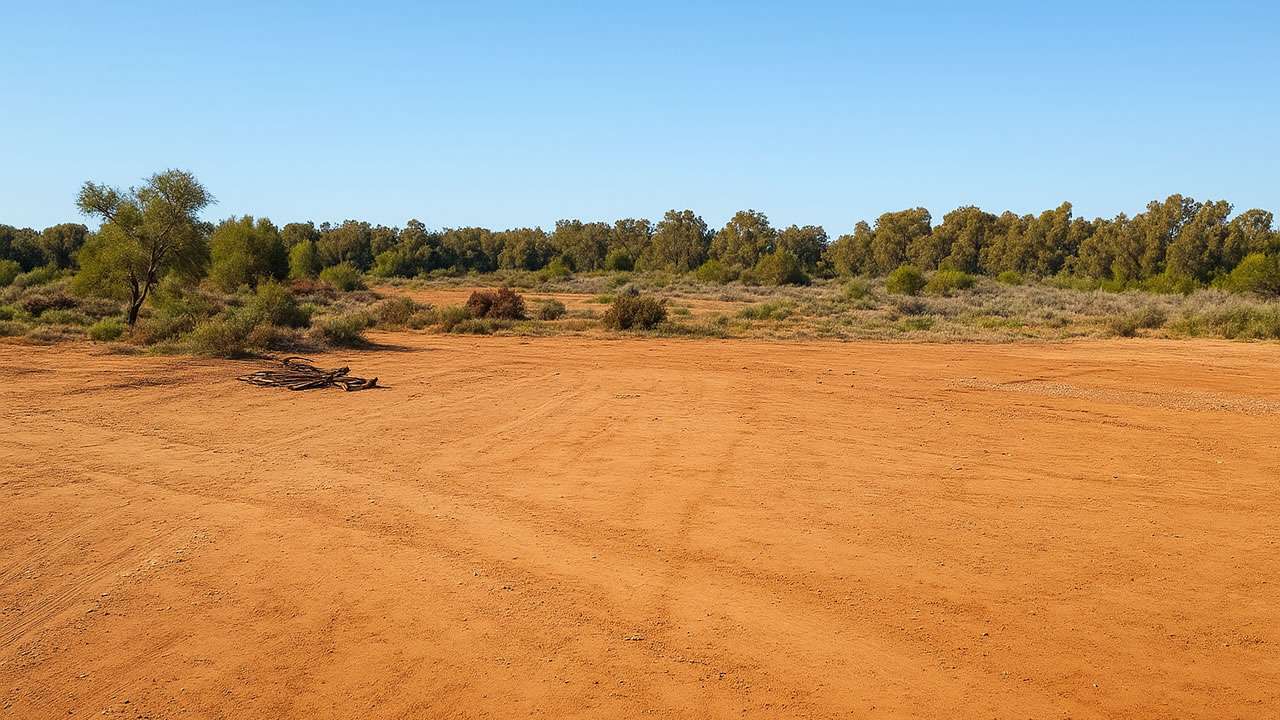
9. Marshalls Clearing

This is a free campground. It is dog friendly. It is accessible to motorbikes, RVs, camper trailers, caravans and big rigs. Camping in tents is allowed.

Type: Free Camping
Cost: Free
Location: Silver city highway, Quarry Nob, New South Wales
GPS: -31.504133°, 141.669828° – Click To View
Pet Friendly: Yes
Distance To Broken Hill: 54km

Marshalls Clearing

Marshalls Clearing

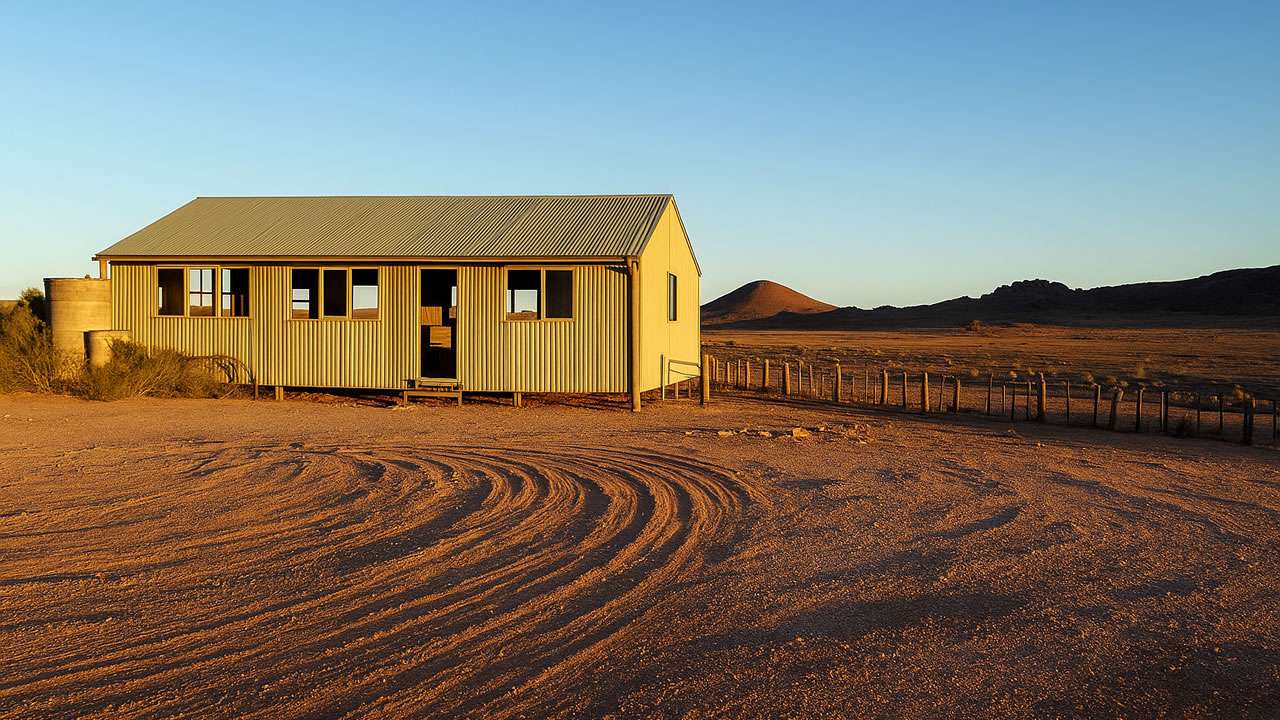
10. Open Area Near An Old Shearing Shed

This is a free campground. It is dog friendly. It is accessible to motorbikes, RVs, camper trailers, caravans and big rigs. Camping in tents is allowed.

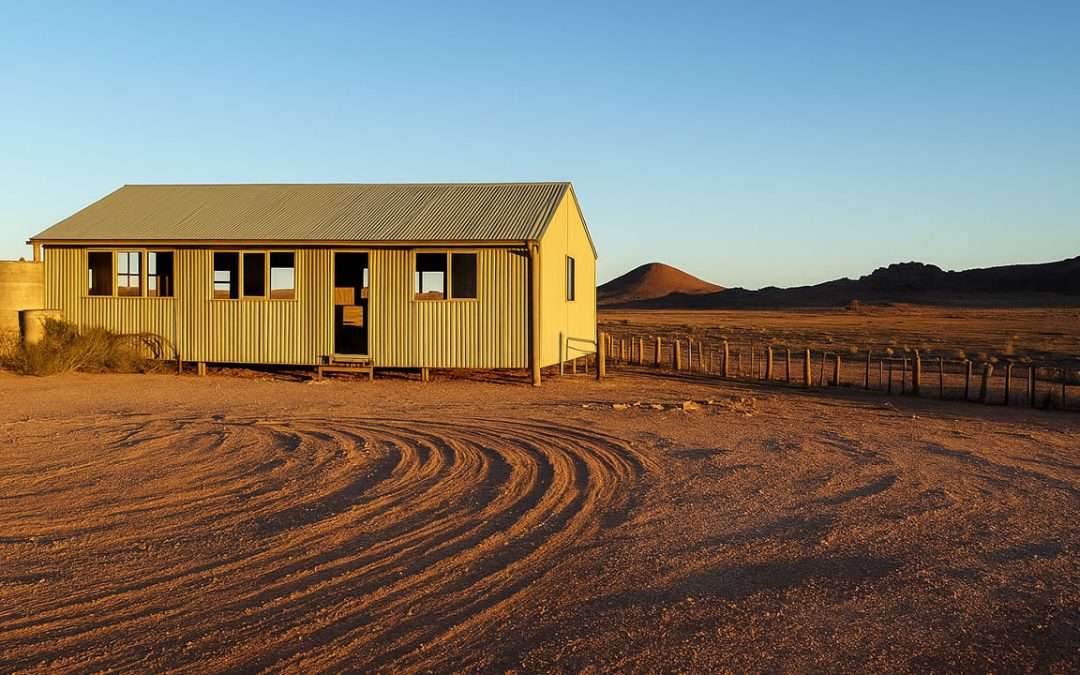
A good stopover on the way to Tibooburra. It’s a lovely place to stay for a night or even a bit longer. The old shearing shed is majestic in it’s simplicity and looks to hold a lot of history. There is hardly any traffic on the road. The perfect outback campsite.

Type: Free Camping
Cost: Free
Location: Silver City Hwy, Fowlers Gap, New South Wales
GPS: -31.410895°, 141.629174° – Click To View
Pet Friendly: Yes
Distance To Broken Hill: 63km

Old Shearing Shed Free Camping In Broken Hill

Old Shearing Shed Free Camping In Broken Hill

11. Matilda Wallace Rest Area

It’s a bitumen roadside rest area with a couple of rubbish bins. Nice views. It’s a wide area safely back off the highway. It’s a remote area.

Type: Rest Area
Cost: Free
Location: Silver City Highway, Eurowie, New South Wales
GPS: -31.387731°, 141.611964° – Click To View
Pet Friendly: Yes
Distance To Broken Hill: 65km

12. Euriowie Creek

This is a free campground. It is dog friendly. It is accessible to motorbikes, RVs, camper trailers and caravans. Camping in tents is allowed.

This is a remote campground in a large open unshaded area. It has awesome views of the Barrier Ranges. There’s little traffic noise so it’s a great stopover between here and there.

Type: Free Camping
Cost: Free
Location: Silver City Highway, Unincorporated Area, New South Wales
GPS: -31.357545°, 141.617855° – Click To View
Pet Friendly: Yes
Distance To Broken Hill: 68km

13. Round Hill Rest Area West Bound

This is a Free roadside rest area. Pets are allowed. It is accessible to motorbikes, RV’s, caravans and big rigs. Camping in tents is not allowed. Not the greatest of camping spots but it’s free and if you are in need it’ll work.

Type: Rest Area
Cost: Free
Location: Round Hill Rest Area Barrier Highway, Broken Hill
GPS: -31.940049°, 141.514252° – Click To View
Pet Friendly: Yes
Distance To Broken Hill:

14. 8 Mile Creek Gravel Pit

This is an unofficial camping area. Usual rules apply, take out what you take in and leave no trace. It’s an old gravel pit with a nice flat surface. Ok for an overnight stay. Not much firewood about. No facilities. Enough space for a few vans. Little traffic noise.

Type: Gravel Pit
Cost: Free
Location: Silver City Hwy, Unincorporated Area, New South Wales
GPS: -31.269553°, 141.611742° – Click To View
Pet Friendly: Yes
Distance To Broken Hill: 78km

15. Fowlers Gap Gravel Pit

This is a suitable place for pulling a vehicle over for the driver to rest where an overnight stay is permitted. It’s not official campground. It is dog friendly. It is accessible to RVs, caravans and big rigs.

Type: Gravel Pit
Cost: Free
Location: Silver City Highway, Unincorporated Area, New South Wales
GPS: -31.246728°, 141.622863° – Click To View
Pet Friendly: Yes
Distance To Broken Hill: 80km

Fowlers Gap Rest Area

Fowlers Gap Rest Area

16. Fowlers Gap Rest Area

This is a suitable place for pulling a vehicle over for the driver to rest where an overnight stay is permitted. It’s not official campground. It is dog friendly. It is accessible to RVs, caravans and big rigs.

Type: Free Camping
Cost: Free
Location: Silver City Hwy, Fowlers Gap, New South Wales
GPS: -31.102183°, 141.701897° – Click To View
Pet Friendly: Yes
Distance To Broken Hill: 98km

17. Fowlers Gap North

This is a small unofficial site between a river bed and a man made waterway. Entry is on the east side of Silver City Highway. It’s a very rocky track in but passable in two wheel drive vehicles with care. There are no facilities at this site. Take all rubbish with you and leave no trace.

Type: Free Camping
Cost: Free
Location: Silver City Hwy, Fowlers Gap, New South Wales
GPS: -31.085282°, 141.713805° – Click To View
Pet Friendly: Yes
Distance To Broken Hill: 100km

18. Spring Hills Rest Area

This is a free campground. It is dog friendly. It is accessible to motorbikes, RVs, camper trailers, caravans and big rigs. Camping in tents is allowed.

Type: Rest Area
Cost: Free
Location: Barrier Hwy, Spring Hills, New South Wales
GPS: -31.723274°, 142.685349° – Click To View
Pet Friendly: Yes
Toilets: Yes
Distance To Broken Hill: 118km

19. The Valley

This isn’t free but it is cheap and great value. Beautiful farm stay at this paid campground. It has toilets, showers, rubbish bins and a dump point. It is accessible to motorbikes, RVs and camper vans.

Type: Farm Stay
Cost: $20 per night
Location: 770 Silver City Highway, New South Wales / ACT
GPS: -31.903180°, 141.516811° – Click To View
Pet Friendly: Yes
Toilets: Yes
Showers: Yes
Dump Point: Yes
Distance To Broken Hill: 8km

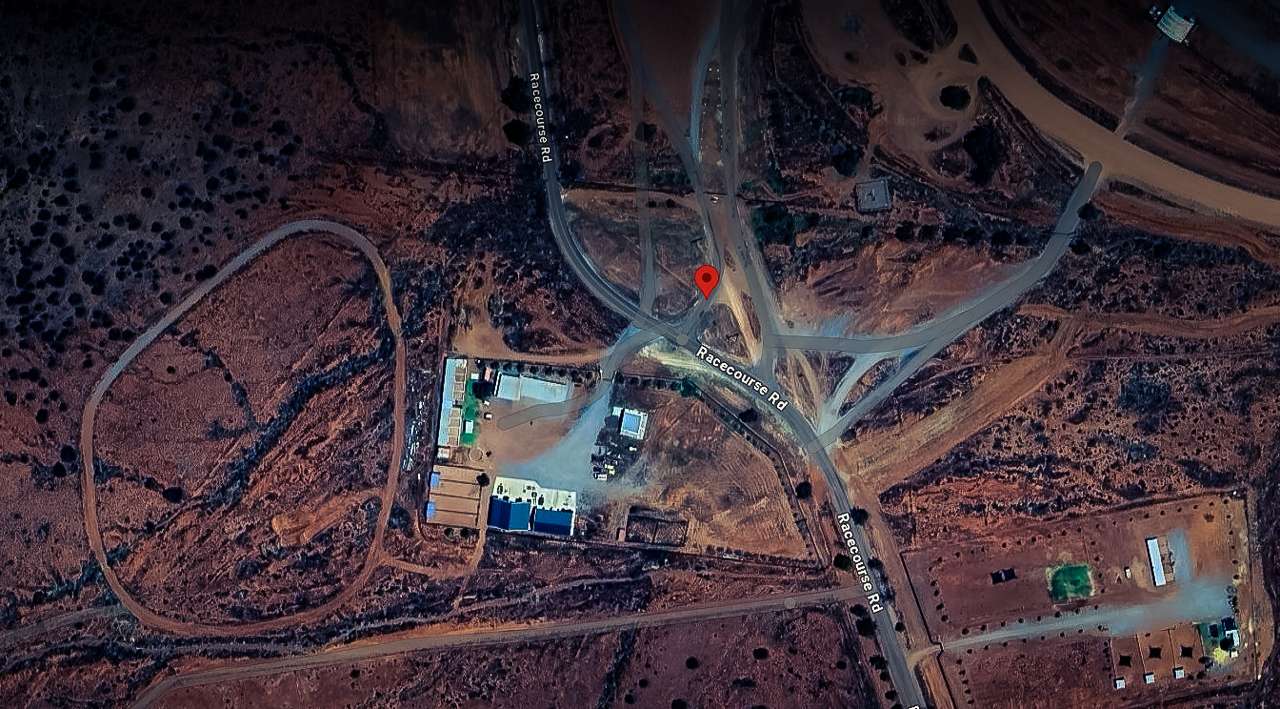
20. Broken Hill Regional Event Centre & Racecourse

This isn’t free but it is cheap and great value. Situated just on the outskirts of Broken Hill town centre, the Broken Hill Regional Events Center is the perfect camping location for tents, camper vans, caravans and larger recreational vehicles. Dump point and drinking water on site.

Offering a number of large grassed areas adjacent to the racetrack. The primitive facilities also include basic showering and toilet facilities (as new and fabulous showers) and a dump point at very affordable prices. Powered and unpowered sites are available. (Please note that powered sites have risen $5 due to escalating electricity costs, now more than $100,000 per year)

The overnight stabling of horses travelling through the city is also available for an additional small fee. This facility is on Crown Land and is a NFP site, run largely by a Trust and voluntary
labour.

Please contact the caretaker to book a site (this is particularly important during busy periods or if you plan to arrive after hours).

  • OFFICE HOURS: 9.00am-11.30, 12.00-5.30
  • CHECK IN: From 12 midday.
  • CHECK OUT: 10.00am
  • Please note Broken Hill is on Adelaide time.

Type: Showground Camping
Cost: Powered $40, Unpowered $25, CMCA members $15 for unpowered sites
Location: Racecourse Road, Broken Hill, New South Wales
GPS: -31.917935°, 141.480024° – Click To View
Booking Required: Yes
Pet Friendly: Yes
Toilets: Yes
Showers: Yes
Drinking Water: Yes
Dump Point: Yes
Phone: 0437 250 286
Email: camping@brokenhilleventscentre.org.au
Website URL: https://www.brokenhilleventscentre.org.au
Distance To Broken Hill: 4km

Free Camping In Broken Hill Broken Hill Regional Event Centre & Racecourse

Free Camping In Broken Hill Broken Hill Regional Event Centre & Racecourse

21. Starview Primitive Campsite

This isn’t free but it is cheap and great value. This paid campground offers toilets, showers and drinking water. Dogs are not permitted. Maximum 5 night stay. It is accessible to RVs, camper trailers, caravans and big rigs. Camping in tents is allowed.

You must book in advance
Book at the Info Centre in town or online at https://www.brokenhill.nsw.gov.au/Facilities/Living-Desert-State-Park/Starview-Campsite

Type: Paid Campground
Cost: $25 per night plus one off $7 camp fee
Location: Living Desert State Park, Broken Hill, New South Wales
GPS: -31.907072°, 141.443280° – Click To View
Booking Required: Yes
Pet Friendly: No
Toilets: Yes
Showers: Yes
Drinking Water: Yes
Phone: (08) 8080 3560
Email: https://www.brokenhill.nsw.gov.au/Facilities/Living-Desert-State-Park/Starview-Campsite
Website URL: https://www.brokenhill.nsw.gov.au/Facilities/Living-Desert-State-Park/Starview-Campsite
Distance To Broken Hill: 6km

22. Stirlingvale

This isn’t free but it is cheap and great value. 7km from broken hill outback camp site. Unpowered sites in bushland. $25 per vehicle per night via honesty box. EFT or cash.

  • Dogs at own risk due to active farm
  • Toilets on site – bring your own toilet paper
  • RV dump point
  • Non potable water
  • Fires allowed depending on fire season

Type: Station Stay
Cost: $25 per night
Location: Barrier Highway, Broken Hill, New South Wales
GPS: -31.986284°, 141.366655° – Click To View
Pet Friendly: Yes At Own Risk
Toilets: Yes
Dump Point: Yes
Phone: 0484 376 797
Email: Stirlingvalestation@gmail.com
Website URL: https://WWW.Stirlingvale.com.au
Distance To Broken Hill: 10km

23. Nine Mile Station

This isn’t free but it is cheap and great value. Nine Mile Station is a working sheep station close to town.

This paid camp ground offers powered sites and several non-powered sites. Powered sites are near the homestead and woolshed $30 (limited). There is a toilet/ shower block available for all campers. Non powered sites ($20) are approx 1km from the homestead. Campers can also use shower/toilet/laundry block if they would like to use these facilities. Some clearance is required for powered sites near the homestead due to levy bank.

Please note google maps is not accurate – please travel 11.5km on the Silver City Highway towards Tibooburra.Turn left onto the Nine Mile Road (a good dirt road). The homestead is 1km along on the left. Please wait on this road near homestead for Greg. Note: Nine Mile road and campsites may be inaccessible when wet.

If you are a local or a group and would like a more isolated campsite, please let Greg know. Please call Greg to book 0427671012. We are a working station and sometimes busy with stock work or out of range. If Greg does not answer straight away – please text and he will get back to you asap. Bookings Essential.

Type: Station Stay
Cost: Unpowered $20, Powered $30
Location: 1421 Silver City Hwy, Broken Hill, New South Wales
GPS: -31.837304°, 141.502423° – Click To View
Booking Required: Yes
Pet Friendly: Yes
Toilets: Yes
Showers: Yes
Water (Non Drinking): Yes
Phone: 0427 671 012
Email: ninemilestation@bigpond.com
Website URL: https://facebook.com/Nine Mile Station Stay
Distance To Broken Hill: 14km

24. Eckerboon Camping Area

This isn’t free but it is cheap and great value. New camping area in NSW State Parks Conservation area. Great camp site for an overnight camp or a bit longer. Toilets and BBQs fairly new and clean. Table and chairs with a sensor light under shelter. Very quiet being away from the road. Ranger comes around to collect fees.

Type: NSW State Conservation Area
Cost: $19.5 for 2 people per night
Location: Langidoon Metford, New South Wales
GPS: -31.673531°, 142.062727° – Click To View
Pet Friendly: No
Toilets: Yes
Distance To Broken Hill: 65km

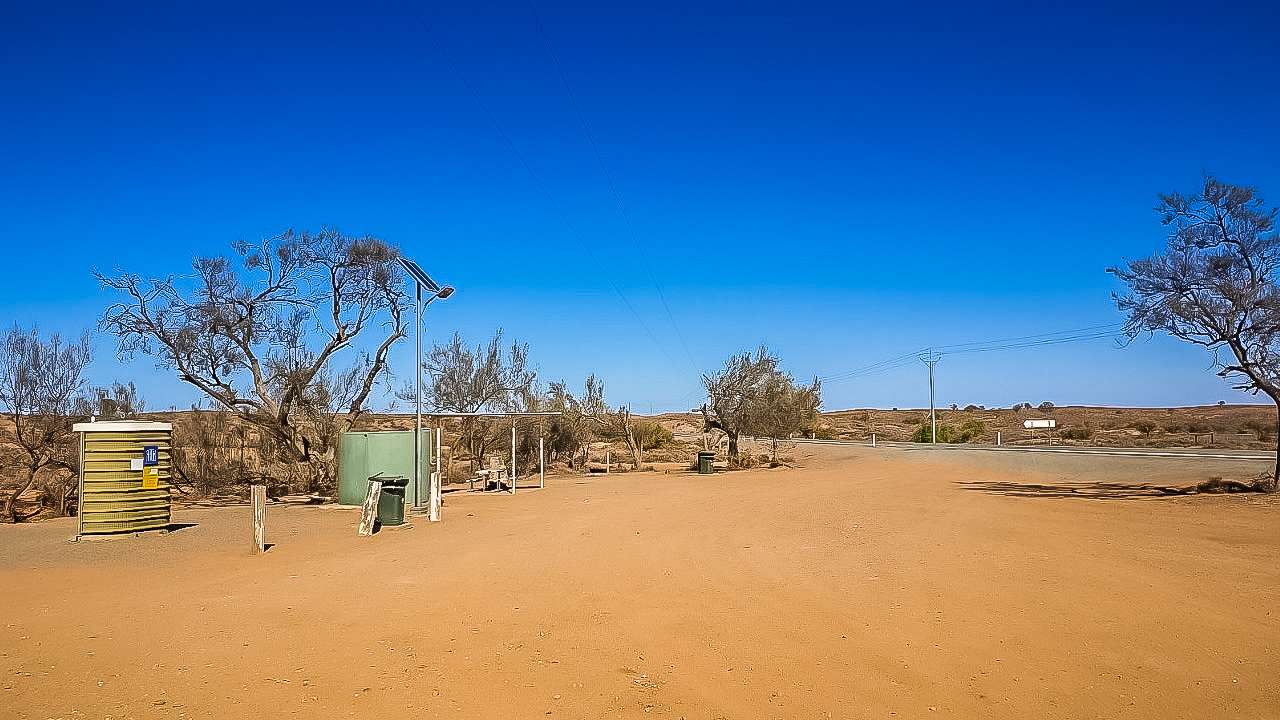
25. Thackaringa Rest Area

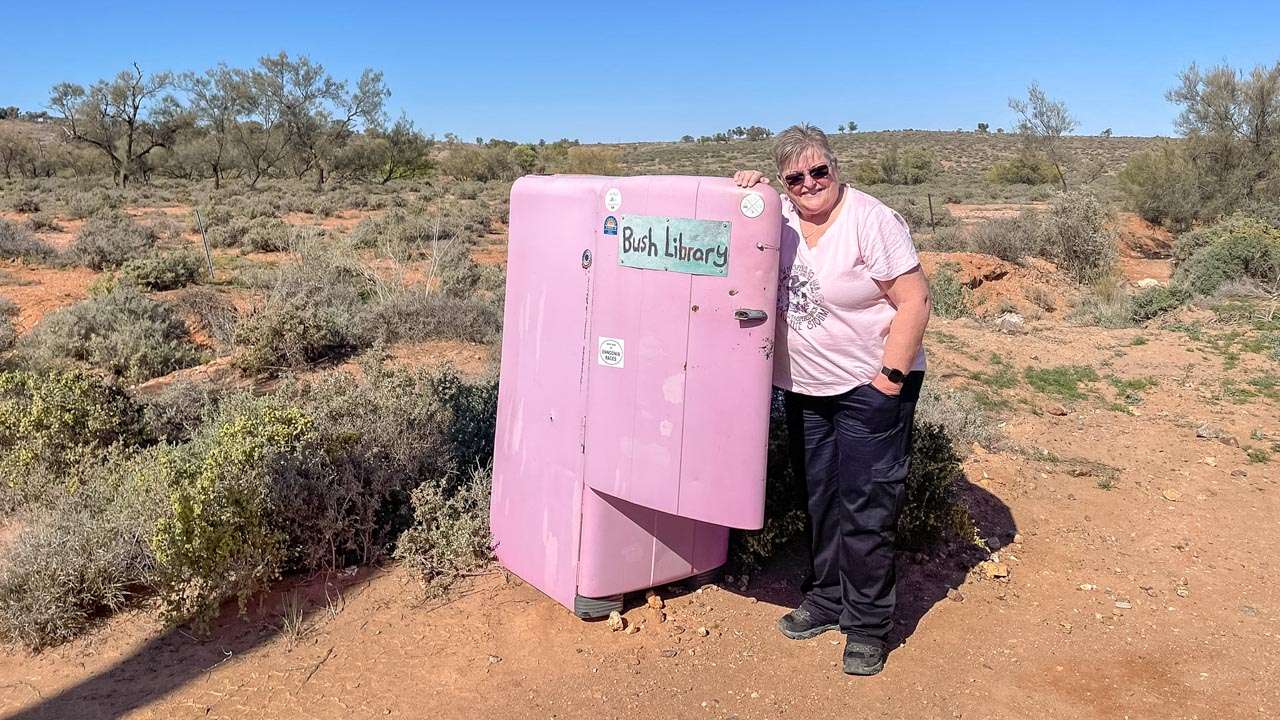
Rest area south of the Barrier Rest Area. Picnic table, non potable water tank, bush library exchange in the pink fridge. As an added bonus we found a geocache here!

Type: Rest Area
Cost: Free
Location: Barrier Highway, Broken Hill, New South Wales
GPS: -32.045098°, 141.128301° – Click To View
Pet Friendly: Yes
Toilets: Yes
Distance To Broken Hill: 33km

Thackaringa Rest Area

Thackaringa Rest Area

Broken Hill – A Rich History

Nestled in the far west of New South Wales, Broken Hill earned its nickname “The Silver City” through its remarkable mining heritage. The city’s story began in 1883 when boundary rider Charles Rasp discovered what he initially thought was tin but turned out to be the world’s largest silver – lead – zinc mineral deposit. This momentous discovery transformed a small settlement into a booming mining town. Consequently, the Broken Hill Proprietary Company (BHP) was established in 1885, laying the foundation for what would become one of Australia’s largest corporations.

Broken Hill’s landscape is defined by the Line of Lode, a massive ore body that rises prominently through the centre of town. The city flourished during the late 19th and early 20th centuries as mining operations expanded. The town developed a strong sense of community and worker solidarity, becoming a significant site for the development of Australia’s trade union movement. The Miners Memorial, standing atop the Line of Lode, commemorates the more than 800 miners who lost their lives working in the mines since operations began.

Free Camping In Broken Hill: Historical Context

The tradition of camping around Broken Hill dates back to the early prospectors and miners who would set up temporary accommodations while searching for minerals. Today, free camping in Broken Hill continues this outback tradition. The surrounding landscape offers campers the chance to experience the same rugged terrain that challenged those early settlers. Additionally, many free camping spots provide views of historical mining infrastructure that dots the landscape, connecting modern travellers to the region’s rich past.

Broken Hill has evolved beyond its mining origins to become a thriving cultural centre. The city is home to numerous galleries and museums that preserve its history while showcasing contemporary Australian art. Moreover, the town’s isolation has fostered a resilient and creative community spirit that visitors can experience firsthand when free camping in Broken Hill and engaging with locals at various events and venues throughout the year.

Is Free Camping In Broken Hill Dangerous? Historical Perspectives

The question “is Broken Hill dangerous” takes on different meanings when viewed through a historical lens. During the early mining days, Broken Hill was indeed hazardous, with mining accidents, harsh working conditions and limited healthcare access creating a challenging environment. However, these historical dangers have transformed over time. The modern city has addressed many of these historical risks through improved safety standards, better infrastructure and comprehensive emergency services.

The mining industry itself has undergone significant changes, with workplace safety becoming a priority. Therefore, while acknowledging the dangerous conditions that were once part of Broken Hill’s identity, visitors today can appreciate how the community has evolved while preserving its historical character. This evolution makes free camping in Broken Hill an opportunity to connect with Australia’s mining heritage in a safe and educational environment.

Reaching The Silver City

How To Get To Broken Hill From Sydney

The journey from Sydney to Broken Hill spans approximately 1,150 kilometres, offering travellers multiple route options. The most direct path takes you through Dubbo and Cobar, following the Mitchell Highway and Barrier Highway. This route typically requires about 13 hours of driving time, making it ideal to break up into a two day journey for those interested in free camping in Broken Hill. Moreover, several interesting towns along the way provide perfect stopping points to stretch your legs and experience rural New South Wales.

For those preferring not to drive, Regional Express (REX) operates daily flights between Sydney and Broken Hill, with a flight time of approximately 2.5 hours. Additionally, NSW TrainLink runs a weekly train service called the Outback Explorer, departing from Sydney Central Station on Mondays and returning from Broken Hill on Tuesdays. The train journey takes about 13 hours but offers spectacular scenery of the changing landscape as you head west.

Coach services also connect Broken Hill to major centres, providing another alternative for travellers. However, having your own vehicle once you arrive gives you the freedom to explore the region and access free camping in Broken Hill and the surrounding areas more easily. Furthermore, a 4WD vehicle is recommended for accessing some of the more remote camping spots around the region.

Travel Times To Broken Hill

Understanding the distances involved when planning your free camping in Broken Hill adventure is essential for adequate preparation. The following table outlines approximate travel times and distances to Broken Hill from major Australian cities and nearby rural centres:

Departure City/Town Distance (km) Driving Time Transport Options
Sydney 1,150 13 hours Car, train, flight, coach
Melbourne 840 9 hours Car, coach, flight via Adelaide
Adelaide 510 5.5 hours Car, coach, flight
Brisbane 1,570 17 hours Car, flight via Sydney
Dubbo 750 8 hours Car, coach
Mildura 300 3.5 hours Car, coach
Port Augusta 390 4 hours Car, coach
Wilcannia 200 2 hours Car
Cobar 450 4.5 hours Car, coach
Wagga Wagga 845 9 hours Car, coach

When planning your journey for free camping in Broken Hill, remember that outback driving requires extra precautions. Firstly, always carry plenty of water and supplies. Secondly, inform someone of your travel plans. And most importantly ensure your vehicle is in good condition before setting off.

Free Camping In Broken Hill: Essential Information
What Constitutes Free Camping In Broken Hill

Free camping in Broken Hill refers to areas where travellers can stay overnight without payment. These designated spots typically offer minimal facilities but provide authentic outback experiences. The local council maintains several free camping areas around the region, usually allowing stays between 24/72 hours depending on the location. These sites operate on a first come, first served basis and typically do not require bookings.

While these areas are free, campers should understand and respect certain guidelines. Most importantly, practising “Leave No Trace” principles is essential when free camping in Broken Hill. This means taking all rubbish with you, avoiding damage to vegetation and respecting wildlife. Additionally, many free camping spots have specific rules regarding campfires, particularly during fire ban seasons, which visitors must strictly observe.

The appeal of free camping in Broken Hill lies in the opportunity to connect with the authentic outback environment. Furthermore, these sites often provide spectacular sunset and sunrise views, outstanding stargazing opportunities due to minimal light pollution and chances to spot native wildlife in their natural habitat. This combination of natural beauty and cost effectiveness makes free camping in Broken Hill particularly attractive to budget conscious travellers seeking genuine Australian experiences.

Is Broken Hill Safe At Night For Campers?

A common concern for those considering free camping in Broken Hill is safety, particularly at night. The question “is Broken Hill safe at night” is frequently asked by potential visitors. Generally speaking, Broken Hill is considered a safe destination for travellers and campers. Broken Hill has a strong community spirit and locals are typically friendly and helpful to visitors. However, as with any location, taking standard safety precautions remains advisable.

When free camping in Broken Hill, particularly in more remote areas, it’s important to be self sufficient and prepared. This means carrying adequate water, food supplies, first-aid equipment and communication devices. Moreover, letting someone know your camping location and expected return date is always a good practice when venturing into more isolated areas.

The primary safety considerations when free camping in Broken Hill relate more to environmental factors than personal security. The outback can experience extreme temperature variations, with very hot days and surprisingly cold nights. Additionally, wildlife encounters are possible, though most native animals pose little threat if respected and not approached. Therefore, while asking “is Broken Hill safe at night” is reasonable, with appropriate preparation and common sense, campers can enjoy a secure and comfortable experience under the spectacular outback sky.

Is Broken Hill Safe: A Crime Perspective

When evaluating “is Broken Hill safe” through a crime statistics lens, the data reveals nuanced realities. According to 2021 crime reports, Broken Hill’s crime rate sits significantly higher than the New South Wales average, with 3,052 criminal incidents recorded annually. Crimes against persons occur at a rate of 4,678 per 100,000 residents – triple the NSW average of 1,500. Domestic violence related offences particularly stand out, with Broken Hill ranking 4th among NSW local government areas for reported incidents. Malicious property damage remains persistently high, with 300 cases recorded in 2021 alone.

Theft and burglary rates show some improvement, decreasing 16% and 15% respectively between 2017-2021. However, intimidation and harassment cases surged 22.6% during the same period. Drug offences remain stable, predominantly involving cannabis and methamphetamine possession. While violent crime represents 27% of total offences, most incidents occur between known parties rather than random attacks. Visitors should note that 91% of NSW suburbs are statistically safer than Broken Hill, with residents having a 1 in 9 chance of experiencing crime compared to the state average of 1 in 20.

Is Broken Hill Safe At Night: Personal Safety Considerations

Addressing “is Broken Hill safe at night” requires understanding both crime patterns and environmental factors. While 44% of assaults occur between 6 PM-6 AM, these predominantly involve alcohol related disputes in licensed venues. The city centre maintains regular police patrols, with Barrier Police District responding to 828 crimes against persons annually. Recent incidents like the April 2025 Crystal Street police pursuit demonstrate active law enforcement response to nighttime offences.

Solo travelers report feeling generally secure after dark, particularly in well lit commercial areas around Argent Street. However, locals advise avoiding isolated spots like the Line of Lode lookout at night due to limited visibility and emergency access. The NSW Police recommend standard urban precautions: securing vehicles, avoiding walking alone in unpopulated areas and refraining from confronting intoxicated individuals.

Nighttime safety improvements include increased CCTV coverage in the CBD and community initiatives like the Night Safe Space program operating weekends until 2 AM. While Broken Hill’s crime rate exceeds state averages, strategic precautions – staying in populated areas, securing valuables and using licensed taxis after dark – significantly reduce personal safety risks for visitors.

Is Broken Hill Dangerous For Visitors?

Addressing the question “is Broken Hill dangerous” requires considering multiple perspectives. For visitors accustomed to urban environments, the outback presents unique challenges that might initially appear dangerous. However, with proper preparation and awareness, these challenges are easily managed. The remoteness of free camping in Broken Hill means services are limited, but this isolation is part of the authentic outback experience that attracts many visitors.

The main concerns when considering “is Broken Hill dangerous” relate to environmental factors. Firstly, the region can experience extreme heat, particularly during summer months, making dehydration a risk. Secondly, storms and changing weather conditions can develop quickly. Thirdly, some tracks and roads may become impassable after rain. Nevertheless, staying informed about weather forecasts, carrying adequate supplies and having a reliable vehicle minimizes these risks significantly.

From a personal safety perspective, Broken Hill has a lower crime rate than many larger Australian cities. The close knit community and relatively small population contribute to a generally safe environment for visitors. However, as with any destination, basic precautions like securing valuables and being aware of your surroundings remain advisable. Ultimately, when asking “is Broken Hill dangerous,” most experienced travellers would agree that the benefits of experiencing this unique outback city far outweigh any perceived risks.

Free Camping In Broken Hill: Practical Advice

Essential Preparations

Proper preparation is crucial for a successful free camping in Broken Hill experience. The remote nature of the region requires self sufficiency and forward planning. Start by ensuring your vehicle is in excellent condition. Consider getting a professional service before departure if embarking on a long journey. Additionally, carrying basic spare parts and knowing how to perform simple repairs can prevent minor issues from becoming major problems.

Water is absolutely essential when free camping in Broken Hill. Experts recommend carrying at least 5-10 litres per person per day, plus extra for emergencies. Food supplies should include non-perishable items that can last the duration of your trip, plus additional supplies for unexpected delays. Furthermore, a comprehensive first-aid kit tailored for outback conditions is non negotiable for responsible campers.

Communication can be challenging in remote areas around Broken Hill. Therefore, consider hiring or purchasing a satellite phone or personal locator beacon for emergencies if venturing far from town. Mobile phone coverage is generally good within Broken Hill itself but becomes patchy or non-existent in more remote camping locations. Moreover, downloading offline maps before your journey ensures you can navigate even without internet connectivity, an important consideration when planning free camping in Broken Hill adventures.

How To Get To Broken Hill From Sydney: The Ultimate Road Trip

Transforming the journey from Sydney to Broken Hill into a memorable road trip enhances the entire free camping experience. The drive presents numerous opportunities to discover regional New South Wales and experience the gradual transition from coastal landscapes to outback terrain. Starting from Sydney, heading west through the Blue Mountains offers spectacular scenery and the first taste of elevation changes. The mountains provide several lookout points and walking trails worth exploring before continuing your journey.

Bathurst makes an excellent first major stop, offering historical significance as Australia’s oldest inland settlement. Continuing west, Dubbo provides another logical breaking point, with the renowned Western Plains Zoo offering a wildlife experience before entering more arid regions. As you progress further along the Mitchell Highway through Nyngan and Cobar, the landscape noticeably changes, becoming more characteristically outback with red soil and sparse vegetation.

Several free camping spots along this route allow you to break up the journey comfortably. The town of Wilcannia, about two hours east of Broken Hill, marks the final stretch of the journey. This historic port once served as a major paddlesteamer hub on the Darling River. Finally, as you approach Broken Hill, the distinctive mining landscapes and unique light that has attracted artists for generations signals your arrival at your free camping in Broken Hill destination. The entire journey offers a gradual immersion into outback Australia that forms an integral part of the overall experience.

Bush Library At Rest Area Between Broken Hill And Cockburn

Bush Library At Rest Area Between Broken Hill And Cockburn

10 Must Do Activities Near Broken Hill

Free Camping In Broken Hill: Nearby Attractions

While free camping in Broken Hill provides an excellent base, exploring the region’s attractions enhances the overall experience. Here are ten must do activities within easy reach of Broken Hill:

  1. The Living Desert Sculptures
    Located just 9km north of Broken Hill, this outdoor art installation features 12 sandstone sculptures created by international artists in 1993. Set against the backdrop of the vast outback landscape, these impressive works are particularly stunning at sunrise or sunset when the changing light brings them to life. The site offers a 2.8km cultural trail where visitors can learn about Aboriginal heritage and native plants.
  2. Silverton Ghost Town
    Once a booming mining town, Silverton now stands as a captivating relic of the past just 25km from Broken Hill. Home to fewer than 50 residents today, this iconic location has featured in numerous films including Mad Max 2. The famous Silverton Hotel, Mundi Mundi Plains lookout and several art galleries make this quirky town worth exploring while free camping in Broken Hill.
  3. Pro Hart Gallery
    Immerse yourself in the colourful works of one of Australia’s most renowned artists, Kevin “Pro” Hart. This gallery houses an impressive collection of the late artist’s paintings that capture the essence of outback life. Located in Broken Hill itself, the gallery also includes Hart’s studio preserved exactly as he left it, providing insight into his creative process.
  4. Royal Flying Doctor Service Visitor Centre
    Learn about this essential service that provides emergency and primary healthcare across remote Australia. The interactive displays and original equipment showcase the challenges of delivering medical services in the outback. The visitor centre offers guided tours and a chance to step inside an actual RFDS aircraft used for medical evacuations.
  5. Menindee Lakes
    Approximately 110km southeast of Broken Hill, this system of lakes formed by the Darling River creates an unexpected oasis in the desert. When filled, these lakes attract abundant birdlife and offer excellent fishing opportunities. The historic Menindee township is also worth exploring, with connections to the ill-fated Burke and Wills expedition making it historically significant.
  6. Broken Hill Regional Art Gallery
    Australia’s oldest regional gallery houses an impressive collection of colonial, modern and contemporary Australian art, including significant Indigenous works. Housed in the restored Sully’s Emporium building, the gallery provides cultural enrichment for those enjoying free camping in Broken Hill and seeking artistic experiences.
  7. Mutawintji National Park
    Located about 130km northeast of Broken Hill, this significant Aboriginal site features ancient rock engravings and hand stencils. The dramatic gorges, rock pools and desert landscapes offer excellent bushwalking opportunities. Guided tours with Aboriginal rangers provide cultural insights that deepen appreciation of this special place.
  8. Line of Lode Miners Memorial
    This striking structure sits atop the massive ore body that gave birth to Broken Hill. The memorial honours more than 800 miners who lost their lives working the mines since 1883. The site also offers panoramic views of Broken Hill and houses a restaurant with spectacular vistas – a must visit while free camping in Broken Hill.
  9. Day Dream Mine
    Experience Broken Hill’s mining heritage firsthand with an underground tour of this historic mine. Knowledgeable guides explain mining techniques and working conditions from the 1880s, providing insight into the industry that built Broken Hill. Located about 20km north of Broken Hill, tours involve walking and climbing through underground tunnels.
  10. Sturt National Park
    For those willing to venture further (about 330km northwest of Broken Hill), this vast park showcases classic outback landscapes including the famous red sand dunes, gibber plains and flat topped mesas. The park protects significant flora and fauna and offers camping facilities for those extending their free camping in Broken Hill adventure northward.

Seasonal Considerations For Free Camping In Broken Hill

Free Camping In Broken Hill: Best Times To Visit

The extreme climate of the outback significantly impacts the free camping in Broken Hill experience throughout the year. Summer (December to February) brings intense heat, with temperatures regularly exceeding 40°C. These conditions can make camping challenging without proper equipment and preparation. Conversely, winter (June to August) delivers mild, sunny days around 16-20°C but cold nights that can drop below freezing, requiring good quality sleeping bags and warm clothing.

Most experienced outback travellers consider spring (September to November) and autumn (March to May) the ideal seasons for free camping in Broken Hill. During these periods, daytime temperatures typically range from comfortable mid 20s to low 30s, while nights remain mild. Additionally, spring often brings wildflowers that temporarily transform the arid landscape with bursts of colour, creating spectacular photographic opportunities.

Another consideration for timing your visit is Broken Hill’s event calendar. The city hosts several significant events throughout the year that attract visitors from across Australia. The Broken Heel Festival in September celebrates the legacy of Priscilla Queen of the Desert with three days of drag performances and festivities. Additionally, the Broken Hill Agfair in May showcases rural industries with exhibitions and entertainment. Planning your free camping in Broken Hill trip around these events adds another dimension to your outback experience.

Camping In Broken Hill Penrose Park Silverton

Camping In Broken Hill Penrose Park Silverton

Is Broken Hill Dangerous: Weather Considerations

When addressing “is Broken Hill dangerous,” weather extremes represent the most significant natural hazard for campers. Summer heatwaves pose serious risks including dehydration, heat exhaustion and heatstroke. Visitors from cooler regions may underestimate how quickly these conditions can develop. Therefore, summer free camping in Broken Hill requires abundant water supplies, shade structures and limiting physical activity during peak heat hours.

Dust storms occasionally sweep through the region, particularly during drier periods. These can reduce visibility dramatically and affect respiratory conditions. Having a weather radio or app with alerts enabled provides warning of approaching storms. Additionally, securing camping equipment properly prevents damage from sudden wind gusts that often precede these dramatic weather events.

Flash flooding, though rare, can occur after heavy rainfall, transforming dry creek beds into powerful waterways within minutes. This presents particular dangers when free camping in Broken Hill’s outlying areas. Always avoid camping in dry creek beds or low lying areas, regardless of how unlikely rain might seem. By respecting these environmental hazards and preparing accordingly, the question “is Broken Hill dangerous” becomes less about genuine risk and more about appropriate preparation and respect for outback conditions.

Conclusion: Free Camping In Broken Hill

Free camping in Broken Hill offers adventurous travellers a genuine outback experience enriched by fascinating history, stunning landscapes and unique attractions. The combination of heritage significance and natural beauty makes this region particularly special among Australian destinations. By understanding the practical considerations, respecting the environment and preparing appropriately, visitors can safely enjoy all that the Silver City and its surroundings have to offer.

When addressing concerns like “is Broken Hill safe at night” or “is Broken Hill dangerous,” knowledge and preparation remain key. The outback presents challenges but rewards prepared travellers with unforgettable experiences and perspectives that simply can’t be found elsewhere. The journey of how to get to Broken Hill from Sydney itself becomes part of the adventure, transitioning travellers from coastal environments to the distinctive red landscapes of outback Australia.

Whether you’re drawn by the mining heritage, artistic culture, or simply the call of the open outback, free camping in Broken Hill provides an accessible way to immerse yourself in one of Australia’s most iconic regions. The connections formed with the landscape, the history and the resilient local community create memories that last long after the red dust has been washed from your camping equipment.

References

  • “Broken Hill.” Visit NSW, www.visitnsw.com/destinations/outback-nsw/broken-hill-area/broken-hill
  • “Line of Lode Miners Memorial.” Broken Hill City Council, www.brokenhill.nsw.gov.au/explore/line-of-lode-miners-memorial
  • “History of Broken Hill.” Broken Hill Heritage, www.brokenhill.com.au/history
  • “Outback NSW Art and Culture.” Destination NSW, www.destinationnsw.com.au/outback-arts
  • National Museum of Australia. “Broken Hill Mining History.” www.nma.gov.au/defining-moments/resources/broken-hill
  • Safe Work Australia. “Mining Safety Evolution.” www.safeworkaustralia.gov.au/industry/mining
  • Transport for NSW. “Sydney to Broken Hill.” transportnsw.info/regional/routes/broken-hill
  • Regional Express. “REX Sydney to Broken Hill Flights.” rex.com.au/flights/sydney-broken-hill
  • NSW TrainLink. “Outback Explorer Service.” transportnsw.info/regional/trains/outback-explorer
  • NRMA. “Outback Driving Tips.” mynrma.com.au/travel/driving-tips/outback-travel
  • Royal Automobile Club of Australia. “Outback Travel Safety.” www.racv.com.au/travel/driving-tips/safety
  • Broken Hill City Council. “Camping Information.” www.brokenhill.nsw.gov.au/visit/camping
  • Leave No Trace Australia. “Principles for Outback Camping.” www.lnt.org.au/principles
  • Outback NSW Tourism. “Stargazing in Broken Hill.” www.visitnsw.com/outback-stargazing
  • NSW Police Force. “Broken Hill Safety Information.” police.nsw.gov.au/safety-and-prevention/regional-safety
  • Outback Safety Australia. “Camping Safety Guide.” www.outbacksafety.com.au/camping-guidelines
  • Bureau of Meteorology. “Broken Hill Climate.” bom.gov.au/nsw/broken-hill
  • Tourism Australia. “Australian Outback Safety.” australia.com/travel-information/safety
  • NRMA. “Outback Road Conditions.” mynrma.com.au/travel/road-conditions
  • Australian Bureau of Statistics. “Regional Safety Statistics.” abs.gov.au/statistics/regional-safety
  • RACV. “Vehicle Preparation for Outback Travel.” www.racv.com.au/on-the-road/driving-maintenance/outback
  • Australian Red Cross. “Outback Water Requirements.” redcross.org.au/first-aid/outback-travel
  • Australian Communications and Media Authority. “Remote Communications Guide.” www.acma.gov.au/outback-communications
  • Blue Mountains Australia. “Visitor Information.” www.visitbluemountains.com.au
  • Taronga Western Plains Zoo. “Visit Information.” taronga.org.au/dubbo-zoo
  • Wilcannia Tourism. “Historical River Port.” www.centraldarling.nsw.gov.au/wilcannia
  • Living Desert Reserve. “Sculpture Information.” www.brokenhill.nsw.gov.au/visit/living-desert
  • Silverton Village Committee. “Visitor Guide.” www.silverton.org.au
  • Pro Hart Gallery. “About the Artist.” www.prohart.com.au
  • Royal Flying Doctor Service. “Visitor Centre Information.” www.flyingdoctor.org.au/broken-hill
  • NSW National Parks. “Menindee Lakes Information.” www.nationalparks.nsw.gov.au/menindee-lakes
  • Broken Hill Regional Art Gallery. “Collection Information.” www.bhrag.com
  • NSW National Parks. “Mutawintji National Park.” www.nationalparks.nsw.gov.au/mutawintji
  • Broken Hill Tourism. “Line of Lode Memorial.” www.visitbrokenhill.com.au/line-of-lode
  • Daydream Mine Tours. “Underground Experience.” www.daydreammine.com.au
  • NSW National Parks. “Sturt National Park.” www.nationalparks.nsw.gov.au/sturt
  • Outback Astronomy. “Broken Hill Star Viewing.” www.outbackastronomy.com.au
  • Broken Hill Dark Sky Guide. “Best Stargazing Locations.” www.brokenhilltourism.com.au/stargazing
  • Outback Astronomy. “Sky Shows Information.” www.outbackastronomy.com.au/shows
  • Bureau of Meteorology. “Broken Hill Summer Climate.” bom.gov.au/nsw/broken-hill/summer
  • Bureau of Meteorology. “Broken Hill Winter Climate.” bom.gov.au/nsw/broken-hill/winter
  • Tourism Australia. “Best Time to Visit the Outback.” australia.com/planning/when-to-go/outback
  • Broken Heel Festival. “Event Information.” www.bhfestival.com
  • Australian Government Health Direct. “Heat-related Illness.” www.healthdirect.gov.au/heat-stress
  • NSW Health. “Dust Storms and Health.” health.nsw.gov.au/environment/factsheets/dust
  • SES NSW. “Flood Safety in Outback NSW.” www.ses.nsw.gov.au/outback-flooding
  • Transport for NSW. “Sustainable Travel Options.” transportnsw.info/sustainability
  • Planet Ark. “Sustainable Travel Tips.” planetark.org/sustainable-travel
  • Carbon Neutral Australia. “Travel Offset Programs.” www.carbonneutral.com.au/travel-offsets
Free Camping Explained: Pros, Cons & Finding The Best Locations

Free Camping Explained: Pros, Cons & Finding The Best Locations

Free Camping Explained: Pros, Cons & Finding The Best Locations

What Is Free Camping?

Free camping means staying the night in a place that isn’t an official campground or holiday park. Depending on where you are in Australia, you might be able to free camp on public land for free, sometimes there will be a small overnight charge managed with an honesty box.

Free camping in Australia is easier than you think. Tips on finding legal sites, safety & making the most of the free camping revolution. Free camping in Australia is turning into a revolution for many caravanners and campers. With the lure of remote bushland, pristine beaches and outback serenity, it’s no wonder that free camping continues to grow in popularity. This comprehensive guide explores everything you need to know about free camping, including its definition, pros and cons, safety tips and how to find the best sites.

Free Camping – also known as freedom camping, bush camping or wild camping refers to staying overnight in a location that isn’t an official commercial campground or holiday park. Instead, these are typically public lands, designated free campgrounds, state forests, or remote wilderness areas where you can set up camp without paying a fee or, in some cases, for a nominal charge managed by an honesty box. The experience is all about immersing yourself in nature, away from the crowds and amenities of traditional caravan parks.

Notably free camping does not mean you can set up camp anywhere you like. Each state and territory has specific regulations and camping is only permitted in designated areas or where local councils allow it. Always check local signage and rules before settling in.

Bethungra Dam Free Camping

Bethungra Dam Free Camping

Freedom Camping Vs Paid Campsites

Feature Free Camping Paid Campsites & Caravan Parks
Cost Free or nominal fee Nightly fees (vary by location)
Facilities Minimal or none (may lack toilets, water) Full amenities (showers, power, etc.)
Location Remote, secluded, off-the-beaten-track Often near towns or attractions
Booking Usually first-come, first-served Often require advance booking
Flexibility High-spontaneous stops possible Lower-bound by reservations
Social Atmosphere Quiet, fewer people Busier, more social
Regulations Strict-must follow local rules Managed and regulated

Pros And Cons Of Free Camping

Pros Of Free Camping

  • Cost Saving: The most obvious benefit is saving money, as you avoid nightly campsite fees.
  • Seclusion And Tranquility: Enjoy remote locations, peace and the sounds of nature without the bustle of a crowded park.
  • Flexibility: Change your plans on a whim, stay longer if you love a spot, or move on if you don’t.
  • Unique Experiences: Discover hidden gems, stunning landscapes and wildlife encounters that commercial parks rarely offer.
  • Adventure: Embrace the spirit of adventure and self-sufficiency-perfect for those who love to “rough it” and connect with the land.

Camping Free Near Penong SA

Camping Free Near Penong SA

Cons Of Freedom Camping

  • Limited Facilities: Most free campsites lack basic amenities such as toilets, showers, potable water and power.
  • Legal Restrictions: Regulations vary by state, council and even suburb. Fines apply if you camp where it’s not permitted.
  • Safety Concerns: Remote locations may pose risks, including wildlife, weather, or security issues (see Safety Considerations below).
  • Environmental Impact: Without proper care, free camping can lead to environmental degradation. Campers must follow Leave No Trace principles.
  • Access: Some free camping spots may be accessible only by 4WD or require a long drive on unsealed roads.

Can You Free Camp Anywhere In Australia?

No. Definitely No. Free camping is only legal in designated areas, which are managed by state governments, councils, or parks authorities. Each state and council area has its own rules.

  • New South Wales & Victoria: Legal only in designated free campsites, some national parks and certain rest areas. Fines apply for illegal camping, especially in urban or tourist hotspots.
  • Queensland: Options are limited along the coast, but roadside rest areas and designated campgrounds allow overnight stays.
  • Western Australia & Northern Territory: Vast open spaces, but bush camping is regulated and often requires a permit.
  • Tasmania: Many conservation areas and national parks offer freedom camping, with clear regulations.
  • South Australia: A mix of designated free campgrounds and relaxed bush camping rules in less populated areas.

Always check with local authorities, apps like WikiCamps, or tourist information centres to confirm where freedom camping is permitted.

Free Camping: Top 20 Free Camping Sites In Australia By State

Looking for the best free camping spots in Australia? Whether you’re after bushland, beach or outback there are plenty of great places to pitch your tent or park your van without spending a cent. Here’s a simple, state by state list of the top 20 freedom camping sites around the country. Always check local rules and book ahead if needed especially at popular sites.

Coober Pedy Free Camp

Coober Pedy Free Camp

New South Wales

  1. Thredbo Diggings Campground, Kosciuszko National Park
    Bush setting by the Thredbo River, great for fishing and wildlife.
  2. Woolshed Flat Campground, Woomargama National Park
    Quiet bush camp with picnic tables and fire pits.
  3. Bendeela Recreation Area, Kangaroo Valley
    Riverside camping, toilets, and lots of wildlife.
  4. Swans Creek Crossing, Kerewong State Forest
    Secluded forest site with basic facilities.

Victoria

  1. Blue Pool Campground, Briagolong State Forest
    Natural swimming hole, drop toilets, and picnic tables.
  2. Stapylton Campground, Grampians (Gariwerd) National Park
    Mountain views, bush setting, and basic amenities.
  3. Little River Campground, Alpine National Park
    Riverside camp with toilets and plenty of shade.
  4. Gunbower Island State Forest
    Lakeside bush camping, good for fishing and kayaking.

Queensland

  1. Julia Creek Free RV Park
    Outback stopover with picnic tables and bush cook camps.
  2. Babinda Rotary Park, Babinda
    Rainforest setting, toilets, and showers.
  3. Calliope River Rest Area, Calliope
    Large riverside area, toilets, and easy access from the highway.
  4. Fletcher Creek, Charters Towers
    Spacious riverside camp with basic facilities.

Eucla WA Free Camping In 2024

Eucla WA Free Camping In 2024

Western Australia

  1. Peak Charles National Park Campground
    Remote bush camp, toilets, and stunning granite peak views.
  2. Jaurdi Conservation Park, Coolgardie
    Quiet bush camp with picnic tables and fire pits.
  3. Roadhouse 360, Nullarbor Plain
    Iconic outback rest stop, basic facilities.
  4. Coalmine Beach, Walpole
    Free bush camping near the beach, toilets provided.

South Australia

  1. Point Lowly Camping Area, Whyalla
    Coastal camp with toilets and great fishing.
  2. Aroona Dam, Leigh Creek
    Lakeside bush camping, toilets, and walking trails.

Tasmania

  1. Friendly Beaches Campground, Freycinet National Park
    Beachfront camping, toilets, and stunning views.
  2. Bay of Fires Conservation Area
    Pristine beach camping, basic facilities, and crystal clear water.

Free Camping: Essential Tips And What To Pack

Facilities At Free Campsites

  • Toilets: Some have drop toilets or none at all.
  • Water: Rarely provided; bring your own supply.
  • Rubbish Disposal: Take all rubbish with you.
  • Power: Off-grid-bring solar panels or generators if needed.
  • Fires: Permitted only in designated fire pits and subject to fire bans.

What To Pack For Freedom Camping

  • Ample drinking water and food supplies
  • Portable toilet or shovel (for remote sites)
  • Rubbish bags
  • First aid kit
  • Maps or GPS (phone coverage can be patchy)
  • Solar panels, battery packs, or generator
  • Insect repellent and sunscreen
  • Emergency contact numbers

Safety Concerns With Free Camping In Australia

Freedom camping offers adventure and cost savings, but it does come with notable safety concerns that every traveller should consider before heading off the beaten track.

Personal Security And Theft

Free camping sites, especially those outside regulated caravan parks, can pose a higher risk of theft and property damage. Opportunistic crimes such as the theft of fridges, barbecues, solar panels and personal items are more common in free camps, particularly those closer to towns or in less visible areas. Campers are advised to:

  • Lock up valuables and secure equipment when away from the site.
  • Avoid hiding your setup in isolated or concealed spots, as visibility can deter thieves.
  • Introduce yourself to neighbouring campers and establish a sense of community, as fellow travellers can help keep an eye out for suspicious activity.
  • Always have a plan for a quick exit, keeping keys, wallets and phones accessible in case you need to leave suddenly.

Freedom Camping In WA

Freedom Camping In WA

Site Selection And Environmental Hazards

Choosing the right site is crucial for safety. Avoid camping under overhanging branches, near long grass (which can harbour snakes or become a fire hazard), or in low lying areas prone to flooding. In remote locations, help may not be readily available, so consider carrying a satellite phone if travelling far from towns.

Behavioural And Social Risks
Large gatherings at popular free camping spots can sometimes lead to antisocial behaviour, driving violations, or even dangerous activities such as setting off flares or starting unauthorised fires. Such incidents have prompted authorities to increase ranger patrols and consider stricter regulations to maintain safety and public order.

Wildlife And Fire Risks
Wildlife encounters are part of the experience, but food left unsecured can attract animals, posing risks to both campers and fauna. Fire safety is also paramount; always observe fire bans and use designated fire pits to prevent bushfires, especially during hot or windy conditions.

Facilities And Self Sufficiency
Most free camping sites offer limited or no facilities. Campers must be self sufficient, bringing their own water, toilet solutions and rubbish disposal systems. This lack of infrastructure can pose health and hygiene risks if not managed properly.

Legal And Regulatory Risks
Camping outside designated areas or overstaying time limits can result in fines or being asked to move on. Always check local regulations, signage and whether self contained vehicles are required.

Summary Table: Key Safety Concerns With Free Camping

Safety Concern Description & Tips
Theft & Vandalism Lock valuables, secure equipment, build rapport with neighbours
Site Hazards Avoid overhanging branches, long grass, flood-prone areas
Antisocial Behaviour Be aware of large crowds, avoid high-risk times and locations
Wildlife Secure food, never feed animals, keep campsite clean
Fire Risk Follow fire bans, use designated fire pits, avoid risky conditions
Lack of Facilities Be self sufficient, manage waste and water responsibly
Legal Issues Camp only in permitted areas, obey time limits and local rules

How To Find Free Camping Spots In Australia

Finding freedom camping spots in Australia is easier than ever thanks to a range of digital tools, directories and resources tailored for caravanners and campers. Here’s how you can discover the best free camping locations across the country:

Use Camping Apps

Several dedicated apps are designed to help travellers find free camping spots:

  • WikiCamps: This is Australia’s most comprehensive camping app, featuring over 40,000 sites, including free camps, caravan parks, dump points and water refill stations. It works offline, offers a trip planner and allows filtering by amenities and site type. There’s a one-off fee, but WikiCamps is widely regarded as the “king” of camping apps in Australia.
  • CamperMate: A free, ad supported app that provides real time user feedback, local tips and an interactive map. It’s ideal for finding free camping sites, especially when you need up to date information on facilities and road conditions. CamperMate also works offline if you download maps in advance.
  • Camps Australia Wide: Available as an app and guidebook, this resource lists over 13,000 verified campgrounds, including many free and low-cost sites. It features offline maps, user reviews and detailed site information, making it a reliable choice for planning your trip.
  • Hipcamp: While primarily focused on paid private land sites, Hipcamp sometimes lists unique free or low-cost options. It’s useful for finding out of the way spots, especially on rural properties.

Check Online Directories And Websites

  • Full Range Camping: Their Free Campgrounds Directory lists over 2,500 free campsites across Australia, complete with GPS coordinates, directions, facilities and user reviews. Many of these are council- or community-provided and are updated regularly.
  • Free Camping Australia: This website provides detailed listings of free campsites by state, including rest areas, bush camps and beachside locations. Each listing includes site descriptions, directions and facility information.

Explore National Parks, State Forests and Crown Land

  • National Parks: Many national parks offer designated free or low-cost camping areas. Always check the park’s official website or contact rangers for up to date information, as some sites require permits or have seasonal restrictions.
  • State Forests: State forests often have fewer restrictions than national parks and may allow bush camping at no cost. These sites typically offer basic amenities and are ideal for self sufficient travellers.
  • Crown Land: In remote areas, certain Crown land parcels permit free camping. Rules vary by state and local council, so always confirm whether a permit is needed and what conditions apply.

Freedom Camping Near Hay NSW

Freedom Camping Near Hay NSW

Utilise Local Knowledge And Visitor Centres

  • Visitor Information Centres: Local centres are invaluable for up to date advice on free camping sites, road conditions and any recent changes to regulations.
  • Word Of Mouth: Fellow travellers, caravan park hosts and local residents often know about hidden gems not listed online.

Look For Signage And Council-Provided Sites

Many towns and communities provide free or low-cost camping areas to attract visitors. These are usually well-signposted and may be located near showgrounds, sports ovals, or behind local pubs. Always read and follow posted rules, including stay limits and self containment requirements.

Key Tips For Finding Free Camping In Australia

  • Plan Ahead: Download maps and site details before you travel, as mobile coverage can be patchy in remote areas.
  • Check Facilities: Free camps often have limited amenities. Be prepared to be self sufficient with water, food and waste disposal.
  • Respect Local Rules: Only camp in designated areas and adhere to stay limits and permit requirements to avoid fines.
  • Support Local Communities: Many free camps are provided by small towns-consider buying supplies or fuel locally to support them.

Summary Table: Top Resources For Finding Free Camping

Resource Description Offline Capable
WikiCamps Comprehensive app with 40,000+ sites Yes
CamperMate Free app with real-time tips and reviews Yes
Camps Australia Wide App and guidebook with 13,000+ listings Yes
Full Range Camping Online directory with 2,500+ free campsites Yes (app)
Free Camping Australia Website with detailed listings by state No
Hipcamp App for private land sites, some free/low-cost No
Visitor Centres Local advice and printed maps N/A

By combining these resources, you’ll have no trouble finding a free camping spot that suits your needs, whether you’re after bushland solitude, a riverside retreat, or a convenient overnight rest area. Always double-check local regulations and enjoy the freedom that comes with exploring Australia’s great outdoors.

Final Tips For Safe Free Camping

  • Always trust your instincts-if a site feels unsafe, move on.
  • Ask local information centres or police for advice on the safest free campsites in the area.
  • Maintain low noise levels and respect other campers and the environment.
  • Carry a list of emergency numbers and keep your phone charged, or consider a satellite phone for remote areas.

By preparing thoroughly and staying aware, you can enjoy the freedom of free camping while minimising the risks.

Great Central Road Free Camp At Docker River

Great Central Road Free Camp At Docker River

Article Summary: Free Camping In Australia

Free camping in Australia is a rewarding budget friendly way to explore Australia. It gives travellers the freedom to immerse themselves in nature and discover hidden locations off the beaten track. Defined as staying overnight in locations outside commercial caravan parks or paid campgrounds, free camping allows for greater flexibility and adventure, but it also comes with important responsibilities and considerations.

To enjoy free camping safely and legally, it’s essential to camp only in designated or council approved areas, respect local rules, and be aware of time limits for each site. Many free camping locations require self contained vehicles, as facilities like toilets, water, and rubbish disposal are often limited or nonexistent. Preparation is key-travellers should pack all necessary supplies, including water, food, sun protection, first aid, and navigation tools, and ensure their vehicle is equipped for off grid living.
Safety remains a top priority. Campers should avoid setting up under large trees, stay alert to weather and bushfire risks, and trust their instincts when choosing a site. Personal security can be improved by camping near others, keeping valuables secure, and maintaining communication with family or friends. Wildlife encounters and environmental hazards are part of the experience, so following Leave No Trace principles and protecting native flora and fauna is vital.

Ultimately, free camping is about balancing freedom with responsibility. By respecting the environment, adhering to local regulations, and prioritising safety, travellers can make the most of Australia’s incredible free camping opportunities-enjoying unforgettable adventures while preserving these special places for future generations.

Free Camping Near Penong WA

Free Camping Near Penong WA

Exploring Corner Country: For Offroad Caravanners & 4WDers

Exploring Corner Country: For Offroad Caravanners & 4WDers

Exploring Corner Country: For Offroad Caravanners & 4WDers

Explore Australia’s remote Corner Country with our 4WD guide. 8-day itinerary, camping spots, iconic pubs & essential prep for offroad caravanners. Corner Country, where Queensland, New South Wales and South Australia converge, is a remote outback region steeped in history, rugged beauty and adventure.

This vast, arid landscape offers offroad caravanners and four wheel drivers a chance to disconnect, explore untouched terrain and retrace the footsteps of explorers and First Nations peoples. With its iconic landmarks, historic pubs and sprawling national parks, Corner Country is a bucket list destination for those seeking an authentic Australian outback experience.

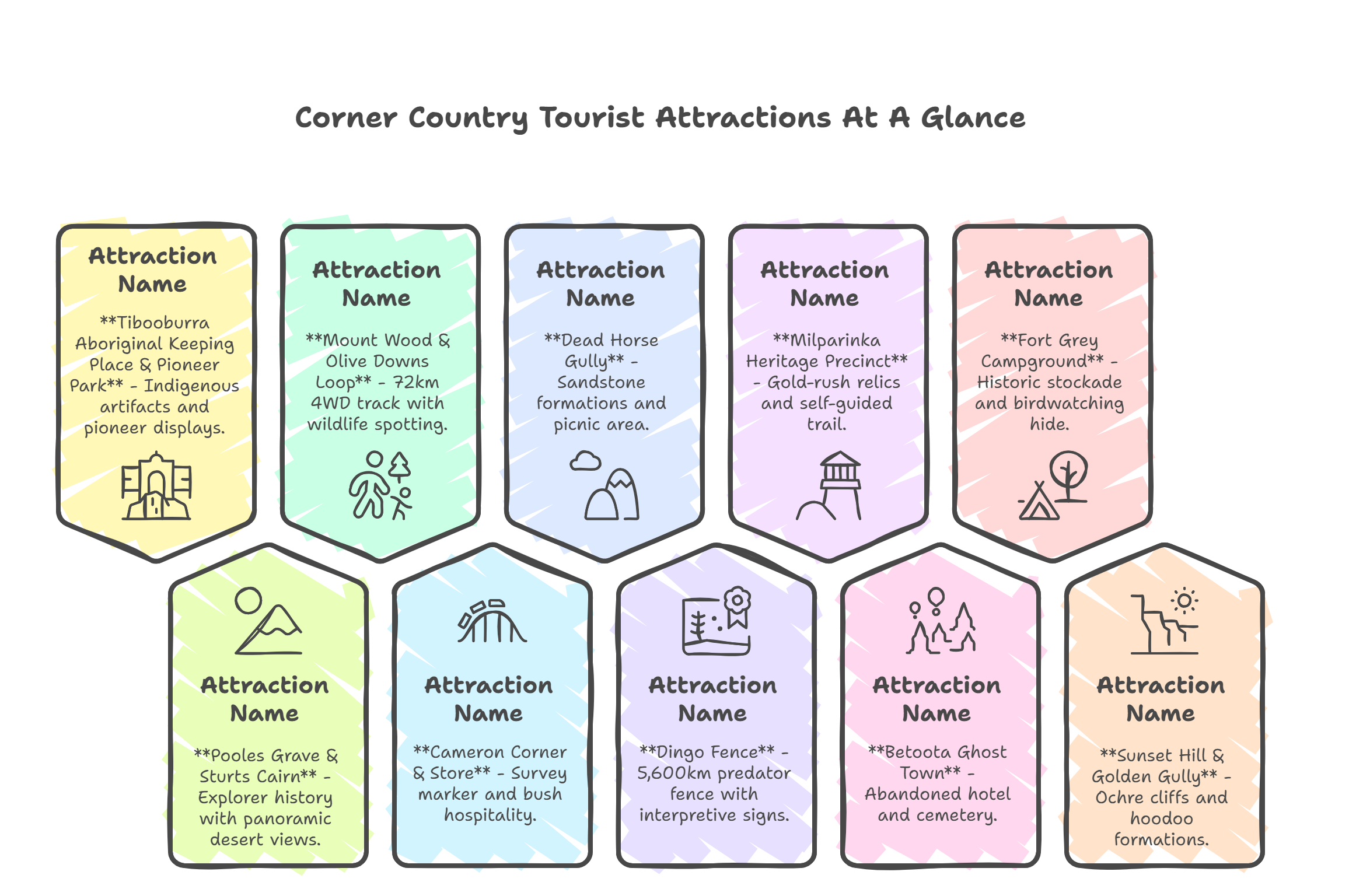
Corner Country Key Attractions At A Glance Infographic

Corner Country Key Attractions At A Glance Infographic

Key Attractions And Activities In Corner Country

Corner Country’s stark beauty and layered history provide endless opportunities for exploration. Below, we’ve expanded the list to 10 must-see attractions and activities, blending adventure, culture, and natural wonders.

1. Tibooburra Aboriginal Keeping Place and Pioneer Park

Located in the heart of Tibooburra, this dual-site attraction offers a deep dive into the region’s Indigenous and settler histories. The Aboriginal Keeping Place houses artifacts from the Wangkumara and Malyangaapa peoples, including tools, ochre paintings, and oral history recordings. Just steps away, Pioneer Park showcases early European life with restored wagons, farming equipment, and a replica slab hut.

  • Highlight: Don’t miss the “Tibooburra Madonna,” a rare 19th-century painting salvaged from a local homestead.
  • Tip: Join a guided tour (book ahead via [Visit Corner Country](https://visitcornercountry.com.au/first-nations/)) to gain insights into Dreaming stories and pastoral struggles.

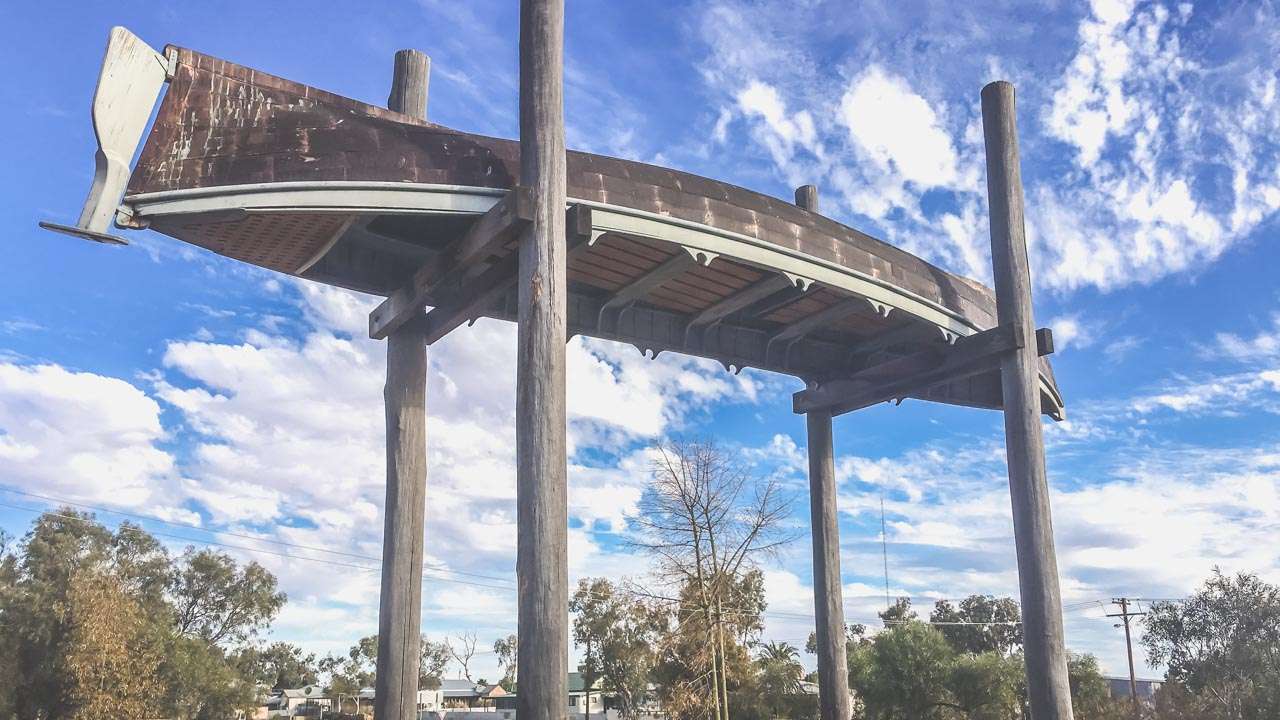
Replica Of Sturts Whaleboat At Tibooburra

Replica Of Sturts Whaleboat At Tibooburra

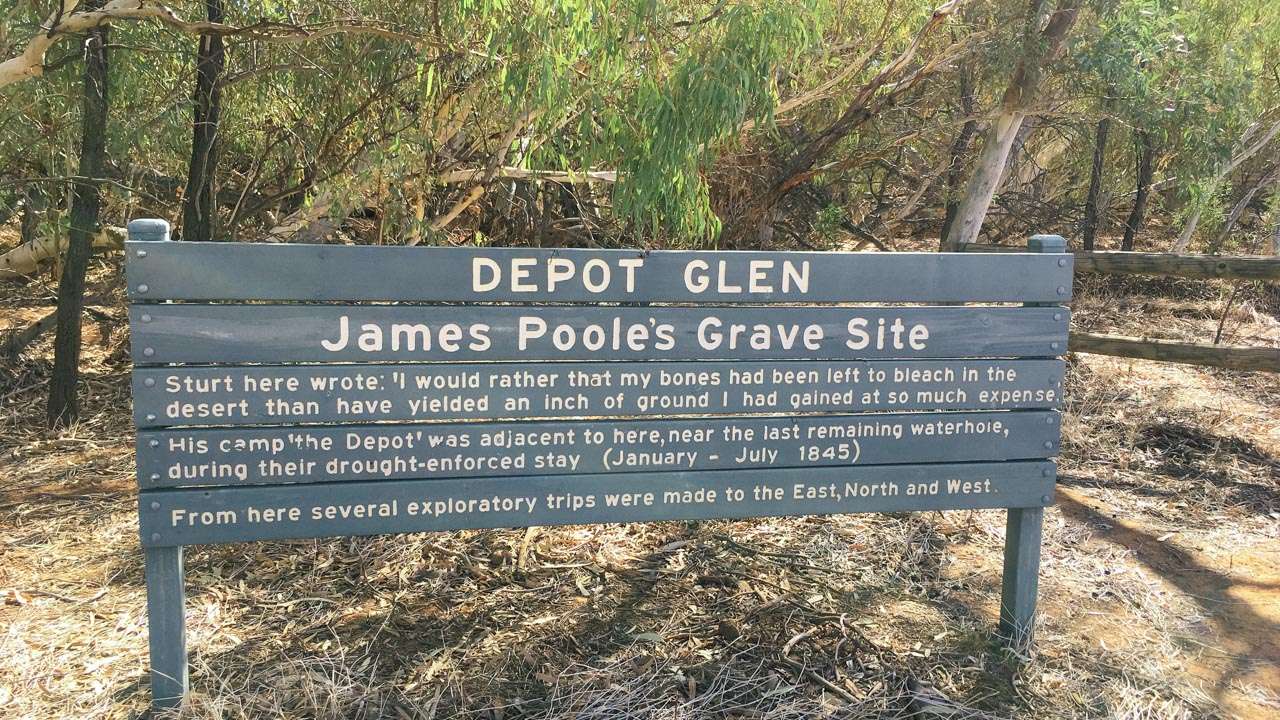
2. Pooles Grave and Sturts Cairn

These two historical markers near Milparinka commemorate the harsh realities of 19th-century exploration. Pooles Grave marks the burial site of a member of Charles Sturt’s 1845 expedition, while Sturts Cairn is a stone pile built by the explorer’s team during their search for inland seas.

  • Highlight: The cairn’s location on a low rise offers sweeping views of the arid plains Sturt described as “gloomy and dismal.”
  • Tip: Visit at dawn or dusk to avoid midday heat and capture dramatic lighting for photography.

Depot Glen Near Milparinka

Depot Glen Near Milparinka

3. Mount Wood and Olive Downs Loop Roads

This 72km 4WD loop in Sturt National Park traverses rocky ridges, claypans, and wildlife-rich plains. The track passes Mount Wood Homestead, a relic of early pastoralism, and Olive Downs, where ancient river gums frame waterholes frequented by emus and kangaroos.

  • Highlight: The “Sea Lake” lookout provides a surreal vista of salt flats that shimmer like water in the distance.
  • Tip: Pack binoculars—this area is part of the Outback Birding Trail, home to Major Mitchell’s cockatoos and wedge-tailed eagles.

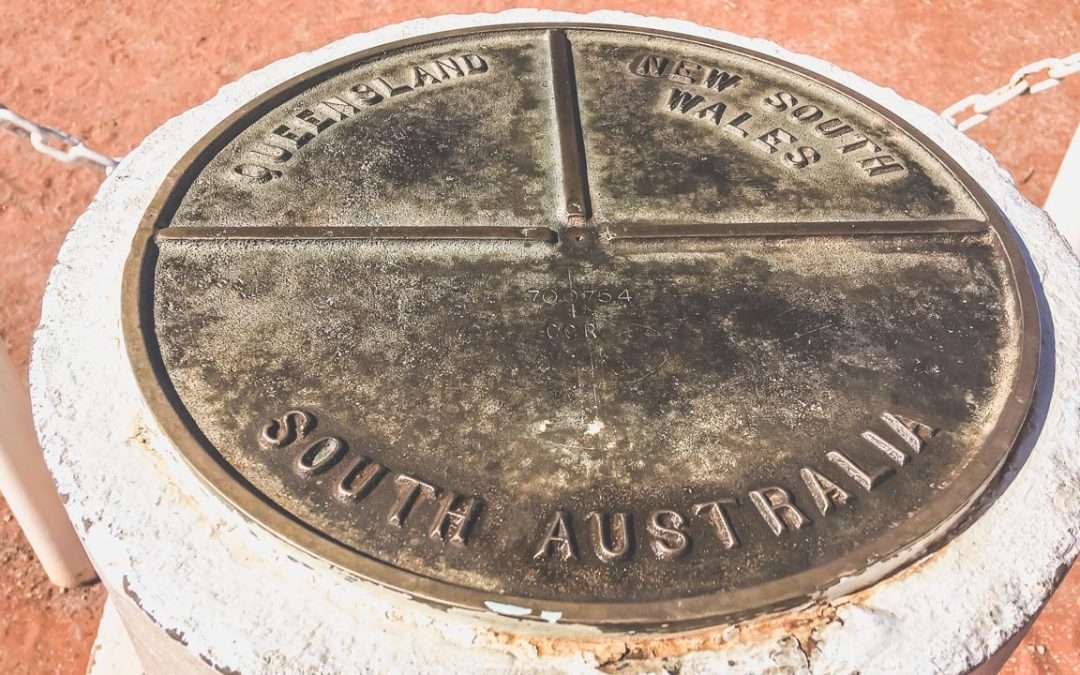
4. Cameron Corner and the Corner Store

The iconic Cameron Corner marks the intersection of Queensland, New South Wales, and South Australia. Nearby, the Cameron Corner Store serves as a social hub, offering fuel, cold beers, and hearty burgers. Climb the store’s lookout tower to snap a photo of the tri-state survey marker.

  • Highlight: Chat with the store’s owner, a local legend who’s collected decades of outback tales.
  • Tip: Time your visit for the annual Cameron Corner Races (September), a quirky event blending horse races and bush humour.

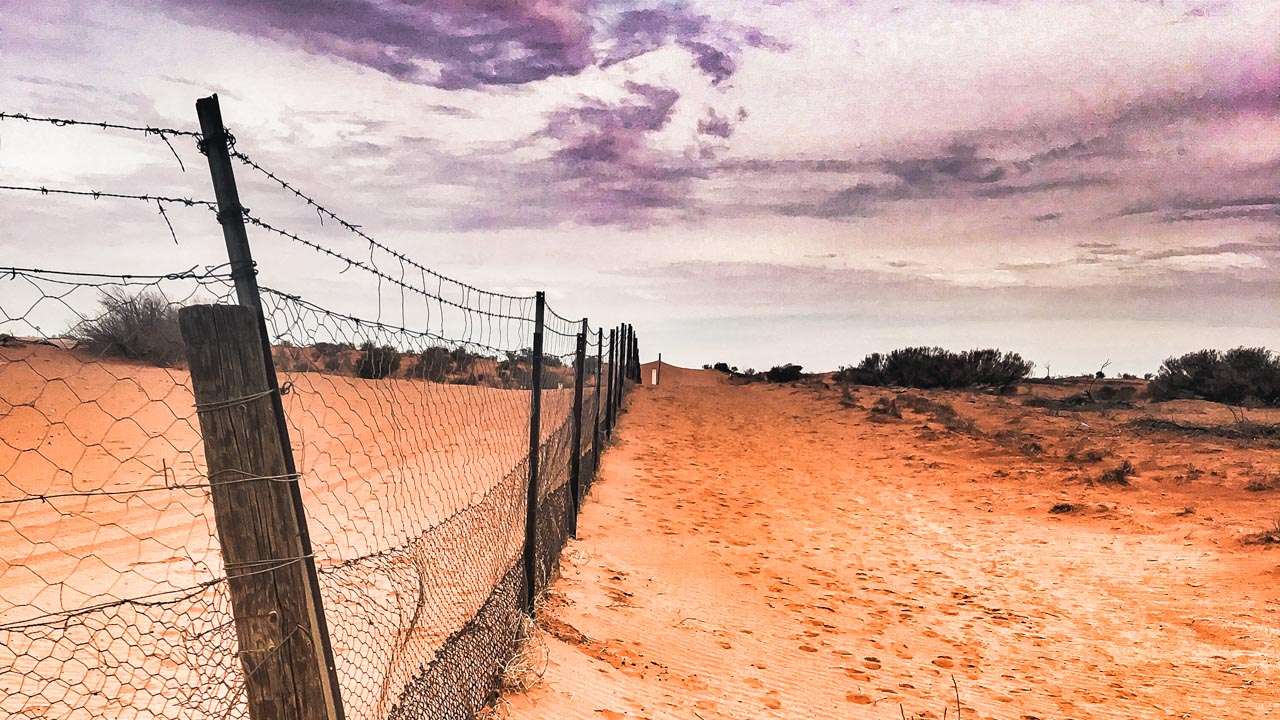
Dingo Fence At Cameron Corner

Dingo Fence At Cameron Corner

5. Dead Horse Gully

Named for the tragic fate of drought-stricken stock, this gorge near Milparinka features striking sandstone formations and fossilized marine remnants. A short walking trail winds through the gully, revealing plaques detailing its geological and pastoral history.

  • Highlight: The “Pudding Tank” rock formation, a natural sandstone dome resembling a colossal dessert.
  • Tip: Combine your visit with a stop at Sturts Depot Campground, a shaded rest spot with picnic tables.

6. Sturt National Park’s Dingo Fence

Stretching 5,600km across three states, the Dingo Fence is one of the world’s longest man-made structures. In Sturt National Park, you can drive alongside this engineering marvel, which was built in the 1880s to protect sheep from predators.

  • Highlight: The Packsaddle Roadhouse section offers interpretive signs explaining the fence’s controversial ecological impact.
  • Tip: Visit at sunset to photograph the fence’s stark lines against the outback’s fiery skies.

7. Milparinka Heritage Precinct

This open-air museum in Milparinka preserves the town’s 1880s gold-rush heyday. Explore the restored courthouse, Royal Hotel cellars, and Sturts Tree, a coolibah where the explorer allegedly carved his initials. The Heritage Walk links 20 sites via a self-guided trail.

  • Highlight: The Albert Hall displays a 19th-century wool wagon and original miner’s diaries.
  • Tip: Download the [Corner Country Stories Drive](https://www.outbackqueensland.com.au/drive/corner-country-stories-drive/) audio guide for immersive storytelling.

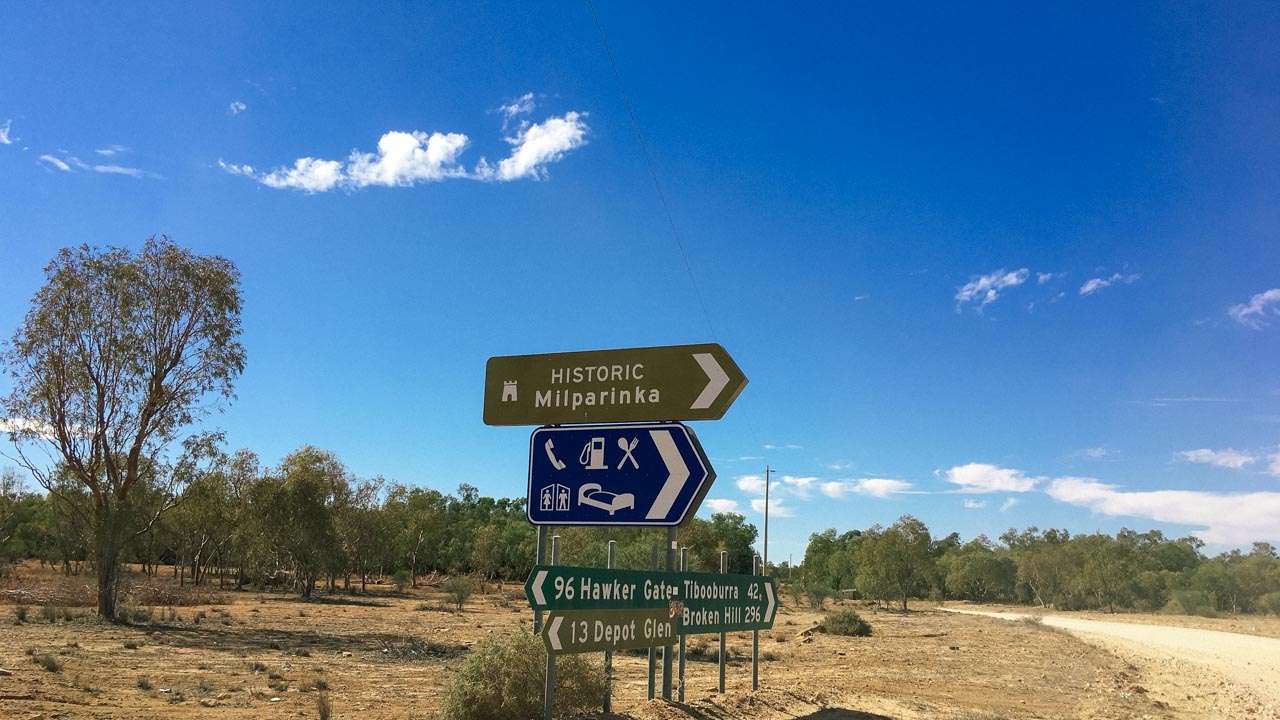
Milparinka Turnoff

Milparinka Turnoff

8. Betoota Ghost Town

Once a thriving pit stop for cattle drovers, Betoota is now a haunting collection of ruins 160km east of Birdsville. The skeletal remains of the Betoota Hotel (closed in 1997) and overgrown cemetery evoke the impermanence of outback settlements.

  • Highlight: The Betoota Racecourse, where dusty tracks and rusted signage hint at long-abandoned race days.
  • Tip: Visit in winter to avoid summer’s blistering heat and snake activity.

9. Fort Grey Campground and Historic Ruins

Nestled in Sturt National Park, Fort Grey combines camping with history. The site features the stone foundations of an 1860s stockade built to protect settlers from Indigenous resistance. Today, it offers toilets, barbecues, and shaded sites.

  • Highlight: The Fort Grey Bird Hide, a quiet spot to observe waterbirds like black swans and cormorants.
  • Tip: Use this campground as a base to explore the park’s western trails, including the Jump Up Loop.

10. Sunset Hill and Golden Gully

In Tibooburra, Sunset Hill and Golden Gully are twin attractions showcasing the region’s ochre-hued geology. Sunset Hill offers panoramic views of the town and surrounding plains, while Golden Gully is a short walk through eroded cliffs that glow amber in the late afternoon.

  • Highlight: The gully’s “Hoodoos”—tall, thin rock spires shaped by centuries of wind and rain.
  • Tip: For photographers, the best light occurs 30 minutes before sunset.

Key Attractions And Activities In Corner Country Comparison Table

Attraction Location Key Features Insider Tip
Tibooburra Aboriginal Keeping Place & Pioneer Park Tibooburra Indigenous artifacts, 19th-century pioneer displays, “Tibooburra Madonna” painting Book guided tours via Visit Corner Country
Pooles Grave & Sturts Cairn Near Milparinka Explorer history, panoramic desert views Best visited at golden hour for photography
Mount Wood & Olive Downs Loop Sturt National Park 72km 4WD track, wildlife spotting, “Sea Lake” mirage effect Bring binoculars for birdwatching
Cameron Corner & Store Tri-state border Survey marker, fuel stop, bush hospitality Time visit for September races
Dead Horse Gully Near Milparinka Sandstone formations, “Pudding Tank” dome Combine with Sturts Depot picnic
Dingo Fence Sturt National Park 5,600km predator fence, interpretive signs Sunset photography opportunity
Milparinka Heritage Precinct Milparinka Gold-rush relics, self-guided heritage trail Download audio guide
Betoota Ghost Town 160km east of Birdsville Abandoned hotel, cemetery, racecourse Winter visits recommended
Fort Grey Campground Sturt National Park Historic stockade, birdwatching hide Base for Jump Up Loop exploration
Sunset Hill & Golden Gully Tibooburra Ochre cliffs, hoodoo formations Arrive 30 mins before sunset

An 8 Day Corner Country Itinerary

This itinerary balances driving challenges, cultural immersion and opportunities to soak in the region’s stark beauty.

Days 1–2: Birdsville to Poeppel Corner

Begin in Birdsville, a quintessential outback town famed for its annual races. Tackle Big Red, the towering sand dune on the edge of the Simpson Desert, testing your 4WD skills. Camp nearby, then drive 150km west to Poeppel Corner, where three states meet. This isolated marker offers a surreal photo opportunity and a tangible connection to Australia’s surveying history.

Days 3–4: Haddon Corner to Cameron Corner

Head to Haddon Corner, another state border junction and explore the ghostly remnants of the Betoota Hotel. Continue to Cameron Corner, marked by the iconic Corner Store, where you can enjoy a cold beer and chat with locals. Camp under the stars at the nearby basic campground.

Days 5–6: Sturt National Park

Enter New South Wales and traverse Sturt National Park via the Mount Wood and Olive Downs Loop Roads. These tracks reveal dramatic mesas, wildlife and the Fort Grey Campground, a historic site with basic facilities.

Days 7–8: Milparinka to Broken Hill

Visit Milparinka, a heritage rich town showcasing 19th century outback life. Explore Sturts Depot Glenn, a vital water source for early explorers, then conclude your journey in Broken Hill, a cultural hub with art galleries and modern comforts.

Remote Area Camping In Corner Country

Camping here requires self sufficiency, but rewards with solitude and star filled skies. Below is a comparison of some of the better known camping sites in corner country.

Campground Facilities Accessibility Highlights
Fort Grey Toilets, barbecues 4WD only Historic ruins, Sturt National Park
Milparinka Caravan Park Powered sites, showers 2WD accessible Heritage precinct, pet-friendly
Cameron Corner None (bush camping) 4WD recommended Proximity to state junction marker
Big Red Campground Bush toilets, fire pits 4WD essential Sunset views over Simpson Desert
Tibooburra Caravan Park Powered sites, showers 2WD accessible Close proximity to central Tibooburra
Tibooburra Aboriginal Campground Toilets, showers, fire pits 2WD accessible Close proximity to central Tibooburra

Pubs and Hotels In Corner Country

These watering holes are lifelines for travellers, offering camaraderie and cold drinks:

  • Cameron Corner Store: Sip a beer at the “corner” of three states. The store sells basic supplies and fuel.
  • Tibooburra Family Hotel: Adorned with vibrant murals, this pub offers hearty meals and air conditioned rooms.
  • Milparinka Hotel: A restored 1880s inn with rustic charm and tales of the region’s pastoral history.
  • Tibooburra Hotel: Recently rebuilt after a fire it is a favourite of the locals.

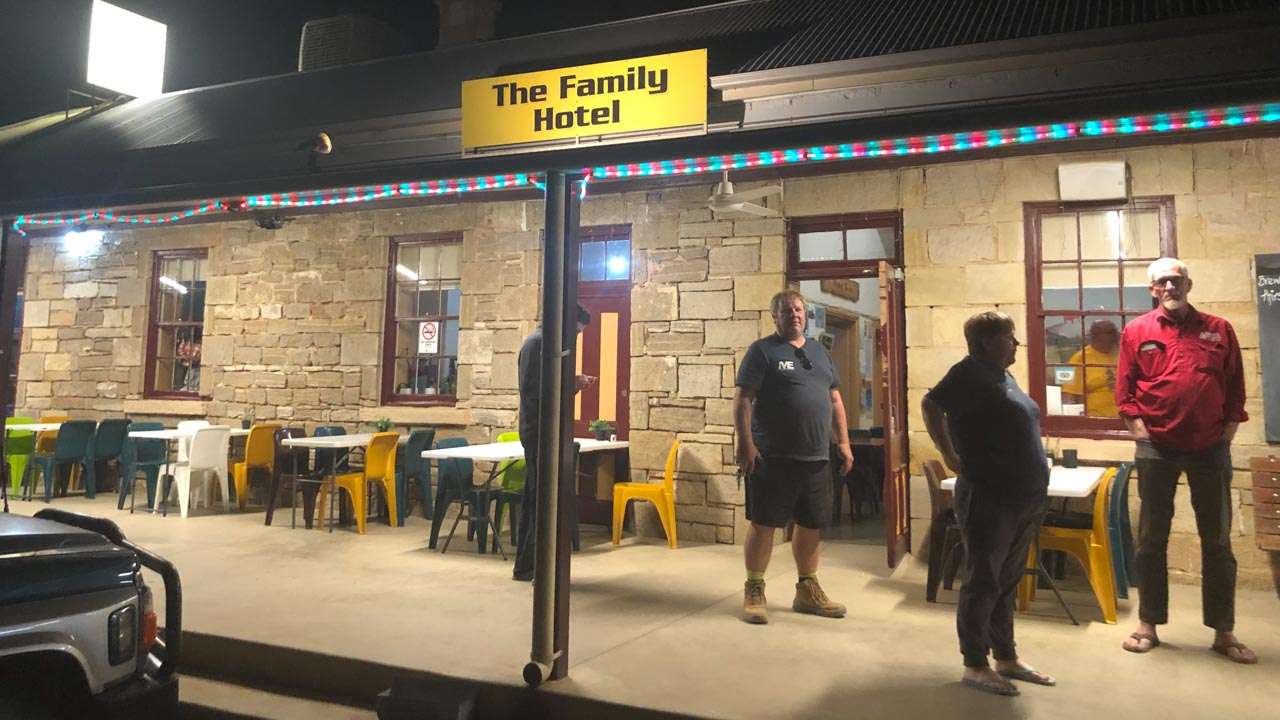
Family Hotel Tibooburra

Family Hotel Tibooburra

History Of Corner Country

Aboriginal Heritage

For millennia, the Maliangaapa, Wadigali and Wangkumara peoples thrived here, using intricate knowledge of soaks and claypans to survive. They traded tools and ochre across vast distances, leaving behind artifacts now preserved in Tibooburra’s Aboriginal Keeping Place. Learn more about their legacy via the [First Nations Cultural Guide](https://visitcornercountry.com.au/first-nations/).

European Exploration

Charles Sturt’s 1844 expedition, aiming to find an inland sea, relied on Aboriginal guides to locate water. By the 1860s, pastoralists displaced Indigenous communities, establishing sheep stations and altering the landscape. Ruins like Pooles Grave and Sturts Cairn commemorate this turbulent era.

Tips For Remote Camping:

  • Carry 40L+ of water per person and a satellite phone for emergencies.
  • Use a portable solar setup to power devices, as most sites lack electricity.
  • Respect fire bans and always leave no trace.

Vehicle And Caravan Preparation

Corner Country’s unsealed roads and extreme temperatures demand meticulous preparation:

1. Vehicle Essentials:

  • Fit all-terrain tyres (e.g., BFGoodrich KO2) and a snorkel for dusty conditions.
  • Equip a dual battery system and carry extra diesel (distances between fuel stops exceed 600km).
  • Pack recovery gear: snatch straps, Maxtrax and consider a high-lift jack.

2. Caravan Readiness:

  • Opt for offroad rated caravans with independent suspension.
  • Secure loose items with heavy-duty straps to withstand corrugations.
  • Check wheel bearings and brakes before departure.

For detailed checklists, consult the [Outback Road Trip Preparation Guide](https://theoutbackloop.com.au/travel-tips/vehicle-preparation-outback-road-trip/).

Final Tips For Travellers To Corner Country

  • Check road conditions via the [NSW National Parks Alerts](https://www.nationalparks.nsw.gov.au) page.
  • Visit in autumn or spring to avoid 45°C summer heat.
  • Support remote communities by purchasing supplies locally.

Corner Country isn’t just a destination – it’s a journey into Australia’s heart, blending challenge, history and raw beauty. With careful planning, your adventure here will be unforgettable.

6 Frequently Asked Question FAQs About Corner Country

What is the best time of year to visit Corner Country?

Aim for autumn (March - May) or spring (September - November) to avoid extreme summer heat (up to 45°C) and freezing winter nights.

Do I need a 4WD to explore Corner Country?

Yes. Unsealed roads, sand dunes like Big Red, and remote tracks require a high-clearance 4WD with all-terrain tyres and recovery gear.

Are there fuel stops in Corner Country?

Fuel is limited. Carry enough for 600-700km between stops. Key stations include Birdsville, Tibooburra, and Cameron Corner Store.

Can I camp freely in Corner Country?

Bush camping is allowed in many areas, but use designated sites (e.g., Fort Grey, Cameron Corner) for safety and minimal environmental impact.

What historical sites should I prioritise?

Don’t miss Sturts Depot Glenn, Pooles Grave, and Tibooburra’s Aboriginal Keeping Place for insights into Indigenous and European history.

How reliable is mobile phone coverage in Corner Country?

Mobile reception is extremely limited. Carry a satellite phone or emergency beacon (e.g., Garmin inReach) for critical communication. Always inform someone of your travel plans before departure.

Road Trip From Melbourne To Adelaide: 3 Unique Itineraries

Road Trip From Melbourne To Adelaide: 3 Unique Itineraries

Road Trip From Melbourne To Adelaide: 3 Unique Itineraries

Plan your ultimate road trip from Melbourne to Adelaide with 3 unique itineraries! Explore scenic stops, free camping spots and must see highlights for caravanners and campers. Adventure awaits! Embarking on a road trip from Melbourne to Adelaide is a quintessential Australian adventure.

Whether you’re a time pressed traveller or a leisurely explorer this journey offers something for everyone. With a road trip from Melbourne to Adelaide driving distance of approximately 900 kilometres, the route is packed with scenic coastal drives, historic landmarks and natural wonders.

Below we’ve come up with three distinct itineraries – 3 days, 7 days and a 14 Day return trip. Each taking a different route to minimise location duplication. All overnight stops prioritise free or low cost camping. Absolutely perfect for caravanners and campers.

Table Of Contents

Road Trip From Melbourne To Adelaide
Key Comparisons And Insights

Itinerary Duration Route Focus Overnight Stops Best For
3 Day Express 3 Days Coastal & Mountain Free Camping Time pressed travellers
7 Day Coastal 7 Days Limestone Coast Low Cost Camping Leisurely coastal explorers
14 Day Return 14 Days Inland & Coastal Mix of Free & Paid Camping Comprehensive exploration

Key Insights On Travel Times And Distances

  1. The 3 Day itinerary is the most time efficient, covering approximately 1,097 km in total, with daily driving times ranging from 3.5 to 6 hours.
  2. The 7 Day itinerary is more relaxed, totalling around 1,143 km, with most driving days under 4 hours.
  3. The 14 Day return trip is the most comprehensive, covering roughly 2,226 km round trip, with driving times averaging 3-5 hours per day.

Each itinerary offers a unique perspective on the Melbourne to Adelaide road trip stops, ensuring you’ll find one that suits your travel style.

3 Day Express Adventure: Coastal And Mountain Highlights

This fast-paced itinerary is ideal for those short on time but eager to experience the best of Victoria’s coastline and mountains.

Day 1: Melbourne to Port Campbell (285 km)

  • Stops: Torquay, Lorne, Apollo Bay
  • Overnight: Port Campbell Recreation Reserve (free camping).

Highlights

  • Twelve Apostles: Iconic limestone stacks rising from the Southern Ocean.
  • Loch Ard Gorge: A stunning gorge with a rich shipwreck history.

Day 2: Port Campbell to Halls Gap (287 km)

  • Stops: Warrnambool, Port Fairy
  • Overnight: Plantation Campground, Grampians (free camping).

Highlights

  • Tower Hill Wildlife Reserve: A volcanic crater teeming with native wildlife.
  • Grampians National Park: Spectacular mountain ranges and waterfalls.

Day 3: Halls Gap to Adelaide (525 km)

  • Stops: Horsham, Bordertown
  • Arrival in Adelaide.

Highlights

  • Little Desert National Park: A unique arid landscape.
  • The Bend Motorsport Park: A must visit for car enthusiasts.

Alternative Stops

Bells Beach, Otway National Park, Hamilton.

Road Trip From Melbourne To Adelaide

Road Trip From Melbourne To Adelaide

3 Day Express Adventure: Coastal And Mountain Highlights At A Glance

Day Route Distance Travel Time Stops Highlights Overnight Stay
1 Melbourne to Port Campbell 285 km 3.5 hours Torquay, Lorne, Apollo Bay Twelve Apostles, Loch Ard Gorge Port Campbell Recreation Reserve (Free)
2 Port Campbell to Halls Gap 287 km 3.5 hours Warrnambool, Port Fairy Tower Hill Wildlife Reserve, Grampians Plantation Campground, Grampians (Free)
3 Halls Gap to Adelaide 525 km 6 hours Horsham, Bordertown Little Desert NP, The Bend Motorsport Arrival in Adelaide

7 Day Coastal Expedition: Exploring the Limestone Coast

This relaxed route hugs the coastline, showcasing the beauty of Victoria and South Australia’s southern shores.

Day 1: Melbourne to Apollo Bay (187 km)

  • Stops: Geelong, Anglesea
  • Overnight: Apollo Bay Recreation Reserve (low-cost camping).

Highlights

  • Great Ocean Road Memorial Arch: The gateway to this iconic drive.
  • Erskine Falls: A picturesque waterfall near Lorne.

Day 2: Apollo Bay to Port Fairy (188 km)

  • Stops: Twelve Apostles, Port Campbell
  • Overnight: Southcombe Park, Port Fairy (low-cost camping).

Highlights

  • Gibson Steps: A dramatic coastal viewpoint.
  • The Arch: A natural rock formation.

Day 3: Port Fairy to Mount Gambier (178 km)

  • Stops: Portland, Nelson
  • Overnight: Mount Gambier Central Caravan Park.

Highlights

  • Cape Bridgewater: Known for its blowholes and seal colony.
  • Glenelg River: Perfect for kayaking or fishing.

Day 4: Mount Gambier to Robe (138 km)

  • Stops: Tantanoola Caves, Millicent
  • Overnight: Long Beach Campground, Robe (free camping).

Highlights

  • Blue Lake: A stunning crater lake that changes colour seasonally.
  • Umpherston Sinkhole: A sunken garden with lush greenery.

Day 5: Robe to Victor Harbor (367 km)

  • Stops: Kingston SE, Meningie
  • Overnight: Adare Camp and Caravan Park, Victor Harbor.

Highlights

  • Cape Jaffa Lighthouse: A historic maritime landmark.
  • Coorong National Park: A haven for birdwatchers.

Day 6: Victor Harbor to McLaren Vale (44 km)

  • Stops: Port Elliot, Goolwa
  • Overnight: Moana Beach Tourist Park.

Highlights

  • Granite Island: Home to a colony of little penguins.
  • Cockle Train: A heritage steam train ride.

Day 7: McLaren Vale to Adelaide (41 km)

  • Stops: Willunga, Hallett Cove
  • Arrival in Adelaide.

Highlights

  • McLaren Vale Wineries: Sample world class wines.
  • Hallett Cove Conservation Park: Known for its geological significance.

Alternative Stops

Cape Otway, Tower Hill, Naracoorte Caves, Currency Creek.

7 Day Coastal Expedition: Exploring the Limestone Coast At A Glance

Day Route Distance Travel Time Stops Highlights Overnight Stay
1 Melbourne to Apollo Bay 187 km 2.5 hours Geelong, Anglesea Great Ocean Road Memorial Arch, Erskine Falls Apollo Bay Recreation Reserve (Low-cost)
2 Apollo Bay to Port Fairy 188 km 2.5 hours Twelve Apostles, Port Campbell Gibson Steps, The Arch Southcombe Park, Port Fairy (Low-cost)
3 Port Fairy to Mount Gambier 178 km 2 hours Portland, Nelson Cape Bridgewater, Glenelg River Mount Gambier Central Caravan Park
4 Mount Gambier to Robe 138 km 1.5 hours Tantanoola Caves, Millicent Blue Lake, Umpherston Sinkhole Long Beach Campground, Robe (Free)
5 Robe to Victor Harbor 367 km 4 hours Kingston SE, Meningie Cape Jaffa Lighthouse, Coorong NP Adare Camp and Caravan Park, Victor Harbor
6 Victor Harbor to McLaren Vale 44 km 45 minutes Port Elliot, Goolwa Granite Island, Cockle Train Moana Beach Tourist Park
7 McLaren Vale to Adelaide 41 km 40 minutes Willunga, Hallett Cove McLaren Vale Wineries, Hallett Cove CP Arrival in Adelaide

14 Day Return Trip Odyssey: Inland and Coastal Exploration

This comprehensive itinerary combines inland and coastal routes, offering a diverse experience of Victoria and South Australia.

Days 1-2: Melbourne to Grampians (260 km)

  • Stops: Ballarat, Ararat
  • Overnight: Stapylton Campground, Grampians (free camping).

Highlights

  • Sovereign Hill: A living museum of the gold rush era.
  • Grampians National Park: Hiking trails and Aboriginal rock art.

Days 3-4: Grampians to Robe (435 km)

  • Stops: Naracoorte, Penola
  • Overnight: The Pines Campground, Little Dip Conservation Park (free camping).

Highlights

  • Naracoorte Caves: A UNESCO World Heritage Site.
  • Coonawarra Wine Region: Renowned for its Cabernet Sauvignon.

Days 5-6: Robe to Victor Harbor (367 km)

  • Stops: Kingston SE, Meningie
  • Overnight: Waitpinga Campground, Newland Head Conservation Park (low-cost camping).

Highlights

  • Cape Jaffa Lighthouse: A historic maritime landmark.
  • Coorong National Park: A haven for birdwatchers.

Days 7-8: Victor Harbor to Adelaide (83 km)

  • Stops: Port Elliot, McLaren Vale
  • Overnight: Adelaide Shores Caravan Park.

Highlights

  • Granite Island: Home to a colony of little penguins.
  • McLaren Vale Wineries: Sample world-class wines.

Days 9-10: Adelaide to Mount Gambier (449 km)

  • Stops: Murray Bridge, Keith
  • Overnight: Mount Gambier Central Caravan Park.

Highlights

  • Monarto Safari Park: An open-range zoo.
  • Blue Lake: A stunning crater lake.

Days 11-12: Mount Gambier to Port Campbell (267 km)

  • Stops: Portland, Warrnambool
  • Overnight: Port Campbell Recreation Reserve (free camping).

Highlights

  • Cape Bridgewater: Known for its blowholes and seal colony.
  • Flagstaff Hill Maritime Village: A recreated 19th-century port.

Days 13-14: Port Campbell to Melbourne (285 km)

  • Stops: Apollo Bay, Lorne
  • Return to Melbourne.

Highlights

  • Twelve Apostles: Iconic limestone stacks.
  • Great Otway National Park: Lush rainforests and waterfalls.

Alternative Stops: Horsham, Bordertown, Tailem Bend, Robe, Port Fairy, Torquay.

14 Day Return Trip Odyssey: Inland and Coastal Exploration At A Glance

Day Route Distance Travel Time Stops Highlights Overnight Stay
1-2 Melbourne to Grampians 260 km 3 hours Ballarat, Ararat Sovereign Hill, Grampians NP Stapylton Campground, Grampians (Free)
3-4 Grampians to Robe 435 km 5 hours Naracoorte, Penola Naracoorte Caves, Coonawarra Wine Region The Pines Campground, Little Dip CP (Free)
5-6 Robe to Victor Harbor 367 km 4 hours Kingston SE, Meningie Cape Jaffa Lighthouse, Coorong NP Waitpinga Campground, Newland Head CP (Low-cost)
7-8 Victor Harbor to Adelaide 83 km 1 hour Port Elliot, McLaren Vale Granite Island, McLaren Vale Wineries Adelaide Shores Caravan Park
9-10 Adelaide to Mount Gambier 449 km 5 hours Murray Bridge, Keith Monarto Safari Park, Blue Lake Mount Gambier Central Caravan Park
11-12 Mount Gambier to Port Campbell 267 km 3 hours Portland, Warrnambool Cape Bridgewater, Flagstaff Hill Port Campbell Recreation Reserve (Free)
13-14 Port Campbell to Melbourne 285 km 3.5 hours Apollo Bay, Lorne Twelve Apostles, Great Otway NP Return to Melbourne

Final Thoughts On A Road Trip From Melbourne To Adelaide

A road trip from Melbourne to Adelaide is more than just a drive – it’s an opportunity to explore Australia’s diverse landscapes and rich history. Whether you choose the 3 Day express, the 7 Day coastal route, or the 14 Day odyssey, each journey promises unforgettable memories. Amanda and I have done all of these routes in parts and visited all of the places outlined. We can highly recommend it.

Remember to check campground availability, especially during peak seasons and always practice responsible camping. Happy travels!

Road Trip From Melbourne To Adelaide Itinerary Decisions

Road Trip From Melbourne To Adelaide Itinerary Decisions

6 Frequently Asked Question FAQs About A Road Trip From Melbourne To Adelaide

What is the best route for a road trip from Melbourne to Adelaide?

The best route depends on your timeframe and interests. For a quick trip, take the Great Ocean Road and Grampians National Park (3-day itinerary). For a coastal adventure, explore the Limestone Coast (7-day itinerary). For a comprehensive journey, combine inland and coastal routes (14-day return trip).

How long does a road trip from Melbourne to Adelaide take?

The road trip from Melbourne to Adelaide can take anywhere from 3 days to 2 weeks, depending on your itinerary. The direct drive is about 9 hours (900 km), but exploring scenic stops and attractions will extend your travel time.

Where can I camp overnight on a road trip from Melbourne to Adelaide?

There are plenty of camping options, including free and low-cost sites. Popular stops include Port Campbell Recreation Reserve, Plantation Campground (Grampians), and Long Beach Campground (Robe). Always check availability and book in advance during peak seasons.

What are the must-see highlights on a road trip from Melbourne to Adelaide?

Key highlights include the Twelve Apostles, Grampians National Park, Blue Lake (Mount Gambier), and Coorong National Park. Each route offers unique attractions, from coastal views to historic landmarks and wildlife encounters.

Can I do a road trip from Melbourne to Adelaide on a budget?

Absolutely! Prioritise free camping sites like Port Campbell Recreation Reserve and The Pines Campground (Robe). Many attractions, such as the Twelve Apostles and Coorong National Park, are free to visit, making the road trip from Melbourne to Adelaide budget-friendly.

Is a road trip from Melbourne to Adelaide suitable for families?

Yes, the road trip from Melbourne to Adelaide is family-friendly. With stops like Tower Hill Wildlife Reserve, Granite Island, and Monarto Safari Park, there are plenty of activities for kids. Choose a relaxed itinerary, such as the 7-day coastal route, for a stress-free family adventure.

Camping Margaret River: Your Ultimate Guide

Camping Margaret River: Your Ultimate Guide

Camping Margaret River: Your Ultimate Guide

Discover the best camping sites in Margaret River WA. Compare free camps, national parks, caravan parks & glamping spots with our complete guide – perfect for budget-friendly adventures or luxury escapes.

Beautiful Margaret River. Famous for its world class wineries, epic surf breaks and towering karri forests. But for campers and caravanners, it’s also a paradise of diverse camping options from beachside caravan parks to secluded bush hideouts. Whether you’re chasing a budget friendly free camp or a glamping experience with a side of chardonnay, this guide breaks down every camping site in and around Margaret River. Let’s dive in!

Camping Margaret River: Where Nature Meets Adventure

Margaret River isn’t just a destination; it’s a vibe. Nestled in Western Australia’s Southwest, this region offers everything from rugged coastal cliffs to serene forest canopies. But with so many camping sites Margaret River options, choosing the right spot can feel overwhelming. Fear not! We’ve scouted the pros, cons and quirks of every caravan park, national park, free camp and even a permaculture farm.

This guide isn’t just a list – it’s your roadmap to balancing comfort, cost and connection with nature. We’ll compare amenities, highlight hidden gems and even throw in a few pro tips to help you dodge crowds or snag the best sunset views. Ready? Let’s explore!

Caravan Parks: Comfort Meets Convenience

If you’re after amenities like hot showers, powered sites and WiFi (because let’s face it, Instagramming your camp setup is half the fun), Margaret River’s caravan parks deliver. These spots are perfect for families, retirees, or anyone who wants a hassle free basecamp for exploring the region.

1. RAC Margaret River Nature Park

Nestled in Wooditjup National Park

Pros

  • Eco-friendly with solar powered facilities: This park takes sustainability seriously, offering solar heated showers and energy efficient lighting.
  • Options galore: Choose from cabins, safari tents, dormitories, or powered sites. The safari tents are a hit for glampers who want a touch of luxury without sacrificing the outdoorsy feel.
  • Proximity to town: Just 10 minutes from Margaret River’s cafes and shops, but surrounded by bushland for that “away from it all” vibe.
  • On site fun: Fire pits, BBQs and even table tennis keep everyone entertained after a day of wine tasting or surfing.

Cons

  • Pricey for budget campers: Powered sites start at around $50/night, which is steep compared to free camps. But for the location and facilities, many say it’s worth the splurge.
  • Bookings essential: Popular year round, especially during school holidays.

Learn more about their sustainability efforts here.

2. Margaret River Tourist Park

44 Station Rd, Margaret River

Pros

  • Central location: Walk to the town’s breweries, boutiques and the Margaret River Chocolate Company (dangerously close, if you ask us).
  • Family friendly: A pool, playground and BBQ areas make this a hit with kids.
  • Pet friendly: Dogs are welcome in selected areas—just keep them on a leash.
  • Spotless amenities: Recent visitors rave about the clean showers and friendly staff.

Cons

  • Peak season chaos: This park books out months in advance during summer. If you’re planning a December trip, set a reminder to reserve your spot!
  • Tight spaces: Some powered sites feel a bit snug for larger caravans or rigs.

Check availability here.

3. Discovery Parks – Margaret River

Bussell Hwy, Cowaramup

Pros

  • RV friendly: Designed for caravans and motorhomes, with electric and water hookups.
  • Accessibility: Wheelchair accessible facilities, including bathrooms and pathways.
  • Pet friendly: Another great option for traveling with furry friends.

Cons

  • Out of town: Located 10km north of Margaret River in Cowaramup (though this puts you closer to iconic spots like Canal Rocks and Injidup Natural Spa).
  • Basic vibe: Less “luxe” than RAC Nature Park, but ideal for no fuss stays.

Camping Margaret River Discovery Parks Margaret River (Image Courtesy Discovery Parks)

Camping Margaret River Discovery Parks Margaret River (Image Courtesy Discovery Parks)

National Park & State Forest Camping Sites: For the Wild at Heart

Prefer waking up to birdsong rather than WiFi? These bush camps balance accessibility with raw natural beauty. They’re perfect for hikers, surfers and anyone craving a digital detox.

Conto Campground

Leeuwin-Naturaliste National Park

Pros

  • Surf and forest combo: Pitch your tent among jarrah trees, then walk 10 minutes to Conto’s surf breaks.
  • Family friendly: Flat, shaded sites and fire pits (bring your own wood!) make this a hit with kids.
  • Well maintained: Clean pit toilets and picnic tables, plus rangers often patrol the area.

Cons

  • No powered sites: Solar panels or generators are a must if you need electricity.
  • Basic facilities: No showers or drinking water – pack in, pack out.

Explore Conto’s hiking trails here.

Boranup Campground

Leeuwin-Naturaliste National Park

Pros

  • Magical karri forest setting: Towering trees create a cathedral-like atmosphere. Perfect for photographers and nature lovers.
  • Proximity to Boranup Beach: A short drive to this secluded stretch of sand, ideal for beachcombing or sunset picnics.
  • Stargazing heaven: Minimal light pollution = epic Milky Way views.

Cons

  • Crowds in peak season: Sites fill fast during school holidays. Arrive early or visit in shoulder seasons (autumn is divine).
  • No water: Bring plenty for drinking, cooking and cleaning.
  • Pro Tip: Combine Boranup with a drive through the Boranup Forest Loop Road – a 12km scenic route through some of WA’s tallest karri trees.

Camping Margaret River Seasonal Considerations - When To Visit Margaret River?

Camping Margaret River Seasonal Considerations – When To Visit Margaret River?

Free Camping Sites: Budget Friendly Bliss

For those who believe the best things in life are free (or at least under $10), these spots offer no-frills stays with killer views. Just remember: free camps require self sufficiency. Pack a portaloo, extra water and a sense of adventure!

Karri Gully Picnic Site

Pros

  • Free and serene: 10 designated spots nestled in a karri forest perfect for campervans and small trailers.
  • Close to town: Only 15 minutes from Margaret River, making it a handy base for day trips.

Cons

  • First come, first served: No bookings, so arrive early on weekends.
  • Basic amenities: Just a picnic table and pit toilet.

Brockman/Stewart Rest Area

Pros

  • Free overnight stop: Ideal for road trippers passing through.
  • Easy access: Right off Bussell Highway, with room for caravans and RVs.

Cons

  • Road noise: Not the quietest spot if you’re a light sleeper.
  • No facilities: Strictly for self contained vehicles.

Other Free Options

  • Capel RV Stop: Free 24-hour stays for self contained vehicles. Great for a quick pit stop north of Margaret River.
  • Darradup Roadside Rest Area: Riverside setting, but better suited for small vans due to tight spaces.

Check this guide for up to date info on time limits and vehicle restrictions.

Margaret River Camping Site: Unique Stays You Won’t Forget

Want to spice up your camping game? Try these quirky options that blend nature with novelty.

Olio Bello Lakeside Glamping

Pros

  • Luxe tents on an olive farm: Think king sized beds, private terraces and lake views. Perfect for anniversaries or romantic getaways.
  • On site café: Feast on wood fired pizzas and olive oil tastings—no camp cooking required!

Cons

Price tag: Starts at $300/night – ouch. But hey, you’re paying for the ‘grammable moments.

Glamp in style here.

Fair Harvest Permaculture Campground

Pros

  • Eco warriors rejoice: Learn about sustainable farming while camping on a working permaculture property.
  • Chill vibes: BYO tent or van and enjoy farm fresh eggs for breakfast.

Cons

  • Rustic facilities: Compost toilets and outdoor showers – embrace the simplicity!

The Great Comparison: Which Camping Style Suits You?

To simplify your decision, here’s a quick breakdown of what each camping style offers:

Camping Type Cost Amenities Best For Vibe
Caravan Parks $$$ Power, pools, Wi-Fi Families, comfort-seekers Social, lively
National Parks $ Basic toilets Hikers, nature lovers Rustic, tranquil
Free Camps Free – $ Minimal (self-contained) Budget travelers Adventurous, quiet
Glamping/Unique $$$$ Luxury/eco-focused Couples, special trips Romantic, Insta-worthy

Camping Murray River Seasonal Considerations: When To Visit

  • Summer (Dec-Feb): Warm and busy. Book caravan parks months in advance. Free camps get crowded – arrive early.
  • Autumn (Mar-May): Mild weather, fewer crowds. Ideal for national park stays.
  • Winter (Jun-Aug): Cool and rainy, but perfect for cozy cabin stays and storm watching.
  • Spring (Sep-Nov): Wildflowers bloom and surf swells pick up. A camper’s dream!

Pro Tips For Camping In Margaret River

  1. Fire Safety: Check [DFES alerts](https://www.emergency.wa.gov.au/) for fire bans. Many sites prohibit fires in summer.
  2. Wildlife Wisdom: Store food securely – quendas (bandicoots) and possums are cheeky thieves!
  3. Leave No Trace: Pack out all waste, especially in free camps and national parks.
  4. Water Wisdom: Many bush camps lack drinking water. Fill up at town visitor centres.

Key Takeaways for Your Margaret River Camping Adventure

  1. Book Ahead: Popular spots like Conto and RAC Nature Park fill fast in summer.
  2. Pack Smart: Free camps require self sufficiency – bring water, a porta-loo and firewood.
  3. Location Matters: Want surf? Prevelly Caravan Park. Want wine? Stay near town.

Final Thoughts: Margaret River Camping Site Perfection Awaits

Whether you’re pitching a tent under karri trees or sipping wine in a glamping tent, Margaret River’s camping scene has something for everyone. Weigh your priorities (budget vs. comfort, solitude vs. convenience) and you’ll find your perfect patch of paradise. Just don’t forget the marshmallows – you’re in for a treat.

Always check parks and caravan parks websites for fire bans and booking updates.

6 Frequently Asked Question FAQs About Camping Margaret River

What’s the best time of year for camping in Margaret River?

Autumn (March-May) and spring (September-November) offer mild weather and fewer crowds. Summer is popular but busy, while winter is ideal for storm-watching and cabin stays.

Are there pet-friendly camping sites in Margaret River?

Yes! Caravan parks like Margaret River Tourist Park and Discovery Parks allow dogs. Free camps like Karri Gully also permit pets, but always check leash rules.

Can I free camp near Margaret River?

Absolutely. Try Karri Gully Picnic Site (15 mins from town) or Brockman/Stewart Rest Area for quick stops. Note: Most free sites require self-contained vehicles.

Do I need to book campsites in advance?

For caravan parks (e.g., RAC Nature Park) and popular national parks like Conto Campground, book months ahead in peak season. Free camps are first-come, first-served.

Are there showers and drinking water at national park campsites?

Most, like Boranup Campground, have pit toilets but no showers or drinking water. Pack your own supply or fill up at town visitor centres.

What’s the best camping option for a romantic getaway?

Splurge on Olio Bello Lakeside Glamping for luxury tents and vineyard views, or try secluded free camps like Willow Springs for a private forest escape.

The Best Camping Sites In Byron Bay (And Worst)

The Best Camping Sites In Byron Bay (And Worst)

The Best Camping Sites In Byron Bay (And Worst)

Compare all camping sites in Byron Bay NSW – free camps, caravan parks & national parks. Discover pros/cons, hidden gems, booking tips & avoid fines. Your complete guide for the perfect coastal escape!

Ah, Byron Bay – the iconic coastal gem of NSW, where golden beaches meet lush hinterland and the vibe is as laid back as a Sunday arvo barbecue. Whether you’re a seasoned caravanner, a tent toting adventurer, or a budget conscious road tripper, finding the perfect camping spot here can make or break your trip. But with so many options – from beachfront holiday parks to sneaky free camps – how do you choose?

Let’s cut through the noise. In this guide, we’ll break down every camping site in and around Byron Bay, including the good, the bad, and the “you might get fined” realities. Buckle up!

Why Camp In Byron Bay?

Byron Bay isn’t just a destination – it’s a lifestyle. Famous for its pristine beaches, vibrant arts scene, and thriving café culture, it’s a magnet for surfers, yogis, and sunset chasers. Camping here lets you soak up the natural beauty while staying close to the action. But with popularity comes competition: sites book out months in advance, and prices soar in peak seasons. Whether you’re after a family friendly resort or a secluded bush retreat, understanding your options is key.

Choosing Camping Sites In Byron Bay

Choosing Camping Sites In Byron Bay

Camping Sites Byron Bay: Caravan Parks and Holiday Parks

If you’re after amenities like powered sites, swimming pools and proximity to Byron’s bustling cafes, caravan parks are your best bet for camping sites in Byron Bay. Here’s the lowdown:

Discovery Parks – Byron Bay

Discovery Parks is the Disneyland of caravan parks. With a water park, café, and dog friendly policy, it’s ideal for families and fur babies. You’re just 5 minutes from Belongil Beach, and RV sites come with electric hookups. But be warned: peak seasons turn this place into a circus. Prices are steep (think $150+ per night in summer), and privacy is scarce when it’s packed.

  • Nearby Attractions: Pop into the Belongil Beach House Café for a post surf coffee or hit the Byron Markets on weekends for local crafts and live music.
  • Good for: Families, social butterflies, and those who like a resort vibe.
  • Skip if: You’re on a tight budget or crave peace.

Reflections Byron Bay – Holiday Park

Nestled near Clarkes Beach and the town’s main strip, Reflections is all about location. Powered sites, cabins, and a kids’ playground make it a hit with families. The downside? Noise from nearby clubs and crowds, especially during school holidays.

  • Eco Friendly Perks: Reflections has solar heated showers and recycling stations, so you can tread lightly while enjoying the beach.
  • Good for: Beach lovers and families wanting convenience.
  • Skip if: You’re noise sensitive or prefer seclusion.

First Sun Holiday Park

Imagine waking up to the sound of waves at First Sun, which sits right on Wreck Beach. This beachfront gem offers unpowered and powered sites, plus cozy cabins. It’s a short stroll to Byron’s shops, but popularity means cramped spaces during busy periods. Bring earplugs if your neighbour’s ukulele jam session isn’t your thing.

  • Surf Tip: Wreck Beach is quieter than Main Beach – perfect for beginners.
  • Good for: Surfers and beach bums.
  • Skip if: You dislike crowds or paying premium prices.

Glen Villa Resort

A quieter option near Cumbebin Wetlands, Glen Villa offers powered sites, villas, and a pool. It’s walking distance to the beach and town, but some visitors grumble about dated facilities and snug sites.

  • Budget Hack: Weekly rates drop the price to around $40/night – ideal for long stays.
  • Good for: Budget travellers wanting a central location.
  • Skip if: You need modern amenities or space.

Suffolk Beachfront Holiday Park

Located 10 minutes south in Suffolk Park, this spot boasts spacious sites and squeaky clean amenities. It’s quieter than Byron’s central parks but further from the action.

  • Local Secret: The Suffolk Bakery does a killer meat pie – worth the detour.
  • Good for: Peace seekers and couples.
  • Skip if: You want to be in the heart of Byron.

Belongil Fields Conference & Holiday Centre

With weekly rates and pet friendly policies Belongil Fields is affordable but polarising. Reviews mention worn facilities so set expectations low.

  • Pet Perk: The off leash dog beach at Belongil is a 10 minute walk away.
  • Good for: Budget road trippers with pets.
  • Skip if: You’re fussy about cleanliness.

Comparison Table: Byron Bay Caravan Parks

Park Name Location Price Best For Pros Cons
Discovery Parks Near Belongil Beach $$$ Families, socialising Water park, dog-friendly Crowded, pricey
Reflections Holiday Park Clarkes Beach $$-$$$ Beach access Central location, playground Noisy, busy
First Sun Holiday Park Wreck Beach $$$ Surfers Beachfront, close to town Expensive, cramped
Glen Villa Resort Cumbebin Wetlands $-$$ Budget travellers Quiet, pool Dated facilities
Suffolk Beachfront Suffolk Park $$ Couples Spacious, clean Far from Byron’s centre
Belongil Fields Belongil $ Pet owners Affordable, weekly rates Run-down facilities

Camping Sites in Byron Bay: National Park and Nature Based Options

For those craving raw nature, Byron’s national parks offer stunning backdrops – but fewer frills.

Camping Sites In Byron Bay Byron Bay Holiday Caravan Park (Image Courtesy Reflections Holidays)

Camping Sites In Byron Bay Byron Bay Holiday Caravan Park (Image Courtesy Reflections Holidays)

Cape Byron State Conservation Area

Home to the iconic Cape Byron Lighthouse, this conservation area is a hiker’s paradise. While overnight camping isn’t permitted, it’s worth a day trip for whale watching (June-November) and rainforest walks. Nearby, Nightcap National Park (45 minutes inland) has basic campsites like Rummery Park but you’ll need to BYO everything.

  • Pro Tip: The 3.7km Cape Byron Walking Track offers jaw dropping coastal views – pack a picnic!
  • Good for: Day trips and hardy adventurers.
  • Skip if: You need amenities or dislike dirt road drives.

State Forest Camping Near Byron Bay

Venture inland for serene bush camping in state forests. Mount Jerusalem State Forest, 90 minutes west, offers secluded sites like Upper Horseshoe Creek Campground. Facilities are bare bones (think pit toilets and fire pits), but the birdwatching is stellar.

  • Need to Know: Permits are required – book via NSW Forestry.
  • Good for: Off-grid explorers and stargazers.
  • Skip if: You rely on amenities or fear bush critters.

Free Camping Sites Byron Bay: The Reality and Risks

Let’s be real: free camping in Byron Bay is a no go. The local council bans overnight stays in streets, parks, and reserves, with fines up to $2,200. Crackdowns are common, especially near popular rest areas:

Yelgun Rest Area (20 mins north): Toilets and picnic tables, but rangers patrol regularly.
Tyagarah Rest Area (15 mins north): Popular for van sleepovers, but still illegal.
Sunnycrest Lane (30 mins west): Quiet but remote, with zero facilities.

A Cautionary Tale

A traveller In 2022 Copped A $1,100 Fine At Tyagarah – Hardly A Budget Win

Legal Alternatives: Head 90 minutes west to Toonumbar Dam for free, legal campsites with basic facilities.

Seasonal Considerations: When To Stay At Camping Sites In Byron Bay

  1. Peak Season (Dec-Feb): Expect crowds, higher prices, and booked out parks. Book 12+ months ahead.
  2. Shoulder Seasons (Mar-May, Sep-Nov): Mild weather, fewer tourists, and discounted rates.
  3. Winter (Jun-Aug): Cooler temps (perfect for hiking) but quieter beaches.
  4. Pro Tip: Avoid school holidays unless you love competing for BBQ space.

Eco Camping: Tread Lightly While Camping In Byron Bay

Byron’s eco conscious vibe extends to camping. Many parks, like Reflections, use solar power and rainwater tanks. Follow these tips:

  • Use biodegradable soap.
  • Stick to marked trails to protect dunes.
  • Dispose of waste in designated bins.

Beyond the Campground: Byron’s Must Do Experiences

  • Surf Lessons: Book a session at Passport to Surf.
  • Farm-to-Table Dining: The Farm Byron Bay serves paddock-to-plate feasts.
  • Crystal Castle: Not talking about “Breaking Bad” here but the association with Byron Bay is sometimes made. Wander among giant amethyst geodes in the hinterland.

Transportation Tips: Getting Around While Staying At Camping Sites In Byron Bay

  • Bike Rentals: Most caravan parks offer rentals – cycle the Cape Byron Trail.
  • Shuttle Buses: Byron Bay Shuttle connects major parks to the town centre.
  • Parking: Street parking in Byron is tight – arrive early or use paid lots.

Safety And Etiquette

  • Wildlife: Store food securely – curious possums and goannas abound.
  • Campfires: Only permitted in designated areas – check fire bans in summer.
  • Noise: Keep music low after 10pm – respect the Byron chill.

Final Thoughts On Camping Sites In Byron Bay

Byron Bay’s camping scene is as diverse as its sunsets. Whether you’re splurging on a beachfront cabin or roughing it in a national park, there’s a spot for every traveller – just know what you’re signing up for. And remember: while free camping might seem tempting, the legal options keep your trip stress free (and your wallet fine free). Now, grab your swag, slap on sunscreen, and get ready to fall in love with Byron’s salty air and sandy toes. Happy camping!