Mutonia Sculpture Park Guide 2026 | Oodnadatta Plane Henge

Mutonia Sculpture Park Guide 2026 | Oodnadatta Plane Henge

Mutonia Sculpture Park Guide 2026 | Oodnadatta Plane Henge

Visiting Mutonia Sculpture Park on the Oodnadatta Track? Find out where it is, what to see, road conditions, photography tips, nearby camping, and why Plane Henge remains one of Outback Australia’s most unusual attractions.

If you’re driving the Oodnadatta Track there are a few places that stand out from the surrounding gibber plains and desert scenery. Mutonia Sculpture Park is definitely one of them.

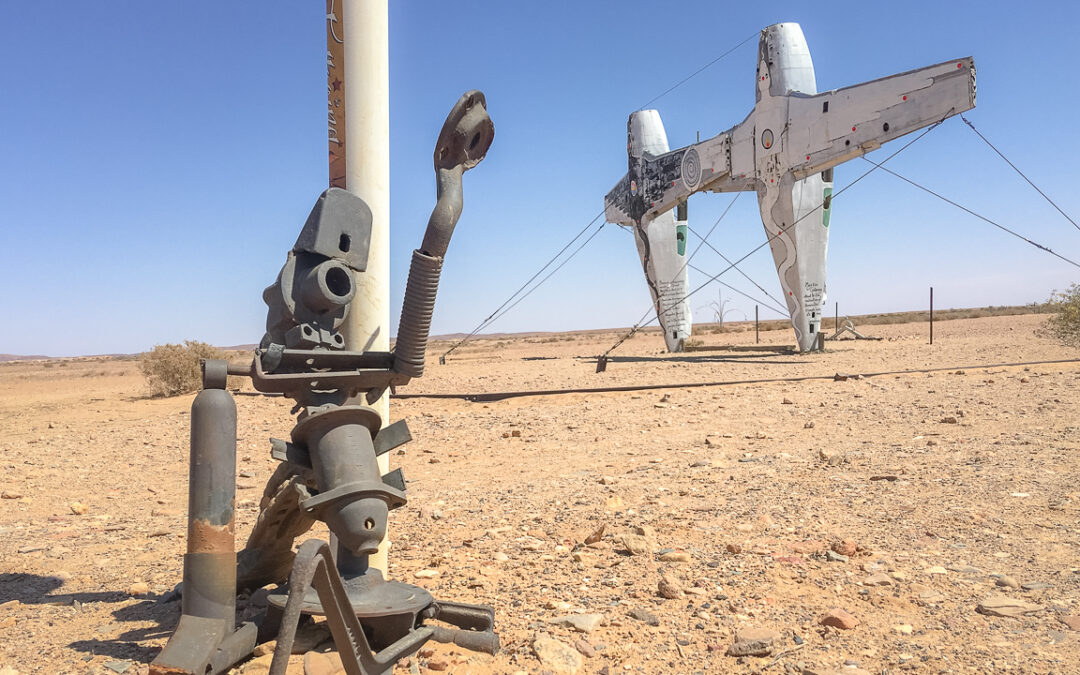
Located west of Marree, this collection of scrap metal sculptures appears almost without warning beside the track. The site is best known for Plane Henge, where two aircraft stand vertically in the desert with their tails buried in the ground.

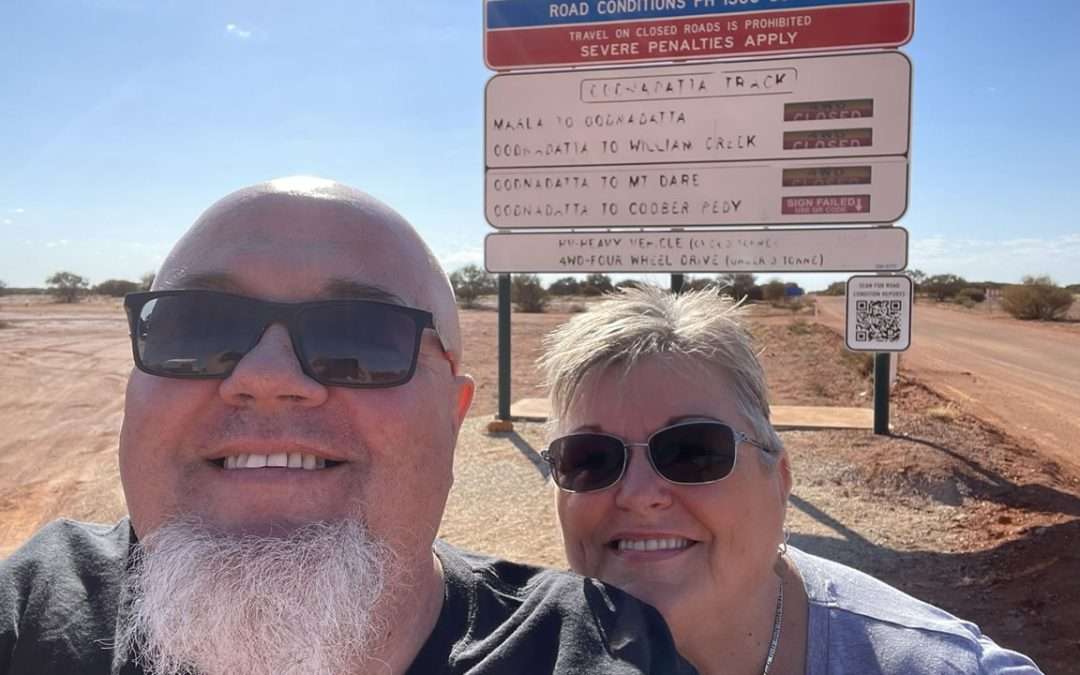
Amanda and I have visited Mutonia Sculpture Park four times, in 2016, 2019, 2022 and 2024. Despite seeing it loads of times we still stop whenever we pass through. The sculptures continue to weather and change, while the remote location makes the site feel different on every visit.

For travellers heading north from Marree, it is one of the first major attractions on the Oodnadatta Track. It has become a popular photo stop and one of the most recognised landmarks in South Australia’s outback.

For more information about the Oodnadatta Track, visit our complete Oodnadatta Track guide.
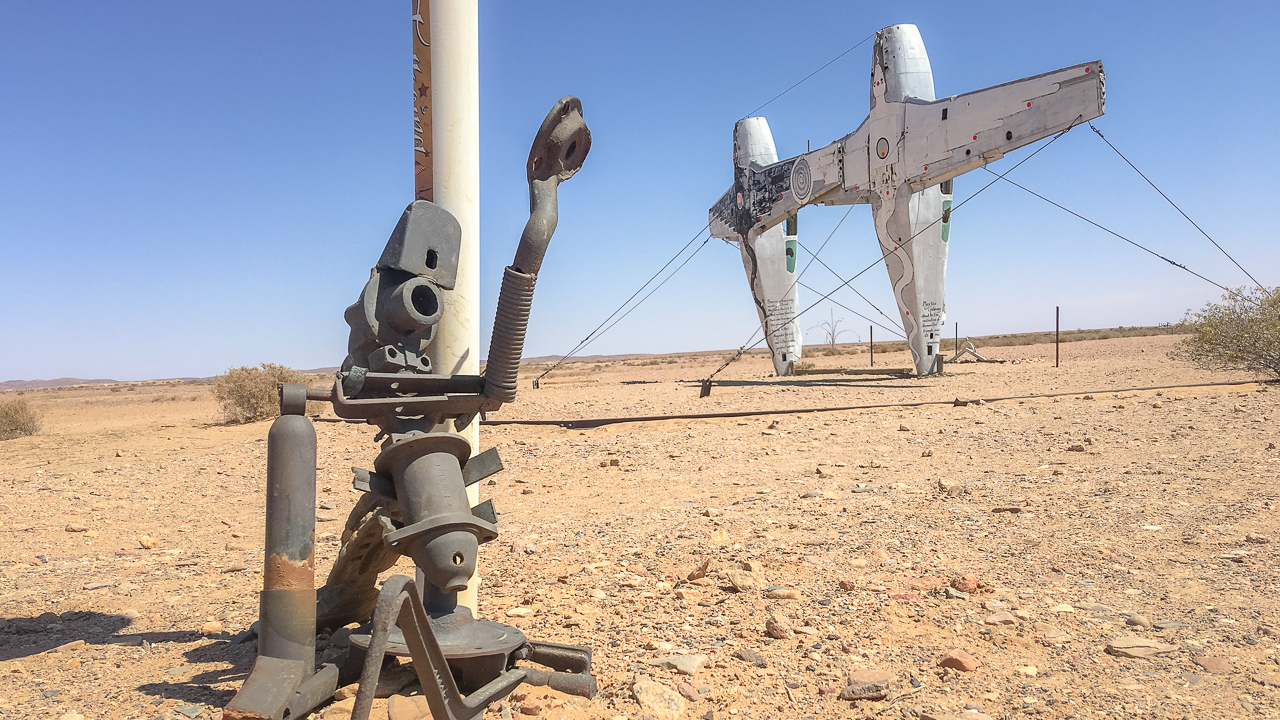
Interesting Sculpture Along The Oodnadatta Track

Interesting Sculpture Along The Oodnadatta Track

Where Is Mutonia Sculpture Park?

The Sculpture Park sits beside the Oodnadatta Track SA near Alberrie Creek, approximately 30 kilometres west of Marree in South Australia.

The site is easy to find. Large sculptures can be seen from the road well before you reach them.

Item Information
Location Oodnadatta Track, near Alberrie Creek
Distance From Marree Approximately 30 km west
Entry Cost Free
Vehicle Access Suitable for most vehicles in dry conditions
Time Required 15 to 45 minutes
Camping Not permitted within the sculpture area

Visitors can pull off the track and walk among the sculptures at their own pace.
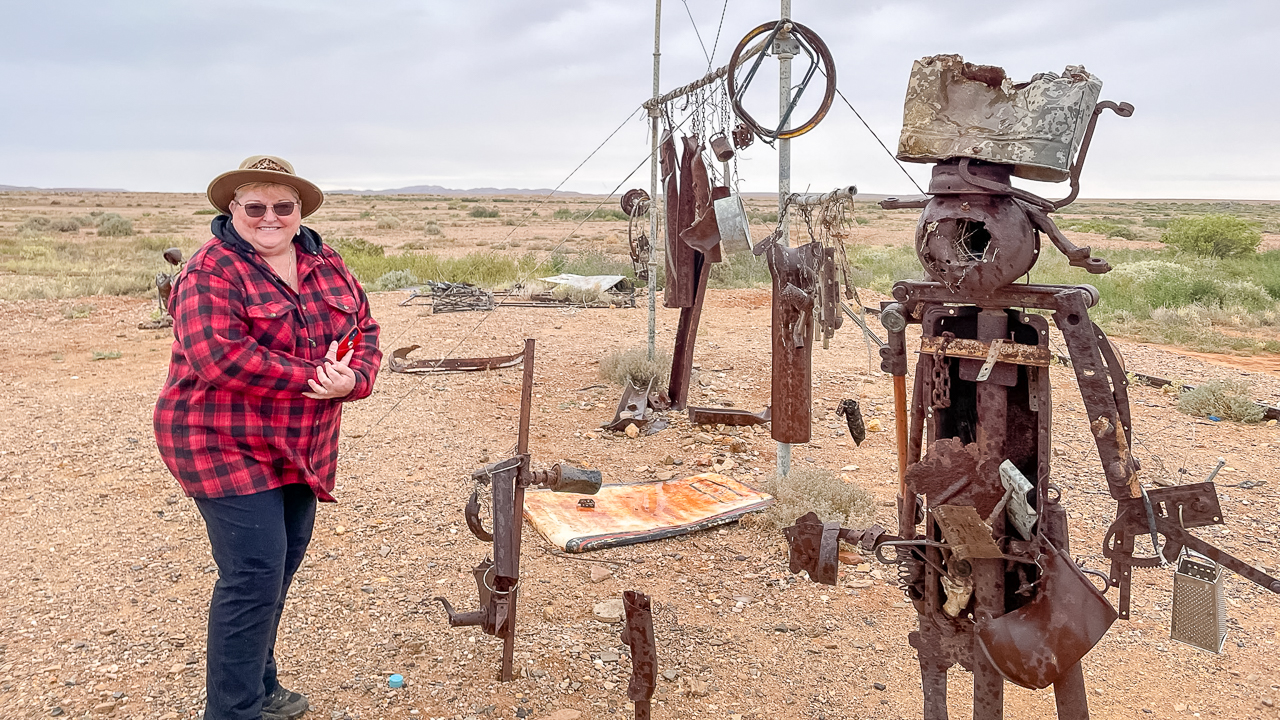
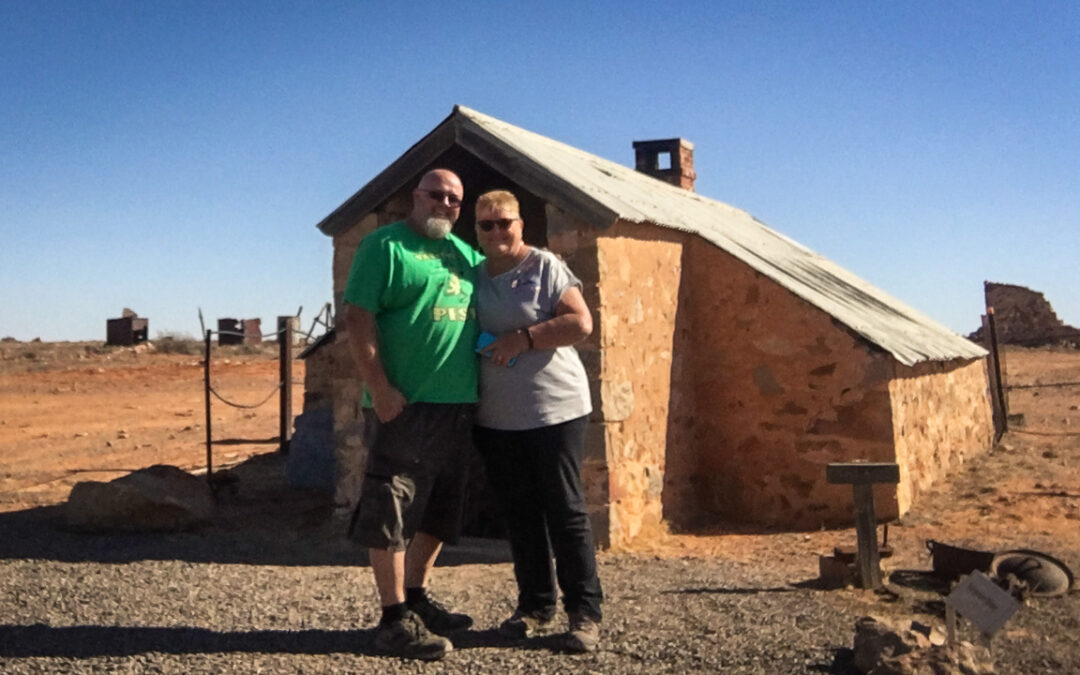
Amanda With A Mate Of Hers

Amanda With A Mate Of Hers

The Story Behind Mutonia Sculpture Park

The park was created by artist Robin Cooke, often known as “Mutoid”. Using recycled vehicles, machinery and scrap metal, he built a collection of large sculptures in the South Australian outback beginning around 2000.

Unlike many art installations there are very few signs explaining the works. Instead you’re free to interpret them however you choose. Personally I have no idea what many of them are or are meant to be be – but I know they’re cool and that I like them!

The result is a roadside attraction that feels completely different from most historic sites along the Oodnadatta Track. Nearby attractions such as the Old Ghan railway ruins and telegraph stations focus on outback history. The Sculpture Park focuses on creativity and recycled materials.
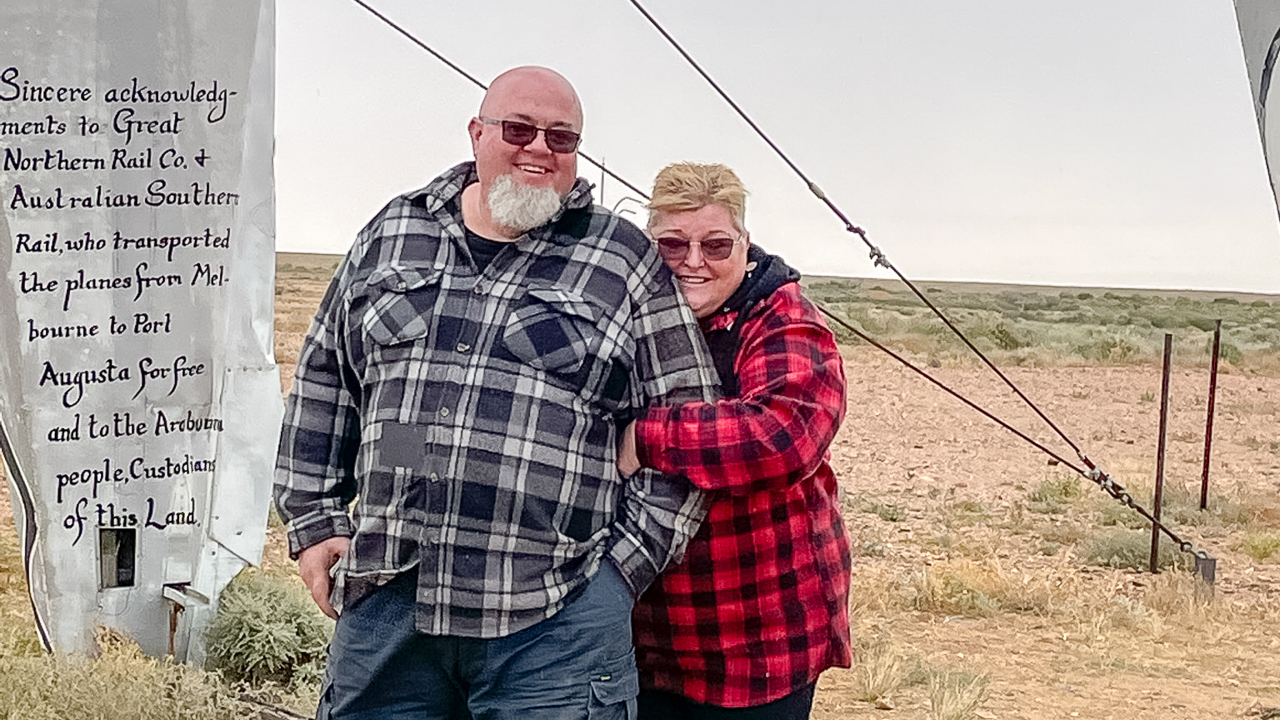
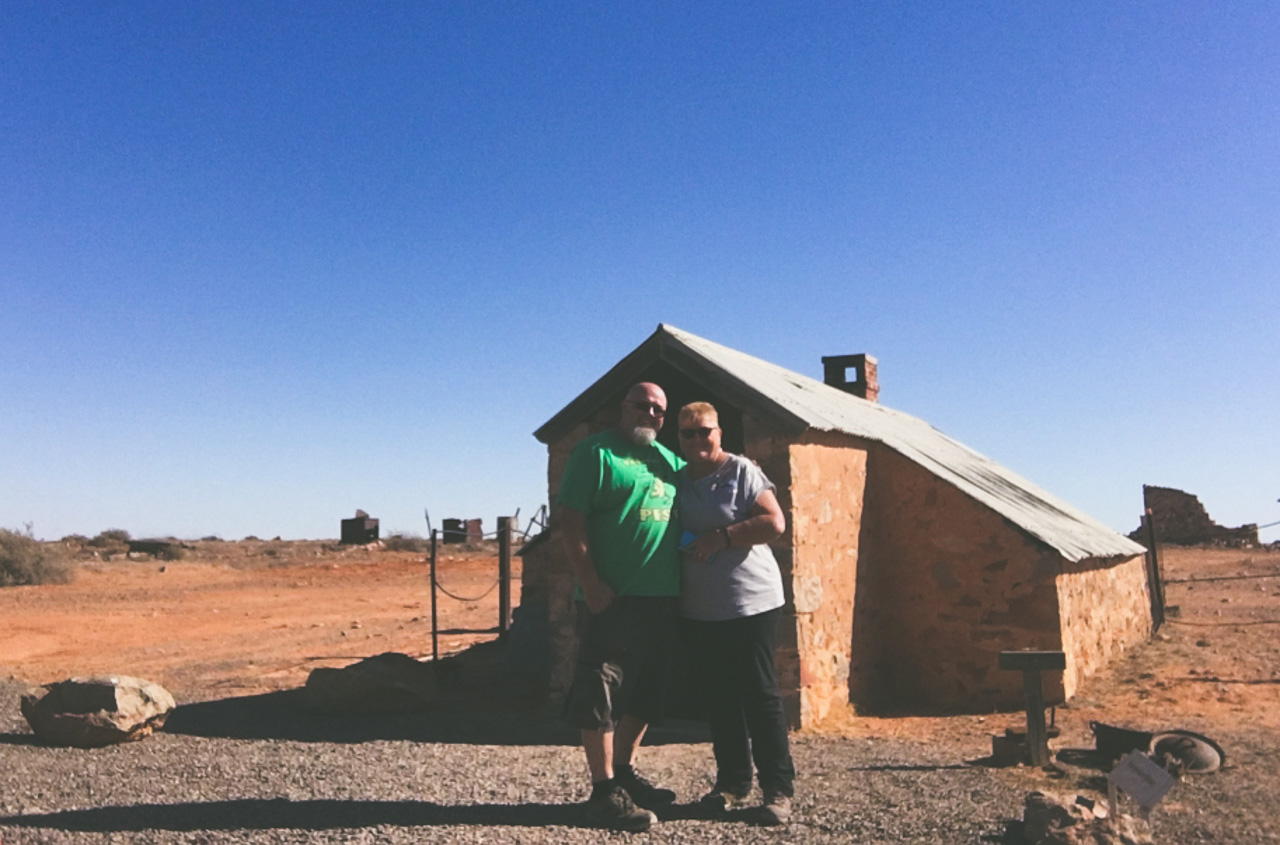
Dave And Amanda At Mutonia Sculpture Park On A Cold Day

Dave And Amanda At Mutonia Sculpture Park On A Cold Day

What Is Plane Henge?

Plane Henge is the most photographed feature within the Sculpture Park.

The sculpture consists of two aircraft positioned vertically in the ground, creating a visual reference to England’s Stonehenge. The polished aluminium aircraft stand high above the surrounding desert and can be seen from a considerable distance.

For many travellers, Plane Henge is the reason they stop.

The structure works particularly well for photography because the aircraft contrast sharply against the flat desert environment. Sunrise and late afternoon usually provide the best lighting.

What Else Can You See?

Although Plane Henge receives most of the attention, there are many other sculptures scattered throughout the site.

Some of the more recognisable works include:

  • The Ghan Hover Bus
  • Giant animal sculptures
  • Wind powered installations
  • Scrap metal figures
  • Vehicle based artworks
  • Mechanical sculptures created from recycled materials

Because the sculptures are exposed to the weather, some pieces have changed noticeably over the years. We noticed several differences between our 2016 visit and our most recent stop in 2024.

That ongoing change is part of what keeps the site interesting.
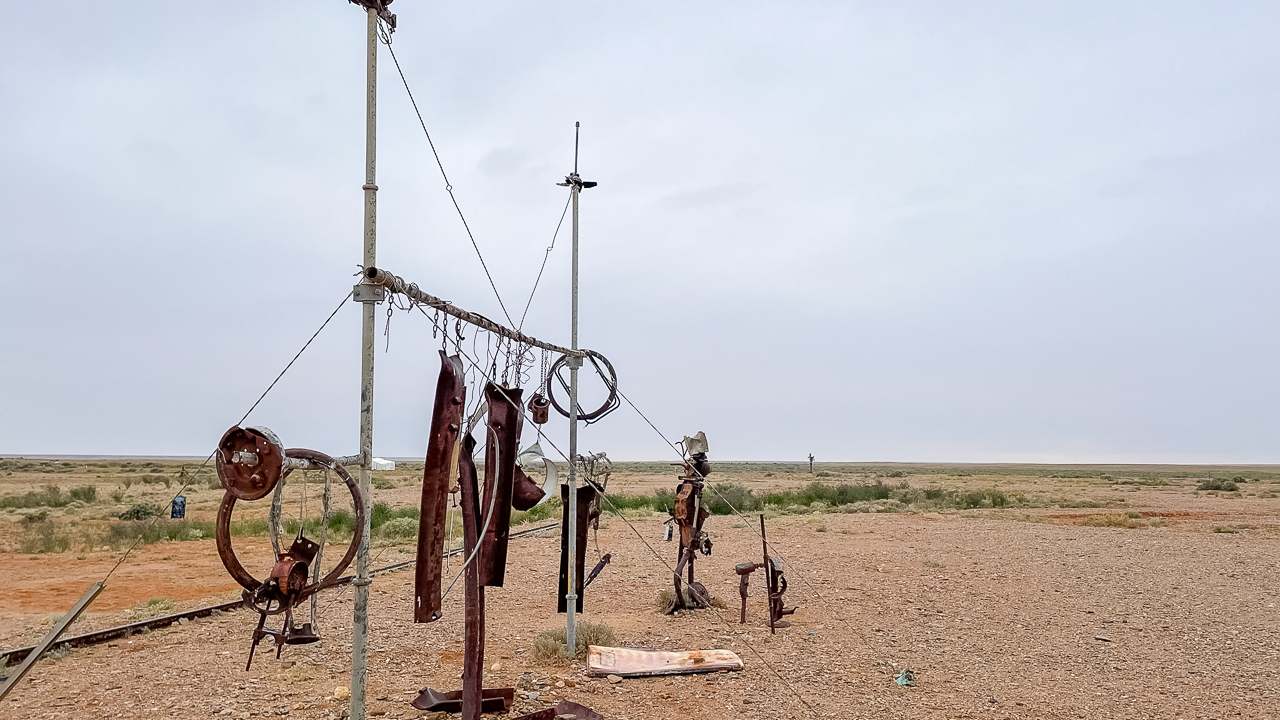
Hanging Out The Washing On The Oodnadatta Track

Hanging Out The Washing On The Oodnadatta Track

Why Mutonia Sculpture Park Stands Out

The Oodnadatta Track contains plenty of historic attractions. However, the Sculpture Park offers something completely different.

Historic Attractions Mutonia Sculpture Park
Focus on outback history Focus on recycled art
Telegraph stations Scrap metal sculptures
Railway ruins Creative installations
Historical interpretation Open interpretation
Educational focus Visual and artistic focus

As a result, many travellers remember the site long after they have completed the track.

The contrast between industrial scrap metal and the surrounding desert creates a scene that is difficult to forget.

Geocaching At Mutonia Sculpture Park

If you enjoy geocaching, keep an eye out while visiting.

Amanda and I located a geocache hidden at Mutonia Sculpture Park during our 2024 trip. Finding it added another layer of fun to an already interesting stop.

Geocaches can change over time, so it is worth checking current listings before you travel.
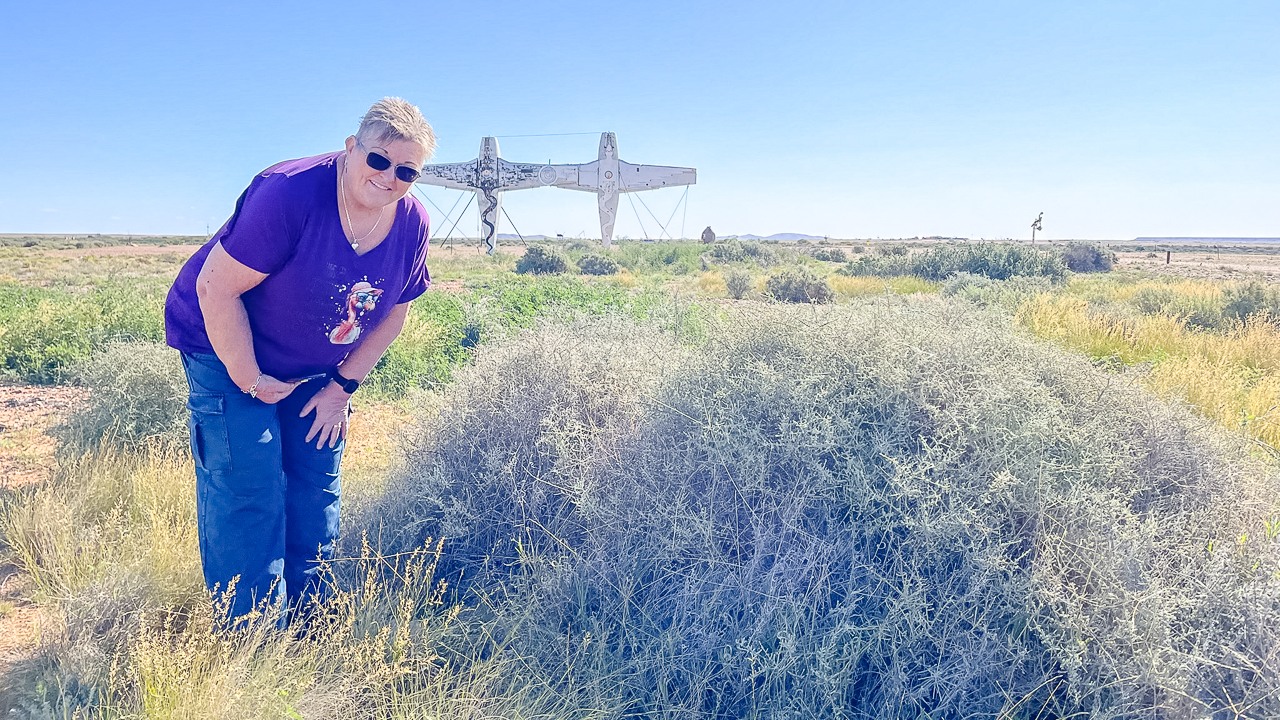
Looking For A Geocache At Mutonia Sculpture Park On The Oodnadatta Track

Looking For A Geocache At Mutonia Sculpture Park On The Oodnadatta Track

Road Conditions And Access

Access depends entirely on Oodnadatta Track conditions.

In dry weather, most caravans, motorhomes, SUVs and four wheel drives can reach the site without difficulty. After rain, however, road closures are common across the region and conditions can change quickly.

Before leaving Marree, check current South Australian outback road reports.
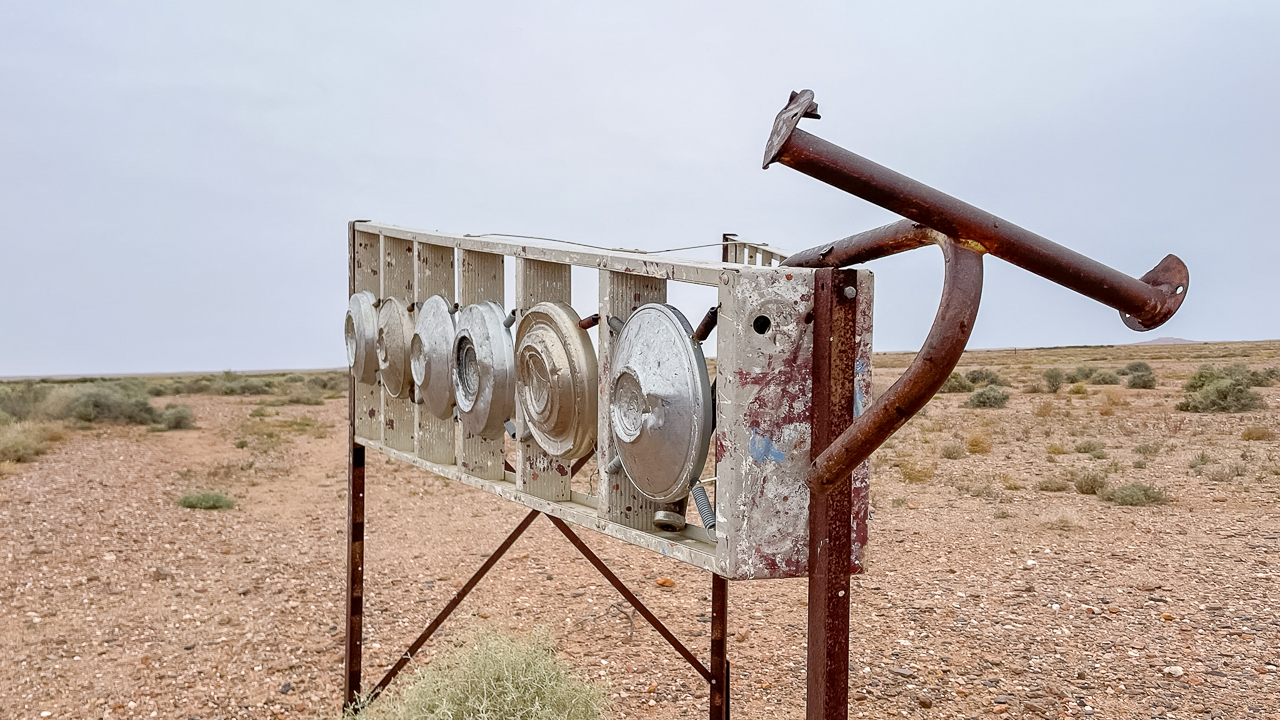
Hubcap Xylophone At Multonia Sculpture Park

Hubcap Xylophone At Multonia Sculpture Park

A few simple tips include:

  • Reduce tyre pressures on corrugated sections.
  • Carry drinking water.
  • Drive to the conditions.
  • Watch for livestock and wildlife.
  • Avoid travelling immediately after heavy rain.

These are the same precautions we follow whenever travelling the Oodnadatta Track.
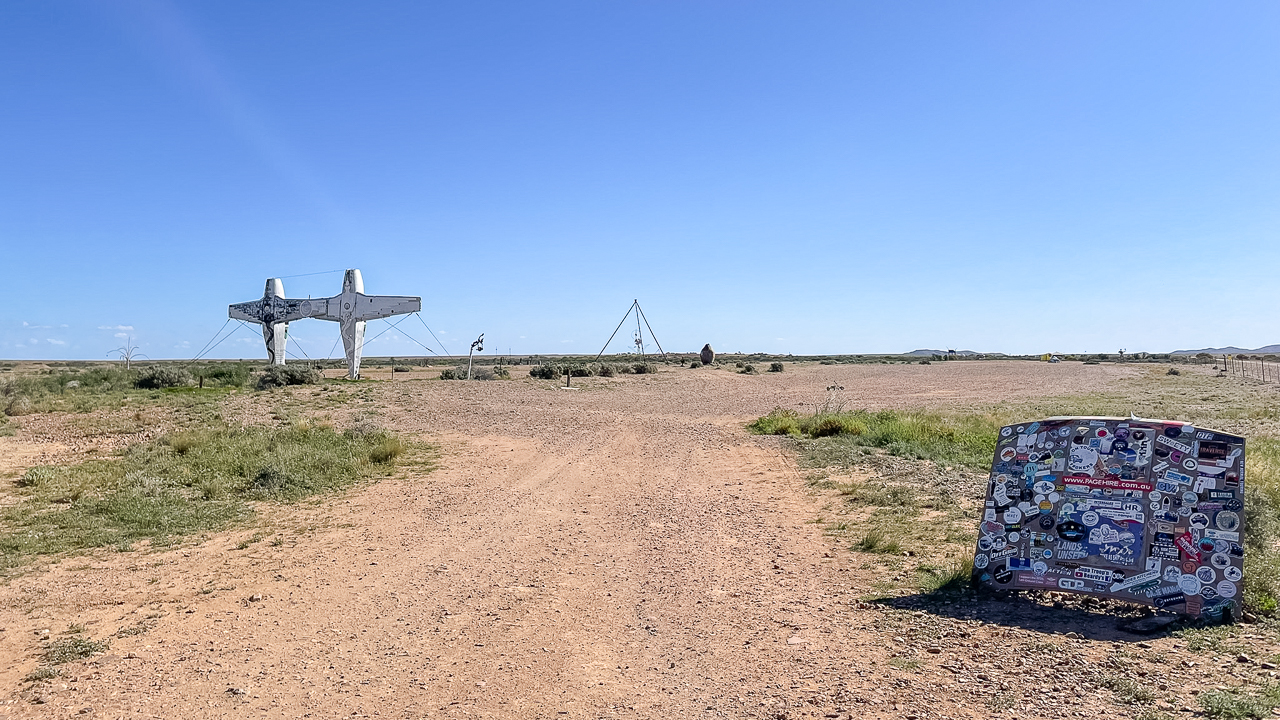
Plane Henge On The Oodnadatta Track

Plane Henge On The Oodnadatta Track

Photography Tips

Mutonia Sculpture Park is one of the most photogenic locations on the track.

For better photos:

  • Visit early or late in the day.
  • Use wide angle shots to capture scale.
  • Include people for perspective.
  • Photograph Plane Henge from several angles.
  • Capture the sculptures against sunrise or sunset skies.

The site is also popular with drone photographers where regulations allow.

Is Mutonia Sculpture Park Worth Visiting?

Yes. Most definitely yes.

The stop requires very little time and costs nothing to visit. Yet it offers something completely different from the rest of the Oodnadatta Track.

After four visits, Amanda and I still pull over every time we pass through. The location provides a good break from driving and a chance to walk around before continuing north or south.

If you’re travelling the Oodnadatta Track, Mutonia Sculpture Park deserves a place on your itinerary. Between Plane Henge, the recycled sculptures and the remote setting, it remains one of the most memorable roadside attractions in outback South Australia.
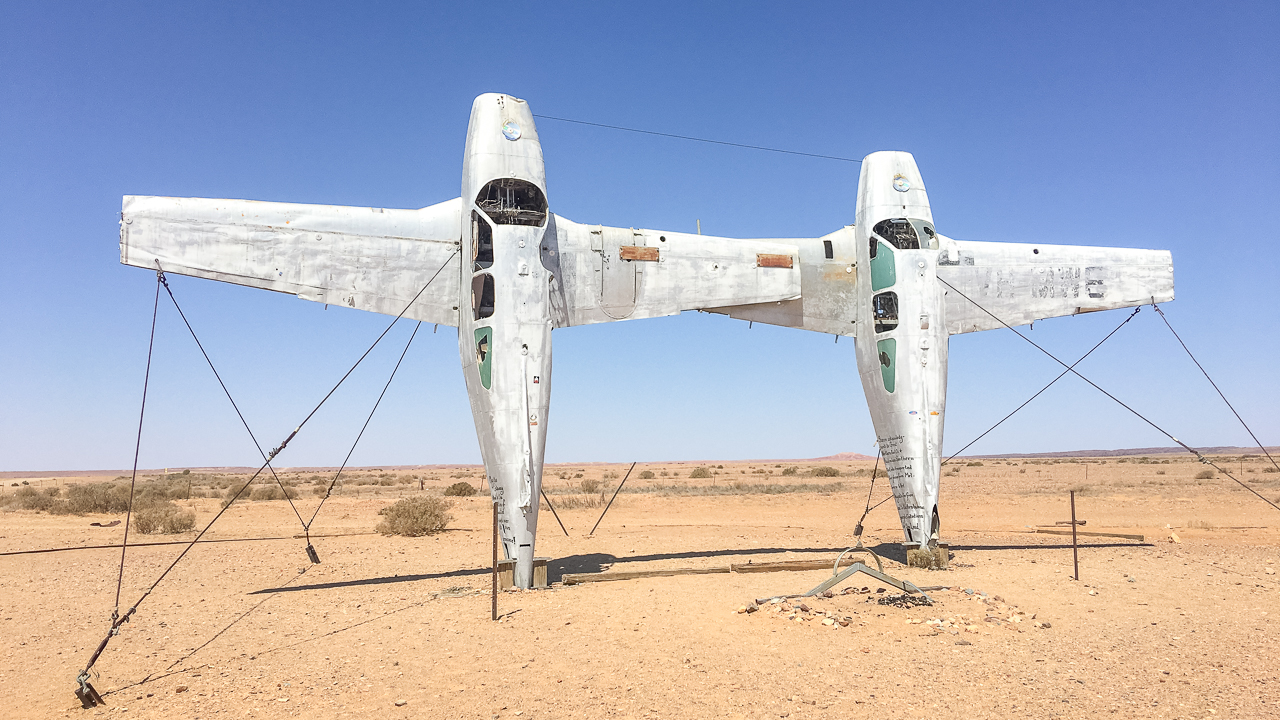
The Iconic Plane Henge On The Oodnadatta Track

The Iconic Plane Henge On The Oodnadatta Track

Visitor Information

Attraction: Mutonia Sculpture Park & Plane Henge

Location: Oodnadatta Track, approximately 30 km west of Marree, South Australia

Entry Fee: Free

Best Time To Visit: April to September

Suitable For: Caravans, camper trailers, motorhomes, four wheel drives and day visitors

Allow: 15 to 45 minutes
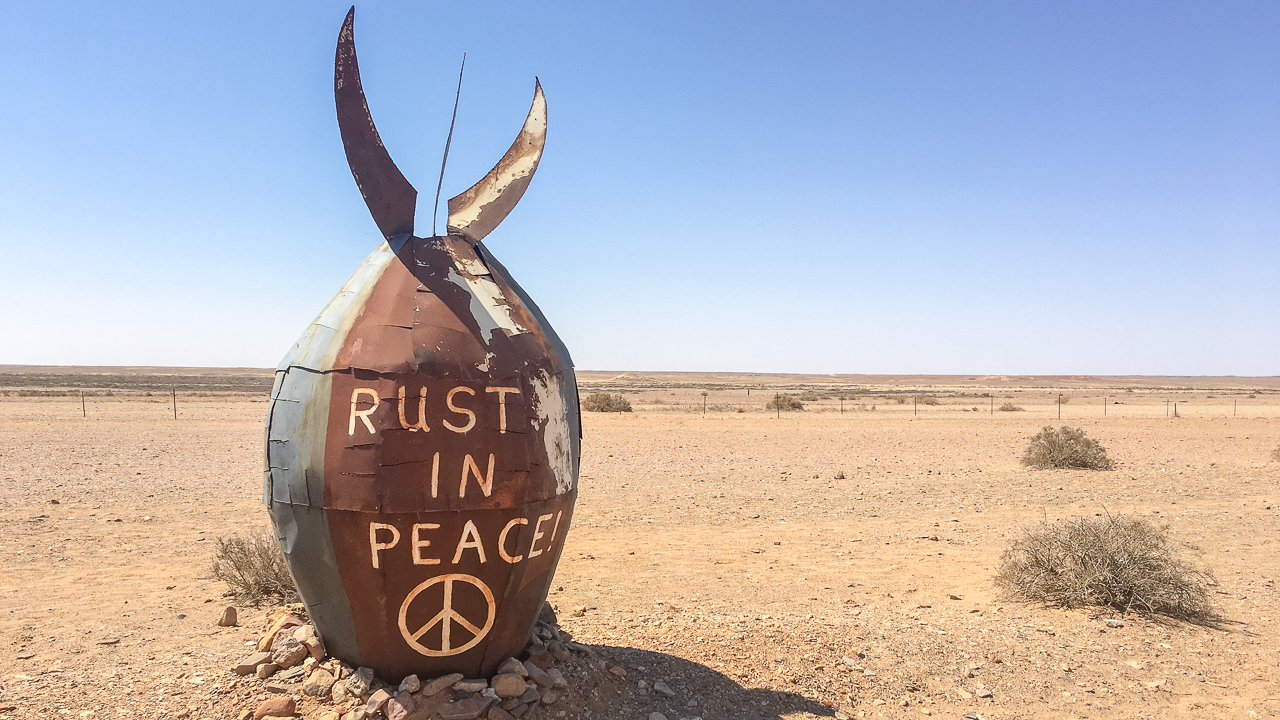
I like This One At Multonia Sculpture Park

I like This One At Multonia Sculpture Park

FAQs – Frequently Asked Questions About Mutonia Sculpture Park

Where Is Mutonia Sculpture Park Located?

Mutonia Sculpture Park is located beside the Oodnadatta Track near Alberrie Creek in South Australia. It sits approximately 30 kilometres west of Marree and is easy to find thanks to the large sculptures visible from the road.

Is There An Entry Fee For Mutonia Sculpture Park?

No. Mutonia Sculpture Park is free to visit. Travellers can stop, park safely off the road and walk around the sculpture area at their own pace.

What Is Plane Henge?

Plane Henge is the most famous sculpture at Mutonia Sculpture Park. It features two aircraft positioned vertically in the ground, creating a visual reference to Stonehenge. It has become one of the most photographed attractions on the Oodnadatta Track.

How Much Time Should I Allow To Visit Mutonia Sculpture Park?

Most visitors spend between 15 and 45 minutes at the site. If you enjoy photography or like taking a closer look at the sculptures, you may want to allow a little longer.

Can I Visit Mutonia Sculpture Park With A Caravan?

Yes. In dry conditions, caravans, camper trailers and motorhomes can usually access the site without any issues. Road conditions on the Oodnadatta Track can change after rain, so always check current road reports before travelling.

Who Created Mutonia Sculpture Park?

The sculpture park was created by artist Robin Cooke, also known as "Mutoid". He used recycled vehicles, machinery and scrap metal to build the collection of sculptures found at the site today.

Is Mutonia Sculpture Park Suitable For Children?

Yes. Children often enjoy walking around the large sculptures and spotting different shapes and designs. As with any outback location, supervision is important due to uneven ground and the remote setting.

Can You Camp At Mutonia Sculpture Park?

Camping is generally not permitted within the sculpture area itself. Travellers will find a range of camping options around Marree and along sections of the Oodnadatta Track.

What Is The Best Time Of Year To Visit Mutonia Sculpture Park?

The cooler months from April to September are usually the most comfortable for visiting. Summer temperatures in the region can be extremely high, particularly from December to February.

Is Mutonia Sculpture Park Worth Visiting?

Yes. Mutonia Sculpture Park is one of the most unusual attractions on the Oodnadatta Track. The combination of Plane Henge, recycled metal sculptures and the remote desert setting makes it a memorable stop for most travellers.

Are There Geocaches At Mutonia Sculpture Park?

There has been at least one geocache hidden at Mutonia Sculpture Park. Amanda and I found a geocache there during our 2024 visit. Cache locations can change over time, so check current geocaching listings before your trip.

What Other Attractions Are Near Mutonia Sculpture Park?

Popular nearby attractions include Marree, Alberrie Creek, Lake Eyre viewpoints, the Old Ghan Railway heritage sites and the many historic locations found along the Oodnadatta Track. Many travellers combine these attractions into a single day of sightseeing.

Old Peake Telegraph Station: Comprehensive Guide (2026)

Old Peake Telegraph Station: Comprehensive Guide (2026)

Old Peake Telegraph Station: Comprehensive Guide (2026)

Visiting the Old Peake Telegraph Station on the Oodnadatta Track? Here’s what to expect, how to get there, and why it’s worth the detour.

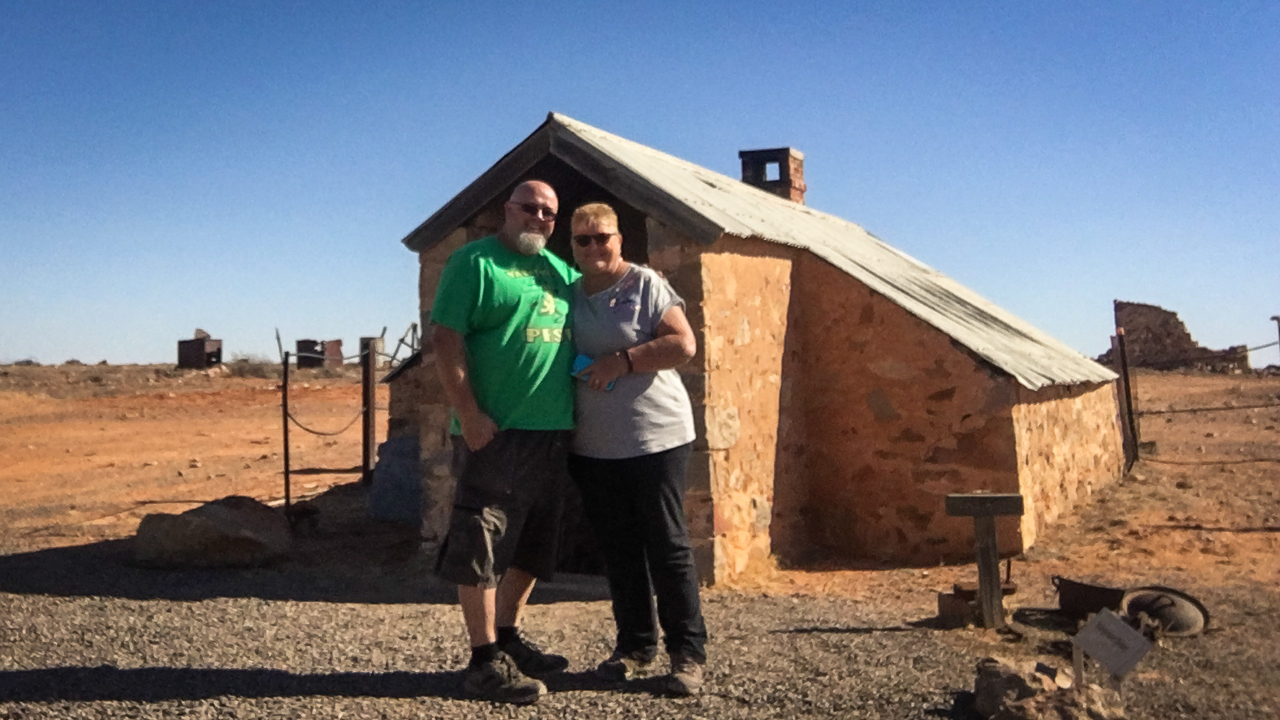
Amanda and I have visited the Old Peake Telegraph Station twice now. Once in 2016 and again in 2022. Both times the peace and quiet was surprising. For a place that at one time was obviously very busy it now stands silent. There’s no traffic noise, no phone signal and no crowds. Just old stone, rusted iron and a story that was a part of how Australia talked to the rest of the world.

If you’re planning a lap of the Oodnadatta Track in South Australia this old repeater station deserves a stop. Below we’ll cover its history, how to get there, what changed between our visits and whether the detour is worth your time and fuel (spoiler alert – it is).

A Short History Of The Peake Telegraph Station

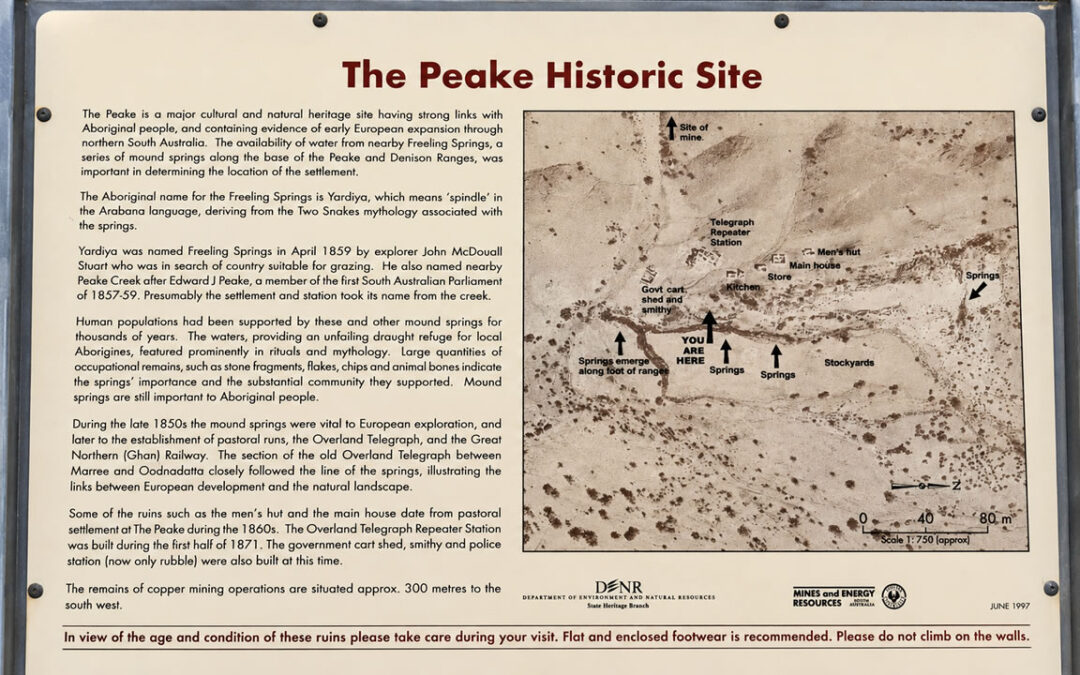
The Overland Telegraph Line linked Adelaide to Darwin in 1872, connecting Australia to London by cable for the first time. Before this news took months to arrive by ship. After the line opened a message could reach London in about a day. That’s the kind of leap this project represented.

The Peake was one of twelve repeater stations built along the route. Workers used around 36,000 poles and 3,200 kilometres of wire to complete the whole line according to the State Library of South Australia. The site sits on land explorer John McDouall Stuart passed through in 1859. He named the nearby creek after parliamentarian Edward John Peake.

Before the telegraph arrived the area had already served as a pastoral run since the late 1850s. Once the railway line shifted the main route in the 1890s the station lost its purpose. Operations later moved to William Creek and the buildings were left to the weather.

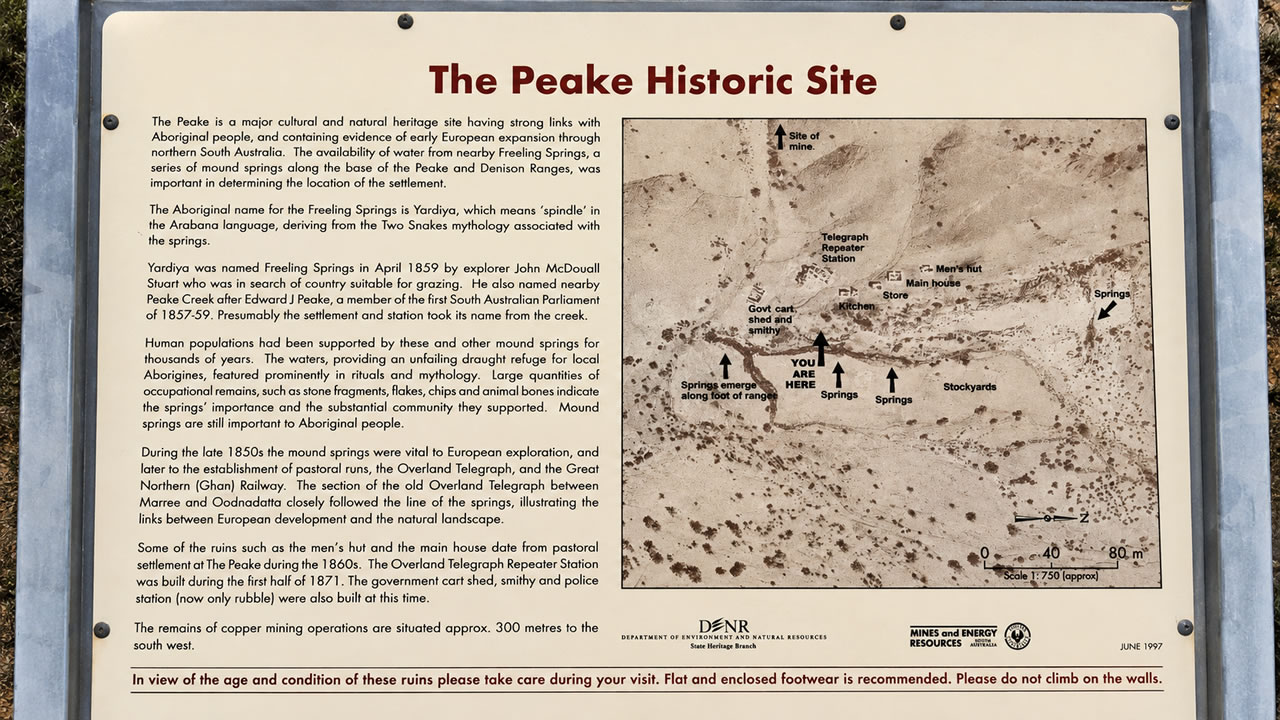
The Peake Historic Site Information Board

The Peake Historic Site Information Board

Old Peake Telegraph Station Today

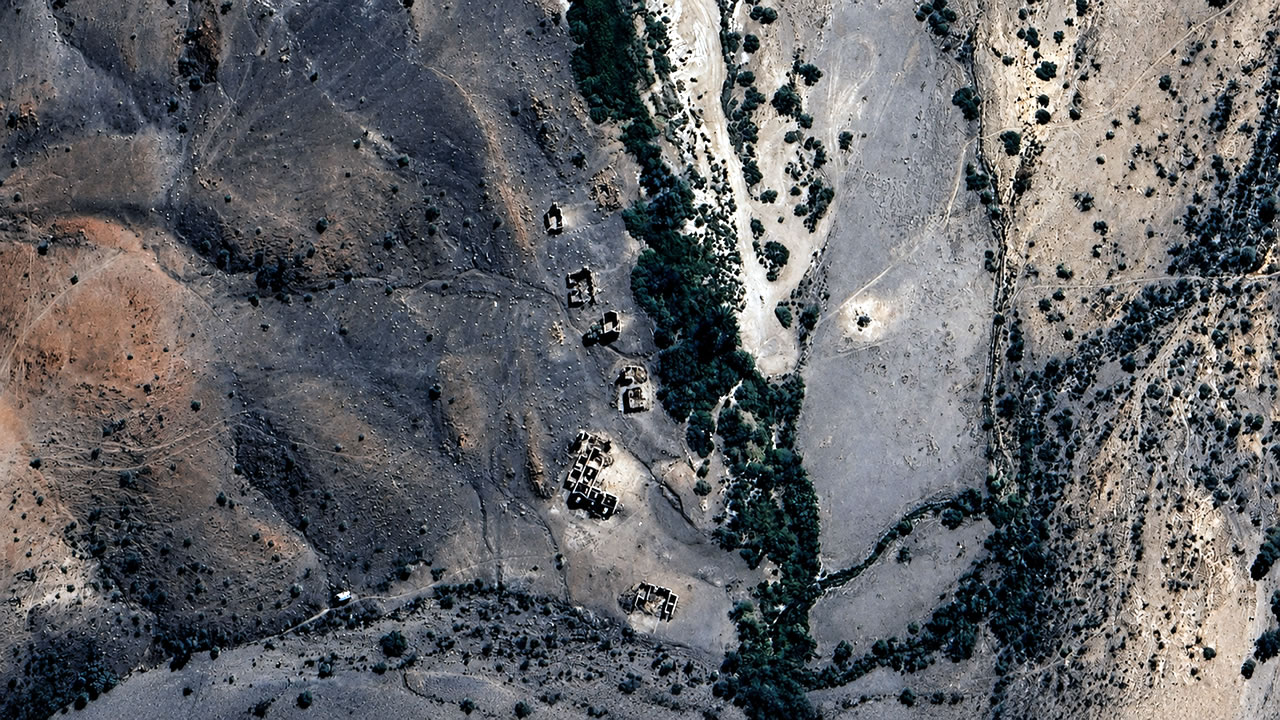
Heritage SA has stabilised and partly restored the stone ruins, according to the Department for Environment and Water. You’ll find the old station buildings, the remains of a small settlement and the nearby Copper Top mine.

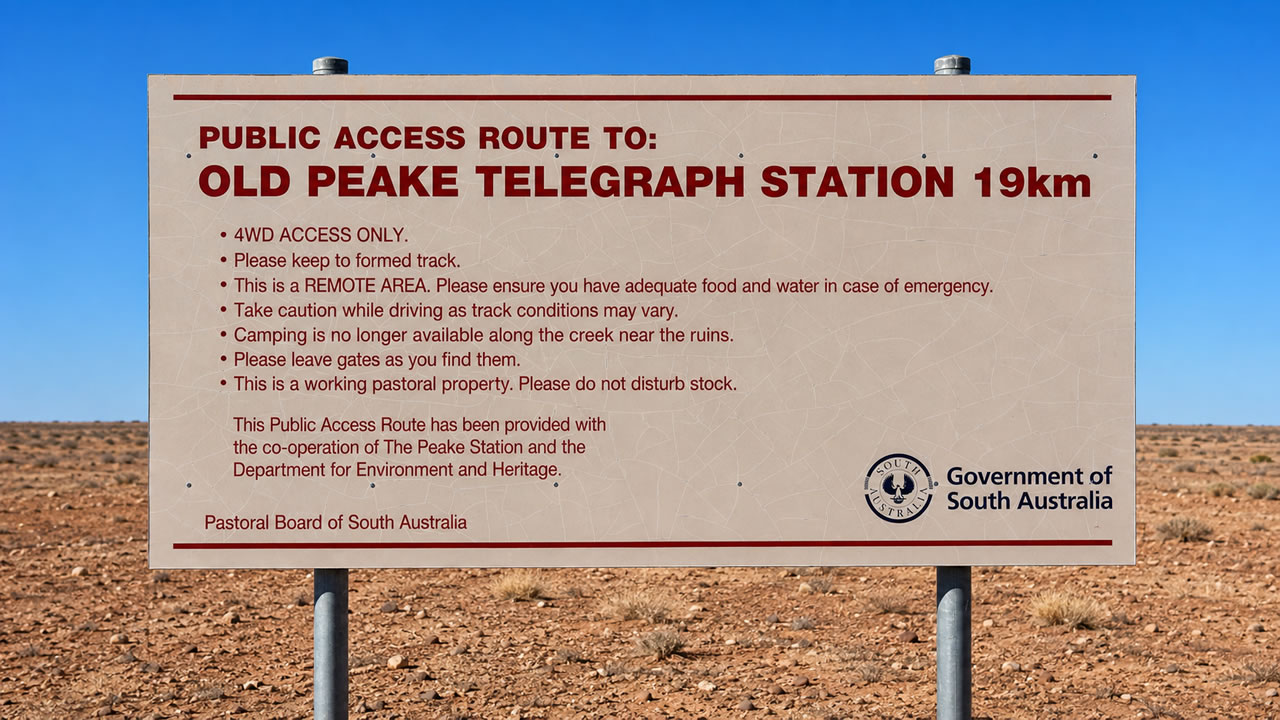
Camping is no longer permitted at the site itself – so plan to visit as a day stop rather than an overnight base. This is a change worth noting if you’re using an older guidebook that mention camping there.

Walks At The Old Peake Telegraph Station

  • The Copper Top Smelter and Mine Walk walking track follows the creek line past the ruins. This walk took us about 2 hours to complete however we’re not exactly prime physical specimens these days!
  • The Settlement Walk takes you through the ruins of the Overland Telegraph Station and pastoral station. Building are marked with interpretive signage (allow about an hour).
  • The Creek And Cemetery Walk allows you to easily explore the plants along the creek (usually dry) and ends up with a walk through the small cemetery (allow about 45 mins)

Wear comfortable walking shoes, a hat and bring plenty of drinking water if going on any of the walks.

Comparing Our 2016 And 2022 Visits

We noticed a few differences between our two trips. Nothing dramatic, but useful if you’re weighing up whether a return visit is worthwhile.

Detail 2016 Visit 2022 Visit
Access track condition Rough, corrugated, slow going Similarly rough, some fresh grading in patches (could have been my imagination too!)
Signage and interpretation Minimal Improved interpretive signs at the ruins
Camping Informal camping still common nearby Camping at the site no longer allowed
Mobile signal None None
Time needed on site About 90 minutes Closer to 3 hours, with the mine walk included

The core experience hasn’t shifted much. Stone walls, red dirt, and a sense of scale that’s hard to get from photos alone.

Getting There From The Oodnadatta Track

The turn-off sits roughly 111 kilometres north of William Creek, or about 95 kilometres south of Oodnadatta, depending which direction you’re travelling. From there, a side track runs east for somewhere between 16 and 25 kilometres to reach the ruins, with sources giving slightly different distances. Either way, budget close to an hour each way.

This side track is 4WD only. High clearance matters here, since the track twists through the base of the Denison Ranges with several creek crossings along the way. A caravan or camper trailer will slow you down considerably, so many travellers unhitch before heading in if they can find a safe spot to leave their rig.

Before setting off, check current conditions. Outback roads in this part of South Australia can close quickly after rain. Call 1300 361 033 for the automated road report, or check the SA outback roads conditions page before you commit fuel and time to the detour.

Old Peake Telgraph Station Public Access Route Sign

Old Peake Telgraph Station Public Access Route Sign

Old Peake Telegraph Station Versus Algebuckina Bridge

Travellers heading up the Oodnadatta Track often compare the Peake ruins with Algebuckina Bridge, another well known stop further north. Both sit just off the main track, and both connect to the old Ghan railway era. Here’s how they differ.

Feature Old Peake Telegraph Station Algebuckina Bridge
Detour length 16 to 25 km, 4WD only On the main track, minimal detour
Time on site 1.5 to 2 hours 30 to 45 minutes
Camping allowed No Yes, near the waterhole
Historical focus Telegraph repeater station and mining Railway engineering
Difficulty Slow, rough, best done unhitched Easy, accessible to most vehicles

If your time is short, Algebuckina is the easier stop. If you want a quieter, more remote experience and don’t mind the extra driving, the Peake ruins offer something the main track doesn’t. To be honest though if you can then visit both. Algebuckina Bridge has fantastic free camping available, so if it was me planning then I’d visit Old Peake Telegraph Station and camp at Algebuckina Bridge.

Old Peake Telegraph Station

Old Peake Telegraph Station

Tips For Caravanners And Campers In May 2026

May sits within the recommended travel window for the Oodnadatta Track, running roughly from May through September. Daytime temperatures are far more manageable than the summer months, when conditions above 45°C are common and can turn dangerous if your vehicle breaks down.

A few points to keep in mind before you go:

  • Carry extra water beyond what you think you’ll need. There’s no fuel or water at the Peake site.
  • Reduce tyre pressure before the side track, and reset it once you’re back on the main road.
  • Fuel up at William Creek or Oodnadatta, since both towns sit well apart from each other.
  • Pack a satellite communication device or personal locator beacon. Mobile coverage does not reach this stretch of the track.
  • Leave your caravan at a safe pull off spot before tackling the access road, unless you’re confident with rough towing.

Final Thoughts

The Old Peake Telegraph Station won’t suit every itinerary. It takes time, a capable vehicle, and a bit of patience with corrugations. In return, you get a genuine slice of colonial era engineering sitting quietly in the desert, largely untouched by tourism infrastructure.

Amanda and I keep returning to places like this because they change slowly enough that each visit still feels worth the drive. Six years between our two trips, and the ruins told the same story, just with a little more signage to help along the way.

FAQs – Frequently Asked Questions About Old Peake Telegraph Station

Is the Old Peake Telegraph Station worth visiting?

Yes. If you're interested in outback history, the Overland Telegraph Line, or remote heritage sites, the Old Peake Telegraph Station is one of the most interesting detours on the Oodnadatta Track. The restored ruins, walking trails and quiet location provide a very different experience from many of the track's more popular stops.

Can you camp at the Old Peake Telegraph Station?

No. Camping is no longer permitted at the site. Visitors should plan to explore the ruins and walking tracks as a day trip. Many travellers choose to camp elsewhere along the Oodnadatta Track, such as near Algebuckina Bridge.

Do I need a 4WD to visit Old Peake Telegraph Station?

A high-clearance 4WD is strongly recommended. The access road is rough, includes creek crossings and can be heavily corrugated. Many travellers leave their caravan or camper trailer behind and visit the site unhitched.

How far is Old Peake Telegraph Station from the Oodnadatta Track?

The turn-off is approximately 111 km north of William Creek and 95 km south of Oodnadatta. From the turn-off, the ruins are reached via a side track that is between 16 km and 25 km long, depending on the source. Allow close to an hour each way for the drive.

How much time should I allow for a visit?

Most visitors should allow at least 1.5 to 3 hours. This gives enough time to explore the ruins and complete one or more of the walking trails. If you plan to do the Copper Top Mine Walk, expect to spend closer to three hours at the site.

Is there mobile phone coverage at Old Peake Telegraph Station?

No. Mobile phone coverage is not available at the site or along much of this section of the Oodnadatta Track. Travellers should carry extra water and consider taking a satellite communication device or personal locator beacon for emergencies.

15 Best Things To Do On The Oodnadatta Track (2026 Guide)
15 Best Things To Do On The Oodnadatta Track (2026 Guide)

15 Best Things To Do On The Oodnadatta Track (2026 Guide)
Looking for the best things to do on the Oodnadatta Track? This 2026 guide covers Lake Eyre, Coward Springs, Strangways Springs, Algebuckina Bridge, camping, geocaching and more.

The Oodnadatta Track is one of Australia’s most popular outback drives. Stretching roughly 620 kilometres between Marree and Marla, the route follows sections of the old Ghan railway through some of South Australia’s most remote country. Many travellers focus on the drive itself. However, there is far more to the track than simply getting from one end to the other.

Amanda and I have travelled the Oodnadatta Track six times between 2016 and 2025. During those trips we have camped beside historic railway bridges, visited remote telegraph stations, soaked in artesian springs and watched Lake Eyre fill with water.

If you are planning a trip in July 2026, these are the attractions and experiences that we believe are worth adding to your itinerary.

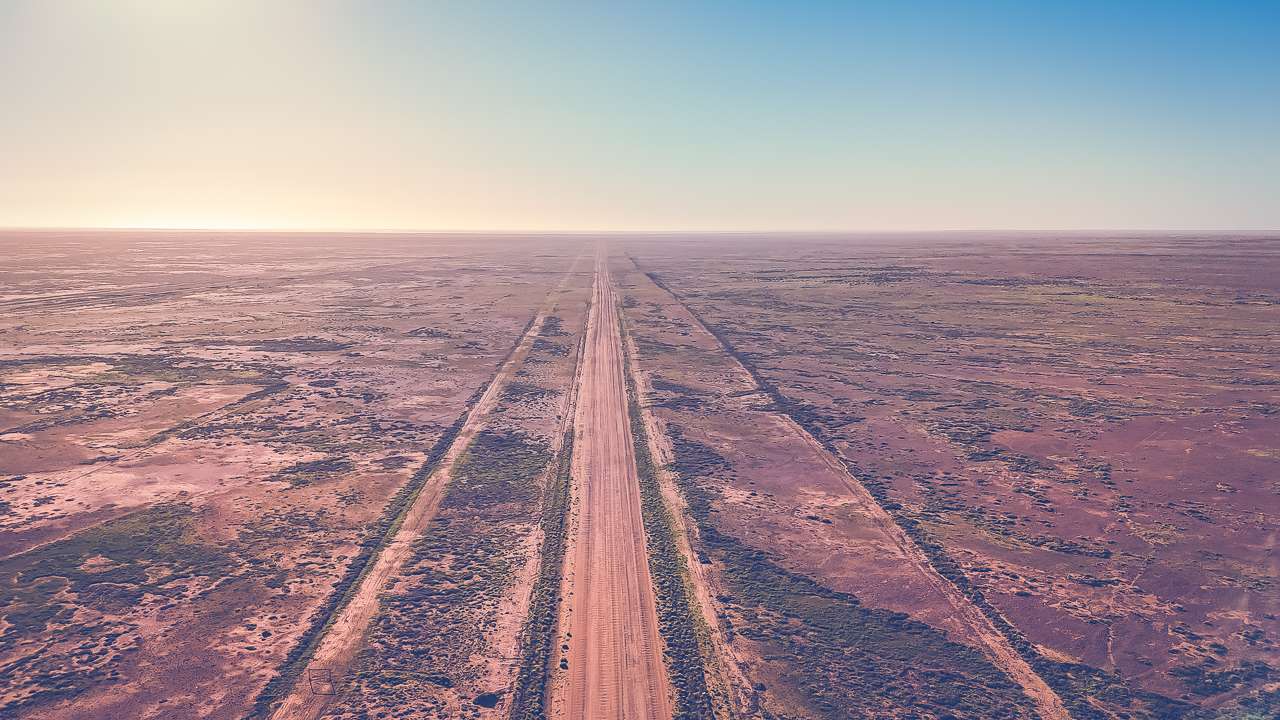
Oodnadatta Track Aerial View Near Curdimurka

Oodnadatta Track Aerial View Near Curdimurka

Quick Guide To The Best Attractions

Attraction Best For Time Needed
Lake Eyre Scenic views Half day to full day
Coward Springs Camping and hot spring Overnight
Algebuckina Bridge Camping, history and photography 30-60 minutes
William Creek Pub, caravan park, fuel and flights 1-2 hours
Farina Historic ruins Half day
The Bubbler Mound springs 90 minutes
Strangways Springs Telegraph history 2-4 hours
Old Peake Telegraph Station Historic ruins 30-60 minutes
Oodnadatta Supplies and history 2 hours
Geocaching Family activity Variable
Old Ghan Railway Ruins Railway history Variable
Marree Pub, caravan park, history, annual camel races, fuel and flights Half day
Trackside Camping Camping Overnight
Mutonia sculpture Park / Plane Henge Random interesting art 30 minutes
Outback Photography Photography Throughout trip

Things To Do On The Oodnadatta Track

Visit Lake Eyre

Lake Eyre remains the biggest attraction associated with the Oodnadatta Track.

When floodwaters reach the lake, travellers can witness one of Australia’s most significant natural events. Water levels have remained a major drawcard in recent years, with many visitors combining the track with a visit to the lake.

William Creek is the main access point for scenic flights. These flights provide the best views of the lake and surrounding salt pans.

If you are planning a visit, check out our Lake Eyre guide for current travel information and trip planning advice.

Stay At Coward Springs

Coward Springs is one of the most popular camping locations on the track.

The campground sits beside a restored railway settlement and includes a spring fed spa. After hours on dusty roads, many travellers appreciate the chance to relax in warm artesian water.

The site also features walking trails, railway displays and shady campsites.

We have stayed here several times and it remains one of our favourite overnight stops on the route.

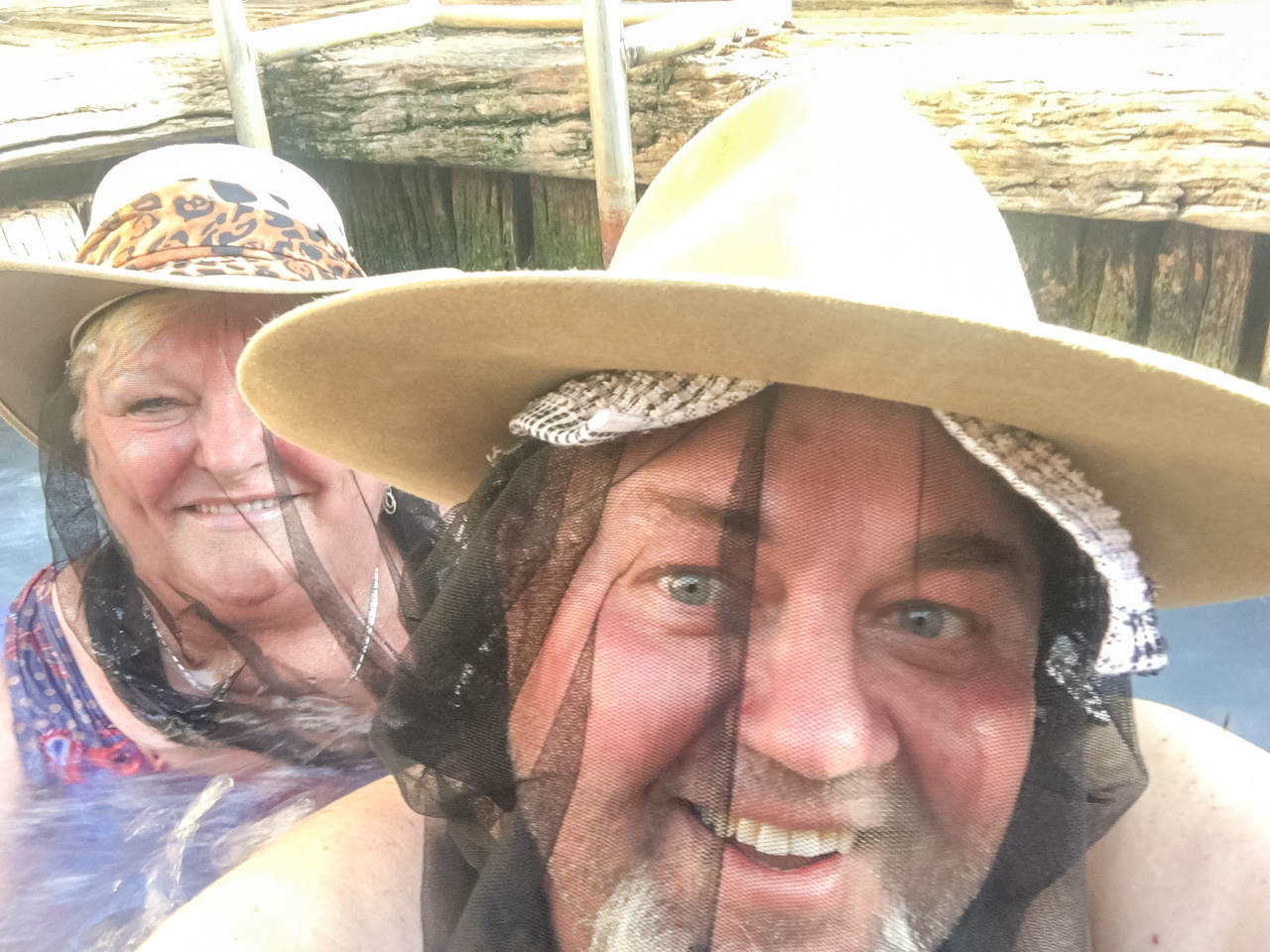
David & Amanda In The Spring At Coward Springs

David & Amanda In The Spring At Coward Springs

Check Out Algebuckina Bridge

Algebuckina Bridge is the longest bridge on the old Ghan railway line.

The bridge crosses the Neales River and has become one of the most photographed structures on the track.

Visitors can walk around the bridge, inspect the railway engineering and camp nearby. Following good rain, the surrounding floodplain can look very different from the dry outback most people expect.

The campground is also one of the best free camping spots on the Oodnadatta Track – if not the best.

Free Camping At Algebuckina Bridge On The Oodnadatta Track

Amanda & I Free Camping At Algebuckina Bridge On The Oodnadatta Track

Stop At William Creek

William Creek may be small, but it is one of the best known settlements in outback South Australia.

Most travellers stop for fuel, meals or a cold drink at the William Creek Hotel. The town is also a major departure point for Lake Eyre scenic flights. They also have a great caravan park with all of the facilities you could possibly need.

Even if you are only passing through, William Creek is worth stopping for.

Explore The Farina Ruins

Farina was once expected to become a major inland settlement.

Today the town is a collection of restored ruins, historic buildings and interpretive displays. Volunteers continue restoration work and operate the well known underground bakery during the tourist season.

Farina provides a fascinating look at the challenges faced by early settlers in the region.

We always camp at Farina and spend many hours checking out the ruins whenever we pass through.

Us Standing Outside The Farina Underground Bakery

Dave & Amanda Standing Outside The Farina Underground Bakery

Visit The Bubbler

The Bubbler is one of the best known mound springs in South Australia.

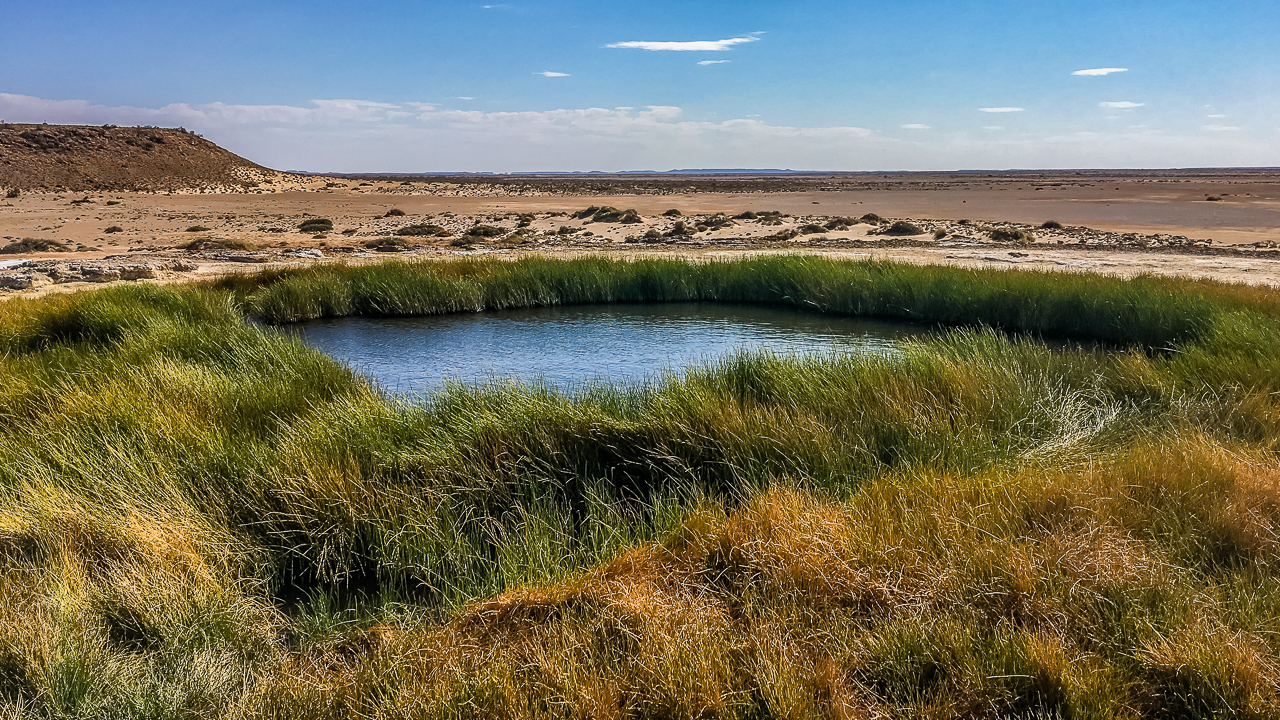
Water rises naturally from the Great Artesian Basin before bubbling to the surface. The spring has created a small wetland environment surrounded by otherwise dry country.

A short stop here provides a good introduction to the mound springs found throughout the region.

For more information, read our Mound Springs guide.

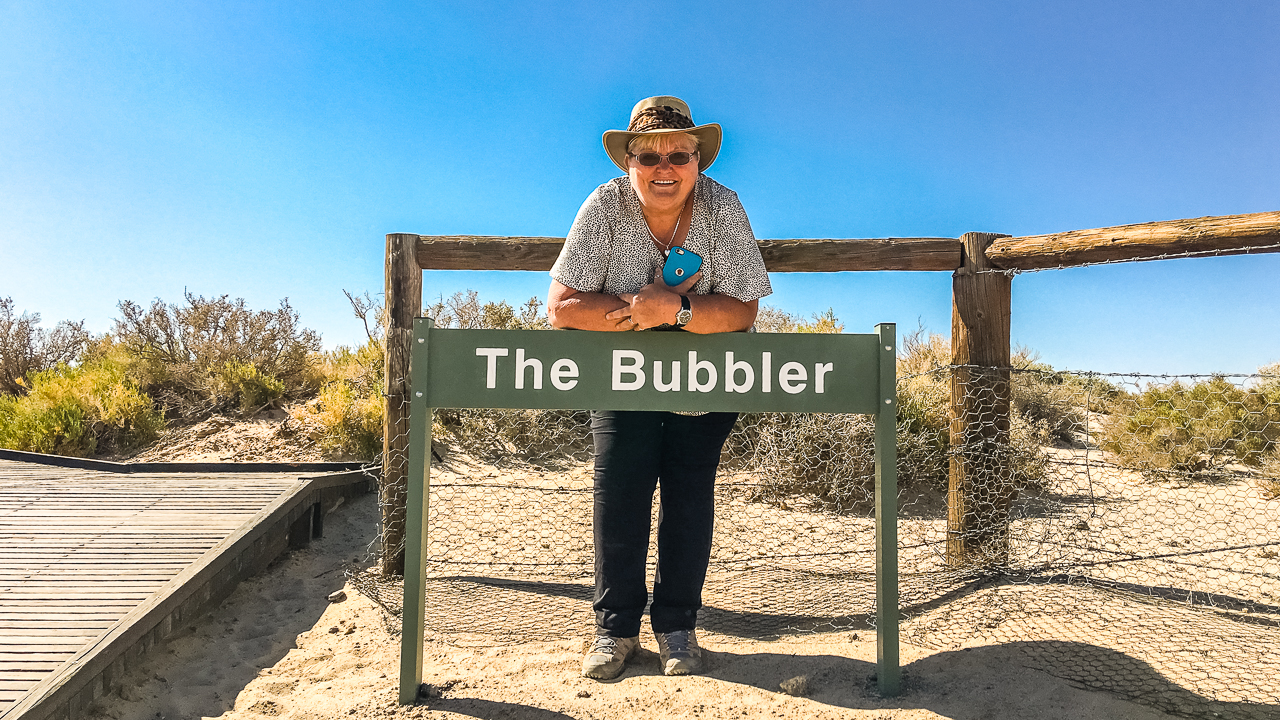
Amanda And I In Front Of The Bubbler Mound Spring

Amanda And I In Front Of The Bubbler Mound Spring

Visit Strangways Springs

Strangways Springs is one of the most historically important locations on the track.

The site was once a major Overland Telegraph repeater station and small settlement. During the nineteenth century it played an important role in communications across inland Australia.

Today visitors can walk among the ruins and learn about the people who lived and worked in this remote location.

The nearby springs supported Aboriginal communities for thousands of years and later became a critical water source for European settlement.

For anyone interested in history, this is one of the standout stops on the Oodnadatta Track.

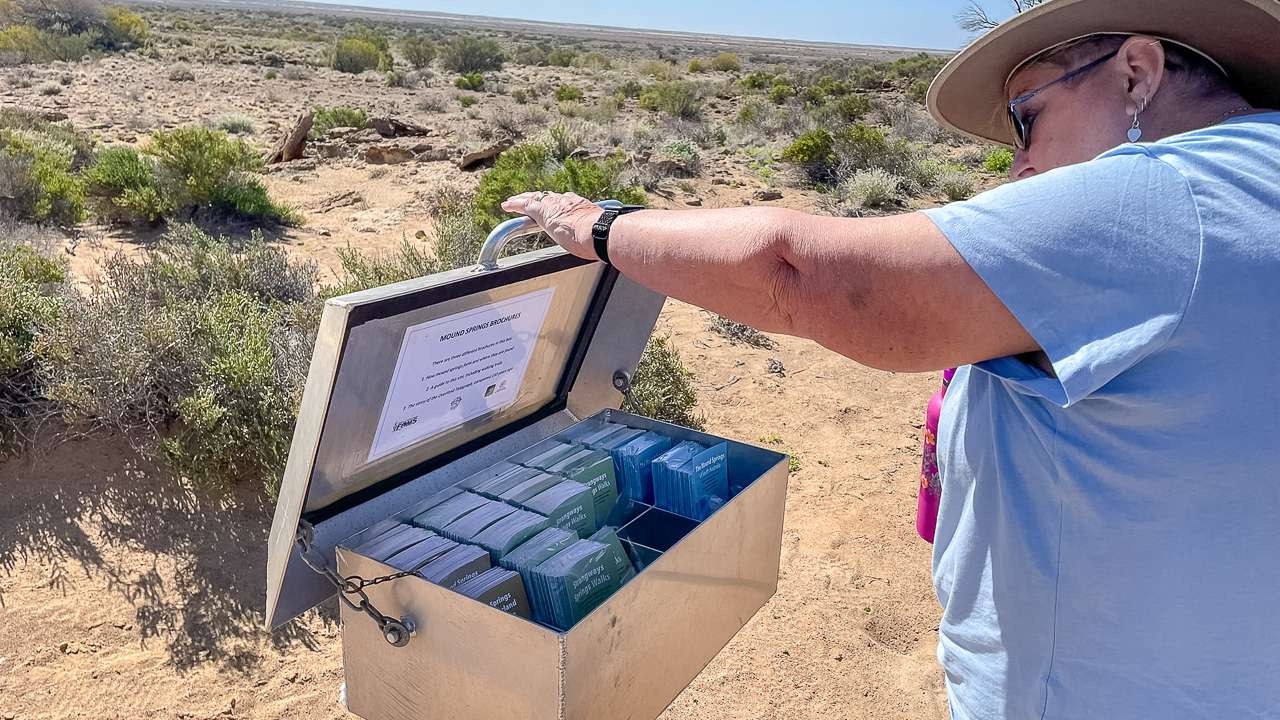
Maps Available At Beginning Of Strangways Springs Walking Trail

Amanda Getting A Map At Strangways Springs – Maps Available At Beginning Of Strangways Springs Walking Trail

Explore The Old Peake Telegraph Station

The Old Peake Telegraph Station provides another glimpse into Australia’s communication history.

The remaining ruins are located a short distance from the main track and are easy to visit.

Information boards explain the significance of the site and the role it played in connecting Australia to the rest of the world through the Overland Telegraph network.

If you enjoy historic sites, this stop is well worth making.

Read our guide to the Old Peake Historic Site.

Spend Time In Oodnadatta

Many travellers simply refuel and continue driving.

However, Oodnadatta itself is worth spending some time in.

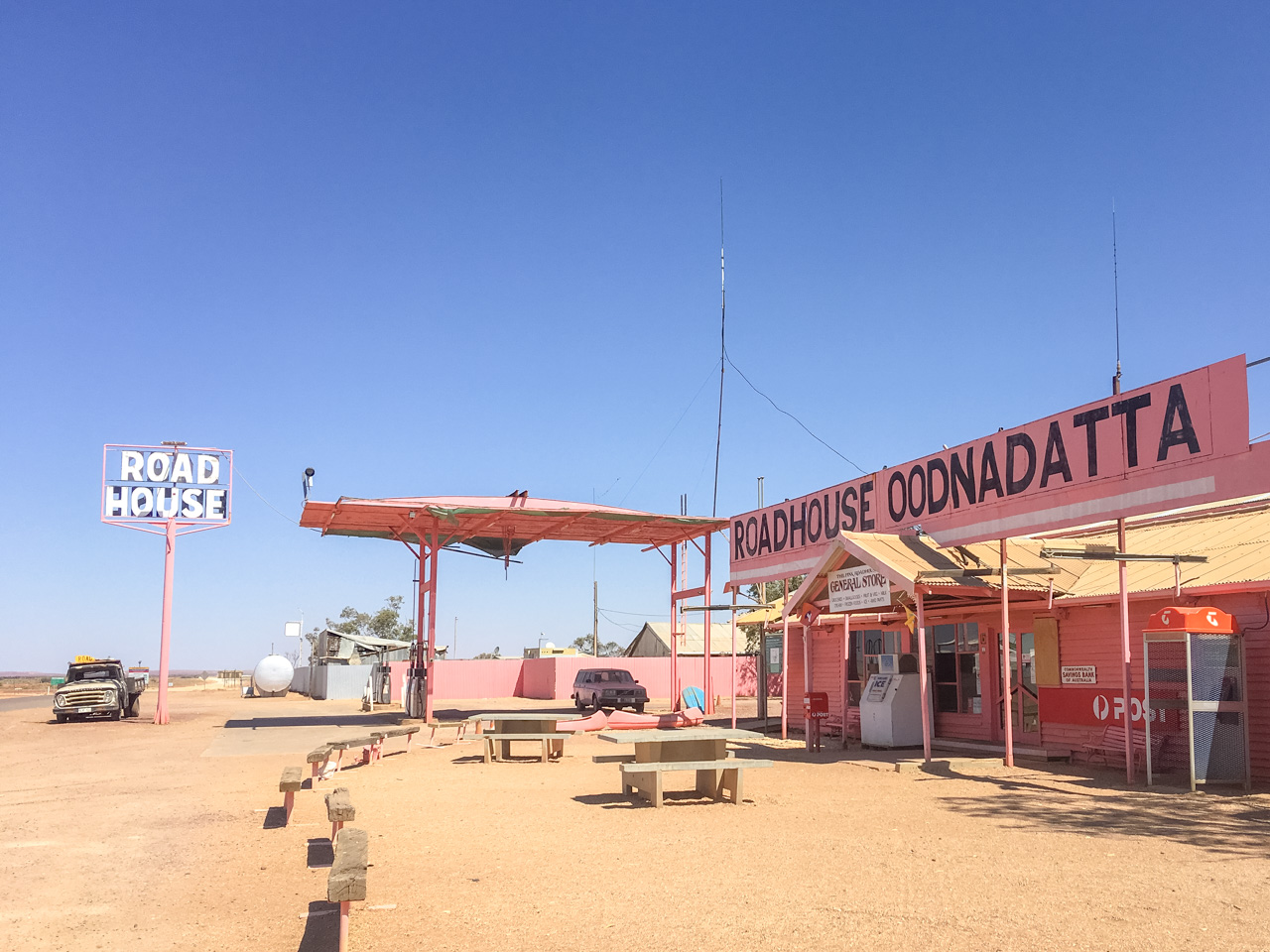
The town has a rich history connected to railways, stock routes and outback travel. The Pink Roadhouse remains a popular stop for travellers seeking fuel, meals and local road condition information.

Before continuing your trip, it is always worth checking the latest road conditions.

Pink Roadhouse Oodnadatta

Pink Roadhouse Oodnadatta

Try Geocaching Along The Track

Geocaching has become increasingly popular along the Oodnadatta Track.

Caches can be found at many historic sites, bridges, ruins and railway locations. Searching for them often leads travellers to places they may otherwise overlook.

Popular geocaching locations include:

  • Algebuckina Bridge
  • Strangways Springs
  • William Creek
  • Farina
  • Oodnadatta
  • Old railway sidings

For families, geocaching can add another layer of interest to a long outback trip.

Look For Old Ghan Railway Ruins

The old Ghan railway is never far away on this route.

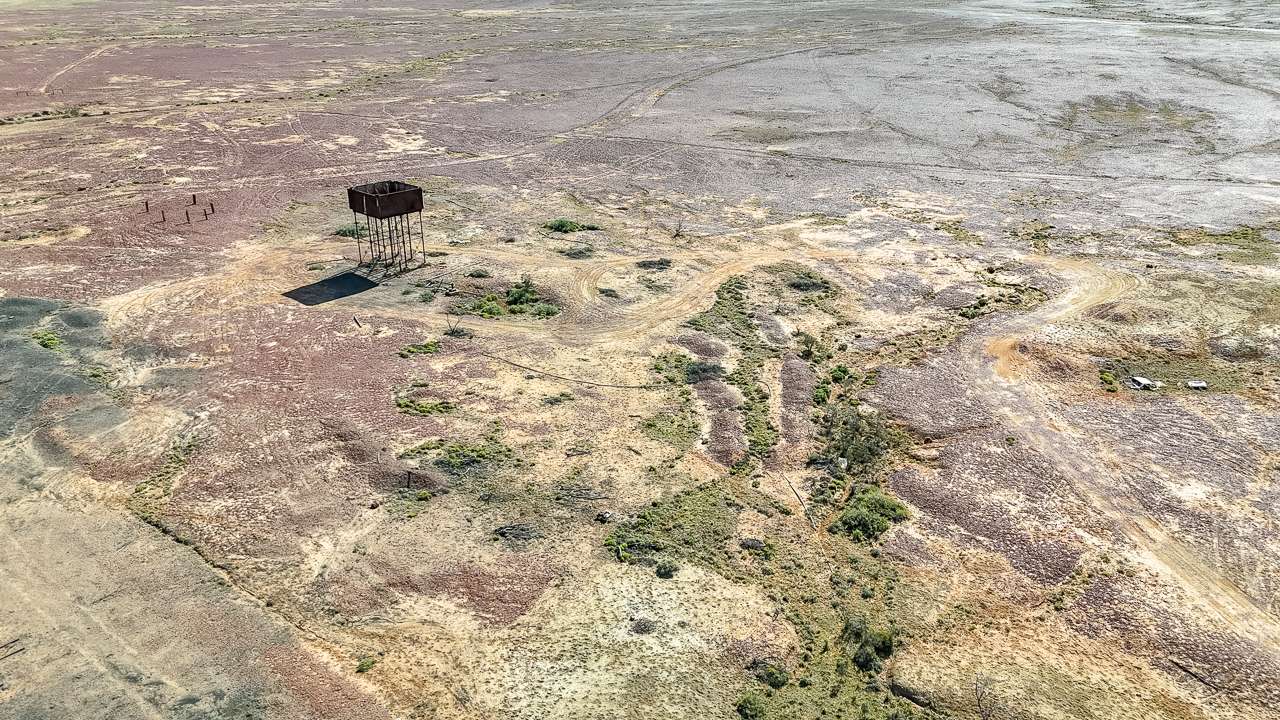
Throughout the drive you will encounter railway embankments, sidings, bridge remains, fettlers cottages and water infrastructure.

Many of these sites are not major attractions in their own right. Even so, they help tell the story of one of Australia’s most challenging railway projects.

Keeping an eye out for these remnants adds extra interest to the drive.

Abandoned Water Tank On Ghan Railway

Abandoned Water Tank On Ghan Railway

Visit Marree – You Just Have To Visit Marree!

Marree is the southern gateway to the Oodnadatta Track and well worth spending a few hours exploring before heading north. Visitors can learn about the town’s Afghan and railway history, visit the old Ghan railway displays, see the historic Marree Hotel and browse local information at the visitor centre.

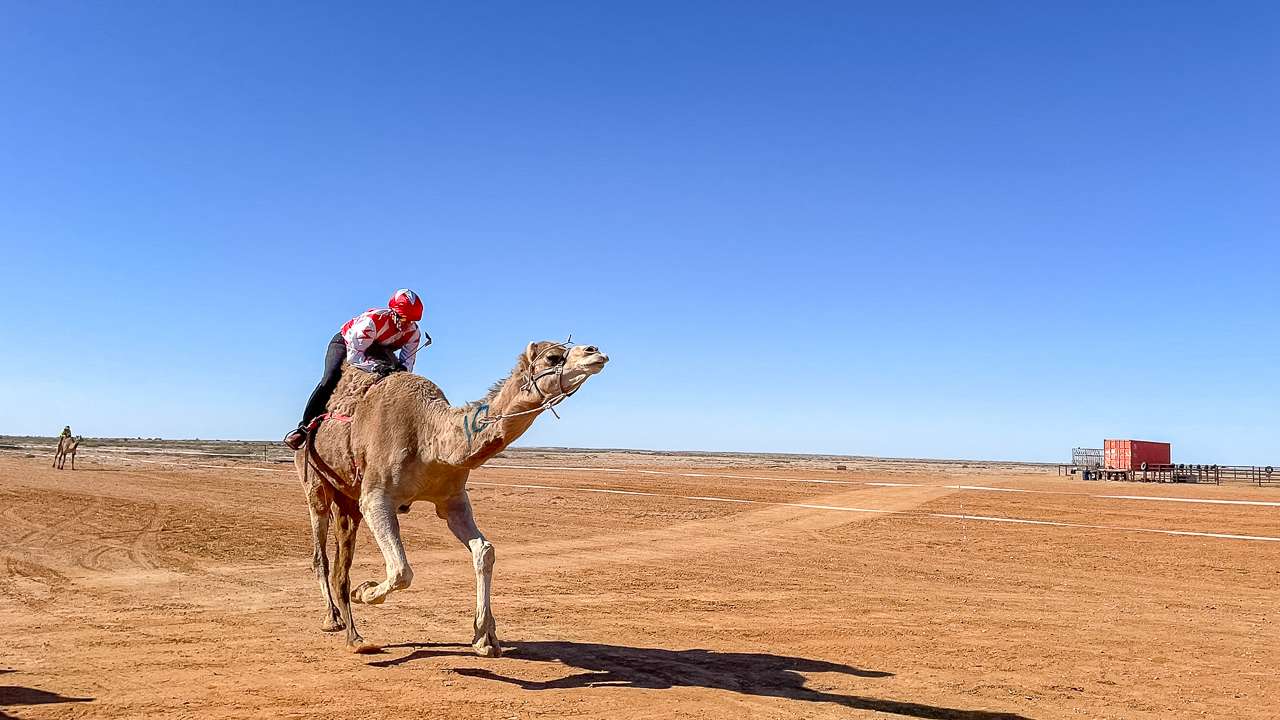
If you are travelling in July the annual Marree Camel Cup is one of the town’s biggest events attracting visitors from across Australia for a day of camel racing, entertainment and outback hospitality.

Look At Him Go! Camel Racing Is Crazy

Look At Him Go! Camel Racing At The Marree Camel Cup Is Crazy!

Camp Beside Historic Sites

Camping is one of the highlights of travelling the Oodnadatta Track.

Popular overnight stops include:

  • Marree
  • Coward Springs
  • Algebuckina Bridge
  • Farina
  • William Creek
  • Oodnadatta

Many campgrounds place you within walking distance of significant historic attractions.

For a complete list, see our Oodnadatta Track Campsites Guide.

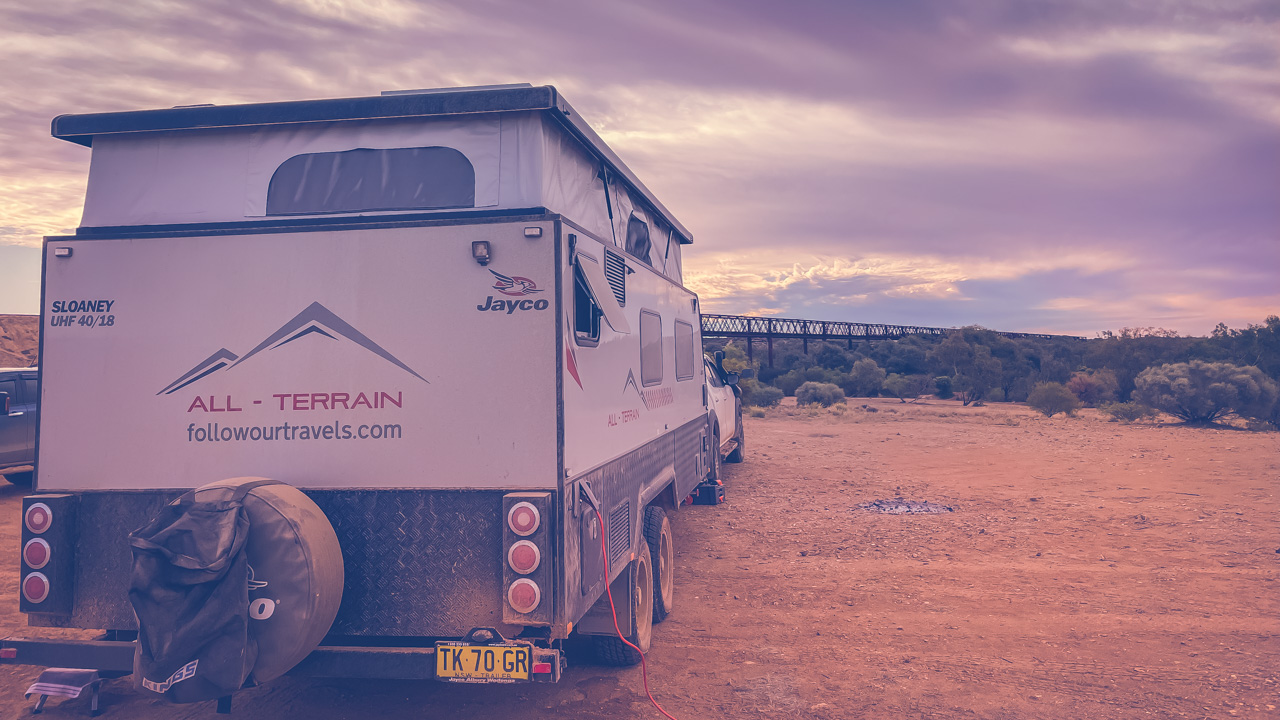
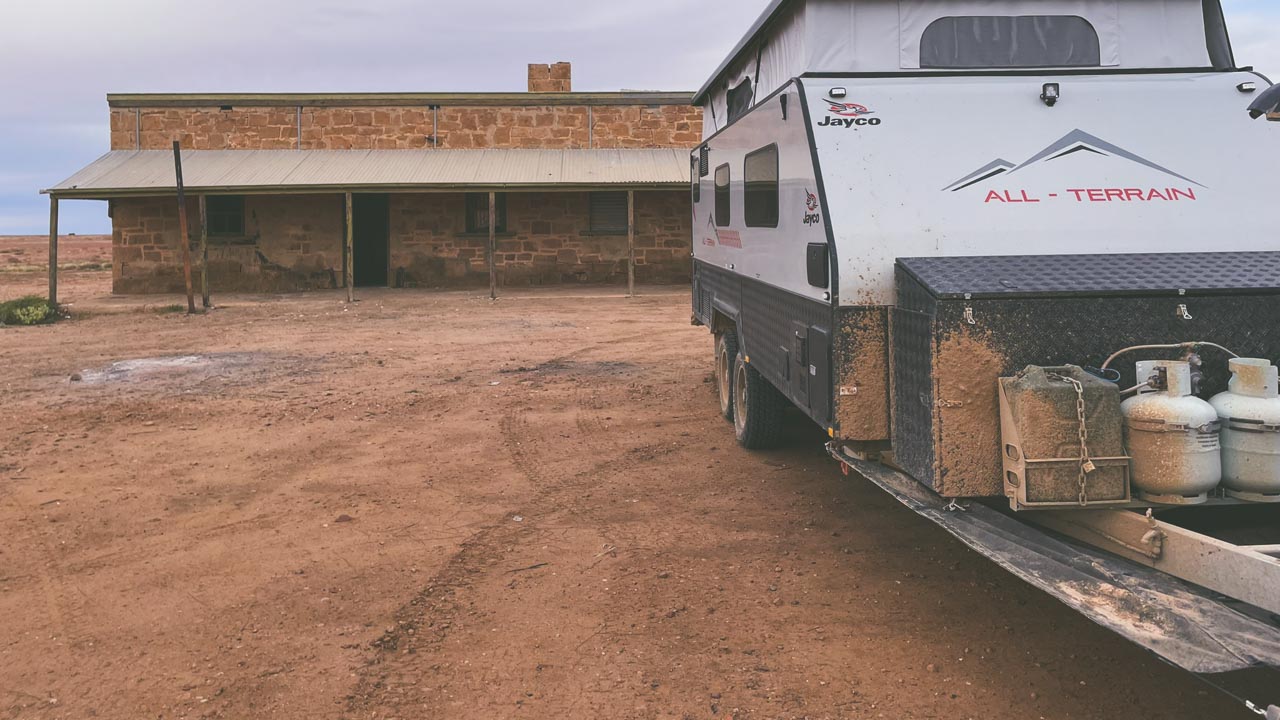
Stone Stomper On Jayco All Terrain At Beresford Siding On The Oodnadatta Track

Stone Stomper On Jayco All Terrain At Beresford Siding On The Oodnadatta Track

Mutonia Sculpture Park | Oodnadatta Plane Henge

If you’re driving the Oodnadatta Track there are a few places that stand out from the surrounding gibber plains and desert scenery. Mutonia Sculpture Park is definitely one of them.

Located west of Marree, this collection of scrap metal sculptures appears almost without warning beside the track. The site is best known for Plane Henge, where two aircraft stand vertically in the desert with their tails buried in the ground.

Amanda and I have visited Mutonia Sculpture Park four times, in 2016, 2019, 2022 and 2024. Despite seeing it loads of times we still stop whenever we pass through. The sculptures continue to weather and change, while the remote location makes the site feel different on every visit.

For travellers heading north from Marree, it is one of the first major attractions on the Oodnadatta Track. It has become a popular photo stop and one of the most recognised landmarks in South Australia’s outback.

Interesting Sculpture Along The Oodnadatta Track

Interesting Sculpture Along The Oodnadatta Track

Photograph The Outback

Photography opportunities exist along the entire route.

Some of our favourite locations include:

  • Algebuckina Bridge
  • Strangways Springs
  • Coward Springs
  • William Creek
  • Lake Eyre
  • Farina
  • The Bubbler

Early morning and late afternoon generally provide the best light.

Why The Oodnadatta Track Stands Out

Many outback roads offer remote driving and desert scenery.

The Oodnadatta Track combines history, geology, camping and railway heritage in a way few other routes can match.

Compared with the Birdsville Track, travellers generally make more sightseeing stops along the Oodnadatta Track. Historic telegraph stations, mound springs, railway ruins and Lake Eyre all sit within easy reach of the road.

As a result, most visitors spend several days travelling the route rather than simply driving from one end to the other.

Planning Your Trip

Road conditions can change quickly after rain. Before departing, check current road reports and local advice.

You should also review:

These articles provide detailed information on fuel stops, campsites, road conditions and attractions based on our six trips along the track between 2016 and 2025.

Final Thoughts

The best things to do on the Oodnadatta Track go well beyond driving the road itself.

Lake Eyre, Coward Springs, Algebuckina Bridge, Strangways Springs, Farina and William Creek are the major highlights. At the same time, smaller attractions such as geocaching, railway ruins and remote campsites often become the most memorable parts of the trip.

Amanda and I have travelled the track six times and every visit has been different. Water levels change, road conditions vary and the outback constantly presents something new to see.

Allow plenty of time, stop often and make the most of the attractions along the way.

FAQs – Frequently Asked Questions About Things To Do On The Oodnadatta Track

How Many Days Do You Need To See The Oodnadatta Track Attractions?

Most travellers should allow at least 4 to 6 days to enjoy the main things to do on the Oodnadatta Track. This allows time to visit Lake Eyre, Coward Springs, Algebuckina Bridge, Strangways Springs, Old Peake Telegraph Station, William Creek and Oodnadatta without rushing. If you enjoy camping, photography or exploring historic sites, allowing a week will provide a more relaxed trip.

What Are The Best Stops On The Oodnadatta Track?

The best stops depend on your interests. For history, Strangways Springs, Old Peake Telegraph Station and the old Ghan railway sites are highlights. For camping, Coward Springs and Algebuckina Bridge are popular choices. Lake Eyre, the mound springs, Farina and William Creek are also among the most visited attractions along the route.

Can You Visit Lake Eyre From The Oodnadatta Track?

Yes, Lake Eyre is one of the most popular side trips when travelling the Oodnadatta Track. William Creek is the main departure point for scenic flights, which provide the best views of the lake. Road access to viewing areas can vary depending on conditions, so always check local information before leaving the main track.

Is The Oodnadatta Track Suitable For Caravans?

Yes, many caravanners travel the Oodnadatta Track each year. However, the road can have corrugations, loose gravel and rough sections, especially after weather events. A well prepared vehicle and caravan are recommended. Before travelling, check current road conditions, carry enough water and fuel, and allow extra time for slower travel.

What Historic Sites Can You Visit On The Oodnadatta Track?

The Oodnadatta Track has many historic sites connected to the old Ghan railway and Overland Telegraph Line. Popular locations include Strangways Springs, Old Peake Telegraph Station, Algebuckina Bridge, Farina and the railway ruins found along the route. These stops provide a good understanding of the challenges faced by early travellers and workers in central Australia.

Can You Go Geocaching On The Oodnadatta Track?

Yes, geocaching is a popular activity along the Oodnadatta Track. Caches can be found near several historic locations, including bridges, railway sites and old settlements. It is a good way to encourage extra stops along the route and can add interest for families travelling with children.

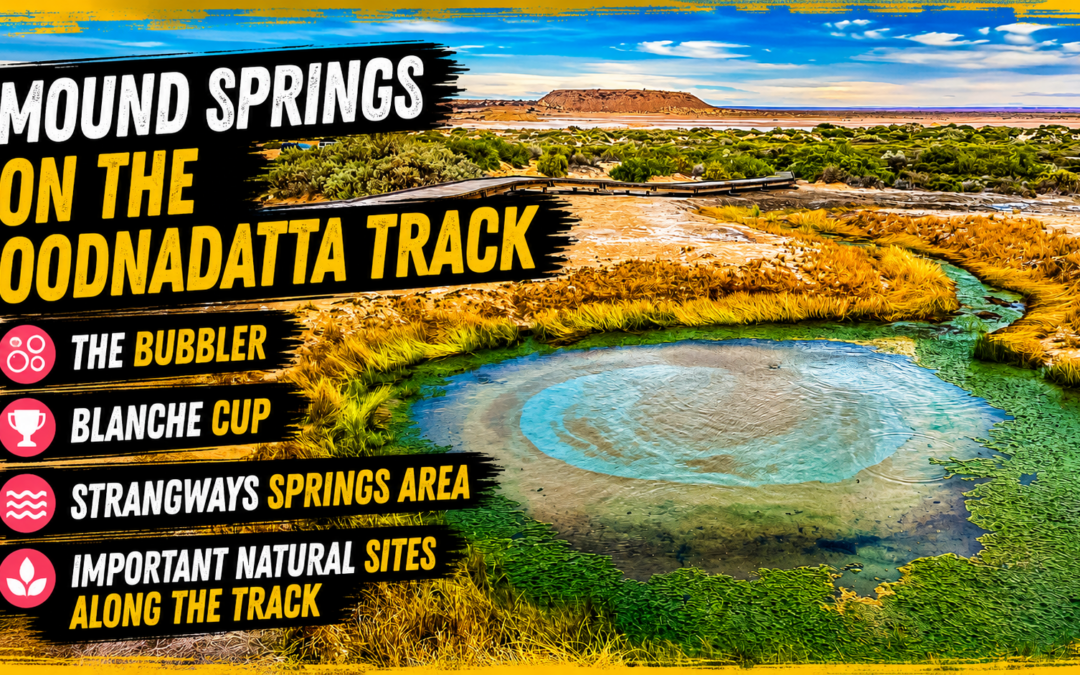
Mound Springs On The Oodnadatta Track

Mound Springs On The Oodnadatta Track

Mound Springs On The Oodnadatta Track

Amanda and I have visited the mound springs several times over the years. We visited The Bubbler and Blanche Cup in 2016, 2019 and 2022. Then in 2024 we stopped again at the Strangways Springs area and saw the mound springs there while travelling the Oodnadatta Track.

Each visit looked a little different. Water levels changed, tracks varied, and the wetlands shifted with the seasons. Even so, the springs always stood out as one of the most important natural sites along the track.

The mound springs along the Oodnadatta Track are one of the more interesting stops in outback South Australia. Most people come for the old Ghan history and remote scenery. However, the mound springs often end up being a highlight of the trip.

My Photo Of The Bubbler Mound Spring Taken In 2022

My Photo Of The Bubbler Mound Spring Taken In 2022

What Are Mound Springs?

Mound springs are natural springs fed by the Great Artesian Basin. Water travels underground for thousands of years before reaching the surface through cracks in the earth.

Over long periods minerals build up around the water source. As a result, small hills or “mounds” form around the spring outlets.

These springs were very important to Aboriginal people, early explorers, railway workers and cattle stations. In such a dry part of Australia, permanent water changed everything.

Today, many mound springs remain protected because they support rare plants and animals found nowhere else.

Friends Of Mound Springs Information

Amanda At The Top Of The Bubbler Boardwalk

Amanda At The Top Of The Bubbler Boardwalk

Mound Springs On The Oodnadatta Track

The best known mound springs on the Oodnadatta Track are:

Mound Spring Location What To Expect Access
The Bubbler Wabma Kadarbu Conservation Park Bubbling artesian water and wetland area Easy walk from car park
Blanche Cup Near The Bubbler Large mound spring with boardwalk access Easy walk
Strangways Springs Near Strangways ruins Smaller springs with railway history nearby Dirt track and short walks

The Bubbler And Blanche Cup

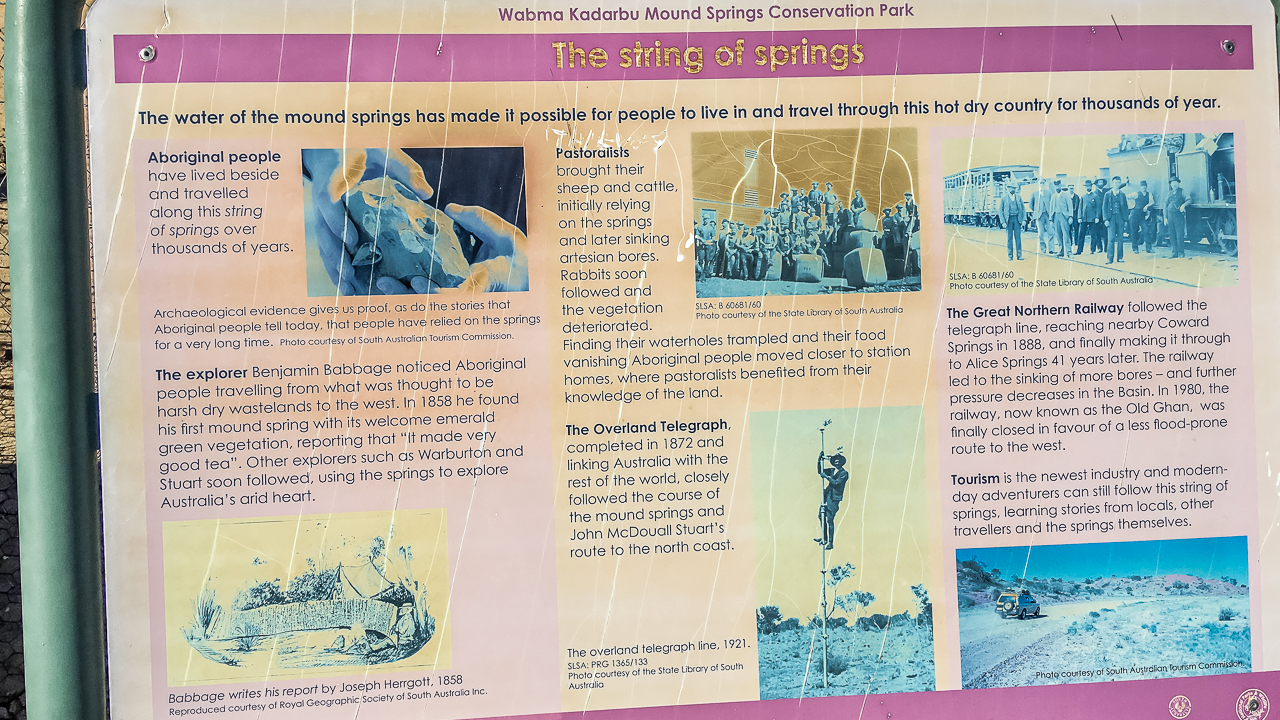
The Bubbler and Blanche Cup are the easiest mound springs to visit on the Oodnadatta Track. They sit inside Wabma Kadarbu Mound Springs Conservation Park between Marree and William Creek.

The turn off is about 10km east of Coward Springs and roughly 130km north west of Marree. The access road is suitable for most vehicles in dry conditions however it can be very corrugated and rough. When we visited the first time we towed the van in all the way. The second two visits we unhooked the van and went in with just the car. When you turn in to the access road just to the left is a big open area you can unhitch and leave your caravan.

Official Mound Springs Visitor Information

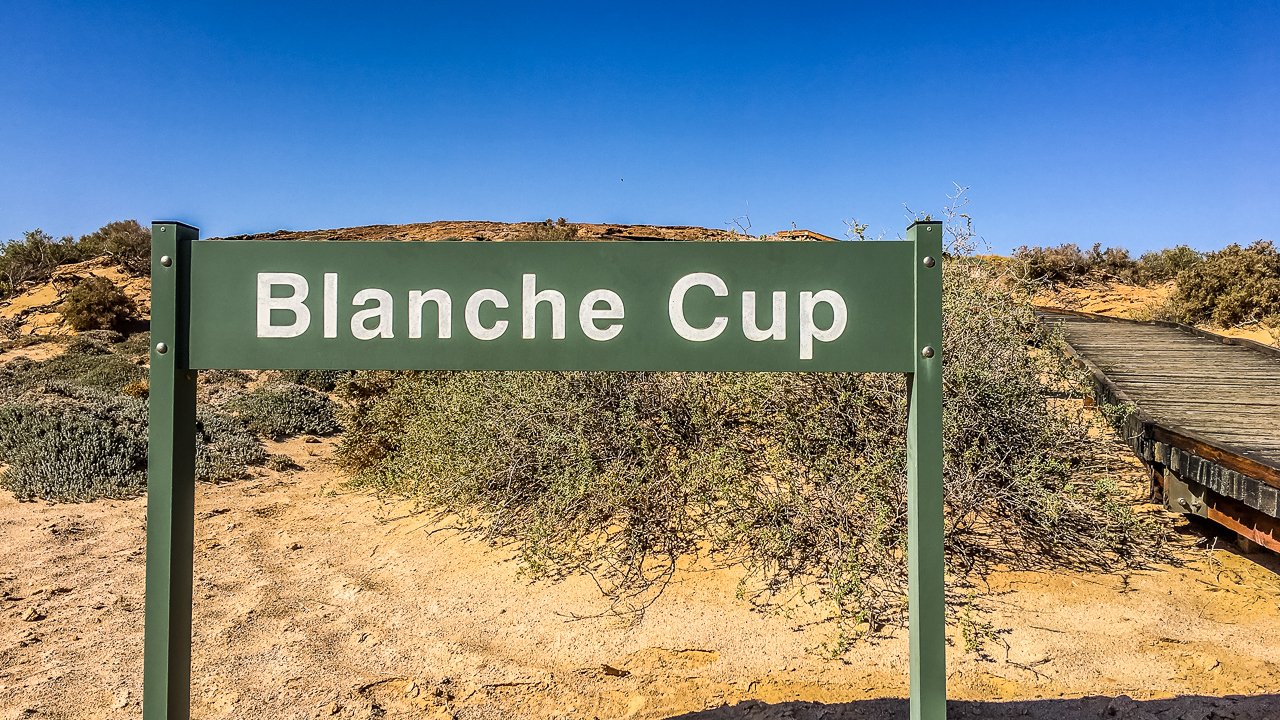
Blanche Cup Noticeboard In Wabma Kadarbu Mound Springs Conservation Park

Blanche Cup Noticeboard In Wabma Kadarbu Mound Springs Conservation Park

We find these springs worth visiting most times we travelled the track. Even after several trips, the contrast between dry desert country and bright green wetlands still stood out.

The Bubbler is known for the bubbling action caused by gases rising through the artesian water. At times the bubbling is strong. During other visits it was more subtle. Water flow can vary between years depending on pressure changes in the basin.

Blanche Cup looks very different. It has a larger mound with a more open pool structure. The boardwalk gives a good view without damaging the fragile ground around the spring.

Importantly, visitors should stay on the marked tracks and boardwalks. The ground near the springs is soft and easily damaged. Swimming is not allowed.

Wabma Kadarbu Conservation Park Information

Why The Springs Matter

The mound springs are far more than a roadside stop.

For thousands of years, Aboriginal groups relied on these permanent water sources. The springs also played a major role during European exploration and the construction of the old Ghan railway.

Without reliable water, many sections of inland Australia could not support travel or settlement.

The springs also support rare wildlife. Some tiny snails and aquatic species only exist in single spring systems. That makes these sites environmentally important as well as historically important.

More About The Environmental Importance Of Mound Springs

Compared with many outback attractions, the mound springs are easy to access and do not require long walks. That makes them popular with caravanners, camper trailer travellers and families.

Amanda And I In Front Of The Bubbler Mound Spring

Amanda And I In Front Of The Bubbler Mound Spring

Strangways Springs

Strangways Springs gives a different experience compared with The Bubbler and Blanche Cup.

We visited the Strangways area in 2024 while travelling between William Creek and Oodnadatta. The spring area itself is quieter and less developed. However, the nearby ruins and telegraph history add another layer to the stop.

Instead of boardwalks and viewing platforms, Strangways feels more remote and untouched.

The old stone ruins nearby are part of the former Overland Telegraph station and railway history. Because of that, many travellers combine the springs visit with a walk through the historic site.

Track conditions into Strangways can vary. After rain, sections may become rough or muddy. Therefore, checking road conditions before leaving is always a good idea.

Strangway Springs Mound Springs On The Oodnadatta Track In 2024

Strangway Springs Mound Springs On The Oodnadatta Track In 2024

Best Time To Visit The Mound Springs On The Oodnadatta Track

The cooler months from May to September are usually the best time to travel the Oodnadatta Track.

Daytime temperatures are more comfortable and road conditions are often better after summer.

Even so, weather still affects the track. Heavy rain can close roads quickly. Corrugations also change throughout the season.

Before travelling, check current conditions through the official South Australian Outback Roads Report and the South Australian National Parks website.

South Australian Outback Roads Report

South Australian National Parks Information

As of May 2026, The Bubbler and Blanche Cup remain accessible through the Wabma Kadarbu conservation area. Visitors should still check local reports before travel due to changing outback conditions.

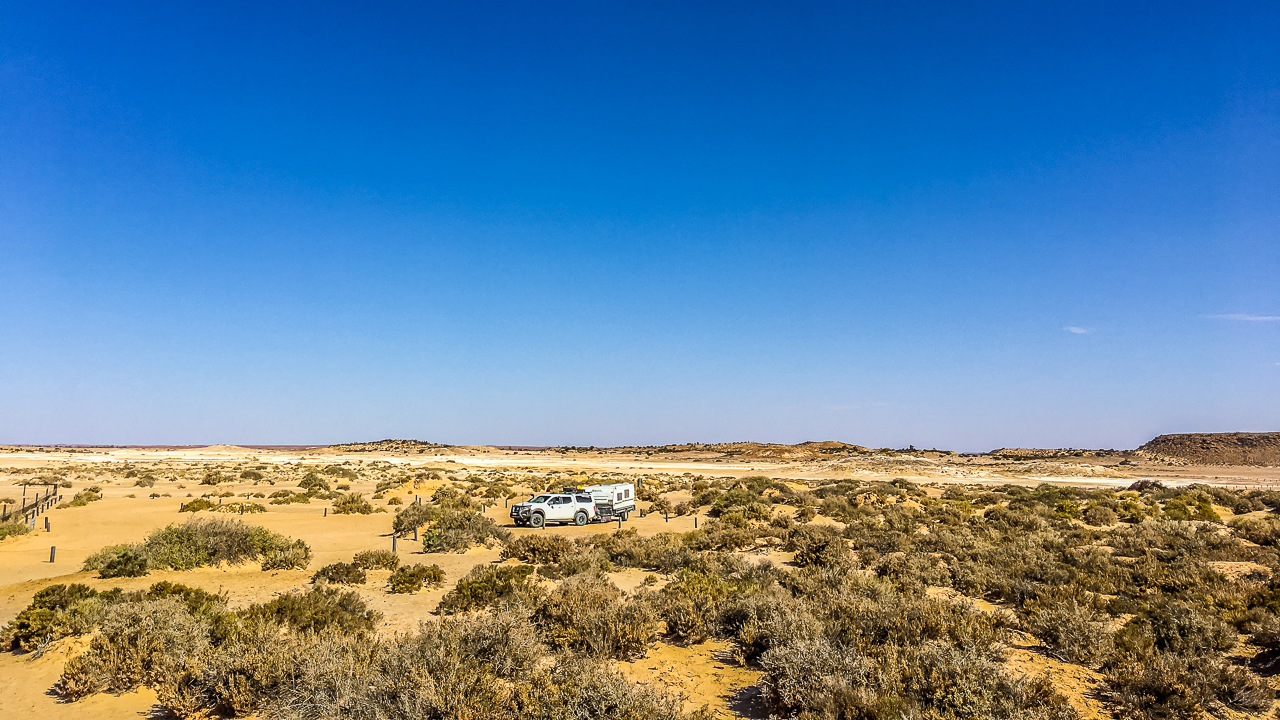
In We Towed The Van Out To The Mound Springs On The Oodnadatta Track

In We Towed The Van Out To The Mound Springs On The Oodnadatta Track

Camping Near The Mound Springs On The Oodnadatta Track

Most travellers stay nearby at Coward Springs.

Coward Springs is one of the better known campgrounds on the Oodnadatta Track. It offers toilets, hot showers and the well known artesian spa.

From there, the mound springs are only a short drive away.

William Creek and Marree also work well as overnight stops depending on your direction of travel.

Things We Noticed Across Multiple Visits

After visiting across several years, a few things stood out to us:

  • Water movement at The Bubbler changed between visits
  • Wetland growth varied each year
  • Visitor numbers increased noticeably after 2020
  • Boardwalks and signage improved over time
  • Track conditions changed more than the springs themselves

Those changes are part of what makes repeat visits worthwhile.

The springs may seem simple at first. However, once you understand their history and importance, they become one of the more memorable stops along the track.

Information Board At Wabma Kadarbu Mound Springs Conservation Park

Information Board At Wabma Kadarbu Mound Springs Conservation Park

Final Thoughts

The mound springs are one of the most worthwhile stops on the Oodnadatta Track. They combine history, geology and outback scenery in one easy visit.

The Bubbler and Blanche Cup are the best known sites and suit almost every traveller. Meanwhile, Strangways Springs gives a quieter and more historic feel.

For us, the springs have been worth stopping at on every trip across the track. They break up the drive, add context to the region, and show just how important water is in the South Australian outback.

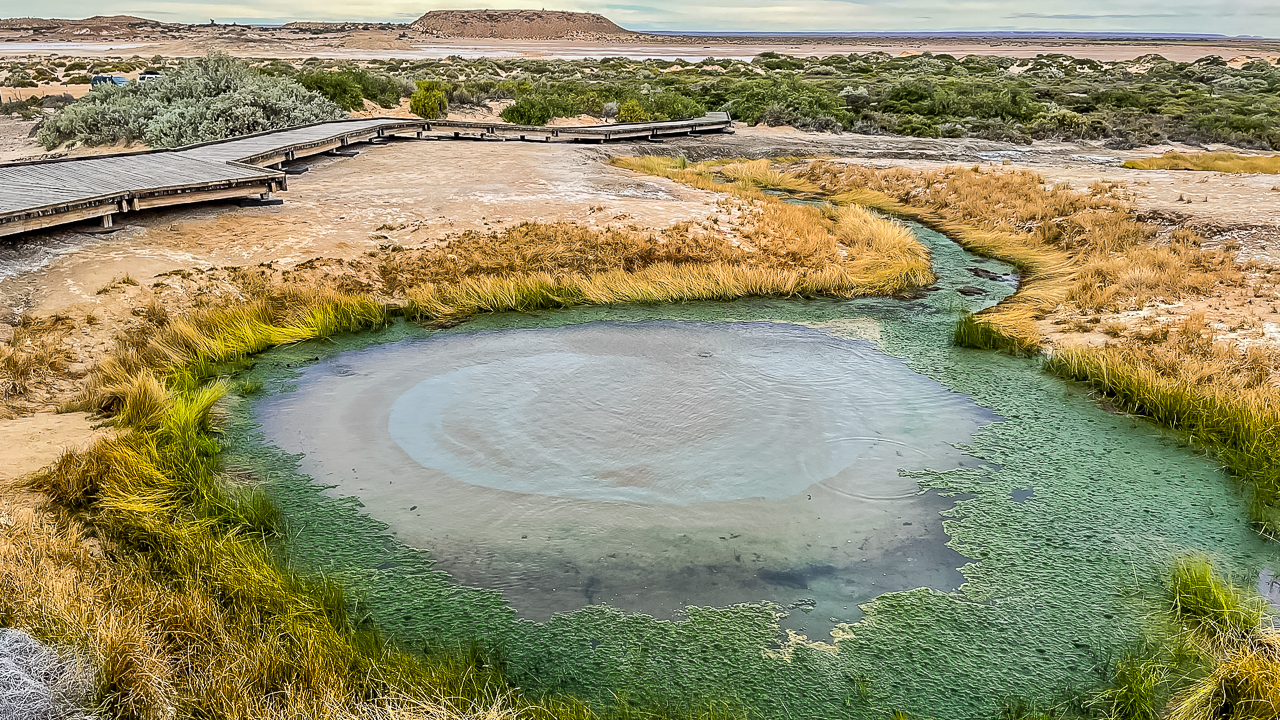
The Bubbler Mound Spring On The Oodnadatta Track

The Bubbler Mound Spring On The Oodnadatta Track

FAQs About The Mound Springs On The Oodnadatta Track

What are mound springs on the Oodnadatta Track?

Mound springs are natural springs fed by underground water from the Great Artesian Basin. Minerals build up over time around the water outlet and form raised mounds. They are an important part of South Australia’s outback history and environment.

Where are the main mound springs located on the Oodnadatta Track?

The best known mound springs are The Bubbler and Blanche Cup inside Wabma Kadarbu Conservation Park between Marree and William Creek. Strangways Springs is further north near the Strangways ruins.

Can you swim in the mound springs?

No, swimming is not allowed at The Bubbler or Blanche Cup. The springs are protected environmental sites and visitors must stay on the marked walking tracks and boardwalks.

Are the mound springs easy to access with a caravan?

Yes, The Bubbler and Blanche Cup are easy to access in dry conditions. Most caravanners and camper trailer travellers can reach the parking area without problems when the Oodnadatta Track is open. The track can be quite corrugated and rough. You can unhitch and park your van in an area to the left of the road in when you first turn in off the Oodnadatta Track.

What is the best time of year to visit the mound springs?

The cooler months from May to September are usually the best time to visit. Temperatures are lower and road conditions are often more comfortable for outback travel.

How far are The Bubbler and Blanche Cup from Marree?

The mound springs are about 130km north west of Marree and around 10km east of Coward Springs.

Why are mound springs important?

Mound springs provided permanent water in dry outback areas for thousands of years. Aboriginal groups, early explorers, railway workers and cattle stations all relied on them.

What makes The Bubbler different from Blanche Cup?

The Bubbler is known for its bubbling artesian water caused by underground gases. Blanche Cup has a larger open spring area and a raised mound with boardwalk access.

Is Strangways Springs worth visiting?

Yes, Strangways Springs is worth visiting for travellers interested in history and quieter stops. The nearby ruins and old telegraph station add extra interest to the area.

Where can you camp near the mound springs?

Coward Springs is the most popular campground near the mound springs. It offers camping, toilets, hot showers and an artesian spa. William Creek and Marree are also common overnight stops nearby.

Farina Underground Bakery Opening Dates 2026 + What To Expect

Farina Underground Bakery Opening Dates 2026 + What To Expect

Farina Underground Bakery Opening Dates 2026 + What To Expect

The Farina Underground Bakery is open in 2026 between the following dates and times.

Sat May 23 2026 to Sunday July 19 2026
8.30am to 3.30pm

The Farina Underground Bakery is one of the most popular stops in outback South Australia and after visiting Farina at least six times over the years between 2016 and 2026 including twice when the bakery was open we can see why.

You’ll find the bakery among the ruins of the old Farina township. The bakery is well known for its fresh bread, pies, pastries and famous my favourite – the custard tarts. During winter, travellers from all over Australia stop here while exploring places like Marree, Lake Eyre, William Creek and the Oodnadatta Track.

For us Farina is always worth the stop. The bakery is great, but it is also the history and atmosphere of the old town remains that makes this place special.

Us Standing Outside The Farina Underground Bakery

Us Standing Outside The Farina Underground Bakery

Where Is The Farina Underground Bakery?

Farina is located about 42km south of Marree in outback South Australia – between Lyndhurst and Marree.

The underground bakery is part of the Farina Restoration Project, where volunteers work to restore buildings and keep the history of the town alive.

When Is The Farina Bakery Open In 2026?

The Farina Underground Bakery is open in 2026 between the following dates and times.

Sat May 23 2026 to Sunday July 19 2026
8.30am to 3.30pm

We have visited Farina lots of times when the bakery was closed and still enjoyed exploring the ruins and camping. To be honest we’ve preferred Farina for camping and exploring the town when the bakery has been closed as it is a LOT quieter.

If you want to buy food from the bakery, it is a good idea to check opening dates before you travel.

What Food Does The Bakery Sell?

When we visited during bakery season, there was a good range of fresh food available including:

  • Bread
  • Bread rolls
  • Pies
  • Pasties
  • Sausage rolls
  • Cakes
  • Slices
  • Donuts
  • Custard tarts
  • Coffee and drinks

On both of our bakery visits there were already plenty of customers lined up not long after opening time.

Our Experience Visiting Farina

We have stopped at Farina many times and always enjoy visiting.

The bakery itself is a great stop but we also recommend spending time walking around the old ruins. There is a lot more to see than many people expect.

Some of the things you can explore include:

  • Old stone buildings
  • Underground rooms
  • Railway remains
  • Historic ruins
  • Information signs
  • Restored heritage areas

Sitting in the middle of the old town with a fresh pastry and coffee is one of those simple outback experiences that is hard to beat. Even when it gets busy, the volunteers running the bakery have always been friendly and organised during our visits.

Why Is The Farina Underground Bakery So Popular?

It Is Different

There are not many places in Australia where you can visit an underground bakery inside an old ghost town.

It Has Real History

Farina was once a busy railway town and you can still see plenty of that history today.

The Food Is Good

After a long drive through the outback, fresh bakery food always goes down well.

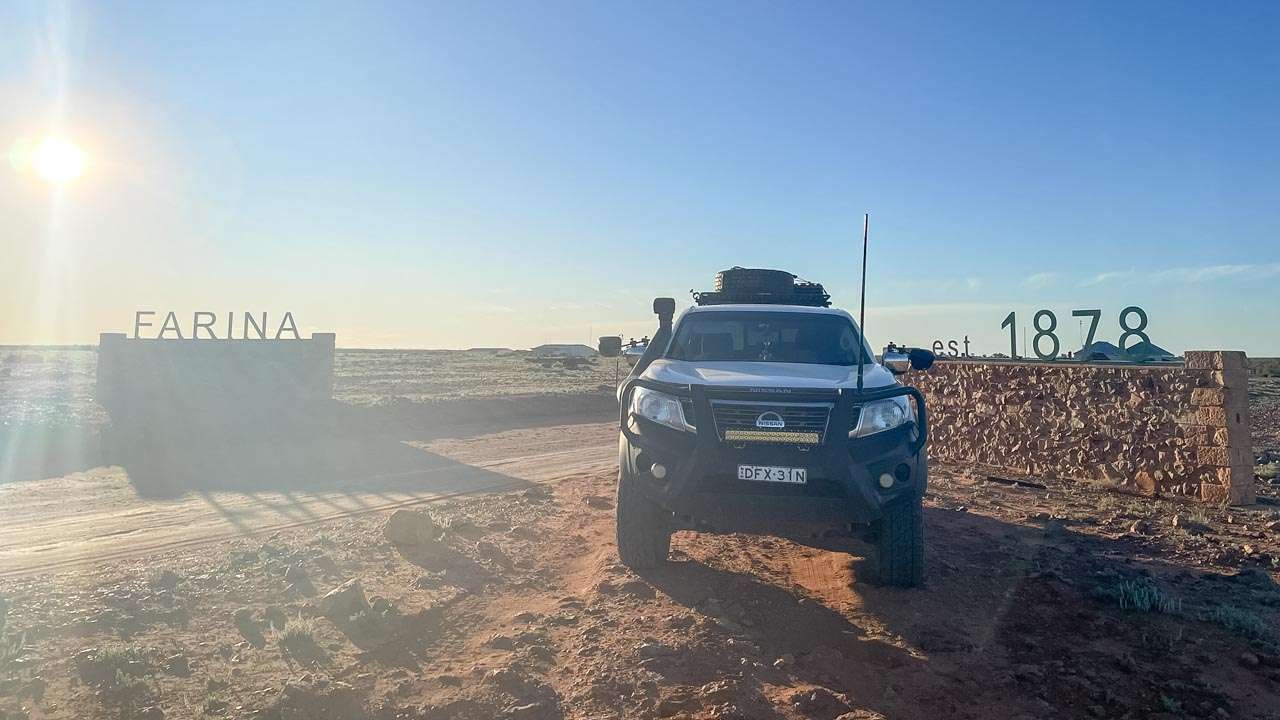
Us Parked Up At The Farina Town Entry

Us Parked Up At The Farina Town Entry

It Helps Restore Farina

Money raised through the bakery helps support ongoing restoration work around the town.

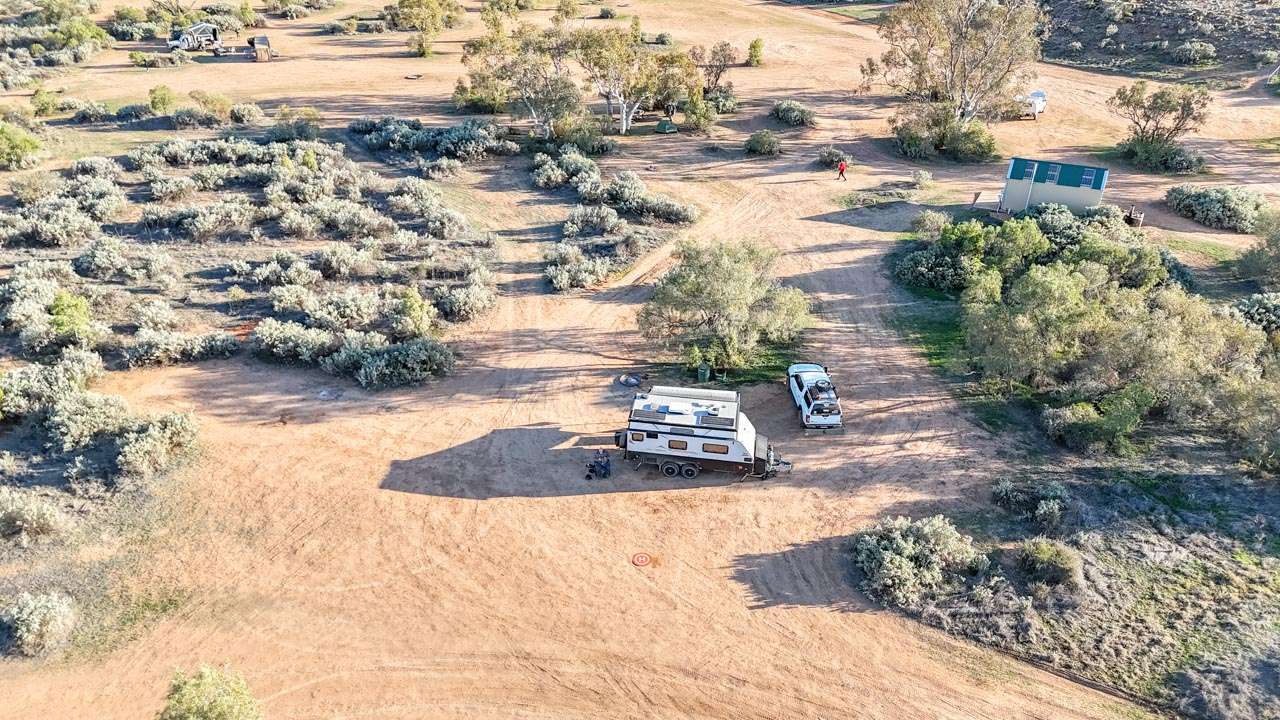
You Can Camp At Farina

We’ve camped at Farina more than half a dozen times and will do so plenty more. It’s one of our favourite places to camp.

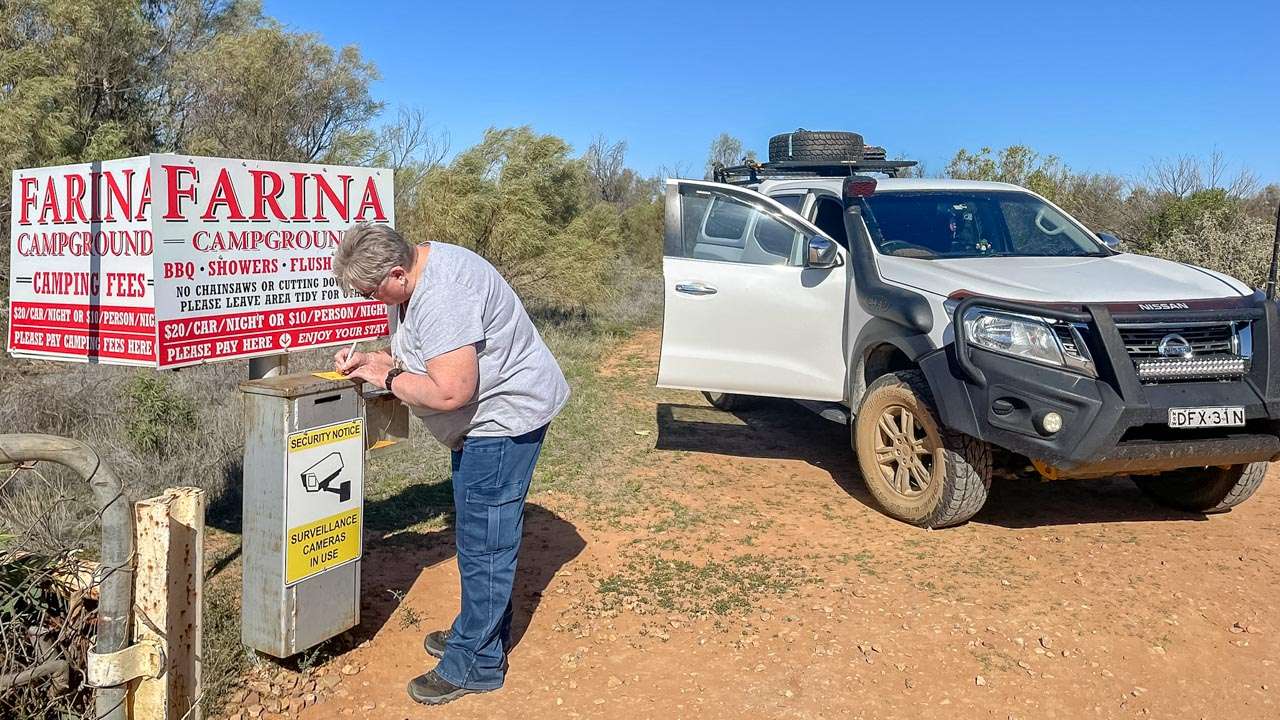
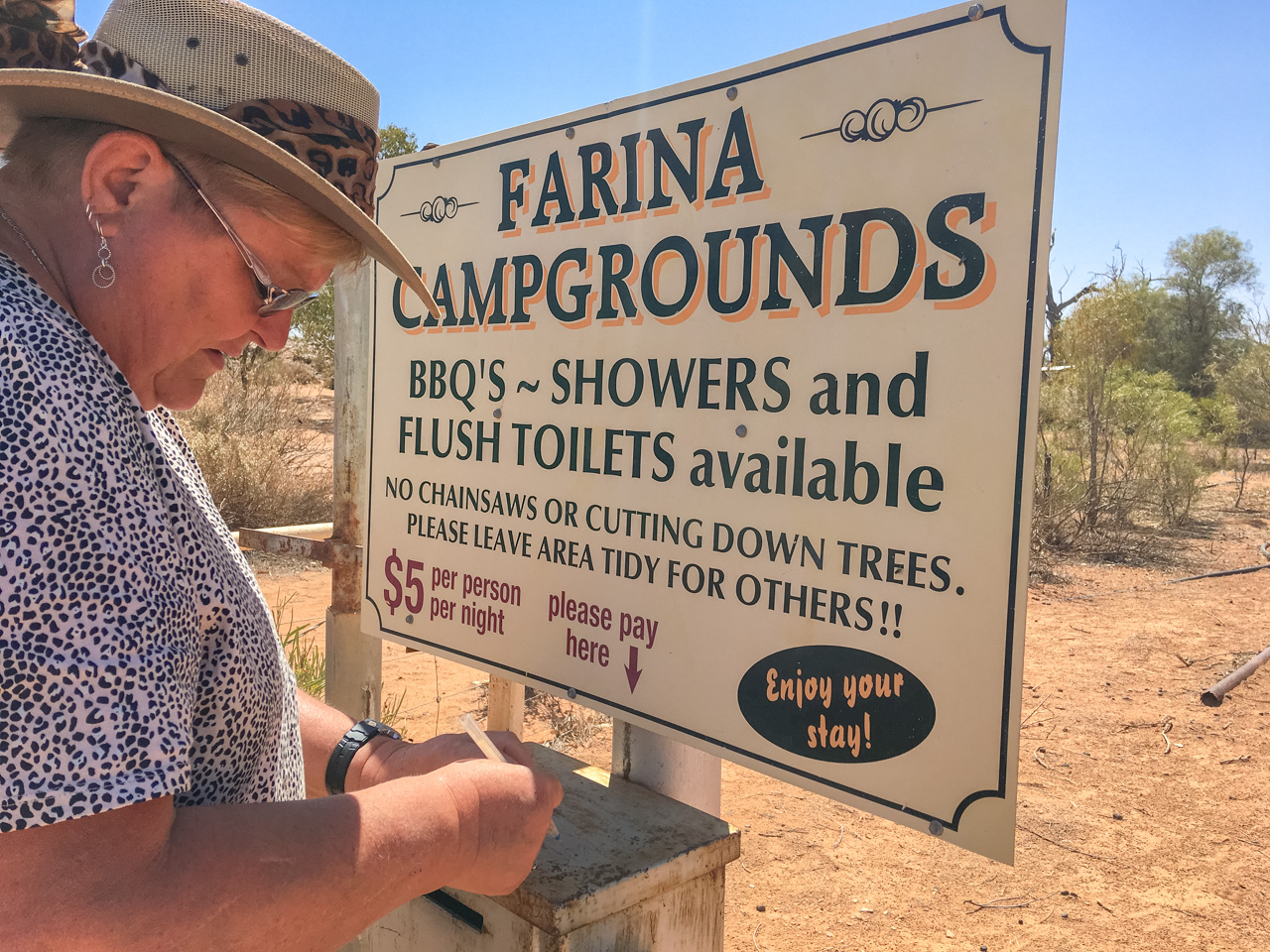
Amanda Paying Our Camping Fees At Farina

Amanda Paying Our Camping Fees At Farina

Tips For Visiting The Farina Underground Bakery

Arrive Early

Popular food items can sell out during busy periods.

Allow Time To Explore

Farina is worth more than just a quick bakery stop.

Carry Water And Supplies

You are in a remote part of South Australia.

Check Road Conditions

Road conditions in the outback can change quickly after rain.

Visit In Winter

The cooler months are the best time to travel through this area.

Is The Farina Underground Bakery Worth Visiting?

Yes, definitely.

After visiting Farina at least six times, including twice during bakery season we reckon it is one of the best stops in outback South Australia.

The bakery, the ruins and the history all make it a memorable place to visit.

If you are travelling north through Marree, heading towards Lake Eyre or driving the Oodnadatta Track we would absolutely recommend stopping at Farina.

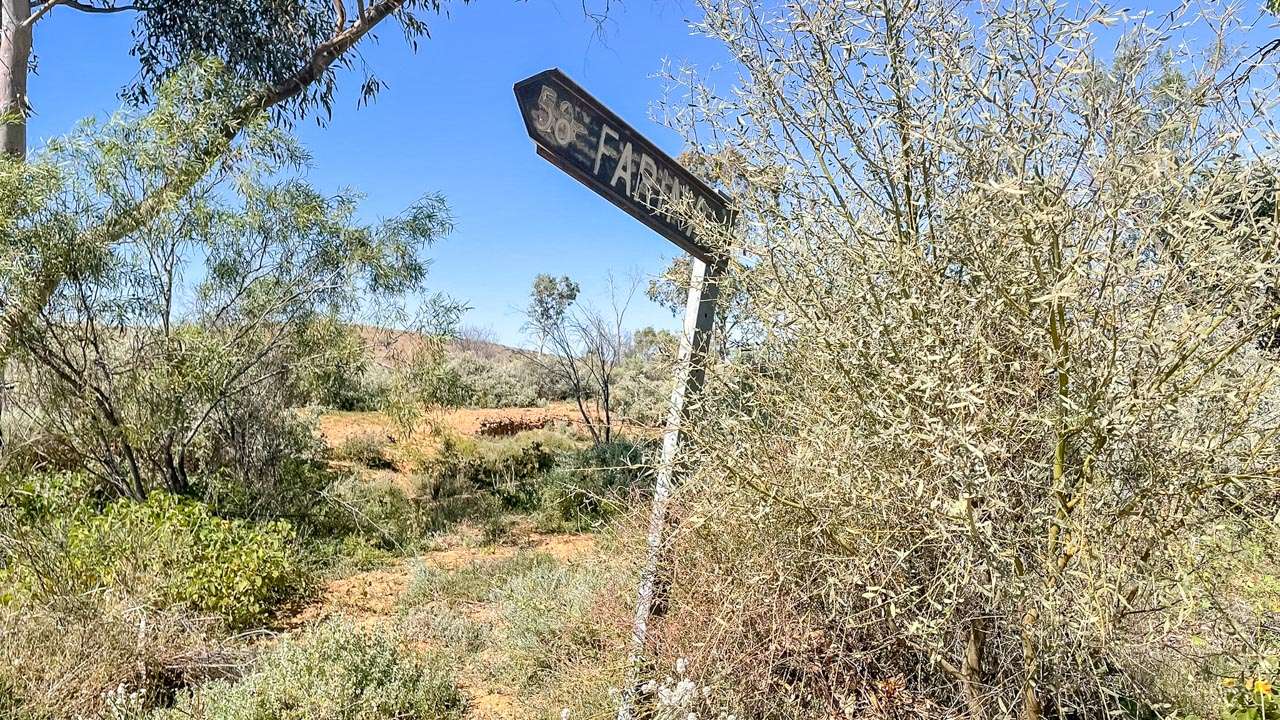
We Took The Directions To Farina Near Witchelina On Mularia Road In 2024

We Took The Directions To Farina Near Witchelina On Mularia Road In 2024

Farina Photo Gallery

FAQs About The Farina Underground Bakery

Is the Farina Underground Bakery open all year?

No. The bakery normally operates during the cooler months between around May and July.

Where is Farina located?

Farina is located about 42 kilometres south of Marree in South Australia.

What is the Farina Underground Bakery famous for?

It is best known for its pies, sausage rolls, pasties, bread and bread rolls plus a range of fresh baked food and it's uniquely original underground bakery setup.

Is Farina worth visiting if the bakery is closed?

Yes. The old ruins and historic township are still well worth seeing.

Can caravans and motorhomes get to Farina?

Yes. Farina is a very popular stop for caravans, campers and four wheel drives.

How much time should you allow at Farina?

We would recommend allowing at the very least a couple of hours to explore the ruins and enjoy the bakery if it is open. To be honest though you really need a couple of days to do any justice to the remains of the old town.
Free Camping At Bromus Dam WA: A Great Nullarbor Campsite

Free Camping At Bromus Dam WA: A Great Nullarbor Campsite

Free Camping At Bromus Dam WA: A Great Nullarbor Campsite

✔ Free camp
✔ Nullarbor location
✔ Lots of room
✔ Toilets

Free camping at Bromus Dam WA near Norseman. Honest review, facilities, access tips and what to expect at this quiet nullarbor stopover. If you’ve spent any time travelling across Western Australia you’ll know the value of a good, reliable free camp.  Bromus Dam is one of those spots that doesn’t get a lot of coverage or reviews – but after staying here ourselves it’s one we’d happily pull into again. It’s simple, it’s quiet and it provides exactly what you need after a day on the road.

Where is Bromus Dam?

Bromus Dam sits about 30 – 35km south of Norseman, just off the Coolgardie Esperance Highway. It’s an easy turn off and only a short drive in on a gravel access road so you don’t need to worry about rough tracks or tricky access.

  • Coordinates: -32.4585, 121.6837
  • Nearest town: Norseman (approx. 30 minutes)
  • Road access: Sealed highway + short gravel entry

It’s a handy stop if you’re heading towards Esperance or coming across from the Nullarbor.

Bromus Dam Camping And Info At A Glance

Bromus Dam Camping offers an affordable camping experience with toilets, picnic facilities, and ample camping areas. Situated 20 km east of Norseman, it’s a peaceful spot to relax and enjoy nature at an economical price.

Type: Nullarbor Free Camping
Amenities: Toilets, camping areas, picnic facilities
Location: Eyre Highway, 20 km east of Norseman
Cost: Free
GPS: -32.1695, 121.8808
Phone: N/A
Website: N/A
Pets: Yes
Distance From Norseman: 20 km
Distance From Ceduna: 1030 km

Free Camping Near Norseman WA Bromus Dam

Free Camping Near Norseman WA Bromus Dam

A Bit Bromus Dam History

Bromus Dam dates back to the late 1920s when it was used to supply water for steam trains running through the area. These days it’s a well maintained rest area and campsite.

Is Bromus Dam Free?

Yes – completely free.

Just pull in, pick a spot and set up. It’s first come, first served like most bush camps in WA.

Facilities For Camping At Bromus Dam

For a free camp, the facilities here are actually pretty decent. Camping at Bromus Dam has a lot more than many other Nullarbor free camps.

What You’ll Find

  • Toilets
  • Picnic tables
  • Rubbish bins
  • Fire pits
  • Large open camping area

What You Won’t Find

  • No drinking water
  • No power
  • No dump point
  • Patchy or no mobile reception. We had one bar of Telstra 4G

You’ll need to be fully self sufficient, especially with water.

Our Experience Camping At Bromus Dam

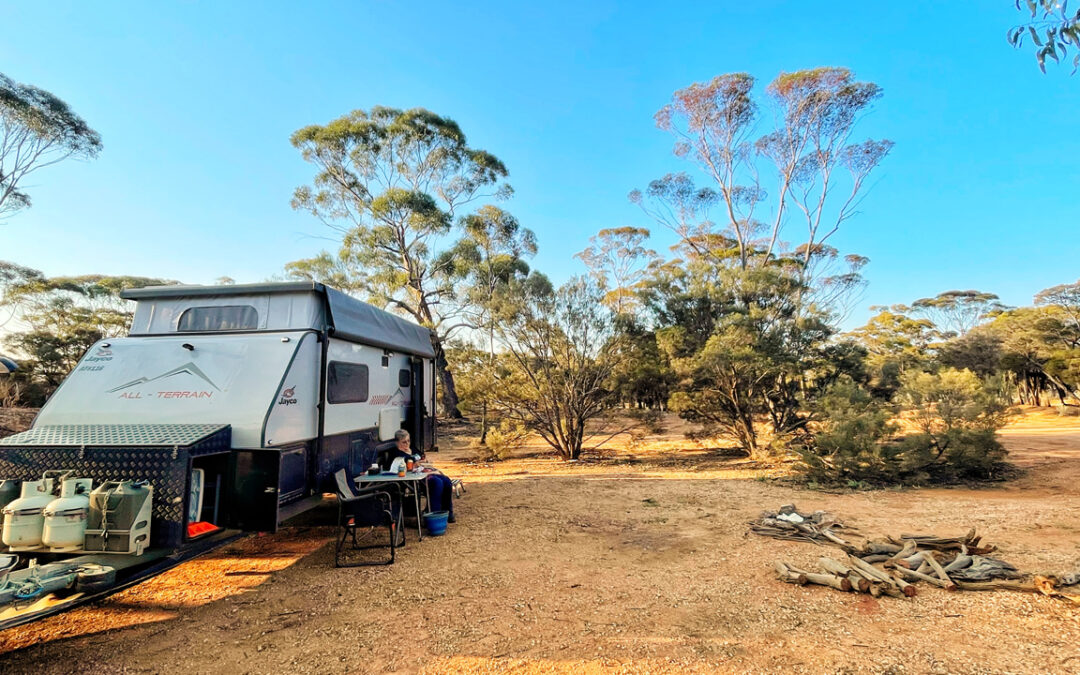
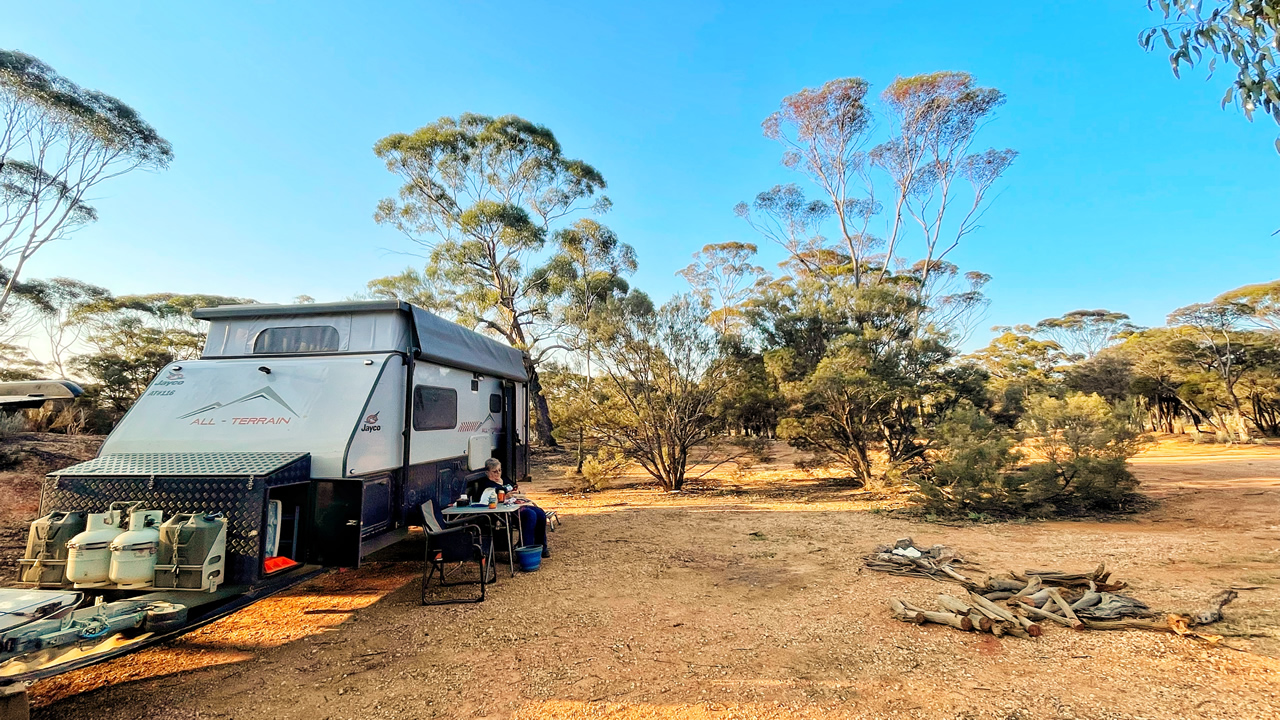
When we stayed here the first thing that stood out was how much space there is. You’re not crammed in next to others – even with a few vans around it still feels open. Head down the back to find some great sites suitable for caravans.

The ground is mostly gravel which makes it ideal for caravans and motorhomes and there are enough scattered trees to grab a bit of shade if you time it right.

Despite being close to the highway it was quiet overnight. We got the odd truck passing through but nothing that kept us awake.

It’s the kind of place where you pull up, cook a meal and have a campfire and a couple of beers.

Is it Caravan Friendly?

Yes – very much so.

This is one of the easier free camps in WA to access with a van:

  • Plenty of room to turn around
  • Flat areas for parking
  • No tight access points

We’d have no hesitation recommending it for caravans, motorhomes, or even bigger rigs.

Best Time Go Camping At bromus Dam

The cooler months (April through October) are the best time to stay here.

Summer can be extremely hot and shade is limited so it’s not the most comfortable stop in peak heat.

If you’re lucky enough to pass through in spring you may catch some wildflowers in the surrounding bush.

Things To Know Before You Go

  • Bring all your own drinking water
  • Check fire restrictions before lighting a fire
  • Arrive earlier in the day if you want a shaded spot
  • Don’t rely on mobile reception
  • Take your rubbish if bins are full

Pros And Cons

Pros

  • Free and easy to access
  • Good space for caravans
  • Toilets available
  • Quiet bush setting

Cons

  • No drinking water
  • Limited shade
  • Basic facilities only
  • Patchy phone signal

Final Thoughts

Bromus Dam isn’t a destination camp – but that’s not the point.

It’s a reliable, no fuss stopover in a part of WA where those matter. After staying here ourselves we’d absolutely use it again when passing through.

If you’re self contained and happy with a simple bush setup it’s a solid option to add to your route.

Information Sources

This article combines first-hand experience with publicly available, verifiable data from:

  • Shire of Dundas (local government tourism information)
  • Personal experience

Conclusion

Details such as location, facilities and access have been cross-checked across multiple sources and verified during our own visit.

And if you’re looking for even more great camps including many free camps on the Nullarbor check out this article – 91 EPIC Nullarbor Camping Sites To Add To Your List.

-David & Amanda

Frequently Asked Questions About Camping at Bromus Dam WA

Is Bromus Dam really free to camp at?

Yes, camping at Bromus Dam is completely free. There are no booking requirements or fees, and sites are unallocated so you can choose your own spot when you arrive.

Do you need a 4WD to access Bromus Dam?

No, you don’t need a 4WD. The site is accessed via a sealed highway with a short gravel track that is generally suitable for 2WD vehicles, caravans and motorhomes in normal conditions.

Are there toilets at Bromus Dam?

Yes, there are basic public toilets available at the site. However, there are no other major amenities, so you’ll still need to be largely self-sufficient.

Can you take caravans and big rigs into Bromus Dam?

Yes, the campground is very caravan friendly. There is plenty of space, relatively flat ground, and easy access, making it suitable for larger rigs and motorhomes.

Is there drinking water available at Bromus Dam?

No, there is no potable water available. You’ll need to bring all your own drinking and washing water with you.

Is Bromus Dam a good overnight stop?

Yes, it’s a great overnight stop if you’re travelling through the area. It’s quiet, easy to access, and offers enough basic facilities to make a comfortable break between long driving days.

Pin It on Pinterest