Uluru Rent A Car Your Guide To Renting A Car At Uluru/Yulara

Uluru Rent A Car Your Guide To Renting A Car At Uluru/Yulara

Uluru Rent A Car Your Guide To Renting A Car At Uluru/Yulara

When in Uluru rent a car for ultimate freedom and flexibility to explore Australia’s Red Centre at your own pace. Uluru is one of Australia’s most iconic landmarks and a must-visit destination for travellers seeking the raw beauty of the Australian Outback. While there are many ways to experience Uluru renting a car offers unparalleled flexibility and freedom. It will allow you to explore at your own pace and get to places that the tourist buses don’t go.

Why Would You Want To Rent A Car In Uluru?

Renting a car in Uluru is more than just a convenient way of getting about. It’s a game changer for your travel plans. With your own vehicle you can craft your itinerary, linger at scenic spots, and venture off the beaten path.

Flexibility And Freedom

Public transport options are zero around Uluru. Making a rental car the best way to ensure you can go wherever you want. In Uluru rent a car to go wherever and whenever you want. Whether it’s catching the sunrise at Uluru or exploring nearby attractions, having a car gives you the ultimate freedom.

Exploring At Your Own Pace

There’s no need to rush or adhere to a tour schedule. Want to spend an extra hour at a breathtaking lookout or take a detour to a less-visited site? With a rental car, it’s all possible.

Types Of Rental Cars Available

Depending on your needs and preferences, there are various types of rental cars available in Uluru.

Sedans And Hatchbacks

Perfect for solo travellers or couples, sedans and hatchbacks are economical and easy to drive. They’re ideal for paved roads and short distances.

SUVs And 4WDs

For those planning to explore more rugged terrain, an SUV or a 4WD vehicle is essential. SUVs and 4WDs give you more flexibility needed if you want to partake in off-road adventures.

Luxury Cars

If you prefer to travel in style, luxury cars offer enhanced comfort and features. An awesome option for those who like to travel in maximum comfort and style.

Top Car Rental Companies In Uluru

Several reputable car rental companies operate in Uluru, providing a range of options to suit different needs.

Avis

Avis is known for its wide selection of vehicles and excellent customer service. They offer various models ranging from compact cars through to 4WDs.

Avis Rent A Car From Uluru – Ayers Rock Airport
Are you looking for a rental car to explore Uluru and Alice Springs? If you’re ready to experience the Red Centre in full Avis can make their trip safer and more enjoyable. Avis offer car hire at Ayers Rock Airport, which is also known as Connellan Airport or Uluru Airport. AVIS specialise in 4WDs, with their vehicles perfect for weekends in the bush or extended outback adventures.

Avis car rental at Ayers Rock Airport is easy to find, with their office located at the Arrivals Hall in the main Terminal Building. The Avis Ayers Rock car rental office is open on Sundays from 9:00 AM to 1:45 PM, and Monday to Friday from 9:00 AM to 2:00 PM. Their rental car must be returned during office hours.

Avis Car Hire Fleet

Cars
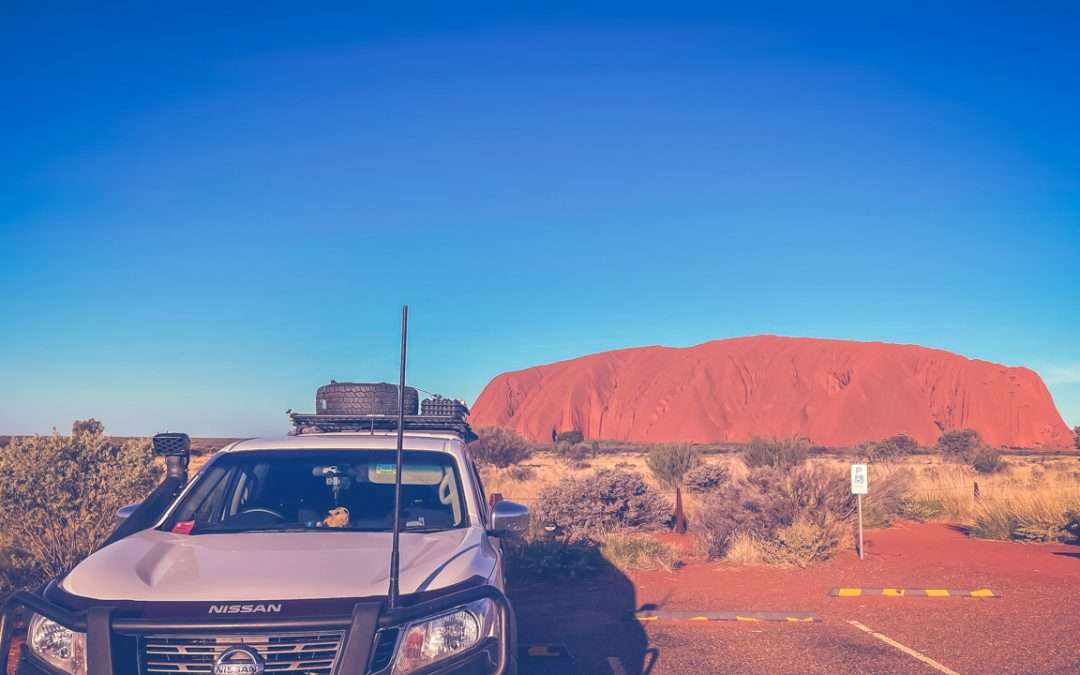
If you need an Uluru rent a car, AVIS have a variety of vehicles to choose from. From compact cars to large sedans and SUVs, you’re sure to find exactly what you need. 4WDs are especially popular in the Red Centre, as they allow you to explore Uluru-Kata Tjuta National Park and get off the beaten track.

When it comes to 4WD hire at Ayers Rock Airport, AVIS combine fantastic off-road performance with modern comfort and advanced safety features. Their 4WDs and other vehicles go through a regular maintenance and cleaning program, so you can book 4WD hire at Uluru with complete confidence. Check out their Ayers Rock Airport car hire fleet today.

Commercial Vehicle Hire – Ute – Van – Truck – Bus
The car rental office at Uluru Airport also supplies commercial vehicles, from utes and vans to small trucks and buses. If you need a practical vehicle for work or recreation, AVIS are sure to have what you need. their commercial vehicles have been selected for outback conditions, with all cars kept in tip-top condition. If you need to visit the Red Centre for a contract or travel between Uluru and Alice for work, AVIS are there to help.

Avis Car Renting Deals & Offers
AVIS want to ensure their Uluru – Ayers Rock Airport car rental services are available to everyone. If you simply need to get from the airport to the city centre one-way car hire is perfect. However when you plan to spend a lot of time exploring Uluru try one of their long term car rentals. And to make sure you save money while hiring a car from Avis, try searching through car hire deals.

Uluru Rent A Car And Visit Yulara Resort

Uluru Rent A Car And Visit Yulara Resort

Hertz

Hertz provides competitive pricing and a large fleet. They are a reliable choice for both short and long-term rentals.

Experience The Quintessential Australian Outback Experience With Hertz
Alice Springs is one of only two major cities in Australia’s Northern Territory, so it stands to reason that much of the outback state is best explored from this central point. Most people come here to see the surrounding region and feast their eyes on some of Australia’s most iconic sights, such as Glen Helen Gorge, Ellery Creek Big Hole, and of course – the world-famous, Uluru. The Australian outback is a place of iconic beauty. For the best way to see it all, jump in a rental car and hit the road. Wherever you choose to explore, you’ll get there in a rental car from Hertz.

Pickup Locations Ayers Rock

Thrifty

Thrifty offers great deals and discounts, making it a popular choice among budget-conscious travellers.

Explore Nearby Natural Wonders In Your Car Hire
There’s more to nature in Uluru National Park and the Northern Territory than just Uluru. The Kata Tjuta is a lesser-known but also awe-inspiring geological formation. Located around a 40-minute drive west of Uluru, you will find Kata Tjuta, also referred to as the Olgas, meaning “many heads”. Holding great cultural significance, the Kata Tjuta consists of 36 large domes (or heads). Thought to be the homes to many spirit energies, the Anangu Aboriginal people still use the area for ceremonies and have inhabited the site for the past 22,000 years. Able to be viewed from several hiking trails, ranging from tough, challenging hikes to more relaxed walking paths, how you choose to experience these wonders is up to you.

At close to a three-and-a-half-hour drive, Kings Canyon is more suited as a multi-day exploration than a single day trip, mainly because it takes a couple of days to take in the natural splendour of the landscape. Dine under the stars at the Kings Canyon resort after a day of hiking and sightseeing, where you can see any number of the 600 species of native plants and animals that call Kings Canyon home.

Use Your Rental Car To Drive Down Red Centre Way
Regarded as one of the great drives on the planet, ‘Red Centre way’ takes you through the heart of Australia on an unforgettable week-long journey. Using your Thrifty car hire, you can cover Alice Springs, Uluru, Kings Canyon and Ormiston Gorge, with stunning red desert between each location.

Drive to Kings Creek Station to see a working cattle and camel station. At around a million camels, Australia has more camels than any country on earth, and you are bound to see more than a few on your drive. In fact, if you really love camels and just seeing them isn’t enough, and you want to get up close and personal, you can take in the sights from a Camel Tour, which will see you riding around stunning trails from atop your hairy steed.

If you’re thinking of something more modern, quad biking and motorcycle tours are also popular ways to see the sights. All of these adventures await you in the “Red Heart”. Hire a Thrifty car hire from Ayers Rock Airport to experience them at your leisure.

Where Is The Branch Located?
If you are coming off a flight at Ayers Rock, you can pick up a vehicle from the counter at the airport terminal. If you are already in the resort you can pick up a vehicle from the Tourist Information Centre at our Town Square in Yulara. If you have booked a vehicle and are already in the resort and you have been advised to collect from the airport, please contact us prior to going out to the Airport so that we can arrange for pick up at our Downtown office. The airport counter only operates when a commercial flight is arriving at the Resort at the times specified by the airline.

  • Address
    Ayers Rock Airport
    Coote Road, Ayers Rock, NT, 0872, Australia
  • Phone
    (08) 8956 2030
  • Opening Hours
    Monday:08:00-17:00
    Tuesday:08:00-17:00
    Wednesday:08:00-17:00
    Thursday:08:00-17:00
    Friday:08:00-17:00
    Saturday:08:00-17:00
    Sunday:08:00-17:00
  • Web
    https://www.thrifty.com.au/locations/ayers-rock-airport

Uluru Rent A Car And Visit Kata Tjuta The Olgas Valley Of The Winds Walk

Uluru Rent A Car And Visit Kata Tjuta The Olgas Valley Of The Winds Walk

How To Choose The Right Rental Car

Selecting the right rental car depends on several factors.

Consider Your Itinerary

Think about the places you plan to visit. If you’re sticking to main roads, a sedan might suffice. For off-road adventures go for for an SUV or 4WD.

Size And Comfort

Consider the number of passengers and the amount of luggage. A larger vehicle might be necessary for families or groups.

Fuel Efficiency

Fuel costs can add up especially if you plan to drive long distances. Choosing a more fuel efficient vehicle can save you money.

Booking Your Rental Car

Booking your rental car in advance is recommended, especially during peak travel seasons.

Online Booking vs. Walk-In

Online booking allows you to compare prices and secure your preferred vehicle. Walk-in bookings are possible but come with the risk of limited availability.

Best Time To Book

Booking at least a few weeks in advance can help you get better deals and ensure the car you want is available.

Necessary Documentation

Make sure to have your driver’s license, credit card, and any other required identification when picking up your rental car.

Cost Of Renting A Car In Uluru

Understanding the costs involved can help you budget for your trip.

Average Rental Prices

Rental prices vary depending on the type of car and rental duration. On average, expect to pay around $350 per day for a standard mid sized car.

Additional Fees To Consider

Be aware of additional fees such as insurance, fuel charges, and young driver fees. Reading the rental agreement carefully can help avoid surprises.

Tips for Saving Money

Booking in advance, choosing a fuel-efficient car, and avoiding unnecessary extras can help reduce rental costs.

Driving In Uluru

Driving in Uluru comes with its own set of challenges and considerations.

Road Conditions And Terrain

The roads around Uluru are generally well-maintained, but some areas, especially off-road tracks, can be rough. Ensure your vehicle is suitable for the terrain you plan to explore.

Weather Considerations

The Outback can experience extreme weather conditions. Keep an eye on the local weather forecast and be prepared for hot temperatures, sudden rain and dusty conditions.

Safety Tips

Always carry plenty of water, a spare tire, and a basic toolkit. Mobile phone coverage can be limited, so it’s wise to inform someone of your travel plans.

Must Visit Attractions Accessible By Car

Uluru is surrounded by stunning attractions that are easily accessible by car.

Uluru-Kata Tjuta National Park

This UNESCO World Heritage site is home to the famous Uluru rock formation and the equally impressive Kata Tjuta (the Olgas). Explore the park’s numerous walking trails and cultural sites.

Kings Canyon

A bit further afield, Kings Canyon offers spectacular hiking opportunities and breathtaking views. The Rim Walk is particularly popular.

Alice Springs

A few hours’ drive from Uluru, Alice Springs is a vibrant town with museums, galleries, and cultural experiences.

Day Trips From Uluru

There are several excellent day trip options for those looking to explore beyond Uluru.

The Olgas (Kata Tjuta)

This group of large, domed rock formations is just a short drive from Uluru and offers stunning scenery and hiking trails.

Mount Conner

Often mistaken for Uluru from a distance, Mount Conner is a striking flat-topped mountain worth visiting.

Aboriginal Cultural Experiences

Engage with the local Anangu people and learn about their rich cultural heritage through guided tours and workshops.

Packing Essentials For Your Road Trip

Preparation is key for a successful road trip in the Outback.

Water And Snacks

Always carry enough water and non-perishable snacks. The distances between service stations can be long.

Maps And GPS

While GPS is helpful, having a physical map as a backup is advisable in case of signal loss.

Emergency Kit

An emergency kit should include a first aid kit, flashlight, extra batteries, and basic tools.

Eco Friendly Driving Tips

Being mindful of the environment is important when driving through such a pristine area.

Minimising Fuel Consumption

Drive smoothly, avoid unnecessary idling, and keep your tires properly inflated to reduce fuel consumption.

Responsible Off-Road Driving

Stick to marked trails and avoid disturbing wildlife or plant life.

Local Etiquette And Respecting Indigenous Land

Respect for the local culture and land is paramount.

Cultural Sensitivity

Be aware of and respect the cultural significance of sites to the Anangu people. Follow guidelines and signs at cultural sites.

Permits And Permissions

Some areas require permits for entry. Ensure you have the necessary permissions before venturing into restricted zones.

Returning Your Rental Car

When your adventure concludes, follow these steps for a smooth return process.

Fuel Policy

Most rental companies require you to return the car with a full tank of fuel. Plan accordingly to avoid extra charges.

Inspection And Damage Checks

Inspect the car for any damage and ensure it’s clean. Report any issues to the rental company.

Returning At Odd Hours

If you need to return the car outside of business hours, confirm the procedure with the rental company to avoid any complications.

Conclusion

Renting a car in Uluru is the key to unlocking an unforgettable adventure in Australia’s Red Centre. With the freedom to explore at your own pace that renting a car in Uluru will give you can fully immerse yourself in the stunning landscapes and rich cultural heritage of the region.

Uluru Rent A Car FAQs Frequently Asked Questions

What is the minimum age to rent a car in Uluru?

The minimum age to rent a car in Uluru is typically 21 years, though some companies may charge an additional fee for drivers under 25.

Are there any additional insurance options available?

Yes, most rental companies offer additional insurance options such as collision damage waivers and personal accident insurance.

Can I rent a car one-way from Uluru?

Some rental companies offer one-way rentals, but it's best to check in advance and confirm any additional fees.

How reliable is GPS navigation in the area?
GPS navigation is generally reliable, but it's wise to have a physical map as a backup in case of signal loss.

What should I do in case of a breakdown?
In case of a breakdown, contact the rental company's roadside assistance service. It's also recommended that you inform someone of your travel plans and expected return time.

53 Best Camp Sites On The Great Central Road

53 Best Camp Sites On The Great Central Road

53 Best Camp Sites On The Great Central Road

Travel the Great Central Road (GCR) with our comprehensive planning guide. Learn about key stops, preparation tips and cultural significance. Are you ready for an adventure that takes you through the heart of Australia’s outback?

The Great Central Road runs from Laverton in Western Australia to Uluru in the Northern Territory. This outback road trip adventure takes you through awesome wide open deep red landscapes. It leaves you with the feeling of a deep connection to country. If you are a well experienced outback adventurer or planning your first outback trip. This guide will equip you with everything you need to know for an unforgettable experience.

Great Central Road Free Camp At Docker River

Great Central Road Free Camp At Docker River

Table Of Contents

History And Background

Origins Of The Great Central Road

The Great Central Road was initially developed as a series of tracks used by Aboriginal communities for trade and travel. Over the years it has been transformed into a defined route to facilitate mining operations and connect remote communities. The Great Central Road is now an important link between Western Australia and the Northern Territory. It is an adventurous path through some of the most remote parts outback Australia has to offer.

Historical Significance Of The Great Central Road

The Great Central Road is more than just a highway; it’s a journey through history. The road passes through lands inhabited by First Nation people for millennia. Their communities have rich traditions and a deep connection to country. This trip is not only a physical journey but it’s a cultural and very historic one as well.

Route Overview

Starting Point: Laverton, WA

Laverton marks the beginning of the Great Central Road. Laverton is steeped in gold mining history and offers travellers a last chance to stock up on essential supplies and services.

Ending Point: Uluru, NT

The route ends (or begins) at Uluru, one of Australia’s most iconic landmarks. This monolith stands as a pertinent example of the natural beauty and spiritual significance of the outback.

Docker River Camping On The Great Central Road

Docker River Camping On The Great Central Road

53 Camping Sites On The Great Central Road

There are numerous designated camping sites along the Great Central Road. These sites provide basic facilities and a safe place to rest.

1. Camp Sandalwood

This is a free campground accessible to camper trailers.

Cost: Free
Type: Bush Camping
Location: White Cliffs Rd, Laverton, Western Australia
GPS: -28.560606°, 122.584711°
Distance From Laverton WA: 20km
Distance From Uluru NT: 1,119km

2. Camp Brakesway

This is a free campground. It is dog friendly. It is accessible to camper trailers, off road caravans and four wheel drives. Camping in tents is allowed.

Cost: Free
Type: Bush Camping
Location: White Cliffs Road, Laverton, Western Australia
GPS: -28.480701°, 122.803377°
Distance From Laverton WA: 45km
Distance From Uluru NT: 1,143km
Pet Friendly: Yes

3. Road Side Stop With Telstra Coverage

This is a free campground. It is accessible to RVs, camper trailers and off road caravans.

Cost: Free
Type: Bush Camping
Location: White Cliffs-Yamarna Rd, Laverton, Western Australia
GPS: -28.400870°, 122.968969°
Distance From Laverton WA: 64km
Distance From Uluru NT: 1,067km

4. Condon Well Camp

This is a free campground. It is accessible to RVs, camper trailers and off road caravans.

Cost: Free
Type: Bush Camping
Location: White Cliffs-Yamarna Road, Laverton, Western Australia
GPS: -28.416255°, 123.099128°
Distance From Laverton WA: 77km
Distance From Uluru NT: 1,074km

5. New Rest Area

This is a new rest area replacing the old one 300m SW of here. Access to old site and Gnamma hole has been blocked with large rocks.

Cost: Free
Type: Bush Camping
Location: Laverton, Western Australia
GPS: -28.366170°, 122.598123°
Distance From Laverton WA: 37km
Distance From Uluru NT: 1,065km
Pet Friendly: Yes

6. Giles Breakaway

This is a free campground. It is accessible to RVs, camper trailers, caravans and big rigs. Camping in tents is allowed. We stayed at Giles Breakaway in August 2024 – click here to read our full rundown.

Cost: Free
Type: Bush Camping
Location: Great Central Rd, Laverton, Western Australia
GPS: -28.279715°, 122.702441°
Distance From Laverton WA: 51km
Distance From Uluru NT: 1,052km
Pet Friendly: Yes

7. Salt Lake Campsite

This is a free campground. It is dog friendly.

Cost: Free
Type: Bush Camping
Location: Great Central Rd, Cosmo Newbery, Western Australia
GPS: -28.208077°, 122.746484°
Distance From Laverton WA: 60km
Distance From Uluru NT: 1,042km
Pet Friendly: Yes

Free Camping On The Great Central Road In WA

Free Camping On The Great Central Road In WA

8. Overnight Stop

This is a free campground. It is dog friendly.

Cost: Free
Type: Bush Camping
Location: Great Central Road, Laverton, Western Australia
GPS: -28.045097°, 122.855767°
Distance From Laverton WA: 82km
Distance From Uluru NT: 1,021km
Pet Friendly: Yes

9. The Pines Rest Area

This is a free campground. It is dog friendly. It is accessible to RVs, camper trailers and caravans. Camping in tents is allowed. You must be fully self-contained.

Cost: Free
Type: Bush Camping
Location: Great Central Rd, Cosmo Newbery, Western Australia
GPS: -27.915623°, 123.178602°
Distance From Laverton WA: 119km
Distance From Uluru NT: 983km
Pet Friendly: Yes

10. Under The Southern Cross Windmill

This is a campground. It is accessible to motorbikes, camper trailers and off road caravans.

Cost: Free
Type: Bush Camping
Location: -27.92123, 123.378667 Is Entrance From GCR, Western Australia
GPS: -27.874536°, 123.342216°
Distance From Laverton WA: 152km
Distance From Uluru NT: 969km

11. Gravel Pit

This is a free campground. It is accessible to RVs, camper trailers, caravans and big rigs.

Cost: Free
Type: Bush Camping
Location: Great Central Road, Cosmo Newbery, Western Australia
GPS: -27.924011°, 123.430979°
Distance From Laverton WA: 144km
Distance From Uluru NT: 952km

12. Nankers Spot

This is a free campground. It is accessible to motorbikes, RVs, camper trailers and caravans. Camping in tents is allowed. You must be fully self-contained.

Cost: Free
Type: Bush Camping
Location: Great Central Road, Cosmo Newbery, Western Australia
GPS: -27.918001°, 123.617686°
Distance From Laverton WA: 163km
Distance From Uluru NT: 940km

13. Karl’s Campspot

This is a free bush campground with room for small the medium size rigs. Smaller units can navigate their rig a fair distance from the road into the bush. Larger units might be better off utilising the area closer to the road (hard to turn and sandy). All spots are sheltered from road and sun by trees and bushes. Campfires are being lit but check with shire regulations.

Cost: Free
Type: Bush Camping
Location: Great Central Road, Western Australia
GPS: -27.916891°, 123.619880°
Distance From Laverton WA: 163km
Distance From Uluru NT: 939km

14. Minnie Creek Road Rest Area

Accessible to motorbikes, camper trailers and off road caravans.

Cost: Free
Type: Bush Camping
Location: Great Central Road, Western Australia
GPS: -27.843846°, 123.917977°
Distance From Laverton WA: 196km
Distance From Uluru NT: 901km
Pet Friendly: Yes

15. Sandrifters Gravel Pit

This is a free campground. It is accessible to motorbikes, RVs, camper trailers and caravans. Camping in tents is allowed.

Cost: Free
Type: Bush Camping
Location: Lake Wells, Great Central Road, Western Australia
GPS: -27.758328°, 124.028482°
Distance From Laverton WA: 210km
Distance From Uluru NT: 886km
Pet Friendly: Yes

16. Rest Stop

This is a free campground.

Cost: Free
Type: Bush Camping / Rest Area
Location: Neale, Great Central Road, Western Australia
GPS: -27.742630°, 124.060603°
Distance From Laverton WA: 214km
Distance From Uluru NT: 889km

17. Shady Gum Camp

Unofficial small site – one car only, no room to turn caravan around if site already in use. Not far from the Hwy, no facilities. Lovely spot to spend the night round a fire.

Cost: Free
Type: Bush Camping
Location: Great Central Rd, Neale, Western Australia
GPS: -27.713851°, 124.140968°
Distance From Laverton WA: 223km
Distance From Uluru NT: 880km
Pet Friendly: Yes

GCR Camping Near Warburton WA

GCR Camping Near Warburton WA

18. Eulalia’s Rest Spot

Turn off the road approximately 1km east of Shady Pines. The entrance is a dirt track south of the road. It may not be suitable for caravans. The spot is off the road, has plenty of firewood and is elevated. It’s obviously not used too much but is less exposed. There are numerous other tracks once you get to the spot.

Cost: Free
Type: Bush Camping
Location: Great Central Rd, Neale, Western Australia
GPS: -27.712349°, 124.157787°
Distance From Laverton WA: 225km
Distance From Uluru NT: 878km

19. Parking Diversion

Unofficial free camping in a long parking diversion off of the Great Central Road. There are no facilities. Campers must be self-sufficient. Take all rubbish with you and leave no trace. Pets are permitted.

Cost: Free
Type: Bush Camping
Location: Great Central Rd, Neale, Western Australia
GPS: -27.548748°, 124.297423°
Distance From Laverton WA: 249km
Distance From Uluru NT: 855km
Pet Friendly: Yes

20. Roadside Rest Area

This is a free campground. It is dog friendly. It is accessible to off road caravans and four wheel drives.

Cost: Free
Type: Bush Camping / Rest Area
Location: David Carnegie Rd, Neale, Western Australia
GPS: -27.220941°, 124.446485°
Distance From Laverton WA: 290km
Distance From Uluru NT: 813km
Pet Friendly: Yes

21. Nullye Soak

This is a free campground. It is dog friendly. It is accessible to camper trailers, off road caravans and four wheel drives. Camping in tents is allowed.

Cost: Free
Type: Bush Camping
Location: Great Central Rd, Lake Wells, Western Australia
GPS: -27.185306°, 124.487631°
Distance From Laverton WA: 295km
Distance From Uluru NT: 807km
Pet Friendly: Yes

22. Tjukayirla Roadhouse

This paid caravan park offers toilets, showers, drinking water and power hookups. It is dog friendly. It is accessible to motorbikes, RVs, camper trailers and caravans. Camping in tents is allowed. They do not take bookings. First in best dressed. Fuel is available.

Cost: Powered $40 / Unpowered $30 (as at June 2024)
Type: Roadhouse Caravan Park
Location: Great Central Rd, Neale, Western Australia
GPS: Great Central Rd, Neale, Western Australia
Distance From Laverton WA: 277km
Distance From Uluru NT: 819km
Phone: (08) 9037-1108
Email: tjukayirlaroadhouse@ngcouncil.org.au
Web: http://tjukayirlaroadhouse.com.au
Pet Friendly: Yes

At Tjukayirla Roadhouse

At Tjukayirla Roadhouse

23. Old Roadworks Camp Site

Unofficial stop. Leave no trace.

Cost: Free
Type: Bush Camping
Location: Great Central Rd, Lake Wells, Western Australia
GPS: -27.048529°, 124.818914°
Distance From Laverton WA: 333km
Distance From Uluru NT: 770km
Pet Friendly: Yes

24. Wahlgu Rockholes

Unofficial stop. Leave no trace.

Cost: Free
Type: Bush Camping
Location: Great Central Rd, Western Australia
GPS: -27.061158°, 125.185781°
Distance From Laverton WA: 370km
Distance From Uluru NT: 727km

25. Corheads Kangaroo Camp

Off the highway. Easily accessible with turn around points and plenty of space trees for shade. Don’t go too far past the big opening as it does get rough & hard to turn around.

Cost: Free
Type: Bush Camping
Location: Great Central Road, Western Australia
GPS: -27.056238°, 125.183536°
Distance From Laverton WA: 370km
Distance From Uluru NT: 727km

26. Road Water Dam

This is a free campground. It is accessible to motorbikes, RVs, camper trailers and caravans.

Cost: Free
Type: Bush Camping
Location: Great Central Road, Western Australia
GPS: -27.050051°, 125.206958°
Distance From Laverton WA: 372km
Distance From Uluru NT: 724km
Pet Friendly: Yes

27. Road Realignment

This is a free campground. It is dog friendly. It is accessible to RVs, camper trailers and caravans.

Cost: Free
Type: Bush Camping
Location: Great Central Road, Western Australia
GPS: -27.034355°, 125.227917°
Distance From Laverton WA: 375km
Distance From Uluru NT: 722km
Pet Friendly: Yes

28. Gravel Pit – Paradise Camp

This is a free campground. An unofficial sign names it as Paradise Camp.

Cost: Free
Type: Bush Camping
Location: GCR, Western Australia
GPS: -26.972562°, 125.407069°
Distance From Laverton WA: 394km
Distance From Uluru NT: 708km

29. Ridge Camp

This is a free campground. It is dog friendly. It is accessible to RVs, big rigs, camper trailers and caravans.

Cost: Free
Type: Bush Camping
Location: Great Central Road, Western Australia
GPS: -26.965449°, 125.412748°
Distance From Laverton WA: 395km
Distance From Uluru NT: 707km

30. Desert Surf Central

This is a free campground. It is accessible to motorbikes, RVs, camper trailers, caravans and big rigs. Camping in tents is allowed. Heaps of room for a few camps, good firewood around and caves to explore. We stayed at Desert Surf Central in August 2024 – click here to read our full rundown.

Cost: Free
Type: Bush Camping
Location: Great Central Road, Western Australia
GPS: -26.836652°, 125.658008°
Distance From Laverton WA: 424km
Distance From Uluru NT: 679km
Pet Friendly: Yes

Breakaways At Desert Surf Central

Breakaways At Desert Surf Central

31. Off The Road

This is a free camping area. It’s dog friendly.

Cost: Free
Type: Bush Camping
Location: Great Central Road, Gibson Desert South, Western Australia
GPS: -26.816710°, 125.693160°
Distance From Laverton WA: 428km
Distance From Uluru NT: 675km
Pet Friendly: Yes

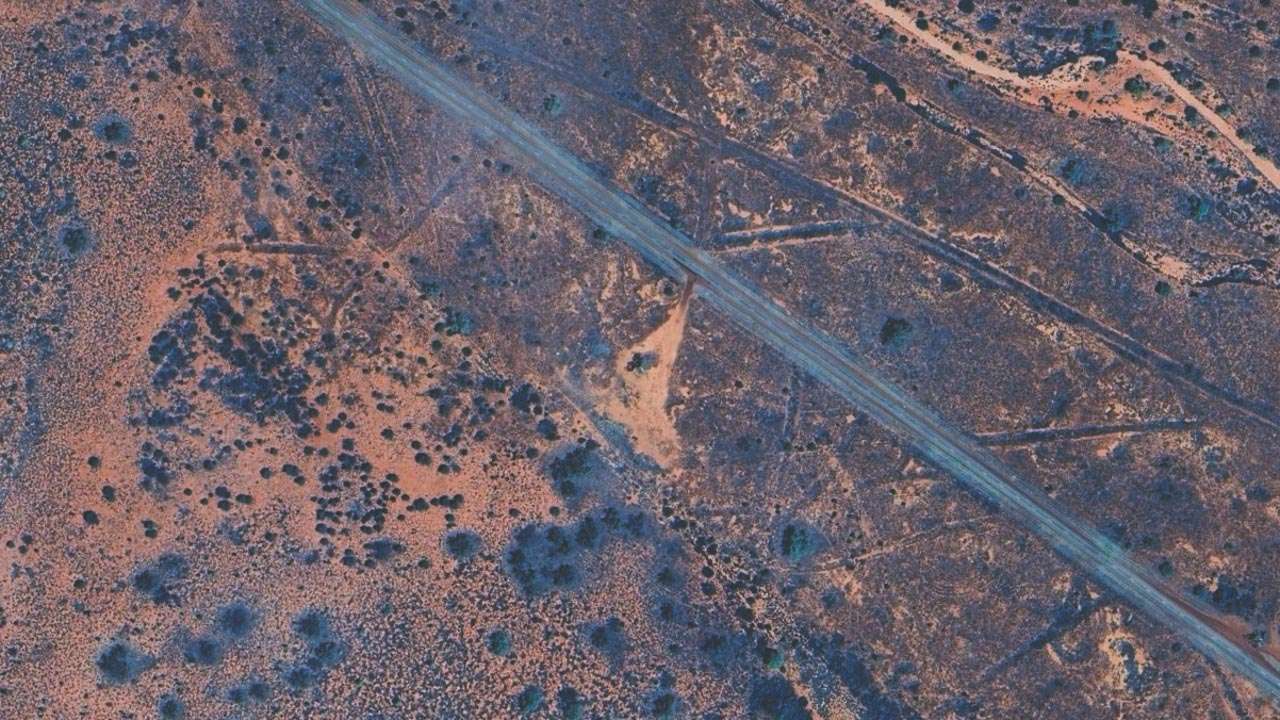
Old Roadworks Camp Site On Great Central Road 770km From Uluru

Old Roadworks Camp Site On Great Central Road 770km From Uluru

32. Gravel Dump

This is a free camping area. It’s dog friendly.

Cost: Free
Type: Bush Camping
Location: Great Central Road, Western Australia
GPS: -26.708662°, 125.766645°
Distance From Laverton WA: 442km
Distance From Uluru NT: 661km
Pet Friendly: Yes

33. Quarry

This is a free camping area.

Cost: Free
Type: Bush Camping
Location: Great Central Road, Gibson Desert South, Western Australia
GPS: -26.621734°, 125.875080°
Distance From Laverton WA: 457km
Distance From Uluru NT: 646km

34. Chris’s Place

This is a free campground. It is dog friendly. It is accessible to motorbikes, RVs, camper trailers, caravans and four wheel drives. Huge area in the bush. It used to be a quarry.

Cost: Free
Type: Bush Camping
Location: Great Central Road, Western Australia
GPS: -26.524739°, 126.029550°
Distance From Laverton WA: 476km
Distance From Uluru NT: 626km
Pet Friendly: Yes

35. Pete’s Bush Camp

This is a free campground. It is accessible to motorbikes, RVs, camper trailers, caravans and big rigs. Camping in tents is allowed.

Cost: Free
Type: Bush Camping
Location: Great Central Road, Gibson Desert South, Western Australia
GPS: -26.522112°, 126.027955°
Distance From Laverton WA: 476km
Distance From Uluru NT: 626km

36. Mikes Place – Near Pete’s

This is a free campground. It is accessible to motorbikes, RVs, camper trailers, caravans and big rigs. Camping in tents is allowed.

Cost: Free
Type: Bush Camping
Location: Great Central Road, Gibson Desert South, Western Australia
GPS: -26.522197°, 126.038044°
Distance From Laverton WA: 477km
Distance From Uluru NT: 625km

37. Micks Camp

Nice quiet spot off to the side of the plateau. A long way off the road pretty good views.

Cost: Free
Type: Bush Camping
Location: Great Central Road, Western Australia
GPS: -26.502166°, 126.056394°
Distance From Laverton WA: 480km
Distance From Uluru NT: 623km

38. Jonas Camp

This is a free camping area off to the side of the road.

Cost: Free
Type: Bush Camping
Location: Great Central Rd, Gibson Desert South, Western Australia
GPS: -26.421422°, 126.146363°
Distance From Laverton WA: 493km
Distance From Uluru NT: 610km

39. Rest Area Unofficial

This is a free campground. Camping in tents is allowed.

Cost: Free
Type: Bush Camping / Rest Area
Location: Great Central Rd, Gibson Desert South, Western Australia
GPS: -26.290962°, 126.234395°
Distance From Laverton WA: 511km
Distance From Uluru NT: 592km

40. Rest Area Along The Old GCR

Rest area along the old Great Central Road. About 30km west of Warburton WA.

Cost: Free
Type: Bush Camping
Location: Old Great Central Road, Western Australia
GPS: -26.219057°, 126.310647°
Distance From Laverton WA: 523km
Distance From Uluru NT: 580km

41. Rock Holes Via Old Great Central Road

This is a free campground. It is accessible to four wheel drives. Camping in tents is allowed. It has a bit of Telstra reception.

Cost: Free
Type: Bush Camping
Location: Great Central Road, Western Australia
GPS: -26.198019°, 126.384344°
Distance From Laverton WA: 530km
Distance From Uluru NT: 572km

42. Old Great Central Hwy Lookout / Rest Stop

This is a free campground. It is accessible to four wheel drives. Camping in tents is allowed. Telstra reception.

Cost: Free
Type: Bush Camping
Location: Old Great Central Hwy (Unsealed), Western Australia
GPS: -26.196682°, 126.390149°
Distance From Laverton WA: 531km
Distance From Uluru NT: 572km

43. Warburton Roadhouse

Congratulations you’re almost at exactly the half way point! For travellers crossing the Great Central Road, the Warburton Roadhouse is the perfect place to restock and refuel. With a variety of accommodation options and a good supply of both fresh and frozen food, Warburton Roadhouse is a welcome sight for many a weary traveller.

Facilities
The Roadhouse offers the following services.

  • Diesel and Opal* fuel (*Opal is a replacement for unleaded petrol.)
  • A takeaway food service and provision of breakfast and dinner if reserved in advance.
  • A well stocked store offering food and personal items including fresh fruit & veg, bread, drinks, ice, fuels, meat, basic grocery items and ice creams.
  • A range of accommodation options to suit everyone from the budget back-packer to the discerning traveller, as well as complete units that will act as a home away from home for persons employed on extended contracts in the community.
  • Tyre repair tools available for use.
  • 24 hour power.
  • The ability to cater for large groups and bus tours.
  • Telstra Network coverage (including 3G).

Cost: $15 per person per night (as on web site June 2024)
Type: Roadhouse Caravan Park
Location: Great Central Rd, Warburton, Western Australia
GPS: -26.131815°, 126.568548°
Distance From Laverton WA: 550km
Distance From Uluru NT: 552km
Phone: (08) 8956-7656
Web: https://warburtonroadhouse.com.au
Email: roadhouse.warbo@bigpond.com
Toilets: Yes
Showers: Yes
Power: Yes
Drinking Water: Yes
Laundry Facilities: Yes
Dump Point: Yes
Telstra Reception: Yes
Pet Friendly: Yes

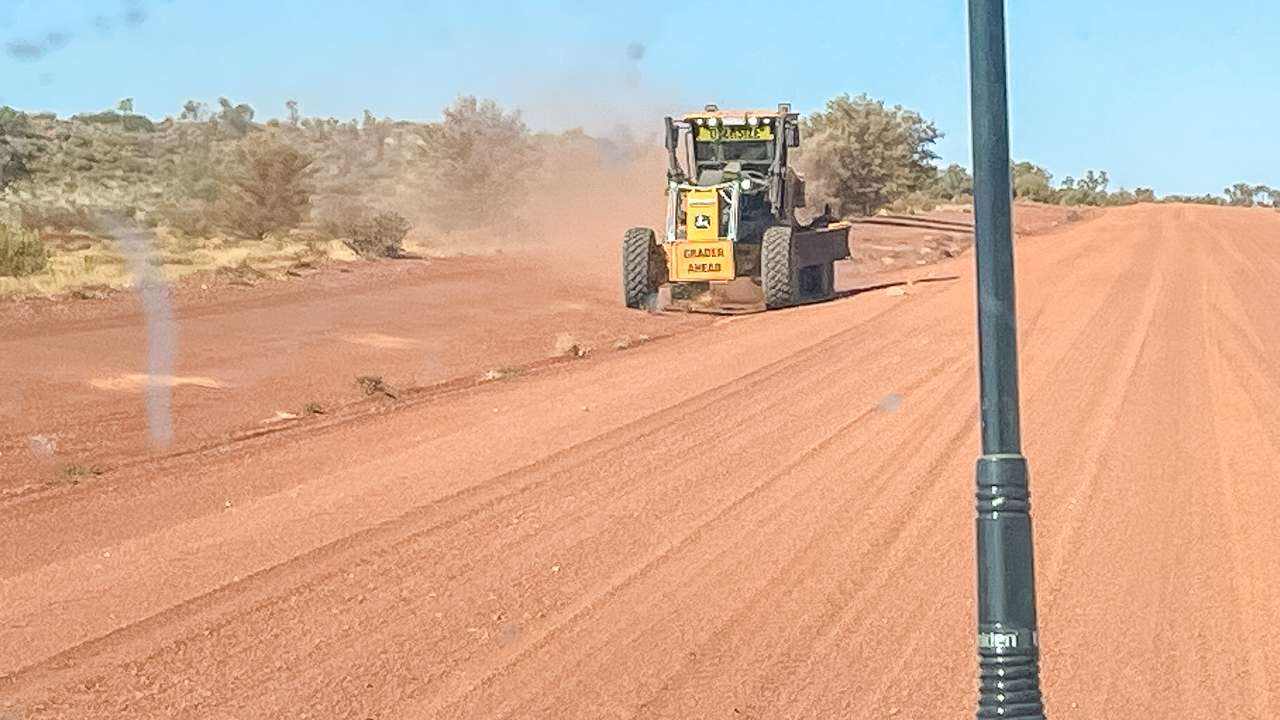
Grader On The Great Central Road Near Warburton

Grader On The Great Central Road Near Warburton

44. Piggies Place

This is a free campground. It is accessible to motorbikes, RVs, camper trailers, caravans and big rigs. Camping in tents is allowed. It’s dog friendly.

Cost: Free
Type: Bush Camping
Location: Great Central Rd, Ngaanyatjarra-Giles 0872, Western Australia
GPS: -25.927265°, 126.861635°
Distance From Laverton WA: 592km
Distance From Uluru NT: 510km
Pet Friendly: Yes

45. Yarla Kutjarra Camping

This is a free campground. It is accessible to motorbikes, RVs, camper trailers, caravans and big rigs. Camping in tents is allowed. It’s dog friendly. Telstra reception. We stayed at Yarla Kutjarra in August 2024 – click here to read our full rundown.

Cost: Free
Type: Bush Camping
Location: Great Central Rd, Between Warakurna and Warburton, Western Australia
GPS: -25.610328°, 127.223357°
Distance From Laverton WA: 646km
Distance From Uluru NT: 457km
Toilets: Yes
Non Potable Water: Yes
Pet Friendly: Yes

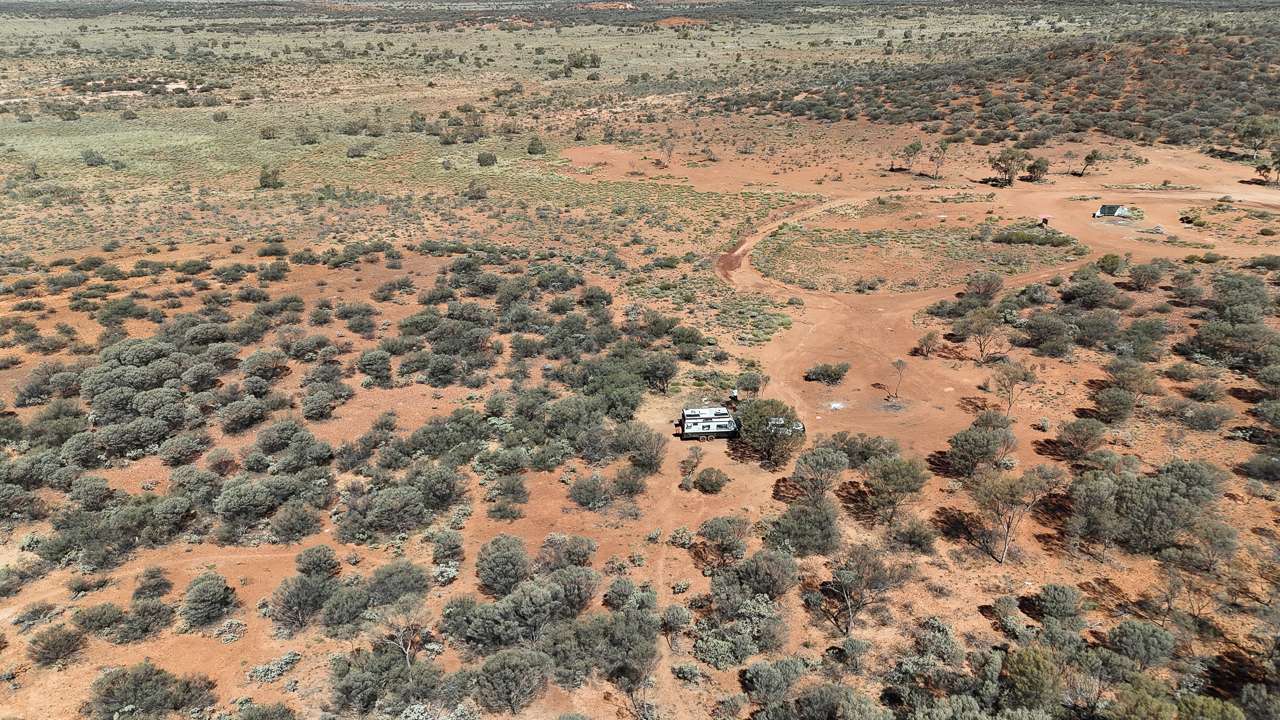
Our Camp On The Great Central Road Camping At Yarla Kutjarra

Our Camp On The Great Central Road Camping At Yarla Kutjarra

46. 2 GS Gravel Pit

Very big open area. Nice and flat. No firewood around so BYO. Loads of room here to turn around even the largest of rigs.

Cost: Free
Type: Bush Camping
Location: GCR, Western Australia
GPS: -25.518839°, 127.371185°
Distance From Laverton WA: 665km
Distance From Uluru NT: 438km
Pet Friendly: Yes

47. Gnamma Holes

This is a free campground. It is accessible to motorbikes, RVs, camper trailers, caravans and big rigs. Camping in tents is allowed. It’s dog friendly. Telstra reception.

Cost: Free
Type: Bush Camping
Location: Great Central Road, Ngaanyatjarra-Giles, Western Australia
GPS: -25.299460°, 127.817354°
Distance From Laverton WA: 717km
Distance From Uluru NT: 385km
Pet Friendly: Yes

48. Warakurna Roadhouse

The Warakurna Roadhouse is located along the Great Central Road, within the Great Victoria Desert, 781km west of Alice Springs and 331km from Yulara (Ayers Rock). Laverton is 811km to the west of the roadhouse and Kalgoorlie is 1163km west.

The Roadhouse offers the following services

  • Diesel and Opal fuel.
  • A takeaway food service.
  • A range of accommodation options to suit everyone from the budget back-packer to the discerning traveller. Including complete units that will act as a home away from home for persons employed on extended contracts in the community.
  • A well stocked store offering food and personal items including fresh fruit & veg, bread, drinks, ice, fuels, meat, basic grocery items and ice creams.
  • 24 hour power
  • An after-hours fuel service
  • Yurliya Gallery (High end Gallery exclusively selling works produced by Warakurna Artists)

Cost: Unpowered $20 – Powered $35 (as on web site June 2024)
Type: Roadhouse Caravan Park
Location: Great Central Rd, Warakurna, Western Australia
GPS: -25.043060°, 128.303328°
Distance From Laverton WA: 811km
Distance From Uluru NT: 331km
Phone: (08) 8956-7344
Web: https://warakurnaroadhouse.com.au
Toilets: Yes
Showers: Yes
Power: Yes
Drinking Water: Yes
Laundry Facilities: Yes
Dump Point: No
Telstra Reception: Yes
Pet Friendly: Yes

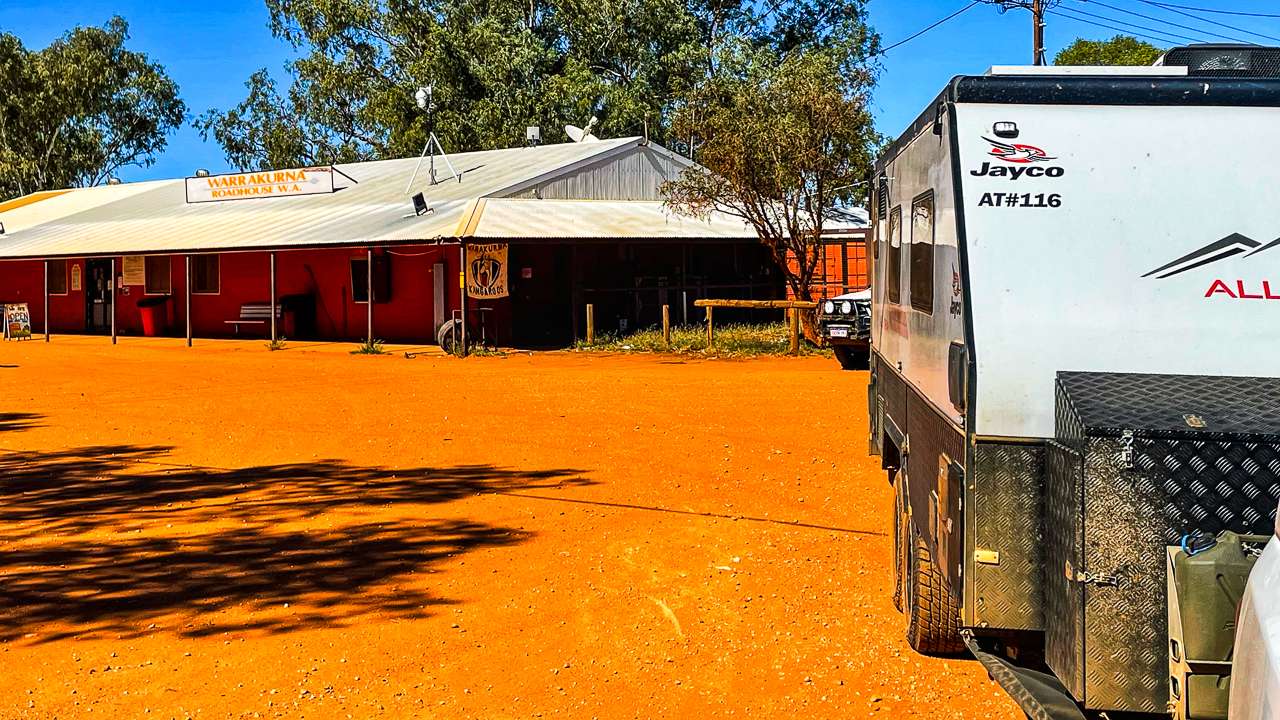
Warrakurna Roadhouse

Warakurna Roadhouse

49. Camel Last Resort

This is a free campground. It is accessible to motorbikes, camper trailers and caravans. Camping in tents is allowed. It’s dog friendly.

Cost: Free
Type: Bush Camping
Location: Great Central Road, Ngaanyatjarra-Giles, Western Australia
GPS: -25.155309°, 128.507698°
Distance From Laverton WA: 801km
Distance From Uluru NT: 302km
Pet Friendly: Yes

50. Giles Mulga Park Rd

This is a free campground. It is accessible to motorbikes, camper trailers and caravans. Camping in tents is allowed. It’s dog friendly.

Cost: Free
Type: Bush Camping
Location: Just Off Giles-Mulga Park Road, Western Australia
GPS: -25.167268°, 128.540448°
Distance From Laverton WA: 804km
Distance From Uluru NT: 298km
Pet Friendly: Yes

51. Docker River Camping

We stayed at Docker River in August 2024 – click here to read our full rundown.

  • This unpaid campground no longer offers toilets or showers.
  • It is dog friendly.
  • It is accessible to RVs, camper trailers, caravans and big rigs.
  • Local community (shop and diesel) closed to other than residents.
  • Camping in tents is allowed.
  • Telstra reception

NOTE: store/fuel at Docker River NOT OPEN SUNDAYS

Cost: Free
Type: Bush Camping
Location: Tjukaruru Rd, Docker River, Northern Territory
GPS: -24.865080°, 129.061564°
Distance From Laverton WA: 875km
Distance From Uluru NT: 228km
Pet Friendly: Yes

52. Ayers Rock Campground

Located 20km from Ayers Rock, Ayers Rock Campground is a great home base for truly experiencing the beauty of Ayers Rock. Unwind in air-conditioned cabins, hook up your caravan, campervan, motor home, or camper trailer at one of the powered campsites, or pitch your tent under the shade of native desert oaks and sleep under the stars. The camping ground also provides a range of services and facilities including a swimming pool, BBQ facilities and outdoor kitchen and self-service laundry facilities to make the great outdoors truly enjoyable.

**YOU CANNOT ENTER SITE IF YOU HAVE A CAT ON BOARD**

Hop on the complimentary shuttle bus for access to the Resort’s restaurants and bars, shops, a well-stocked IGA supermarket, petrol station, Tour & Information Centre, and art galleries. Participate in a range of free daily activities including guided garden walks and Indigenous bush yarns.

Pre-booking is essential. Especially during the Australian School Holiday periods and also peak season from May to August the campground sells out consistently. Contact number is 1300 134 044

Cost: Unpowered $50 – Powered $75 (as on web site June 2024)
Type: Resort / Caravan Park
Location: 173 Yulara Dr, Yulara 0872, Northern Territory
GPS: -25.238749°, 130.990129°
Distance From Laverton WA: 1,107km
Distance From Uluru NT: 15km
Phone: 0130 013 404
Web: https://ayersrockresort.com.au
Toilets: Yes
Showers: Yes
Power: Yes
Drinking Water: Yes
Laundry Facilities: Yes
Dump Point: Yes
Telstra Reception: Yes
Pet Friendly: Yes
Pet Sitting: Yes

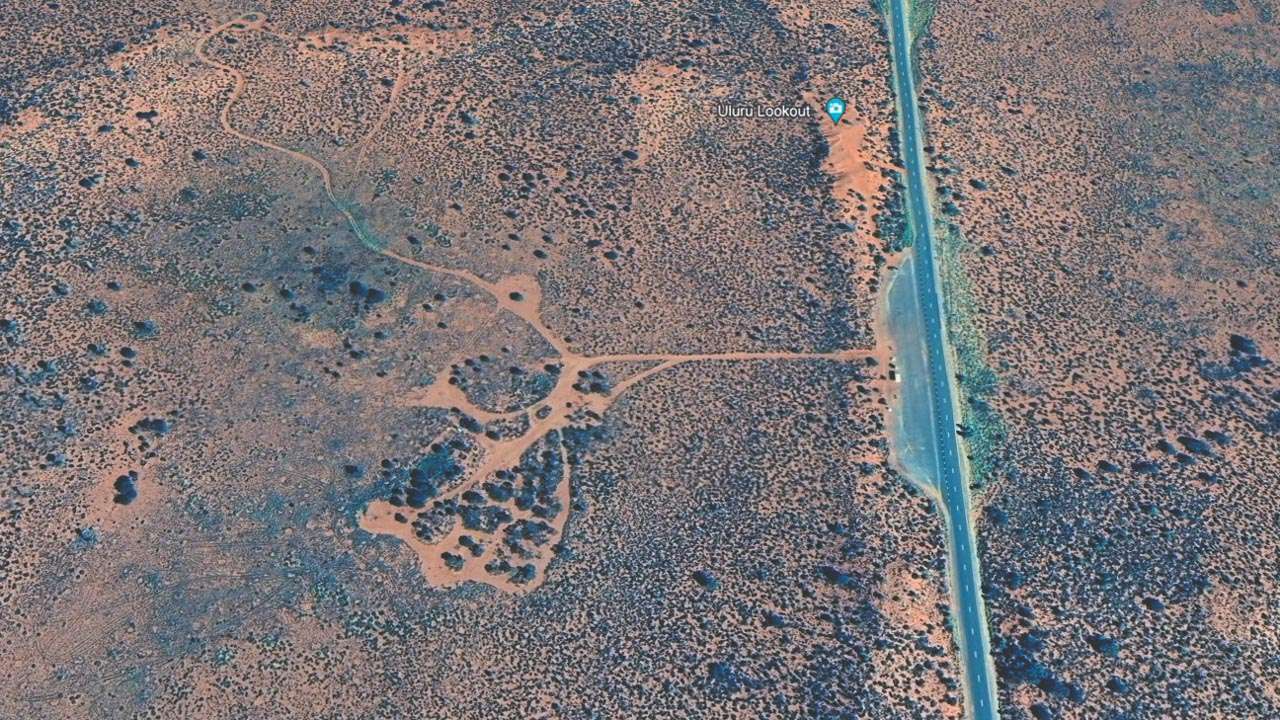
53. Sandy View Roadside Rest Area

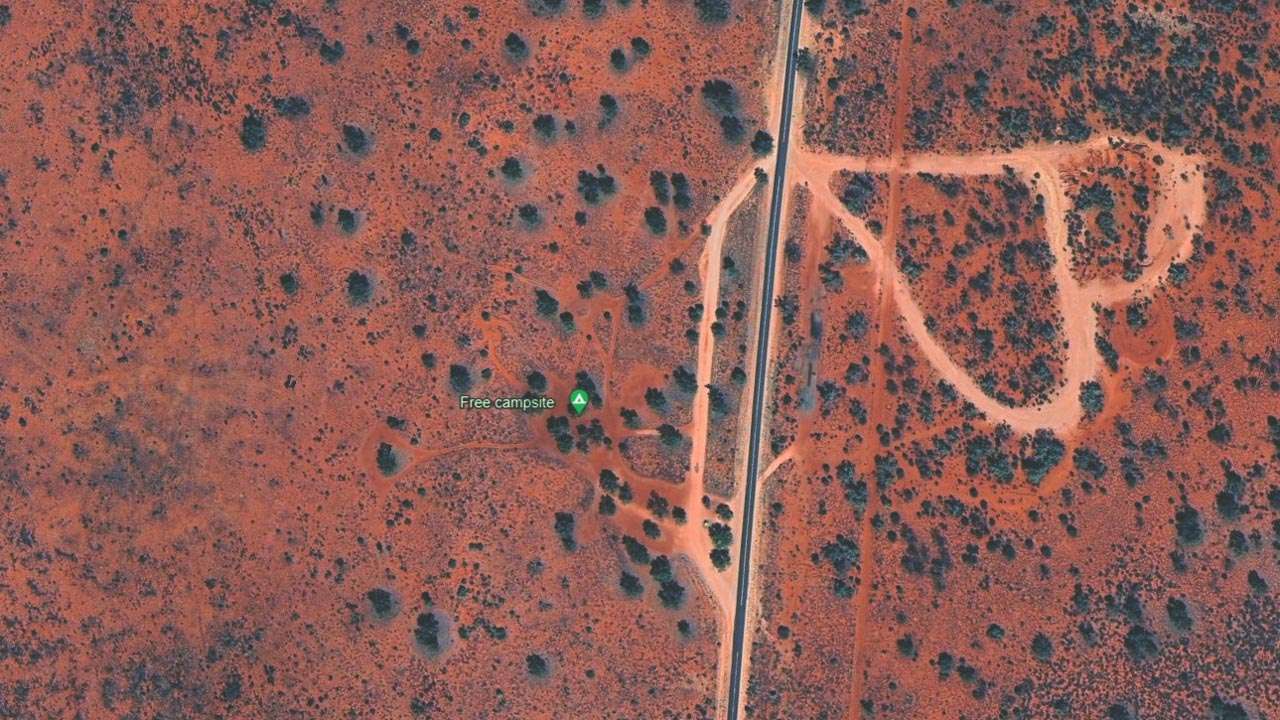
This is a free campground. It’s not on the Great Central Road however it’s the only listed free camping area anywhere near Uluru.

  • It is accessible to motorbikes, RVs, camper trailers and caravans.
  • Camping in tents is allowed.
  • You can stay here for up to 24 hours.
  • This is a roadside site only.
  • Free camping at Ayers Rock.
  • Free camping at Uluru.
  • Free camping at Yulara.

Cost: Free
Type: Roadside Camping
Location: Lasseter Hwy, Yulara, Northern Territory
GPS: -25.220208°, 131.229939°
Distance From Laverton WA: 1,133km
Distance From Uluru NT: 41km
Pet Friendly: Yes

Preparation For The Trip

Vehicle Requirements

Embarking on the Great Central Road requires a reliable 4WD vehicle. Ensure your vehicle is well-maintained and equipped for off-road conditions. Spare tyres, extra fuel, and a comprehensive toolkit are essential.

Essential Supplies

Pack enough food, water, and camping gear for the entire journey. Consider carrying extra supplies in case of emergencies. A first aid kit, navigation tools, and satellite phone are also crucial.

Permits And Regulations

Travelling through Aboriginal lands requires permits. Make sure to obtain the necessary permits for each section of the road. Respect local regulations and be aware of restricted areas.

Best Time to Travel

Seasonal Considerations

The best time to travel the Great Central Road is during the cooler months from April to October. This time of year offers more manageable temperatures and has the potential for fewer weather related disruptions.

Weather Conditions

Prepare yourself for extreme weather conditions including sudden storms and high temperatures. And don’t forget the temperature can also be very cold at night – even down below zero during the winter months. Check weather forecasts regularly and plan your journey to suit.

Major Attractions

Tjukayirla Roadhouse

This roadhouse is a popular stop for travellers, offering fuel, food, and basic accommodation. Refuel and have a break before continuing your journey.

Warburton Community

The Warburton Community is rich in First Nation culture and gives a view into the traditions and lifestyles of the local people. Visit the Tjulyuru Cultural and Civic Centre for an immersive cultural experience.

Docker River

Docker River is a small community with a stunning backdrop of red desert landscapes. It’s a fantastic place to camp. You can set up here and explore the surrounding area.

Kata Tjuta (The Olgas)

These impressive rock formations are located near Uluru and are a must-see. Kata Tjuta, meaning “many heads” is a sacred site with stunning walking trails.

Uluru (Ayers Rock)

The journey culminates at Uluru, a UNESCO World Heritage Site. Witness the changing colours of this iconic rock at sunrise and sunset, and learn about its cultural significance.

Cultural Significance

Aboriginal Communities

The Great Central Road passes through lands belonging to various Aboriginal groups. Remember to respect their customs, traditions and privacy. Engage with local communities to learn about their rich cultural heritage.

Respecting Local Traditions and Laws

Always seek permission before entering Aboriginal lands. Please follow and respect guidelines for behaviour and interactions and avoid disturbing sacred sites.

Flora and Fauna

Unique Wildlife

The outback is home to a big range of wildlife including kangaroos, emus and dingoes. Keep watch for these animals and maintain a safe distance so you don’t disturb them.

Plant Life

The desert landscape features unique vegetation adapted to the harsh conditions. Look for resilient plants like spinifex and mulga trees that thrive in the outback environment.

Roadhouses On The Great Central Road

Roadhouses are your best and most reliable sources of water, fuel and food along the Great Central Road. Generally in most circumstances these will be your only sources to purchase these items. So plan your journey carefully. and know where they are. And an old adage in the bush still holds true. Never drive past a roadhouse without filling up as you never know if the next one will be open or will have fuel.

Tjukayirla Roadhouse

Tjukayirla Roadhouse is located in the Great Victoria Desert, along the Great Central Road (Outback Way). A distance of 305 km separates the roadhouse from Laverton, and a distance of 245 km separates it from Warburton. The Tjukayirla Roadhouse was established and owned by the Blackstone Community. As part of the original survey route to Warburton, the surveyors placed a Paine and Barclay Surveyor marker next to the Tjukayirla Rockholes, which give the roadhouse its name. A visit to the desert breakaways and wildflowers is well worth the time. It is common to see dingoes, emus, kangaroos, camels, as well as a wide variety of birds around the roadhouse.

Trading Hours
Monday to Friday: 8am – 5pm
Saturday – Sunday: 9am – 5pm
After hours to 8pm: $20 fee to open

Fuel
Diesel and Opal fuel is available

Stores
Sit down or takeaway meals, hot & cold drinks, snacks, souvenirs, indigenous paintings, artefacts, basic food items, motor vehicle accessories and tyres

Accommodation

  • Twin share rooms with tea and coffee making facilities
  • 2 x self contained units with television (without bathroom)
  • Caravan and camping sites with or without power
  • Amenities block
  • 24 hour power

Pets
Pets are not permitted in rooms but are allowed outside on a leash. All pets must be under control at all times

Repairs
Minor mechanical, welding repairs, breakdown recovery, tow service to Perth

Managers: Andrew and Sussan Bignell

Contact Details
Postal Address: PMB 53 Alice Springs NT 0872
Phone: (08) 9037 1108
Fax: (08) 9037 1110
Email: tjukayirlaroadhouse@bigpond.com
Web: https://tjukayirlaroadhouse.com.au/

Warburton Roadhouse

The Warburton Roadhouse is located outside the community on the Great Central Road.

Trading Hours
Monday to Friday: 8am – 5pm (WST)
Saturday to Sunday: 9am – 3pm (WST)
Public Holidays: 9am – 12 midday (WST)

Please note: No shop or fuel sales are made outside of these hours.

Fuel
Diesel and Opal fuel is available

Stores
Takeaway food, fruit & veg, bread, drinks, ice, meat, basic grocery items, tyres and motor vehicle accessories

Accommodation

  • 2 x Self Contained Units
  • 12 x Double Ensuites
  • 11 x Single Budget
  • 20 x Single Ensuites
  • There are two toilet facilities and one laundry

The Roadhouse is able to cater for coach groups and have enough beds for approximately 63 people. As well as accommodation, dinner and breakfast are available with prior arrangements. Meals are available but orders are to be made when booking rooms. Anyone arriving after hours can come to the Manager’s house, which is located at the rear of the roadhouse, for accommodation and camping inquiries.

Pets
On arrival please notify managers if you have a pet with you. Pets only allowed if you are camping. No pets allowed to wander freely in the grounds and must be kept on a leash

Repairs
Tyre and other minor repairs including welding can be carried out in the community workshop

Manager: Scott Peers

Contact Details
Postal Address: Warburton Community, PMB 71 Kalgoorlie WA 6430
Phone: (08) 8956 7656
Fax: (08) 8956 7645
Email: roadhouse.warbo@bigpond.com
Web: https://warburtonroadhouse.com.au/

Warakurna Roadhouse

The Warakurna Roadhouse is located outside the community on the Great Central Road.

Trading Hours (Central Standard Time)
Monday to Friday: 8.30am – 5.00pm
Saturday-Sunday: 9.00am – 3.00pm
Public Holidays: 9.00am – 12.00 midday
Closed: Good Friday, Christmas Day and New Years Day.

Fuel
Diesel and Opal fuel is available.
After hours fuel only up to 8.00pm.
If fuel is required outside of trading hours then a fee of $20 will apply per vehicle.
Closed Good Friday, Christmas Day and New Years Day.

Stores
Takeaway food, drinks, basic grocery items and local artefacts

Accommodation

  • 5 x self contained units (sleeps 2-5 people)
  • 10 x backpacker style rooms
  • Powered camp sites
  • An after hours service is available (until 8pm CST), by going to the managers residence for camping and accommodation

Pets
Contact Managers

Repairs
Tyre repairs can be carried out in the workshop

Contact Details
Postal Address: C/- Warakurna Community, PMB 62 Alice Springs NT 0872
Phone: (08) 8956 7344
Fax: (08) 8956 2850
Email: warakurnaroadhouse@bigpond.com
Web: https://warakurnaroadhouse.com.au/

Safety Tips

Navigating Remote Areas

Always travel with a detailed map and GPS. Inform someone of your travel plans and estimated arrival times.

Health Precautions

Stay hydrated and protect yourself from the sun with appropriate clothing and sunscreen. Carry a well-stocked first aid kit for emergencies.

Travel Tips

Driving Advice

Drive cautiously and be prepared for varying road conditions. Reduce speed in sandy or rocky areas to avoid damage to your vehicle.

Communication

Mobile phone coverage is limited, so carry a satellite phone for emergencies. Inform others of your location and travel plans regularly.

Fuel Management

Plan your fuel stops carefully. Carry extra fuel in approved containers, and refuel whenever possible to avoid running out in remote areas.

Environmental Impacts Of The Great Central Road

Leave No Trace Principles

Follow Leave No Trace principles to minimise your environmental impact. Pack out all waste and avoid damaging vegetation and wildlife habitats.

Conservation Efforts On The Great Central Road

Help to assist local conservation efforts by respecting guidelines and participating in community led initiatives. Protecting the outback ensures its beauty for future generations.

Common Challenges And How To Overcome Them

Road Conditions

Road conditions can vary, with sections being sandy, rocky, or corrugated. Drive cautiously and adjust your speed to the conditions. You can check the current road conditions here > https://www.ngaanyatjarraku.wa.gov.au/road-conditions/road-conditions.aspx

Vehicle Breakdowns

Be prepared for potential vehicle issues. Carry spare parts and tools, and know basic repair techniques. Assistance can be far away, so self-sufficiency is crucial.

Weather Related Issues

A sudden weather change can bugger up your travel plans. Keep an eye on forecasts and be flexible with your itinerary to accommodate unexpected conditions. Check your weather apps whenever you have a viable internet connection. Remember that mobile phone connection can be spotty at best.

Valuable Resources

Conclusion

The Great Central Road offers a once in a lifetime adventure through Australia’s outback. From its rich cultural heritage to its stunning landscapes, this journey is as rewarding as it is challenging. By preparing adequately, respecting local traditions, and embracing the spirit of adventure, you’ll create unforgettable memories on this epic road trip. So, pack your gear, fuel up, and set off on the adventure of a lifetime along the Great Central Road.

FAQs – Frequently Asked Question About The Great Central Road

What permits do I need to travel the Great Central Road?

You'll need permits to travel through Aboriginal lands. These can be obtained online or at specific entry points along the route.

Is the Great Central Road suitable for beginners?

While it's a challenging route, beginners can undertake it with proper preparation and a reliable 4WD vehicle. Plan thoroughly and seek advice from experienced travellers.

How long does it take to drive the Great Central Road?

The journey typically takes 4-7 days, depending on your pace and the stops you make along the way. Allow extra time for exploration and rest.

Are there fuel stops along the Great Central Road?

Yes, there are several fuel stops, including roadhouses like Tjukayirla and Warburton. Plan your fuel stops carefully to avoid running out.

What is the best vehicle for the Great Central Road?

A well-maintained 4WD vehicle is essential for this journey. Ensure it is equipped for off-road conditions and carry necessary spare parts and tools.

Lake Wallace Camping For Free – Full Amenities Near Sydney

Lake Wallace Camping For Free – Full Amenities Near Sydney

Lake Wallace Camping For Free – Full Amenities Near Sydney

Lake Wallace Camping is a perfect spot for RVs and caravans. Free camping with toilets and showers close to Sydney with lots to explore and do. Located only ten minutes west of Lithgow Lake Wallace camping at Wallerawang or “Wang” as the locals lovingly refer to it is an awesome free camping campsite for self-contained recreational vehicles and caravans.

Lake Wallace offers an RV-friendly campsite in an impeccable location to station your RV or caravan for a couple of days. The amenities include an RV dump point, toilets and showers, a playground, barbecue facilities and a designated off-leash dog area. Lake Wallace Camping is just a few minutes over two hours drive from Sydney and is conveniently located only 15 minutes from Lithgow.

  • Camping is allowed for a maximum of 48 hours, with open fires strictly prohibited. The Wallerawang Town Centre is conveniently situated a ten-minute walk or a brief two-minute drive away, providing options for dining and additional supplies.
  • An information bay at the entrance to Lake Wallace outlines suggestions on w wide and varied array of activities and attractions within the Seven Valleys destination.
  • For further details on extending your stay or for any other inquiries visit the great friendly staff at the Seven Valleys Visitor Information Centre.
  • About Lake Wallace Camping Barton Avenue Wallerawang NSW
  • Located just 10 minutes on the Bathurst side of Lithgow, Lake Wallace is designated an RV friendly campground and is the ideal location to set up your RV or Caravan for a couple of days. Facilities include RV Dump point, nearby toilets and hot showers, playground, barbecue facilities and off leash dog area.
  • Self-contained RV’s and Caravans with on-board toilet facilities are allowed for a maximum of 48 hours in the designated areas.
  • The Lithgow area has an abundance of environmental areas that are a drawcard for visitors. Lake Wallace is an example. During holiday periods, the lake foreshores and water are heavily used. This requires careful management of some of the issues that can arise.
  • As of 22 May 2023, open fires will no longer be permitted within the bounds of Lake Wallace. Campfires/naked flames are no longer allowed.
  • While open fires are much loved by many campers they can create problems. This includes damage to the open spaces and the need to then remediate the affected areas. Vegetation which supports wildlife can also be damaged when people forage for kindling and firewood. The community has expressed concern that unattended fires impact the safety of other users, and result in negative impacts to the environment and amenity of the site. Signage advising of the changes has been erected to inform all users visiting the site. Please contact Lithgow City Council on 02 6354 9999 should open fires be identified.
  • Wallerawang Town Centre is only a ten minute walk or two minute drive for a meal and extra supplies.
  • Dogs are permitted on a leash.

Address: Barton Ave, Wallerawang NSW
Type: Free Camping
Cost: Free
GPS: -33.415073°, 150.073976°
Phone: 1300 760 276 or (02) 6352 9130
Email: tourism@sevenvalleys.com.au
Web: https://www.visitnsw.com/destinations/blue-mountains/lithgow-area/lithgow/attractions/lake-wallace
Fires: No
Toilets: Yes
Showers: Yes
Dump Point: Yes
Pet Friendly: Yes

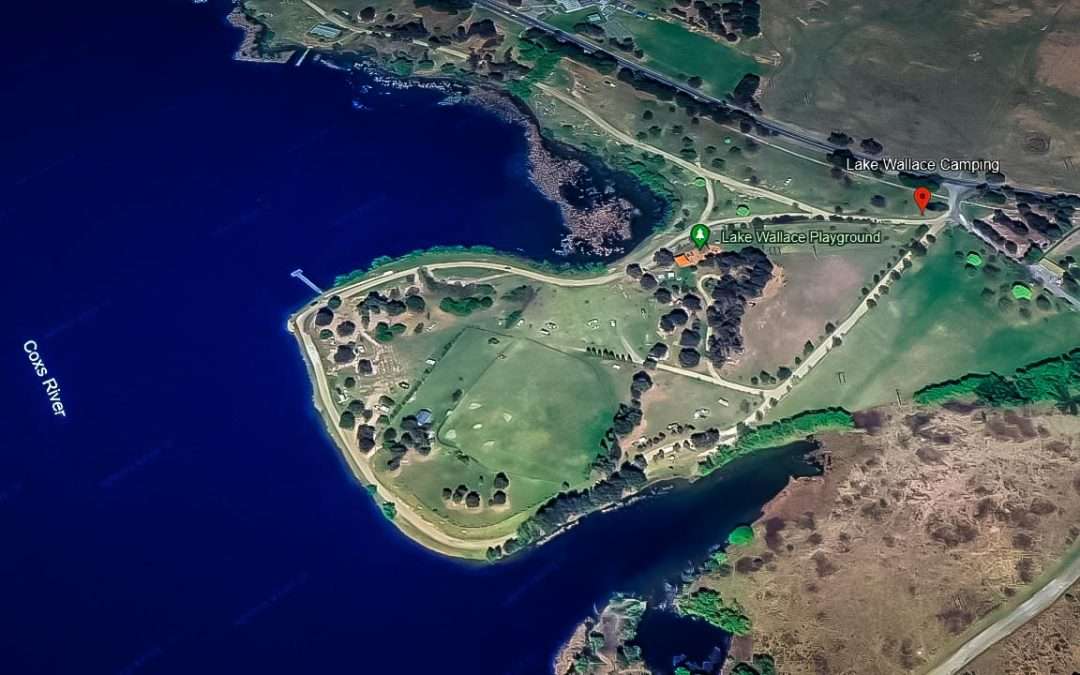
Lake Wallace Camping

Lake Wallace Camping

About Wallerawang

A settlement that emerged to accommodate the operational demands of the Wallerawang Power Station. Located beyond Lithgow on the western frontier of the Blue Mountains, it has garnered attention since the power station’s closure in 2015. The town is known for the frequently visited Lake Wallace, a charming recreation zone originally created to supply water to the power station, and the historic St John’s Church, designed by the illustrious colonial architect Edmund Blacket.

Location

Wallerawang is situated on the western edge of the Blue Mountains, 152 km north-west of Sydney via the Great Western Highway, and stands at an elevation of 900 meters above sea level.

Origin Of Name

The name “Wallerawang” originates from a Wiradjuri term believed to mean “place near wood and water” or “plenty of water.”

Things To See And Do

Lake Wallace

Lake Wallace is just a ten-minute walk from Wallerawang’s shopping centre. Lake Wallace is an artificial lake initially created to provide cooling water for the power station. Today, it offers numerous recreational activities such as fishing, sailing, trout fishing, and canoeing. The area also features camping grounds, picnic areas, barbecue facilities, and children’s play spaces. Birdlife is abundant, with black swans and white-faced herons being particularly notable.

Camping Near Lithgow

Camping Near Lithgow

St John the Evangelist Church

Located on the Main Street, St John The Evangelist Church is a stone structure designed by Edmund Blacket and built between 1880-1881 at the request of Georgina Lyons Barton. It serves as a memorial to her parents, James and Robina Walker. The Barton family owned the old Wallerawang estate, then known as Barton Park. The Heritage Council of New South Wales notes: “this church was used by both Presbyterian and Anglican denominations and was jointly bequeathed to them on 18th November 1952. St John the Evangelist Church contains numerous significant movable objects and artifacts (e.g., main altar, pews, reader’s lectern, baptismal font, and other associated furnishings) that were purpose-built for the Church.” It received heritage listing in 2004.

The History Of The Wallerawang Power Station

The transformation in power generation has led to the closure and dismantling of the Wallerawang Power Station, which once served as the main employer in the area. This power station was pivotal in the development of the western coalfields of NSW for over 40 years. Commencing operations in 1957, it was integral in supplying power to the railways. With a total capacity of 1000 megawatts, it generated electricity through coal-fired boilers and steam-driven turbo-generators. Unlike coastal power stations that used salt water for cooling, Wallerawang employed a system of cooling towers with water sourced from Lake Wallace and Lake Lyell.

Over 75 percent of the power station’s coal was provided by the nearby Angus Place colliery, with the remainder supplied by local privately-owned mines. The coal was transported by conveyor to the power station’s pulverizing mills, where it was ground into a fine powder before being combusted in the furnace. At its peak, up to 2.2 million tonnes of coal were consumed annually.

History Of Wallerawang

  • Prior to European settlement, the area around Wallerawang was inhabited by the Wiradjuri and/or the Wywandy First Nation peoples.
  • The first European in the vicinity was James Blackman, who established the route from Bathurst to Wallerawang in 1820.
  • The “Wallerawong” station was claimed by James Walker in 1824.
  • In the late 1820s, Wallerawang became a significant stopover for travellers journeying between Sydney and the farming regions beyond Mudgee.
  • The renowned natural historian Charles Darwin stayed overnight at ‘Wallerawang’ farm in 1836.
  • Two of James Walker’s convict servants acquired land in the district in the 1850s.
  • James Walker’s widow established a modest stone school in 1860.
  • The railway reached Lithgow in 1869 and Wallerawang in 1870, facilitating closer settlement of the valley.
  • A town developed adjacent to Wallerawang station.
  • Until the line to Bathurst was completed in 1876, all passengers alighted at Wallerawang and joined a Cobb & Co. coach for the journey west to Bathurst or north to Mudgee.
  • St John’s Church of England was erected by 1881 to a design by Edmund Blacket, at the behest of James Walker’s daughter.
  • In 1942, Wallerawang became an inland fuel depot for the RAAF.
  • Around 1950, new town plans were drawn up for Wallerawang, which was planned as a coal centre for the railway line.
  • A new power station was proposed in 1950.
  • In 1957, Wallerawang Power Station started generating electricity.
  • In 1978, Lake Wallace was constructed.
  • By the mid-1980s, automation, computerisation, and rationalisation resulted in significant job losses from both the power station and the local collieries.
  • The railway to the town closed during the early 1990s.
  • In 1995, the present school in the town was opened.
  • In 2014, Energy Australia announced the permanent closure of Wallerawang power station.
  • Dismantling of Wallerawang Power Station commenced in May 2015.

Getting To Lake Wallace Camping And Recreation Area from Sydney

To get to Lake Wallace Recreation Area from Sydney follow these directions:

  1. Start from Sydney and head west on the M4 motorway. Continue on the M4 until you reach the Great Western Highway.
  2. Follow the Great Western Highway through the Blue Mountains and past Lithgow.
  3. Once you reach Wallerawang, turn onto Lake Wallace Road.
  4. Follow Lake Wallace Road until you reach the recreation area.
Travel From to Lake Wallace Camping Area And Recreation Area Distance Time
Adelaide 1,226km 13:31
Brisbane 1,023km 11:03
Canberra 831km 08:54
Melbourne 523km 05:36
Sydney 137km 01:57

Summary For Lake Wallace Camping

Located just 10 minutes west of Lithgow, Lake Wallace camping, known locally as “Wang,” is a popular free campsite for self-contained RVs and caravans. It offers an RV-friendly environment with amenities such as an RV dump point, toilets, showers, playground, barbecue facilities, and an off-leash dog area.

Lake Wallace camping is a convenient 2-hour drive from Sydney and only 15 minutes from Lithgow. Camping is allowed for a maximum of 48 hours, and open fires are strictly prohibited. The nearby Wallerawang Town Centre is easily accessible for dining and supplies.

An information bay at Lake Wallace provides suggestions for various activities and attractions in the Seven Valleys destination, enhancing the visitor experience.

  • Lake Wallace camping at Wallerawang offers free camping for self-contained RVs and caravans.
  • The campsite is RV-friendly with essential amenities and is conveniently located near Lithgow.
  • Visitors can enjoy a range of activities and attractions in the Seven Valleys area.

Camping At Wallerawang Near Lithgow

Camping At Wallerawang Near Lithgow

The Ultimate Guide To State Forest Camping In NSW Australia

The Ultimate Guide To State Forest Camping In NSW Australia

The Ultimate Guide To State Forest Camping In NSW Australia

Want to know all about state forest camping in New South Wales (NSW) State forests? Well you’re in luck because this guide has got you covered from top to bottom! We’re talking about where to camp, what facilities you’ll find, how much it’ll cost you (spoiler alert: free!) and all the rules to follow for a fun and safe time.

  • Facilities
    First off let’s chat about what you can expect in terms of camping facilities. Picture this: loads of camping spots nestled in State forests, some with spots for tents or caravans, fire pits for roasting marshmallows, and toilets for when nature calls. Oh, and did I mention the picnic areas with tables and BBQs? Yeah a lot of the sites have them too! Just remember to use the existing fire pits because that’s the way to go.
  • Cost
    Now let’s talk cost. How much is this gonna set you back? Well, guess what? Camping in NSW State forests won’t cost you a cent! That’s right it’s absolutely free! Gotta love that.
  • Rules
    But hold up as always there are some rules you have to follow. You can’t reserve or book camping spots and you can only stay for up to four weeks at a time. Keep an eye out for signs at campsites because sometimes they’ll have shorter stay limits. And always listen to the forest officers – they know what’s up.
  • Camp Fires
    Now about campfires. Most places won’t have firewood so it’s best to bring your own or a gas BBQ. And remember there are fire regulations to watch out for, especially during Total Fire Bans. If you see a bushfire dial triple zero (000) immediately. During summer, there might be Solid Fuel Fire Bans in effect, meaning no campfires or charcoal BBQs allowed. So pack those gas appliances and plan accordingly. And hey, always check for closures and notices before you head out on your trip.
  • Safety
    Before you hit the road, make sure you’ve checked out all the important safety info. And if you’re planning on having a fire, double-check for any total fire bans in the area. And hey, don’t forget to reach out for the latest information on where you’re headed.
  • Camping Spots
    Now, let’s talk camping spots. You can camp in pretty much all State forests except for Cumberland and Strickland State forests. But here’s the scoop: camping usually ain’t allowed in picnic areas, ‘cept for rest areas along major highways passing through State forests. Got it?
  • What Can You Do In NSW State Forests?
    Phew, that’s a lot of camping talk! But wait, there’s more! We’re talkin’ four-wheel driving, trail bike riding, hiking, bushwalking, mountain biking, fossicking, rock climbing – you name it, NSW State forests got it! Just make sure you’re playing by the rules, staying safe, and respecting the environment.
  • Dogs
    Oh, and if you’re bringing along your furry friend, no worries! NSW State forests are dog-friendly, so your furbaby (I hate the term furbaby but apparently I’m on my own there) can tag along for the adventure. Just remember to keep ’em on a leash, clean up after ’em, and be respectful of other campers.

So there you have it, friends and neighbours! A rundown of all the camping and outdoor fun you can have in NSW State forests. Now go on, grab your gear, grab your beer and get ready for an epic adventure in the great outdoors!

Random Campsite In Wingello State Forest

Random Campsite In Wingello State Forest

Table Of Contents

Can You Camp in a State Forest? Your Aussie Bush Getaway Guide

Absolutely! One of the best ways to experience Australia’s natural beauty is by asking, can you camp in a state forest? The answer is usually yes, offering fantastic, often budget-friendly, bush camping adventures. However, camping in a state forest isn’t always as simple as just pitching your tent anywhere. Rules vary significantly between states and even individual forests. You can camp in a state forest, but you must check the specific regulations first. This often involves:

  1. Permits: Some state forests require a permit, sometimes free, sometimes paid. Book online through the relevant state forestry department (like Forestry Corporation NSW, VicForests, etc.).
  2. Designated Areas: Often, camping is only allowed in marked sites or clearings. Look for signs.
  3. Self Sufficiency: Facilities are usually minimal (maybe a pit toilet). Bring all your water, food, and be prepared for no power. Practice strict “leave no trace”.
  4. Fire Rules: Total fire bans are common, especially in summer. Use only designated fireplaces if fires are permitted. Carry your own firewood.

So – Can You Camp in a State Forest?

Yes you definitely can you camp in a state forest! It’s a rewarding way to connect with nature. Just remember: always research the rules for that specific forest online before you go, get any necessary permits, respect fire bans, and leave the site pristine. Knowing the answer to can you camp in a state forest is the first step to an unforgettable Aussie outdoor experience.

List Of State Forest Camping Sites In NSW

1. Bago State Forest

Includes: Paddy’s River Dam – Blowering Dam Foreshore (currently closed) – Hume and Hovell Walking track – Pilot Hill Arboretum – Paling Yards

Camping, picnicking and bushwalking are permitted in Bago State Forest. Dogs are welcome on a lead and horse riding is allowed on formed roads and fire trails. Four-wheel driving and trail bike riding are permitted but only on formed roads. Driving off-road and unauthorised track construction is not permitted. Access to the site is via 4WD in dry conditions only. Take all rubbish with you and leave no trace.

There are no toilet facilities at this site. If you do not have your own toilet, camp at one of the nearby sites that have toilet facilities. When planning your visit, make sure you know what fire ratings and bans apply. In summer periods, Forestry Corporation may declare a Solid Fuel Fire Ban, meaning no wood or charcoal fires can be lit at any time. When lighting a campfire, make sure you stick to the following rules: In picnic and camping areas, only light fires in existing fire places. No fires are permitted within pine plantation areas. Only use fallen wood to light your fire never attempt to cut standing timber, whether alive or dead. Before lighting a fire, make sure the surrounding area is clear of leaves and flammable material and always keep plenty ofwater handy in case of a stray spark. Never leave your fire unattended and fully extinguish your fire with water before leaving.

Type: State Forest Free Camping
Location: Foreshore Rd, Blowering, New South Wales
GPS: -35.540476°, 148.260035°
Pet Friendly: Yes

Yadboro State Forest Old Trestle Bridge

Yadboro State Forest Old Trestle Bridge

2. Barrington Tops State Forest (Manning River)

Includes: Manning River – Cobark Lookout

Access to Barrington Tops State Forest is via Gloucester or Scone. The Manning River runs through the forest. On the banks of the Manning River, this stunning camping and picnic area is popular with four-wheel-drive enthusiasts and freshwater fisherman. It’s nestled in cool highland forests and is perfect for a peaceful mountain getaway.

The Manning River camping and picnic areas were upgraded in 2017, with the new site now located next to Henry’s Bridge on Pheasants Creek Road. To help protect catchment/stream health, please take all rubbish with you when you leave.

Type: State Forest Free Camping
Location: Pheasant Creek Rd, Barrington Tops NSW 2422
GPS: -31.88120234794992, 151.51210752467628
Pet Friendly: Yes

3. Belanglo State Forest (Dalys Clearing)

Includes: Dalys Clearing

This free campground offers toilets. It is dog friendly. It is accessible to motorbikes, RVs, camper trailers, caravans and big rigs. Camping in tents is allowed.

Type: State Forest Free Camping
Location: Dalys Rd, Belanglo State Forest, New South Wales
GPS: -34.527643°, 150.241341°
Web: https://www.forestrycorporation.com.au/visit/forests/belanglo
Pet Friendly: Yes

4. Bodalla State Forest (Bodalla Forest Rest Area)

Includes: Bodalla Forest Rest Area – Kianga Rainforest Walk – Wagonga Scenic Drive

Bodalla Forest Rest Area is located in Bodalla State Forest, just off the Princes Highway. This free campground offers toilets, picnic tables, drinking water and a book exchange. It is dog friendly. It is accessible to RVs, camper trailers, caravans and big rigs. Camping in tents is allowed. The shaded area is nestled under tall spotted gums, with a easy walking trail around Mummaga Lake from which you may spot a variety or native animals and birds.

Type: State Forest Free Camping
Location: Bodalla Park Rd, Bodalla, New South Wales
GPS: -36.151320°, 150.095116°-36.151320°, 150.095116°
Phone: 1300 655 687
Web: https://www.forestrycorporation.com.au/visit/forests/bodalla
Email: visit@fcnsw.com.au
Pet Friendly: Yes

Yadboro State Forest Camping

Yadboro State Forest Camping

5. Bondi State Forest (Bondi Forest Lodge)

Includes: Bondi Forest Lodge

Type: State Forest Free Camping
Location: Unnamed Road, Rockton NSW 2632
GPS: -37.18646690375689, 149.29029090616655
Pet Friendly: Yes

6. Boonoo State Forest

Includes: Basket Swamp visitor area – Basket Swamp Falls

Campground accessed via Basket Swamp National Park but is located in Boonoo State Forest. This free campground offers one long drop toilet. Dogs are permitted as campground is in State Forest (just be sure not to walk your dog in the National Park section).

  • 4WD is required to access this site.
  • It is accessible to camper trailers and off road caravans.
  • Camping in tents is allowed.
  • Road is dirt and maybe slippery when wet as area is swampy.
  • Road is narrow so beware if oncoming vehicles, particularly if towing.
  • No rubbish bins and no phone signal.

Type: State Forest Free Camping
Location: Boonoo State Forest, New South Wales
GPS: -28.910180°, 152.153782°
Phone: (02) 6736 4298
Pet Friendly: Yes

7. Bulahdelah State Forest

Bulahdelah Mountain is a legislated Aboriginal Place in recognition of the cultural, spiritual and historical significance of the area to the Worimi People. Worimi People are the traditional custodians of this country. Please respect Country and enjoy this beautiful place. Read more about the significance of Bulahdelah Mountain to the Worimi People.

The mountain landscape is unique, with towering Blackbutt, spectacular Grass Trees and contrasting alunite geological features. The walking tracks start at the base of the mountain.

  • Boolah-Dillah Track: 2.2km return takes you to the Worimi Cultural Area.
  • Mountain Track (1.7km return): starts from the Worimi Cultural Area and takes you to Mountain lookout.
  • Ted Baker Track (840m return): starts along the Boolah-Dillah Track.
  • Download the site map.
  • Caution – Lookouts are natural rock cliffs with no barriers or viewing platforms. Please take caution when walking with young children or anyone who might need assistance.
  • Caution – The mountain contains old mine sites, so please keep to formed walking tracks and avoid tunnels or loose edges.

The mountain was mined for its alunite. You can observe some of the old mining boilers, tram tracks, mullock heaps along the walks. To learn more, visit Bulahdelah Mountain Park, which is located at the base of the mountain. Toilets are also located there.

Type: State Forest Free Camping
Location: Pacific Hwy, Bulahdelah NSW 2423
GPS: -32.40791009139656, 152.22272522111493
Pet Friendly: Yes

Yadboro Flat Camping

Yadboro Flat Camping

8. Campbells Island State Forest

Includes: Campbells Island

Camping areas at various locations along the Murray and Little Murray Rivers.

Type: State Forest Free Camping
Location: Murrabit VIC 3579
GPS: -35.51140856981758, 143.94973744837247
Pet Friendly: Yes

9. Chichester State Forest (Allyn River)

Includes: Allyn River Forest Rest Area – Peach Tree – White Rock – Old Camp – Mount Allyn – Ladies Well – Dobbie Rim – Pademelon – Allyn River Rainforest Walking Track

Located in Chichester State Forest, Old Camp is positioned closest to the Allyn River with drive-in shady and spacious camp sites. A popular spot with families. Toilet facilities are provided. Dogs are permitted.

Type: State Forest Free Camping
Location: Allyn River Rd, Upper Allyn, New South Wales
GPS: -32.155619°, 151.488603°
Phone: 0130 065 568
Web: https://www.forestrycorporation.com.au/visit/forests/chichester
Email: info@fcnsw.com.au
Pet Friendly: Yes

10. Chichester State Forest (Telegherry River)

Includes: Telegherry Forest Park – Frying Pan Creek – Currawong Camping Area – Coachwood Camping Area

On the way to Telegherry Forest Rest Area you will find a small, open air museum of old logging machinery. This is an excellent reminder of how logging equipment and practices have advanced over time. Telegherry Forest Rest Area contains separate picnic and camping areas beside the river. There are a number of short walking tracks leading into the surrounding forest and areas of river/creek that are popular spots on a hot day.

For visitor safety and protection of the environment, please note that following wet weather Telegherry may be closed to the public andthe gate will be locked.

Type: State Forest Free Camping
Location: Middle Ridge Rd, Upper Karuah River, New South Wales
GPS: -32.221114°, 151.745442°
Phone: (02) 9872 0111 or 1300 655 687
Web: https://www.forestrycorporation.com.au/visit/forests/chichester-telegherry
Email: visit@fcnsw.com.au
Pet Friendly: Yes

11. Coopernook State Forest (The Forest Headquarters)

Includes: Coopernook Forest HQ

The Forest Headquarters is just north of Coopernook (beoveen Taree and Kew). It is a lovely spot for a family picnic or overnight stay in scenic eucalypt forest. Caravans and campervans are welcome but no power available.

Type: State Forest Free Camping
Location: Bangalow Rd, Coopernook, New South Wales
GPS: -31.788881°, 152.608581°
Phone: (02) 9871 3377
Web: https://www.forestrycorporation.com.au/visit/forests/coopernook
Pet Friendly: Yes

Wingello State Forest Camping Ripper Of A Camp Site

Wingello State Forest Camping Ripper Of A Camp Site

11. Dog Rocks State Forest (Campbells River)

Includes: Campbells River

It is accessible to camper trailers. Camping in tents is allowed.

Type: State Forest Free Camping
Location: Swallows Nest Rd, Mount David, New South Wales
GPS: -33.785820°, 149.609451°
Pet Friendly: Yes

12. East Boyd State Forest (Scrubby Creek Rest Area)

Includes: Edrom Lodge – Scrubby Creek Rest Area

An attractive picnic area set on the banks ofthe Imlay Creek in Timbillica State Forests, around 1 Okm from the Princes Highway via Imlay Road. There is a popular swimming hole in granite boulders about 50 metres downstream from the picnic site. Facilities include toilets, picnic tables and fire pits. Pets are permitted.

Type: State Forest Free Camping
Location: Princes Highway, New South Wales
GPS: -37.222069°, 149.830303°
Pet Friendly: Yes

13. Ellangowan State Forest (Braemar Roadside Rest Area)

Includes: Braemar Roadside Rest Area

Basic facilities in roadside rest area on the Summerland Way, about 30 kilometres south of Casino, in Ellangowan State Forest. The site is suitable for tents, motorhomes, camper trailers, caravans and big rigs. Facilities include drop toilets, picnic tables, rubbish bins and fire pits. Pets are permitted.

Type: State Forest Free Camping
Location: Summerland Way, Rappville, New South Wales
GPS: -29.088060°, 153.001973°
Web: https://www.forestrycorporation.com.au/visit/forests/ellangowan
Pet Friendly: Yes

14. Girard State Forest (Crooked Creek Picnic Area)

Includes: Crooked Creek Picnic Area

Located about 500 metres from the Bruxner Highway in the Girard State Forest, this lovely natural clearing beside Crooked Creek provides for a convenient overnight or short stay camping. Facilities include toilets, picnic tables, walking tracks, 4WD tracks and fire pits. Pets are permitted.

Type: State Forest Free Camping
Location: Crooked Creek Fire Trail, Sandy Hill, New South Wales
GPS: -28.926982°, 152.312500°
Web: https://www.forests.nsw.gov.au/visiting/forests/girard
Pet Friendly: Yes

Wingello State Forest Camping

Wingello State Forest Camping

15. Hampton State Forest (Millionth Acre Recreation Area)

Includes: Millionth Acre

This free campground offers toilets. It is dog friendly. It is accessible to motorbikes, RVs, camper trailers, caravans and big rigs. Camping in tents is allowed.

Type: State Forest Free Camping
Location: Duckmaloi Rd, Hampton, New South Wales
GPS: -33.676944°, 150.050272°
Pet Friendly: Yes

16. Heaton State Forest (Watagan HQ Camping Area)

Includes: Heaton Forest Park – Heaton Lookout – Hunter Lookout – Mcleans Lookout – Watagan Headquarters

This is a free campground. It is dog friendly. It is accessible to motorbikes, RVs, camper trailers and caravans. Camping in tents is allowed.

Type: State Forest Free Camping
Location: Watagan Forest Rd, Olney, New South Wales
GPS: -32.975802°, 151.412148°
Pet Friendly: Yes

17. Kerewong State Forest (Swans Crossing)

Includes: Longworth’s Tramline – Swans Crossing

About a 20 minute drive from Kew (halfway between Taree and Kempsey) is Swans Crossing. Popular with locals and visitors alike, this camping and picnic area in Kerewong State Forest is set on former farmland. The Swan family ran a dairy and beef property on the site for many years, including clearing the forest and establishing grasses for the stock. This continued until 1964 when the area became State forest and was regenerated as native forest including hardwood plantation areas.

  • No longer closed on weekdays (previously was due to logging operations).
  • Swimming is a popular activity in the nearby shallows of Upsalls Creek.
  • Longworths Tramway Heritage Walk is located a short drive away, with other walking tracks leading off from the site including Cascade Walking Track.
  • Tents, camper trailers, caravans and camper vans are welcome at Swans Crossing.

Type: State Forest Free Camping
Location: Kerewong Rd, Swans Crossing, New South Wales
GPS: -31.608745°, 152.581787°
Phone: (02) 6585 3744
Web: https://www.forestrycorporation.com.au/visit/forests/kerewong
Pet Friendly: Yes

18. Koondrook State Forest

Includes: Koondrook State Forest

At various locations along the Murray River. There are many sites suitable for camping.

Type: State Forest Free Camping
GPS: -35.66800670000439, 144.246664668354
Phone: (02) 9872 0111
Pet Friendly: Yes

19. Mount Boss State Forest (Wild Bull Camping Area)

Includes: Cobrabald – Wild Bull – Pappinbarra Field Studies Centre – Cobrabald – The Bluff

This free campground offers toilets and swimming. It is dog friendly. Camping in tents is allowed. Room and access for camper trailers and small caravans

Type: State Forest Free Camping
Location: Cobrabald Rd, Kippara, New South Wales
GPS: -31.245876°, 152.513164°
Web: https://www.forestrycorporation.com.au/visit/forests/mount-boss
Pet Friendly: Yes

Walking In Wingello State Forest

Walking In Wingello State Forest

20. Nalbaugh State Forest (Nalbaugh Falls)

Includes: Nalbaugh Falls

Type: State Forest Free Camping
GPS: -31.23992690611348, 146.91757958395064
Phone: (02) 9872 0111
Web: https://www.forestrycorporation.com.au/visit/forests/nalbaugh-state-forest
Pet Friendly: Yes

21. Olney State Forest (The Basin Campground)

Includes: Abbotts Falls – Casuarina – Rock Lily – The Basin – The Pines Camping Area – The Pines Walking Trail – The Pines Picnic Area – Turpentine – Old Mill Picnic Area – Olney Headquarters

Located in the Olney State Forest the Basin Campground features open grassy camp sites with easy access and a flowing creek nearby. Located away and further inland of The Pines, Turpentine & Casuarina camping areas, the Basin is suitable for large groups. Nearby creeks can be used for swimming in the warmer months. The Great North Walk passes by this camping and picnic area.

Facilities include toilets, picnic tables and fire pits. State forests permit dogs, but visitors should keep them under control and on a lead at all times.

Please dispose of rubbish properly. Use rubbish bins if provided or take it with you. Choose a campsite carefully, at least 20 metres from the edge of any stream or waterway. Use existing areas for camping and do not clear or damage trees and plants. Do not cut standing timber, alive or dead, for firewood.

Type: State Forest Free Camping
Location: Basin Forest Rd, Olney, New South Wales
GPS: -33.104476°, 151.230474°
Web: https://www.forestrycorporation.com.au/visit/forests/olney
Pet Friendly: Yes

Walking In Belanglo State Forest

Walking In Belanglo State Forest

22. Penrose State Forest (Kingsbury VC Rest Area)

Includes: Kingsbury VC Rest Area

This is an ideal place to camp alongside for an overnighter on the Hume Highway between Sydney and Canberra.

This free campground is located in the Penrose State Forest and offers toilets, bins and picnic tables. It is dog friendly. It is accessible to RVs, camper trailers, caravans and big rigs. You can stay here for up to 24 hours. Fire is allowed when not total fire ban. The noise ofthe highway is quite loud.

Type: State Forest Free Camping
Location: Stingray Road, Penrose, New South Wales
GPS: -34.619317°, 150.213856°
Pet Friendly: Yes

23. Perricoota State Forest (Perricoota State Forest Bush Camping)

Includes: Perricoota

This free campground offers swimming. It is dog friendly. It is accessible to RVs, camper trailers, caravans and big rigs. Camping in tents is allowed.

Type: State Forest Free Camping
Location: Freemans Rd, Womboota, New South Wales
GPS: -35.940171°, 144.479270°
Web: https://www.forestrycorporation.com.au/visit/forests/perricoota
Pet Friendly: Yes

24. Stewarts Brook State Forest

Includes: Moonan Brook Forestry Cottage – Moonan Outlook – The Firs Picnic Area

Type: State Forest Free Camping
Location: Stewarts Brook NSW 2337
GPS: -31.93137288282747, 151.36193641023226
Phone: 0298720111
Pet Friendly: Yes

25. Styx River State Forest (Wattle Flat Camping Area)

Includes: Wattle Flat Picnic Area – Wattle Flat Camping Area

Bush camping beside the Styx River in the Styx River State Forest. Facilities include toilets, picnic tables and BBQ. The forest can be accessed via the Armidale-Kempsey Road. Turn north onto Styx River Forest Way and follow directional signage. Access for two wheel drives not recommended. Caravans and campervans are welcome, but only four wheel drives. No power is available.

Choose a campsite carefully, at least 20 metres from the edge of any stream or waterway. Use existing areas for camping and do not clear or damage trees and plants. Use soaps or detergents at least 50 metres from waterways and camping areas. Detergents, toothpaste and soap (even biodegradable) harm fish and aquatic life. Take all rubbish with you and leave no trace. State forests permit dogs, but visitors should keep them under control and on a lead at all times.

Type: State Forest Free Camping
Location: Boundary Rd, Armidale Region, New South Wales
GPS: -30.584152°, 152.200199°
Web: https://www.forestrycorporation.com.au/visit/forests/styx-river
Pet Friendly: Yes

State Forest Camping In Penrose State Forest

State Forest Camping In Penrose State Forest

26. Sunny Corner State Forest

Includes: Mary’s Park – Sunny Corner Arboretum – Sunny Corner

This site is located in Sunny Corner State Forest. No facilities are provided so please abide by minimal impact principles. Take all rubbish with you and leave no trace.

  • There is a drop toilet at this site and a fire pit
  • No water is available
  • Play ground for small children
  • Pets are permitted

Type: State Forest Free Camping
Location: Sunny Corner Road, Sunny Corner, New South Wales
GPS: -33.387867°, 149.892964°
Web: https://www.forestrycorporation.com.au/visit/forests/sunny-corner-state-forest
Pet Friendly: Yes

27. Tallaganda State Forest (Lowden Forest Park)

Includes: Fern Gully Walking Trail – Hopkin’s Pond – Lowden Forest Park – Tallaganda Forest Drive

This free campground offers toilets. It is dog friendly. It is accessible to motorbikes, RVs, camper trailers, caravans and big rigs. Camping in tents is allowed.

Type: State Forest Free Camping
Location: Tallaganda State Forest, New South Wales
GPS: -35.509774°, 149.602694°
Pet Friendly: Yes

28. Urbenville State Forest (Urbenville Forest Park)

Includes: Urbenville Forest Park

Free picnic and camping ground in forest park on town boundary. Grassy and flat camping are with toilets, picnic tables and BBQ’s. Take all rubbish with you and leave no trace. Use existing areas for camping and do not clear or damage trees and plants. Do not cut standing timber, alive or dead, for firewood. State forests permit dogs but visitors should keep them under control and on a lead at all times.

Type: State Forest Free Camping
Location: Clarence Way, Urbenville, New South Wales
GPS: -28.468365°, 152.548682°
Phone: (02) 6634-1254
Web: https://www.forests.nsw.gov.au/visiting/forests/urbenville
Pet Friendly: Yes

29. Vittoria State Forest (Macquarie Woods Rec Area)

Includes: Macquarie Woods

This relatively unknown treasure offers picnicking and camping areas, walking tracks and a lookout with extensive views of the Macquarie Valley. Macquarie Woods is situated on the Mitchell Highway about halfiway between Bathurst and Orange. Macquarie Woods covers an area of 600 hectares and was established in 1988 as a demonstration forest. It displays exotic conifer planted forests and has an area of native woodland which once dominated the landscape. This is made up of yellow box, Blakelys red gum, red stringybark and apple box and other eucalypts in an expanse of native grass.

A large picnic area situated in the middle of the Forest with a camping area, toilets and information shelter completes the site. There are no camping fees and dogs are permitted. Solid fuel fires are not permitted. Fine of $2200 apply.

Type: State Forest Free Camping
Location: Cashens Lane, Vittoria, New South Wales
GPS: -33.408018°, 149.312622°
Web: https://www.forestrycorporation.com.au/visit/forests/vittoria-state-forest
Pet Friendly: Yes

Penrose Forest NSW State forest Camping

Penrose Forest NSW State forest Camping

30. Vulcan State Forest (Vulcan State Forest at Shooters Hill)

Includes: Black Springs

Dispersed forest camping sites in Vulcan State Forest just off Riverview Forest Road near Shooters Hill. No amenities or facilities. Multiple separated sites available. Established fire pits and grassy areas to camp. Basic state forest camping. Take all rubbish with you.

Type: State Forest Free Camping
Location: Riverview Forest Road, New South Wales
GPS: -33.886148°, 149.845463°
Web: https://www.forestrycorporation.com.au/visit/forests/vulcan-state-forest
Pet Friendly: Yes

31. Wild Cattle Creek State Forest (Mobong Creek)

Includes: Mobong Creek

This free campground offers toilets and swimming. It is dog friendly. Camping in tents is allowed. Only one flat camp site. Do not attempt if it’s due to rain. 4wd only. Road in is only partially sealed and has large pot holes.

Type: State Forest Free Camping
Location: Moses Creek Rd,, New South Wales
GPS: -30.218611°, 152.779190°
Pet Friendly: Yes

32. Wingello State Forest (Wingello HQ Camp)

Includes: HQ Camp

We’ve camped here loads of times and it’s pretty awesome. Besides the main camping area there are lots and lots of great sites dispersed all through the area.

HQ Camp is a free campground with toilets. It is dog friendly. It is accessible to motorbikes, RVs, camper trailers, caravans and big rigs. Camping in tents is allowed.

Type: State Forest Free Camping
Location: Caroua Road Wingello, New South Wales
GPS: -34.715833°, 150.189104°
Pet Friendly: Yes

Dalys Clearing Camping In Belanglo State Forest

Dalys Clearing Camping In Belanglo State Forest

33. Yadboro State Forest (Yadboro Flat)

Includes: Yadboro Flat

This free campground offers toilets and swimming. It is dog friendly. It is accessible to camper trailers. Camping in tents is allowed.

Type: State Forest Free Camping
Location: Yadboro State Forest, New South Wales
GPS: -35.340331°, 150.217275°
Web: http://www.forestrycorporation.com.au/visit/forests/yadboro
Pet Friendly: Yes

34. Yambulla State Forest (Newtons Crossing Camp)

Includes: Newton’s Crossing – Allan Brook

This free campground offers toilets and swimming. It is dog friendly. It is accessible to motorbikes, camper trailers and caravans. Camping in tents is allowed.

Type: State Forest Free Camping
Location: Allan Brook Rd, Yambulla, New South Wales
GPS: -37.267390°, 149.674800°
Pet Friendly: Yes

Four Wheel Driving And Trail Bike Riding In State Forest

Roaming Roads In NSW State Forests

Forestry Corporation maintains a sprawling network of roads and fire trails across its forests. These roads serve practical purposes, facilitating timber harvesting and protecting forests from summer bushfires. But they also grant community access to the forests, whether for tourism, recreation, or exploring the great outdoors with four-wheel drives or trail bikes.

Rules Of The Road

When it comes to State forest roads, there are a few things to keep in mind:

  • Normal road rules apply: Just like on regular roads, State forest roads have rules that everyone must follow.
  • Licencing and registration: Drivers and riders need to have the necessary licences, and vehicles, including motorcycles, must be registered and display clear registration plates.
  • Safety first: Riders must wear appropriate safety gear as required by law.
  • Stay on designated paths: Vehicles, including trail bikes and 4WDs, are only allowed on established roads, formed vehicle trails, and fire trails. Creating new tracks or bush bashing is a no-go.
  • Obey signage and directions: Follow any signs, directions, or gates to protect sensitive areas, respect adjacent private properties, and ensure everyone’s safety.
  • Exceptions: Remember, Cumberland State Forest doesn’t allow camping, trail bike riding, or 4WDing.

Protecting Our Roads

With 60,000 km of forest roads in NSW State Forests, it’s crucial to preserve them:

  • Drive responsibly: Avoid driving in wet conditions to prevent road damage and environmental harm.
  • Respect others: Slow down and show consideration for all road users, including trucks, vehicles, runners, cyclists, and horse riders.

Unacceptable Behaviour

Certain behaviours are strictly prohibited in State forests:

  • Damaging roads, infrastructure, or the environment
  • Creating new trails or driving off formed roads for thrills
  • Engaging in reckless driving practices

NSW And Act 4wd Association

Forestry Corporation collaborates with the NSW ACT 4WD Association to ensure responsible off-road activities. Affiliated 4WD Clubs can organise events in State forests, adhering to the Association’s 4WD Code of Conduct.

Safety Reminders

Driving In State Forests Requires Caution

  • Roads may be narrow, winding, and unsealed, with limited maintenance.
  • Plan your journey, check the weather forecast, and be prepared for various conditions.
  • Keep an eye out for other vehicles and heavy equipment like trucks and excavators, especially in remote areas with poor mobile phone reception.

So, next time you hit the road in a NSW State forest, remember to drive responsibly and enjoy the journey!

Hiking And Bushwalking

Explore NSW State Forests: Your Adventure Awaits!

Get ready for an unforgettable adventure in the NSW State forests! With a plethora of captivating walking and hiking trails boasting breathtaking scenery and natural wonders, there’s something for everyone to enjoy.
From short strolls spanning a few hundred metres to epic treks covering hundreds of kilometres, the trails offer varying levels of difficulty to cater to all skill levels and preferences.
Embark on renowned walks like the Great North Walk, stretching from Sydney to Newcastle, or tackle the challenging Six Foot Track in the majestic Blue Mountains, both of which traverse State forests, adding an extra layer of allure to your journey.

Before setting off on your expedition, it’s essential to be well-prepared:

  • Familiarise yourself with important safety information for visiting state forests to ensure a safe and enjoyable experience.
  • Plan your trip meticulously, never venture alone, and always inform someone trustworthy of your whereabouts for added security.
  • Keep in mind that permits from the Forestry Corporation are mandatory for commercial activities and most organised events in State forests, so be sure to obtain them beforehand.

With these preparations in place, you’re all set to embark on an incredible journey through the captivating landscapes of NSW State forests. Let the adventure begin!

Where Can I Go Hiking And Bushwalking In NSW State Forests?

  • Armidale State Forest
    Includes: Armidale Forest Park
  • Awaba State Forest
    Includes: Deltaforce Paintball
  • Bagawa State Forest
    Includes: Twelve Sixty Flora Reserve
  • Bago State Forest
    Includes: Paddy’s River Dam; Blowering Dam Foreshore (currently closed); Hume and Hovell Walking track; Pilot Hill Arboretum; Paling Yards
  • Bodalla State Forest
    Includes: Bodalla Forest Rest Area; Kianga Rainforest Walk; Wagonga Scenic Drive
  • Bondi State Forest
    Includes: Bondi Forest Lodge
  • Boonoo State Forest
    Includes: Basket Swamp visitor area; Basket Swamp Falls
  • Bulahdelah State ForestBurrawan State Forest
    Includes: Burrawan Picnic Area; Old Bottlebutt
  • Campbells Island State Forest
    Includes: Campbells Island
  • Chichester State Forest (Allyn River)
    Includes: Allyn River Forest Rest Area; Peach Tree; White Rock; Old Camp; Mount Allyn; Ladies Well; Dobbie Rim; Pademelon; Allyn River Rainforest Walking Track
  • Chichester State Forest (Telegherry River)
    Includes: Telegherry Forest Park; Frying Pan Creek; Currawong Camping Area; Coachwood Camping Area
  • Cowarra State ForestCumberland State Forest
    Includes: Calgaroo Picnic Area; Shepherds Picnic Area; Swains Picnic Area; Bellamy Picnic Area
  • Girard State Forest
    Includes: Crooked Creek Picnic area
  • Glenwood State Forest
    Includes: Mountain Biking in Glenwood State Forest
  • Gurnang State Forest
    Includes: Bicentennial Trail
  • Heaton State Forest
    Includes: Heaton Forest Park; Heaton Lookout; Hunter Lookout; Mcleans Lookout; Watagan Headquarters
  • Kerewong State Forest
    Includes: Longworth’s Tramline; Swans Crossing
  • Koondrook State Forest
    Includes: Koondrook State Forest
  • Lidsdale State Forest
    Includes: Mountain Biking in Lidsdale State Forest
  • Mannus State Forest
    Includes: Mannus Lake
  • Micalong State Forest
    Includes: Micalong Swamp
  • Mundaroo State Forest
    Includes: Maginnity’s Historical Walking Trail; Hume and Hovell Walking track
  • Olney State Forest
    Includes: Abbotts Falls; Casuarina; Rock Lily; The Basin; The Pines Camping Area; The Pines Walking Trail; The Pines Picnic Area; Turpentine; Old Mill Picnic Area; Olney Headquarters
  • Orara East State Forest
    Includes: Includes: Forest Sky Pier, Sealy Lookout, Korora Lookout, Halfway Picnic Point.; Sealy Lookout
  • Perricoota State Forest
    Includes: Perricoota
  • Stewarts Brook State Forest
    Includes: Moonan Brook Forestry Cottage; Moonan Outlook; The Firs Picnic Area
  • Strickland State Forest
    Includes: Arboretum trail; Banksia Picnic Area; Bellbird trail; Cabbage Tree Trail; Stoney Creek Trail; Strickland Falls Trail
  • Styx River State Forest
    Includes: Wattle Flat Picnic Area; Wattle Flat Camping Area
  • Sunny Corner State Forest
    Includes: Mary’s Park; Sunny Corner Arboretum
  • Tallaganda State Forest
    Includes: Fern Gully Walking Trail; Hopkin’s Pond; Lowden Forest Park; Tallaganda Forest Drive
  • Tumut State Forest
    Includes: Tumut Trail
  • Vittoria State Forest
    Includes: Macquarie Woods
  • Vulcan State Forest
    Includes: Black Springs
  • Wang Wauk State Forest
    Includes: Sam’s Camp; Wootton Historical Railway Walk; Trestle Bridge
  • Wild Cattle Creek State Forest
    Includes: Mobong Creek

Dalys Clearing Camping In Belanglo State Forest

Dalys Clearing Camping In Belanglo State Forest

Mountain Bike Riding In NSW State Forests

Mountain bikers get ready to pedal your way through the stunning NSW State forest, where an extensive network of roads offer some absolute ripper opportunities for both leisurely rides and tough as guts challenges.

Whether you’re seeking an easygoing track or craving an adrenaline-pumping adventure, the State forests of NSW have something for every rider.

Venture into Bondi State Forest near Bombala, where a well-developed network of trails awaits, promising an unforgettable biking experience amidst picturesque surroundings. Closer to Sydney, the Southern Highlands State forests beckon with their enchanting pine forests, inviting riders to explore their winding paths and discover hidden gems along the way.

But before you hit the trails, here are a few things to keep in mind:

  • Familiarise yourself with essential safety information for visiting state forests to ensure a smooth and secure biking experience.
  • Don’t forget that permits from Forestry Corporation are required for commercial activities and most organised events in State forests, so be sure to obtain them in advance.

With your bike tuned up and your spirit of adventure ignited, prepare to embark on an epic journey through the breathtaking landscapes of NSW State forests. Let the biking escapade begin!

Where Can I Go Mountain Bike Riding While State Forest Camping In NSW?

  • Armidale State Forest
    Includes: Armidale Forest Park
  • Bago State Forest
    Includes: Paddy’s River Dam; Blowering Dam Foreshore (currently closed); Hume and Hovell Walking track; Pilot Hill Arboretum; Paling Yards
  • Beaury State Forest
    Includes: Tooloom Forest Drive
  • Bermagui State Forest
    Includes: Bermagui Picnic Area
  • Bodalla State Forest
    Includes: Bodalla Forest Rest Area; Kianga Rainforest Walk; Wagonga Scenic Drive
  • Bondi State Forest
    Includes: Bondi Forest Lodge
  • Boyne State Forest
    Includes: Big Bit Lookout
  • Clyde State Forest
    Includes: Mogood Lookout
  • Ellangowan State Forest
    Includes: Braemar roadside rest area
  • Girard State Forest
    Includes: Crooked Creek Picnic area
  • Glenwood State Forest
    Includes: Mountain Biking in Glenwood State Forest
  • Lidsdale State Forest
    Includes: Mountain Biking in Lidsdale State Forest
  • Nundle State Forest
    Includes: Nundle Forest Way; Ponderosa Park
  • Olney State Forest
    Includes: Abbotts Falls; Casuarina; Rock Lily; The Basin; The Pines Camping Area; The Pines Walking Trail; The Pines Picnic Area; Turpentine; Old Mill Picnic Area; Olney Headquarters
  • Orara East State Forest
    Includes: Includes: Forest Sky Pier, Sealy Lookout, Korora Lookout, Halfway Picnic Point.; Sealy Lookout
  • Ourimbah State Forest
    Includes: TreeTop Adventure Park; Dedicated mountain biking track
  • Toonumbar State Forest
    Includes: Toonumbar Forest Drive
  • Tumut State Forest
    Includes: Tumut Trail
  • Urbenville State Forest
    Includes: Urbenville Forest Park
  • Wingello State Forest
    Includes: HQ Camp

Fossicking While State Forest Camping In NSW

Hey there fellow fossickers! Did you know that you can embark on an exciting fossicking expedition right here in the NSW State forests? But before you grab your gear and head out let’s go over the details you need to know to keep yourself out of trouble.

Get Your Permit: Fossicking in State forests requires a permit, but don’t worry, it’s easy to obtain! Simply apply online through Forestry Corporation for a 12-month state-wide permit at just $27.50, including GST. With this permit, you’re all set for some small-scale fossicking fun for recreational, tourism, or educational purposes.

Family Fun: Planning to bring the whole crew along? No problem! A single permit can cover a family group of up to 5 people, including 2 adults and 3 children under 18 years of age. It’s a fantastic way to bond and create unforgettable memories together.

Group Gatherings: If you’re fossicking with a group or club, each member or family group must hold a permit. But here’s a tip: clubs can apply for a permit to cover single events through the Forest Permit – organised activities system.

Rules of the Hunt: While fossicking, it’s crucial to follow all regulations and guidelines, respecting the environment and fellow visitors. Remember, leave the forest just as beautiful as you found it. For more detailed information, be sure to check out “A Guide to Fossicking in New South Wales“.

Native Title Consideration: In areas where native title exists, ensure you obtain consent from the relevant registered native title body corporate before fossicking. You can find more information about Native Title on the National Native Title Tribunal website.

Map Your Journey: Before you set out, take a peek at the maps indicating where fossicking is permitted. Keep in mind that while every effort is made to ensure accuracy, State forests may close areas at short notice for operational or safety reasons.

Prepare and Explore: Apply for your fossicking permit, read up on the guidelines, and check out the maps to plan your adventure accordingly. Remember, fossicking is all about the small-scale search for minerals and gemstones using hand-held implements only. No fancy machinery allowed!

So, what are you waiting for? Grab your permit, gather your gear, and get ready to uncover hidden treasures in the breathtaking NSW State forests. Your fossicking adventure awaits!

Dogs And State Forest Camping In NSW

NSW State Forests Are Your Ideal Camping Destination With Your Furry Friend.

Planning a holiday with your beloved canine companion can often present challenges, especially when it comes to finding pet-friendly destinations. But did you know that in New South Wales (NSW), all State forests extend a warm welcome to your furry friend? Here’s why NSW State forests should be your next adventure spot with your loyal companion:

Welcoming Your Canine Friend

Unlike many other destinations, NSW State forests embrace the presence of dogs, ensuring that no member of your family is left behind. Whether you’re embarking on a hiking expedition or planning a camping getaway, your furry friend can join in on the fun without any hesitation.

Here Are Some Important Guidelines To Remember

To ensure a harmonious experience for everyone exploring NSW State forests, it’s essential to adhere to a few guidelines:

  • Control: Keep your dog under control at all times as per the responsibilities outlined in the Companion Animals Act 1998.
  • Cleanliness: Always pick up after your dog to maintain cleanliness and preserve the natural beauty of the forests.
  • Provision: Pack enough food and water for your dog, especially for long forest trips, to ensure their well-being throughout the journey.
  • Respect: Be mindful of fellow campers who may not have dogs and keep noise levels to a minimum, particularly during quiet hours.
  • Awareness: Stay within State forests as adjacent National Parks may have restrictions on dogs.

Additional Information About State Forest Camping In NSW With Your Dog

For further inquiries or assistance regarding your visit to NSW State forests with your furry friend, feel free to contact the Forestry Corporation:

  • Call the Forestry Corporation State-wide Information Line at 1300 655 687 or 02 9871 3377, Monday to Friday from 9:30 am to 4:30 pm.
  • Visit the Forestry Corporation Visitor Centre at 95 Castle Hill Road, West Pennant Hills NSW 2125.

Rock Climbing In NSW State Forests

Ready to conquer the heights and delve into the heart of NSW State forests? The Forestry Corporation extends a warm welcome to all responsible rock climbers and abseilers, offering a playground of natural wonders to explore. But before you gear up and hit the rocks, let’s go over a few ground rules to ensure a safe and respectful journey.

Excluded Areas

While most of our State forests are open for rock climbing and abseiling fun, there are a few exceptions. These areas are off-limits due to their sensitivity in terms of cultural heritage and environmental value, or because these activities clash with other forest happenings. Here are some spots you’ll need to steer clear of:

  1. Flora Reserves: Areas zoned as Forest Management Zone (FMZ) 1 are a no-go for climbing adventures. You can check out our online FMZ map for more details.
  2. Declared Aboriginal Places: Respect is key. Rock climbing and abseiling are not allowed in declared Aboriginal places within NSW State forests.
  3. Specific Forests: Certain State forests, like Biamanga in Mumbulla State Forest and Bulahdelah Mountain in Bulahdelah State Forest, are also excluded from these activities.

General Guidelines

Before you strap on your climbing shoes, keep these pointers in mind:

  • Check for Closures: Forest operations or timber harvesting might lead to temporary closures. Always obey signs and check for any additional restrictions.
  • Stay Updated: The excluded areas can change, so make sure to stay in the loop by checking our website regularly.

Camping In Wingello State Forest

Camping In Wingello State Forest

Climbing Conditions

Rock climbing and abseiling are thrilling adventures, but safety comes first. Here’s how you can make sure you’re climbing responsibly:

  • Protect the Environment: Watch out for sensitive plants and habitats, like orchids, cracks, and crevices where microbats and reptiles call home.
  • Minimise Damage: Be gentle with the rocks and avoid disturbing wildlife habitats. Try out different routes to spread out the wear and tear.
  • Respect Nature: Leave no trace behind. Minimise pathways and use natural features as anchor points. Permanent steel pegs are a no-no, but nuts or chocks are fair game.

So gear up, stay safe, and get ready for an adrenaline packed adventure rock climbing in the breathtaking NSW State forests!

Staying Safe

When visiting NSW State forests, it’s crucial to prioritise safety:

  1. In case of a bushfire emergency, call ‘000’ or visit www.rfs.nsw.gov.au for updates.
  2. Stay informed about Total Fire Bans and Current Fire Danger Maps at www.rfs.nsw.gov.au.
  3. For more information about emergency services, visit www.nsw.gov.au.

Australia Day Camping In Belanglo State Forest

Australia Day Camping In Belanglo State Forest

FAQs About Camping In NSW State Forests

How Much Does It Cost To Camp In NSW State Forests?

Guess what? Camping in State forests won't cost you a cent.

What facilities are there in State forests For State Forest Camping?

You can find loads of camping spots in State forests. Some have space for tents or caravans, fire pits, and toilets. Many of these forests even have picnic areas with tables and BBQs. Remember to use the existing fire pits whenever you can.

What Restrictions are there on NSW State Forest Camp Sites?

You can't reserve or book camping spots in State forests. And there's a limit to how long you can stay—usually four weeks tops. Keep an eye out for signs at campsites that might specify shorter stays, and make sure to follow any instructions from the forest officers.

Campfires And Firewood In NSW State Forests

Most places won't have firewood available, so it's best to bring your own or a gas BBQ. And watch out for fire regulations, especially during Total Fire Bans. If you spot a bushfire, dial triple zero (000) ASAP. During summer, Solid Fuel Fire Bans might be in effect in many State forests, meaning no campfires or charcoal BBQs allowed. Make sure to pack gas appliances and plan for days with total fire bans. Check for current closures and notices before your trip or reach out to your local Forestry Corporation office for the latest info.

What do I need to know before I go camping In NSW State Forests?

  • Check out important info about visiting State forests for safety tips and sustainable recreation
  • If you're thinking about having a fire, make sure there's no total fire ban in the area
  • Get in touch with us for the most up-to-date info on the area you're planning to visit

Where Abouts Can I Camp In A NSW State Forest?

You can camp in all State forests except for Cumberland and Strickland State forests. Just remember, camping usually isn't allowed in picnic areas. The exception? Rest areas along major highways passing through State forests.

7 Best Caravan Parks In Broken Hill

7 Best Caravan Parks In Broken Hill

7 Best Caravan Parks In Broken Hill

Caravan parks in Broken Hill provide the perfect gateway to experience this iconic region, offering a blend of convenience, comfort, and rustic charm. Nestled deep in the heart of the Australian Outback, Broken Hill is a place of stark beauty, rich history, and a unique sense of adventure.

In this blog post we outline caravan parks in Broken Hill. Not all of them are actually in Broken Hill but they are very close to it and a couple are station stays. Go on a journey through the enchanting landscapes, intriguing history and local attractions that make this destination a must-visit for travellers seeking an authentic Outback experience.

Caravan Parks In Broken Hill

1. Broken Hill Tourist Park

Broken Hill Tourist Park is centrally located so you can experience everything our stunning outback region has to offer. Close to all the main attractions including our much photographed “Living Desert Scuptures” and handy to the city centre – 3kms from the city’s Tourist Information Centre and 1.5 kms from Centro Westside Plaza shopping centre.

Broken Hill Tourist Park offers a range of accommodation to suit your holiday style and budget from luxurious cabins to powered caravan and camping sites including private ensuite sites and drive-through sites for extra convenience.

Guest can cool off in the inground swimming pool which is solar heated for year round swimming. The kids can start their outback adventure in the children’s playground and the whole family can enjoy a delicious meal cooked to perfection on the undercover BBQ.

Type: Caravan Park
Cost: $55 per night two adults water and power (Sep 2023)
Location: 142 Rakow St, Broken Hill, New South Wales
GPS: -31.961498°, 141.437717°
Phone: 0180 080 384 or (08) 8087 3841
Web: https://brokenhilltouristpark.com.au
Email: stay@brokenhilltouristpark.com.au
Pet Friendly: Yes

Camping In Broken Hill Penrose Park Silverton

Camping In Broken Hill Penrose Park Silverton

2. Outback View Holiday Park

The team at Outback View Holiday Park (previously Lake View Caravan Park) look forward to welcoming you to Broken Hill. From cabins to caravanning and camping. There’s something for everyone! Guests enjoy amazing views over the Barrier Ranges dotted with greenery, red for miles, underneath a glittering night sky and spectacular sunrises.

Type: Caravan Park
Cost: $45 per night two adults water and power (Sep 2023)
Location: 1 Mann St, Broken Hill, New South Wales
GPS: -31.943928°, 141.486799°
Phone: (08) 8088-2250
Web: http://www.outbackview.com.au
Email: stay@outbackview.com.au
Pet Friendly: Yes

3. Broken Hill Outback Resort

Offering a unique combination of nature and luxury, Broken Hill Outback Resort is designed for anyone seeking quality accommodation in the heart of the Australian Outback. With a mix of powered and unpowered caravan and camping sites on
level, grassy areas complete with high spec amenities block, camp kitchen, kids playground, 24 King Spa Cabins, Bar / Restaurant the resort provides all guests with luxury, comfort and convenience.

Surrounded by breathtaking views of the Barrier ranges guests experience the vastness of the outback with its serenity and quintessentially Australian rugged landscapes all while enjoying the comforts of resort living. Our location also provides perfect backdrop for inspirational sunrise and sunset viewing.

Type: Caravan Park
Cost: $48 per night two adults water and power (Sep 2023)
Location: 1 Barrier Hwy, Broken Hill, New South Wales
GPS: -31.896350°, 141.596648°
Phone: 0447 626 154 or 1300 688 225
Web: https://www.brokenhilloutbackresort.com.au
Email: info@brokenhilloutbackresort.com.au
Pet Friendly: Yes

Broken Hill Cemetery

Broken Hill Cemetery

4. Mt Gipps Station Stay

Bookings Essential

A working organic meat sheep farm station stay about 30 minutes north of Broken Hill. They offer Station Stay accommodation, such as camping, powered caravan sites, shearer’s quarters and cottages. So close to Broken Hill, you can sight see all day and then within 30mins, you can have slip into town for a coffee or meal.

In the interest of guest safety bookings are essential even on the same day. This just means we can make you aware of any changes to road conditions and check you in safely.

They allow dogs but as they are a working station they need to be on leads at all times.

Type: Station Stay
Cost: $30 per night two adults with power (Sep 2023)
Location: 860 Corona Rd, Fowlers Gap 2880, New South Wales
GPS: -31.628995°, 141.557399°
Phone: 0402 354 553 or 0429 941 972
Web: https://mtgipps.com.au
Email: enquiry@mtgipps.com.au
Pet Friendly: Yes

RFDS Base Broken Hill

RFDS Base Broken Hill

5. Penrose Park Recreation And Campground

Just a short 20-minute drive from the historic city of Broken Hill Australia’s first heritage listed city you’ll find upon the charming town of Silverton and the hidden gem of Penrose Park.

Whether you’re in search of a tranquil camping spot, a family-friendly BBQ area, an action-packed weekend, or a serene week away from the hustle and bustle, Penrose Park is the ideal destination for you. Here you can experience expansive powered camping sites and a variety of camping options. Unwind in the historical family cottage, well-appointed ensuite cabins and contemporary bunkhouses.

Penrose Park holds a unique and cherished place in the hearts of both locals and visitors. It is as much a symbol of Silverton as the city itself. Situated right on the border of the awe-inspiring Mundi Mundi Plain and nestled beside the serene Umberumberka Creek, this park offers a tranquil escape that will leave a lasting impression. Take a moment to explore, soak in the surroundings, and consider an extended stay. You’ll find that Penrose Park is an experience that promises no disappointment.

Type: Caravan Park
Cost: $20 per night two adults unpowered (Sep 2023)
Location: Penrose Park Rd, Silverton, New South Wales
GPS: -31.882346°, 141.229573°
Phone: 0458 600 891
Web: https://penroseparksilverton.com
Email: Penroseparksilverton@gmail.com
Pet Friendly: Yes

6. Regional Event Centre & Racecourse

Situated just on the outskirts of Broken Hill town centre the Broken Hill Regional Events Centre is the perfect camping location for tents, camper vans, caravans and larger recreational vehicles.

Offering a number of large grassed areas adjacent to the racetrack. The primitive facilities also include basic showering and toilet facilities (as new and fabulous showers) and a dump point at very affordable prices. Powered and unpowered sites are available.

The overnight stabling of horses travelling through the city is also available for an additional small fee. This facility is on Crown Land and is a NFP site run largely by a Trust and voluntary labour.

Contact the caretaker to book a site.

Type: Showground Camping
Cost: $25 per night two adults unpowered (Sep 2023)
Location: 220 Racecourse Rd, Broken Hill, New South Wales
GPS: -31.918077°, 141.479942°
Phone: 0437 250 286
Web: https://www.brokenhilleventscentre.org.au
Email: camping@brokenhilleventscentre.org.au
Pet Friendly: Yes

Silverton Hotel

Silverton Hotel

7. Nine Mile Station

Bookings Essential

A working sheep station close to town (11.5km from Broken Hill on the Silver City Highway Tibooburra Rd) that offers accommodation.

This paid camp ground offers limited powered sites and several non-powered sites. Powered sites are near the homestead and woolshed $30. There is a toilet/shower block available for all campers. Non powered sites ($20) are approximately 1km from the homestead. Campers can also use shower/toilet/laundry block if they would like to use these facilities.

The non-powered and powered sites are accessible to motorbikes, RVs, camper trailers, caravans and motor homes. Clearance is required for powered sites near the homestead due to levy bank.

If you are in a group and would like a more isolated campsite, please let Greg know. Please call Greg to book 0427671012. We are a working station and sometimes busy with stock work or out of range. If Greg does not answer straight away please text and he will get back to you asap.

Shearers quarters accommodation also available. 7 rooms of various bedding configurations, reverse cycle air conditioning $60 per room (include towel/linen). Access to Shower/ toilet block. Large shared kitchen/ dining and BBQ areas. Would suit large groups or workers /contractors.

Type: Station Stay
Cost: $35 per night two adults with power (Sep 2023)
Location: 1421 Silver City Hwy, Broken Hill, New South Wales
GPS: -31.837304°, 141.502423°
Phone: 0427 671 012
Email: ninemilestation@bigpond.com
Pet Friendly: Yes

Broken Hill – The Land of Contrasts

Broken Hill often referred to as the ‘Silver City,’ is a place of stark contrasts. It’s where the arid outback meets rugged charm, and modern amenities coexist with the timeless essence of the land. The surrounding landscapes are characterized by vast, open plains, unique rock formations, and the occasional glimpse of wildlife. Visitors to the caravan parks in Broken Hill often find themselves captivated by the breathtaking sunsets that paint the sky in a vivid palette of colours, making it a haven for photographers and nature enthusiasts alike.

Caravan Parks In Broken Hill Where Comfort Meets Adventure

a. Accommodation Options
Caravan parks in Broken Hill offer a wide range of accommodation options to cater to the diverse needs of travellers. From powered and unpowered sites for caravans and tents to cozy cabins and self-contained units, there is something for everyone. These parks are known for their clean and well-maintained facilities, making it easy to enjoy the great outdoors without sacrificing comfort.

b. Facilities and Amenities
Modern caravan parks in Broken Hill come equipped with all the essential amenities needed for a comfortable stay. You can expect amenities such as clean showers and restrooms, laundry facilities, BBQ areas, and even swimming pools. Some parks also have playgrounds and recreational spaces for families traveling with children. The welcoming staff is always ready to assist you with anything you may need, ensuring your stay is as enjoyable as possible.

Discovering The History Of Broken Hill

a. The Mining Legacy
One cannot visit Broken Hill without delving into its rich mining history. The city is famed for its silver, lead, and zinc mines that played a pivotal role in the development of the Australian mining industry. To get a deeper understanding of this history, a visit to the Broken Hill Mining and Minerals Museum is a must. The museum showcases a vast collection of minerals, gemstones, and mining artifacts, providing an insightful journey into the mining heritage of the region.

b. Historic Town Tours
Caravan parks in Broken Hill often offer guided tours to explore the historic town itself. The streets are lined with century-old buildings, and you can learn about the colourful characters and stories that shaped the city. Highlights may include the iconic Palace Hotel, the Broken Hill Trades Hall, and the Mario’s Palace. These tours make history come alive, allowing you to step back in time and understand the challenges and triumphs of this remote community.

Silverton Hotel Cheers

Silverton Hotel Cheers

Local Attractions

a. The Living Desert Sculptures
One of the most iconic attractions in Broken Hill is the Living Desert Sculptures. These large sandstone sculptures are perched atop a hill, offering panoramic views of the surrounding plains. Created by artists from around the world, these sculptures are a testament to the creative spirit that thrives in this region. Sunset and sunrise visits are especially popular as they add an otherworldly aura to the already breathtaking landscape.

b. Royal Flying Doctor Service Visitors’ Centre
The Royal Flying Doctor Service (RFDS) plays a vital role in providing medical assistance to the remote Outback communities. The Visitors’ Centre in Broken Hill is a remarkable place to learn about this essential service. Interactive displays and exhibits showcase the history and operations of the RFDS, offering a glimpse into the challenges of providing healthcare in such remote areas.

c. Outback Astronomy
Broken Hill boasts some of the darkest night skies in Australia, making it a prime destination for stargazing. The Outback Astronomy experience allows visitors to explore the Southern Hemisphere’s night sky like never before. With the assistance of powerful telescopes and knowledgeable guides, you can witness the beauty of the universe, including planets, stars, and galaxies.

Local Cuisine and Dining

a. Pub Culture
Australia’s outback is famous for its ‘pub culture,’ and Broken Hill is no exception. The city is home to several historic pubs that offer a blend of classic Australian cuisine and unique outback flavours. Don’t miss the opportunity to enjoy a counter meal or a cold drink while soaking in the atmosphere and mingling with the friendly locals. Our favourite Broken Hill pub is The Palace. A more than honourable mention goes to a pub about 30 minutes outside of Broken Hill – The Silverton Hotel.

b. Silver City Mint and Art Centre
The Silver City Mint and Art Centre is more than just a place to buy souvenirs; it’s an attraction in itself. It houses a working silver mine replica, a gallery showcasing local and indigenous art, and a café that serves delectable local fare. This is an ideal stop for those who wish to combine a cultural experience with a gastronomic one.

ThePalace Hotel Broken Hill

ThePalace Hotel Broken Hill

Conclusion To Caravan Parks In Broken Hill

Caravan parks in Broken Hill offer a gateway to a unique Outback adventure where modern comfort meets the rugged charm of the Australian wilderness. From the rich mining history to the captivating local attractions Broken Hill has much to offer. This remote outpost beckons travellers to experience its stark beauty and historical significance. So whether you’re seeking an escape into nature, a journey through history or simply a unique adventure, caravan parks in Broken Hill should be on your travel list. Broken Hill offers a memorable experience that will stay with you for years to come.

Free Camping in Winton QLD: Your Outback Adventure Awaits!

Free Camping in Winton QLD: Your Outback Adventure Awaits!

Free Camping in Winton QLD: Your Outback Adventure Awaits!

In this blog post we have a look at some free camping in Winton. Winton is a small town nestled in the heart of Outback Queensland. A great place to explore the outback and a must do for adventure seekers. Known for its rich history, stunning landscapes, it is an iconic Australian outback experience.

Winton offers an excellent opportunity for free camping. If you’re looking to immerse yourself in the rugged beauty of the Australian Outback without breaking the bank – free camping in Winton is the way to go.

Plan Your Visit

Before heading off on your journey to Winton it’s important to plan your visit carefully. Research the weather, local attractions, and the best time of year to visit. While free camping is a cost-effective way to explore the area, be prepared for the extreme temperatures of the Outback. It’s recommended to visit during the cooler months (May to September) for a more comfortable experience. And if you aren’t a fan of flies then maybe give it a miss.

  • Sufficient water and food supplies.
  • A first-aid kit.
  • Adequate clothing for varying temperatures.
  • A reliable GPS or maps for navigation.
  • Camping gear, including tents, sleeping bags, and cooking equipment.

Setup At Mistake Creek Free Camping In Winton QLD

Setup At Mistake Creek Free Camping In Winton QLD

Exploring Winton

With the high cost of fuel and the long distances to get to Winton free camping is a fantastic way to save on accommodation costs. Winton offers a wide range of attractions to explore.

  1. Australian Age of Dinosaurs: Discover the world’s largest collection of Australian dinosaur fossils at this renowned museum.
  2. Waltzing Matilda Centre: Learn about the history of the famous song “Waltzing Matilda” and its connections to Winton.
  3. Lark Quarry Dinosaur Trackways: Explore a unique site with preserved dinosaur footprints.
  4. Adventure Drives: Take advantage of the stunning 4WD routes in the region including the famous “Winton to Boulia.”

Amanda At The Waltzing Matilda Centre Winton QLD

Amanda At The Waltzing Matilda Centre Winton QLD

Places Available For Free Camping In Winton

1. Mistake Creek

  • This is a free campground beside a creek. It is dog friendly.
  • It is accessible to RVs, camper trailers, caravans and big rigs. Camping in tents is allowed.
  • There are no facilities. Take all rubbish with you and leave no trace.
  • Dogs are permitted.
  • This area may become muddy and slippery when wet.

Type: Free Camping
Cost: Free
Location: Winton-Jundah Rd, Winton, Queensland
GPS: -22.417848°, 143.033297°
Pet Friendly: Yes

Campfire At Mistake Creek Winton QLD

Campfire At Mistake Creek Winton QLD

2. Mistake Creek Overflow

  • It is accessible to RVs, camper trailers, caravans and big rigs. Camping in tents is allowed.
  • There are no facilities. Take all rubbish with you and leave no trace.
  • Dogs are permitted.
  • This area may become muddy and slippery when wet.

Type: Free Camping
Cost: Free
Location: Winton-Jundah Rd, Winton, Queensland
GPS: -22.419791°, 143.032828°
Pet Friendly: Yes

3. Long Waterhole

This is commonly known as the locals’ waterhole, It is approximately 2kms from Winton on the Jundah Road. Long Waterhole is man-made and was once used during the Outback Festival as the site for the World Crayfish Derby!

The townsfolk often go there in the summertime for a swim and occasionally a speedboat will be launched for a spot of water-skiing.

  • If you carry it in, carry it out
  • Dont burn, dump or bury rubbish
  • Leave the campsite clean and tidy
  • Take only photographs and leave only footprints

WARNING – The area is prone to being affected by rain and flood water. Be aware and evacuate the area immediately as necessary.

Type: Free Camping
Cost: Free
Location: Winton-Jundah Rd, Winton, Queensland
GPS: -22.412903°, 143.058587°
Pet Friendly: Yes

Sunset At Mistake Creek While Free Camping In Winton

Sunset At Mistake Creek While Free Camping In Winton