Mound Springs On The Oodnadatta Track

Mound Springs On The Oodnadatta Track

Mound Springs On The Oodnadatta Track

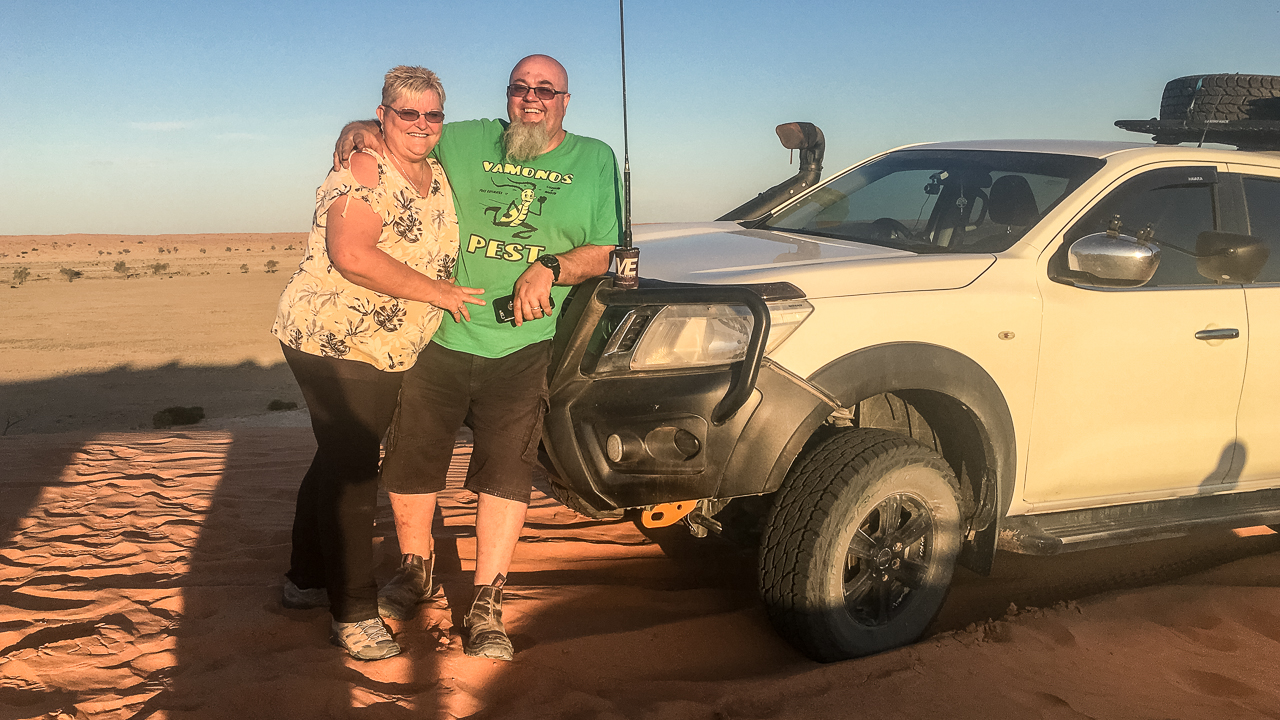
Amanda and I have visited the mound springs several times over the years. We visited The Bubbler and Blanche Cup in 2016, 2019 and 2022. Then in 2024 we stopped again at the Strangways Springs area and saw the mound springs there while travelling the Oodnadatta Track.

Each visit looked a little different. Water levels changed, tracks varied, and the wetlands shifted with the seasons. Even so, the springs always stood out as one of the most important natural sites along the track.

The mound springs along the Oodnadatta Track are one of the more interesting stops in outback South Australia. Most people come for the old Ghan history and remote scenery. However, the mound springs often end up being a highlight of the trip.
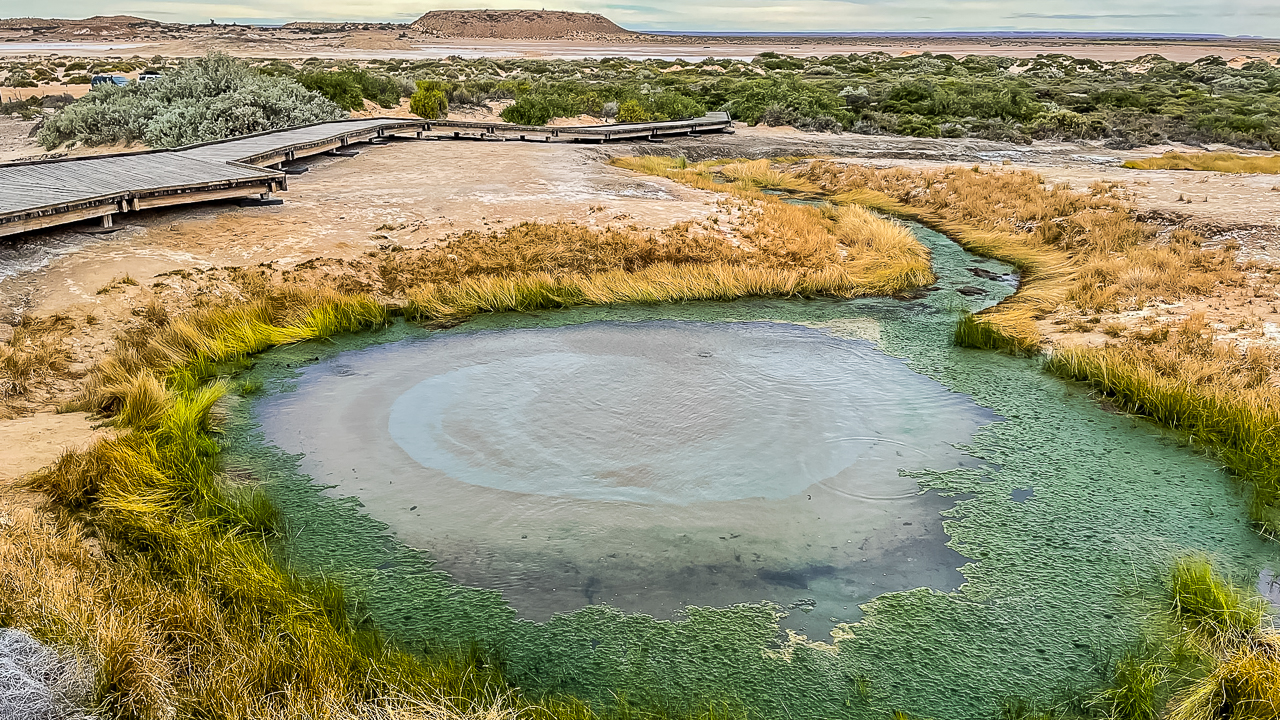
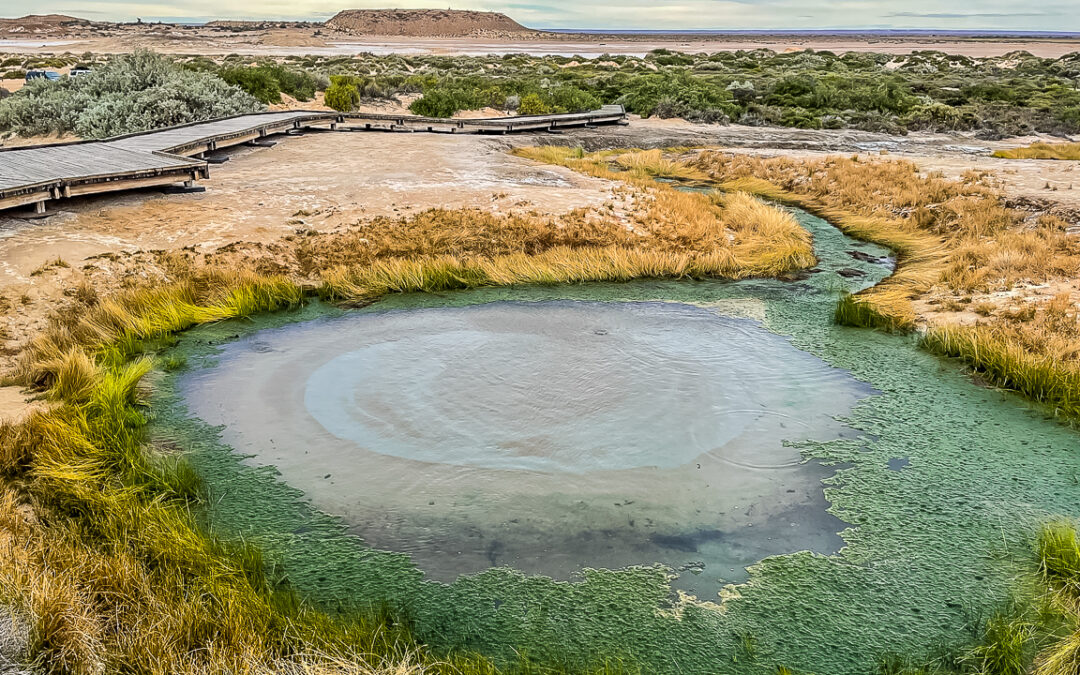
My Photo Of The Bubbler Mound Spring Taken In 2022

My Photo Of The Bubbler Mound Spring Taken In 2022

What Are Mound Springs?

Mound springs are natural springs fed by the Great Artesian Basin. Water travels underground for thousands of years before reaching the surface through cracks in the earth.

Over long periods minerals build up around the water source. As a result, small hills or “mounds” form around the spring outlets.

These springs were very important to Aboriginal people, early explorers, railway workers and cattle stations. In such a dry part of Australia, permanent water changed everything.

Today, many mound springs remain protected because they support rare plants and animals found nowhere else.

Friends Of Mound Springs Information
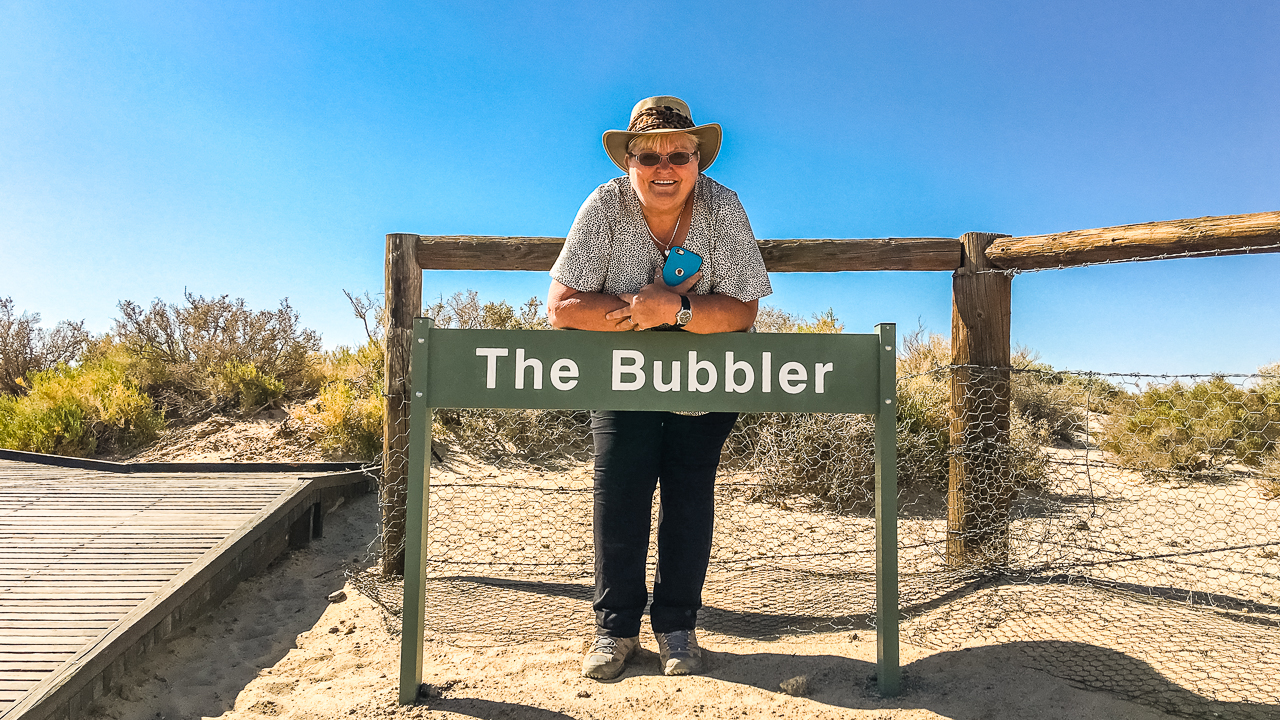
Amanda At The Top Of The Bubbler Boardwalk

Amanda At The Top Of The Bubbler Boardwalk

Mound Springs On The Oodnadatta Track

The best known mound springs on the Oodnadatta Track are:

Mound Spring Location What To Expect Access
The Bubbler Wabma Kadarbu Conservation Park Bubbling artesian water and wetland area Easy walk from car park
Blanche Cup Near The Bubbler Large mound spring with boardwalk access Easy walk
Strangways Springs Near Strangways ruins Smaller springs with railway history nearby Dirt track and short walks

The Bubbler And Blanche Cup

The Bubbler and Blanche Cup are the easiest mound springs to visit on the Oodnadatta Track. They sit inside Wabma Kadarbu Mound Springs Conservation Park between Marree and William Creek.

The turn off is about 10km east of Coward Springs and roughly 130km north west of Marree. The access road is suitable for most vehicles in dry conditions however it can be very corrugated and rough. When we visited the first time we towed the van in all the way. The second two visits we unhooked the van and went in with just the car. When you turn in to the access road just to the left is a big open area you can unhitch and leave your caravan.

Official Mound Springs Visitor Information
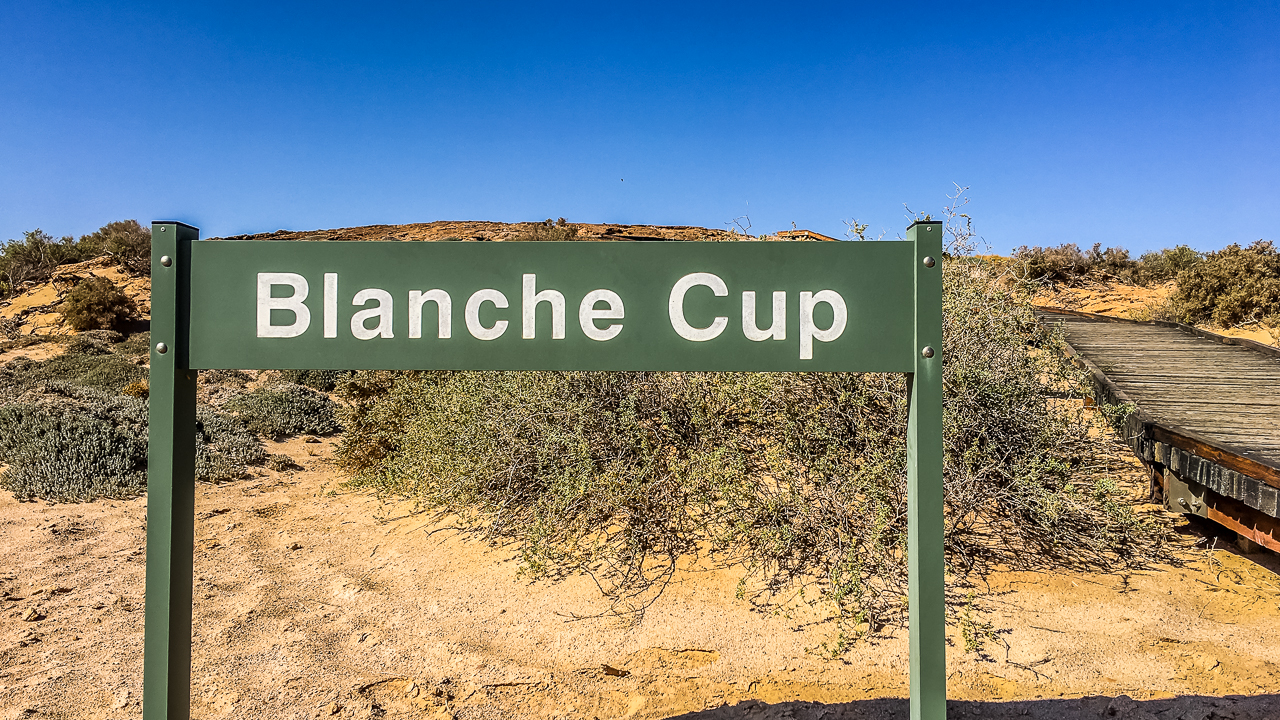
Blanche Cup Noticeboard In Wabma Kadarbu Mound Springs Conservation Park

Blanche Cup Noticeboard In Wabma Kadarbu Mound Springs Conservation Park

We find these springs worth visiting most times we travelled the track. Even after several trips, the contrast between dry desert country and bright green wetlands still stood out.

The Bubbler is known for the bubbling action caused by gases rising through the artesian water. At times the bubbling is strong. During other visits it was more subtle. Water flow can vary between years depending on pressure changes in the basin.

Blanche Cup looks very different. It has a larger mound with a more open pool structure. The boardwalk gives a good view without damaging the fragile ground around the spring.

Importantly, visitors should stay on the marked tracks and boardwalks. The ground near the springs is soft and easily damaged. Swimming is not allowed.

Wabma Kadarbu Conservation Park Information

Why The Springs Matter

The mound springs are far more than a roadside stop.

For thousands of years, Aboriginal groups relied on these permanent water sources. The springs also played a major role during European exploration and the construction of the old Ghan railway.

Without reliable water, many sections of inland Australia could not support travel or settlement.

The springs also support rare wildlife. Some tiny snails and aquatic species only exist in single spring systems. That makes these sites environmentally important as well as historically important.

More About The Environmental Importance Of Mound Springs

Compared with many outback attractions, the mound springs are easy to access and do not require long walks. That makes them popular with caravanners, camper trailer travellers and families.

Amanda And I In Front Of The Bubbler Mound Spring

Amanda And I In Front Of The Bubbler Mound Spring

Strangways Springs

Strangways Springs gives a different experience compared with The Bubbler and Blanche Cup.

We visited the Strangways area in 2024 while travelling between William Creek and Oodnadatta. The spring area itself is quieter and less developed. However, the nearby ruins and telegraph history add another layer to the stop.

Instead of boardwalks and viewing platforms, Strangways feels more remote and untouched.

The old stone ruins nearby are part of the former Overland Telegraph station and railway history. Because of that, many travellers combine the springs visit with a walk through the historic site.

Track conditions into Strangways can vary. After rain, sections may become rough or muddy. Therefore, checking road conditions before leaving is always a good idea.
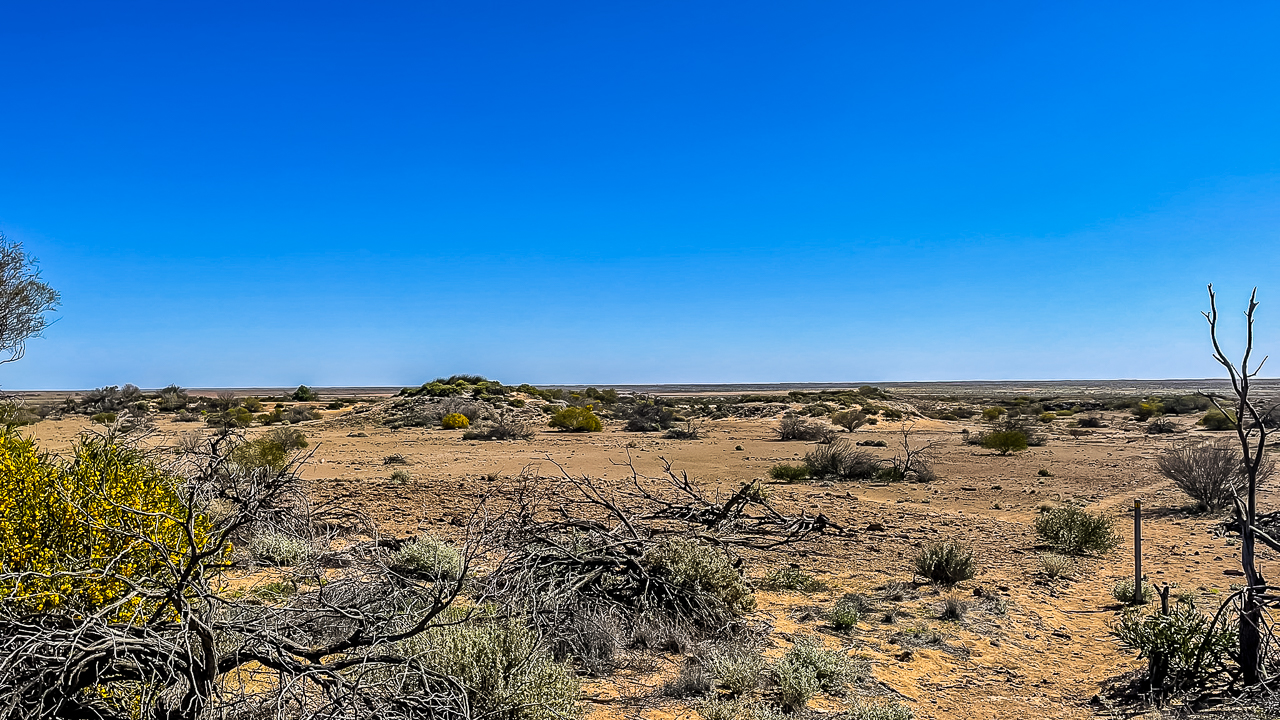
Strangway Springs Mound Springs On The Oodnadatta Track In 2024

Strangway Springs Mound Springs On The Oodnadatta Track In 2024

Best Time To Visit The Mound Springs On The Oodnadatta Track

The cooler months from May to September are usually the best time to travel the Oodnadatta Track.

Daytime temperatures are more comfortable and road conditions are often better after summer.

Even so, weather still affects the track. Heavy rain can close roads quickly. Corrugations also change throughout the season.

Before travelling, check current conditions through the official South Australian Outback Roads Report and the South Australian National Parks website.

South Australian Outback Roads Report

South Australian National Parks Information

As of May 2026, The Bubbler and Blanche Cup remain accessible through the Wabma Kadarbu conservation area. Visitors should still check local reports before travel due to changing outback conditions.
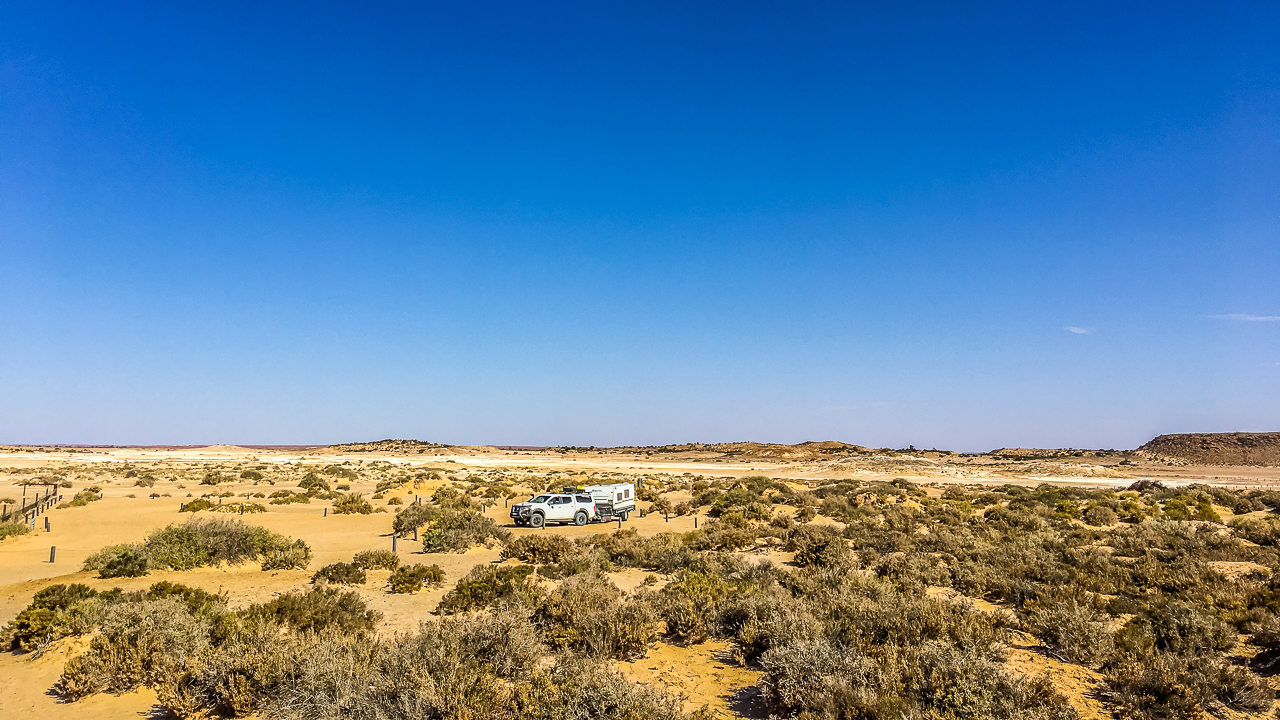
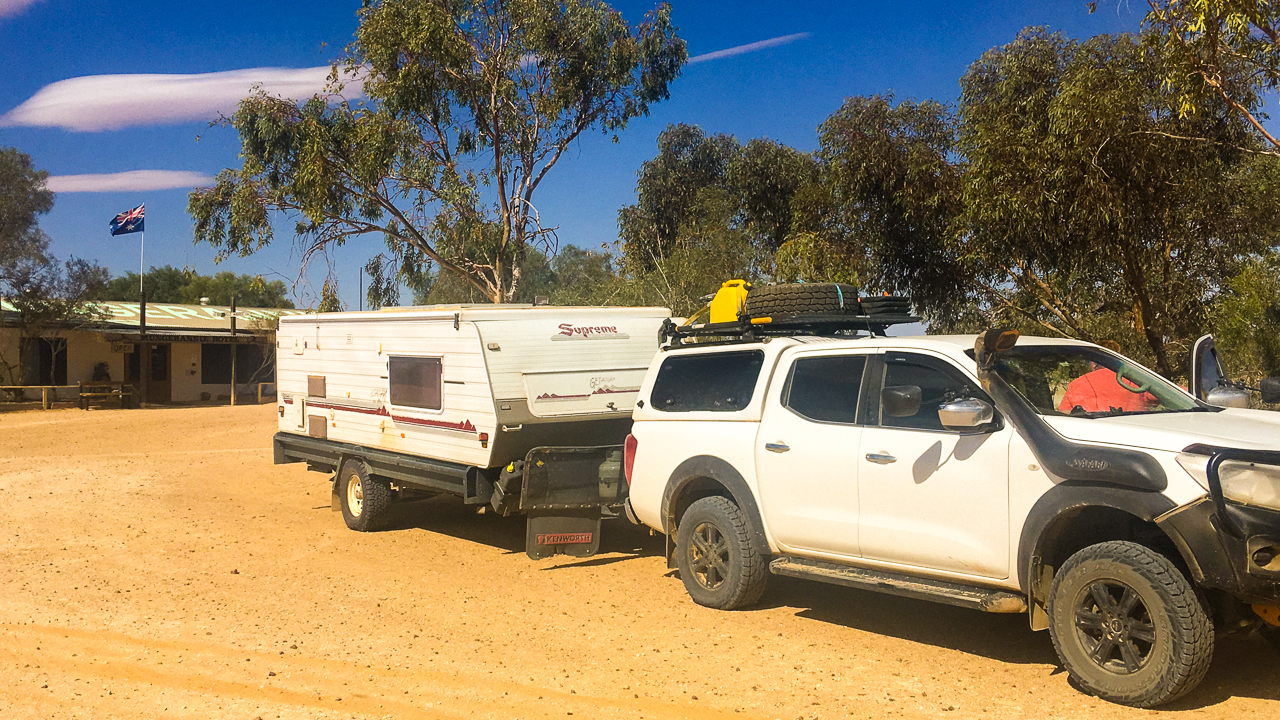
In We Towed The Van Out To The Mound Springs On The Oodnadatta Track

In We Towed The Van Out To The Mound Springs On The Oodnadatta Track

Camping Near The Mound Springs On The Oodnadatta Track

Most travellers stay nearby at Coward Springs.

Coward Springs is one of the better known campgrounds on the Oodnadatta Track. It offers toilets, hot showers and the well known artesian spa.

From there, the mound springs are only a short drive away.

William Creek and Marree also work well as overnight stops depending on your direction of travel.

Things We Noticed Across Multiple Visits

After visiting across several years, a few things stood out to us:

  • Water movement at The Bubbler changed between visits
  • Wetland growth varied each year
  • Visitor numbers increased noticeably after 2020
  • Boardwalks and signage improved over time
  • Track conditions changed more than the springs themselves

Those changes are part of what makes repeat visits worthwhile.

The springs may seem simple at first. However, once you understand their history and importance, they become one of the more memorable stops along the track.
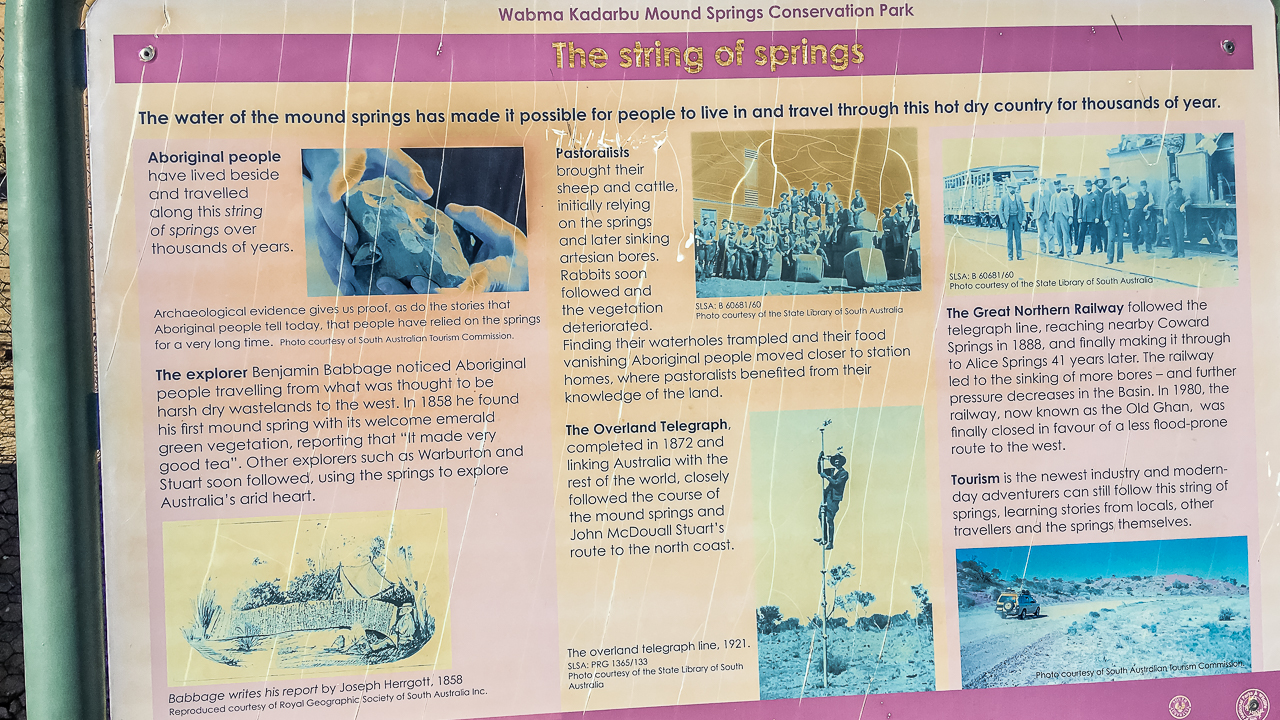
Information Board At Wabma Kadarbu Mound Springs Conservation Park

Information Board At Wabma Kadarbu Mound Springs Conservation Park

Final Thoughts

The mound springs are one of the most worthwhile stops on the Oodnadatta Track. They combine history, geology and outback scenery in one easy visit.

The Bubbler and Blanche Cup are the best known sites and suit almost every traveller. Meanwhile, Strangways Springs gives a quieter and more historic feel.

For us, the springs have been worth stopping at on every trip across the track. They break up the drive, add context to the region, and show just how important water is in the South Australian outback.
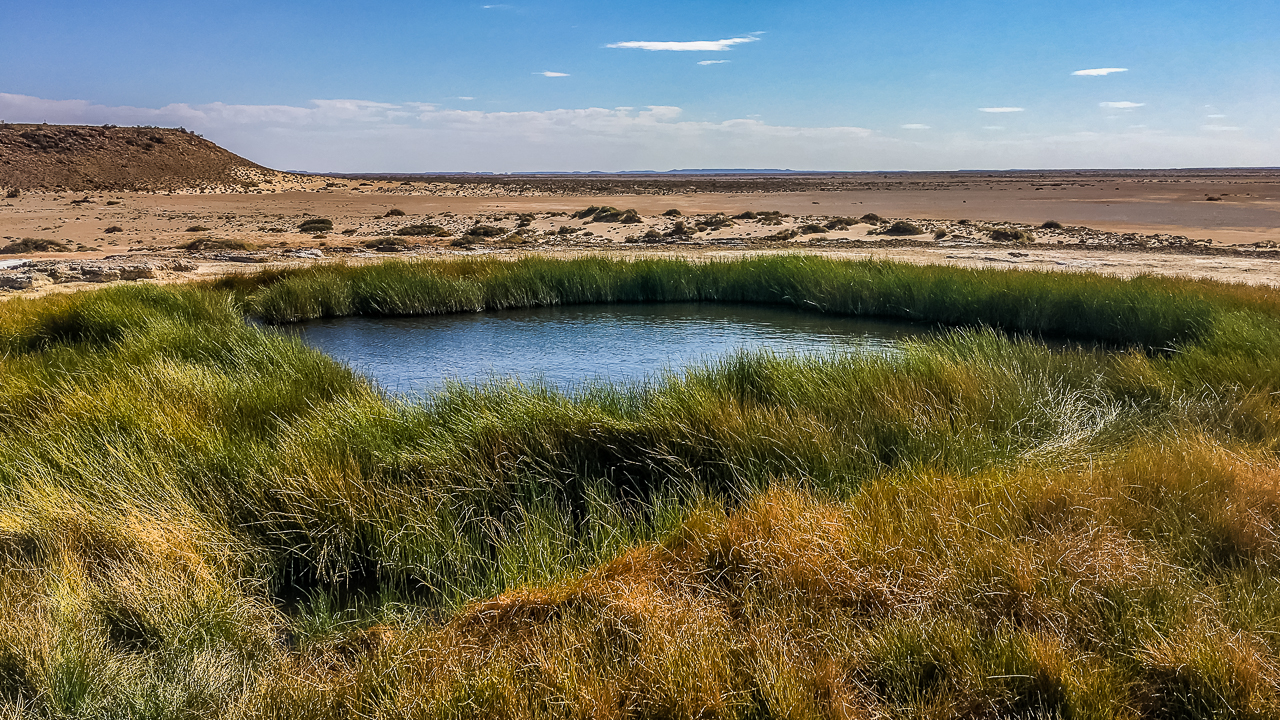
The Bubbler Mound Spring On The Oodnadatta Track

The Bubbler Mound Spring On The Oodnadatta Track

FAQs About The Mound Springs On The Oodnadatta Track

What are mound springs on the Oodnadatta Track?

Mound springs are natural springs fed by underground water from the Great Artesian Basin. Minerals build up over time around the water outlet and form raised mounds. They are an important part of South Australia’s outback history and environment.

Where are the main mound springs located on the Oodnadatta Track?

The best known mound springs are The Bubbler and Blanche Cup inside Wabma Kadarbu Conservation Park between Marree and William Creek. Strangways Springs is further north near the Strangways ruins.

Can you swim in the mound springs?

No, swimming is not allowed at The Bubbler or Blanche Cup. The springs are protected environmental sites and visitors must stay on the marked walking tracks and boardwalks.

Are the mound springs easy to access with a caravan?

Yes, The Bubbler and Blanche Cup are easy to access in dry conditions. Most caravanners and camper trailer travellers can reach the parking area without problems when the Oodnadatta Track is open. The track can be quite corrugated and rough. You can unhitch and park your van in an area to the left of the road in when you first turn in off the Oodnadatta Track.

What is the best time of year to visit the mound springs?

The cooler months from May to September are usually the best time to visit. Temperatures are lower and road conditions are often more comfortable for outback travel.

How far are The Bubbler and Blanche Cup from Marree?

The mound springs are about 130km north west of Marree and around 10km east of Coward Springs.

Why are mound springs important?

Mound springs provided permanent water in dry outback areas for thousands of years. Aboriginal groups, early explorers, railway workers and cattle stations all relied on them.

What makes The Bubbler different from Blanche Cup?

The Bubbler is known for its bubbling artesian water caused by underground gases. Blanche Cup has a larger open spring area and a raised mound with boardwalk access.

Is Strangways Springs worth visiting?

Yes, Strangways Springs is worth visiting for travellers interested in history and quieter stops. The nearby ruins and old telegraph station add extra interest to the area.

Where can you camp near the mound springs?

Coward Springs is the most popular campground near the mound springs. It offers camping, toilets, hot showers and an artesian spa. William Creek and Marree are also common overnight stops nearby.

Birdsville Track Road Conditions (2026) – Access Latest Updates

Birdsville Track Road Conditions (2026) – Access Latest Updates

Birdsville Track Road Conditions (2026) – Access Latest Updates

Updated May 2026: all Birdsville Track Road Conditions links and information have been checked and verified.

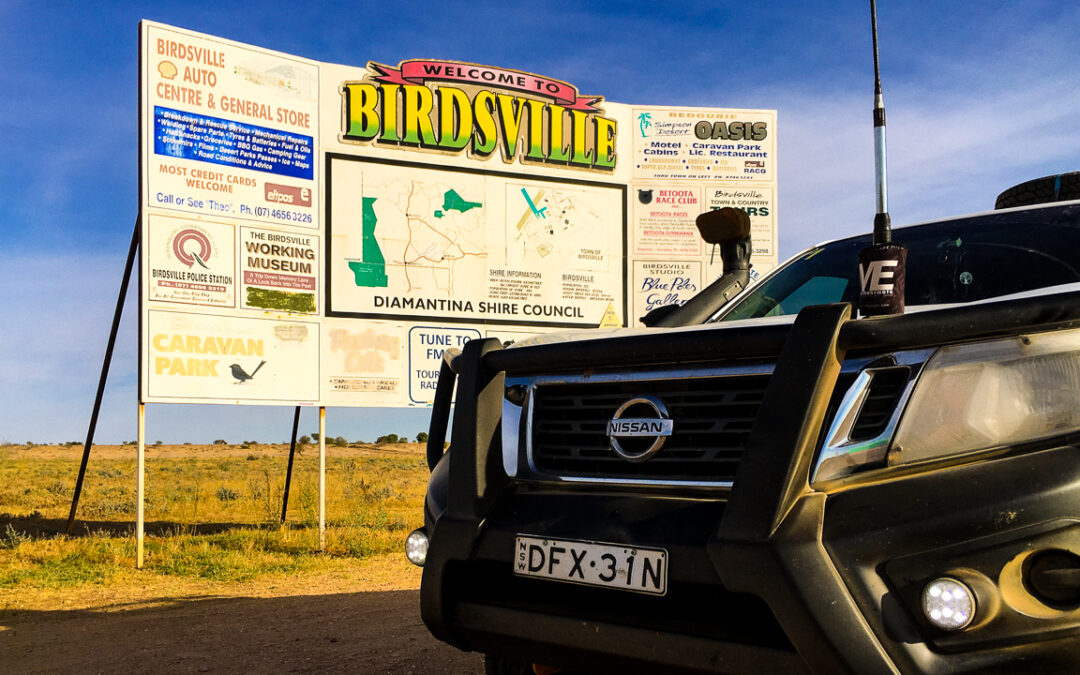
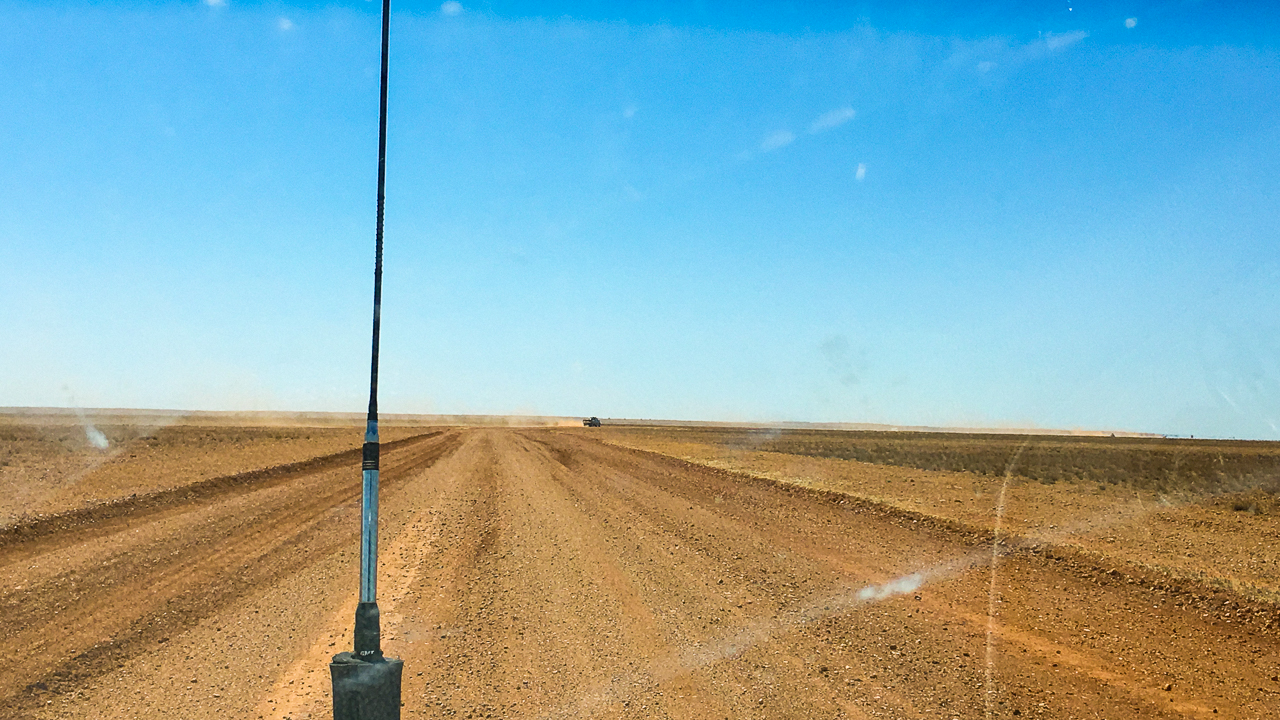
Amanda and I have driven the Birdsville Track twice in 2019 and again in 2023. Both trips were very different. In 2019 the road was mostly dry and heavily corrugated. In 2023 we found long graded sections mixed with damaged areas after rain.

The Birdsville Track is one of Australia’s best known outback drives. However Birdsville Track road conditions can change fast. Rain in Queensland can close sections days later even when the weather looks fine in South Australia.

That is why checking current conditions matters before you leave Marree or Birdsville.

As of May 2026, conditions across the outback remain unpredictable after major flooding during late 2025 and early 2026. Some sections reopened earlier this year, although closures and restrictions still happen after rain events.

Because of that, relying on a single source is risky.

Us On The Birdsville Track In

Us On The Birdsville Track In

Current Birdsville Track Road Conditions

The best way to check current Birdsville Track road conditions is by using several trusted sources together.

Here are the ones we use before every outback trip.

Source What It Covers Why It Matters
South Australia Outback Roads SA closures, warnings and restrictions Main source for Marree to the QLD border
Queensland Traffic Queensland road closures Important near Birdsville
Bureau of Meteorology Rain forecasts and flood warnings Rain upstream affects the track later
Local Hotels and Roadhouses Current on ground reports Often more current than websites
UHF Radio Channel 40 Truck driver updates Helpful while travelling

South Australia Outback Roads Website

The most important source for the southern section is the South Australian Government outback road map.

The official outback road warnings page is:

South Australia Outback Road Warnings Map

This map shows if roads are:

  • Open
  • Open with warnings
  • 4WD only
  • Closed

It also shows flood damage, washouts and detours.

As of May 2026, the map still updates regularly after heavy rain events across the far north.

The South Australian Government reopened the SA section of the Birdsville Track in January 2026 after flood repairs near Cooper Creek.

Even so, conditions can change within hours after rain.

Queensland Traffic Website

The Queensland section near Birdsville also closes regularly after rain.

The best official source is:

Queensland Traffic Road Conditions

Queensland Transport updates closures, restrictions and flood impacts daily. The western districts still had many road closures during May 2026 after widespread flooding earlier in the year.

This matters because many travellers only check South Australia updates. That can create problems once you cross into Queensland.

Bureau Of Meteorology

The Bureau of Meteorology is just as important as road reports.

A dry track today may close tomorrow if heavy rain falls upstream.

You can check forecasts and flood warnings here:

Bureau Of Meteorology Queensland Forecasts

Bureau Of Meteorology South Australia Forecasts

Floodwater from Queensland often moves slowly into Channel Country. That can affect crossings and low sections along the Birdsville Track days later.

In 2026, flooding around Birdsville and Bedourie cut road access for weeks.

Local Reports Matter For Birdsville Track Road Conditions

Official websites help, although local advice is often more useful.

Before we drove the track in 2023 we spoke with travellers coming south into Marree. Their updates matched the road far better than social media posts.

Roadhouses and pubs usually know what conditions are really like.

These stops are worth calling before you leave:

Marree Hotel

Marree Hotel

Phone: (08) 8675 8344

Mungerannie Hotel

Mungerannie Hotel

Phone: (08) 8675 8317

Us At Mungerannie Hotel Is A Great Source Of Information On Birdsville Track Road Conditions

Us At Mungerannie Hotel Is A Great Source Of Information On Birdsville Track Road Conditions

Birdsville Hotel

Birdsville Hotel

Phone: (07) 4656 3244

Staff hear from travellers every day. They often know about corrugations, bulldust, damaged sections and fuel supply issues before government websites update.

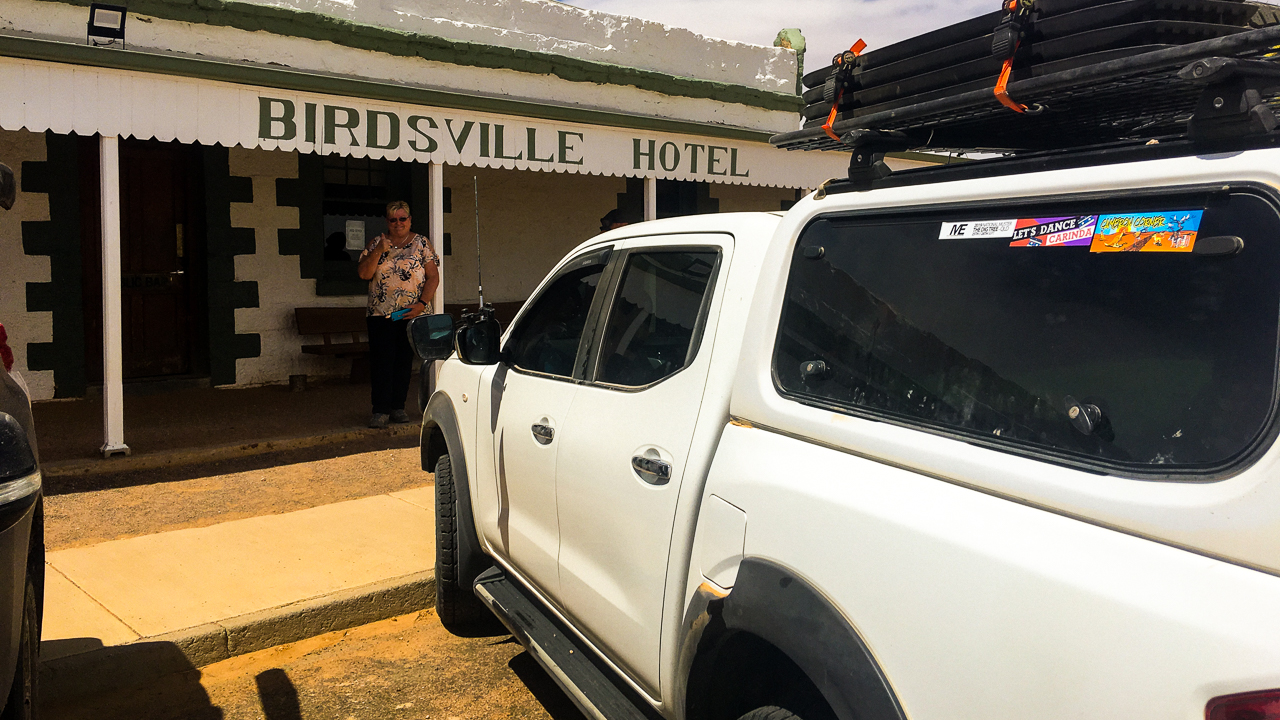
Amanda & I At The Birdsville Hotel In

Amanda & I At The Birdsville Hotel In

Facebook Groups And Forums Are A Great Source Of Birdsville Track Road Conditions

The following is a very active Facebook Group that has lots of current access information available The Birdsville Track (Facebook Group)

  • Facebook groups can help, although you should treat them carefully and verify information with the poster of the information..
  • Some travellers post photos and videos from the track daily. That gives a good picture of current conditions.
  • Still, road surfaces can change fast after grading or rain.

We usually compare Facebook reports with official government maps before making decisions.

Reddit discussions during 2026 also highlighted ongoing flood impacts and sudden closures across outback Queensland and South Australia.

Why Conditions Change So Quickly

Many first time visitors expect the Birdsville Track to stay fairly consistent.

That is not how outback roads work.

A road can feel smooth after grading one week. Then corrugations and bulldust return a week later after traffic builds up.

Rain creates bigger problems. Even small falls can close clay sections quickly.

Flooding around Cooper Creek caused major disruptions through 2025 and into 2026. Authorities even used a barge crossing during part of that period.

As a result, checking conditions once is not enough.

We usually check:

  • One week before leaving
  • The night before departure
  • Again at Marree or Birdsville
  • During the trip using UHF radio

Best Time To Drive The Birdsville Track

Most travellers drive the track between May and September.

Winter usually brings cooler temperatures and lower rainfall. Even then, closures still happen.

May 2026 has already seen fresh warnings and flood impacts across outback regions.

Summer trips carry far more risk due to heat and storms.

Our Advice After Two Trips

The Birdsville Track is easier than many people expect when conditions are good.

Still, people get caught out every year by flooding, damaged roads and poor preparation.

From our experience, these simple steps help most:

  • Check multiple official sources
  • Watch weather forecasts closely
  • Speak with locals before leaving
  • Carry extra fuel and water
  • Slow down for corrugations
  • Never drive on closed roads

That last point matters most.

Outback closures exist for safety and road protection. Ignoring them can leave you stranded for days.

Final Thoughts On Birdsville Track Road Conditions

The best Birdsville Track trips usually start with good planning.

Road conditions across the outback can change quickly, especially after rain. Because of that, official road reports, weather forecasts and local advice all matter.

We have found that combining government websites with local reports gives the clearest picture before heading north from Marree or south from Birdsville.

If conditions stay dry, the Birdsville Track remains one of the great outback drives in Australia.

Amanda And I On Top Of Big Red In

Amanda And I On Top Of Big Red In

Frequently Asked Questions About Birdsville Track Road Conditions

How often do Birdsville Track road conditions change?

Birdsville Track road conditions can change very quickly after rain. A road that is open in the morning may close later that day if storms move through the area. Corrugations and bulldust can also change within days depending on traffic and grading work.

What is the best website for current Birdsville Track road conditions?

The best official source for South Australia is the SA Outback Road Warnings Map. For the Queensland section near Birdsville, Queensland Traffic is the best source. We recommend checking both before leaving.

Do I need a 4WD for the Birdsville Track?

Many travellers complete the Birdsville Track in a high clearance 2WD during dry conditions. However, a 4WD gives more flexibility if road conditions worsen. After rain or during rough periods, a 4WD is often the safer choice.

When is the best time to drive the Birdsville Track?

Most people travel the Birdsville Track between May and September. Temperatures are cooler during winter and road conditions are often more stable. Summer travel brings high heat and a greater chance of storms and road closures.

Can caravans drive the Birdsville Track?

Yes, many caravans use the Birdsville Track every year. Still, conditions play a big part in how suitable the road will be. Heavy corrugations and washouts can damage caravans, especially after rain or during busy travel periods.

Is there mobile phone coverage on the Birdsville Track?

Mobile coverage is very limited along most of the Birdsville Track. You may get coverage at Marree and Birdsville, although large sections have no signal at all. Many travellers carry a satellite phone, Starlink or HF radio for safety.

Snowy Mountains Historic Huts: We Visit 3 Historic Homesteads

Snowy Mountains Historic Huts: We Visit 3 Historic Homesteads

Snowy Mountains Historic Huts: We Visit 3 Historic Homesteads

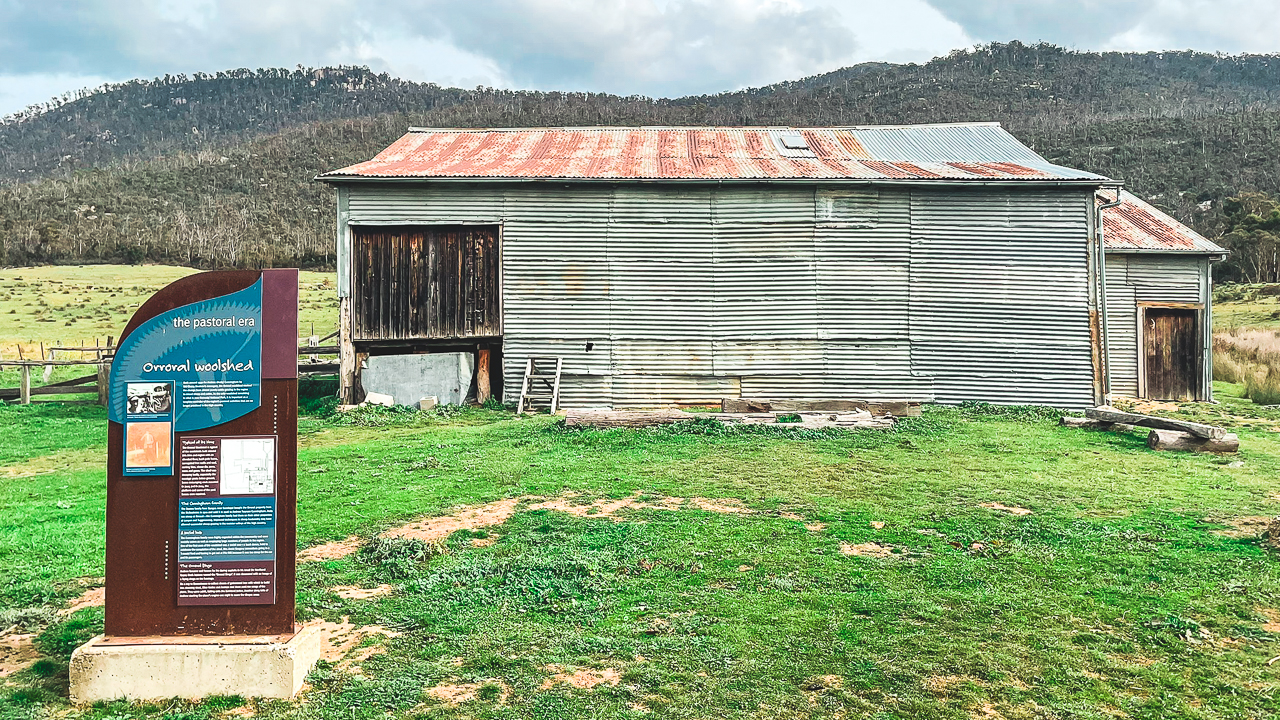
We spent the day exploring remote back roads and Snowy Mountains historic huts between Jindabyne and the northern sections of the Snowy Mountains region. Travelling via Alpine Way, Middlingbank Road and Boboyan Road we visited several historic homesteads. Homesteads visited include Westermans Homestead, Brayshaws Homestead and Orroral Homestead. We drove through rough but manageable dirt roads in dry conditions.

This guide is based on our own first hand trip through the area in May 2026. We have included current access conditions, road observations and what each historic site is like today. If you’re planning a NSW High Country 4WD trip focused on historic huts, remote touring routes and Snowy Mountains history. This drive is well worth adding to your itinerary. Here’s day one of us exploring NSW high country huts.

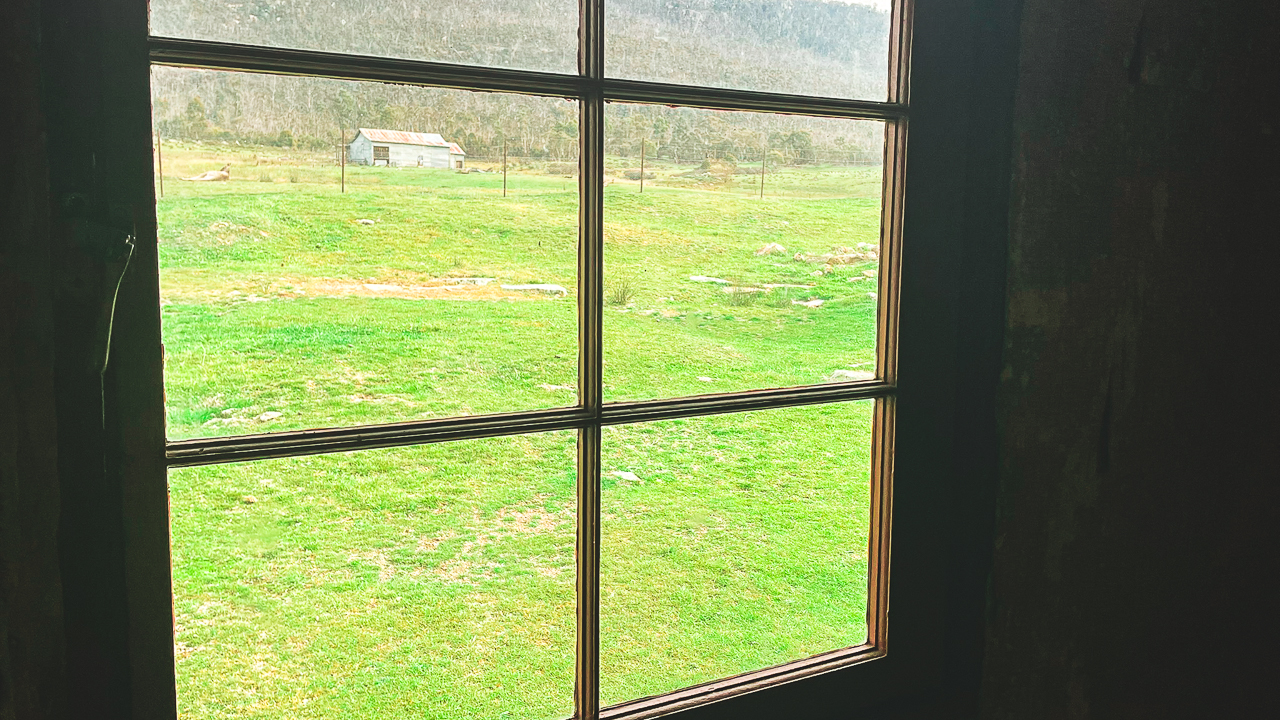
Orroral Homestead One Of The Snowy Mountains Historic Huts We Visited ()

Orroral Homestead One Of The Snowy Mountains Historic Huts We Visited ()

Road Conditions

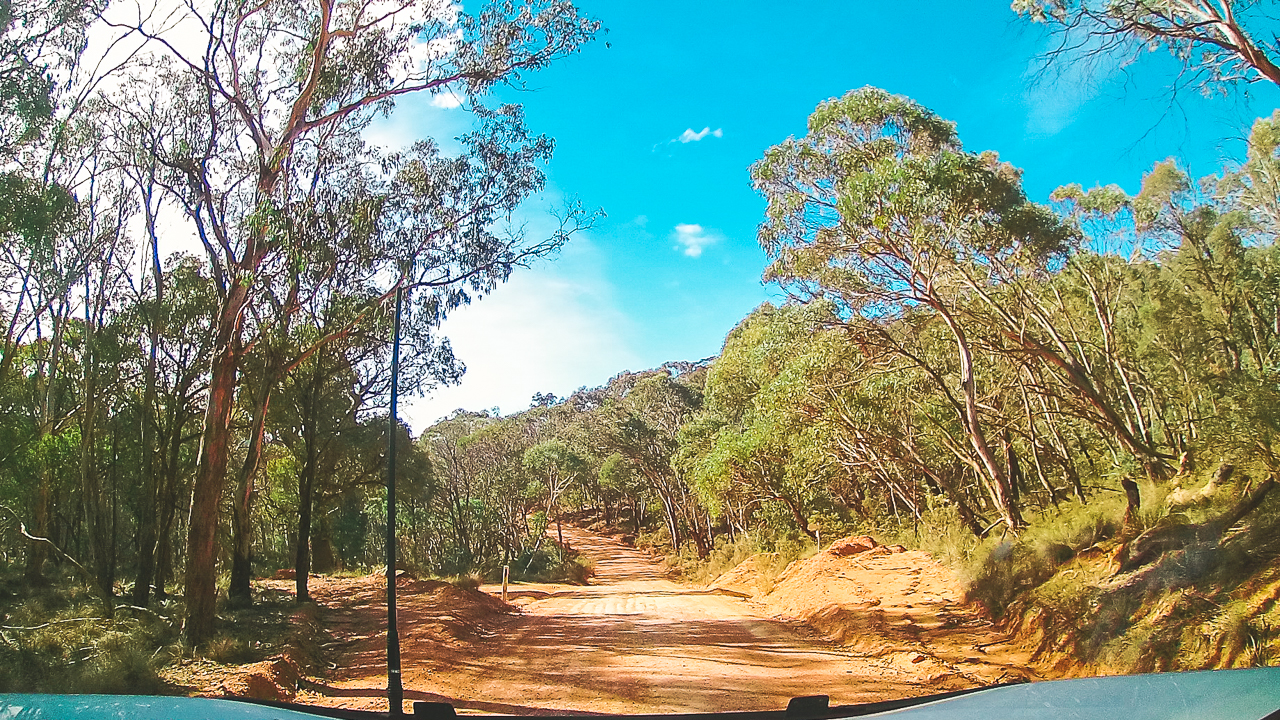
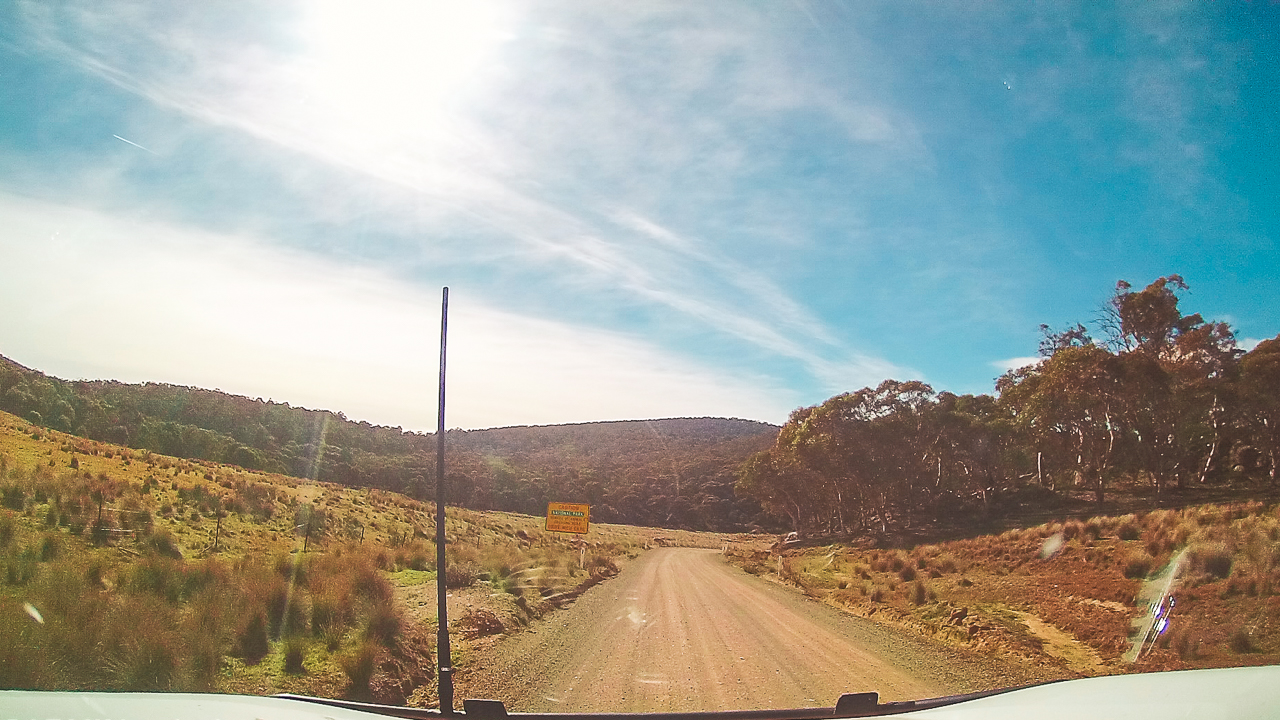
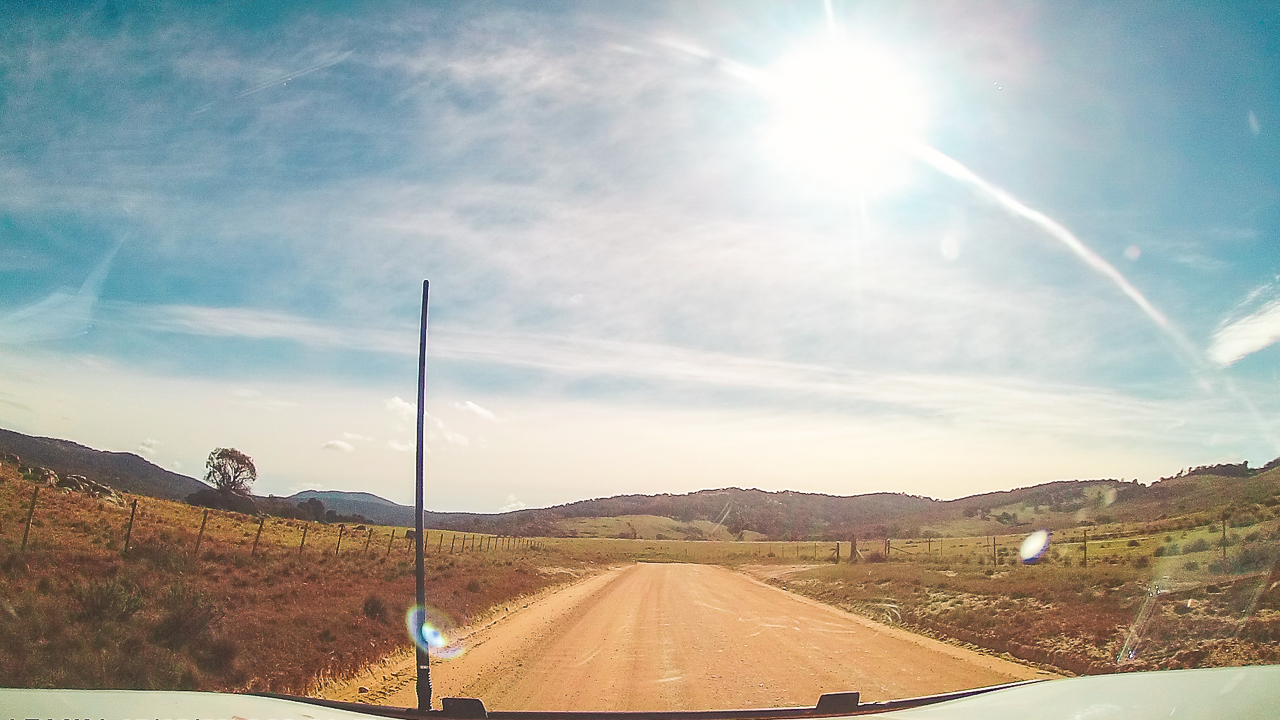
Road conditions during our trip were mostly dry with some rough corrugated sections along Boboyan Road and nearby fire trails.

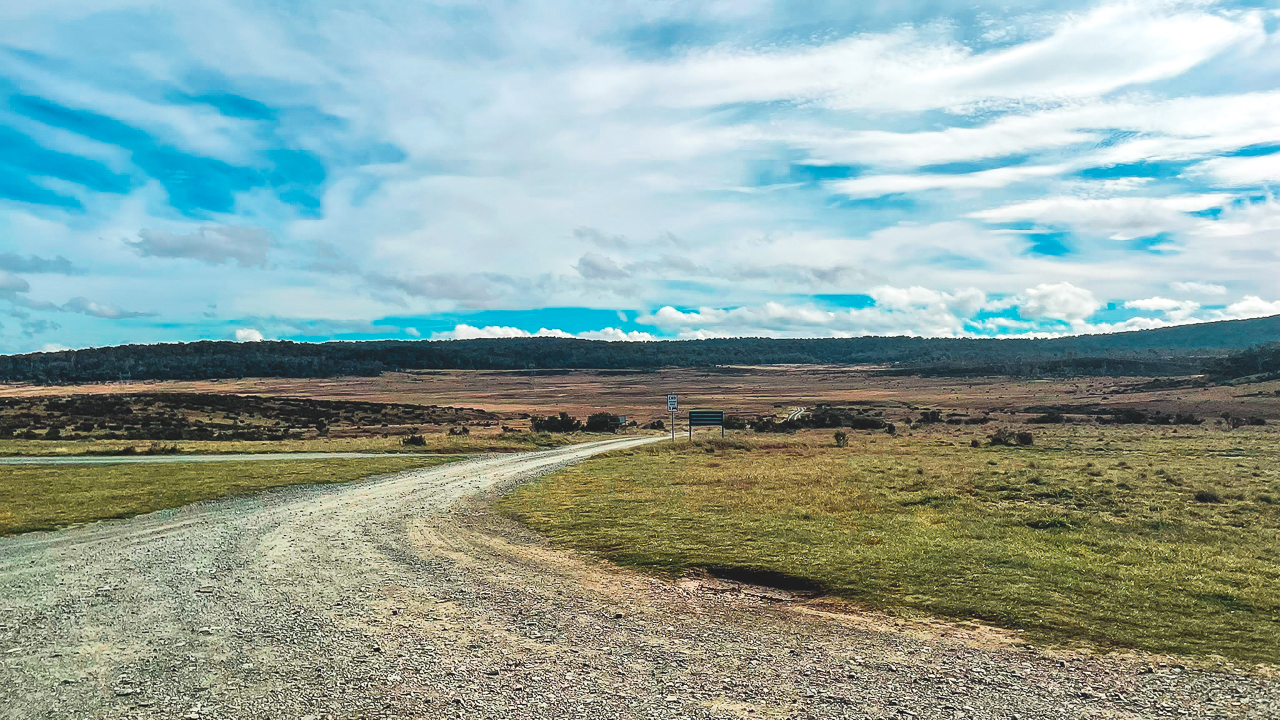
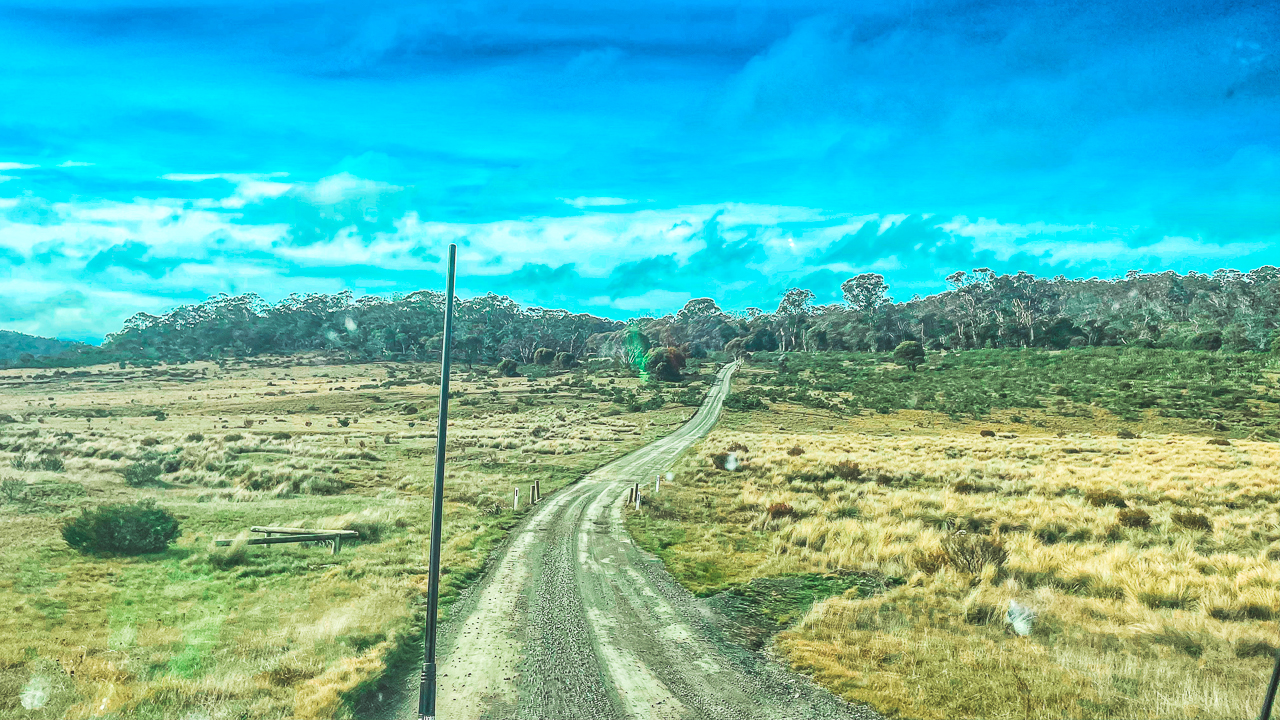
Dirt Road We Travelled While Visiting One Of The Snowy Mountains Historic Huts

Dirt Road We Travelled While Visiting One Of The Snowy Mountains Historic Huts

Heading Inland From Jindabyne

After breakfast at a cafe we left Jindabyne early in the morning and headed north along Alpine Way before turning off near Berridale. Once we reached Middlingbank Road the scenery quickly changed from alpine tourist areas to quieter back roads and open grazing country.

After joining Boboyan Road the driving became rougher with long stretches of dirt road, potholes and corrugations. None of it was difficult in dry weather but it definitely felt more remote compared to the sealed roads around the Snowy Mountains tourist areas.

The further inland we travelled the fewer people we saw. Most of the day was spent driving through bushland, open plains and isolated mountain country while stopping at several historic sites along the way.

Westermans Homestead

The first stop for the day was Westermans Homestead. Unfortunately this one turned into a bit of a disappointment because access had been closed due to aerial pest control operations in the area.

The closure officially started from Monday 18.05.2026 but the gate to the fire trail had already been locked when we arrived on Sunday 17.05.2026. From the signs and information nearby it appeared the aerial shooting program was most likely targeting brumbies.

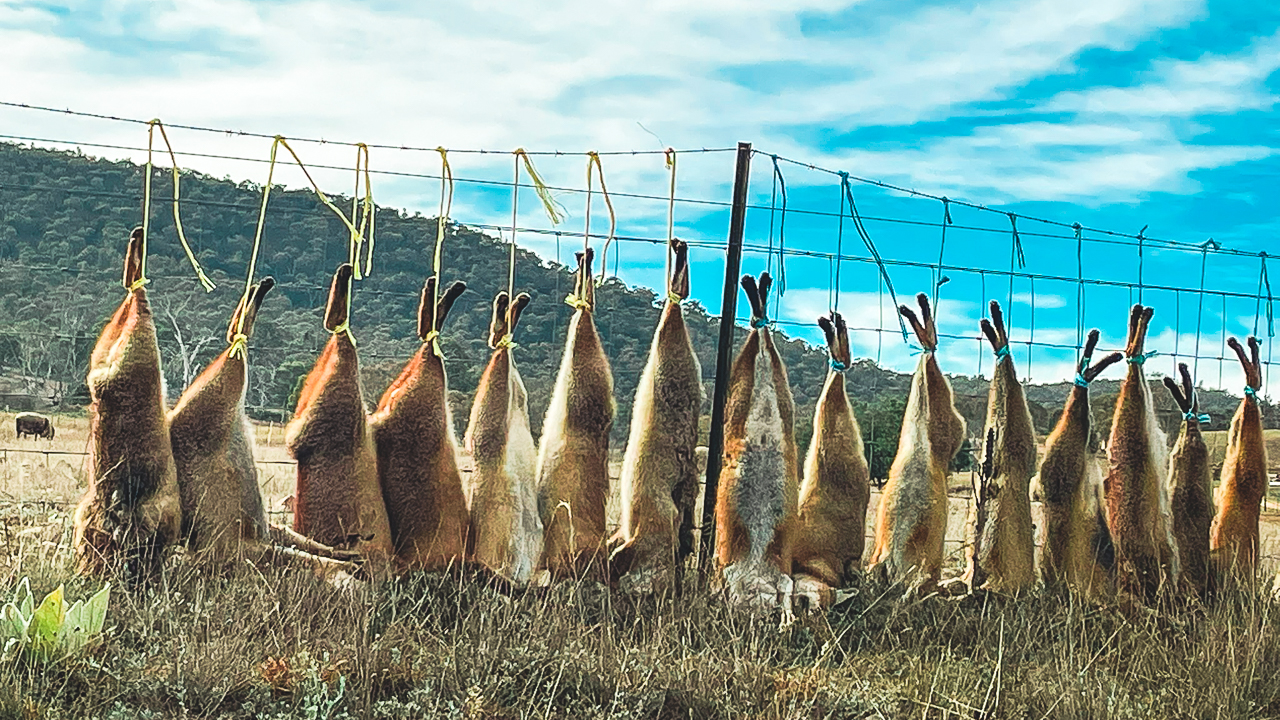
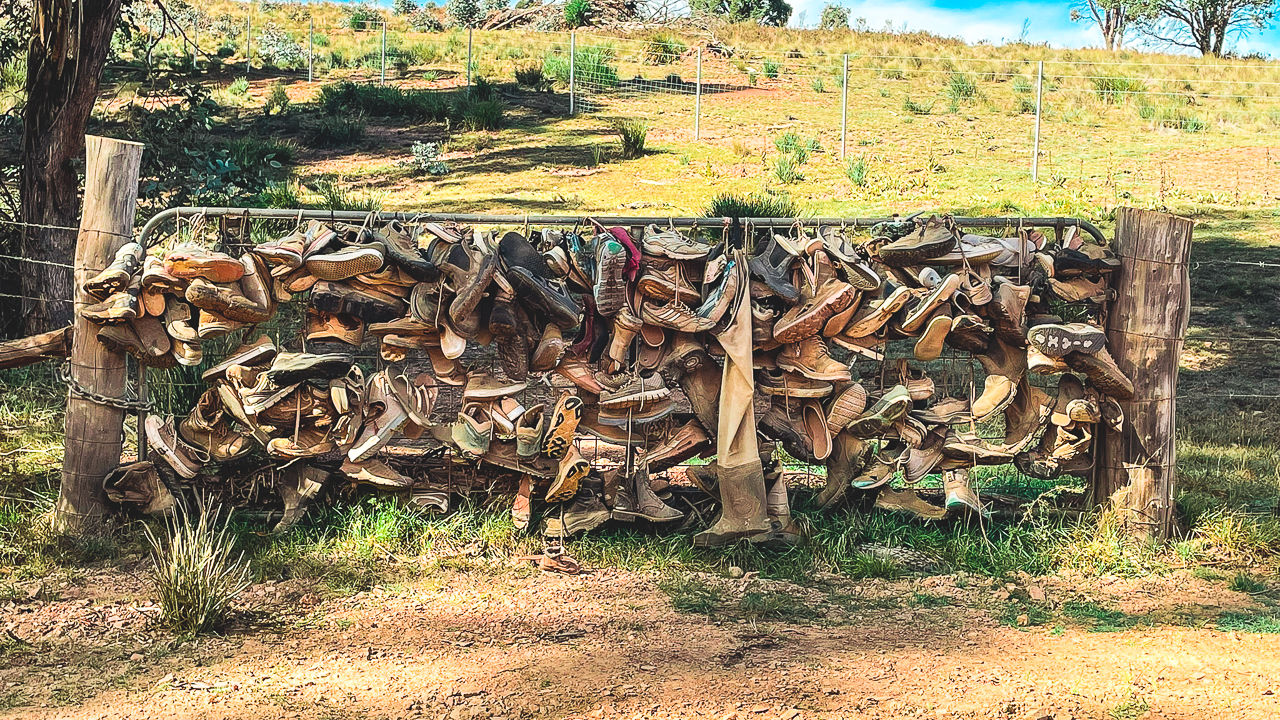
On the drive in we passed a fence lined with about 20 freshly shot foxes strung up along it. There were also the remains of many more that had clearly been there for quite a while. Years ago it was common to see foxes hanging from fences in rural areas as part of pest control programs. It is something you do not see very often anymore.

It was a shame that we could not actually reach Westermans Homestead itself. It was still an interesting reminder that access conditions can change quickly in remote national park areas. It is always worth checking road closures and park alerts before planning a trip into the NSW High Country.

The drive through this section was still worthwhile thanks to the scenery and remote feel of the area. It definitely felt like proper Snowy Mountains backcountry touring.

Dead Foxes On Fence Along Boboyan Road

Dead Foxes On Fence Along Boboyan Road

Brayshaws Homestead

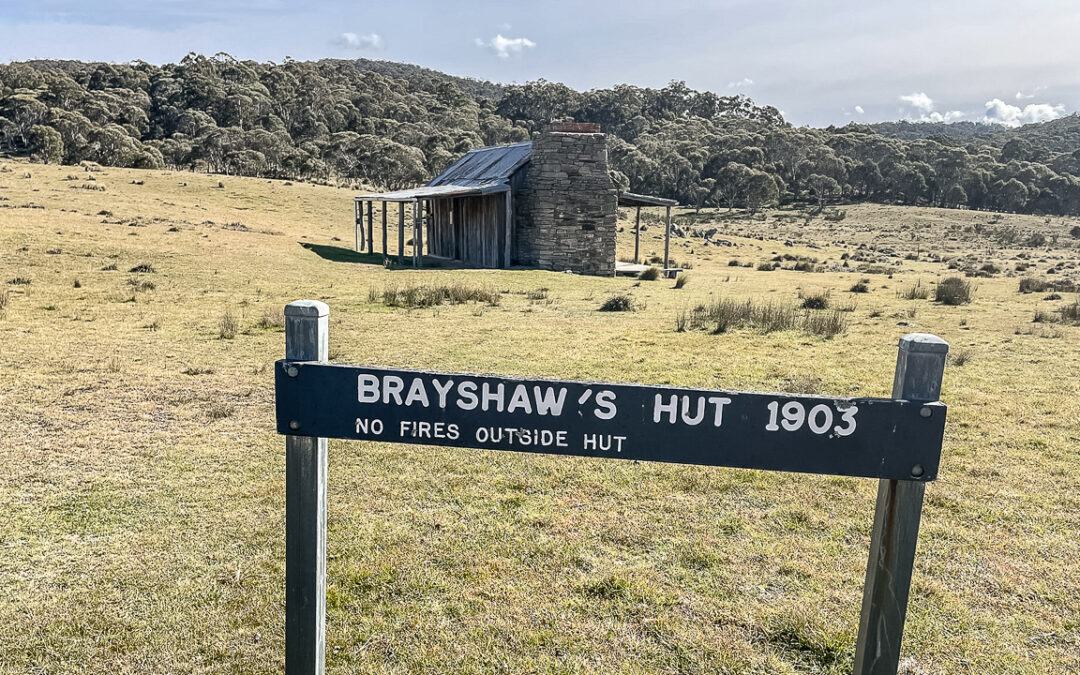
After leaving the Westermans area we continued on towards Brayshaws Homestead. This ended up being one of the more interesting Snowy Mountains historic huts we visited during the trip.

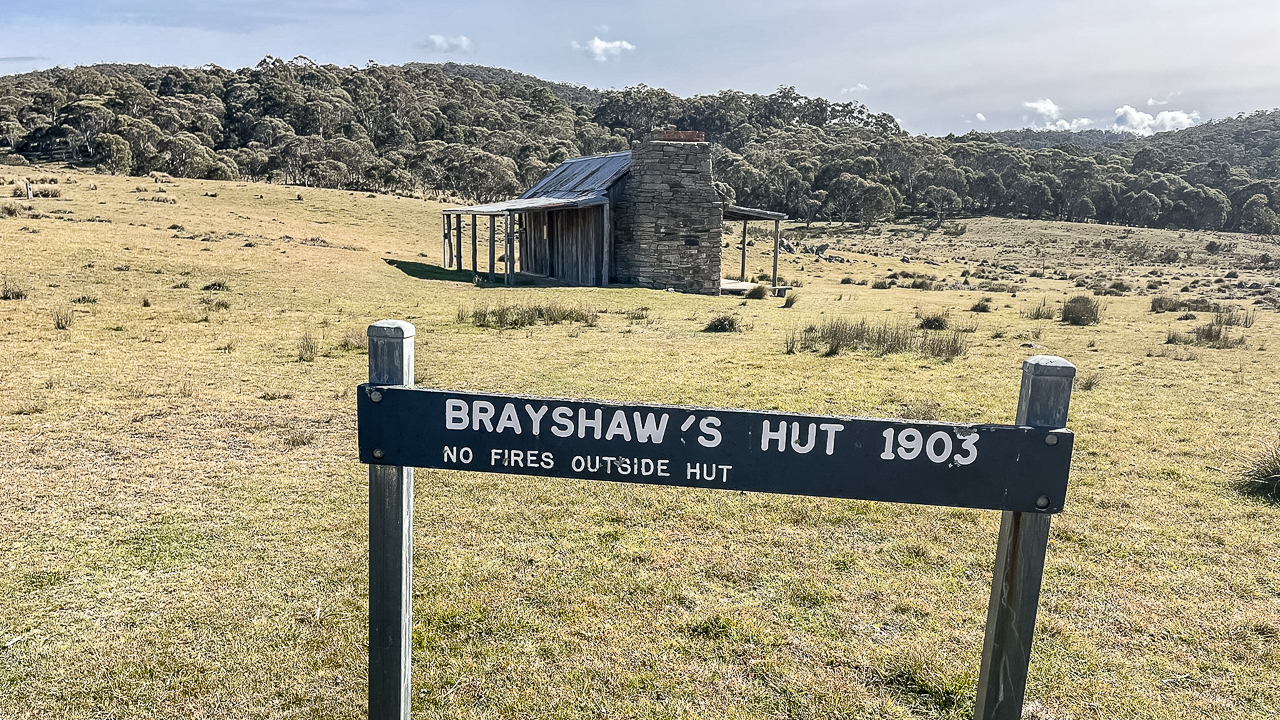
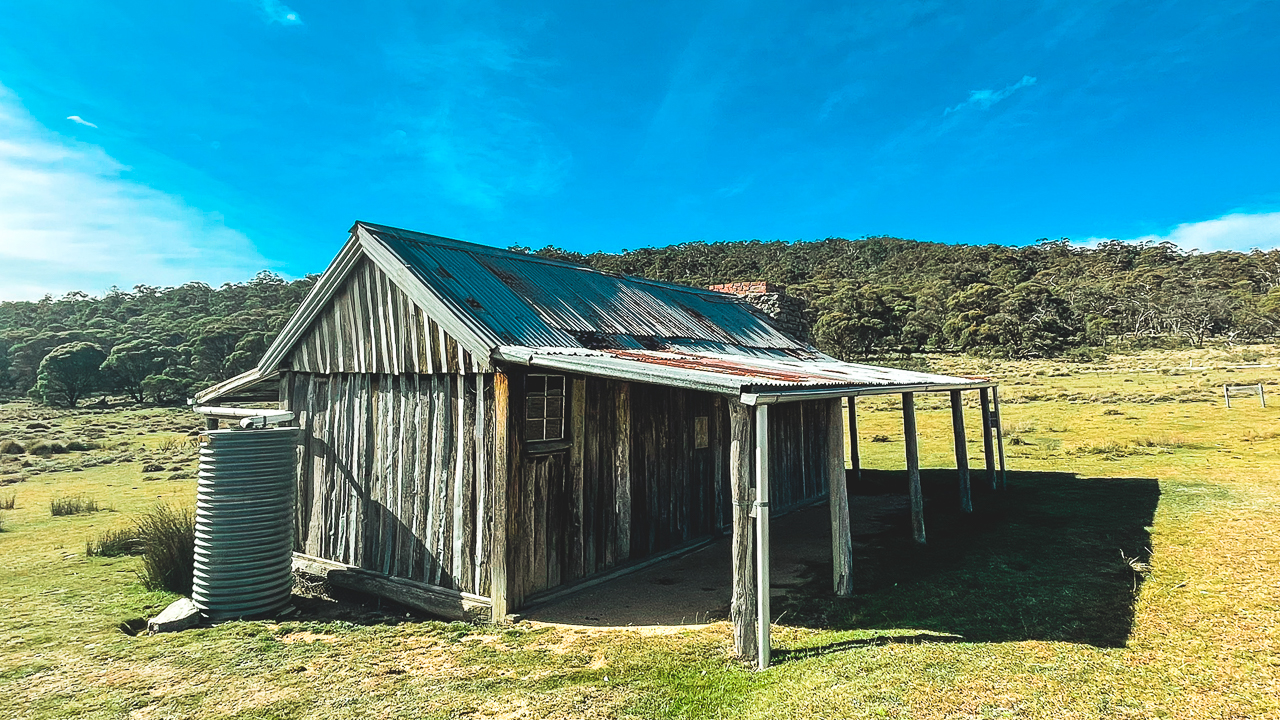
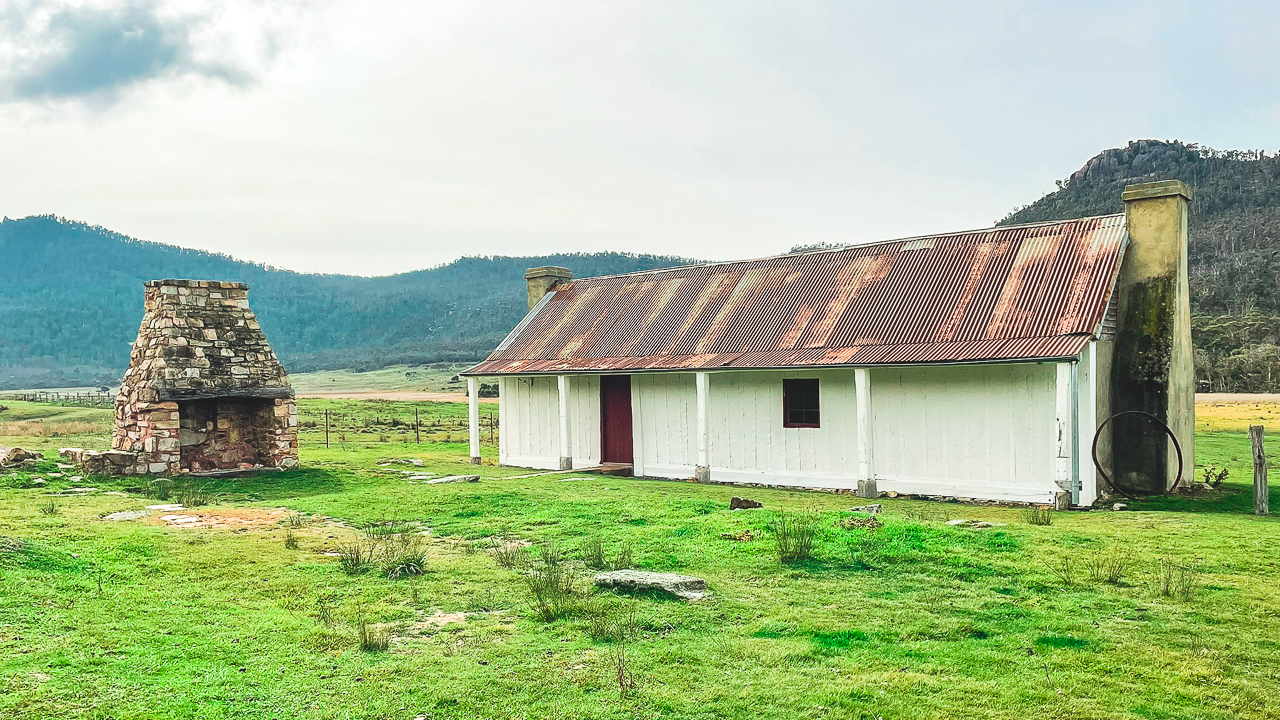
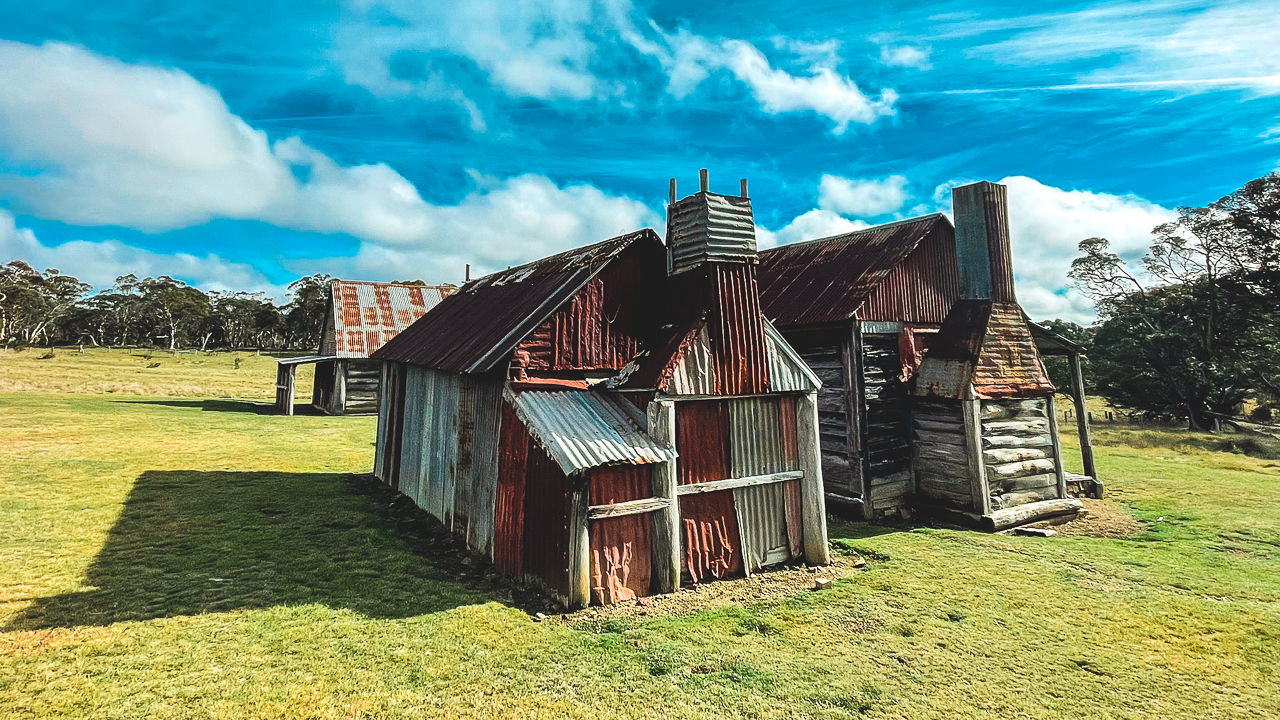
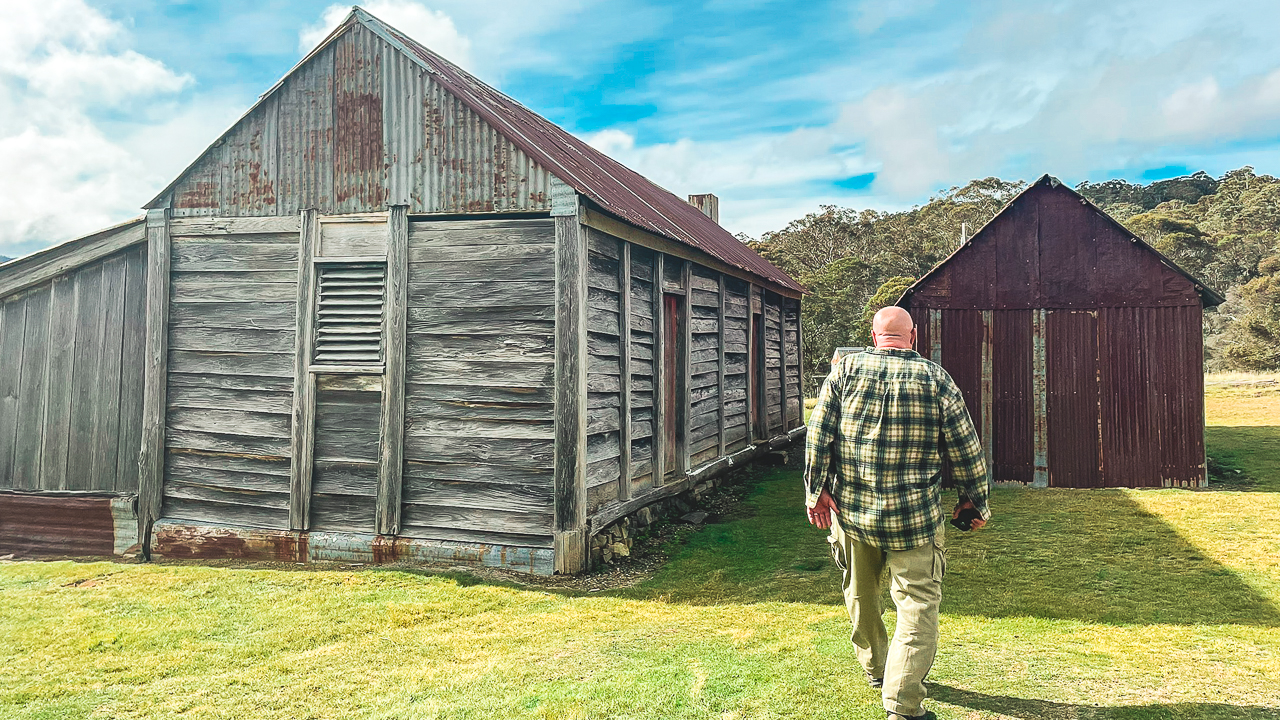
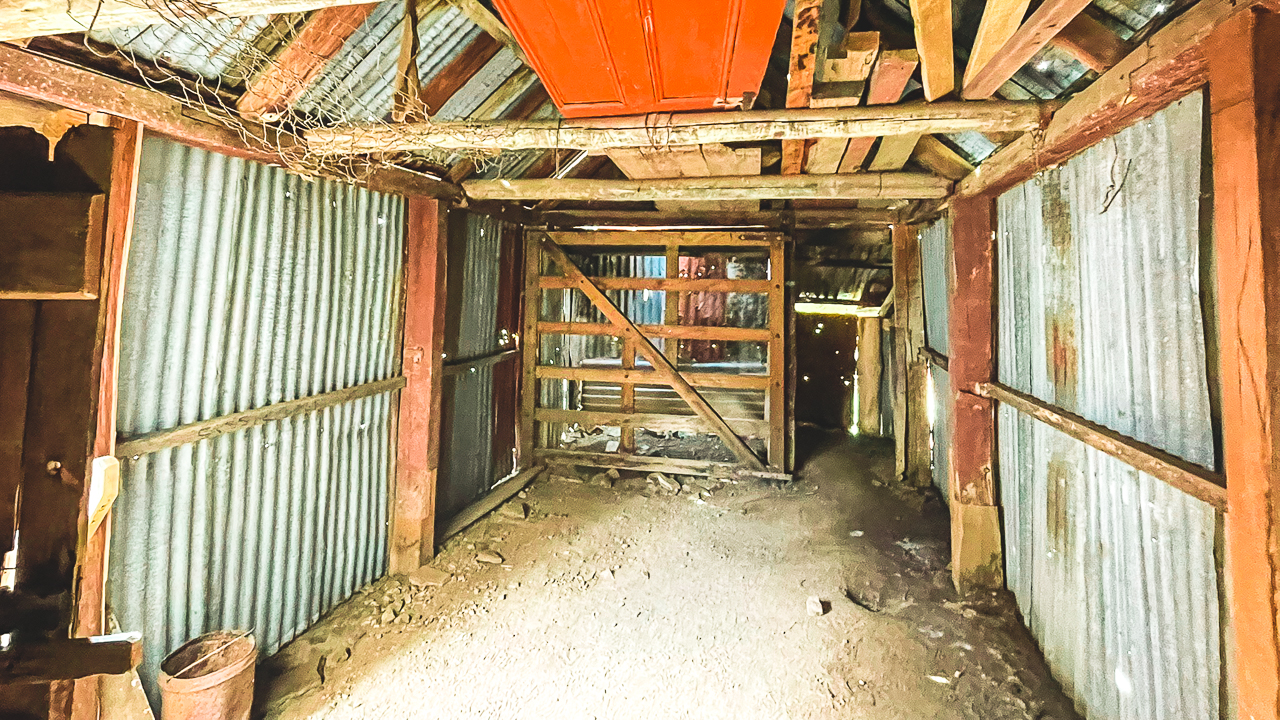
Brayshaws Homestead is a vertical slab hut built in 1903. Compared to some of the larger homesteads in the region, this one is very basic and simple. It gives a good idea of how tough life would have been for early settlers living in the high country.

The timber slab walls, small rooms and basic layout all show how practical these huts needed to be. Winters in this part of the country would have been extremely cold and isolated.

The owner reportedly lived there for around 28 years until his death. According to one of the information boards site he died from exposure after falling from his horse and suffering injuries.

Walking around the hut today it is easy to imagine how remote this country would have felt in the early 1900s. Even with modern vehicles and roads it still feels isolated.

Brayshaws Homestead is well worth visiting if you are interested in Snowy Mountains history, old grazing properties or historic huts in the NSW High Country.

Brayshaws Homestead Snowy Mountains Historic Hut

Brayshaws Homestead Snowy Mountains Historic Hut

Orroral Homestead – One Of Our Favourite Snowy Mountains Historic Huts

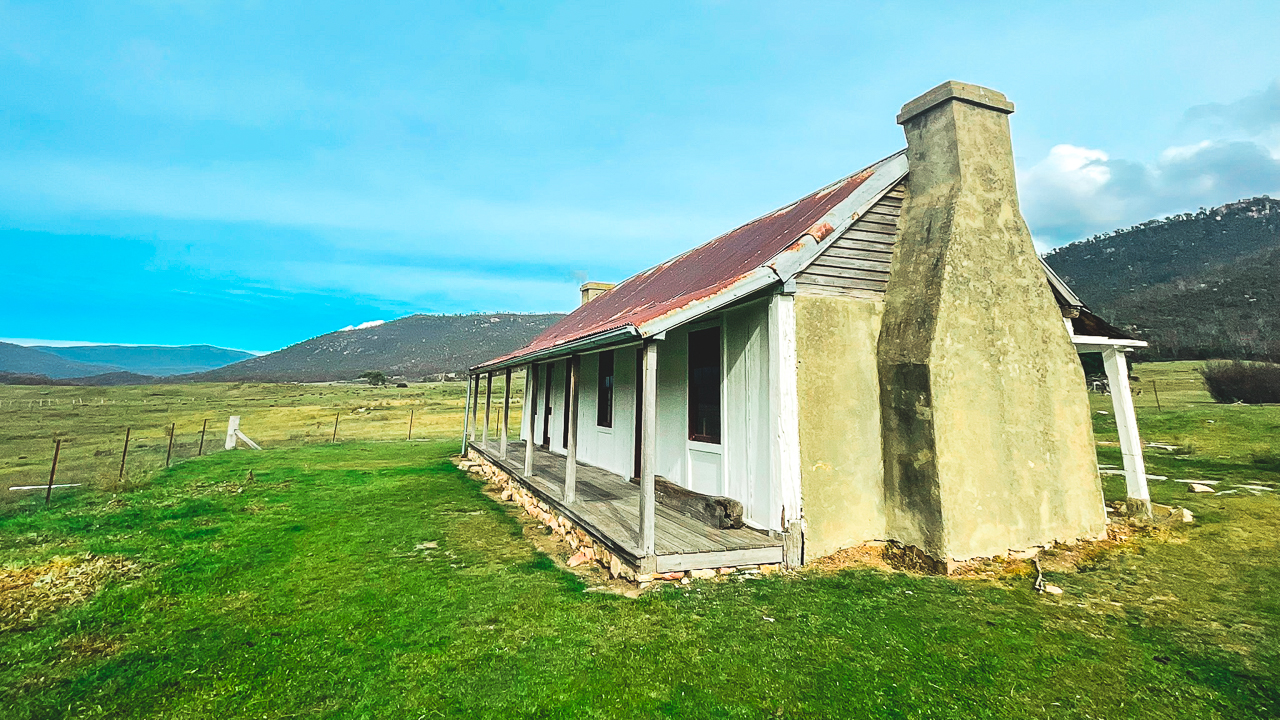
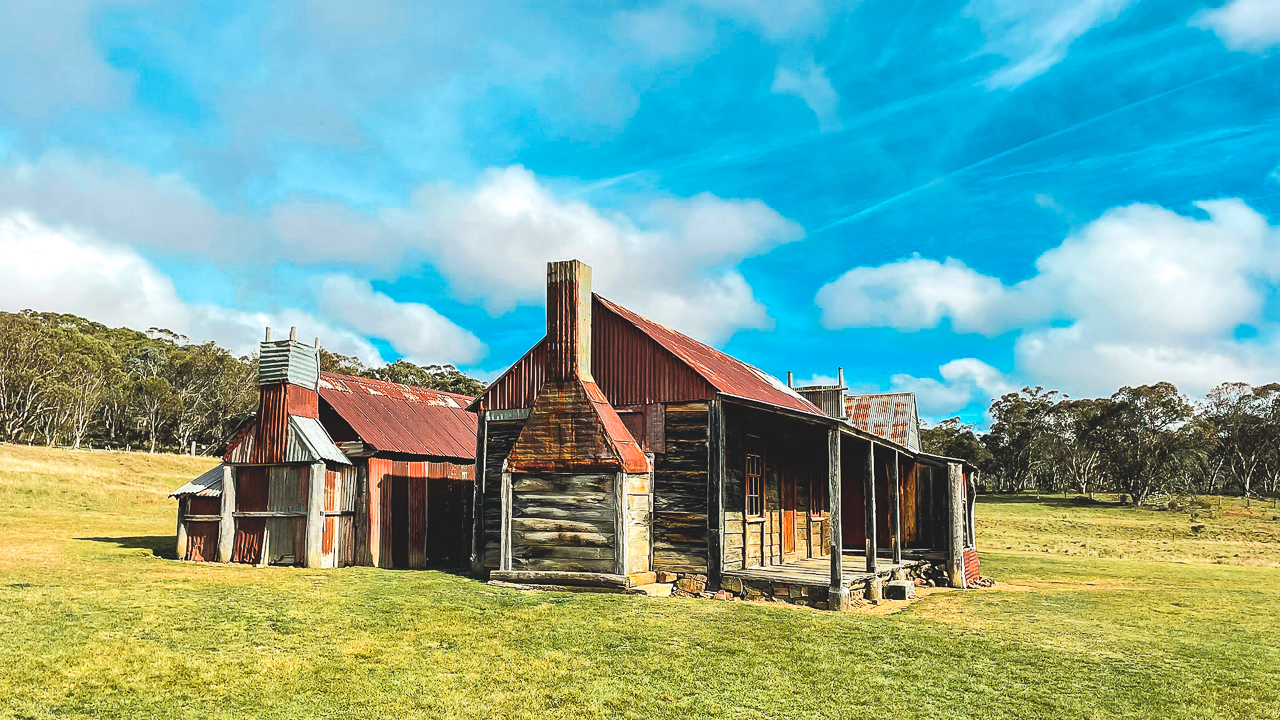
Orroral Homestead was the final homestead of the day. It was another excellent stop and probably the most impressive building we visited during our two day trip.

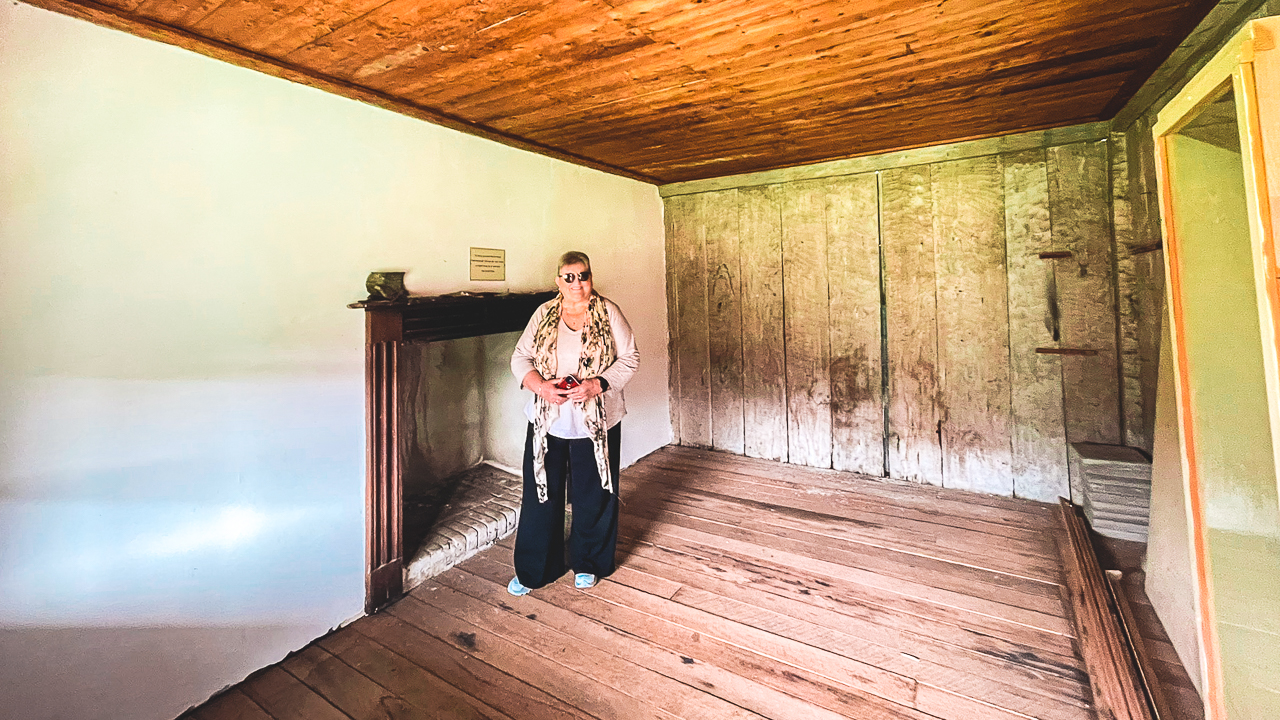
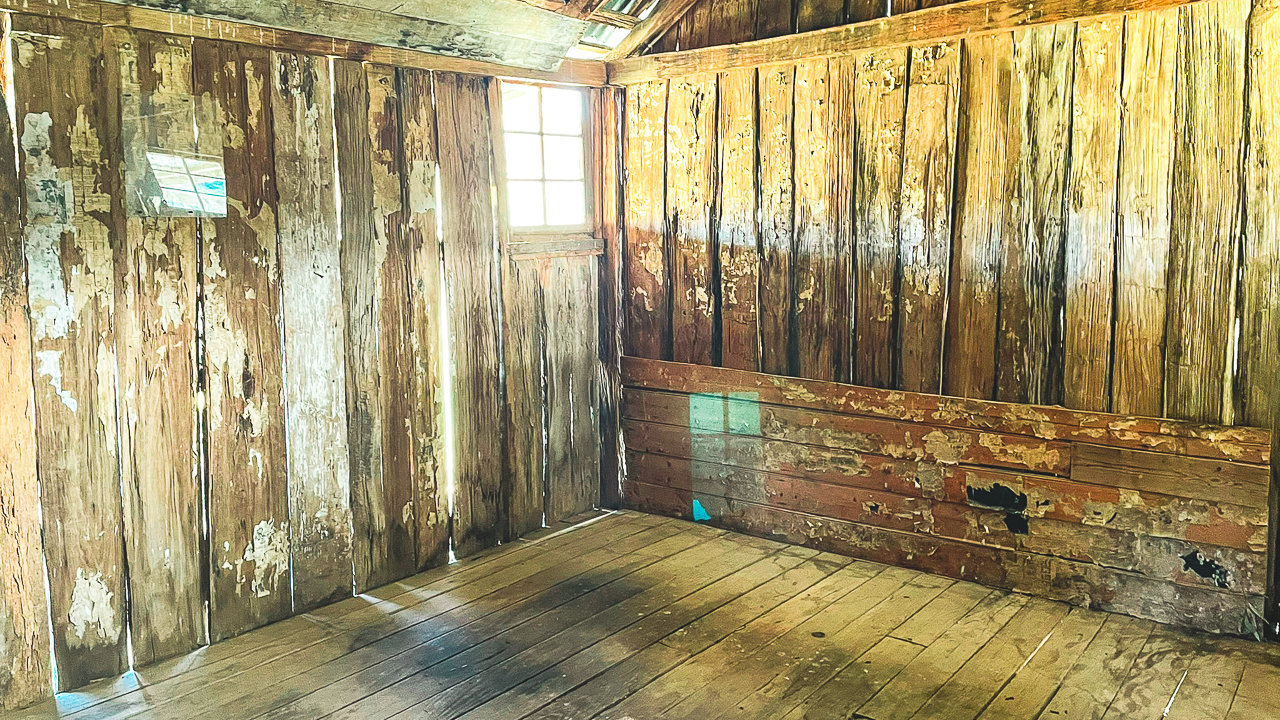
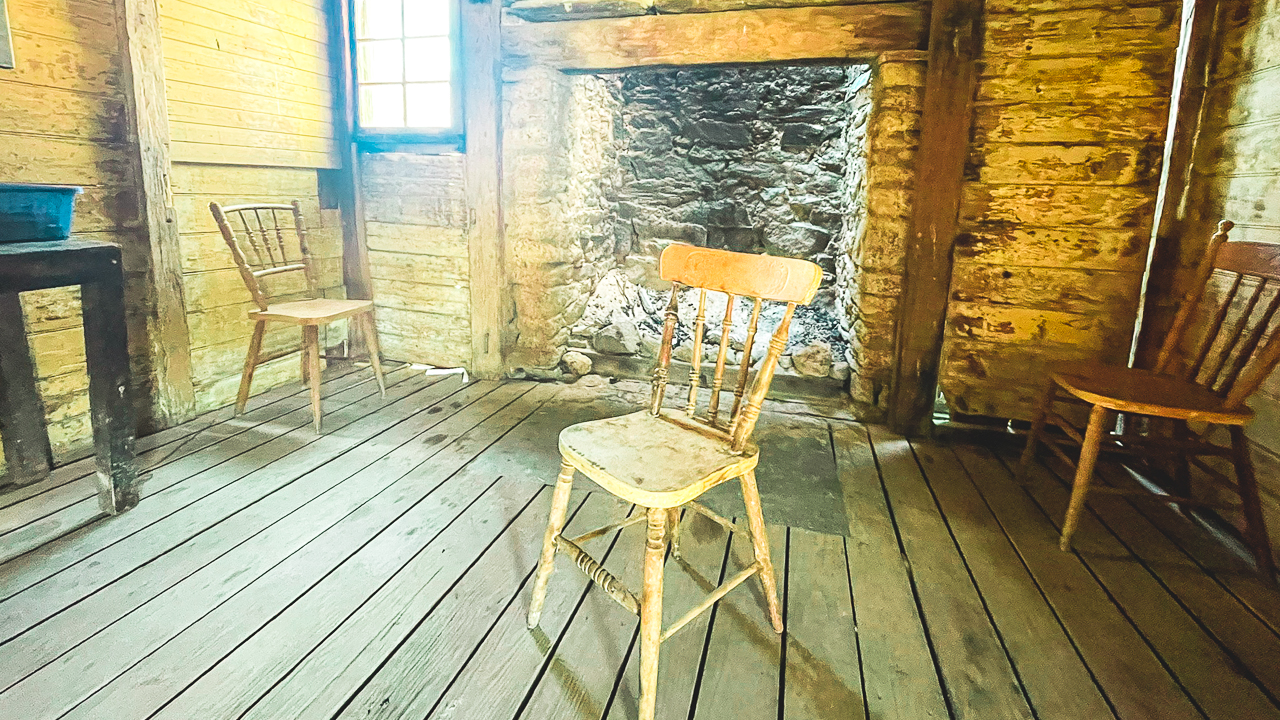
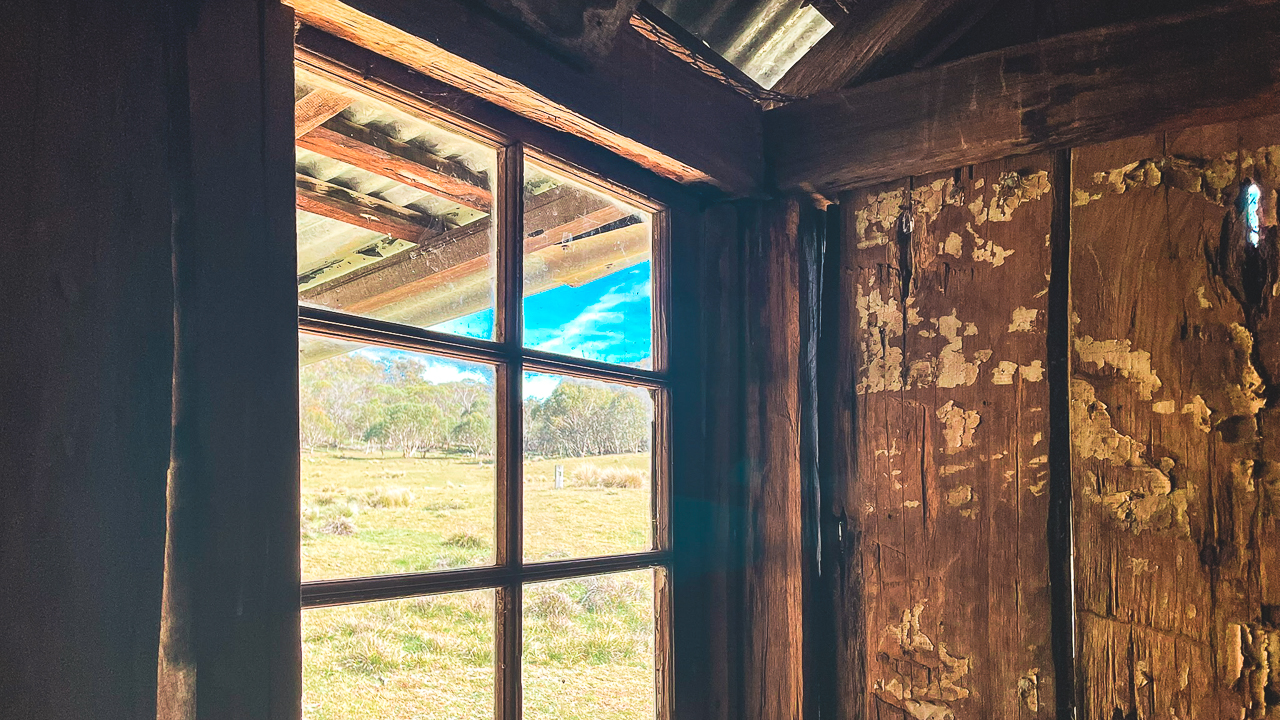
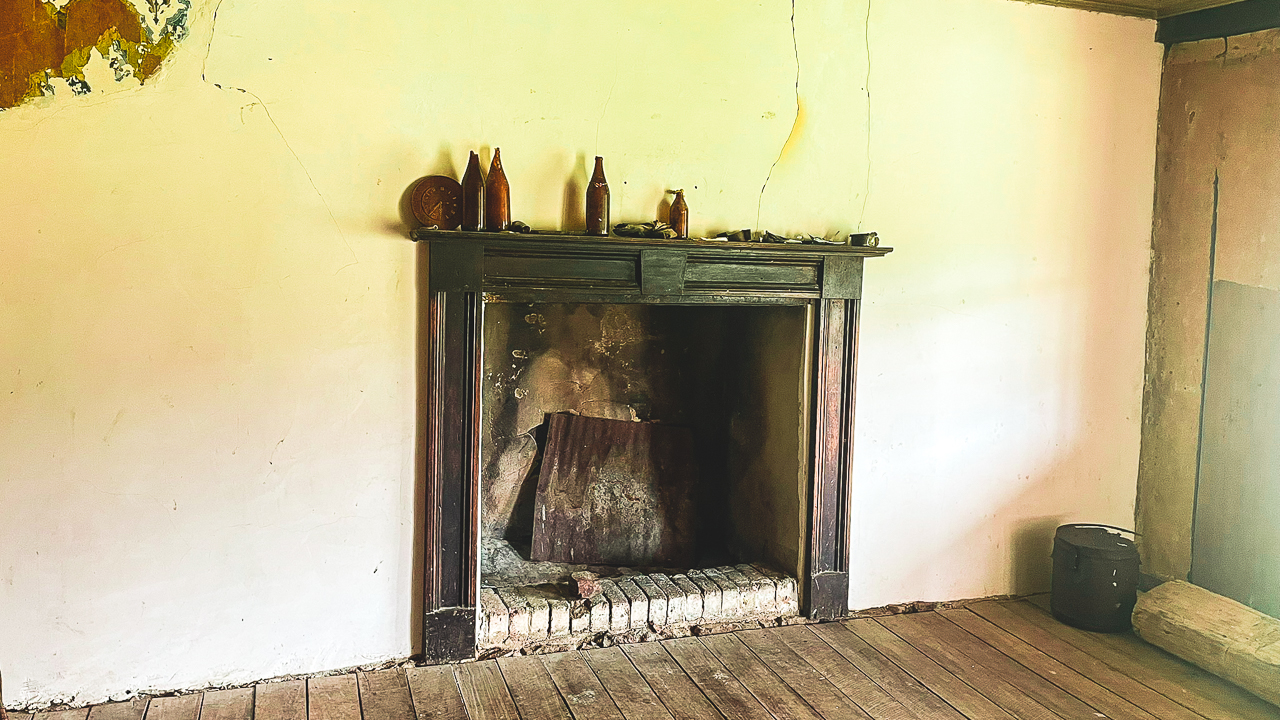
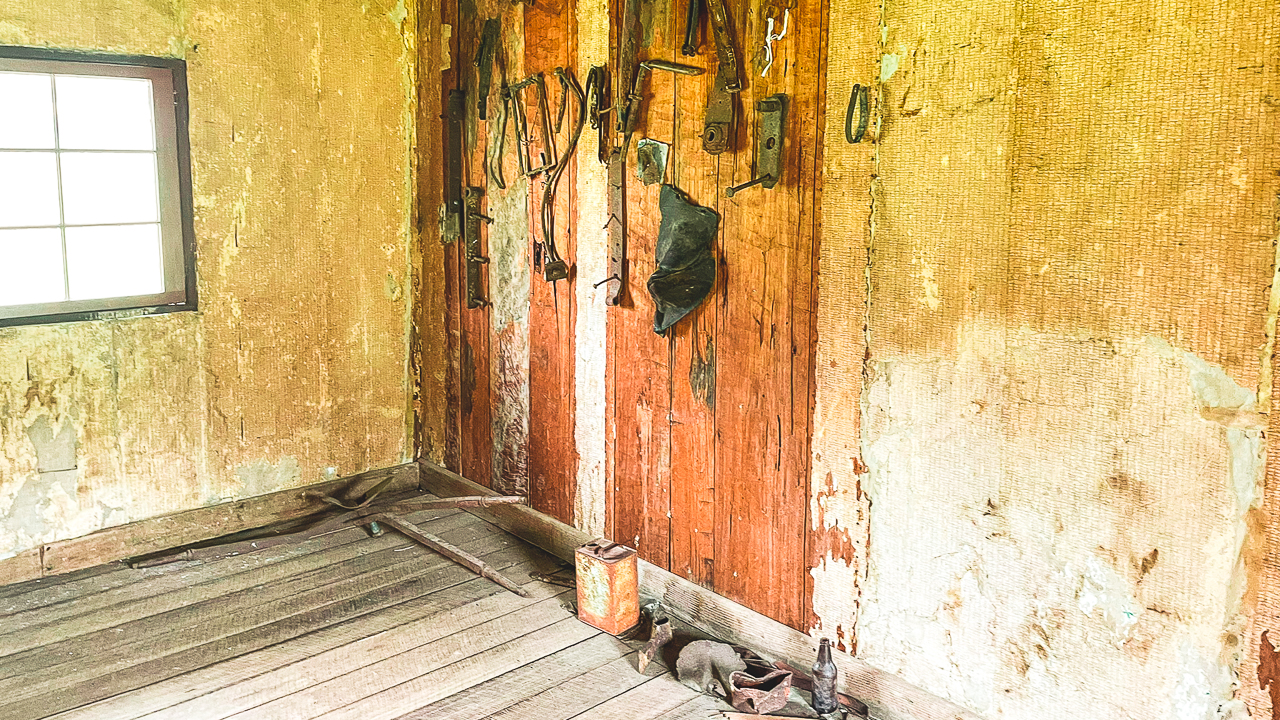
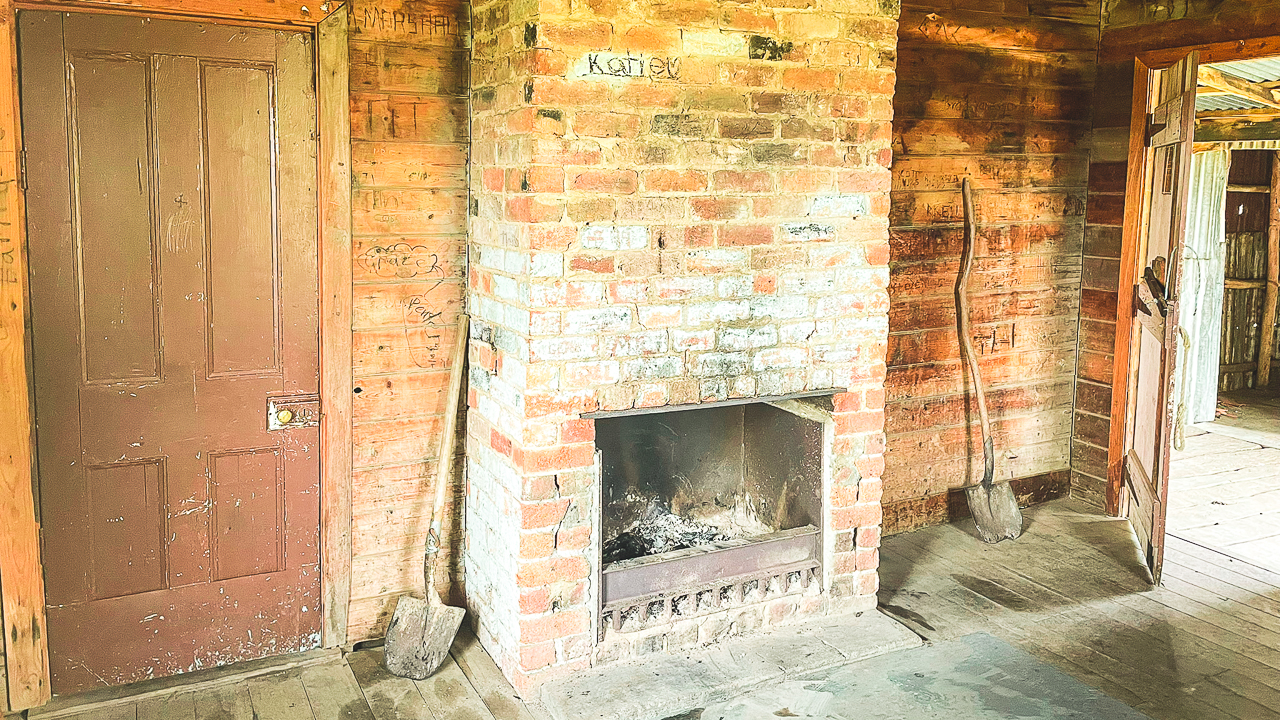
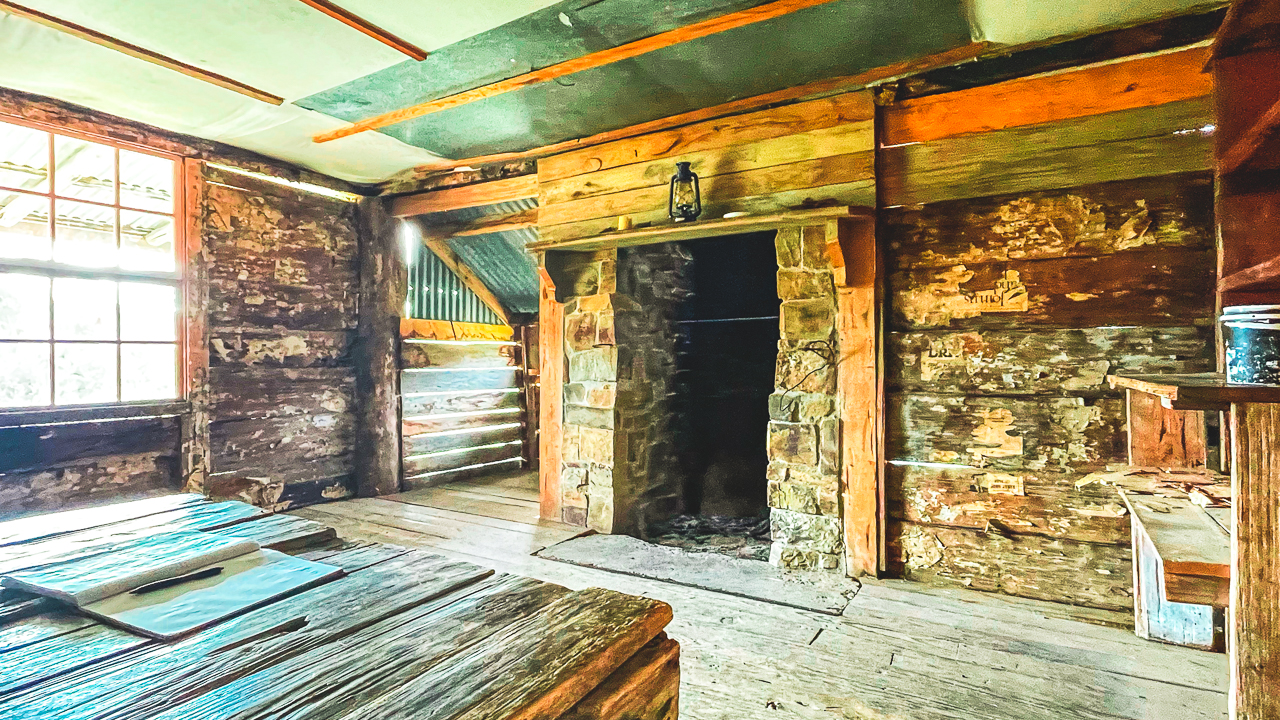
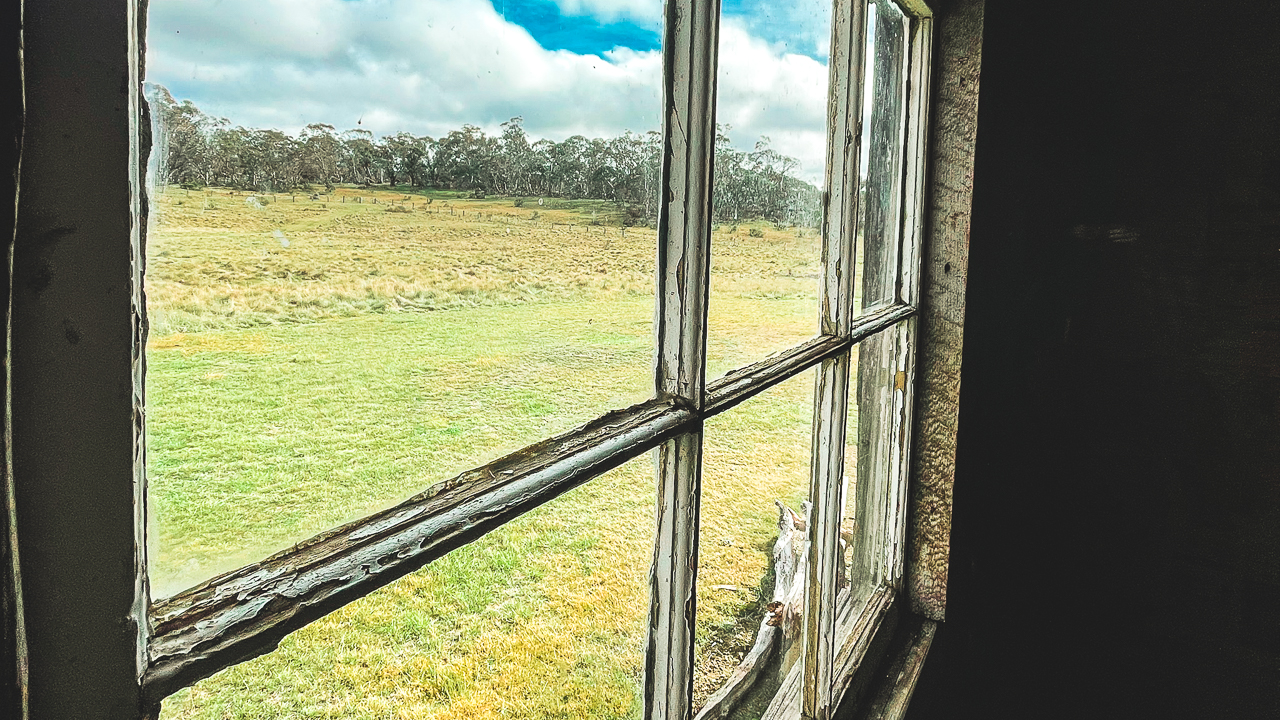
Like Brayshaws, this homestead was also built using vertical slab construction, however it was much larger and clearly built to a higher standard. Inside there were still remnants of wallpaper attached to some walls along with signs of old plaster work.

Compared to the smaller huts we had seen over the previous few days, this place felt much more substantial and comfortable for its time. It would have been a major property in the area during its working years.

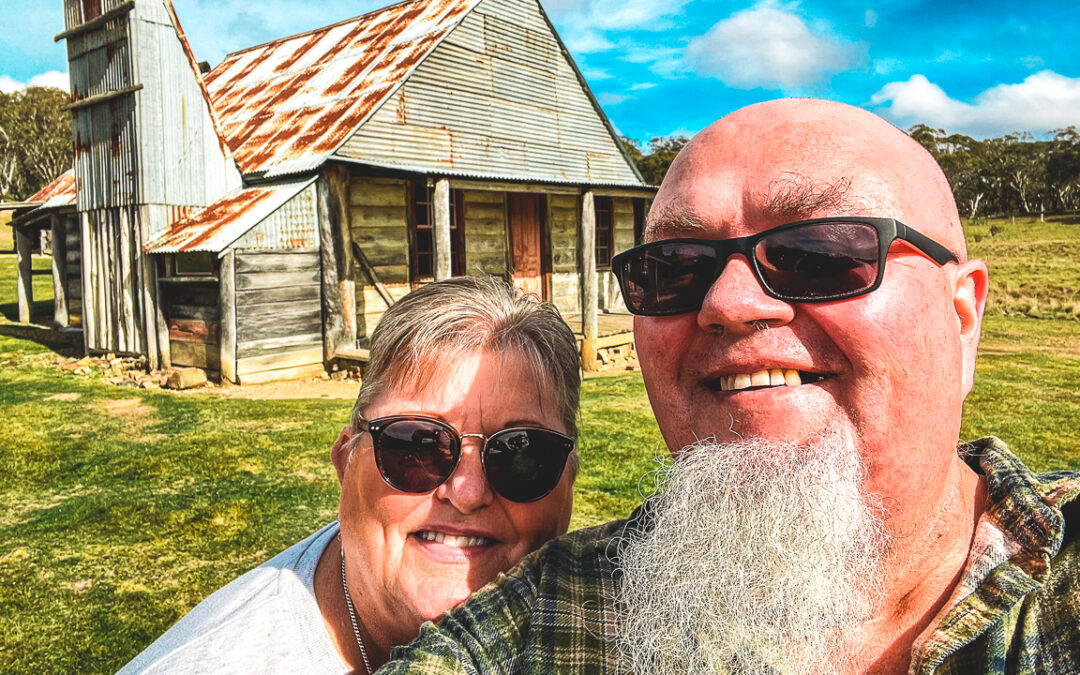
Amanda Near One Of The Fireplaces Inside Orroral Homestead

Amanda Near One Of The Fireplaces Inside Orroral Homestead

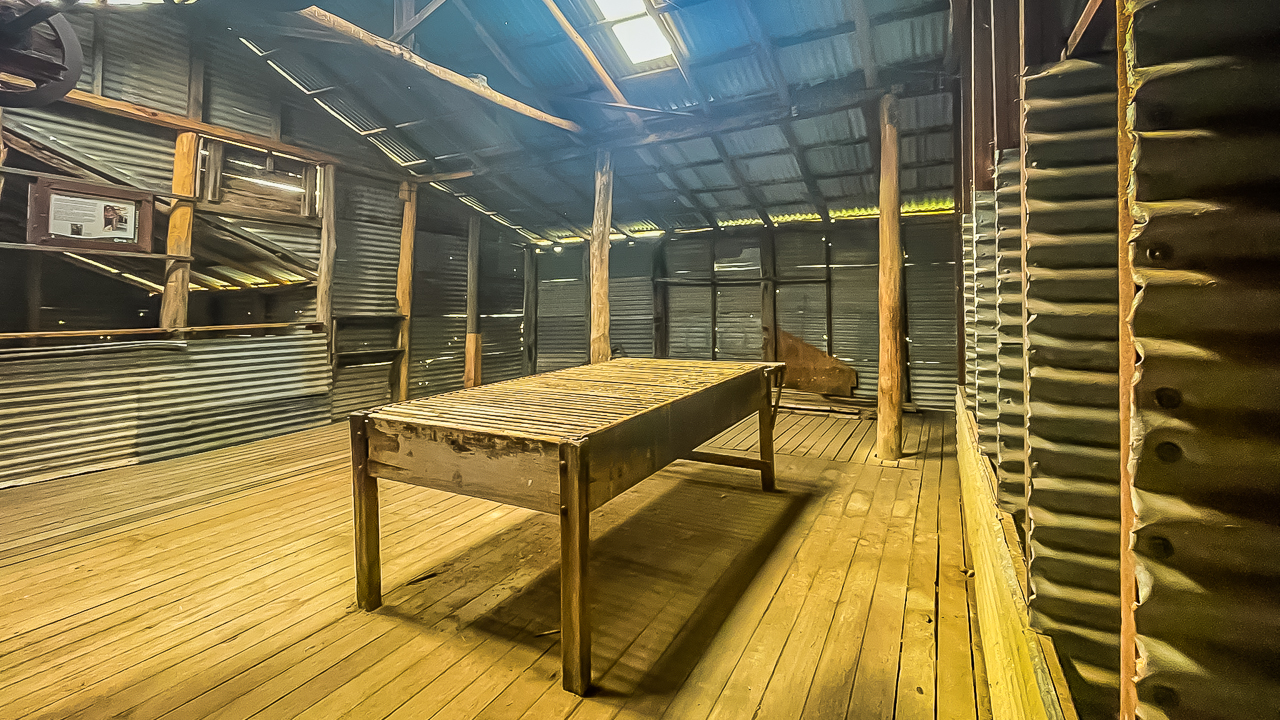
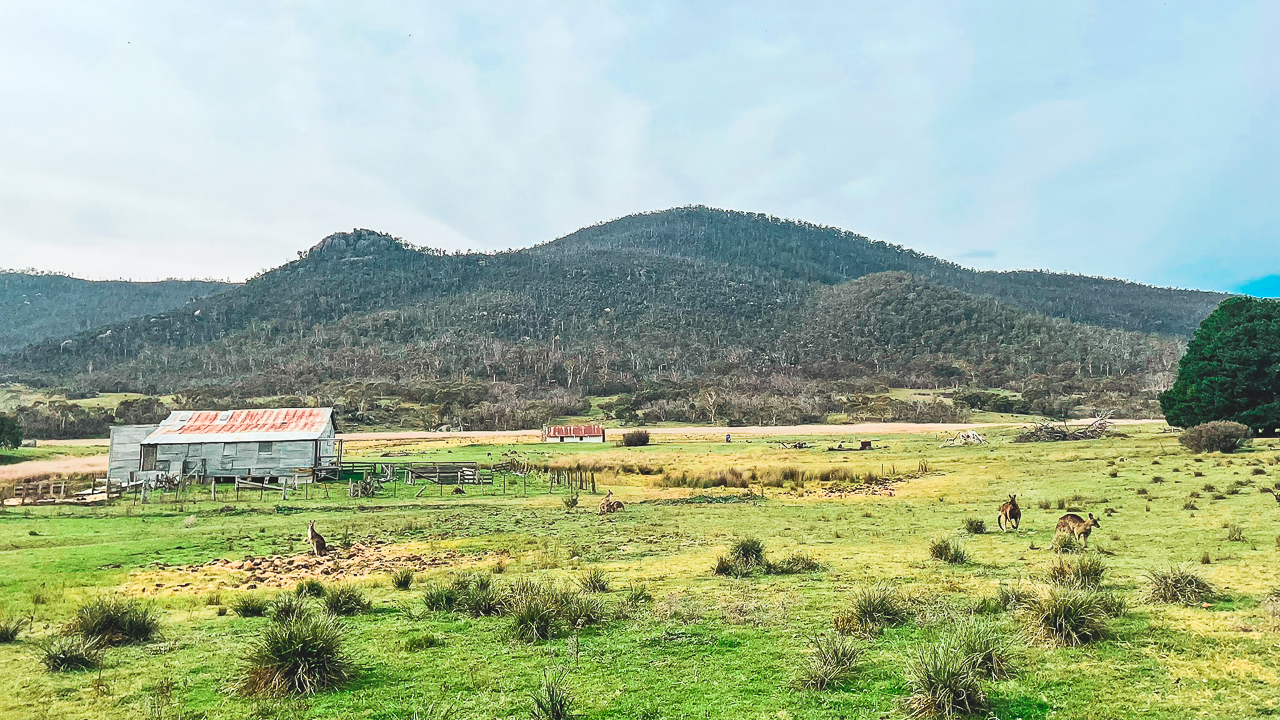
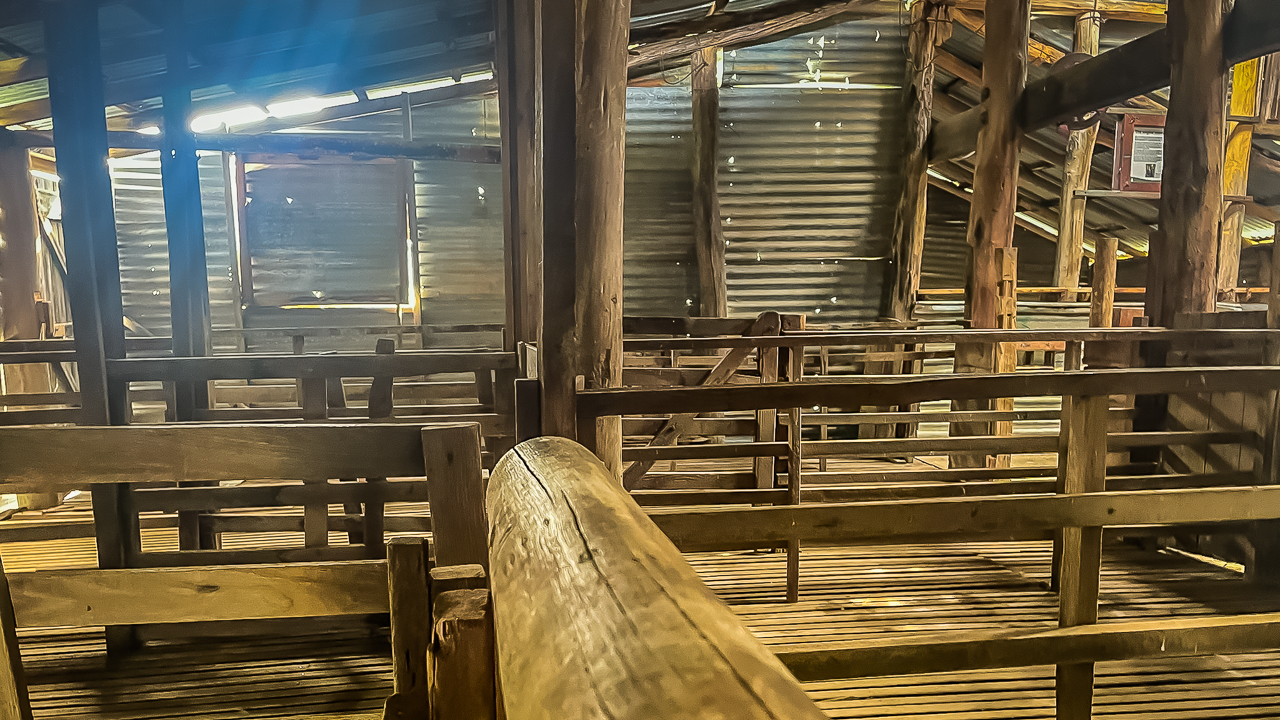
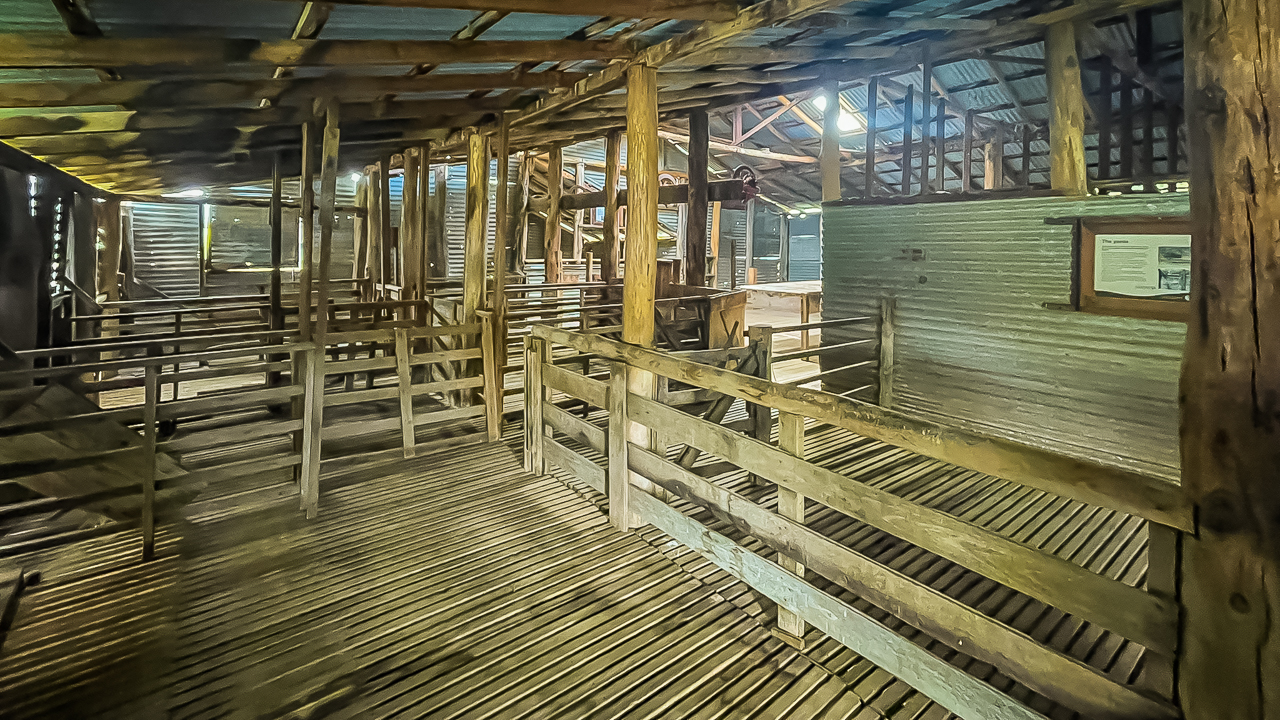
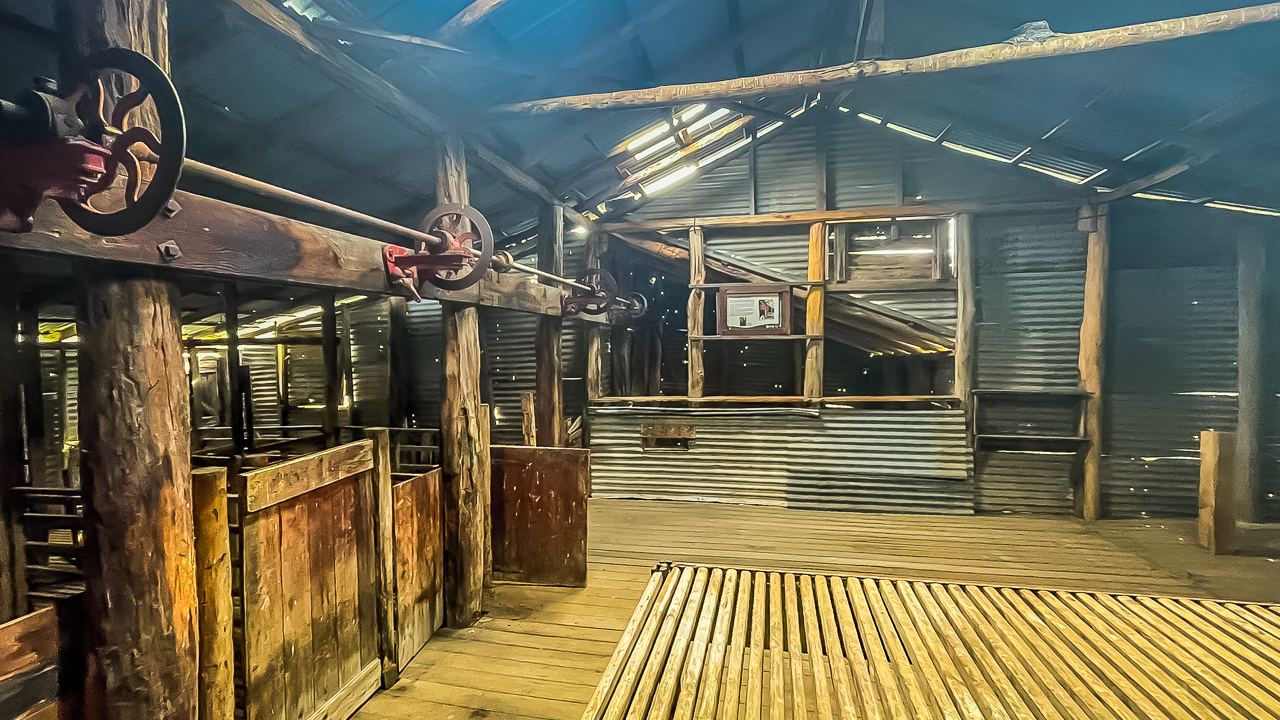
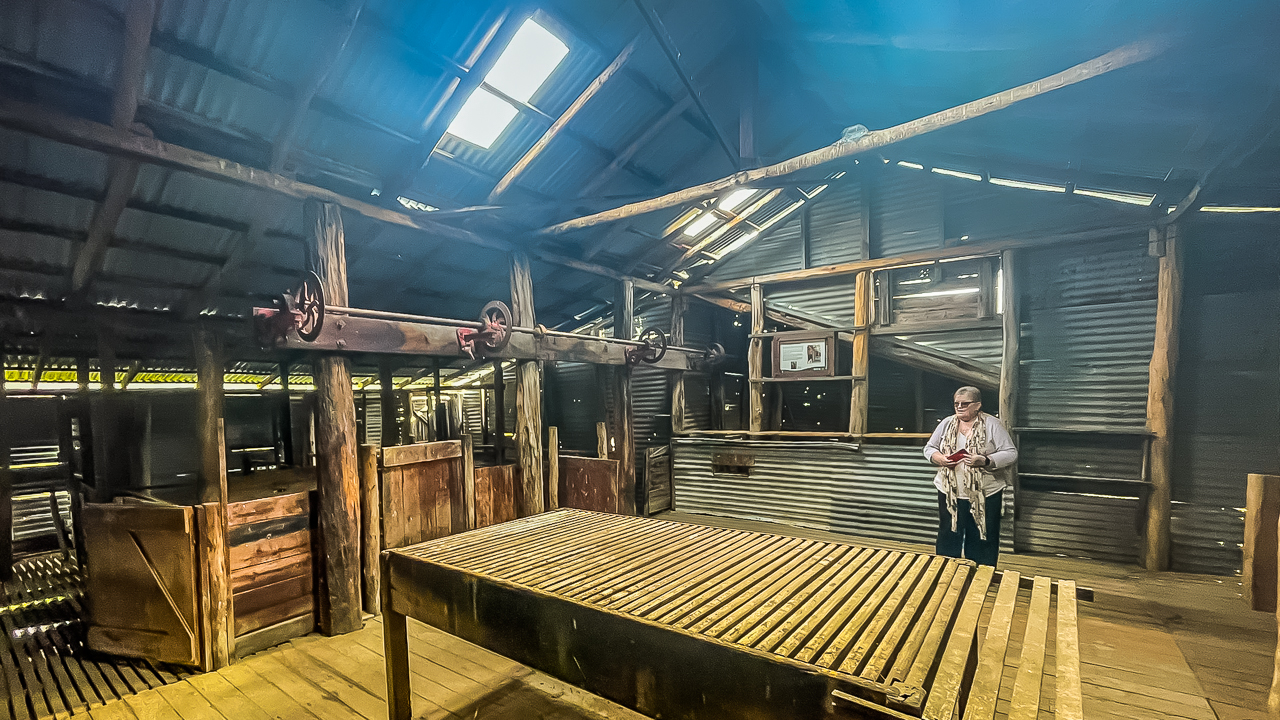
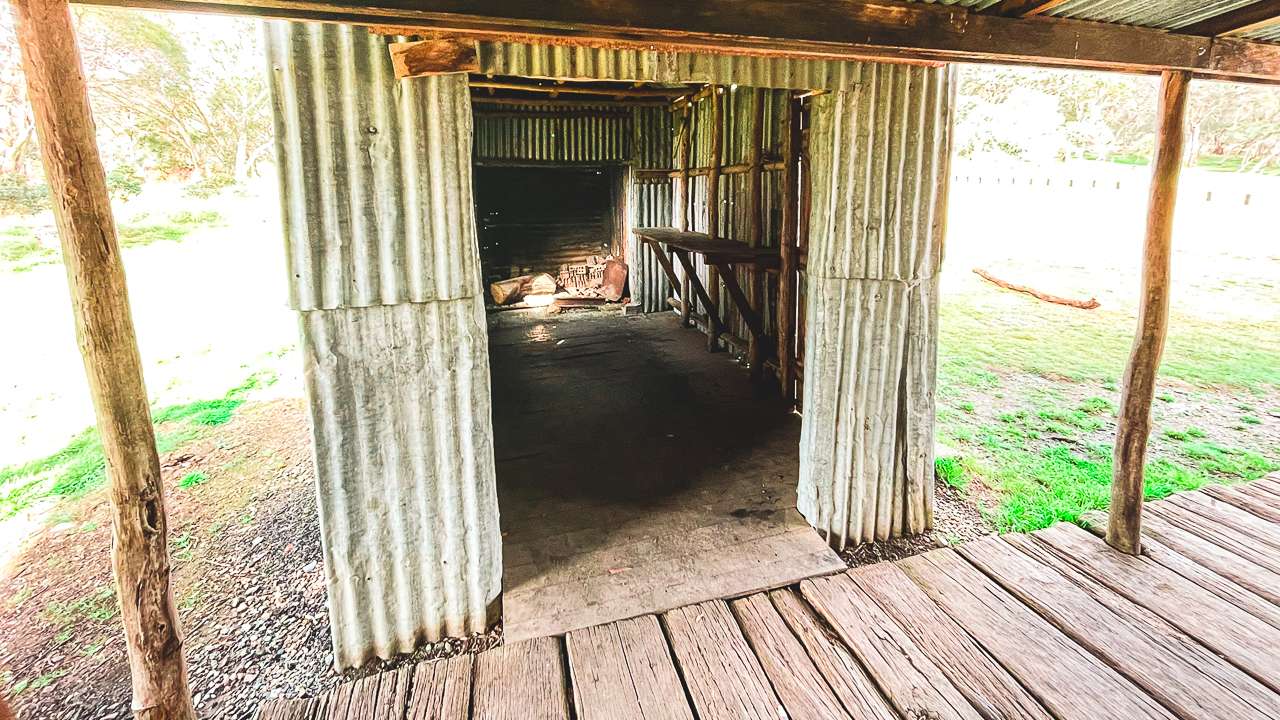
One of the highlights was the shearing shed which was still fully intact. The shed was built in 1930 and gave a good look at how sheep grazing operations would have been run in the Snowy Mountains region.

We spent quite a while walking through the old buildings and looking around the sheds before continuing on. These sorts of places are one of the best parts about exploring the NSW High Country because so much history is still sitting out there in the bush.

If you want the opportunity to get up close and personal with some Skippyroos then Orroral Homestead is just the thing for you. It’s about a 1.5km return walk from the parking area on Orroral Road to the homestead and shearing shed and there must have been around a 150 kangaroos in residence. They’re fine and pose no problem at all, if you leave them alone they ignore you and do what they do – which isn’t much.

Orroral Homestead Shearing Shed Sorting Table

Orroral Homestead Shearing Shed Sorting Table

Another Great Day Exploring Snowy Mountains Historic Huts

By the end of the day we had covered a lot of ground through the NSW High Country and visited several very different historic huts and homesteads. The combination of rough roads, mountain scenery and historic sites made this a interesting day.

Some were small and basic while others were larger and more developed, but all of them offered a look into what life would have been like for the early settlers, stockmen and graziers who lived and worked in this region.

The roads were rough in sections but overall it was an enjoyable touring route with plenty of variety. Between the dirt roads, mountain scenery and remote historic sites it felt like a proper Snowy Mountains adventure.

Amanda and I both had a great time exploring this part of the high country and we are already planning another trip back to discover more Snowy Mountains historic huts and remote touring routes.

We have now spent many trips exploring the Snowy Mountains and NSW High Country focusing on historic huts. We also enjoy the alpine touring routes and remote camping areas across the region.

View Down To Orroral Homestead

View Down To Orroral Homestead

Snowy Mountains Historic Huts Photo Gallery

Snowy Mountains Historic Huts FAQs: Access, History And 4WD Touring Guide

What are some of the best Snowy Mountains historic huts to visit?

Some of the best Snowy Mountains historic huts and homesteads include Brayshaws Homestead, Westermans Homestead, Orroral Homestead, Coolamine Homestead and Geehi Hut.

Can you visit Westermans Homestead?

Access to Westermans Homestead can sometimes be closed due to park management activities including aerial pest control programs. It is important to check current national park alerts before visiting.

What is Brayshaws Homestead?

Brayshaws Homestead is a historic vertical slab hut built in 1903 in the NSW High Country. It gives a good insight into how early settlers lived in remote mountain areas.

What is Orroral Homestead like?

Orroral Homestead is a much larger vertical slab building compared to many other high country huts. It still contains remains of wallpaper, plaster work and an intact shearing shed built in 1930.

Do you need a 4WD to visit these Snowy Mountains historic huts?

A 4WD is recommended for many of the roads in the NSW High Country, especially after rain or during colder months. Roads can be rough, corrugated and rocky in sections.

Are the roads difficult in this area?

Most of the roads are manageable in dry conditions but some sections can be rough with corrugations, potholes and uneven surfaces. Conditions can change quickly depending on weather.

Where is Brayshaws Homestead located?

Brayshaws Homestead is located in the NSW High Country near the Boboyan Road area west of the Snowy Mountains region.

Can you camp near these historic huts?

Camping is available in many parts of the NSW High Country, although camping rules vary depending on the location and whether the area is inside a national park.

When is the best time to explore Snowy Mountains historic huts?

Late spring through to autumn is generally the best time to visit. Winter conditions can include snow, road closures and difficult driving conditions.

Why are Snowy Mountains historic huts important?

The huts and homesteads preserve the history of early settlers, stockmen and grazing families who lived and worked in the remote alpine regions of New South Wales.
Exploring NSW High Country Huts Day 1

Exploring NSW High Country Huts Day 1

Exploring NSW High Country Huts Day 1

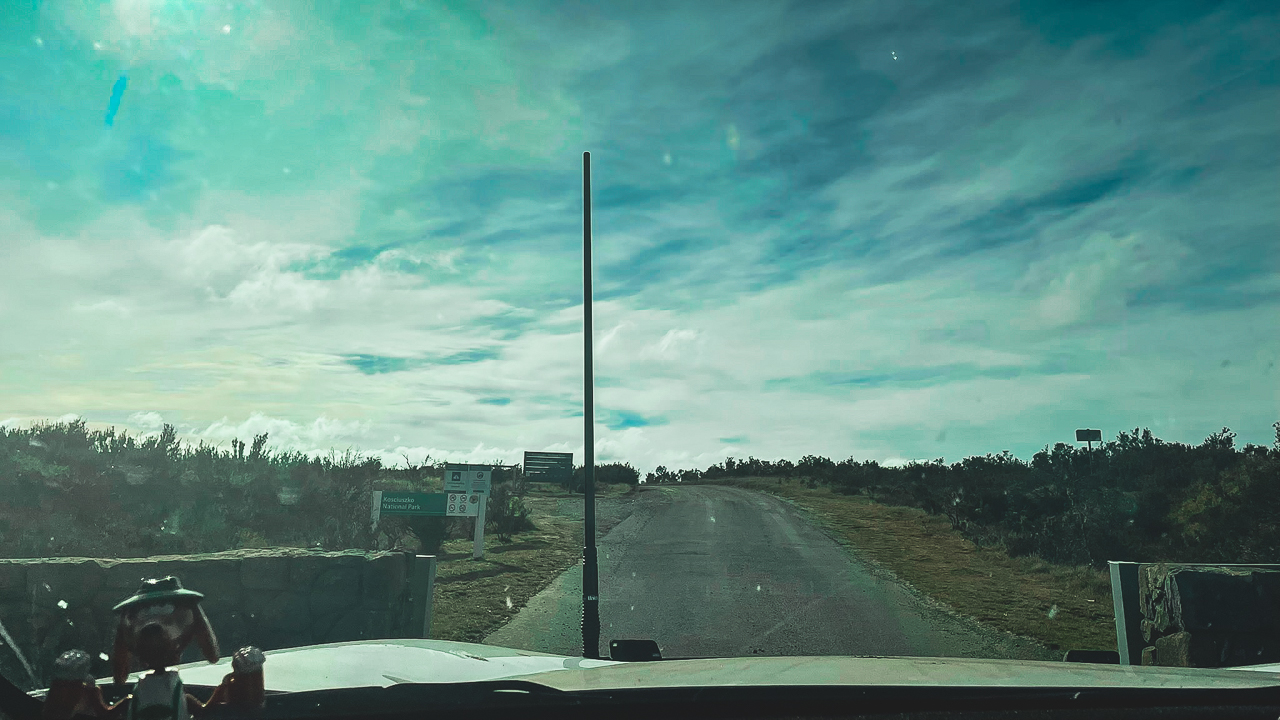
We spent a full day driving and exploring parts of the NSW High Country, focusing on historic huts, old homesteads and key natural sites across Kosciuszko National Park. The route included Coolamine Homestead, Blue Waterholes, Cooindel Hut and Geehi Hut, along with drives through Kiandra, Link Road and Alpine Way.

This guide is based on first-hand travel through the region in typical touring conditions using a standard 4WD on maintained dirt roads. It covers what each stop is like today, access conditions and what you can expect to see on the ground. The aim is to provide practical, up-to-date information for anyone planning a similar NSW High Country trip focused on huts, scenery and easy off-road touring routes.

Coolamine Homestead

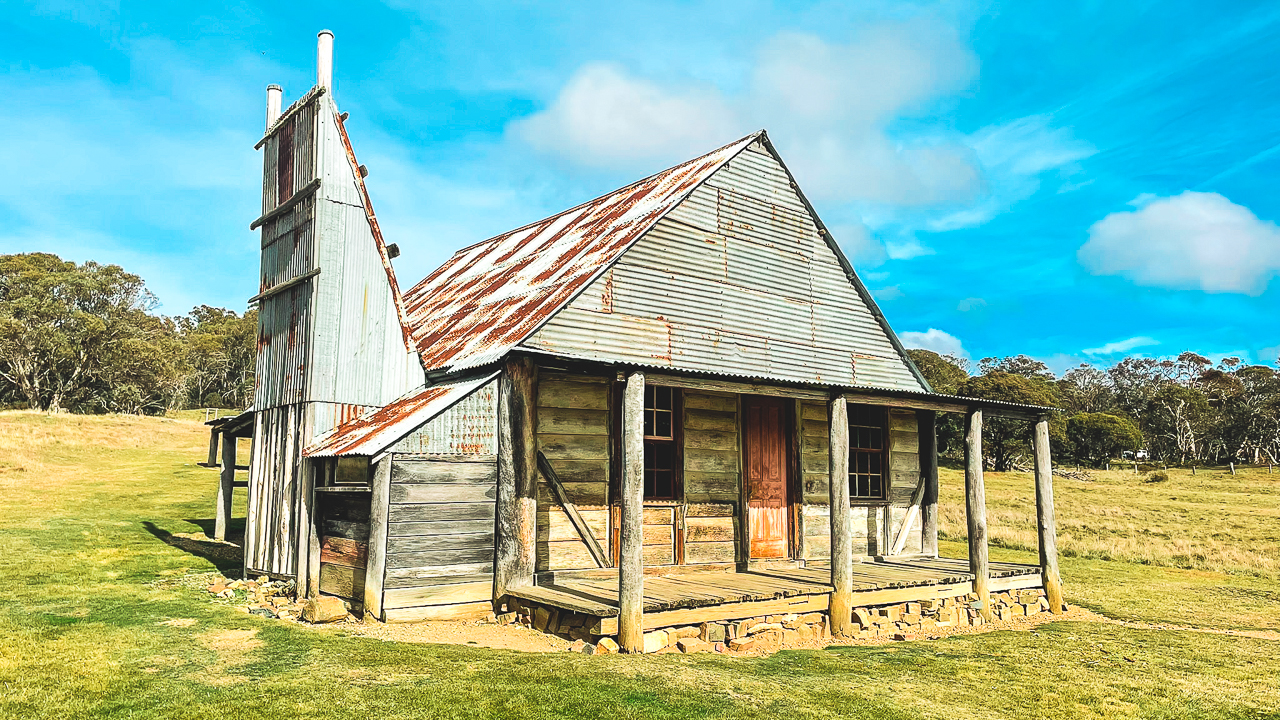
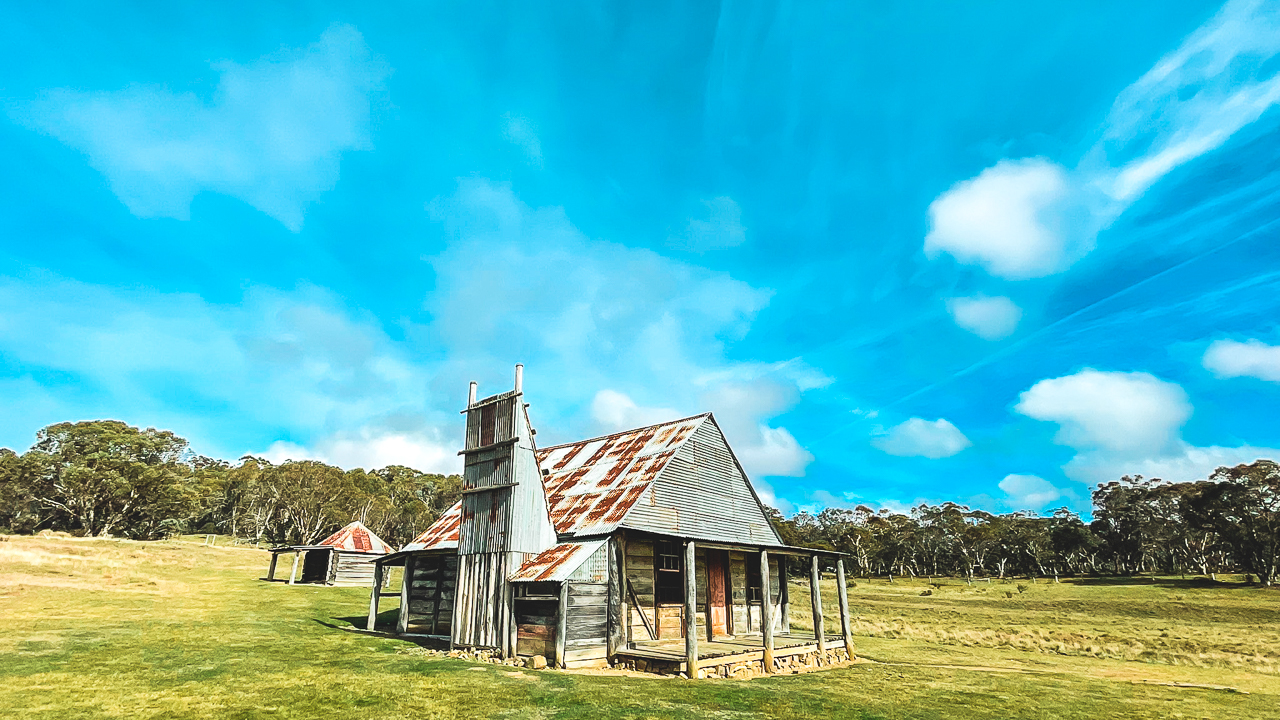
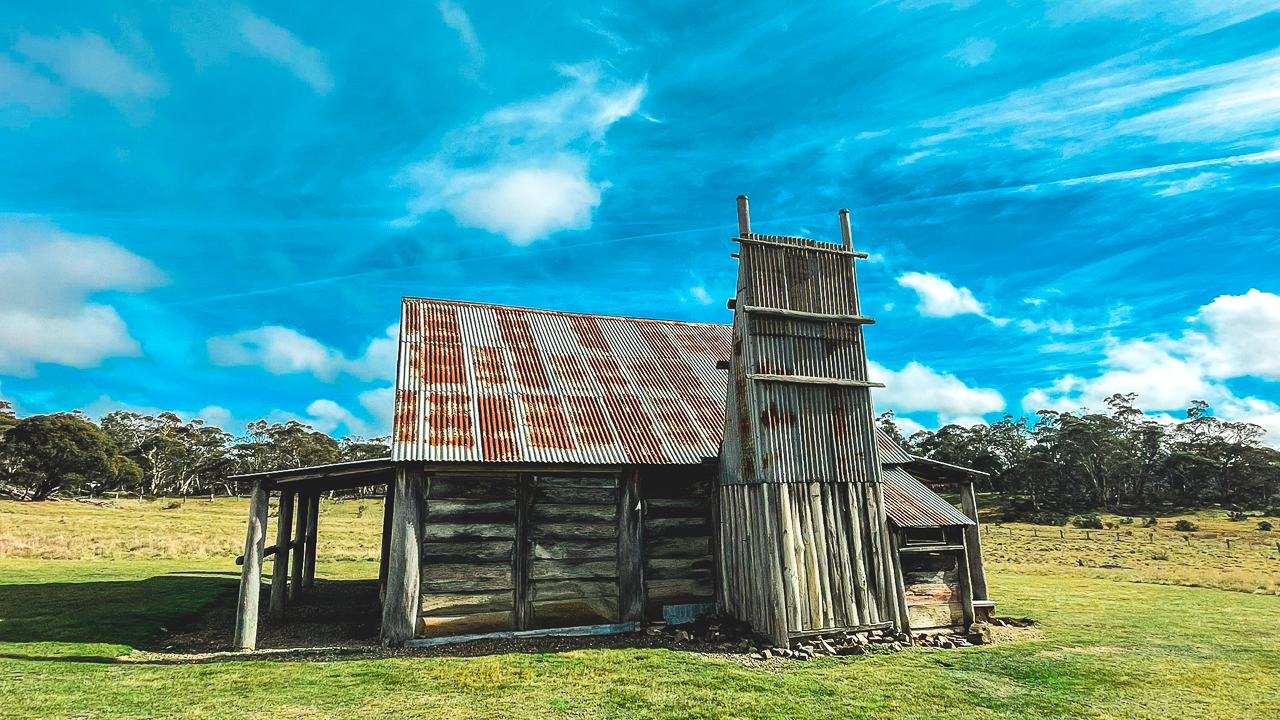
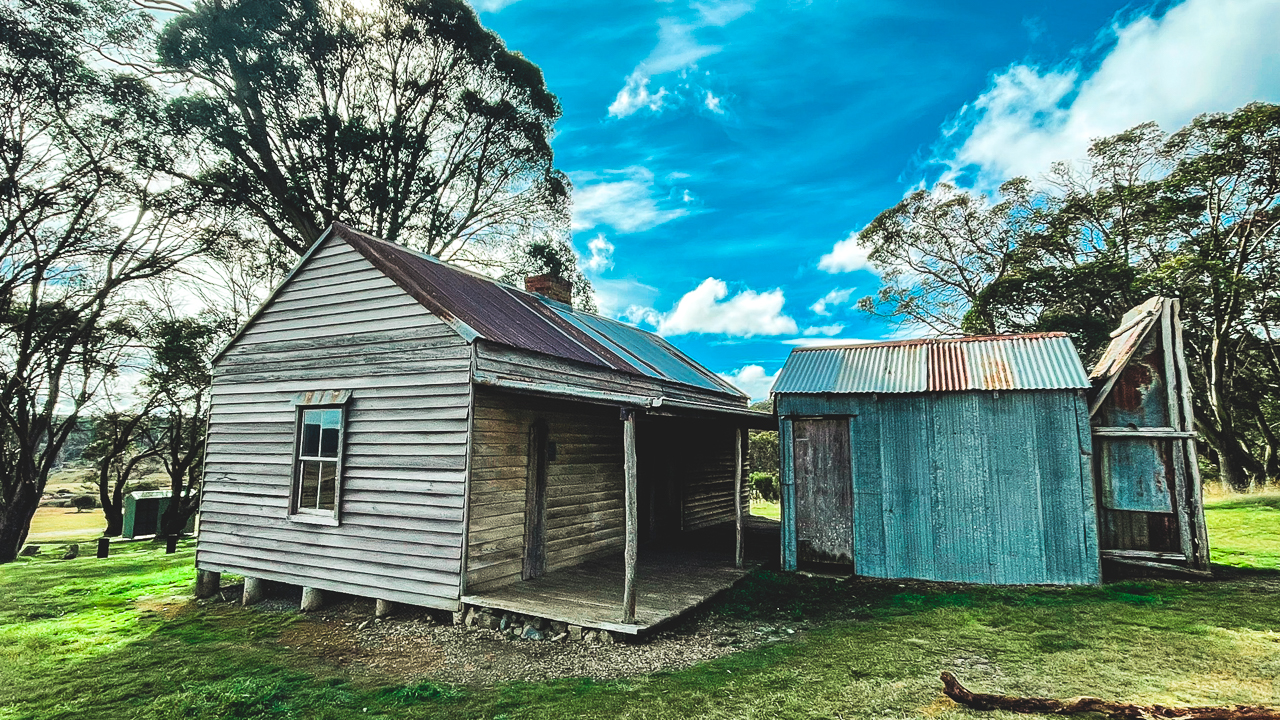
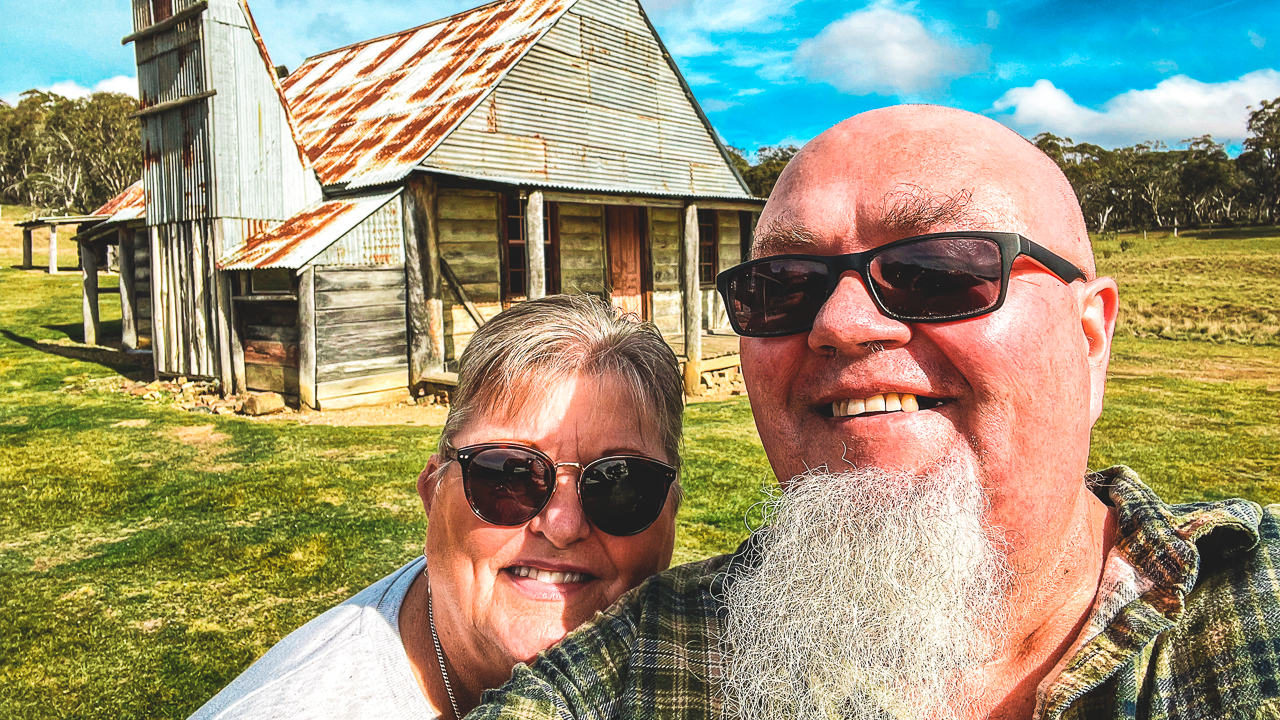
Our first of our NSW high country huts was Coolamine Homestead and it was the standout for the day. I’d seen a few videos of it on YouTube including one of Coolamine Homestead being restored in the 1970’s. Located in the Long Plain area of Kosciuszko National Park, Coolamine is one of the better preserved historic homesteads in the Snowy Mountains region. The drive in was easy and suitable for most vehicles in dry weather. In et weather it would be quite interesting. Once we arrived, we spent some time walking around the buildings and reading the information signs around the site.

The Spectacular Coolamine Homestead One Of Many NSW High Country Huts

The Spectacular Coolamine Homestead One Of Many NSW High Country Huts

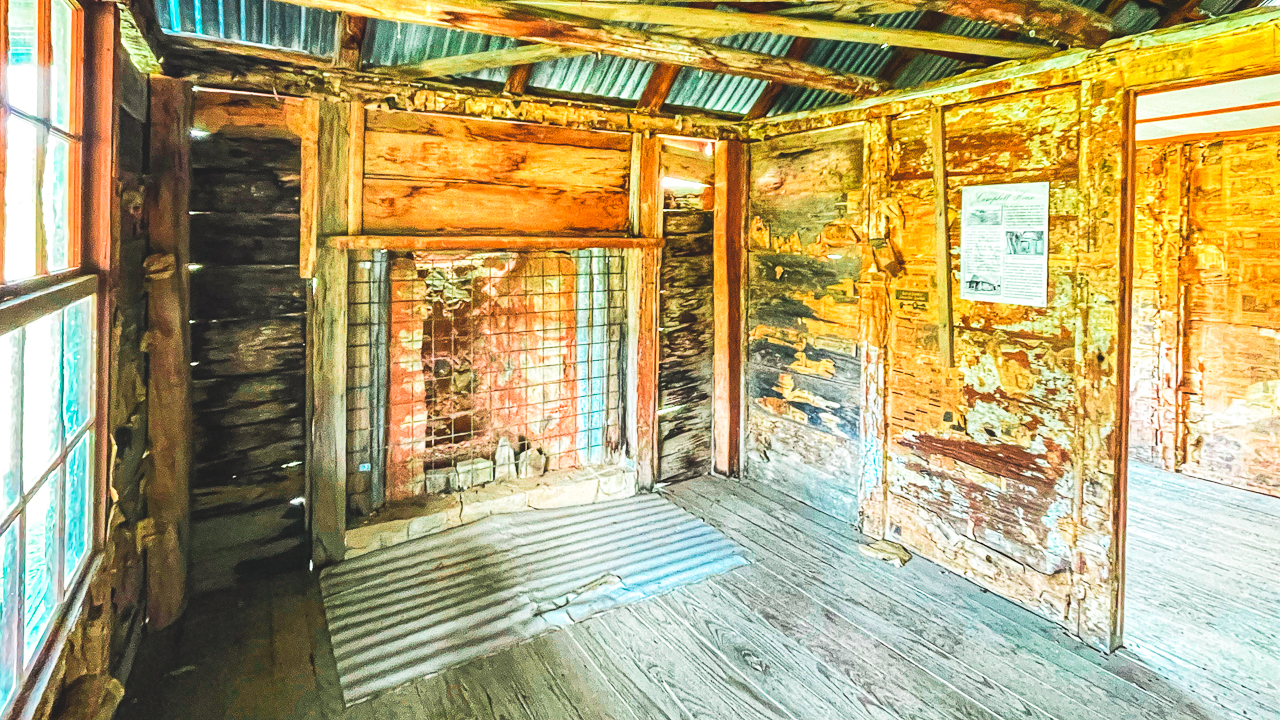
The homestead itself is in very good condition and there are several old sheds and smaller buildings nearby. The area around Coolamine is wide open with grassy plains and mountain views in the distance. It is easy to see why early settlers used this area for grazing cattle and sheep. Even though it is a popular stop, it still feels quiet and remote. A highlight of the main building was the preserved old newspapers lining the walls. They made for some interesting reading. Another thing we liked about Coolamine was how complete it still is compared to some of the other historic sites in the high country. A lot of old huts have fallen apart over time, but Coolamine still gives a good idea of what life would have been like here many years ago.

It is an easy place to spend an hour or so just walking around and taking in the surroundings. If you are travelling through this part of the Snowy Mountains it is definitely worth the detour.

Blue Waterholes

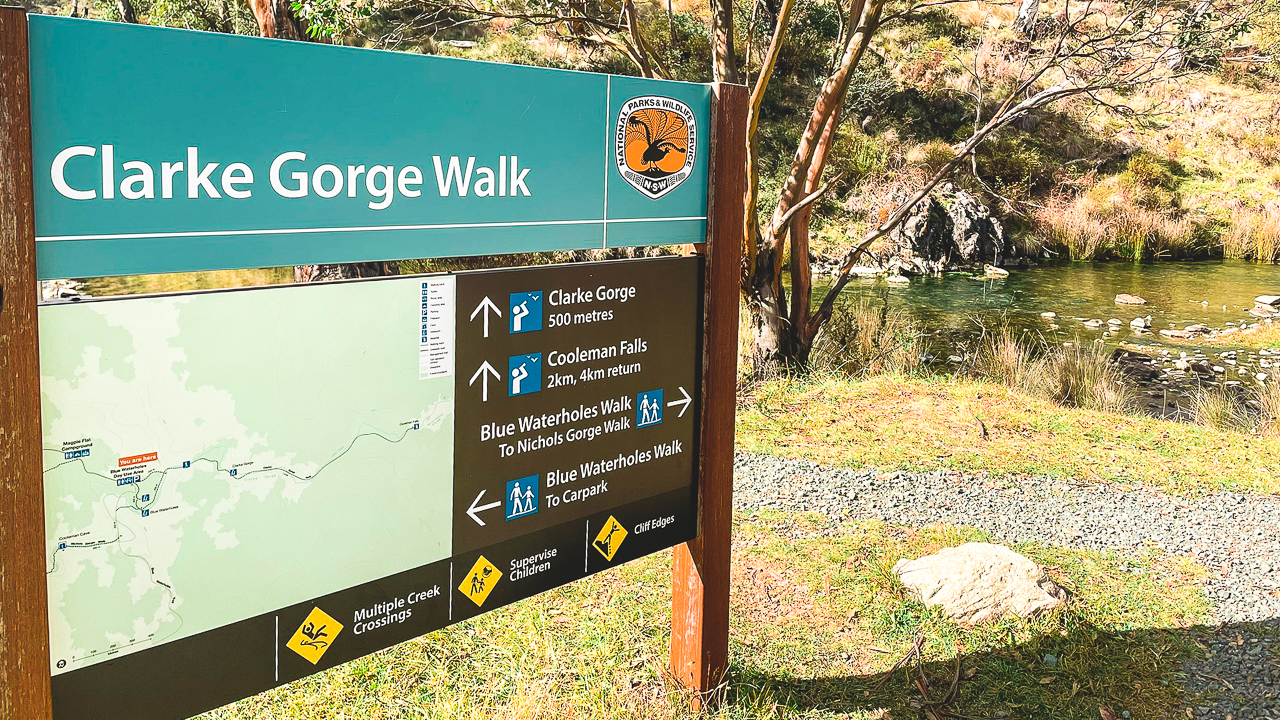
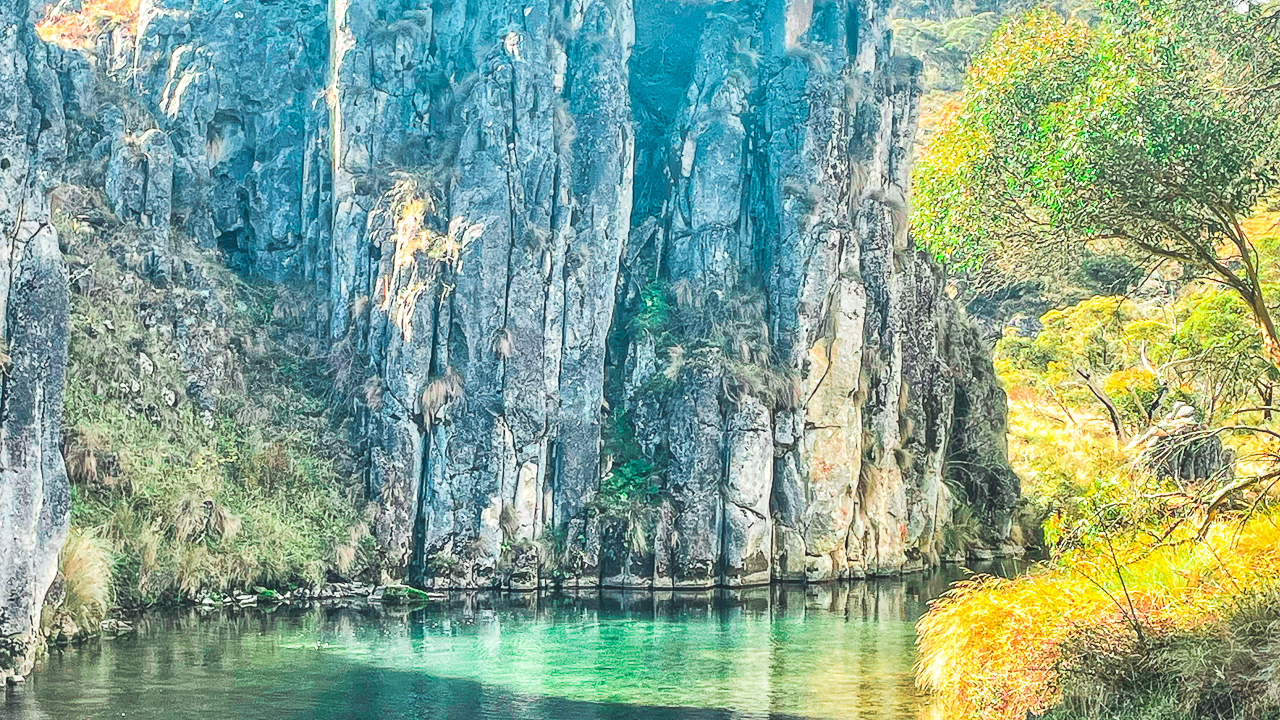
From Coolamine we headed across to Blue Waterholes – it’s only another 8km return from Coolamine Homestead. This is one of the more well-known spots in the northern part of Kosciuszko National Park and it is easy to see why. Blue Waterholes is known for its clear blue water, limestone cliffs and walking tracks. We parked near the campground and went for a walk around the area. The tracks were easy and gave good views over the river and waterholes.

The landscape around Blue Waterholes is very different to other parts of the Snowy Mountains. Instead of thick bushland and alpine forest, the area is more open with rocky limestone country and caves. It has a very different look compared to the rest of the drive. The water was very clear and there were quite a few people around enjoying the area, although it still felt relaxed and quiet. There are a few different walking tracks around Blue Waterholes depending on how far you want to go. It is a good stop if you want to get out of the car for a while and stretch the legs. Even a short walk around the main viewing areas is worth doing.

Cooindel Hut

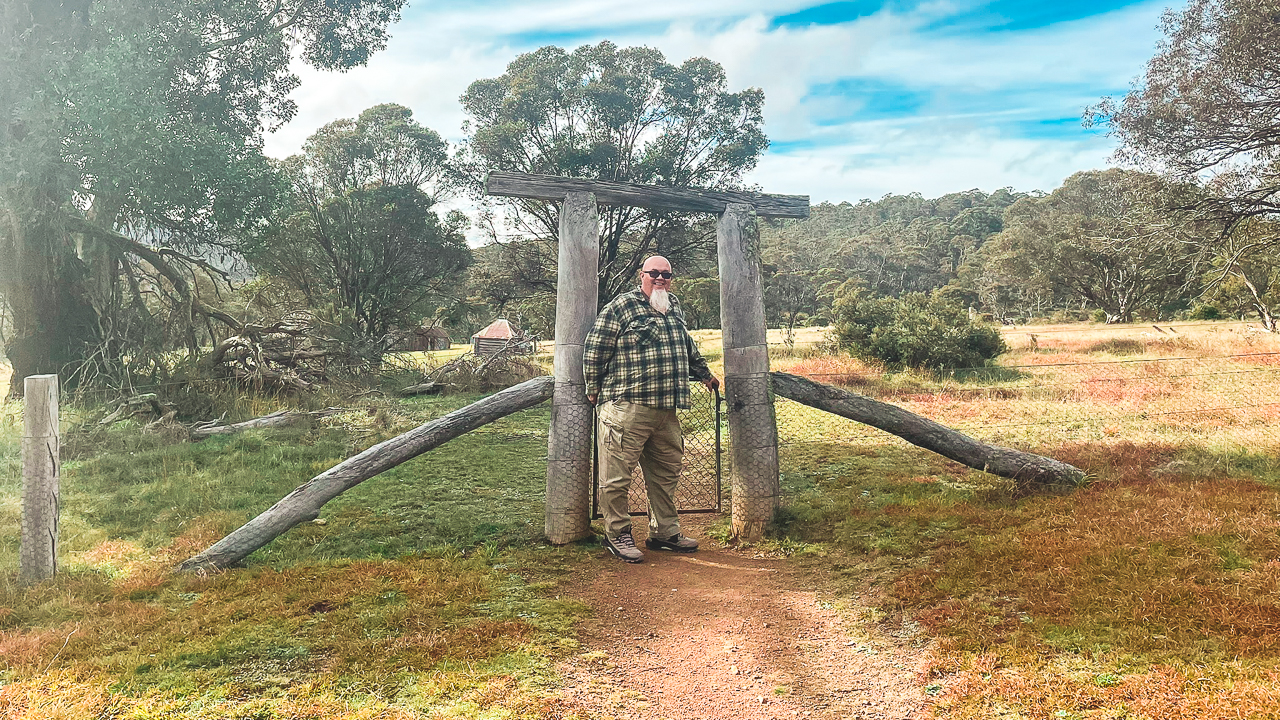
After leaving Blue Waterholes we continued on to Cooindel Hut. This was another interesting stop and one of the more complete huts we saw during the day. Cooindel Hut is smaller and more basic than Coolamine Homestead, but it still has a lot of character. The hut sits in a nice quiet area surrounded by bush and open country. A lot of huts in the high country are partly damaged or falling apart, but Cooindel is still mostly intact. That made it easier to picture what these huts would have been like when they were regularly used by stockmen and cattle workers.

We spent a bit of time walking around the hut and looking at the old timber construction before continuing on. These sorts of places are a good reminder of how isolated this country would have been in the past. The roads through this section were easy enough and suited relaxed touring rather than difficult four-wheel driving. Most of the day was more about the scenery and the historic sites than tackling hard tracks.

Me Beginning The Clarke Gorge Walk At Blue Waterholes In Kosciuszko National Park

Me Beginning The Clarke Gorge Walk At Blue Waterholes In Kosciuszko National Park

Kiandra, Link Road And Alpine Way

From Cooindel Hut we headed back out to the Snowy Mountains Highway and drove past Kiandra. Kiandra is one of the old gold rush towns in the Snowy Mountains and is an interesting area to drive through even if you are only passing by. The scenery through here was excellent with open plains, rolling hills and mountain views most of the way. Conditions were cool but clear which made for a good day on the road. We then turned onto Link Road and drove through part of the Snowy Hydro area. Along the way we passed several Snowy Hydro power stations and other infrastructure connected to the Snowy Mountains Scheme.

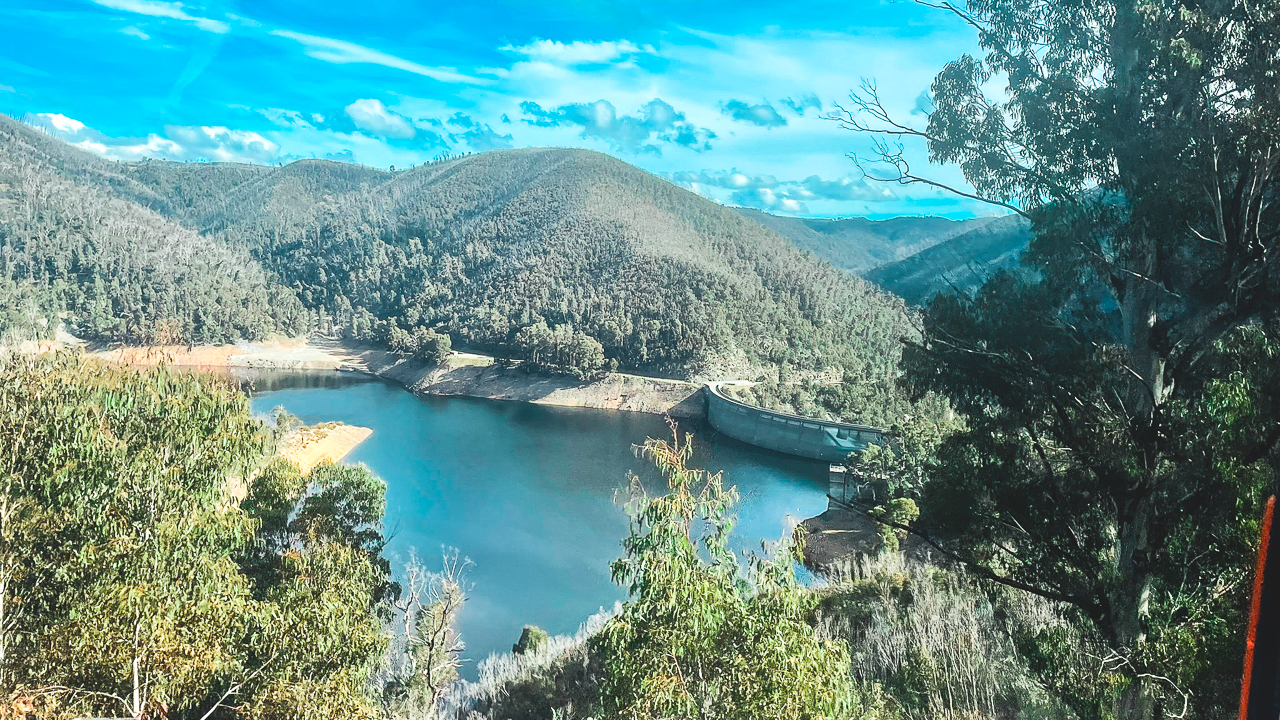
On The Link Road Heading Down To A Dam Thats Part Of The Snowy Hydro

On The Link Road Heading Down To A Dam Thats Part Of The Snowy Hydro

Geehi Hut

From there we joined Alpine Way and stopped at Geehi to have a quick look at another hut. Geehi is a nice area with good mountain views and plenty of camping.

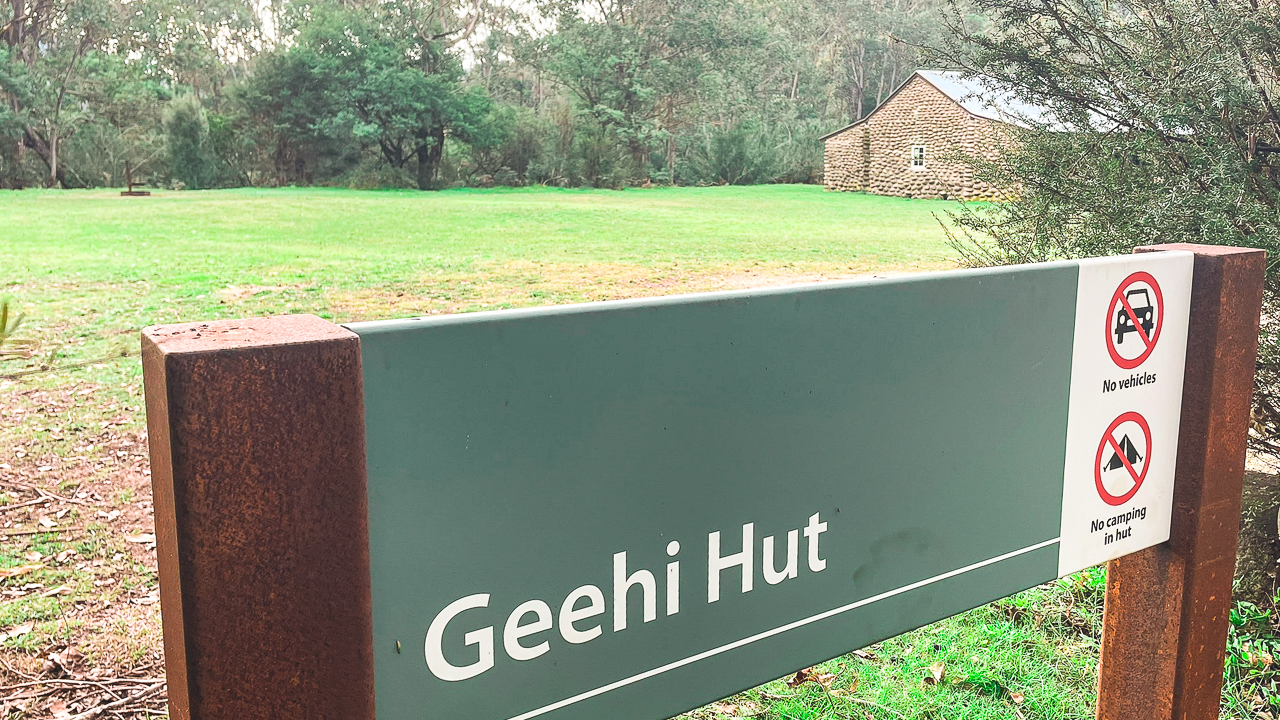
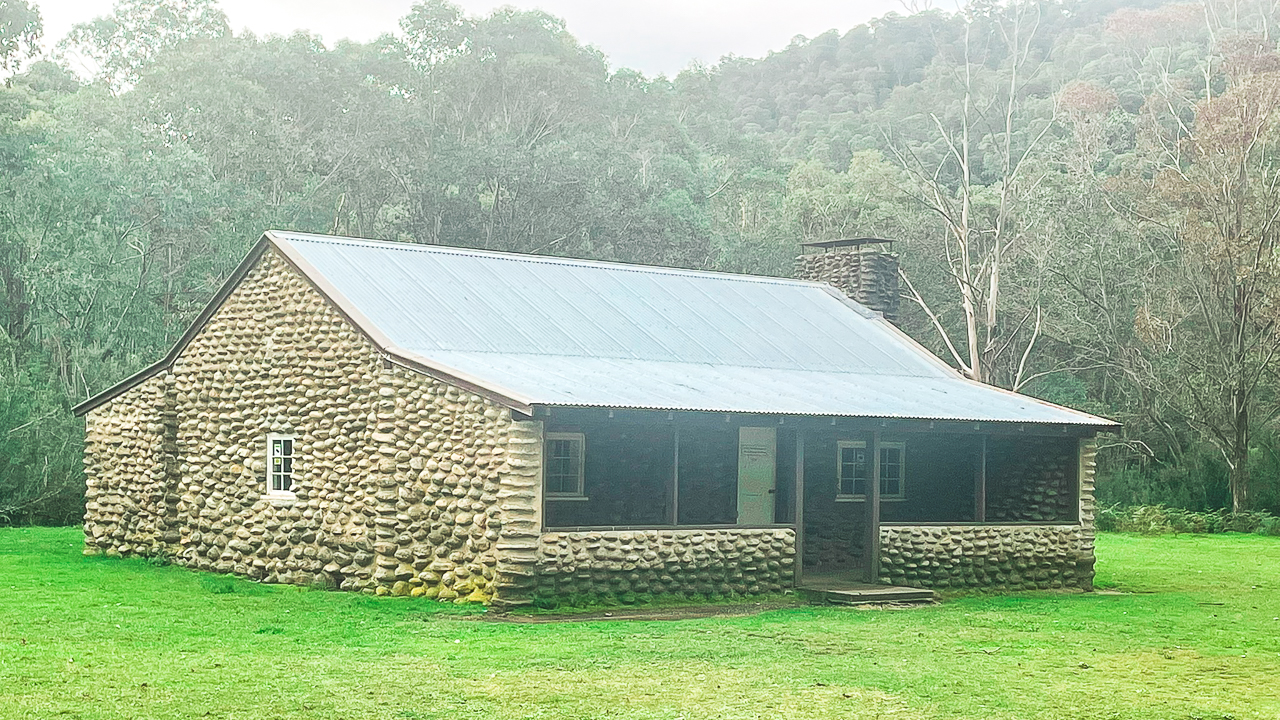
Geehi Hut was originally built in 1952 by Jim Nankervis and his brother to support cattle grazing and fishing trips in the area. At the time there was also a shelter, laundry, shed and toilet nearby, although some of those buildings have since been removed. The hut is easy to access today and can usually be reached in a standard 2WD vehicle in good conditions. There is also a large campground with plenty of space for tents and caravans.

In 2004 the hut was rebuilt by the Kosciuszko Huts Association with help from NPWS staff and local four wheel drive clubs. The rebuilt hut was officially reopened in October 2004 with members of the Nankervis family attending.

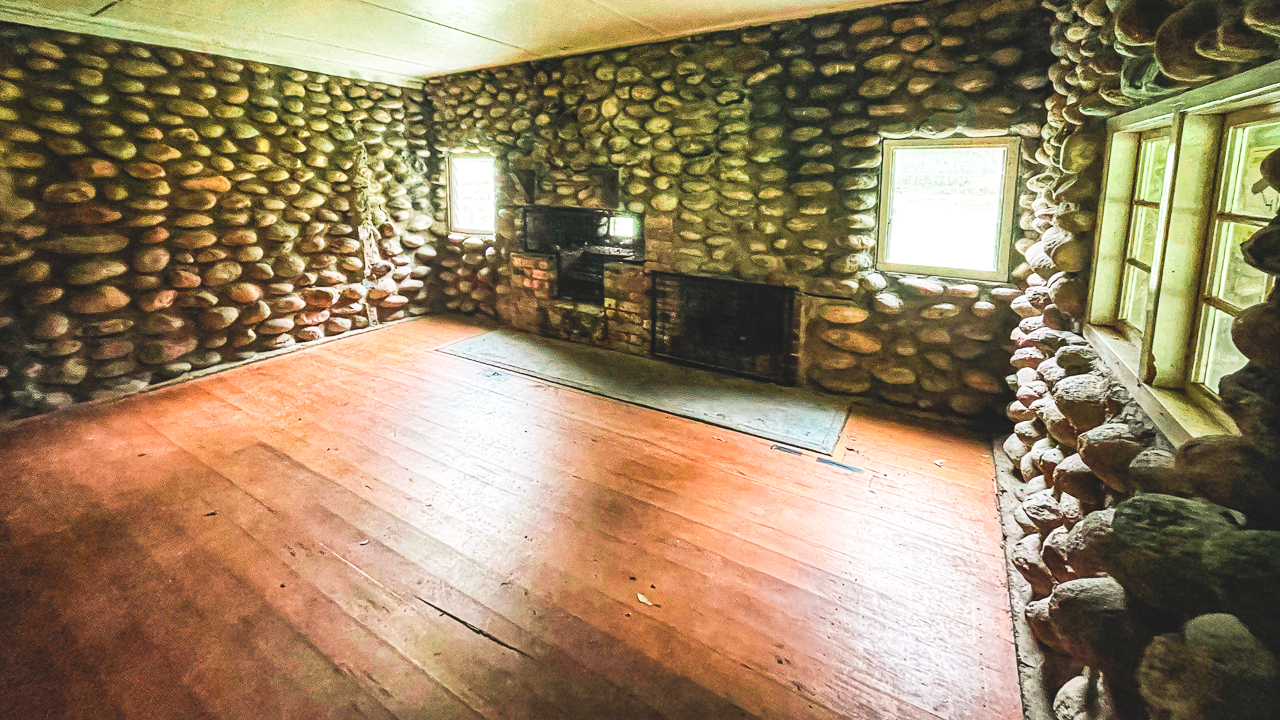
The hut itself is fairly large at around 11 metres by 9 metres and contains three rooms. It was built using local river stones with a concrete and dirt floor along with a large stone fireplace and chimney.

Geehi Hut Sign

Geehi Hut Sign

Stayed In A Cabin Overnight At Discovery Parks Jindabyne After exploring NSW High Country Huts

After Geehi we continued on past Thredbo and eventually reached Jindabyne for the night. We stayed in a cabin at Discovery Parks Jindabyne and it was fantastic. It’s quite a nice looking and well maintained park. We finished the day with Indian for dinner from in town before settling in to watch the footy after a full day exploring the NSW High Country.

Exploring NSW High Country Huts Day 1 Photo Gallery

NSW High Country Huts FAQs: Access, Driving Conditions And What To Expect

What is NSW High Country Huts travel like?

It is generally easy 4WD touring on maintained dirt roads with short walks at most hut and natural sites. Most locations can be reached in dry conditions without technical driving.

Do you need a 4WD for this route?

A 4WD is recommended but not always strictly required in dry weather. Some roads can be rough, corrugated or closed in winter due to snow.

Can you visit Coolamine Homestead?

Yes, Coolamine Homestead is open to the public and accessible via a well-formed dirt road in Kosciuszko National Park. It is one of the best preserved historic sites in the area.

What is Blue Waterholes known for?

Blue Waterholes is known for its clear blue water, limestone formations and walking tracks. It is also a popular camping and day use area.

Is Cooindel Hut still intact?

Cooindel Hut is mostly intact compared to many other high country huts. It is smaller than Coolamine but still in good condition and accessible for viewing.

What is Geehi Hut like?

Geehi Hut is a reconstructed historic hut near Alpine Way. It is easy to access and located close to a large camping area with mountain views.

How long does this NSW High Country huts route take?

The full loop including multiple stops can be done comfortably in a full day, depending on how long you spend at each location.

Is there mobile reception in the area?

Mobile reception is limited or patchy across much of the NSW High Country, especially in valleys and remote sections of Kosciuszko National Park.

Are the roads suitable for beginners?

Yes, most roads on this route are suitable for beginner to intermediate drivers in dry conditions, as long as you drive carefully and avoid wet or snowy weather.

When is the best time to visit NSW High Country huts?

Late spring to early autumn is generally best when roads are open and conditions are more stable. Winter access can be restricted due to snow. Long Plains Road is closed between the June long weekend and October.

Farina Underground Bakery Opening Dates 2026 + What To Expect

Farina Underground Bakery Opening Dates 2026 + What To Expect

Farina Underground Bakery Opening Dates 2026 + What To Expect

The Farina Underground Bakery is open in 2026 between the following dates and times.

Sat May 23 2026 to Sunday July 19 2026
8.30am to 3.30pm

The Farina Underground Bakery is one of the most popular stops in outback South Australia and after visiting Farina at least six times over the years between 2016 and 2026 including twice when the bakery was open we can see why.

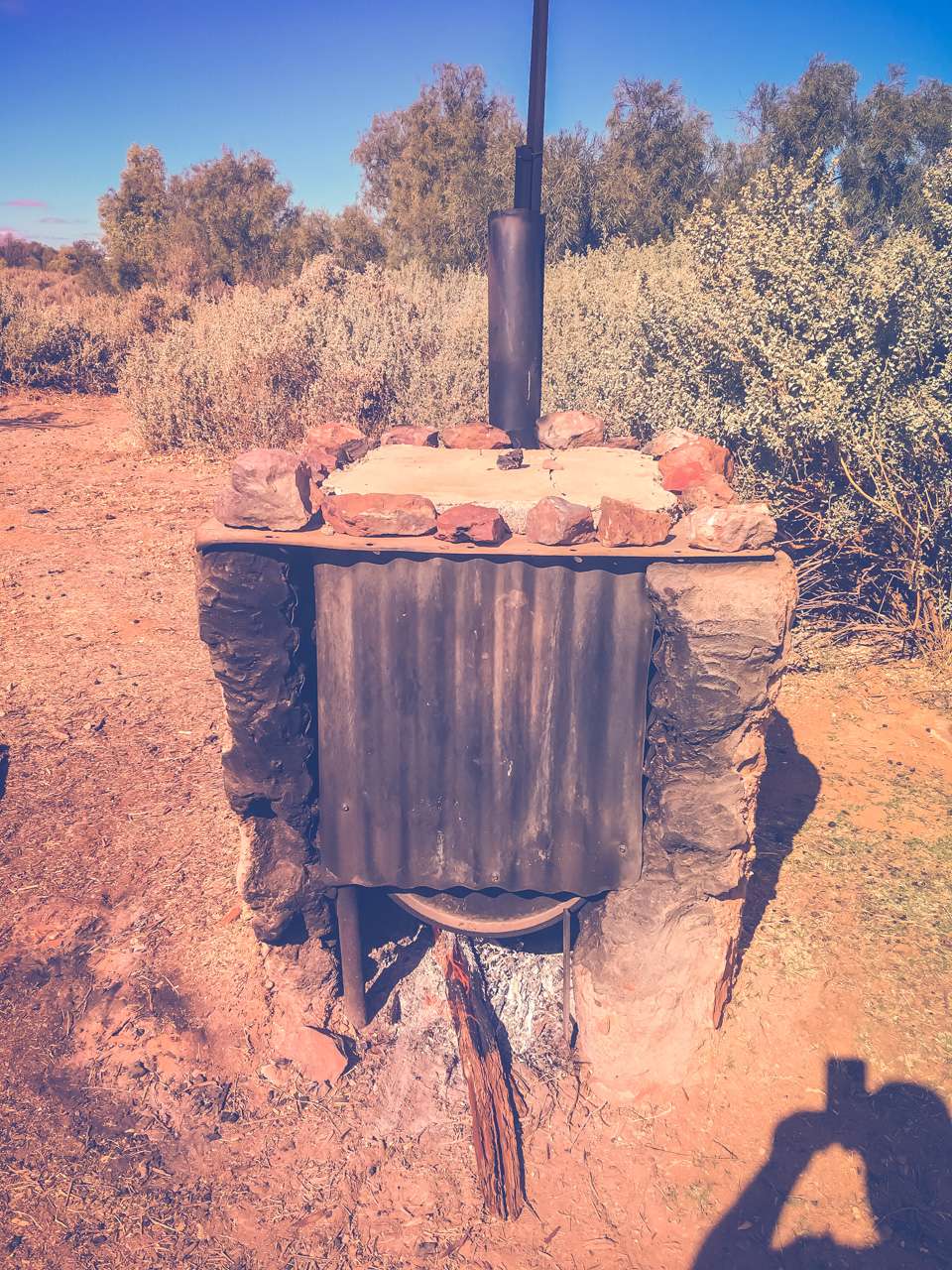
You’ll find the bakery among the ruins of the old Farina township. The bakery is well known for its fresh bread, pies, pastries and famous my favourite – the custard tarts. During winter, travellers from all over Australia stop here while exploring places like Marree, Lake Eyre, William Creek and the Oodnadatta Track.

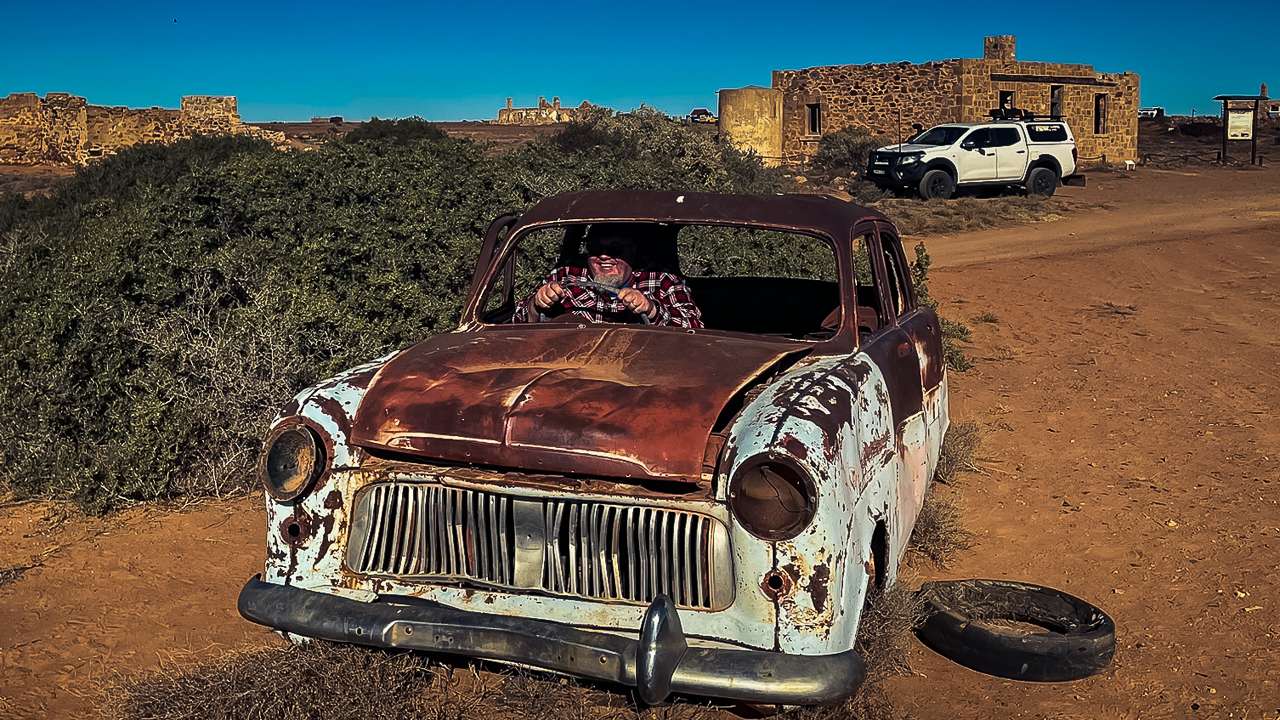
For us Farina is always worth the stop. The bakery is great, but it is also the history and atmosphere of the old town remains that makes this place special.

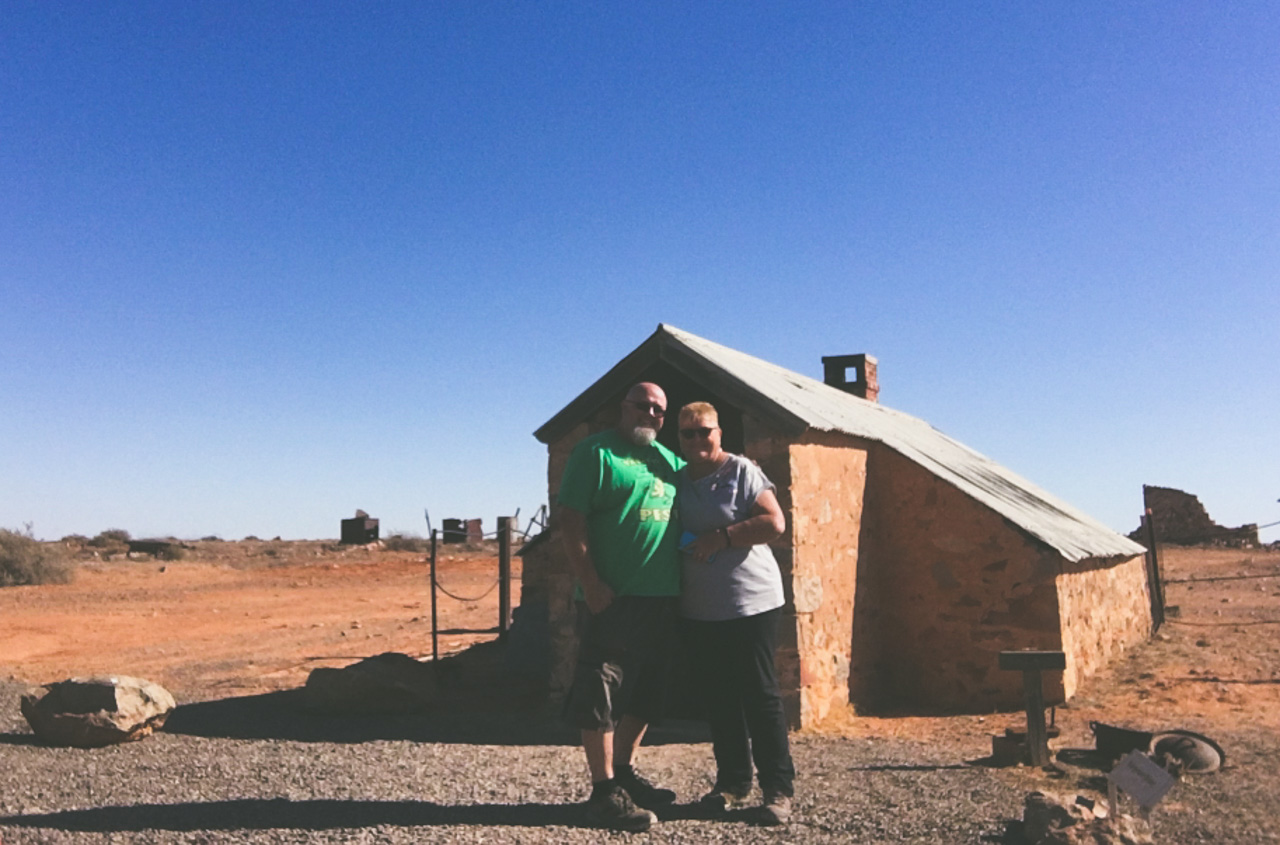
Us Standing Outside The Farina Underground Bakery

Us Standing Outside The Farina Underground Bakery

Where Is The Farina Underground Bakery?

Farina is located about 42km south of Marree in outback South Australia – between Lyndhurst and Marree.

The underground bakery is part of the Farina Restoration Project, where volunteers work to restore buildings and keep the history of the town alive.

When Is The Farina Bakery Open In 2026?

The Farina Underground Bakery is open in 2026 between the following dates and times.

Sat May 23 2026 to Sunday July 19 2026
8.30am to 3.30pm

We have visited Farina lots of times when the bakery was closed and still enjoyed exploring the ruins and camping. To be honest we’ve preferred Farina for camping and exploring the town when the bakery has been closed as it is a LOT quieter.

If you want to buy food from the bakery, it is a good idea to check opening dates before you travel.

What Food Does The Bakery Sell?

When we visited during bakery season, there was a good range of fresh food available including:

  • Bread
  • Bread rolls
  • Pies
  • Pasties
  • Sausage rolls
  • Cakes
  • Slices
  • Donuts
  • Custard tarts
  • Coffee and drinks

On both of our bakery visits there were already plenty of customers lined up not long after opening time.

Our Experience Visiting Farina

We have stopped at Farina many times and always enjoy visiting.

The bakery itself is a great stop but we also recommend spending time walking around the old ruins. There is a lot more to see than many people expect.

Some of the things you can explore include:

  • Old stone buildings
  • Underground rooms
  • Railway remains
  • Historic ruins
  • Information signs
  • Restored heritage areas

Sitting in the middle of the old town with a fresh pastry and coffee is one of those simple outback experiences that is hard to beat. Even when it gets busy, the volunteers running the bakery have always been friendly and organised during our visits.

Why Is The Farina Underground Bakery So Popular?

It Is Different

There are not many places in Australia where you can visit an underground bakery inside an old ghost town.

It Has Real History

Farina was once a busy railway town and you can still see plenty of that history today.

The Food Is Good

After a long drive through the outback, fresh bakery food always goes down well.

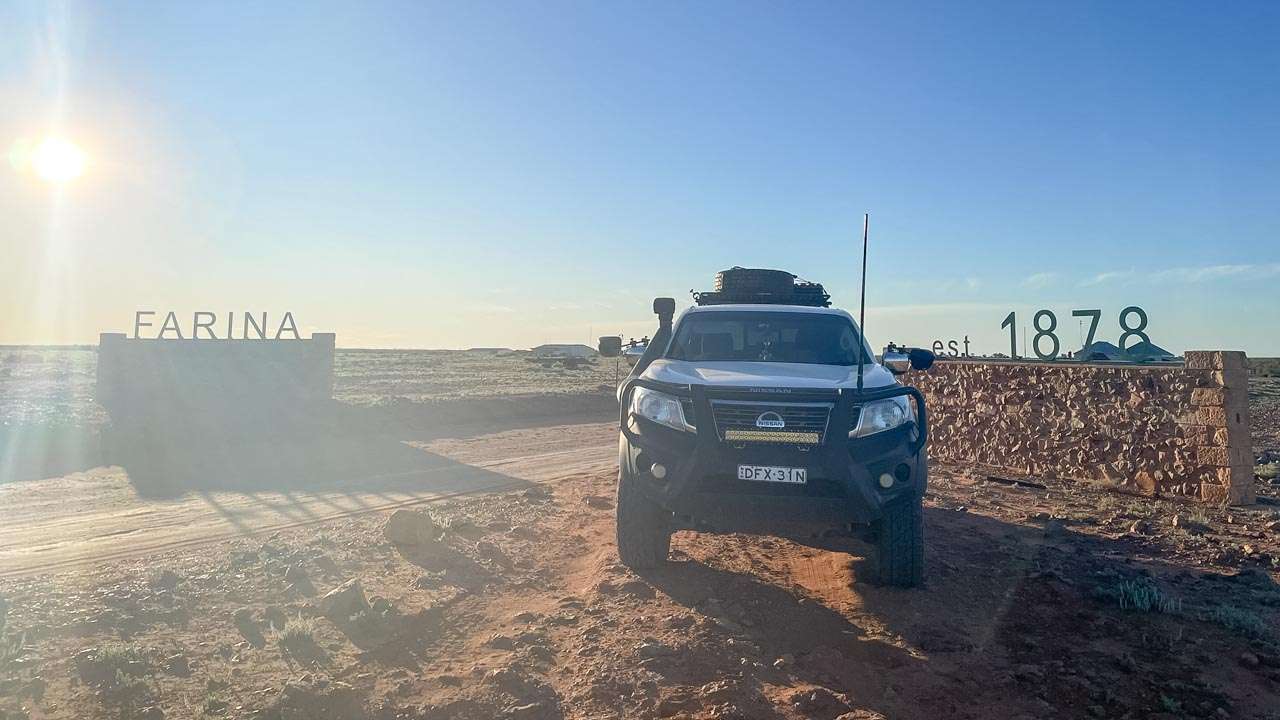
Us Parked Up At The Farina Town Entry

Us Parked Up At The Farina Town Entry

It Helps Restore Farina

Money raised through the bakery helps support ongoing restoration work around the town.

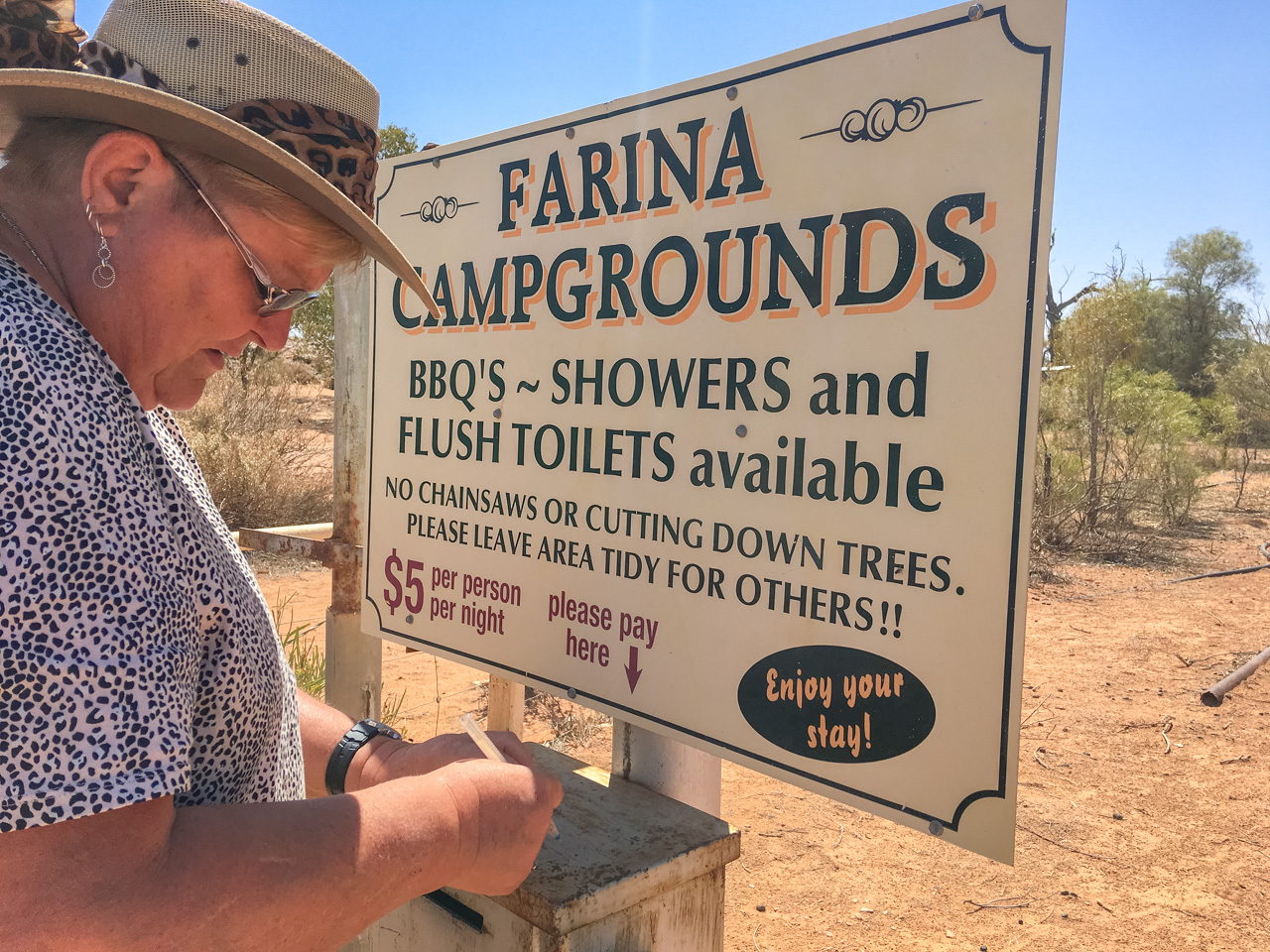
You Can Camp At Farina

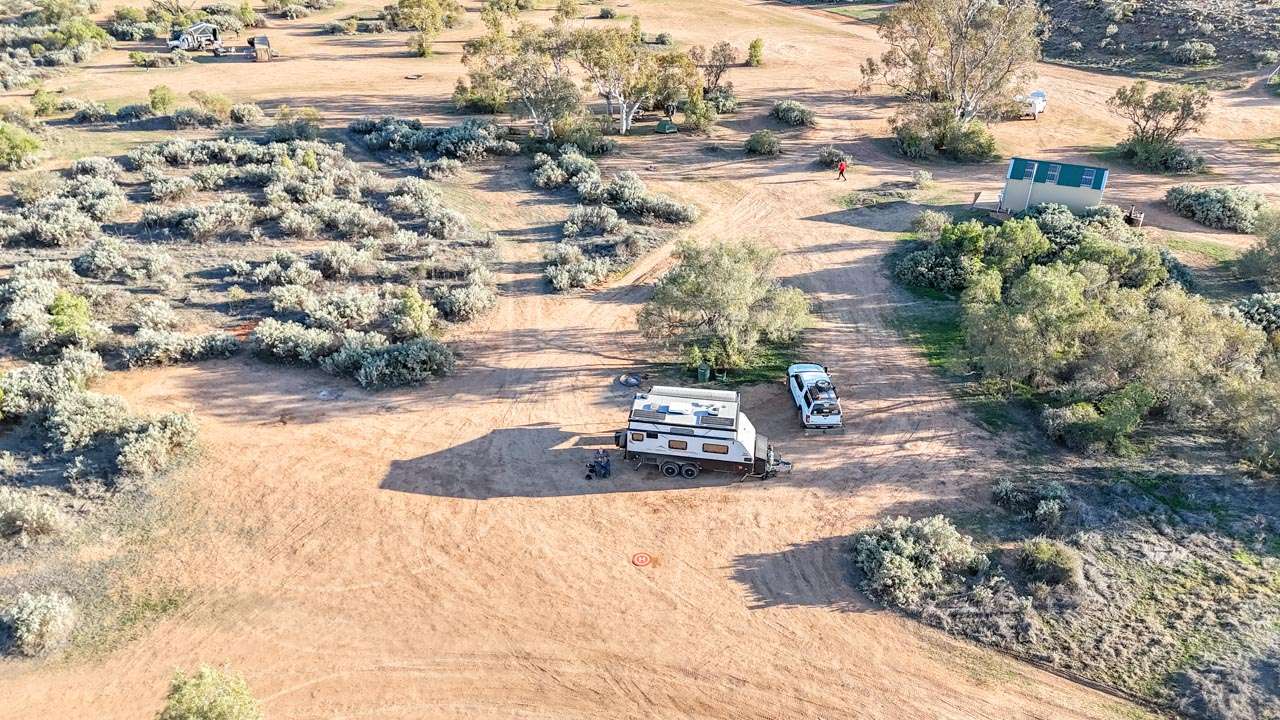
We’ve camped at Farina more than half a dozen times and will do so plenty more. It’s one of our favourite places to camp.

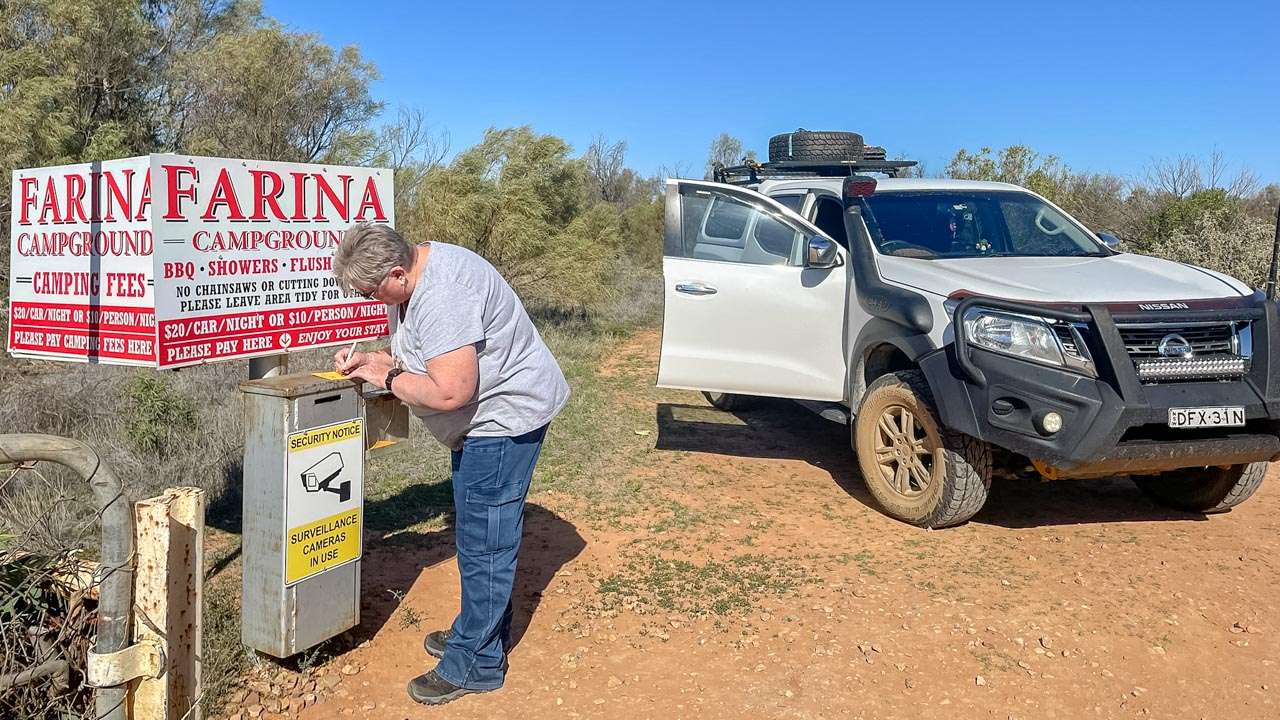
Amanda Paying Our Camping Fees At Farina

Amanda Paying Our Camping Fees At Farina

Tips For Visiting The Farina Underground Bakery

Arrive Early

Popular food items can sell out during busy periods.

Allow Time To Explore

Farina is worth more than just a quick bakery stop.

Carry Water And Supplies

You are in a remote part of South Australia.

Check Road Conditions

Road conditions in the outback can change quickly after rain.

Visit In Winter

The cooler months are the best time to travel through this area.

Is The Farina Underground Bakery Worth Visiting?

Yes, definitely.

After visiting Farina at least six times, including twice during bakery season we reckon it is one of the best stops in outback South Australia.

The bakery, the ruins and the history all make it a memorable place to visit.

If you are travelling north through Marree, heading towards Lake Eyre or driving the Oodnadatta Track we would absolutely recommend stopping at Farina.

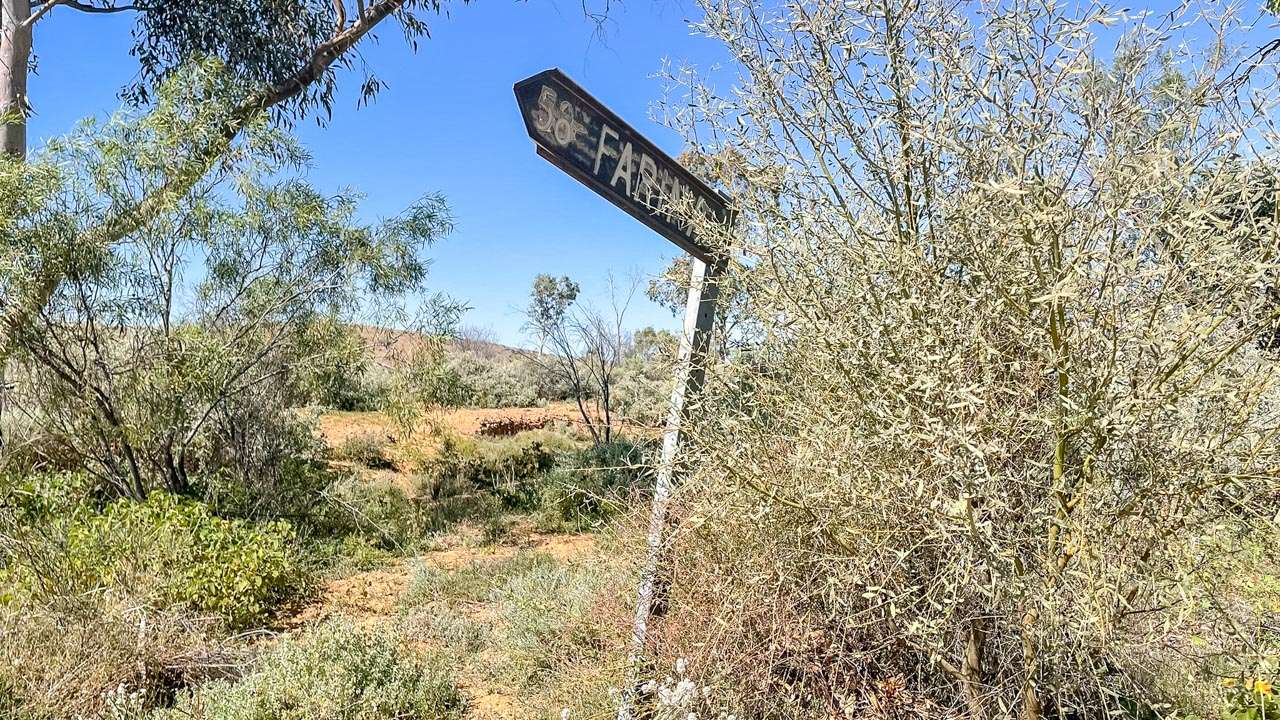
We Took The Directions To Farina Near Witchelina On Mularia Road In 2024

We Took The Directions To Farina Near Witchelina On Mularia Road In 2024

Farina Photo Gallery

FAQs About The Farina Underground Bakery

Is the Farina Underground Bakery open all year?

No. The bakery normally operates during the cooler months between around May and July.

Where is Farina located?

Farina is located about 42 kilometres south of Marree in South Australia.

What is the Farina Underground Bakery famous for?

It is best known for its pies, sausage rolls, pasties, bread and bread rolls plus a range of fresh baked food and it's uniquely original underground bakery setup.

Is Farina worth visiting if the bakery is closed?

Yes. The old ruins and historic township are still well worth seeing.

Can caravans and motorhomes get to Farina?

Yes. Farina is a very popular stop for caravans, campers and four wheel drives.

How much time should you allow at Farina?

We would recommend allowing at the very least a couple of hours to explore the ruins and enjoy the bakery if it is open. To be honest though you really need a couple of days to do any justice to the remains of the old town.
Oodnadatta Track Road Conditions (2026) – Access Latest Updates

Oodnadatta Track Road Conditions (2026) – Access Latest Updates

Oodnadatta Track Road Conditions (2026) – Access Latest Updates

Updated May 2026: all links and information have been checked and verified.

We’ve done six separate trips along the Oodnadatta Track between 2016 and 2025 and the road conditions have been different each time. Oodnadatta Track road conditions can change quickly. The list below outlines the best places to get current track conditions.

Where Can I Find Reliable Oodnadatta Track Road Condition Information?

Oodnadatta Track Road Conditions

Multiple resources provide current Oodnadatta Track road conditions, including the official South Australian Department for Infrastructure and Transport website, automated phone services, local businesses along the route and mobile applications designed for outback travel. These resources offer real-time updates on closures, restrictions and weather related impacts that can change rapidly in outback conditions.

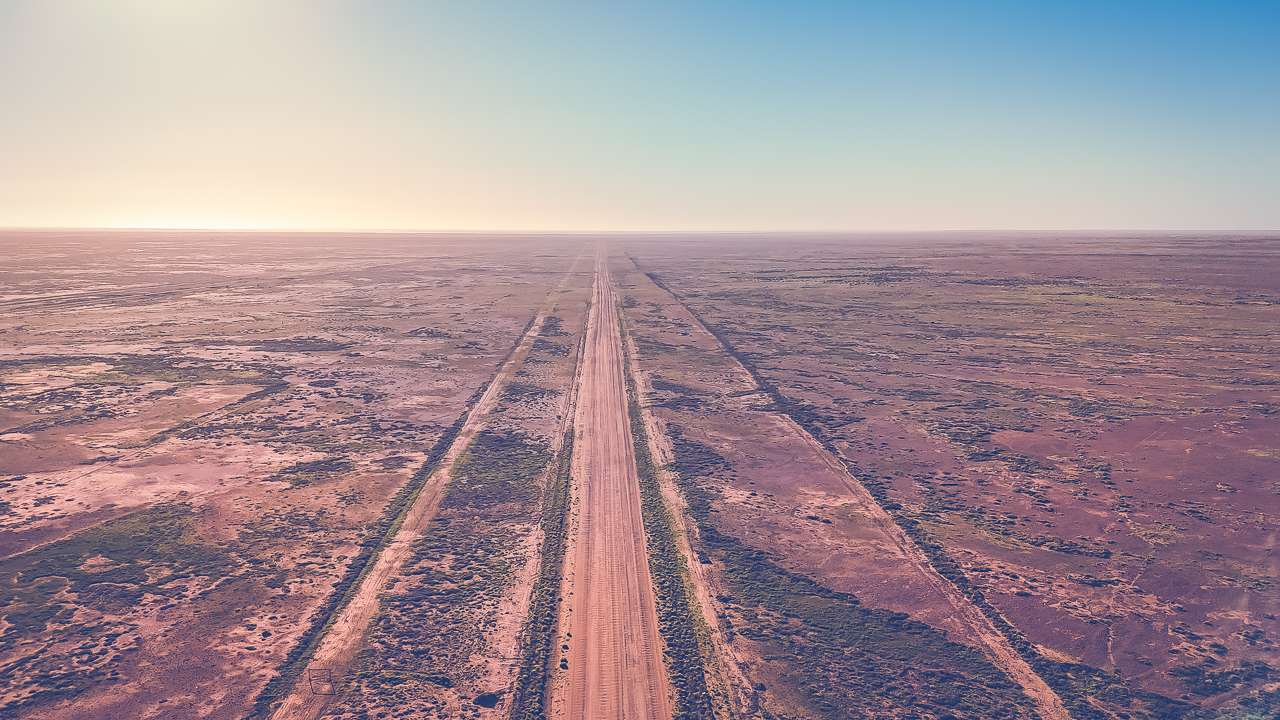
Oodnadatta Track Aerial View Near Curdimurka

Oodnadatta Track Aerial View Near Curdimurka

Official Government Resources For Oodnadatta Track Road Conditions

The South Australian Department for Infrastructure and Transport maintains the most authoritative source for outback road information. Their comprehensive Outback Roads Warnings website provides real time updates on Oodnadatta Track road conditions, road closures, restrictions and warnings across northern South Australia. Additionally, this official platform updates whenever conditions change, ensuring travellers receive the most current information available.

How Much Rain Does It Take To Close The Oodnadatta Track

Even small amounts of rainfall can dramatically impact track accessibility. Historical records show that as little as 5 millimetres of rain has caused temporary closures of sections between major towns. The track’s surface can become extremely hazardous when wet creating conditions that can strand vehicles for days. Driving on the track when wet can cause damage to the road surface that is costly to repair in both time and money.

The Department for Infrastructure and Transport monitors rainfall patterns closely and implements closures proactively to prevent travellers from becoming stranded. Consequently, understanding rainfall thresholds helps travellers appreciate why seemingly minor weather events can have major impacts on accessibility.

Automated Phone Services For Road Updates

Travellers can access recorded road condition reports by calling 1300 361 033 which provides 24 hour automated updates. This service covers all major outback routes including detailed information about the Oodnadatta Track. The automated system updates regularly to reflect changing conditions across the region.

The phone service proves particularly valuable for travellers without reliable internet access in remote areas. Additionally, many experienced outback travellers recommend calling this number before departing and again at major stops along the route.

Technology Solutions For Tracking Oodnadatta Track Conditions Today

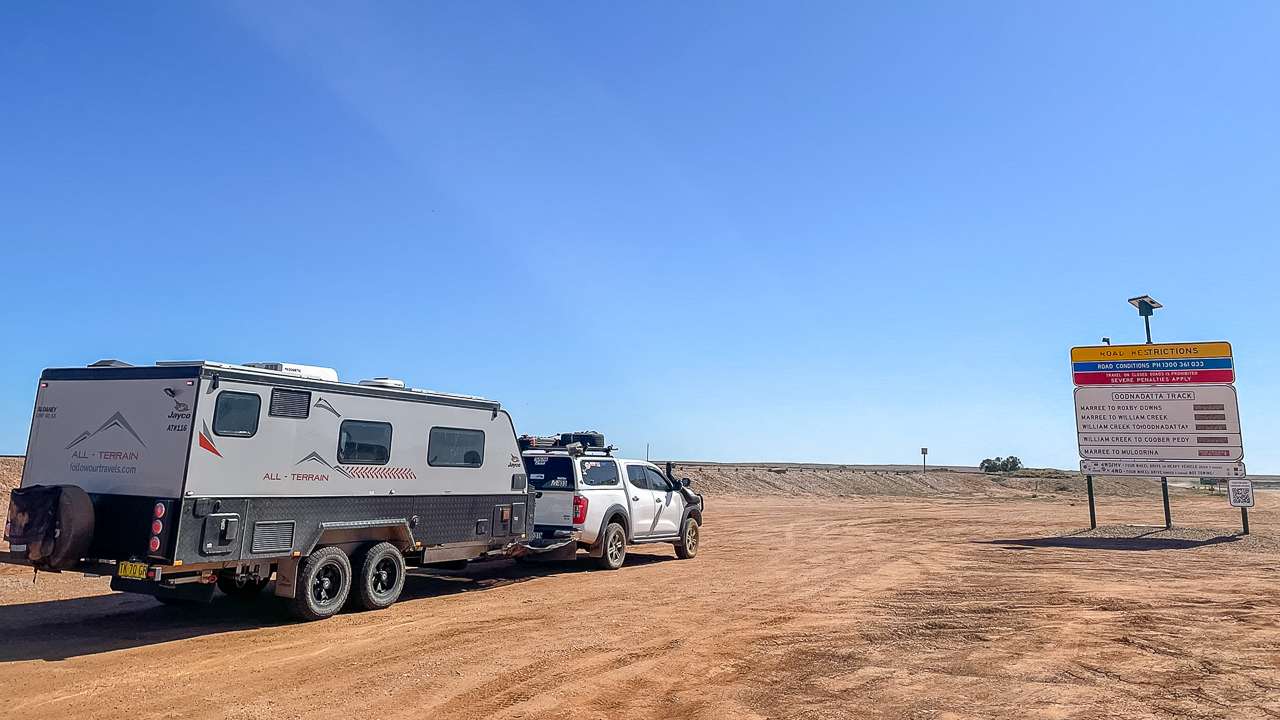
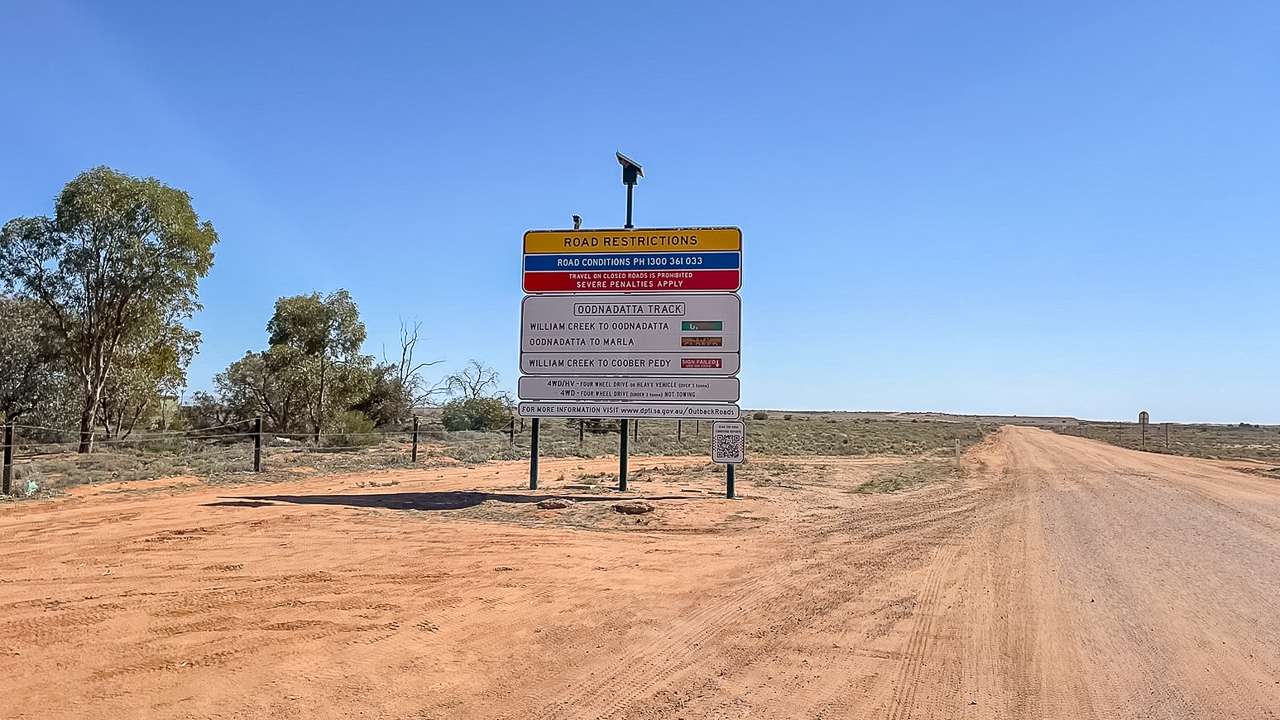
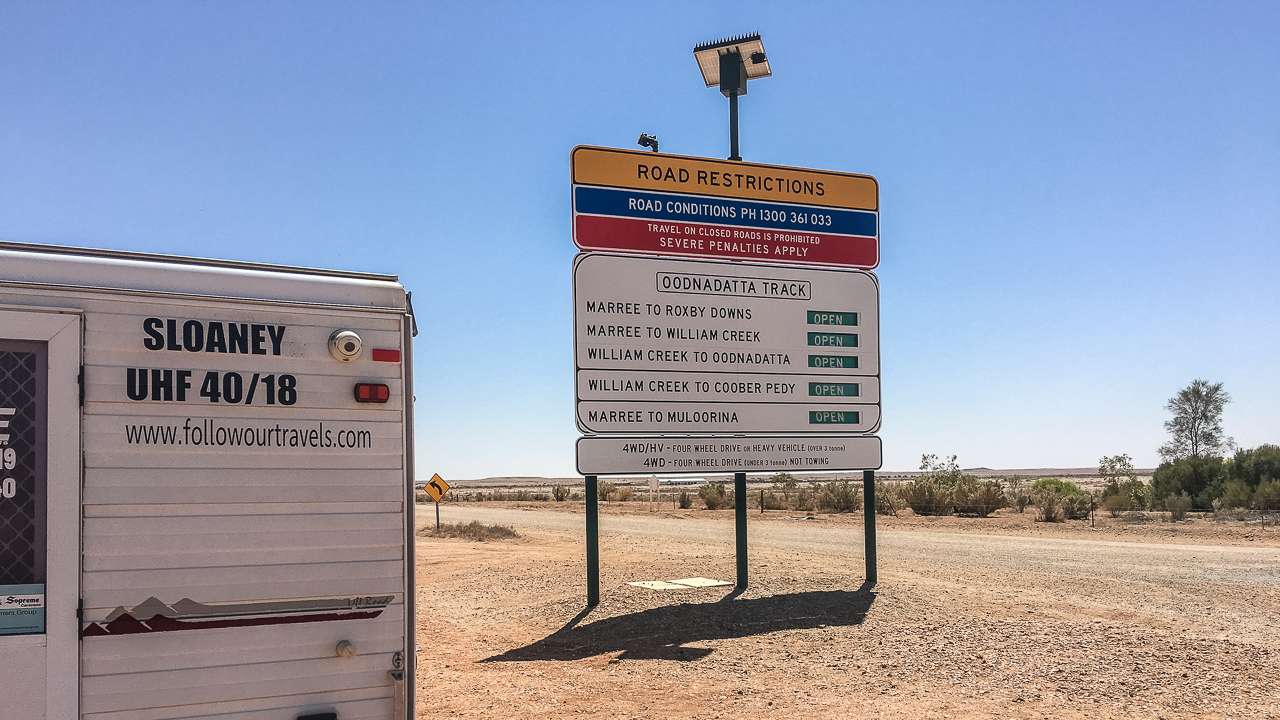
Modern technology has revolutionised how travellers access current road condition information. QR codes installed on roadside signs throughout the outback provide direct links to the latest warnings and closures. These codes work wherever mobile phone coverage exists giving travellers immediate access to updated information.

Mobile Applications And Digital Resources

The ExplorOz Traveller application offers comprehensive offline mapping capabilities specifically designed for Australian outback conditions. This platform includes community contributed road reports and track conditions from recent travellers. Similarly, the application provides valuable insights into current track conditions that official sources might not immediately reflect.

Drive Weather applications help travellers understand weather patterns along their planned route. These specialised tools predict conditions that could affect road accessibility hours or days in advance. Consequently, proactive planning using weather applications can prevent travellers from encountering unexpected closures.

Us At The Oodnadatta Track Sign At Marree In 2024 With QR Code

Us At The Oodnadatta Track Sign At Marree In 2024 With QR Code

Is The Oodnadatta Track Open – Real Time Monitoring

Real time monitoring systems provide continuous updates on track accessibility. The official DIT website features an interactive map showing current road statuses using colour-coded indicators. Green sections indicate open roads, while red areas show complete closures to all vehicle types.

However satellite outages occasionally disrupt automatic updates to roadside signs. During these periods, QR codes on signs provide alternative access to current information. Travellers should always verify conditions through multiple sources before departing.

Local Business Network For Current Road Information

William Creek Hotel

The William Creek Hotel serves as a crucial information hub for track conditions. Staff members receive regular updates from travellers and maintain close contact with maintenance crews. Moreover, the hotel’s strategic location halfway along the track makes it an ideal source for current conditions in both directions.

Travellers can contact the William Creek Hotel at (08) 8670 7880 for detailed local knowledge. The hotel staff understand seasonal variations and can provide advice about vehicle suitability for current conditions. Additionally, they offer insights into fuel availability and accommodation options along the route.

Marree Hotel

The historic Marree Hotel, located at the southern terminus of the track, provides invaluable local intelligence. Staff members regularly discuss road conditions with pastoralists and travellers who use the route daily. Furthermore, their experience with seasonal patterns helps them provide realistic assessments of track conditions.

Hotel representatives can advise on tyre pressures, travel times, and current hazards along specific sections. They also maintain awareness of alternative routes when main sections experience closures. Consequently, calling ahead to Marree Hotel often provides insights unavailable through official channels.

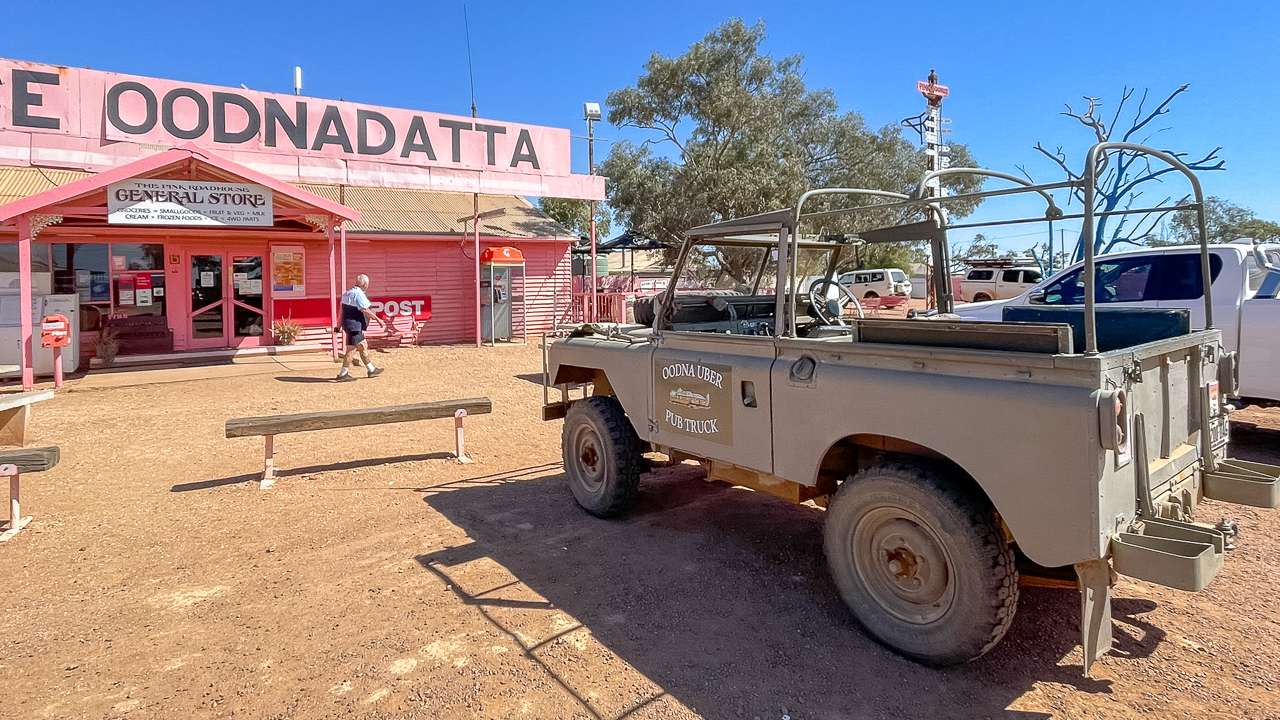
Oodnadatta Pink Roadhouse

The Oodnadatta Pink Roadhouse operates a toll free information service on 1800 802 074 . This service provides current track conditions from the northern perspective. Staff members receive regular reports from freight operators and maintenance crews working on the track.

The Pink Roadhouse At Oodnadatta

The Pink Roadhouse At Oodnadatta

Weather Monitoring For Oodnadatta Track Planning

Bureau Of Meteorology Resources

The Bureau of Meteorology provides essential weather forecasting for outback regions. Their Oodnadatta weather station offers current conditions and forecasts that directly impact track accessibility. Additionally, rainfall warnings help travellers understand when conditions might deteriorate rapidly.

Understanding weather patterns proves crucial for successful track navigation. Even moderate rainfall can transform well-maintained sections into impassable quagmires within hours. Therefore, monitoring weather forecasts should form an integral part of pre-departure planning.

Rainfall Impact Assessment

Different sections of the track respond differently to rainfall events. The stretch between Marla and Oodnadatta includes several major floodways that become impassable during significant rain events. Recent infrastructure improvements have enhanced these sections, but they remain vulnerable to major weather events.

Clay surfaces throughout the middle sections become extremely slippery when wet. These areas can remain hazardous for days after rainfall events cease. Consequently, understanding which sections face the greatest weather-related risks helps travellers plan accordingly.

Resource Type Contact Details Information Provided Update Frequency
DIT Official Website dit.sa.gov.au/outbackroads Real-time closures, restrictions, warnings As conditions change
Automated Phone Service 1300 361 033 Recorded road conditions Multiple daily updates
William Creek Hotel (08) 8670 7880 Local conditions, fuel, accommodation Real-time local knowledge
Marree Hotel (08) 8675 8344 Southern access conditions Daily traveller reports
Pink Roadhouse 1800 802 074 Northern access conditions Regular operator updates
Bureau of Meteorology bom.gov.au Weather forecasts, warnings Hourly weather updates

Social Media And Community Networks

Department For Infrastructure And Transport Social Channels

The Department for Infrastructure and Transport maintains active social media channels providing regular updates. Their Facebook page ( facebook.com/DFITSA ) shares maintenance schedules and emergency closures. Twitter updates ( @DFIT_SA ) offer immediate notifications when conditions change rapidly.

Social media channels often provide faster updates than official websites during emergency situations. Maintenance crews post updates directly from work sites, giving travellers immediate awareness of changing conditions. Therefore, following these channels provides an additional layer of current information.

Facebook Group

There is a currently a very active Oodnadatta Track Facebook group that has a lot of posts and current up to date road conditions. Join the group if you want to see what they have going on.

ExplorOz Community Contributions

The ExplorOz community platform hosts active discussions about current track conditions. Experienced travellers share recent experiences and provide warnings about specific hazards. Moreover, these community reports often include photographs showing current road surfaces and obstacles.

Community contributions supplement official information with practical insights from recent travellers. Members frequently post updates about corrugations, creek crossings, and vehicle suitability for current conditions. Consequently, consulting community forums provides valuable real-world perspectives on track conditions.

Emergency Communication And Safety Resources

Emergency Contact Networks

Emergency communication becomes critical when travelling remote sections of the Oodnadatta Track. The Royal Flying Doctor Service maintains emergency contact numbers for outback regions. Additionally, the Automobile Association emergency service (131 111) provides 24-hour breakdown assistance.

Satellite communication devices offer reliable contact options in areas without mobile coverage. Personal locator beacons provide emergency services with precise location information when assistance becomes necessary. Therefore, carrying appropriate emergency communication equipment forms an essential safety requirement.

Is The Oodnadatta Track Open – Emergency Closures

Emergency closures can occur without warning when conditions deteriorate rapidly. Maintenance crews prioritise safety over convenience, implementing closures proactively when risks increase. Flash flooding events can close multiple sections simultaneously, stranding travellers at intermediate locations.

Understanding emergency procedures helps travellers respond appropriately when unexpected closures occur. Local businesses along the route provide accommodation and supplies during extended closure periods. Furthermore, maintaining flexible travel schedules allows for delays caused by emergency situations.

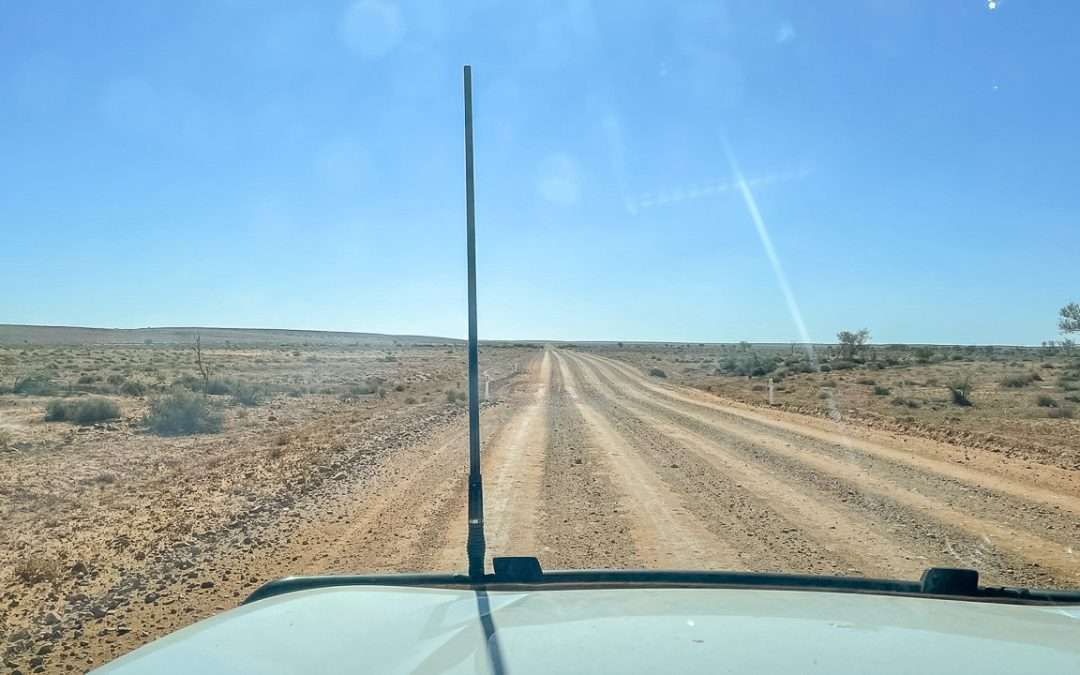
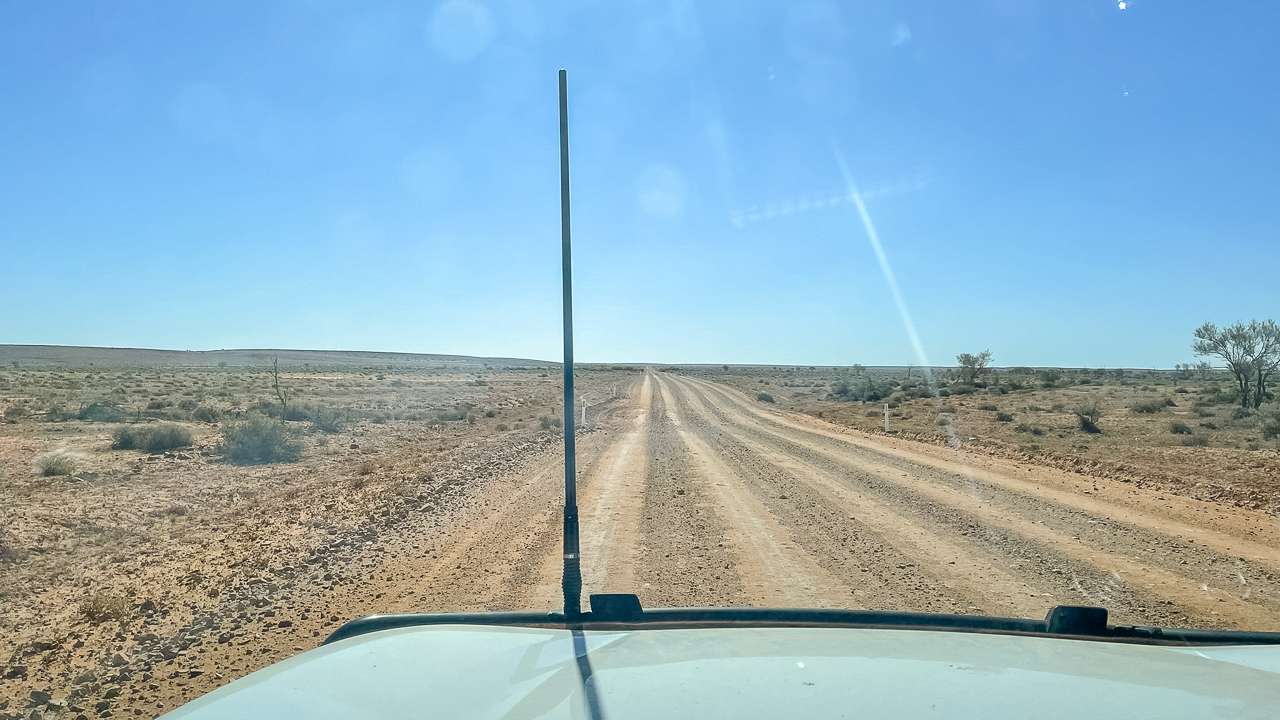
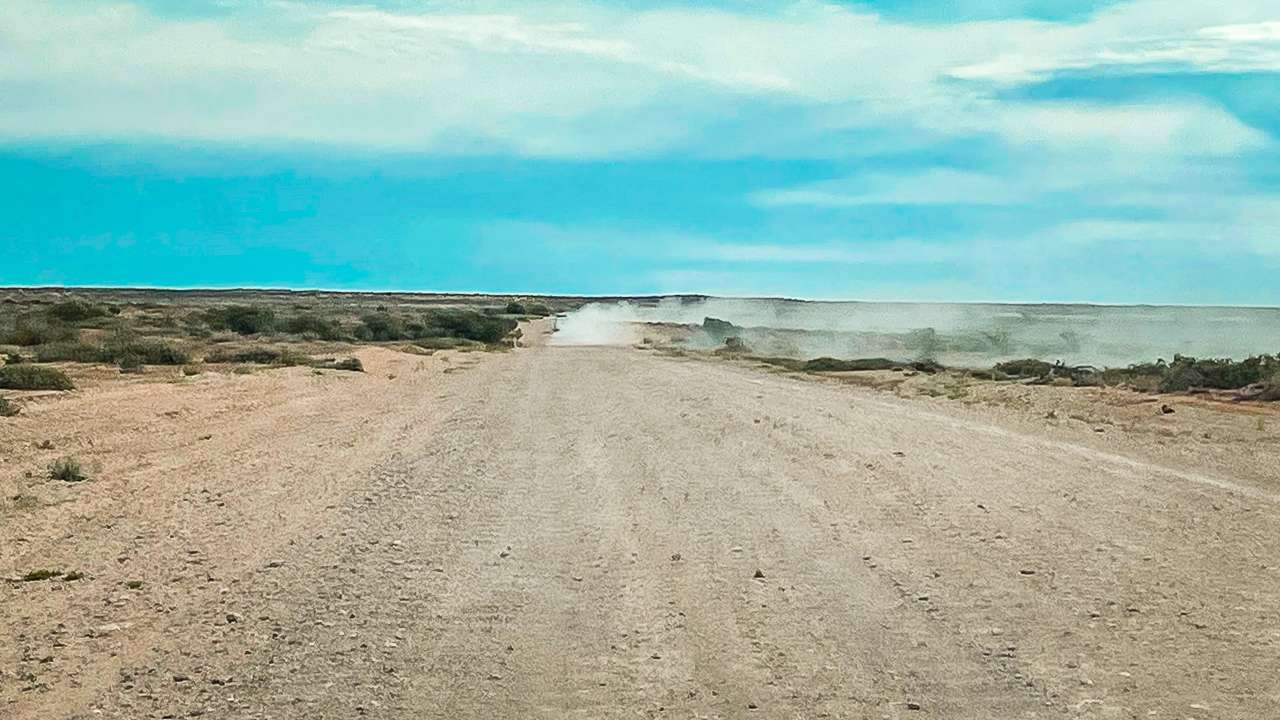
Us Travelling The Oodnadatta Track In Good Condition In 2022

Us Travelling The Oodnadatta Track In Good Condition In 2022

Seasonal Considerations For Track Conditions

Oodnadatta Track Conditions Today – Seasonal Variations

Track conditions vary dramatically between seasons, affecting accessibility and vehicle requirements. Winter months generally provide the most stable conditions, with minimal rainfall and moderate temperatures. However, overnight frosts can create slippery surfaces during early morning hours.

Summer conditions present extreme heat challenges, with temperatures regularly exceeding 40 degrees Celsius. Additionally, summer storms can produce intense rainfall that quickly transforms track surfaces. Spring and autumn offer transitional conditions that require careful weather monitoring.

Oodnadatta Track Road Conditions Photo Gallery

Pin It on Pinterest