Artesian Bore Baths & Mineral Springs Map & Information

Artesian Bore Baths & Mineral Springs Map & Information

Artesian Bore Baths & Mineral Springs Map & Information

Discover Australias top artesian bore baths and mineral springs complete with handy map – perfect for your next caravan or camping adventure. Australia’s vast outback conceals a remarkable secret beneath its surface – the Great Artesian Basin, home to numerous thermal springs and bores that provide some of the most unique bathing experiences in the world.

Have you ever wondered where you can soak in ancient, mineral rich waters beneath the Australian sky?
Australia’s artesian bore baths and mineral springs offer a unique chance to relax in naturally heated pools, with water drawn from deep underground aquifers like the Great Artesian Basin – some of it up to two million years old. These soothing spots are renowned for their therapeutic benefits and are popular stops for caravan and camping travellers seeking outback serenity and a memorable soak.

For caravan and camping enthusiasts, Artesian Bore Baths represent an extraordinary attraction, offering relaxation, rejuvenation and relief after long journeys across the country’s expansive landscapes. The healing properties of these natural thermal waters have drawn visitors for generations, creating a tradition of wellness that continues to thrive today.

Table Of Contents

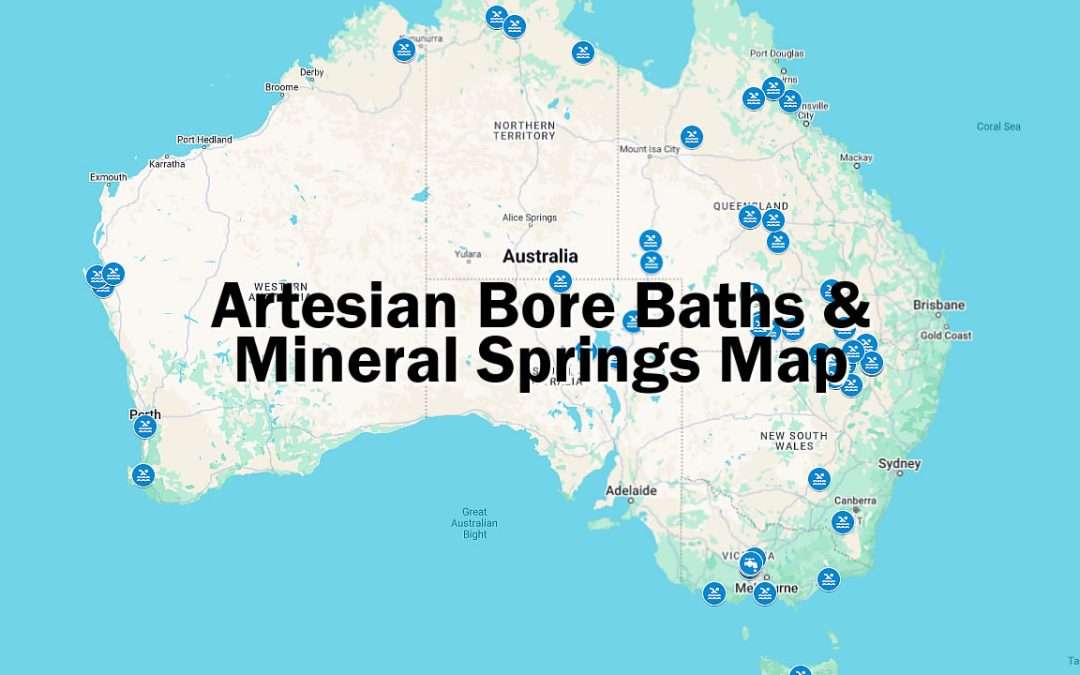
Artesian Bore Baths Location Map – Map Includes Mineral Springs

Artesian Bore Baths And Mineral Springs by State: Your Perfect Caravan Camping Stops

If you’re dreaming of soaking your cares away under wide open skies, Australia’s artesian bore baths and mineral springs offer the perfect escape for caravan and camping travellers. Fed by the ancient waters of the Great Artesian Basin and other natural aquifers, these thermal pools are scattered across the country – each promising a unique blend of relaxation, outback scenery, and a touch of local history. Whether you’re after the therapeutic benefits of mineral rich waters or simply looking for a memorable stop on your next road trip, this state-by-state guide will help you discover some of Australia’s most inviting hot springs and artesian baths – many with campgrounds right next door for the ultimate soak and stay experience.

NSW – New South Wales Artesian Bore Baths And Mineral Springs

1. Artesian Spa Motel

The famous Moree Bore (Bore Baths) was completed in 1895. People from all over the world have enjoyed the healing qualities of the natural hot mineral springs for over one hundred years.

Address: 2 Boggabilla Rd, Moree, NSW 2400
View On Map: Google Maps
GPS: -29.458737574528836, 149.84296653897746
Phone: 02 6752 2466
Website: https://artesianspamotel.com.au/

2. Barmedman Mineral Pool

Barmedman Mineral Pool is a large relaxing cold water pool with a naturally high mineral content.

Address: Nobbys Rd, Barmedman, NSW 2668
View On Map: Google Maps
Email: barmedmanpool@gmail.com
Website: https://www.facebook.com/barmedmanmineralpool/
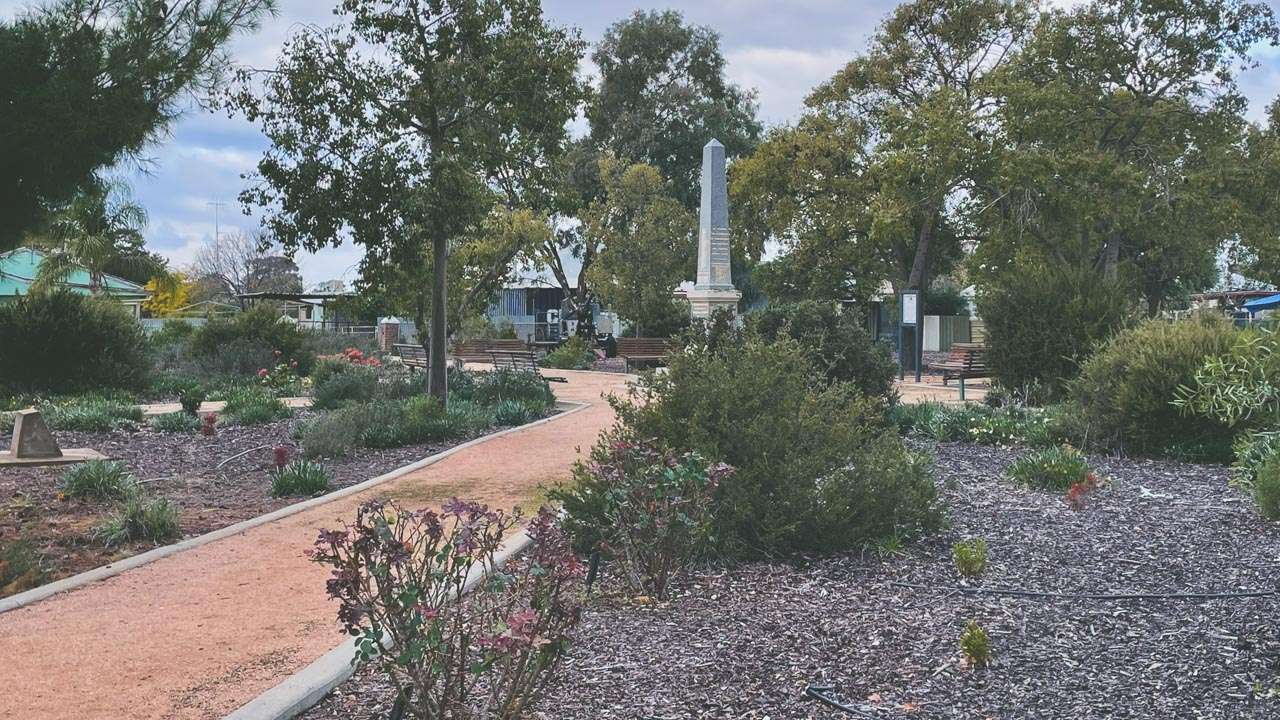
War Memorial Park In Barmedman

War Memorial Park In Barmedman

3. Boomi Artisian Spa Pools

The Boomi Artesian Pool draws artesian water from a depth of 1,222 metres and has been used to swim in since its construction in 1905. Construction of the present day baths was commenced in 1975 and the latest addition of the spa baths was in 1996.

Address: Boomi St, Boomi, NSW 2405
View On Map: Google Maps
GPS: -28.724929739484086, 149.57828765429144
Phone: 02 6753 5336
Website: https://www.moreetourism.com.au/

4. Burren Junction Bore Baths

The Burren Junction Bore Baths and Camp Ground are located in a rural setting, 100 metres off the Kamilaroi Highway on a sealed road. The baths are open 24 hours a day, seven days a week (may close seasonally) and are a popular meeting place for locals and visitors. The artesian water flowing from the bore maintains a constant temperature of approximately 36 degrees Celsius and contains reputed therapeutic qualities that relieve aching muscles.

Address: Kamilaroi Hwy, Burren Junction, NSW 2386
View On Map: Google Maps
GPS: -30.113182039281906, 148.995878883175
Email: admin@walgett.nsw.gov.au
Phone: 02 68286100
Website: https://www.walgett.nsw.gov.au/Departments/Infrastructure-Compliance/Swimming-pools-bore-baths/Burren-Junction-Bore-Baths

5. Collarenabri Artesian Hot Spring

[CURRENTLY CLOSED] Collarenebri Artesian Bore Bath was funded as part of the Murray Darling Basin Economic Development Program and seen as a significant opportunity for the local community, aiming to revitalise the Collarenebri economy and boost tourism in the town.

Address: 6 Wilson St, Collarenabri, NSW 2833
View On Map: Google Maps
GPS: -30.113154196789747, 148.99586815434012
Phone: 02 6828 6139
Website: https://www.nsw.gov.au/visiting-and-exploring-nsw/locations-and-attractions/collarenebri-bore-bath

6. Dragon Pheonix Resort

The property features open-air artesian thermal pool along with our salt water swimming pool, perfect for relaxation. The outdoor artesian thermal pool, with a temperature of 38 to 40°C and the refreshing swimming pool are both fully open and ready for guests to enjoy.

Address: 361 Frome St, Moree, NSW 2400
View On Map: Google Maps
GPS: -29.47576769240387, 149.8429222831525
Email: info@phoenixresort.com.au
Phone: 0409 981 172
Website: https://www.phoenixresort.com.au/

7. Goodooga Artesian Spa

Goodooga Artesian Springs are a serene oasis that promises relaxation and rejuvenation in the heart of the outback. Nestled in the picturesque landscape of western New South Wales, our artesian springs offer a unique experience for those seeking tranquillity and wellness.

Address: Queensland St, Goodooga, NSW 2838
View On Map: Google Maps
GPS: -29.1099185024653, 147.45826142546997
Email: info@brewarrina.nsw.gov.au
Phone: 02 6830 5100
Website: https://visitbrewarrina.com.au/goodooga-artesian-springs/

8. Gwydir Thermal Pools

The artesian thermal mineral pools are what brings many of their guests from far and wide . They have 5 fully tiled Artesian pools ranging from 39 to 34 degrees Celcius and a 25 metre Artesian lap pool kept at about 29 degrees . All of their pools are for exclusive use of their guests at no extra charge.

Address: 4 Amaroo St, Moree, NSW 2400
View On Map: Google Maps
GPS: -29.4850202970618, 149.8495019831528
Email: enquiries@gwydircarapark.com.au
Phone: 02 6752 2723
Website: https://www.gwydircarapark.com.au/

9. Hot Springs Pools & Units

Hot Springs Pools and Units love seeing their guests smile. There is nothing quite as relaxing and therapeutic as a soak in their Artesian Thermal Pool. As a guest you get to use the pool for free. Their 25 metre fully tiled pool has plenty of seating benches, water jets and water curtains to help maximize your Artesian Thermal Water experience. The pool is filled with pure Artesian water from the Great Artesian Basin and is drawn from 2,400 feet below the ground where it’s naturally warmed by the heat inside the earth. The high mineral content of the Artesian Thermal Water is absorbed from the earth as the water filters down to the lower areas of the basin. This process occurs very slowly which means that the water extracted from the basin to fill their pools may not have seen daylight for millions of years.

Address: Jones Ave, Moree, NSW 2400
View On Map: Google Maps
GPS: -29.480057361375177, 149.84230655431787
Email: enquire@hotspringspoolandunits.com.au
Phone: 02 6752 2723
Website: https://www.hotspringspoolandunits.com.au/

10. Lightning Ridge Bore Baths

The Lightning Ridge open-air Artesian Baths were opened in 1962. The Artesian Baths are free of charge and open 24 hours a day 7 days a week (Closed for cleaning Monday, Wednesday & Friday between 10 am-12noon). The Bore Baths are a popular meeting place for locals and visitors to bathe, relax and socialise.

Address: Pandora St, Lightning Ridge, NSW 2834
View On Map: Google Maps
GPS: -29.422487949453384, 147.99787658315054
Phone: 02 6828 6100
Website: https://www.explorelightningridge.com.au/Things-To-Do/Hot-Artesian-Bore-Baths

Lightning Ridge Artesian Bore Baths

Lightning Ridge Artesian Bore Baths

11. Moree Artesian Aquatic Centre

The Moree Artesian Aquatic Centre is nature’s magic at work! The Moree Artesian aquatic centre is the region’s premier health and wellness centre. Home to Artesian water, it attracts both domestic and international travellers that come for the healing properties of the water. Open all year round as a family friendly facility that welcomes all.

Address: 20 Anne St, Moree, NSW 2400
View On Map: Google Maps
GPS: -29.47390114833185, 149.84666182732678
Phone: 02 6752 2272
Website: https://www.moreeartesianaquaticcentre.com.au/

12. Moree Tourist Park

Swimming pool & therapeutic hot pools. Please note: therapeutic hot pools are adults only.

Address: 28 Oak St, Moree, NSW 2400
View On Map: Google Maps
GPS: -29.470823301239157, 149.85056386596858
Email: stay@moreetouristpark.com.au
Phone: 02 6752 7188
Website: https://moreetouristpark.com.au/

13. Mungindi Swimming Pool

Artesian Water – Rest and rejuvenate in an ambience created by nature at the Mungindi Swimming Pool Complex.

Address: Bucknell St, Mungindi, NSW 2406
View On Map: Google Maps
GPS: -28.97984962600047, 148.99271692546546
Email: info@moreetourism.com.au
Phone: 02 6753 2347
Website: https://www.moreetourism.com.au/directory/128601/mungindi-hot-pool

14. Pilliga Artesian Bore Bath

Soak away those aches and pains in the 37-degree mineral-rich water of the Pilliga Artesian Bore Bath. It has become a popular recreational spot for swimming and camping, with the therapeutic value of the water having long been recognised by locals and visitors who make regular pilgrimages to the Bath. Open 24hrs a day, relax in the bath and enjoy the sunsets and serenity that Pilliga is known for.

Address: Narrabri Rd, Pilliga, NSW 2388
View On Map: Google Maps
GPS: -30.355082408515955, 148.90698866968842
Email: tourism@narrabri.nsw.gov.au
Phone: 02 6799 6760
Website: https://explorenarrabriregion.com.au/narrabri-directory/pilliga-hot-artesian-bore-baths/

15. Walgett Bore Baths

The original Walgett Bore Baths were located in Dewhurst Street and officially opened on the 8th of December 1933. The bore baths proved extremely popular from the start, particularly in the evening. Between the 8th and 17th December 1933, 1047 people passed through the turnstile. The current Bore Baths located on the corner of Montkeila and Fox Streets was opened in 1988 and built as part of the Bi Centenary celebrations. The water in Walgett Bore Baths, comes from the Great Artesian Basin and is approximately two million years old. Natural pressure sends the water to the surface through an artesian bore and it maintains a constant temperature of 38-40 degrees Celsius. The warm artesian waters are rich in potassium salts, which are reputedly therapeutic for tired and aching muscles.

Address: Montkeila St/Castlereagh Hwy, Walgett, NSW 2832
View On Map: Google Maps
GPS: -30.016419417421243, 148.11680876783208
Phone: 02 6828 6100
Website: https://www.explorelightningridge.com.au/Things-To-Do/Hot-Artesian-Bore-Baths

16. Yarrangobilly Caves Thermal Pool

Take the short Yarrangobilly Caves thermal pool walk and enjoy a swim in the spring-fed natural pool. It’s easily combined with a picnic, bushwalk or cave tour in the Yarrangobilly area of Kosciuszko National Park.

Address: Thermal Pool Walk, Yarrangobilly, NSW 2720
View On Map: Google Maps
GPS: -35.73105163522771, 148.48599452366827
Email: parks.info@environment.nsw.gov.au
Phone: 1300 072 757
Website: https://www.nationalparks.nsw.gov.au/things-to-do/walking-tracks/yarrangobilly-caves-thermal-pool-walk

NT – Northern Territory Artesian Bore Baths and Mineral Springs

17. Berry Springs Nature Park

Berry Springs is one of the most beautiful parks to cool off and relax in close to Darwin. It has great shaded picnic and barbeque areas close to clear swimming pools surrounded by trees and aquatic life.

Address: Berry Springs Nature Reserve, Berry Springs, NT 0837
View On Map: Google Maps
GPS: -12.702141864920096, 130.99759496736257
Phone: 08 8999 4555
Website: https://nt.gov.au/parks/find-a-park/berry-springs-nature-park

18. Bitter Springs

Bitter Springs is one of two natural thermal pools in Elsey National Park. Spring water rises from underground at a rate of 30.5million litres per day. The water is very warm all year round.

Address: Martin Road, Mataranka, NT 0852
View On Map: Google Maps
GPS: -14.899467756135369, 133.08320449718647
Phone: 08 8973 8888
Website: https://nt.gov.au/parks/find-a-park/elsey-national-park/bitter-springs

19. Tjuwaliyn (Douglas) Hot Springs Park

[CURRENTLY CLOSED] The park is on the traditional lands of the Wagiman people and contains sacred sites. The Wagiman women care for and work with Parks and Wildlife to manage the park and continue to perform ceremonies on the land. They ask that men do not go near the sacred site. Do not enter areas of the park closed for cultural and conservation reasons.

Address: Hot Springs Rd, Hayes Creek, NT 0822
View On Map: Google Maps
GPS: -13.764286809875374, 131.44068371155686
Phone: 08 8999 4555
Website: https://nt.gov.au/parks/find-a-park/tjuwaliyn-douglas-hot-springs-park

20. Katherine Hot Springs

These natural thermal springs are situated on the banks of the Katherine River, within the Katherine township and comprise of a series of clear pools framed by native vegetation.

Address: Riverbank Dr, Katherine, NT 0850
View On Map: Google Maps
GPS: -14.481940663415847, 132.25411130972677
Email: records@ktc.nt.gov.au
Phone: 08 8972 5500
Website: https://northernterritory.com/katherine-and-surrounds/see-and-do/katherine-hot-springs

21. Lorella Springs Wilderness Park

[CURRENTLY CLOSED] Until further notice, Lorella Springs will remain closed to the drive by market. Registered 4×4 guided tour groups are still permitted. Please contact them for details of groups currently booked for if you wish to join in.

Address: Savannah Way, Borroloola, NT 0854
View On Map: Google Maps
GPS: -15.720438341906464, 135.64029692324797
Email: mail@lorellasprings.com
Phone: 08 8975 9917
Website: https://www.lorellasprings.com.au/

22. Mataranka Thermal Pool And Rainbow Springs

Elsey National Park. The park is 8km from Mataranka and home to historical sites and crystal clear thermal pools. Enjoy a swim, scenic walk or fishing.

Address: 642 Homestead Rd, Mataranka, NT 0852
View On Map: Google Maps
GPS: -14.922271911338935, 133.1336325539102
Phone: 08 8973 8888
Website: https://nt.gov.au/parks/find-a-park/elsey-national-park/bitter-springs

QLD – Queensland Artesian Bore Baths and Mineral Springs

23. The Lake – Lake Houdraman

Want to make the most of your outback station visit at The Lake Quilpie with a delicious soak in warm artesian water? Then their new Lakeview bathhouse just might be the ticket. Relax into one of two large clawfoot baths steaming with mineralised artesian water.

Address: 20545 Diamantina Developmental Rd, Quilpie, QLD 4480
View On Map: Google Maps
GPS: -26.588717640116123, 144.31073832354096
Email: thelakequilpie@gmail.com
Phone: 0418 947 955
Website: https://www.thelakequilpie.com/

24. Alroy Camping Grounds

This is an amazing spot, with immaculate amenities and the giant outdoor tubs are magical under the stars. Plenty of space to camp and nice and level. Firewood delivery and a chat every afternoon is great.

Address: Eulo Toompine Rd, Yowah, QLD 4490

View On Map: Google Maps
GPS: -27.802211208417845, 144.70892299659027
Email: alroystation@gmail.com
Phone: 0427 992 889
Website: https://www.facebook.com/AlroyStationEulo/

25. Artesian Mud Baths Eulo

Picture yourself soaking in a clean bath of natural artesian water, filled with the rich minerals of smooth milky clay, sipping on your choice of beverage and some nibblies, all included in your package price…now that’s luxury. Soak in warm artesian water impregnated with clay, pat on milky grey natural mud and let your skin absorb the goodness from the rich minerals. The clays and minerals cleanse, tone and revitalise your body.

Address: 6889 Adventure Way, Eulo, QLD 4491
View On Map: Google Maps
GPS: -28.16284042042208, 145.04429576776752
Email: eulomudbaths@gmail.com
Phone: 0405 030 707
Website: https://www.artesianmudbathseulo.com.au/

26. Bedourie Artesian Spa Complex

Soothe your travel weary muscles in Bedourie’s 22 person therapeutic spa, filled with crystal clear water from the historic Artesian Bore, drilled in 1905. For over a century, visitors have found relief in the spa’s warm waters, maintained at a comforting 38 to 40 degrees Celsius.

Address: Nappa St, Bedourie, QLD 4829
View On Map: Google Maps
GPS: -28.162830961775448, 145.04432795427215
Email: visitors@diamantina.qld.gov.au
Phone: 1300 794 257
Website: https://www.outbackqueensland.com.au/attractions/bedourie-artesian-spa-and-aquatic-centre/

27. Blackall Aquatic Centre

In need of some rest and relaxation? Take a break at the Blackall Aquatic Centre. Unwind in the spa, where warm, bubbling artesian waters – naturally heated to 36-40 degrees – await you. If a swim is more your style, there’s also a 50 metre Olympic sized pool available. With walk in access, everyone can experience the therapeutic benefits of the artesian waters. Facilities include changing rooms, hot showers, toilets and a kiosk offering snacks and drinks. Stop by for a refreshing dip and enjoy this unexpected oasis – it’s bliss after a long day on the road.

Address: 1 Salvia St, Blackall, QLD 4472
View On Map: Google Maps
GPS: -24.42640237623522, 145.47513570997793
Email: binfo@btrc.qld.gov.au
Phone: 07 4657 4975
Website: https://www.outbackqueensland.com.au/attractions/blackall-aquatic-centre/

28. Carcory Bore

The Carcoory Homestead was built in 1877 of local limestone by Hector and Norman Wilson. Listed by the National Trust, this attraction is an example of the rich history of the Diamantina Shire. After years of drought and the loss of 4,000 bullocks, Carcoory was abandoned by Sir Sydney Kidman in 1906. Today, it is part of Roseberth Station and serves as a reminder of early settlement in the area. Located on the road between Bedourie and Birdsville, the closest town to this attraction is Birdsville.

Address: Eyre Development Road, Birdsville, QLD 4482
View On Map: Google Maps
GPS: -25.24392667623726, 139.56011958301244
Email: info@diamantina.qld.gov.au
Phone: 07 4656 2000
Website: https://www.queensland.com/au/en/things-to-do/attractions/p-56b25f64d5f1565045da24fb-carcoory-ruins

29. Cardwell Spa Pool

The Cardwell Spa Pool is a geological wonder, located in the beautiful coastal town of Cardwell in Tropical North Queensland. Although locals have been cooling off here for years, this magical swimming hole remained relatively unknown until a social media post went viral.

Address: Brasenose St, Cardwell, QLD 4849
View On Map: Google Maps
GPS: -18.2639372392526, 145.9697406251497
Email: cardwelltourism@ccrc.qld.gov.au
Phone: 07 4066 2412
Website: https://tropicalnorthqueensland.org.au/articles/cardwell-spa-pool/

30. Channel Country Tourist Park & Spas

Enjoy a relaxing dip in one of the three hot artesian spas. The water in the spas comes from the Great Artesian Basin, emerging from the ground at around 80° celsius. They have to cool the water down. Artesian water is known to have therapeutic qualities, a great way to shake off the day’s driving.

Address: 21 Chipu St, Quilpie, QLD 4480
View On Map: Google Maps
GPS: -26.616746724017926, 144.26444182538629
Email: channelpark@bigpond.com
Phone: 07 4656 2087
Website: https://channelcountrytouristpark.com.au/

31. Charlotte Plains

Charlotte Plains is a family owned and operated sheep station, featuring campgrounds and hot artesian springs located near Cunnamulla.

Address: 1993 Charlotte Plains Road, Cunnamulla, QLD 4490
View On Map: Google Maps
GPS: -28.080751151779353, 146.1777268404861
Email: stay@charlotteplains.com.au
Phone: 07 4588 8804
Website: http://www.charlotteplains.com.au/

32. Dunblane Pastoral

Experience the beauty and expanse of the outback’s night sky and spot a falling star. Slip into the Great Artesian Basin tubs for the sunsets that never fail to impress.

Address: 42164 Landsborough Hwy, Barcaldine, QLD 4725
View On Map: Google Maps
GPS: -23.54284779905855, 145.19487826857934
Website: https://www.hipcamp.com/en-AU/discover/au/dunblane

33. Ilfracombe Memorial Park

Located in the centre of town, on the Landsborough highway. This attractive park has access to a 20m swimming pool and heated mineral spa. Shade structures are situated throughout and there are Male/female/disabled toilets/showers. Enjoy a leisurely soak and take advantage of the playground equipment and free barbeque facilities.

Address: Landsborough Highway, Ilfracombe, QLD 4727
View On Map: Google Maps
GPS: -23.48921838315252, 144.50656388295917
Email: council@longreach.qld.gov.au
Phone: 07 4658 4111
Website: https://www.outbackqueensland.com.au/attractions/ilfracombe-memorial-park-swimming-pool-and-spa/

34. Innot Hot Springs

The Innot Hot Springs are naturally heated pools located on Nettle Creek in the Atherton Tablelands. They aren’t the greatest but they do offer a warm, natural place to relax – and they’re completely free

Address: Kennedy Highway, Innot Hot Springs, QLD 4872
View On Map: Google Maps
GPS: -17.66595818541053, 145.23956561305064

35. Innot Hot Springs Caravan and Leisure Park

[TEMPORARILY CLOSED] Whether you’re a guest staying there or a day visitor looking for a relaxing escape their doors are open to you. Natural hot springs and picturesque surroundings provide the perfect backdrop for a day to relax and unwind.

Address: 16018 Kennedy Hwy, Innot Hot Springs, QLD 4872
View On Map: Google Maps
GPS: -17.665778661593762, 145.23845249969685
Email: info@innothotspringscaravanpark.com.au
Phone: 07 4097 0136
Website: https://innothotspringscaravanpark.com.au/

36. Julia Creek Caravan Park

Artesian Bath Houses. Newly constructed private bath houses are an unexpected surprise in the Outback and something you’ll really enjoy. The baths are nice and roomy, two in each bath house, seating, pebble floor mats, authentic outback clothes hooks and a great view. Throw in some bath salts or bubble bath, sip on some chilled wine, snack on nibbles and enjoy the company of partner or friend or just on your own and enjoy the view.

Address: Old Normanton Rd, Julia Creek, QLD 4823
View On Map: Google Maps
GPS: -20.652367614813635, 141.74479205404495
Email: jccaravanpark@mckinlay.qld.gov.au
Phone: 07 4746 7108
Website: https://atthecreek.com.au/julia-creek-caravan-park/

37. Lara Station Wetlands

Thermal controlled Artesian therapeutic Hot Pool included in fee. Fresh Artesian drinking water. You are welcome to fill your tanks and drink as much as you like!

Address: Landsborough Hwy, Barcaldine, QLD 4725
View On Map: Google Maps
GPS: -23.80685604417638, 145.19254815413368
Email: larawetlands@gmail.com
Phone: 0457 661 243
Website: https://www.larawetlands.com.au/

38. Mitchell Great Artesian Spa

The Great Artesian Spa comprises two large pools of artesian water. The spa has been designed for easy access, which includes a hydro chair for those who have restricted mobility. One of the pools has naturally heated waters from the Great Artesian Basin which is maintained at a comfortable temperature designed to relax tired muscles, ease tension and revitalize both body and mind. The other pool is designed for those who prefer a cooler experience.

Address: 2 Cambridge St, Mitchell, QLD 4465
View On Map: Google Maps
GPS: -26.486114019035206, 147.9788460235378
Email: mitchell.spa@outlook.com
Phone: 07 4624 6923
Website: https://www.greatartesianspa.com/

39. Quilpie Country Tourist Park & Spas

The Channel Country Tourist Park & Spas has loads of features to make your stay enjoyable. Their hot artesian spas are popular with guests.

Address: 21 Chipu St, Quilpie, QLD 4480
View On Map: Google Maps
GPS: -26.6167179485258, 144.2644740118909
Email: channelpark@bigpond.com
Phone: 07 4656 2087
Website: https://www.channelcountrytouristpark.com.au/

40. St George Aquatic Centre

Facilities include a 50 metre lap pool, a heated artesian pool (BATHS) and the newly-build children’s splash park. Amenities, change rooms and a canteen are available to patrons.

Address: 148-154 Victoria St, St George, QLD 4487
View On Map: Google Maps
GPS: -28.03945701606526, 148.57747718125884
Phone: 0497 722 076
Website: https://www.balonne.qld.gov.au/Facilities-and-Recreation/Facilities/Swimming-Pools/St-George-Aquatic-Centre

41. Talaroo Hot Springs

Talaroo Hot Springs unite one of outback Queensland’s most extraordinary geological wonders with the Aboriginal hospitality of the Ewamian people. Set in the heart of Gulf Savannah country, Talaroo’s surreal landscape of pools and terraces, vivid colours and diverse formations provides a captivating backdrop for a truly unique visitor experience.

Address: Gulf Savannah Way (Gulf Development Road), Mt Surprise, QLD 4871
View On Map: Google Maps
GPS: -18.120845768529744, 143.96201910980682
Email: manager@talaroo.com.au
Phone: 0456 793 764
Website: https://www.talaroo.com.au/

42. Yowah Artesian Pool

There is a moderately hot bath with the hot water from the Artesian Basin cooled down by running the hot water down an automatic mining hoist coupled to a race and falling into the pool. Water from the moderately hot bath is then diverted into the slightly cooler pool. There is a cold shower to cool off in, dressing rooms and toilets with separate disabled access toilet.

Address: Harlequin Dr, Yowah, QLD 4490
View On Map: Google Maps
GPS: -27.970553386606934, 144.63533974077038
Email: visitor@paroo.qld.gov.au
Phone: 07 4655 8470
Website: https://www.outbackqueensland.com.au/attractions/yowah-artesian-pools/

SA – South Australian Artesian Bore Baths and Mineral Springs

43. Clayton Wetlands Campground

Camping is unpowered and suitable for all types of camping. Facilities include showers, flushing toilets and hot artesian spa.

Address: Birdsville Track, Clayton Station, SA 5733
View On Map: Google Maps
GPS: -29.27400993292405, 138.3745990813012
Email: claytonstation@bigpond.com
Phone: 08 8675 8311
Website: https://www.claytonstation.com.au

44. Coward Springs

Soak in the “natural spa” on the edge of the wetland – 29 degrees and high in mineral salts, it is always refreshing. Try it under the starry night sky or in the early morning in the rising steam.

Address: Oodnadatta Track, Stuarts Creek, SA 5720
View On Map: Google Maps
GPS: -29.40019561816687, 136.8143332951168
Phone: 08 8675 8336
Website: https://cowardsprings.com.au/

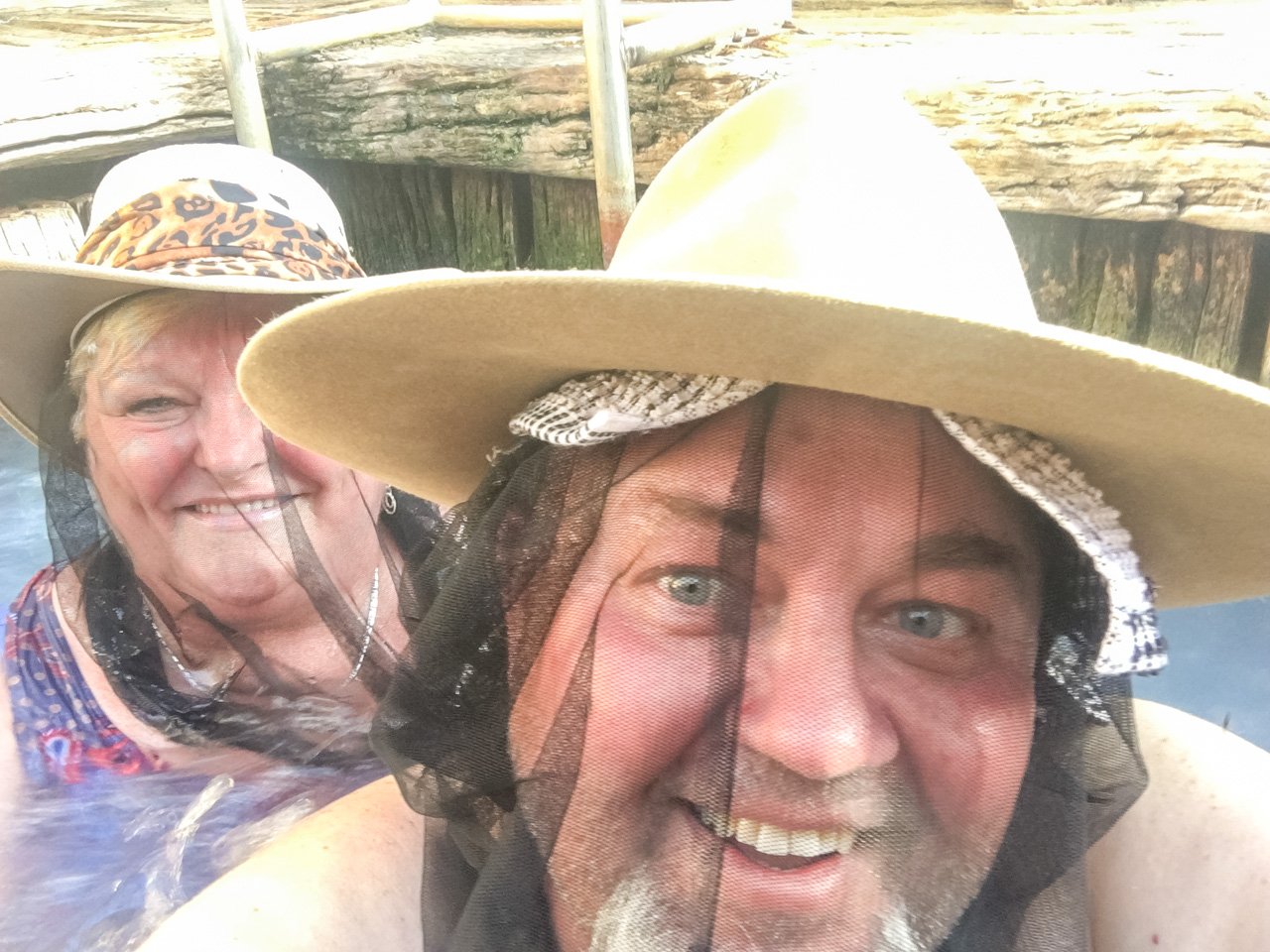
David & Amanda In The Spring At Coward Springs

David & Amanda In The Spring At Coward Springs

45. Dalhousie (Edith) Springs

The park is home to more than 120 mound springs, including the National Heritage-listed Dalhousie Springs, used by Aboriginal people for thousands of years as a source of food, shelter and medicine.

Address: Witjira National Park, Witjira, SA 5734
View On Map: Google Maps
GPS: -26.459734909978945, 135.52288703278163
Email: DEWDesertParks@sa.gov.au
Phone: 08 8648 5328
Website: https://southaustralia.com/products/flinders-ranges-and-outback/attraction/dalhousie-springs-witjira-national-park

46. Muloorina Hot Spring

Sit on the deck or relax in the hot tub overlooking Clayton Creek taking in the spectacular sunset.

Address: Un Named Rd, Muloorina, SA 5733
View On Map: Google Maps
GPS: -29.23859498974554, 137.90659355430938
Email: desertparks@sa.gov.au
Phone: 08 8648 5300
Website: https://www.parks.sa.gov.au/find-a-park/Browse_by_region/flinders-ranges-outback/kati-thanda-lake-eyre-national-park

TAS – Tasmanian Artesian Bore Baths and Mineral Springs

47. Hastings Caves & Thermal Springs

Thermal pool and barbeques. There is a fee for the swimming area which is set in a lush forest glade, picnic facilities and barbeques are available. Electric barbeques turn off 30 minutes prior to closing time. Portable cookers are not permitted.

Address: 754 Hastings Caves Rd, Hastings, TAS 7109
View On Map: Google Maps
GPS: -43.41294363694334, 146.87399192605815
Email: HastingsCaves@parks.tas.gov.au
Phone: 03 6298 3209
Website: https://parks.tas.gov.au/explore-our-parks/hastings-caves-state-reserve/hastings-caves-and-thermal-springs

48. Kimberley Warm Springs

Kimberley Warm Springs are a geothermal feature and semi-developed visitor site located in the town of Kimberley, North West Tasmania. The Springs are located within the Kimberley Warm Springs Reserve, which is managed by Parks and Wildlife Service Tasmania.

Address: Warm Springs Road, Kimberley, TAS 7304
View On Map: Google Maps
GPS: -41.39818941063854, 146.49284019713016

VIC – Victorian Artesian Bore Baths and Mineral Springs

49. Alba Thermal Springs And Spa

Enjoy the sense of relaxation and rejuvenation at Alba Thermal Springs & Spa, a wellness sanctuary on Victoria’s Mornington Peninsula. Immerse yourself in the healing powers of the hot springs, find peace in the gentle embrace of the rain pool, or nestle into the forest pools.

Address: 282 Browns Rd, Fingal, VIC 3939
View On Map: Google Maps
GPS: -38.39292547536062, 144.8446829816575
Phone: 03 5985 0900
Website: https://albathermalsprings.com.au/

50. Central Springs Mineral Reserve

Lake Daylesford is two minutes by car from the town centre. Around the lake is the peace mile walking track, the Boathouse Restaurant, a book store and the nearby Central Springs Reserve. The reserve is a grassy area alongside a creek, with three mineral water pumps.

Address: Leggett St, Daylesford, VIC 3460
View On Map: Google Maps
GPS: -37.35157049930289, 144.1372428816132
Website: https://www.hepburn.vic.gov.au/Places-activities/Venues/Lake-Daylesford-and-Central-Springs-Reserve

51. Deep Blue Hot Springs

The award-winning Deep Blue Hot Springs Warrnambool is the ultimate geothermal mineral bathing Sanctuary. Discover the myriad of open-air rock pools, sensory caves and cleansing waterfalls while soaking in the therapeutic waters, naturally rich in minerals and heat.

Address: Worm Bay Rd, Warrnambool, VIC 3280
View On Map: Google Maps
GPS: -38.39751112903683, 142.4737708969973
Email: reservations@thedeepblue.com.au
Phone: 03 5559 2000
Website: https://thedeepblue.com.au/hot-springs-sanctuary/

52. Glenlyon Mineral Springs

Alongside the Kangaroo Creek, Glenlyon Spring is easily accessed being on the outskirts of the township of Glenlyon. A popular picnic destination the area includes covered picnic shelters, free electric BBQ, toilets and parkland. Camping is permitted at the picturesque reserve which incorporates a cross-country course for horses, a cricket oval and small racetrack. The current Glenlyon mineral spring bore was drilled in 2006 and has a depth of 98m.

Address: Suttons Ln, Glenlyon, VIC 3461
View On Map: Google Maps
GPS: -37.29746353306806, 144.25430589695048
Website: https://www.mineralspringsvictoria.com.au/glenlyon-spring

53. Hard Hills Spring

Almost all of Australia’s mineral springs occur in Victoria and most are in the Central Highlands, concentrated mainly around Daylesford and Hepburn Springs.

Address: Fulcher St, Daylesford, VIC 3460
View On Map: Google Maps
GPS: -37.34828873480419, 144.13354615464527
Website: https://www.hepburn.vic.gov.au/Places-activities/Parks-and-recreation/Mineral-springs

54. Hepburn Bathhouse & Spa

Visit Hepburn Bathhouse & Spa. A peaceful place to relax that’s been around since 1895. For over 100 years people have visited to enjoy the natural, mineral rich water. You can soak in these waters and choose from different wellness packages to help you feel calm and refreshed. It’s a great way to enjoy the health benefits of mineral bathing in a historic setting

Address: Mineral Springs Reserve Rd, Hepburn Springs, VIC 3460
View On Map: Google Maps
GPS: -37.30985007101756, 144.13984341044628
Email: reservations@hepburnbathhouse.com
Phone: 03 8727 8901
Website: https://hepburnbathhouse.com/

55. Jubilee Lake

Walk the lake circuit and stop at the Jubilee Mineral Spring to try some of the area’s famous mineral water.

Address: Lane Rd, Daylesford, VIC 3460
View On Map: Google Maps
GPS: -37.365890006943914, 144.1494234273735
Email: info@jubileelake.com.au
Phone: 03 5348 2186
Website: https://www.visitmelbourne.com/regions/daylesford-and-the-macedon-ranges/see-and-do/nature-and-wildlife/lakes-and-waterways/jubilee-lake

56. Leitches Creek Mineral Springs

This small area has two mineral springs – one with a hand pump and another where water flows from a pipe in a concrete trench built in 1905. Mineral water still comes out of the pipe today. The Leitches Creek Pit is currently closed due to poor water quality. The Leitches Creek Pump remains open – always check conditions with Hepburn Shire Council before visiting.

Address: 194 Dairy Flat Rd, Musk, VIC 3461
View On Map: Google Maps
GPS: -37.35911757760153, 144.2062489392833
Website: https://www.mineralspringsvictoria.com.au/leitches-creek

57. Metung Hot Springs

Located on a natural hillside with views of the beautiful Gippsland Lakes, the award winning hot springs is now open and taking bookings.

Address: 73 Storth Ryes Ave, Metung, VIC 3904
View On Map: Google Maps
GPS: -37.882356112493646, 147.83398294114951
Email: info@metunghotsprings.com
Phone: 03 5141 2300
Website: https://www.metunghotsprings.com/

58. Peninsula Hot Springs

Peninsula Hot Springs is a natural mineral hot springs and day spa located less than 90 minutes from Melbourne. You can enjoy over 70 different bathing and wellness experiences set in nature, inspired by places around the world.

Address: 140 Springs Ln, Fingal, VIC 3939
View On Map: Google Maps
GPS: -38.40674191071168, 144.84267505282332
Email: info@peninsulahotsprings.com
Phone: 03 5950 8777
Website: https://www.peninsulahotsprings.com/

59. Sutton Spring Art & Spa Retreats

They offer 3 retreats each with a private outdoor jacuzzi, free unlimited Wi-Fi, unique artwork and a mix of interesting designs. Sutton Spring Art & Spa Retreats is the perfect place for a relaxing and romantic getaway.

Address: 10 Table Hill Rd, Daylesford, VIC 3460
View On Map: Google Maps
GPS: -37.342852179497676, 144.13011026996168
Phone: 0438 820 859
Website: http://www.suttonspringretreats.com/

60. Taradale Mineral Springs Reserve

The mineral spring in Taradale was first found during gold mining, when it started to flow into Back Creek near the Calder Highway. By 1928, a small area was set aside to protect it. The water gets fizzier the deeper you go. Taradale sits in a pretty valley with forests and farms around it and it’s known for the large Taradale Viaduct built in 1862. Once a busy gold rush town, Taradale is now a quiet and charming place with a mix of farmers, artists, business owners, commuters and retirees.

Address: Murchison St & Jackson St, Taradale, VIC 3447
View On Map: Google Maps
GPS: -37.1386057583605, 144.35007471228334
Email: info@mountalexander.vic.gov.au
Phone: 03 5471 1700
Website: https://www.mountalexander.vic.gov.au/Explore-the-shire/Parks-reserves-and-playgrounds/Taradale-Mineral-Springs-Reserve

61. Vaughan Mineral Spring

Vaughan Mineral Springs is in the southern part of Castlemaine Diggings Heritage Park. Walk along the Loddon River and see some local birds. Don’t forget to stop and try the mineral water while you’re there!

Address: Greville St, Daylesford, VIC 3460
View On Map: Google Maps
GPS: -37.158725963131694, 144.21559419694464
Website: https://www.parks.vic.gov.au/places-to-see/parks/castlemaine-diggings-national-heritage-park/attractions/vaughan-springs-and-southern-castlemaine-diggings

62. Wagga Spring

Wagga Spring is a quiet place for natural bathing, made easier to reach with added steps. You can easily see it while walking along the path.

Address: Dry Diggings Track, Daylesford, VIC 3460
View On Map: Google Maps
GPS: -37.347353042515294, 144.1324804779471
Website: https://tomelbourne.com.au/central-springs-mineral-reserve-and-mineral-springs-of-daylesford/wagga-springs/

63. Wombat Flat Mineral Spring

Wombat Flat Spring is on the edge of Lake Daylesford, just a short walk or drive from the town centre. It’s a great picnic spot with shady trees and grassy areas. There’s also a walking trail around the lake with nice views, places to sit and chances to see local wildlife.

Address: Bleakley St, Daylesford, VIC 3460
View On Map: Google Maps
GPS: -37.34979722410573, 144.13982412578744
Website: https://www.mineralspringsvictoria.com.au/wombat-flat

64. Woolnoughs Crossing Mineral Springs & Picnic Ground

Woolnough’s Crossing is a quiet picnic spot next to Kangaroo Creek near Glenlyon. The area’s mineral springs were first studied in 1893. The current spring was drilled in 2006 and goes 28 meters deep. It replaced an older one that mixed creek and spring water. Two more springs can be seen in the creek bed when water levels are low, especially in summer. These springs are small but flow strongly. There’s also a private spring nearby.

Address: 81 Woolnoughs Rd, Porcupine Ridge, VIC 3461
View On Map: Google Maps
GPS: -37.294043474181116, 144.20656245461998
Website: https://www.mineralspringsvictoria.com.au/woolnoughs-mineral-spring

WA – West Australian Artesian Bore Baths and Mineral Springs

65. Barrabup Pool

Saint John Brook Conservation Park is a beautiful spot with picnic and camping areas by the brook. At Barrabup Pool, you can walk out to enjoy the view or take photos. It’s a nice place for swimming and canoeing, with forest all around. Fishing and marroning are only allowed during certain seasons. If you’re having a fire, bring your own wood and use the fire rings during fire season. Also, bring your own drinking water.

Address: St John Brook Conservation Park, Barrabup, WA 6275
View On Map: Google Maps
GPS: -33.94418126354783, 115.6911001391443
Contact Form: https://exploreparks.dbca.wa.gov.au/contact/busselton-parks-and-wildlife-office
Phone: 08 9752 5555
Website: https://exploreparks.dbca.wa.gov.au/site/barrabup-pool

66. Bicton Pool (Melville Water Polo Club)

Geothermal Hydrotherapy Pool. Hydrotherapy pool is heated to 33.5 to 37.5 degrees C all year round.

Address: Bicton Baths Reserve 80 Blackwall Reach Parade, Bicton, WA 6157
View On Map: Google Maps
GPS: -32.02841556774145, 115.77701682557544
Email: office@melvillewaterpolo.com.au
View On Map: Google Maps
Website: https://melvillewaterpolo.com.au/bicton-pool/

67. Our Place at Nanga

Visit Nanga in the Shark Bay region, where you’ll find clean beaches, lots of unique sea life and interesting local history to explore.

Address: Lot 3 Nanga Rd, Nanga, WA 6537
View On Map: Google Maps
GPS: -26.25526927207811, 113.80743631187916
Email: hello@ourplaceatnanga.com
Phone: 08 9948 1136
Website: https://www.ourplaceatnanga.com/

68. Peron Heritage Precinct

Historic place with a small interpretive centre, walk trail and hot tub, where you can soak in the hot artesian waters on the former Peron Station.

Address: Peron Rd, Francois Peron Nat’l Park, WA 6537
View On Map: Google Maps
GPS: -25.838343290295292, 113.55634498303085
Contact Form: https://exploreparks.dbca.wa.gov.au/node/2385
Phone: 08 9948 2226
Website: http://exploreparks.dbca.wa.gov.au/site/peron-homestead-precinct

69. Wooramel Riverside Retreat

This one of a kind campground is set under big gum trees by the Wooramel River. You can relax in warm artesian baths from the Birdrong aquifer, watch birds and wildlife, enjoy your own campfire and see amazing stars at night. It’s a friendly, peaceful spot 120 km south of Carnarvon and just 2 km off the North West Coastal Highway on WA’s Coral Coast. Open from March 1 to December 1

Address: Wooramel Station North West Coastal Hwy, Carnarvon, WA 6701
View On Map: Google Maps
GPS: -25.7420949317137, 114.28314431186277
Email: info@wooramel.com.au
Phone: 0499 425 888
Website: https://www.wooramel.com.au/
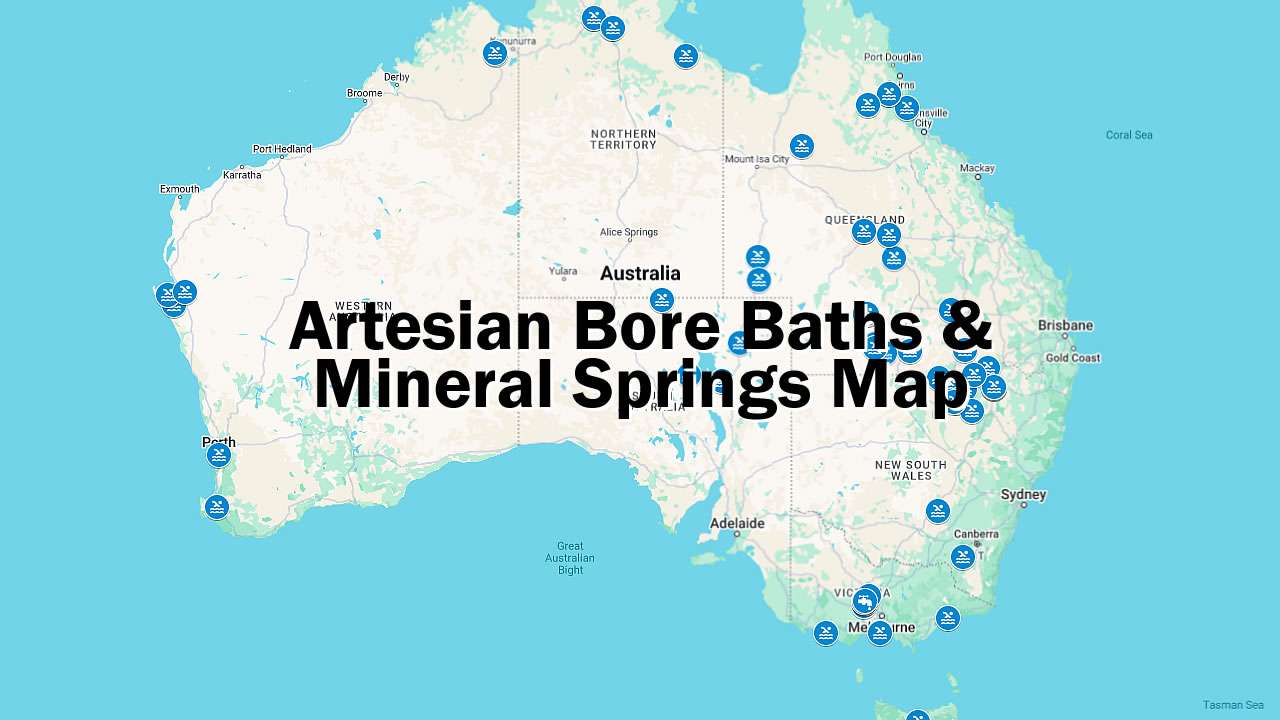
Artesian Bore Baths & Mineral Springs Map & Info

Artesian Bore Baths & Mineral Springs Map & Info

The Great Artesian Basin: Australia’s Underground Marvel

The Great Artesian Basin (GAB) stands as a geological wonder that serves as the source for Australia’s famed artesian waters. Covering an astounding 1.7 million square kilometres – roughly one-fifth of the Australian continent – it stretches beneath Queensland, New South Wales, South Australia and the Northern Territory[1][8][9]. This makes it the largest and deepest artesian basin in the world, containing an estimated 64,900 cubic kilometres of groundwater[1].

Artesian Baths Australia: A Natural Phenomenon

Artesian Baths Australia offer a unique experience made possible by the remarkable geology beneath our feet. The water in these baths emerges from deep underground, where it has been trapped in sandstone layers formed during the Triassic, Jurassic and early Cretaceous periods[1]. This ancient water finds its way to the surface either naturally through springs or through human-made bores, bringing with it warmth and minerals accumulated during its long journey through the earth’s crust.

The waters of the GAB maintain temperatures ranging from 30 to 100°C[1], with most bathing facilities featuring waters around 38-47°C[2][5][9]. This natural warmth is what makes Artesian Bore Baths so appealing, especially for travellers seeking relaxation under the vast Australian skies.

Health Benefits Of Artesian Waters

Therapeutic Properties Of Artesian Bore Baths

The health benefits of bathing in artesian waters have been celebrated for generations. While Indigenous peoples likely recognised these properties centuries ago, European settlers quickly discovered the therapeutic potential of these mineral-rich waters.

Modern visitors to Artesian Bore Baths report a range of benefits, with many describing how “worldly cares and pains seem to have dissolved away” after soaking in the warm, mineral-rich waters[2]. Additionally, the combination of heat and minerals creates an experience that’s both physically and mentally rejuvenating.

Wellness Benefits Of Artesian Baths Australia

Research suggests that the benefits of thermal mineral bathing extend beyond simple relaxation. The waters from the Great Artesian Basin are believed to help reduce arthritic symptoms, ease muscle tension, boost circulation, improve mental health and provide better sleep[6][7].

These benefits occur partly because the minerals in the water are absorbed through the skin, “helping to repair tissue damage and also help the body fight illness”[7]. For travellers on long journeys through the Australian outback, these therapeutic properties make artesian baths particularly valuable for recovery and rejuvenation.

Experiencing Australia’s Artesian Waters

Popular Regions For Artesian Baths Australia

While specific listings of artesian baths are beyond the scope of this article, understanding the regions where these facilities are concentrated can help travellers plan their journeys. Queensland hosts numerous artesian facilities, particularly in the state’s western regions. New South Wales also features several notable locations, including the famous Lightning Ridge area and the Pilliga region.

The Narrabri Shire in north-west New South Wales is home to seven distinctive hot artesian spa facilities, with the Pilliga Artesian Bore Baths being particularly well-known[5]. These facilities provide accessible ways for travellers to experience the unique properties of artesian waters.

Artesian Baths Lightning Ridge: A Unique Experience

Lightning Ridge in New South Wales offers a particularly intriguing artesian bathing experience. The region, famous for its black opals, also provides visitors with the opportunity to soak in mineral-rich artesian waters. These facilities represent just one highlight of this fascinating opal mining town.

The connection between opals and artesian waters in the region is more than coincidental. As mentioned in the research, groundwater has played a role in the formation of opals throughout the Great Artesian Basin[3]. “Silicate minerals dissolved within the groundwater, under the right conditions, precipitate opal into various sites within the weathered portion of the basin rocks”[3]. This creates another layer of interest for visitors exploring the region’s natural wonders.

Modern Facilities At Artesian Baths QLD

Queensland’s artesian facilities range from rustic rural experiences to more developed wellness destinations. The recently established Cunnamulla Hot Springs represents a more sophisticated approach, offering “a constellation of geothermal mineral pools, as well as a cold plunge pool, sauna and steam room” nestled beside the Warrego River[6].

Modern facilities often blend the natural benefits of artesian waters with additional amenities that enhance the experience. These may include complementary treatments like the “Body Clay Ritual” offered at Cunnamulla, where “cooling Australian clays are painted onto the skin before being washed away under a mineral shower”[6].

Practical Information For Visitors

Planning Your Visit To Artesian Baths Lightning Ridge

For travellers planning to include artesian baths in their journey, timing considerations can enhance the experience. Many visitors find that early morning or evening soaks offer the most rewarding experiences. Evening visits, in particular, allow bathers to enjoy “the incredible starry skies of the outback while immersed in natural hot springs”[6].

Different seasons also affect the bathing experience. During cooler months, the warm waters provide welcome relief from chilly outback nights, while in summer, early morning or evening soaks help avoid the midday heat while still enjoying the therapeutic benefits.

Accommodations Near Artesian Bore Baths

Many artesian bathing facilities offer on-site or nearby accommodation options catering specifically to caravan and camping enthusiasts. For example, the Pilliga Artesian Bore Baths features camping pads alongside “new toilet and BBQ facilities”[5], making it an ideal stop for self-contained travellers.

Other locations like the Artesian Spa Motel in Moree[4] combine accommodation with bathing facilities, providing convenient options for those seeking multi-day experiences. For caravan and camping enthusiasts, these locations offer the perfect combination of natural therapy and outback adventure.

Conservation And Sustainability

Preserving Artesian Baths Australia For Future Generations

The Great Artesian Basin represents one of Australia’s most precious natural resources and conservation efforts are essential to ensure its long-term sustainability. Early uncontrolled boring practices led to significant pressure declines across the basin, with many bores being allowed to flow freely without caps or controls.

Modern management approaches, coordinated by bodies like the Great Artesian Basin Coordinating Committee (GABCC)[1], focus on capping and controlling bores to minimise water waste. These conservation efforts help ensure that artesian waters remain available for both practical use and recreational enjoyment.

Responsible Tourism At Artesian Baths QLD

As visitors to these unique natural attractions, travellers have a responsibility to practice sustainable tourism. This includes respecting usage guidelines at public facilities, avoiding wasteful practices and understanding the environmental context of these precious water resources.

Many facilities now incorporate educational elements that help visitors appreciate the geological and historical significance of the Great Artesian Basin. This awareness contributes to a culture of conservation among the travelling community, ensuring these resources remain available for future generations.

Comparing Artesian Experiences

To help travellers understand the variety of artesian bathing experiences available, the table below compares several aspects of artesian facilities across different regions:

Aspect Traditional Bore Baths Modern Spa Facilities Natural Mound Springs
Water Temperature Typically 38-47°C Controlled, often with multiple temperature options Variable, generally 30-40°C
Facilities Basic, often open-air pools Comprehensive with additional amenities (saunas, cold plunge pools) Minimal or undeveloped
Accessibility Varies, many are remote Generally good, often near towns Often remote with limited access
Accommodation Often basic camping facilities Ranging from motels to luxury options Typically undeveloped
Historical Significance High, many date to early 20th century Variable, some built on historical sites Highest, used by Indigenous peoples for millennia
Water Properties Natural, unfiltered mineral content Sometimes filtered or supplemented Completely natural with unique local mineral profiles

This comparison highlights the diversity of experiences available to travellers seeking artesian waters. From rustic outback bores to developed wellness facilities, the Great Artesian Basin provides a spectrum of bathing opportunities across eastern Australia.

The Formation Of Artesian Baths Australia

The formation of the Great Artesian Basin began millions of years ago when continental erosion deposited sandstone layers that would eventually become water-bearing aquifers. These permeable layers were later covered by marine sedimentary rock, forming a confining layer that trapped water within the sandstone[1]. The eastern edge of the basin was uplifted during the formation of the Great Dividing Range, creating the conditions for water to enter the aquifer system and gradually flow westward and southward.

Today, recharge primarily occurs along the basin’s eastern edge in Queensland and New South Wales, with water slowly percolating through the sandstone at a rate of just one to five metres per year[1]. This extremely slow movement means that by the time the water emerges in springs or bores in the southern parts of the basin, it may be up to 2 million years old[1].

Indigenous Heritage And European Discovery

Aboriginal Connection To Artesian Waters

Long before European settlement, Aboriginal peoples recognised the value of natural springs fed by the Great Artesian Basin. The Kamilaroi people, in particular, used these springs as reliable water sources during times of drought[5][9]. These natural oases held significant cultural importance and provided sustenance in an otherwise harsh environment.

Indigenous knowledge of these water sources proved invaluable to early explorers and settlers, who might otherwise have struggled to find reliable water in the arid interior. Consequently, this traditional knowledge represents one of the many deep connections Aboriginal peoples maintain with the Australian landscape.

European Utilisation Of Artesian Bore Baths QLD

European settlers discovered the potential of accessing the Great Artesian Basin’s waters when the first successful bores were drilled near Bourke in 1878[5]. This breakthrough led to a proliferation of bores throughout the basin, particularly in Queensland where the artesian water proved transformative for pastoral activities.

The famous Moree Bore, completed in 1895, became one of the earliest recreational uses of artesian water[4]. Since then, people from around the world have visited to enjoy the healing properties of these natural hot mineral springs for over a century. In Queensland, the development of artesian bores was particularly significant, enabling settlement and agricultural development in regions that would otherwise have been too dry for sustained human activity.

The Science Of Artesian Waters

Understanding Artesian Bore Baths

Artesian Bore Baths function on a simple yet fascinating principle. In a true artesian system, water in the aquifer is under sufficient pressure to rise naturally to the surface when the confining layer is penetrated by a bore. This pressure results from the weight of water in higher parts of the aquifer, creating hydrostatic pressure throughout the system.

The water’s journey through various rock formations enriches it with minerals and maintains its heat. When a bore is drilled into the pressurised aquifer, water rises to the surface without pumping – a phenomenon that early settlers found almost miraculous in Australia’s dry interior.

Mineral Content Of Artesian Baths QLD

The therapeutic value of artesian waters comes largely from their mineral content. As water travels through the basin’s rock formations, it dissolves and carries minerals that give each bore its unique properties. These waters typically contain high levels of calcium, magnesium, potassium, sulphur and bicarbonate[7].

In Queensland, where many popular artesian facilities are located, the waters often have a slightly alkaline pH of around 8, as observed at locations like Corella Country Farm Stay[2]. Furthermore, this mineral composition contributes to both the distinctive feel of the water and its reputed health benefits.

Conclusion: The Timeless Appeal Of Artesian Waters

The Enduring Attraction Of Artesian Bore Baths

The appeal of Artesian Bore Baths transcends trends in tourism and wellness. For over a century, Australians and international visitors have sought out these unique waters for their warmth, mineral content and therapeutic properties. As one source notes, “People from all over the world have enjoyed the healing qualities of the natural hot mineral springs for over one hundred years”[4].

For caravan and camping enthusiasts, these facilities offer something beyond the typical travel experience – a chance to connect with one of Australia’s most remarkable natural resources while enjoying its benefits firsthand. The combination of geological wonder, historical significance and wellness benefits creates an experience that resonates on multiple levels.

Artesian Baths Lightning Ridge And Beyond: Australia’s Hidden Gems

Whether exploring the opal fields of Lightning Ridge, the outback expanses of Queensland, or the diverse landscapes of New South Wales, artesian bathing opportunities provide memorable highlights for any journey. Each location offers its own unique character, water properties and surrounding attractions.

As travellers seek more authentic and meaningful experiences, Artesian Bore Baths represent a perfect blend of natural wonder, cultural heritage and personal wellness. They remind us of the extraordinary resources that lie beneath Australia’s surface and the ingenuity that has made them accessible to generations of visitors.

The next time you’re planning a caravan or camping journey through Australia’s interior, consider including stops at these remarkable thermal waters. The experience of soaking in water that may have begun its journey millions of years ago offers a unique perspective on Australia’s ancient landscape – and provides a welcome respite for travel-weary bodies and minds.

Citations
[1] https://en.wikipedia.org/wiki/Great_Artesian_Basin
[2] https://corellacreek.com.au/great-artesian-basin/
[3] https://www.iah.org.au/wp-content/uploads/2015/04/1_Great-Artesian-Basin.pdf
[4] https://artesianspamotel.com.au/history-of-the-artesian-spa/
[5] https://wanderer.cmca.net.au/Article/Display/ba909ee8-00ec-4a5d-895b-6254a77b4b4a
[6] https://www.cunnamullahotsprings.com
[7] https://www.hotspringspoolandunits.com.au/artesian-water-health-benefits.html
[8] https://www.ga.gov.au/scientific-topics/water/groundwater/gab
[9] https://greatartesiandrive.com.au/about/
[10] https://www.moreeartesianaquaticcentre.com.au/artesian-bathing/artesian-wellness-bathing
[11] https://gisera.csiro.au/resources/frequently-asked-questions/the-great-artesian-basin-and-coal-seam-gas/
[12] https://www.waterdropfilter.com.au/blogs/home-and-wellness/what-is-artesian-water
[13] https://www.youtube.com/watch?v=c-y_qrzWEcg
[14] https://www.moreeartesianaquaticcentre.com.au/day-spa/balneotherapy
[15] https://waterpartnership.org.au/news-item/fact-finding-in-australias-great-artesian-basin/
[16] https://runawayjuno.com/runaway-tales/great-artesian-basin-reason-australia-exists/
[17] https://www.britannica.com/place/Great-Artesian-Basin
[18] https://www.explorelightningridge.com.au/Things-To-Do/Hot-Artesian-Bore-Baths/Burren-Junction-Artesian-Bore-Bath
[19] https://www.youtube.com/watch?v=wERpJ4pFAp4
[20] https://www.outbackqueensland.com.au/attractions/julia-creek-artesian-baths/
[21] https://www.canberratimes.com.au/story/8923438/discovering-the-great-artesian-basins-hidden-gems/
[22] https://www.outbackqueensland.com.au/experiences/wellness-way-hot-springs-trail/
[23] https://www.homewater.com/blog/lets-take-a-deep-dive-into-artesian-water
[24] https://pmc.ncbi.nlm.nih.gov/articles/PMC5318167/
[25] https://www.pentair.com/en-us/water-softening-filtration/education/what-is-artesian-water.html
[26] https://www.hotspringspoolandunits.com.au/blog/world-going-crazy-over-artesian-water
[27] https://haydenwater.com/faqs/
[28] https://hepburnbathhouse.com/about/the-mineral-waters


Disclaimer

  • The information in this blog post about artesian bore baths and mineral springs is provided as a general guide only.
  • Details such as opening hours, access, facilities, water temperature, and accommodation options can change without notice.
  • We strongly recommend contacting each location directly to confirm the latest information before planning your visit.
  • While we strive to keep our listings accurate and up to date, changes may occur that are beyond our control.
  • Always check local rules, regulations, and safety advice before using any bore bath or mineral spring.
  • Your experience may vary depending on seasonal conditions, maintenance, or other factors.
25 Campsites For Free Camping In Broken Hill

25 Campsites For Free Camping In Broken Hill

25 Campsites For Free Camping In Broken Hill

Explore Broken Hill on a budget with our free camping in Broken Hill camping guide. Learn where to stay, what to do and how to enjoy a safe stay. Broken Hill stands as an iconic outback destination that offers travellers a unique blend of mining heritage, artistic culture and breathtaking landscapes.

For caravan and camping enthusiasts seeking adventure without breaking the bank, free camping in Broken Hill provides an excellent opportunity to experience the raw beauty of Australia’s first heritage listed city. This guide explores everything you need to know about free camping in the region It has practical tips on nearby attractions making certain your outback journey is memorable for all the right reasons. With proper preparation and local knowledge, visitors can safely enjoy this historic mining town while taking advantage of the free camping opportunities in the surrounding area.

Stephens Creek Camping Area And Abandoned Quondong Hotel And Roadhouse Free Camping In Broken Hill

Stephens Creek Camping Area And Abandoned Quondong Hotel And Roadhouse Free Camping In Broken Hill

Free Camping In Broken Hill: 25 Great Campsites

If you’re planning a trip to Broken Hill and want to save on accommodation, free camping is a fantastic way to experience the outback without spending a cent. From quiet rest areas with basic facilities to peaceful bush spots surrounded by stunning landscapes, there are plenty of free camping sites around Broken Hill that suit caravans, camper trailers and tents alike. Whether you’re just passing through or staying a few days, these 25 free camping locations offer great options to rest, relax and soak up the unique Silver City vibe. Get ready to explore the best free camping spots Broken Hill has to offer!

Table Of Contents

1. Pine Creek

This is a free campground. It is dog friendly. It is accessible to RVs, camper trailers and caravans. A good solid overnight camp spot on the south side of the creek. There’s room to turn around and you could fit a couple of small to medium sized caravans. Fairly quiet, not a lot of road noise.

Type: Free Camping
Cost: Free
Location: Silvercity highway, New South Wales
GPS: -32.337660°, 141.456721° – Click To View
Pet Friendly: Yes
Distance To Broken Hill: 42km

2. Yancowinna Creek Gravel Pit

This is a free campground. It is dog friendly. It is accessible to motorbikes, RVs, camper trailers, caravans and big rigs. Camping in tents is allowed.

Type: Gravel Pit
Cost: Free
Location: Barrier Hwy, Broken Hill, New South Wales
GPS: -31.844723°, 141.948554° – Click To View
Pet Friendly: Yes
Toilets: No
Showers: No
Drinking Water: No
Distance To Broken Hill: 47km

3. Little Topar Roadhouse

Camping and 24 hour card only fuel available. This free campground offers toilets. It is dog friendly. It is accessible to RVs, caravans and big rigs. Has toilets but by all reports they aren’t overly clean.

Type: Roadhouse
Cost: Free
Location: Barrier Highway, Little Topar, New South Wales
GPS: -31.780313°, 142.227626° – Click To View
Pet Friendly: Yes
Toilets: Yes
Showers: No
Drinking Water: No
Phone: (08) 8091 9428
Fuel: Yes
Distance To Broken Hill: 75km

4. RTA Stockpile 64

This is a gravel pit suitable place for pulling a vehicle over to for the driver to rest where an overnight stay is permitted. It is dog friendly. It is accessible to RVs, camper trailers, caravans and big rigs. It has a good solid grvel surface.

Type: Gravel Pit
Cost: Free
Location: Silver City Hwy, Broken Hill, New South Wales
GPS: -32.449432°, 141.556669° – Click To View
Pet Friendly: Yes
Distance To Broken Hill: 56km

5. Broken Hill Cattle Yard At Menindee Turn Off

This is a free campground. It is dog friendly. It is accessible to RVs, camper trailers, caravans and big rigs. Turn off at the cattle yards before the dirt road it is on the right. A rock pyramid (cairn) marks the entry. No noise. A great overnight stop.

Type: Free Camping
Cost: Free
Location: Silver city highway, New South Wales
GPS: -32.623490°, 141.693503° – Click To View
Pet Friendly: Yes
Distance To Broken Hill: 72km

Broken Hill Cattle Yard At Menindee Turn Off

Broken Hill Cattle Yard At Menindee Turn Off

6. Tandou Rd Camp

This is a free campground. It is dog friendly. Nice and quiet. Great little site about 100m before the end of the bitumen road on the right hand side. Site is set back, grassy and level. Would be almost impossible to find in the dark. Room for maybe 3 or 4 small caravans or camper trailers. Too small for big caravans. No facilities. Perfectly suited for an overnight stay. Plenty of firewood. No good if wet.

Type: Free Camping
Cost: Free
Location: Tandou Rd, New South Wales
GPS: -32.623392°, 141.693671° – Click To View
Pet Friendly: Yes
Distance To Broken Hill: 72km

7. Stephens Creek

This is a free campground. It is dog friendly. It is accessible to motorbikes, RVs, camper trailers, caravans and big rigs. Camping in tents is allowed.

There used to be a roadhouse here – Quandong Roadhouse. It disappeared years ago. All that’s left of it is rubble & old tin. Great for overnight. If you follow the track on the right you can get further away from the road however there’s not much noise anyway. It’s an isolated camping area which is great if that’s your preference.

Type: Free Camping
Cost: Free
Location: Near The Abandoned Quondong Hotel Site Off Menindee Rd Stephens Creek, New South Wales
GPS: -32.155959°, 141.917910° – Click To View
Pet Friendly: Yes
Distance To Broken Hill: 48km

8. Mingary Creek Camp

This is a free campground. It is dog friendly. It is accessible to motorbikes, RVs, camper trailers, caravans and big rigs. Camping in tents is allowed.

It’s a nice camp spot tucked in off the road and across the railway tracks. Lots of trees around to give shade if required.Trucks and trains will travel past during the night. There’s a bit of firewood around.

Type: Free Camping
Cost: Free
Location: Mooleulooloo Road, Pastoral Unincorporated Area, South Australia
GPS: -32.127374°, 140.736240° – Click To View
Pet Friendly: Yes
Distance To Broken Hill: 160km

9. Marshalls Clearing

This is a free campground. It is dog friendly. It is accessible to motorbikes, RVs, camper trailers, caravans and big rigs. Camping in tents is allowed.

Type: Free Camping
Cost: Free
Location: Silver city highway, Quarry Nob, New South Wales
GPS: -31.504133°, 141.669828° – Click To View
Pet Friendly: Yes
Distance To Broken Hill: 54km

Marshalls Clearing

Marshalls Clearing

10. Open Area Near An Old Shearing Shed

This is a free campground. It is dog friendly. It is accessible to motorbikes, RVs, camper trailers, caravans and big rigs. Camping in tents is allowed.

A good stopover on the way to Tibooburra. It’s a lovely place to stay for a night or even a bit longer. The old shearing shed is majestic in it’s simplicity and looks to hold a lot of history. There is hardly any traffic on the road. The perfect outback campsite.

Type: Free Camping
Cost: Free
Location: Silver City Hwy, Fowlers Gap, New South Wales
GPS: -31.410895°, 141.629174° – Click To View
Pet Friendly: Yes
Distance To Broken Hill: 63km

Old Shearing Shed Free Camping In Broken Hill

Old Shearing Shed Free Camping In Broken Hill

11. Matilda Wallace Rest Area

It’s a bitumen roadside rest area with a couple of rubbish bins. Nice views. It’s a wide area safely back off the highway. It’s a remote area.

Type: Rest Area
Cost: Free
Location: Silver City Highway, Eurowie, New South Wales
GPS: -31.387731°, 141.611964° – Click To View
Pet Friendly: Yes
Distance To Broken Hill: 65km

12. Euriowie Creek

This is a free campground. It is dog friendly. It is accessible to motorbikes, RVs, camper trailers and caravans. Camping in tents is allowed.

This is a remote campground in a large open unshaded area. It has awesome views of the Barrier Ranges. There’s little traffic noise so it’s a great stopover between here and there.

Type: Free Camping
Cost: Free
Location: Silver City Highway, Unincorporated Area, New South Wales
GPS: -31.357545°, 141.617855° – Click To View
Pet Friendly: Yes
Distance To Broken Hill: 68km

13. Round Hill Rest Area West Bound

This is a Free roadside rest area. Pets are allowed. It is accessible to motorbikes, RV’s, caravans and big rigs. Camping in tents is not allowed. Not the greatest of camping spots but it’s free and if you are in need it’ll work.

Type: Rest Area
Cost: Free
Location: Round Hill Rest Area Barrier Highway, Broken Hill
GPS: -31.940049°, 141.514252° – Click To View
Pet Friendly: Yes
Distance To Broken Hill:

14. 8 Mile Creek Gravel Pit

This is an unofficial camping area. Usual rules apply, take out what you take in and leave no trace. It’s an old gravel pit with a nice flat surface. Ok for an overnight stay. Not much firewood about. No facilities. Enough space for a few vans. Little traffic noise.

Type: Gravel Pit
Cost: Free
Location: Silver City Hwy, Unincorporated Area, New South Wales
GPS: -31.269553°, 141.611742° – Click To View
Pet Friendly: Yes
Distance To Broken Hill: 78km

15. Fowlers Gap Gravel Pit

This is a suitable place for pulling a vehicle over for the driver to rest where an overnight stay is permitted. It’s not official campground. It is dog friendly. It is accessible to RVs, caravans and big rigs.

Type: Gravel Pit
Cost: Free
Location: Silver City Highway, Unincorporated Area, New South Wales
GPS: -31.246728°, 141.622863° – Click To View
Pet Friendly: Yes
Distance To Broken Hill: 80km

Fowlers Gap Rest Area

Fowlers Gap Rest Area

16. Fowlers Gap Rest Area

This is a suitable place for pulling a vehicle over for the driver to rest where an overnight stay is permitted. It’s not official campground. It is dog friendly. It is accessible to RVs, caravans and big rigs.

Type: Free Camping
Cost: Free
Location: Silver City Hwy, Fowlers Gap, New South Wales
GPS: -31.102183°, 141.701897° – Click To View
Pet Friendly: Yes
Distance To Broken Hill: 98km

17. Fowlers Gap North

This is a small unofficial site between a river bed and a man made waterway. Entry is on the east side of Silver City Highway. It’s a very rocky track in but passable in two wheel drive vehicles with care. There are no facilities at this site. Take all rubbish with you and leave no trace.

Type: Free Camping
Cost: Free
Location: Silver City Hwy, Fowlers Gap, New South Wales
GPS: -31.085282°, 141.713805° – Click To View
Pet Friendly: Yes
Distance To Broken Hill: 100km

18. Spring Hills Rest Area

This is a free campground. It is dog friendly. It is accessible to motorbikes, RVs, camper trailers, caravans and big rigs. Camping in tents is allowed.

Type: Rest Area
Cost: Free
Location: Barrier Hwy, Spring Hills, New South Wales
GPS: -31.723274°, 142.685349° – Click To View
Pet Friendly: Yes
Toilets: Yes
Distance To Broken Hill: 118km

19. The Valley

This isn’t free but it is cheap and great value. Beautiful farm stay at this paid campground. It has toilets, showers, rubbish bins and a dump point. It is accessible to motorbikes, RVs and camper vans.

Type: Farm Stay
Cost: $20 per night
Location: 770 Silver City Highway, New South Wales / ACT
GPS: -31.903180°, 141.516811° – Click To View
Pet Friendly: Yes
Toilets: Yes
Showers: Yes
Dump Point: Yes
Distance To Broken Hill: 8km

20. Broken Hill Regional Event Centre & Racecourse

This isn’t free but it is cheap and great value. Situated just on the outskirts of Broken Hill town centre, the Broken Hill Regional Events Center is the perfect camping location for tents, camper vans, caravans and larger recreational vehicles. Dump point and drinking water on site.

Offering a number of large grassed areas adjacent to the racetrack. The primitive facilities also include basic showering and toilet facilities (as new and fabulous showers) and a dump point at very affordable prices. Powered and unpowered sites are available. (Please note that powered sites have risen $5 due to escalating electricity costs, now more than $100,000 per year)

The overnight stabling of horses travelling through the city is also available for an additional small fee. This facility is on Crown Land and is a NFP site, run largely by a Trust and voluntary
labour.

Please contact the caretaker to book a site (this is particularly important during busy periods or if you plan to arrive after hours).

  • OFFICE HOURS: 9.00am-11.30, 12.00-5.30
  • CHECK IN: From 12 midday.
  • CHECK OUT: 10.00am
  • Please note Broken Hill is on Adelaide time.

Type: Showground Camping
Cost: Powered $40, Unpowered $25, CMCA members $15 for unpowered sites
Location: Racecourse Road, Broken Hill, New South Wales
GPS: -31.917935°, 141.480024° – Click To View
Booking Required: Yes
Pet Friendly: Yes
Toilets: Yes
Showers: Yes
Drinking Water: Yes
Dump Point: Yes
Phone: 0437 250 286
Email: camping@brokenhilleventscentre.org.au
Website URL: https://www.brokenhilleventscentre.org.au
Distance To Broken Hill: 4km

Free Camping In Broken Hill Broken Hill Regional Event Centre & Racecourse

Free Camping In Broken Hill Broken Hill Regional Event Centre & Racecourse

21. Starview Primitive Campsite

This isn’t free but it is cheap and great value. This paid campground offers toilets, showers and drinking water. Dogs are not permitted. Maximum 5 night stay. It is accessible to RVs, camper trailers, caravans and big rigs. Camping in tents is allowed.

You must book in advance
Book at the Info Centre in town or online at https://www.brokenhill.nsw.gov.au/Facilities/Living-Desert-State-Park/Starview-Campsite

Type: Paid Campground
Cost: $25 per night plus one off $7 camp fee
Location: Living Desert State Park, Broken Hill, New South Wales
GPS: -31.907072°, 141.443280° – Click To View
Booking Required: Yes
Pet Friendly: No
Toilets: Yes
Showers: Yes
Drinking Water: Yes
Phone: (08) 8080 3560
Email: https://www.brokenhill.nsw.gov.au/Facilities/Living-Desert-State-Park/Starview-Campsite
Website URL: https://www.brokenhill.nsw.gov.au/Facilities/Living-Desert-State-Park/Starview-Campsite
Distance To Broken Hill: 6km

22. Stirlingvale

This isn’t free but it is cheap and great value. 7km from broken hill outback camp site. Unpowered sites in bushland. $25 per vehicle per night via honesty box. EFT or cash.

  • Dogs at own risk due to active farm
  • Toilets on site – bring your own toilet paper
  • RV dump point
  • Non potable water
  • Fires allowed depending on fire season

Type: Station Stay
Cost: $25 per night
Location: Barrier Highway, Broken Hill, New South Wales
GPS: -31.986284°, 141.366655° – Click To View
Pet Friendly: Yes At Own Risk
Toilets: Yes
Dump Point: Yes
Phone: 0484 376 797
Email: Stirlingvalestation@gmail.com
Website URL: https://WWW.Stirlingvale.com.au
Distance To Broken Hill: 10km

23. Nine Mile Station

This isn’t free but it is cheap and great value. Nine Mile Station is a working sheep station close to town.

This paid camp ground offers powered sites and several non-powered sites. Powered sites are near the homestead and woolshed $30 (limited). There is a toilet/ shower block available for all campers. Non powered sites ($20) are approx 1km from the homestead. Campers can also use shower/toilet/laundry block if they would like to use these facilities. Some clearance is required for powered sites near the homestead due to levy bank.

Please note google maps is not accurate – please travel 11.5km on the Silver City Highway towards Tibooburra.Turn left onto the Nine Mile Road (a good dirt road). The homestead is 1km along on the left. Please wait on this road near homestead for Greg. Note: Nine Mile road and campsites may be inaccessible when wet.

If you are a local or a group and would like a more isolated campsite, please let Greg know. Please call Greg to book 0427671012. We are a working station and sometimes busy with stock work or out of range. If Greg does not answer straight away – please text and he will get back to you asap. Bookings Essential.

Type: Station Stay
Cost: Unpowered $20, Powered $30
Location: 1421 Silver City Hwy, Broken Hill, New South Wales
GPS: -31.837304°, 141.502423° – Click To View
Booking Required: Yes
Pet Friendly: Yes
Toilets: Yes
Showers: Yes
Water (Non Drinking): Yes
Phone: 0427 671 012
Email: ninemilestation@bigpond.com
Website URL: https://facebook.com/Nine Mile Station Stay
Distance To Broken Hill: 14km

24. Eckerboon Camping Area

This isn’t free but it is cheap and great value. New camping area in NSW State Parks Conservation area. Great camp site for an overnight camp or a bit longer. Toilets and BBQs fairly new and clean. Table and chairs with a sensor light under shelter. Very quiet being away from the road. Ranger comes around to collect fees.

Type: NSW State Conservation Area
Cost: $19.5 for 2 people per night
Location: Langidoon Metford, New South Wales
GPS: -31.673531°, 142.062727° – Click To View
Pet Friendly: No
Toilets: Yes
Distance To Broken Hill: 65km

25. Thackaringa Rest Area

Rest area south of the Barrier Rest Area. Picnic table, non potable water tank, bush library exchange in the pink fridge. As an added bonus we found a geocache here!

Type: Rest Area
Cost: Free
Location: Barrier Highway, Broken Hill, New South Wales
GPS: -32.045098°, 141.128301° – Click To View
Pet Friendly: Yes
Toilets: Yes
Distance To Broken Hill: 33km

Thackaringa Rest Area

Thackaringa Rest Area

Broken Hill – A Rich History

Nestled in the far west of New South Wales, Broken Hill earned its nickname “The Silver City” through its remarkable mining heritage. The city’s story began in 1883 when boundary rider Charles Rasp discovered what he initially thought was tin but turned out to be the world’s largest silver – lead – zinc mineral deposit. This momentous discovery transformed a small settlement into a booming mining town. Consequently, the Broken Hill Proprietary Company (BHP) was established in 1885, laying the foundation for what would become one of Australia’s largest corporations.

Broken Hill’s landscape is defined by the Line of Lode, a massive ore body that rises prominently through the centre of town. The city flourished during the late 19th and early 20th centuries as mining operations expanded. The town developed a strong sense of community and worker solidarity, becoming a significant site for the development of Australia’s trade union movement. The Miners Memorial, standing atop the Line of Lode, commemorates the more than 800 miners who lost their lives working in the mines since operations began.

Free Camping In Broken Hill: Historical Context

The tradition of camping around Broken Hill dates back to the early prospectors and miners who would set up temporary accommodations while searching for minerals. Today, free camping in Broken Hill continues this outback tradition. The surrounding landscape offers campers the chance to experience the same rugged terrain that challenged those early settlers. Additionally, many free camping spots provide views of historical mining infrastructure that dots the landscape, connecting modern travellers to the region’s rich past.

Broken Hill has evolved beyond its mining origins to become a thriving cultural centre. The city is home to numerous galleries and museums that preserve its history while showcasing contemporary Australian art. Moreover, the town’s isolation has fostered a resilient and creative community spirit that visitors can experience firsthand when free camping in Broken Hill and engaging with locals at various events and venues throughout the year.

Is Free Camping In Broken Hill Dangerous? Historical Perspectives

The question “is Broken Hill dangerous” takes on different meanings when viewed through a historical lens. During the early mining days, Broken Hill was indeed hazardous, with mining accidents, harsh working conditions and limited healthcare access creating a challenging environment. However, these historical dangers have transformed over time. The modern city has addressed many of these historical risks through improved safety standards, better infrastructure and comprehensive emergency services.

The mining industry itself has undergone significant changes, with workplace safety becoming a priority. Therefore, while acknowledging the dangerous conditions that were once part of Broken Hill’s identity, visitors today can appreciate how the community has evolved while preserving its historical character. This evolution makes free camping in Broken Hill an opportunity to connect with Australia’s mining heritage in a safe and educational environment.

Reaching The Silver City

How To Get To Broken Hill From Sydney

The journey from Sydney to Broken Hill spans approximately 1,150 kilometres, offering travellers multiple route options. The most direct path takes you through Dubbo and Cobar, following the Mitchell Highway and Barrier Highway. This route typically requires about 13 hours of driving time, making it ideal to break up into a two day journey for those interested in free camping in Broken Hill. Moreover, several interesting towns along the way provide perfect stopping points to stretch your legs and experience rural New South Wales.

For those preferring not to drive, Regional Express (REX) operates daily flights between Sydney and Broken Hill, with a flight time of approximately 2.5 hours. Additionally, NSW TrainLink runs a weekly train service called the Outback Explorer, departing from Sydney Central Station on Mondays and returning from Broken Hill on Tuesdays. The train journey takes about 13 hours but offers spectacular scenery of the changing landscape as you head west.

Coach services also connect Broken Hill to major centres, providing another alternative for travellers. However, having your own vehicle once you arrive gives you the freedom to explore the region and access free camping in Broken Hill and the surrounding areas more easily. Furthermore, a 4WD vehicle is recommended for accessing some of the more remote camping spots around the region.

Travel Times To Broken Hill

Understanding the distances involved when planning your free camping in Broken Hill adventure is essential for adequate preparation. The following table outlines approximate travel times and distances to Broken Hill from major Australian cities and nearby rural centres:

Departure City/Town Distance (km) Driving Time Transport Options
Sydney 1,150 13 hours Car, train, flight, coach
Melbourne 840 9 hours Car, coach, flight via Adelaide
Adelaide 510 5.5 hours Car, coach, flight
Brisbane 1,570 17 hours Car, flight via Sydney
Dubbo 750 8 hours Car, coach
Mildura 300 3.5 hours Car, coach
Port Augusta 390 4 hours Car, coach
Wilcannia 200 2 hours Car
Cobar 450 4.5 hours Car, coach
Wagga Wagga 845 9 hours Car, coach

When planning your journey for free camping in Broken Hill, remember that outback driving requires extra precautions. Firstly, always carry plenty of water and supplies. Secondly, inform someone of your travel plans. And most importantly ensure your vehicle is in good condition before setting off.

Free Camping In Broken Hill: Essential Information

What Constitutes Free Camping In Broken Hill

Free camping in Broken Hill refers to areas where travellers can stay overnight without payment. These designated spots typically offer minimal facilities but provide authentic outback experiences. The local council maintains several free camping areas around the region, usually allowing stays between 24/72 hours depending on the location. These sites operate on a first come, first served basis and typically do not require bookings.

While these areas are free, campers should understand and respect certain guidelines. Most importantly, practising “Leave No Trace” principles is essential when free camping in Broken Hill. This means taking all rubbish with you, avoiding damage to vegetation and respecting wildlife. Additionally, many free camping spots have specific rules regarding campfires, particularly during fire ban seasons, which visitors must strictly observe.

The appeal of free camping in Broken Hill lies in the opportunity to connect with the authentic outback environment. Furthermore, these sites often provide spectacular sunset and sunrise views, outstanding stargazing opportunities due to minimal light pollution and chances to spot native wildlife in their natural habitat. This combination of natural beauty and cost effectiveness makes free camping in Broken Hill particularly attractive to budget conscious travellers seeking genuine Australian experiences.

Is Broken Hill Safe At Night For Campers?

A common concern for those considering free camping in Broken Hill is safety, particularly at night. The question “is Broken Hill safe at night” is frequently asked by potential visitors. Generally speaking, Broken Hill is considered a safe destination for travellers and campers. Broken Hill has a strong community spirit and locals are typically friendly and helpful to visitors. However, as with any location, taking standard safety precautions remains advisable.

When free camping in Broken Hill, particularly in more remote areas, it’s important to be self sufficient and prepared. This means carrying adequate water, food supplies, first-aid equipment and communication devices. Moreover, letting someone know your camping location and expected return date is always a good practice when venturing into more isolated areas.

The primary safety considerations when free camping in Broken Hill relate more to environmental factors than personal security. The outback can experience extreme temperature variations, with very hot days and surprisingly cold nights. Additionally, wildlife encounters are possible, though most native animals pose little threat if respected and not approached. Therefore, while asking “is Broken Hill safe at night” is reasonable, with appropriate preparation and common sense, campers can enjoy a secure and comfortable experience under the spectacular outback sky.

Is Broken Hill Safe: A Crime Perspective

When evaluating “is Broken Hill safe” through a crime statistics lens, the data reveals nuanced realities. According to 2021 crime reports, Broken Hill’s crime rate sits significantly higher than the New South Wales average, with 3,052 criminal incidents recorded annually. Crimes against persons occur at a rate of 4,678 per 100,000 residents – triple the NSW average of 1,500. Domestic violence related offences particularly stand out, with Broken Hill ranking 4th among NSW local government areas for reported incidents. Malicious property damage remains persistently high, with 300 cases recorded in 2021 alone.

Theft and burglary rates show some improvement, decreasing 16% and 15% respectively between 2017-2021. However, intimidation and harassment cases surged 22.6% during the same period. Drug offences remain stable, predominantly involving cannabis and methamphetamine possession. While violent crime represents 27% of total offences, most incidents occur between known parties rather than random attacks. Visitors should note that 91% of NSW suburbs are statistically safer than Broken Hill, with residents having a 1 in 9 chance of experiencing crime compared to the state average of 1 in 20.

Is Broken Hill Safe At Night: Personal Safety Considerations

Addressing “is Broken Hill safe at night” requires understanding both crime patterns and environmental factors. While 44% of assaults occur between 6 PM-6 AM, these predominantly involve alcohol related disputes in licensed venues. The city centre maintains regular police patrols, with Barrier Police District responding to 828 crimes against persons annually. Recent incidents like the April 2025 Crystal Street police pursuit demonstrate active law enforcement response to nighttime offences.

Solo travelers report feeling generally secure after dark, particularly in well lit commercial areas around Argent Street. However, locals advise avoiding isolated spots like the Line of Lode lookout at night due to limited visibility and emergency access. The NSW Police recommend standard urban precautions: securing vehicles, avoiding walking alone in unpopulated areas and refraining from confronting intoxicated individuals.

Nighttime safety improvements include increased CCTV coverage in the CBD and community initiatives like the Night Safe Space program operating weekends until 2 AM. While Broken Hill’s crime rate exceeds state averages, strategic precautions – staying in populated areas, securing valuables and using licensed taxis after dark – significantly reduce personal safety risks for visitors.

Is Broken Hill Dangerous For Visitors?

Addressing the question “is Broken Hill dangerous” requires considering multiple perspectives. For visitors accustomed to urban environments, the outback presents unique challenges that might initially appear dangerous. However, with proper preparation and awareness, these challenges are easily managed. The remoteness of free camping in Broken Hill means services are limited, but this isolation is part of the authentic outback experience that attracts many visitors.

The main concerns when considering “is Broken Hill dangerous” relate to environmental factors. Firstly, the region can experience extreme heat, particularly during summer months, making dehydration a risk. Secondly, storms and changing weather conditions can develop quickly. Thirdly, some tracks and roads may become impassable after rain. Nevertheless, staying informed about weather forecasts, carrying adequate supplies and having a reliable vehicle minimizes these risks significantly.

From a personal safety perspective, Broken Hill has a lower crime rate than many larger Australian cities. The close knit community and relatively small population contribute to a generally safe environment for visitors. However, as with any destination, basic precautions like securing valuables and being aware of your surroundings remain advisable. Ultimately, when asking “is Broken Hill dangerous,” most experienced travellers would agree that the benefits of experiencing this unique outback city far outweigh any perceived risks.

Free Camping In Broken Hill: Practical Advice

Essential Preparations

Proper preparation is crucial for a successful free camping in Broken Hill experience. The remote nature of the region requires self sufficiency and forward planning. Start by ensuring your vehicle is in excellent condition. Consider getting a professional service before departure if embarking on a long journey. Additionally, carrying basic spare parts and knowing how to perform simple repairs can prevent minor issues from becoming major problems.

Water is absolutely essential when free camping in Broken Hill. Experts recommend carrying at least 5-10 litres per person per day, plus extra for emergencies. Food supplies should include non-perishable items that can last the duration of your trip, plus additional supplies for unexpected delays. Furthermore, a comprehensive first-aid kit tailored for outback conditions is non negotiable for responsible campers.

Communication can be challenging in remote areas around Broken Hill. Therefore, consider hiring or purchasing a satellite phone or personal locator beacon for emergencies if venturing far from town. Mobile phone coverage is generally good within Broken Hill itself but becomes patchy or non-existent in more remote camping locations. Moreover, downloading offline maps before your journey ensures you can navigate even without internet connectivity, an important consideration when planning free camping in Broken Hill adventures.

How To Get To Broken Hill From Sydney: The Ultimate Road Trip

Transforming the journey from Sydney to Broken Hill into a memorable road trip enhances the entire free camping experience. The drive presents numerous opportunities to discover regional New South Wales and experience the gradual transition from coastal landscapes to outback terrain. Starting from Sydney, heading west through the Blue Mountains offers spectacular scenery and the first taste of elevation changes. The mountains provide several lookout points and walking trails worth exploring before continuing your journey.

Bathurst makes an excellent first major stop, offering historical significance as Australia’s oldest inland settlement. Continuing west, Dubbo provides another logical breaking point, with the renowned Western Plains Zoo offering a wildlife experience before entering more arid regions. As you progress further along the Mitchell Highway through Nyngan and Cobar, the landscape noticeably changes, becoming more characteristically outback with red soil and sparse vegetation.

Several free camping spots along this route allow you to break up the journey comfortably. The town of Wilcannia, about two hours east of Broken Hill, marks the final stretch of the journey. This historic port once served as a major paddlesteamer hub on the Darling River. Finally, as you approach Broken Hill, the distinctive mining landscapes and unique light that has attracted artists for generations signals your arrival at your free camping in Broken Hill destination. The entire journey offers a gradual immersion into outback Australia that forms an integral part of the overall experience.

Bush Library At Rest Area Between Broken Hill And Cockburn

Bush Library At Rest Area Between Broken Hill And Cockburn

10 Must Do Activities Near Broken Hill

Free Camping In Broken Hill: Nearby Attractions

While free camping in Broken Hill provides an excellent base, exploring the region’s attractions enhances the overall experience. Here are ten must do activities within easy reach of Broken Hill:

  1. The Living Desert Sculptures
    Located just 9km north of Broken Hill, this outdoor art installation features 12 sandstone sculptures created by international artists in 1993. Set against the backdrop of the vast outback landscape, these impressive works are particularly stunning at sunrise or sunset when the changing light brings them to life. The site offers a 2.8km cultural trail where visitors can learn about Aboriginal heritage and native plants.
  2. Silverton Ghost Town
    Once a booming mining town, Silverton now stands as a captivating relic of the past just 25km from Broken Hill. Home to fewer than 50 residents today, this iconic location has featured in numerous films including Mad Max 2. The famous Silverton Hotel, Mundi Mundi Plains lookout and several art galleries make this quirky town worth exploring while free camping in Broken Hill.
  3. Pro Hart Gallery
    Immerse yourself in the colourful works of one of Australia’s most renowned artists, Kevin “Pro” Hart. This gallery houses an impressive collection of the late artist’s paintings that capture the essence of outback life. Located in Broken Hill itself, the gallery also includes Hart’s studio preserved exactly as he left it, providing insight into his creative process.
  4. Royal Flying Doctor Service Visitor Centre
    Learn about this essential service that provides emergency and primary healthcare across remote Australia. The interactive displays and original equipment showcase the challenges of delivering medical services in the outback. The visitor centre offers guided tours and a chance to step inside an actual RFDS aircraft used for medical evacuations.
  5. Menindee Lakes
    Approximately 110km southeast of Broken Hill, this system of lakes formed by the Darling River creates an unexpected oasis in the desert. When filled, these lakes attract abundant birdlife and offer excellent fishing opportunities. The historic Menindee township is also worth exploring, with connections to the ill-fated Burke and Wills expedition making it historically significant.
  6. Broken Hill Regional Art Gallery
    Australia’s oldest regional gallery houses an impressive collection of colonial, modern and contemporary Australian art, including significant Indigenous works. Housed in the restored Sully’s Emporium building, the gallery provides cultural enrichment for those enjoying free camping in Broken Hill and seeking artistic experiences.
  7. Mutawintji National Park
    Located about 130km northeast of Broken Hill, this significant Aboriginal site features ancient rock engravings and hand stencils. The dramatic gorges, rock pools and desert landscapes offer excellent bushwalking opportunities. Guided tours with Aboriginal rangers provide cultural insights that deepen appreciation of this special place.
  8. Line of Lode Miners Memorial
    This striking structure sits atop the massive ore body that gave birth to Broken Hill. The memorial honours more than 800 miners who lost their lives working the mines since 1883. The site also offers panoramic views of Broken Hill and houses a restaurant with spectacular vistas – a must visit while free camping in Broken Hill.
  9. Day Dream Mine
    Experience Broken Hill’s mining heritage firsthand with an underground tour of this historic mine. Knowledgeable guides explain mining techniques and working conditions from the 1880s, providing insight into the industry that built Broken Hill. Located about 20km north of Broken Hill, tours involve walking and climbing through underground tunnels.
  10. Sturt National Park
    For those willing to venture further (about 330km northwest of Broken Hill), this vast park showcases classic outback landscapes including the famous red sand dunes, gibber plains and flat topped mesas. The park protects significant flora and fauna and offers camping facilities for those extending their free camping in Broken Hill adventure northward.

Seasonal Considerations For Free Camping In Broken Hill

Free Camping In Broken Hill: Best Times To Visit

The extreme climate of the outback significantly impacts the free camping in Broken Hill experience throughout the year. Summer (December to February) brings intense heat, with temperatures regularly exceeding 40°C. These conditions can make camping challenging without proper equipment and preparation. Conversely, winter (June to August) delivers mild, sunny days around 16-20°C but cold nights that can drop below freezing, requiring good quality sleeping bags and warm clothing.

Most experienced outback travellers consider spring (September to November) and autumn (March to May) the ideal seasons for free camping in Broken Hill. During these periods, daytime temperatures typically range from comfortable mid 20s to low 30s, while nights remain mild. Additionally, spring often brings wildflowers that temporarily transform the arid landscape with bursts of colour, creating spectacular photographic opportunities.

Another consideration for timing your visit is Broken Hill’s event calendar. The city hosts several significant events throughout the year that attract visitors from across Australia. The Broken Heel Festival in September celebrates the legacy of Priscilla Queen of the Desert with three days of drag performances and festivities. Additionally, the Broken Hill Agfair in May showcases rural industries with exhibitions and entertainment. Planning your free camping in Broken Hill trip around these events adds another dimension to your outback experience.

Camping In Broken Hill Penrose Park Silverton

Camping In Broken Hill Penrose Park Silverton

Is Broken Hill Dangerous: Weather Considerations

When addressing “is Broken Hill dangerous,” weather extremes represent the most significant natural hazard for campers. Summer heatwaves pose serious risks including dehydration, heat exhaustion and heatstroke. Visitors from cooler regions may underestimate how quickly these conditions can develop. Therefore, summer free camping in Broken Hill requires abundant water supplies, shade structures and limiting physical activity during peak heat hours.

Dust storms occasionally sweep through the region, particularly during drier periods. These can reduce visibility dramatically and affect respiratory conditions. Having a weather radio or app with alerts enabled provides warning of approaching storms. Additionally, securing camping equipment properly prevents damage from sudden wind gusts that often precede these dramatic weather events.

Flash flooding, though rare, can occur after heavy rainfall, transforming dry creek beds into powerful waterways within minutes. This presents particular dangers when free camping in Broken Hill’s outlying areas. Always avoid camping in dry creek beds or low lying areas, regardless of how unlikely rain might seem. By respecting these environmental hazards and preparing accordingly, the question “is Broken Hill dangerous” becomes less about genuine risk and more about appropriate preparation and respect for outback conditions.

Conclusion: Free Camping In Broken Hill

Free camping in Broken Hill offers adventurous travellers a genuine outback experience enriched by fascinating history, stunning landscapes and unique attractions. The combination of heritage significance and natural beauty makes this region particularly special among Australian destinations. By understanding the practical considerations, respecting the environment and preparing appropriately, visitors can safely enjoy all that the Silver City and its surroundings have to offer.

When addressing concerns like “is Broken Hill safe at night” or “is Broken Hill dangerous,” knowledge and preparation remain key. The outback presents challenges but rewards prepared travellers with unforgettable experiences and perspectives that simply can’t be found elsewhere. The journey of how to get to Broken Hill from Sydney itself becomes part of the adventure, transitioning travellers from coastal environments to the distinctive red landscapes of outback Australia.

Whether you’re drawn by the mining heritage, artistic culture, or simply the call of the open outback, free camping in Broken Hill provides an accessible way to immerse yourself in one of Australia’s most iconic regions. The connections formed with the landscape, the history and the resilient local community create memories that last long after the red dust has been washed from your camping equipment.

References

  • “Broken Hill.” Visit NSW, www.visitnsw.com/destinations/outback-nsw/broken-hill-area/broken-hill
  • “Line of Lode Miners Memorial.” Broken Hill City Council, www.brokenhill.nsw.gov.au/explore/line-of-lode-miners-memorial
  • “History of Broken Hill.” Broken Hill Heritage, www.brokenhill.com.au/history
  • “Outback NSW Art and Culture.” Destination NSW, www.destinationnsw.com.au/outback-arts
  • National Museum of Australia. “Broken Hill Mining History.” www.nma.gov.au/defining-moments/resources/broken-hill
  • Safe Work Australia. “Mining Safety Evolution.” www.safeworkaustralia.gov.au/industry/mining
  • Transport for NSW. “Sydney to Broken Hill.” transportnsw.info/regional/routes/broken-hill
  • Regional Express. “REX Sydney to Broken Hill Flights.” rex.com.au/flights/sydney-broken-hill
  • NSW TrainLink. “Outback Explorer Service.” transportnsw.info/regional/trains/outback-explorer
  • NRMA. “Outback Driving Tips.” mynrma.com.au/travel/driving-tips/outback-travel
  • Royal Automobile Club of Australia. “Outback Travel Safety.” www.racv.com.au/travel/driving-tips/safety
  • Broken Hill City Council. “Camping Information.” www.brokenhill.nsw.gov.au/visit/camping
  • Leave No Trace Australia. “Principles for Outback Camping.” www.lnt.org.au/principles
  • Outback NSW Tourism. “Stargazing in Broken Hill.” www.visitnsw.com/outback-stargazing
  • NSW Police Force. “Broken Hill Safety Information.” police.nsw.gov.au/safety-and-prevention/regional-safety
  • Outback Safety Australia. “Camping Safety Guide.” www.outbacksafety.com.au/camping-guidelines
  • Bureau of Meteorology. “Broken Hill Climate.” bom.gov.au/nsw/broken-hill
  • Tourism Australia. “Australian Outback Safety.” australia.com/travel-information/safety
  • NRMA. “Outback Road Conditions.” mynrma.com.au/travel/road-conditions
  • Australian Bureau of Statistics. “Regional Safety Statistics.” abs.gov.au/statistics/regional-safety
  • RACV. “Vehicle Preparation for Outback Travel.” www.racv.com.au/on-the-road/driving-maintenance/outback
  • Australian Red Cross. “Outback Water Requirements.” redcross.org.au/first-aid/outback-travel
  • Australian Communications and Media Authority. “Remote Communications Guide.” www.acma.gov.au/outback-communications
  • Blue Mountains Australia. “Visitor Information.” www.visitbluemountains.com.au
  • Taronga Western Plains Zoo. “Visit Information.” taronga.org.au/dubbo-zoo
  • Wilcannia Tourism. “Historical River Port.” www.centraldarling.nsw.gov.au/wilcannia
  • Living Desert Reserve. “Sculpture Information.” www.brokenhill.nsw.gov.au/visit/living-desert
  • Silverton Village Committee. “Visitor Guide.” www.silverton.org.au
  • Pro Hart Gallery. “About the Artist.” www.prohart.com.au
  • Royal Flying Doctor Service. “Visitor Centre Information.” www.flyingdoctor.org.au/broken-hill
  • NSW National Parks. “Menindee Lakes Information.” www.nationalparks.nsw.gov.au/menindee-lakes
  • Broken Hill Regional Art Gallery. “Collection Information.” www.bhrag.com
  • NSW National Parks. “Mutawintji National Park.” www.nationalparks.nsw.gov.au/mutawintji
  • Broken Hill Tourism. “Line of Lode Memorial.” www.visitbrokenhill.com.au/line-of-lode
  • Daydream Mine Tours. “Underground Experience.” www.daydreammine.com.au
  • NSW National Parks. “Sturt National Park.” www.nationalparks.nsw.gov.au/sturt
  • Outback Astronomy. “Broken Hill Star Viewing.” www.outbackastronomy.com.au
  • Broken Hill Dark Sky Guide. “Best Stargazing Locations.” www.brokenhilltourism.com.au/stargazing
  • Outback Astronomy. “Sky Shows Information.” www.outbackastronomy.com.au/shows
  • Bureau of Meteorology. “Broken Hill Summer Climate.” bom.gov.au/nsw/broken-hill/summer
  • Bureau of Meteorology. “Broken Hill Winter Climate.” bom.gov.au/nsw/broken-hill/winter
  • Tourism Australia. “Best Time to Visit the Outback.” australia.com/planning/when-to-go/outback
  • Broken Heel Festival. “Event Information.” www.bhfestival.com
  • Australian Government Health Direct. “Heat-related Illness.” www.healthdirect.gov.au/heat-stress
  • NSW Health. “Dust Storms and Health.” health.nsw.gov.au/environment/factsheets/dust
  • SES NSW. “Flood Safety in Outback NSW.” www.ses.nsw.gov.au/outback-flooding
  • Transport for NSW. “Sustainable Travel Options.” transportnsw.info/sustainability
  • Planet Ark. “Sustainable Travel Tips.” planetark.org/sustainable-travel
  • Carbon Neutral Australia. “Travel Offset Programs.” www.carbonneutral.com.au/travel-offsets
Free Camping Explained: Pros, Cons & Finding The Best Locations

Free Camping Explained: Pros, Cons & Finding The Best Locations

Free Camping Explained: Pros, Cons & Finding The Best Locations

What Is Free Camping?

Free camping means staying the night in a place that isn’t an official campground or holiday park. Depending on where you are in Australia, you might be able to free camp on public land for free, sometimes there will be a small overnight charge managed with an honesty box.

Free camping in Australia is easier than you think. Tips on finding legal sites, safety & making the most of the free camping revolution. Free camping in Australia is turning into a revolution for many caravanners and campers. With the lure of remote bushland, pristine beaches and outback serenity, it’s no wonder that free camping continues to grow in popularity. This comprehensive guide explores everything you need to know about free camping, including its definition, pros and cons, safety tips and how to find the best sites.

Free Camping – also known as freedom camping, bush camping or wild camping refers to staying overnight in a location that isn’t an official commercial campground or holiday park. Instead, these are typically public lands, designated free campgrounds, state forests, or remote wilderness areas where you can set up camp without paying a fee or, in some cases, for a nominal charge managed by an honesty box. The experience is all about immersing yourself in nature, away from the crowds and amenities of traditional caravan parks.

Notably free camping does not mean you can set up camp anywhere you like. Each state and territory has specific regulations and camping is only permitted in designated areas or where local councils allow it. Always check local signage and rules before settling in.

Bethungra Dam Free Camping

Bethungra Dam Free Camping

Freedom Camping Vs Paid Campsites

Feature Free Camping Paid Campsites & Caravan Parks
Cost Free or nominal fee Nightly fees (vary by location)
Facilities Minimal or none (may lack toilets, water) Full amenities (showers, power, etc.)
Location Remote, secluded, off-the-beaten-track Often near towns or attractions
Booking Usually first-come, first-served Often require advance booking
Flexibility High-spontaneous stops possible Lower-bound by reservations
Social Atmosphere Quiet, fewer people Busier, more social
Regulations Strict-must follow local rules Managed and regulated

Pros And Cons Of Free Camping

Pros Of Free Camping

  • Cost Saving: The most obvious benefit is saving money, as you avoid nightly campsite fees.
  • Seclusion And Tranquility: Enjoy remote locations, peace and the sounds of nature without the bustle of a crowded park.
  • Flexibility: Change your plans on a whim, stay longer if you love a spot, or move on if you don’t.
  • Unique Experiences: Discover hidden gems, stunning landscapes and wildlife encounters that commercial parks rarely offer.
  • Adventure: Embrace the spirit of adventure and self-sufficiency-perfect for those who love to “rough it” and connect with the land.

Camping Free Near Penong SA

Camping Free Near Penong SA

Cons Of Freedom Camping

  • Limited Facilities: Most free campsites lack basic amenities such as toilets, showers, potable water and power.
  • Legal Restrictions: Regulations vary by state, council and even suburb. Fines apply if you camp where it’s not permitted.
  • Safety Concerns: Remote locations may pose risks, including wildlife, weather, or security issues (see Safety Considerations below).
  • Environmental Impact: Without proper care, free camping can lead to environmental degradation. Campers must follow Leave No Trace principles.
  • Access: Some free camping spots may be accessible only by 4WD or require a long drive on unsealed roads.

Can You Free Camp Anywhere In Australia?

No. Definitely No. Free camping is only legal in designated areas, which are managed by state governments, councils, or parks authorities. Each state and council area has its own rules.

  • New South Wales & Victoria: Legal only in designated free campsites, some national parks and certain rest areas. Fines apply for illegal camping, especially in urban or tourist hotspots.
  • Queensland: Options are limited along the coast, but roadside rest areas and designated campgrounds allow overnight stays.
  • Western Australia & Northern Territory: Vast open spaces, but bush camping is regulated and often requires a permit.
  • Tasmania: Many conservation areas and national parks offer freedom camping, with clear regulations.
  • South Australia: A mix of designated free campgrounds and relaxed bush camping rules in less populated areas.

Always check with local authorities, apps like WikiCamps, or tourist information centres to confirm where freedom camping is permitted.

Free Camping: Top 20 Free Camping Sites In Australia By State

Looking for the best free camping spots in Australia? Whether you’re after bushland, beach or outback there are plenty of great places to pitch your tent or park your van without spending a cent. Here’s a simple, state by state list of the top 20 freedom camping sites around the country. Always check local rules and book ahead if needed especially at popular sites.

Coober Pedy Free Camp

Coober Pedy Free Camp

New South Wales

  1. Thredbo Diggings Campground, Kosciuszko National Park
    Bush setting by the Thredbo River, great for fishing and wildlife.
  2. Woolshed Flat Campground, Woomargama National Park
    Quiet bush camp with picnic tables and fire pits.
  3. Bendeela Recreation Area, Kangaroo Valley
    Riverside camping, toilets, and lots of wildlife.
  4. Swans Creek Crossing, Kerewong State Forest
    Secluded forest site with basic facilities.

Victoria

  1. Blue Pool Campground, Briagolong State Forest
    Natural swimming hole, drop toilets, and picnic tables.
  2. Stapylton Campground, Grampians (Gariwerd) National Park
    Mountain views, bush setting, and basic amenities.
  3. Little River Campground, Alpine National Park
    Riverside camp with toilets and plenty of shade.
  4. Gunbower Island State Forest
    Lakeside bush camping, good for fishing and kayaking.

Queensland

  1. Julia Creek Free RV Park
    Outback stopover with picnic tables and bush cook camps.
  2. Babinda Rotary Park, Babinda
    Rainforest setting, toilets, and showers.
  3. Calliope River Rest Area, Calliope
    Large riverside area, toilets, and easy access from the highway.
  4. Fletcher Creek, Charters Towers
    Spacious riverside camp with basic facilities.

Eucla WA Free Camping In 2024

Eucla WA Free Camping In 2024

Western Australia

  1. Peak Charles National Park Campground
    Remote bush camp, toilets, and stunning granite peak views.
  2. Jaurdi Conservation Park, Coolgardie
    Quiet bush camp with picnic tables and fire pits.
  3. Roadhouse 360, Nullarbor Plain
    Iconic outback rest stop, basic facilities.
  4. Coalmine Beach, Walpole
    Free bush camping near the beach, toilets provided.

South Australia

  1. Point Lowly Camping Area, Whyalla
    Coastal camp with toilets and great fishing.
  2. Aroona Dam, Leigh Creek
    Lakeside bush camping, toilets, and walking trails.

Tasmania

  1. Friendly Beaches Campground, Freycinet National Park
    Beachfront camping, toilets, and stunning views.
  2. Bay of Fires Conservation Area
    Pristine beach camping, basic facilities, and crystal clear water.

Free Camping: Essential Tips And What To Pack

Facilities At Free Campsites

  • Toilets: Some have drop toilets or none at all.
  • Water: Rarely provided; bring your own supply.
  • Rubbish Disposal: Take all rubbish with you.
  • Power: Off-grid-bring solar panels or generators if needed.
  • Fires: Permitted only in designated fire pits and subject to fire bans.

What To Pack For Freedom Camping

  • Ample drinking water and food supplies
  • Portable toilet or shovel (for remote sites)
  • Rubbish bags
  • First aid kit
  • Maps or GPS (phone coverage can be patchy)
  • Solar panels, battery packs, or generator
  • Insect repellent and sunscreen
  • Emergency contact numbers

Safety Concerns With Free Camping In Australia

Freedom camping offers adventure and cost savings, but it does come with notable safety concerns that every traveller should consider before heading off the beaten track.

Personal Security And Theft

Free camping sites, especially those outside regulated caravan parks, can pose a higher risk of theft and property damage. Opportunistic crimes such as the theft of fridges, barbecues, solar panels and personal items are more common in free camps, particularly those closer to towns or in less visible areas. Campers are advised to:

  • Lock up valuables and secure equipment when away from the site.
  • Avoid hiding your setup in isolated or concealed spots, as visibility can deter thieves.
  • Introduce yourself to neighbouring campers and establish a sense of community, as fellow travellers can help keep an eye out for suspicious activity.
  • Always have a plan for a quick exit, keeping keys, wallets and phones accessible in case you need to leave suddenly.

Freedom Camping In WA

Freedom Camping In WA

Site Selection And Environmental Hazards

Choosing the right site is crucial for safety. Avoid camping under overhanging branches, near long grass (which can harbour snakes or become a fire hazard), or in low lying areas prone to flooding. In remote locations, help may not be readily available, so consider carrying a satellite phone if travelling far from towns.

Behavioural And Social Risks
Large gatherings at popular free camping spots can sometimes lead to antisocial behaviour, driving violations, or even dangerous activities such as setting off flares or starting unauthorised fires. Such incidents have prompted authorities to increase ranger patrols and consider stricter regulations to maintain safety and public order.

Wildlife And Fire Risks
Wildlife encounters are part of the experience, but food left unsecured can attract animals, posing risks to both campers and fauna. Fire safety is also paramount; always observe fire bans and use designated fire pits to prevent bushfires, especially during hot or windy conditions.

Facilities And Self Sufficiency
Most free camping sites offer limited or no facilities. Campers must be self sufficient, bringing their own water, toilet solutions and rubbish disposal systems. This lack of infrastructure can pose health and hygiene risks if not managed properly.

Legal And Regulatory Risks
Camping outside designated areas or overstaying time limits can result in fines or being asked to move on. Always check local regulations, signage and whether self contained vehicles are required.

Summary Table: Key Safety Concerns With Free Camping

Safety Concern Description & Tips
Theft & Vandalism Lock valuables, secure equipment, build rapport with neighbours
Site Hazards Avoid overhanging branches, long grass, flood-prone areas
Antisocial Behaviour Be aware of large crowds, avoid high-risk times and locations
Wildlife Secure food, never feed animals, keep campsite clean
Fire Risk Follow fire bans, use designated fire pits, avoid risky conditions
Lack of Facilities Be self sufficient, manage waste and water responsibly
Legal Issues Camp only in permitted areas, obey time limits and local rules

How To Find Free Camping Spots In Australia

Finding freedom camping spots in Australia is easier than ever thanks to a range of digital tools, directories and resources tailored for caravanners and campers. Here’s how you can discover the best free camping locations across the country:

Use Camping Apps

Several dedicated apps are designed to help travellers find free camping spots:

  • WikiCamps: This is Australia’s most comprehensive camping app, featuring over 40,000 sites, including free camps, caravan parks, dump points and water refill stations. It works offline, offers a trip planner and allows filtering by amenities and site type. There’s a one-off fee, but WikiCamps is widely regarded as the “king” of camping apps in Australia.
  • CamperMate: A free, ad supported app that provides real time user feedback, local tips and an interactive map. It’s ideal for finding free camping sites, especially when you need up to date information on facilities and road conditions. CamperMate also works offline if you download maps in advance.
  • Camps Australia Wide: Available as an app and guidebook, this resource lists over 13,000 verified campgrounds, including many free and low-cost sites. It features offline maps, user reviews and detailed site information, making it a reliable choice for planning your trip.
  • Hipcamp: While primarily focused on paid private land sites, Hipcamp sometimes lists unique free or low-cost options. It’s useful for finding out of the way spots, especially on rural properties.

Check Online Directories And Websites

  • Full Range Camping: Their Free Campgrounds Directory lists over 2,500 free campsites across Australia, complete with GPS coordinates, directions, facilities and user reviews. Many of these are council- or community-provided and are updated regularly.
  • Free Camping Australia: This website provides detailed listings of free campsites by state, including rest areas, bush camps and beachside locations. Each listing includes site descriptions, directions and facility information.

Explore National Parks, State Forests and Crown Land

  • National Parks: Many national parks offer designated free or low-cost camping areas. Always check the park’s official website or contact rangers for up to date information, as some sites require permits or have seasonal restrictions.
  • State Forests: State forests often have fewer restrictions than national parks and may allow bush camping at no cost. These sites typically offer basic amenities and are ideal for self sufficient travellers.
  • Crown Land: In remote areas, certain Crown land parcels permit free camping. Rules vary by state and local council, so always confirm whether a permit is needed and what conditions apply.

Freedom Camping Near Hay NSW

Freedom Camping Near Hay NSW

Utilise Local Knowledge And Visitor Centres

  • Visitor Information Centres: Local centres are invaluable for up to date advice on free camping sites, road conditions and any recent changes to regulations.
  • Word Of Mouth: Fellow travellers, caravan park hosts and local residents often know about hidden gems not listed online.

Look For Signage And Council-Provided Sites

Many towns and communities provide free or low-cost camping areas to attract visitors. These are usually well-signposted and may be located near showgrounds, sports ovals, or behind local pubs. Always read and follow posted rules, including stay limits and self containment requirements.

Key Tips For Finding Free Camping In Australia

  • Plan Ahead: Download maps and site details before you travel, as mobile coverage can be patchy in remote areas.
  • Check Facilities: Free camps often have limited amenities. Be prepared to be self sufficient with water, food and waste disposal.
  • Respect Local Rules: Only camp in designated areas and adhere to stay limits and permit requirements to avoid fines.
  • Support Local Communities: Many free camps are provided by small towns-consider buying supplies or fuel locally to support them.

Oodnadatta Track Free Camping At Curdimurka Siding

Oodnadatta Track Free Camping At Curdimurka Siding

Summary Table: Top Resources For Finding Free Camping

Resource Description Offline Capable
WikiCamps Comprehensive app with 40,000+ sites Yes
CamperMate Free app with real-time tips and reviews Yes
Camps Australia Wide App and guidebook with 13,000+ listings Yes
Full Range Camping Online directory with 2,500+ free campsites Yes (app)
Free Camping Australia Website with detailed listings by state No
Hipcamp App for private land sites, some free/low-cost No
Visitor Centres Local advice and printed maps N/A

By combining these resources, you’ll have no trouble finding a free camping spot that suits your needs, whether you’re after bushland solitude, a riverside retreat, or a convenient overnight rest area. Always double-check local regulations and enjoy the freedom that comes with exploring Australia’s great outdoors.

Final Tips For Safe Free Camping

  • Always trust your instincts-if a site feels unsafe, move on.
  • Ask local information centres or police for advice on the safest free campsites in the area.
  • Maintain low noise levels and respect other campers and the environment.
  • Carry a list of emergency numbers and keep your phone charged, or consider a satellite phone for remote areas.

By preparing thoroughly and staying aware, you can enjoy the freedom of free camping while minimising the risks.

Great Central Road Free Camp At Docker River

Great Central Road Free Camp At Docker River

Article Summary: Free Camping In Australia

Free camping in Australia is a rewarding budget friendly way to explore Australia. It gives travellers the freedom to immerse themselves in nature and discover hidden locations off the beaten track. Defined as staying overnight in locations outside commercial caravan parks or paid campgrounds, free camping allows for greater flexibility and adventure, but it also comes with important responsibilities and considerations.

To enjoy free camping safely and legally, it’s essential to camp only in designated or council approved areas, respect local rules, and be aware of time limits for each site. Many free camping locations require self contained vehicles, as facilities like toilets, water, and rubbish disposal are often limited or nonexistent. Preparation is key-travellers should pack all necessary supplies, including water, food, sun protection, first aid, and navigation tools, and ensure their vehicle is equipped for off grid living.

Safety remains a top priority. Campers should avoid setting up under large trees, stay alert to weather and bushfire risks, and trust their instincts when choosing a site. Personal security can be improved by camping near others, keeping valuables secure, and maintaining communication with family or friends. Wildlife encounters and environmental hazards are part of the experience, so following Leave No Trace principles and protecting native flora and fauna is vital.

Ultimately, free camping is about balancing freedom with responsibility. By respecting the environment, adhering to local regulations, and prioritising safety, travellers can make the most of Australia’s incredible free camping opportunities-enjoying unforgettable adventures while preserving these special places for future generations.

Free Camping Near Penong WA

Free Camping Near Penong WA

How To Choose & Install A Caravan Reversing Camera

How To Choose & Install A Caravan Reversing Camera

How To Choose & Install A Caravan Reversing Camera

How to choose & install a caravan reversing camera in Australia. Compare top 10 models, wireless vs wired systems, night vision & troubleshooting tips.

Introduction: Revolutionising Safety With A Caravan Reversing Camera

Reversing a caravan remains one of the most challenging aspects of Australian caravanning, with insurance claims data showing 35% of caravan related incidents occur during reversing maneuvers[3]. Modern reversing camera systems transform this high stress task into a controlled operation, combining advanced technology with user-friendly design. This guide explores ten top rated systems, compares wired vs wireless technologies, and provides essential installation advice tailored for Australian conditions.

Caravan Reversing Camera

Caravan Reversing Camera

Top 10 Caravan Reversing Cameras In Australia

  1. Furrion Vision S Wireless System
    • Resolution: 1080p HD
    • Viewing Angle: 155° ultra-wide
    • Special Features: Motion detection alerts, built-in microphone, IP69K waterproof rating
    • Best For: Luxury caravans and off-road setups
    • Price Range: $1,100-$1,800[2]
  2. Dometic PerfectView HD
    • Display: 7″ Touchscreen
    • Night Vision: 10m infrared
    • Connectivity: Wired/Wireless hybrid
    • Standout Feature: Dual-camera compatibility
    • Price: $799-$1,299[2]
  3. Aussie Traveller Dual-Camera Pro
    • Cameras: 120°+150° combo
    • Monitor: Split-screen 7″ HD
    • Weatherproofing: IP68
    • Special: 15m heavy-duty cabling
    • Price: $650-$950[2]
  4. SPHERE Heavy-Duty Wireless
    • Construction: Military-grade aluminium
    • Temperature Range: -20°C to 70°C
    • Special: Solar-rechargeable option
    • Best For: Extreme outback conditions
    • Price: $899-$1,499[4]
  5. Carvision Bluetooth 7″ System
    • Connectivity: Bluetooth 5.0
    • Cameras: Supports 4-channel
    • Display: Anti-glare IPS screen
    • Special: Parking guidelines overlay
    • Price: $499-$799[2]
  6. Elinz Digital Wireless Pro
    • Resolution: 720p HD
    • Transmission: Digital 2.4GHz
    • Range: 25m line-of-sight
    • Standout: Choice Magazine recommended[1]
    • Price: $349-$599[1]
  7. Garmin BC 35 Wireless
    • Integration: Works with GPS units
    • Power: OBD-II connection
    • Special: Voice command compatible
    • Price: $399-$599
    • Best For: Tech integrated vehicles
  8. Oricom UHD450
    • Resolution: 4MP Ultra HD
    • Night Vision: 18 infrared LEDs
    • Storage: Built-in DVR
    • Price: $599-$899
    • Special: License plate camera option
  9. Uniden Guardian HD
    • Security Features: Motion-activated recording
    • Display: Mirror-mounted option
    • Connectivity: WiFi smartphone streaming
    • Price: $499-$799
    • Best For: Security conscious owners
  10. Safety Dave Dual Reverse Camera
    • Configuration: 45°+120° dual lenses
    • Resolution: AHD
    • Weatherproofing: IP67
    • Price: $193-$300
    • Special: Australian based support

Comparison Table: Wired vs Wireless Caravan Reversing Cameras

Feature Wired Systems[3][5] Wireless Systems[3][5]
Installation Complex, professional recommended DIY-friendly
Signal Reliability No interference Potential 2.4GHz interference
Image Quality Uncompressed HD Digital compressed HD
Range Unlimited with boosters 15-25m typical
Cost Higher ($500-$2,500) Mid-range ($300-$1,500)
Maintenance Cable integrity checks Antenna alignment
Best For Long caravans (>8m) Quick setups
Night Vision Consistent performance Dependent on transmission
Expandability Easy multi-camera setups Limited by channels
Durability Vulnerable cable damage Weather-resistant units

In Depth Feature Analysis

1. Wireless Caravan Reversing Camera Technology

Modern wireless caravan reversing camera systems use 2.4GHz digital signals or Bluetooth 5.0 for transmission:

  • Digital Encryption prevents signal hijacking[3]
  • Auto-Channel Selection avoids frequency congestion[5]
  • Low-Latency Transmission (<0.3s delay) enables real-time maneuvering[3]

2. Bluetooth Caravan Reversing Camera Systems

Bluetooth models like Carvision’s 7″ system offer:

  • Smartphone Integration via dedicated apps
  • Multi-Device Pairing for different drivers
  • Audio Alerts through vehicle speakers[^2]
    [^2]: Based on Carvision product specifications

Comparison Wired Vs Wireless Caravan Reversing Cameras

Comparison Wired Vs Wireless Caravan Reversing Cameras

Installation Masterclass

How to Install a Caravan Reversing Camera: Wireless Systems

  1. Camera Positioning
    • Mount 1.8-2.2m above ground[^3]
    • Angle downward 10-15°[^3]
    • Avoid direct sun exposure[^3]
  2. Power Management
    • Connect to reverse light circuit[3]
    • Install 3A inline fuse[3]
    • Use marine-grade heat shrink connectors[3]
  3. Monitor Setup
    • Position below eye level[^3]
    • Secure with anti-vibration mount[3]
    • Connect to ACC-switched power[3]
      [^3]: Industry standard installation practices
  4. Wired System Installation Nuances
    • Cable Routing: Use existing chassis channels[3]
    • Grounding: Dedicated chassis ground points[3]
    • Signal Boosters: Required every 8m[3]
    • Testing: Multimeter continuity checks[3]

Elinz Caravan Reversing Camera

Elinz Caravan Reversing Camera

Technical Deep Dive: How Caravan Reversing Cameras Work

Image Processing Pipeline

  1. CMOS Sensor captures light through polycarbonate lens
  2. ISP Chip applies:
    • Auto-Exposure
    • White Balance
    • Noise Reduction
  3. Encoder compresses video (H.264/H.265)
  4. Transmitter sends via 2.4GHz/Bluetooth/wired
  5. Monitor decodes and displays with OSD overlays[3][5]

Night Vision Technology

  • IR Illuminators: 850nm wavelength (invisible)
  • L-CUT Filter: Removes IR pollution during daylight
  • Smart IR: Adjusts intensity based on distance[3]

Australian Specific Considerations

Regulatory Compliance

  • ADR 46/00: Voluntary standard for aftermarket systems
  • EMC Requirements: C-Tick certification mandatory[^4]
  • Mounting Laws: Must not obscure number plate[^4]
    [^4]Australian Design Rules for vehicle modifications

Climate Adaptations

  • Dust Sealing: IP68 minimum for outback[4]
  • UV Protection: Polycarbonate lens coating[4]
  • Corrosion Resistance: 316 marine-grade stainless[4]

Troubleshooting: Caravan Reversing Camera Not Working?

Diagnostic Flowchart

  1. Power Supply Check
    • Test camera voltage (12V±10%)
    • Verify ground connection
  2. Signal Path Validation
    • Check antenna orientation (wireless)
    • Test with replacement cables (wired)
  3. Environmental Factors
    • Remove 2.4GHz interference sources
    • Clean lens/IR illuminators
  4. Firmware Updates
    • Check manufacturer portals
    • Follow update protocols[3][5]

Cost Analysis: Budgeting Guide

Component Entry-Level ($) Mid-Range ($) Premium ($)
Camera Unit $80-$150 $150-$300 $300-$600
Monitor $100-$200 $200-$400 $400-$800
Installation DIY $200-$400 $400-$800
Accessories $50-$100 $100-$200 $200-$500
Total $230-$450 $450-$900 $900-$2,500

Emerging Technologies

AI-Powered Systems

  • Obstacle Classification: Pedestrian/vehicle detection
  • Predictive Pathing: Trajectory projection
  • Automatic Braking Integration: Emergency stop systems[^5]
    [^5]: Industry development trends

360° Bird’s-Eye View

  • Quad Camera Systems: 190° fisheye lenses
  • Real-Time Stitching: <1ms latency processing
  • Touchscreen Zones: Selectable viewing angles[3]

Brand Directory With Contact Details

Brand Website Contact Price Range Specialty
Aussie Traveller https://aussietraveller.com.au 1300 882 770 $400-$900 Dual-camera systems
Furrion https://furrion.com/au 1800 287 746 $800-$1,800 Luxury integration
Dometic https://dometic.com/en-au 02 9756 3955 $700-$1,500 Touring caravans
Safety Dave https://safetydave.com.au 1800 072 338 $100-$300 Budget-friendly options
SPHERE https://sphere.com.au Not specified $300-$600 Heavy-duty construction
Elinz https://elinz.com.au Not specified $200-$600 Wireless systems
Carvision https://carvision.com.au 1300 227 847 $400-$800 Bluetooth integration
Garmin https://garmin.com/au 1800 235 822 $300-$600 GPS integration
Oricom https://oricom.com.au 1300 884 672 $500-$900 Security features
Uniden https://uniden.com.au 1300 366 895 $400-$800 Smart connectivity
Legal Disclaimer: The information in this guide is provided for general informational purposes only. While we strive to ensure accuracy, specifications, pricing, and product availability may change. Always verify details directly with manufacturers before purchasing. Installation of caravan reversing cameras should comply with Australian Design Rules (ADRs) and local regulations. Professional installation is recommended for complex systems. The author and publisher disclaim all liability for any loss, damage, or injury arising from the use of this information. Reversing cameras are supplementary aids and do not replace proper driving practices or legally required safety equipment. Consult qualified experts for advice tailored to your specific vehicle and caravan setup. (Note: This disclaimer is a general template and does not constitute legal advice. For specific legal requirements consult a qualified professional.)

Citations
[1] https://www.elinz.com.au/shop/reverse-camera-system
[2] https://www.caravanrvcamping.com.au/caravan-reversing-cameras-buyers-guide
[3] https://www.caravanrvcamping.com.au/complete-buyers-guide-to-caravan-reversing-cameras
[4] https://www.outbackequipment.com.au/caravan-rv-trailer/towing-vehicle-accessories/reversing-cameras/
[5] https://www.rvpartsexpress.com.au/blog/post/which-is-better-wired-or-wireless-caravan-camera/
[6] https://aussietraveller.com.au/collections/reversing-cameras
[7] https://www.mygenerator.com.au/reversing-cameras/
[8] https://caravanmods.com.au/collections/reverse-cameras
[9] https://englaon.com.au/collections/rear-observation-system
[10] https://polarisgps.com.au/product-category/head-units/head-unit-accessories-add-ons/caravan-camera/
[11] https://polarisgps.com.au/product-category/rear-vision/carvan-trailer-cam-kits/
[12] https://safetydave.com.au/rear-vision/rear-vision-cameras/
[13] https://www.rvcs.com.au/caravan-rear-view-camera-kits/
[14] https://www.caravanersforum.com/viewtopic.php?t=87348
[15] https://www.naselectronics.com.au/reversing-cameras-for-caravan-towing-kits-include-woza-cable-nas/
[16] https://www.youtube.com/watch?v=dG-w8EH2Ryc
[17] https://adelaiderv.com.au/reversing-camera-systems-for-caravans/
[18] https://mobileaudioconcepts.com.au/wireless-vs-wired-cameras-four-essential-factors-to-consider-when-choosing-the-right-one/
[19] https://4x4offroad.au/guides/are-wireless-reversing-cameras-any-good/
[20] https://www.elinz.com.au/view/elinz-reverse-camera-system-buyers-guide/6408

Caravan Reversing Cameras: 6 Essential FAQs

What's the difference between a wired and a wireless caravan reversing camera?

Wired systems use physical cables for stable HD video but require complex installation, while wireless models offer easier DIY setup with potential signal interference in crowded areas. Modern digital wireless systems reduce lag and improve reliability.

Does a caravan reversing camera work at night?

Yes, most quality models feature infrared night vision (5-20m range) using 850nm LEDs. Look for IP67+ waterproof ratings to ensure reliability in all conditions.

What viewing angle is best for caravan reversing?

Opt for 120°-150° lenses for general reversing. Narrow 30°-45° angles suit hitching assistance, while 360° systems provide complete visibility but cost more.

How difficult is installation of a caravan reversing camera? Can I DIY?

Wireless systems are DIY-friendly with basic tools, while wired setups often require professional help for cable routing through chassis channels Safety Dave recommends silicone sealing and strategic cable management.

Which caravan reversing camera brands offer the best value in Australia?

Aussie Traveller provides rugged dual-camera systems, Safety Dave offers budget-friendly options, and Furrion delivers luxury integration (though pricier) SPHERE excels in heavy-duty construction.

Why does my caravan reversing camera keep disconnecting?

Common issues include 2.4GHz interference, loose antenna alignment, power supply problems, or damaged cables. Safety Dave recommends checking ground connections and using shielded cables.

List Of Australian Caravan Brands

Adventura Caravans, Adventure Caravans, Aliner Caravans, Alpha Fibreglass, AOR (Australian Off Road Caravans), Apollo Caravans, Aussie Wide Caravans, Australian Motor Homes Pty Ltd, Australian Off Road Caravans, Avan Campers, Avan Caravans, Avida RV, Bailey Caravans, Ballina Campervans, Beachmere Caravans, Big Red Caravan Co., Billabong Custom Caravans, Black Series Caravans, Broadwater Caravans, Bushtracker Caravans, Camprite Campers, Caravan Manufacturer, Caria Caravan Trailer, Challenge Camper Trailers Caravans, Chapman Caravans, Classic RTM Caravans, Concept Caravans, Coromal Caravans, Creative Caravans, Crusader Caravans, Customline Caravans, Davsher Caravans, Desert Edge Trailers, Designer Vans Caravans, Discoverer Campers, Dreamhaven Caravans, Dreamland Trailers, Driftaway Caravans, Dryden Trailers Caravans, Eagle Caravans, Elddis Caravans, Elross Caravans, Emerald Caravans, Evernew Caravans, Exodus Campers, Ezytrail Campers, Ezytrail Caravans, Galaxy Caravans, Goldstream Recreational Vehicles, Goldstream RV, Golf Caravans, Grand Tourer Caravans, Heaslip Campers, Horizon Motorhomes, I & D Industries, Imperial Caravans, Jayco, Jayco Caravans, Jurgens Australia, Jurgens Caravans, Kea Campers Australia Caravans, Kingdom Caravans, Knaus Caravans, La Vista Caravans, Lifestyle Leisure RV, Limit Seeker Camper Trailers Caravans, Lotus Caravans, Majestic Caravans, Mandurah Caravans, MARS Campers, MARS Caravans, May West Caravans, Melbourne RV, Metro Caravans, Millard Caravans, Montana Caravans, New Age Caravans, Nova Caravans, Olympic Caravans, Opalite Caravans, Outback Caravans, Paradise Caravans, Paradise Motor Homes, Paramount Caravans, Regal Caravans, Regent Caravans, Retreat Caravans, Rhinomax, Rivenlee Caravans, Roadstar Caravans, Roma Caravans, Royal Flair Caravans, Shasta Caravans, Snowy River Caravans, Spaceland Industries Caravans, Spinifex Caravans, Suncamper Caravans, Sunland Caravans, Sunliner Recreational Vehicles, Supreme Caravans, Swagman Aust Caravans, Toy Haulers Manufacturer, Track Trailer, Trackabout Caravan Co., Trailblazer Caravans, Trailblazers RV Caravans, Trailer Manufacturer, Trailstar Caravans, Trakka, Trakka Caravans, Trakmaster Caravans, Travelhome, Traveller Caravans, Truelux 5th Wheel, Universal Caravans, Vanguard Caravans, Victory Caravans, Western Caravans, Windsor Caravans, Winnebago Industries, Wirraway Motorhomes, Zone RV


Types Of Campgrounds In Australia Comparing The Different Types

Types Of Campgrounds In Australia Comparing The Different Types

Types Of Campgrounds In Australia Comparing The Different Types

Find out about the 5 types of campgrounds in Australia! Comparisons between free bush camps to luxury caravan parks and everything in between. Australia’s vast landscapes offer campgrounds as diverse as the travellers who explore them. From coastal retreats to outback hideaways, understanding the nuances of each type ensures a tailored experience. This guide breaks down the options, helping you match your travel style with the perfect site.

Free Campgrounds: Rugged Adventure For The Self Sufficient

Free campgrounds, often called “bush camps” or “freedom camps,” cater to adventurers seeking raw, unfiltered nature. These sites typically lack facilities, demanding self-sufficiency. Travellers must bring their own water, waste systems and power sources.

According to the Western Australian Department of Biodiversity, Conservation and Attractions, many free sites sit in remote regions like the Nullarbor or Cape York, accessible only by 4WD. Their appeal lies in solitude and cost-effectiveness, making them ideal for budget-conscious explorers or those with off-road caravans.

However, free camping isn’t for everyone. Limited amenities mean no showers, toilets, or emergency services. Always check local regulations via government resources like Parkstay WA, as some areas restrict stays to 48 hours or ban campfires during dry seasons. For example, in Western Australia’s Goldfields, campers must carry firewood due to strict biosecurity laws.

Pro tip: Use apps like WikiCamps to locate free sites with user reviewed safety tips. Pair this with a reliable solar setup, as recommended by Jackery’s Guide to Powered Camping, to maintain off-grid comfort.

Camping Margaret River Discovery Parks Margaret River (Image Courtesy Discovery Parks)

Camping Margaret River Discovery Parks Margaret River (Image Courtesy Discovery Parks)

Caravan Parks: Comfort And Community

For families or first-time campers, caravan parks deliver convenience and social opportunities. These sites feature powered sites, modern amenities and often extras like pools, playgrounds and BBQ areas.

NSW National Parks highlights popular coastal caravan parks in regions like Byron Bay or Sydney, where beach access pairs with Wi-Fi and laundry facilities. Prices vary: a powered site averages $40–$60 nightly, while cabins cost more. Luxury options, such as NRMA Holiday Parks, even offer ensuite bathrooms and private kitchens.

Caravan parks also foster camaraderie. Regular events, like communal dinners or guided walks, appeal to retirees and families. Websites like Hipcamp list parks with pet-friendly policies or waterfront views, broadening their appeal. For instance, Ballina’s Shaws Bay Holiday Park welcomes dogs and provides direct kayak access to tidal lakes.

These parks are ideal for multi-generational trips. Grandparents appreciate the ease of drive-in sites, while kids enjoy structured activities like scavenger hunts or movie nights.

Holiday Haven Huskisson Beach (Photo Courtesy Holiday Haven Huskisson Beach)

Holiday Haven Huskisson Beach (Photo Courtesy Holiday Haven Huskisson Beach)

National Park Campgrounds: Immersive Nature With Basic Amenities

National park campgrounds strike a balance between accessibility and wilderness. Sites like those in Kosciuszko or Freycinet National Parks offer picnic tables, toilets and fire pits, letting travellers focus on hiking or wildlife spotting.

The Victorian Parks Department notes that fees here are modest ($10–$30 nightly), with some requiring 4WD access. Booking ahead is crucial – popular parks like Wilsons Promontory fill quickly during peak seasons. For example, the Grampians’ Halls Gap Lakeside Tourist Park offers stargazing tours, blending education with adventure.

These campgrounds suit eco-conscious travellers. Strict “leave no trace” rules protect ecosystems, while guided ranger programs enrich the experience. In Queensland’s Daintree Rainforest, campers join nocturnal walks to spot rare cassowaries, reinforcing the importance of conservation.

Pro tip: Opt for shoulder seasons (March–May or September–November) to avoid crowds. Parks like Litchfield in the Northern Territory offer quieter waterfalls and swimming holes during these periods.

Recreation Grounds And Showgrounds: Affordable Community Hubs

Regional towns often convert showgrounds into low cost campgrounds, offering powered sites and hot showers for under $25 nightly. These spots provide insight into local culture, with markets or rodeos occasionally hosted nearby.

Parkstay WA lists sites like Kojonup Showgrounds, where travellers mingle with locals at onsite pubs or museums. Pets are often permitted, a perk rarely found in national parks. In Victoria’s High Country, Bright Showgrounds becomes a hub during autumn festivals, offering campers front-row seats to parades and live music.

While amenities are basic, the affordability and central location make showgrounds ideal for road-trippers exploring regional routes like the Great Ocean Road. Facilities vary: some provide kitchens, while others rely on nearby town services. Always check for event schedules—camping during an annual show might mean noisy nights but unforgettable cultural exchanges.

Rv Parks: Functional Stops For Long Haul Travellers

RV parks cater specifically to motorhomes and caravans, offering dump points, water refills and sometimes drive-through sites. Chains like Big4 provide consistency for long-term travellers, with memberships reducing costs.

The WA Government emphasises their practicality for cross-continent journeys. Sites like Kalgoorlie’s RV Stopover let drivers restock before tackling remote stretches like the Gibb River Road. Many parks also offer minor mechanical repairs or tyre inflation stations, a lifesaver in regions like the Kimberley.

For extended stays, consider “stay and save” deals. For example, Cairns Coconut Resort discounts weekly rates by 15%, appealing to snowbirds escaping southern winters.

Comparing Australia’s Campgrounds: Which Suits You?

The table below summarises key differences comparing Australia’s campgrounds:

Campground Type Cost/Night Facilities Access Best For
Free Campgrounds Free None or basic 4WD often needed Adventurers, budget travellers
Caravan Parks $40–$60+ Full amenities Easy, near towns Families, first-timers
National Park Campgrounds $10–$30 Basic (toilets, tables) Varies Nature enthusiasts
Recreation Grounds Under $25 Showers, power Easy, in towns Road-trippers, pet owners
RV Parks $30–$50 Waste points, water Highway-adjacent Long-term caravaners

Emerging Trends In Australian Campgrounds

  1. Eco-Friendly Upgrades: Many caravan parks now use solar power and rainwater tanks. Hipcamp lists sites like Tallebudgera Creek Tourist Park, which won awards for its sustainability initiatives.
  2. Tech Integration: Free Wi-Fi and app-based booking systems are becoming standard. NSW’s Sydney and Surrounds Campgrounds allow real time availability checks, reducing no-show risks.
  3. Pet Friendly Expansion: Over 40% of recreation grounds now welcome pets, per Parks Victoria, with designated off leash areas and dog washing stations.

Key Insights For Choosing Your Campground

  1. Match Facilities to Needs: Families prioritise playgrounds and pools, while solo travellers may seek solitude. Always cross check amenities on official sites like NSW National Parks.
  2. Consider Accessibility: Remote free sites demand robust vehicles, whereas caravan parks suit all vehicle types. For example, Flinders Ranges’ Wilpena Pound Resort offers 2WD-friendly access to rugged landscapes.
  3. Book Ahead in Peak Seasons: Coastal and iconic national parks (e.g., Uluru) require months ahead bookings. Use tools like Parkstay WA to set booking reminders.
  4. Respect Local Rules: Fire bans, noise curfews and wildlife protection laws vary. Always consult official park websites for site-specific guidelines, such as avoiding generator use after 8 PM in free camps.

Seasonal Considerations: When To Go Where

Season Recommended Campground Type Reason
Summer Coastal Caravan Parks Beach access, shaded sites, pool facilities
Autumn National Parks Mild weather, fewer crowds, vibrant foliage
Winter Northern RV Parks Escape southern cold; explore the tropical north
Spring Recreation Grounds Wildflower blooms in WA; regional festivals

Infographic Comparing Australia’s Campgrounds Which Suits You

Infographic Comparing Australia’s Campgrounds Which Suits You

Conclusion: Australia’s Campgrounds Offer Something For Everyone

Whether you crave the simplicity of a free bush camp or the convenience of a caravan park, Australia’s campgrounds adapt to your journey. By aligning your priorities – budget, comfort, or adventure – you’ll find a site that transforms a trip into an unforgettable experience.

Remember, preparation is key. Invest in quality gear, research local conditions and always have a backup plan. Prioritise sustainability by following “leave no trace” principles and supporting campgrounds with eco-friendly initiatives.

Exploring Corner Country: For Offroad Caravanners & 4WDers

Exploring Corner Country: For Offroad Caravanners & 4WDers

Exploring Corner Country: For Offroad Caravanners & 4WDers

Explore Australia’s remote Corner Country with our 4WD guide. 8-day itinerary, camping spots, iconic pubs & essential prep for offroad caravanners. Corner Country, where Queensland, New South Wales and South Australia converge, is a remote outback region steeped in history, rugged beauty and adventure.

This vast, arid landscape offers offroad caravanners and four wheel drivers a chance to disconnect, explore untouched terrain and retrace the footsteps of explorers and First Nations peoples. With its iconic landmarks, historic pubs and sprawling national parks, Corner Country is a bucket list destination for those seeking an authentic Australian outback experience.

Corner Country Key Attractions At A Glance Infographic

Corner Country Key Attractions At A Glance Infographic

Key Attractions And Activities In Corner Country

Corner Country’s stark beauty and layered history provide endless opportunities for exploration. Below, we’ve expanded the list to 10 must-see attractions and activities, blending adventure, culture, and natural wonders.

1. Tibooburra Aboriginal Keeping Place and Pioneer Park

Located in the heart of Tibooburra, this dual-site attraction offers a deep dive into the region’s Indigenous and settler histories. The Aboriginal Keeping Place houses artifacts from the Wangkumara and Malyangaapa peoples, including tools, ochre paintings, and oral history recordings. Just steps away, Pioneer Park showcases early European life with restored wagons, farming equipment, and a replica slab hut.

  • Highlight: Don’t miss the “Tibooburra Madonna,” a rare 19th-century painting salvaged from a local homestead.
  • Tip: Join a guided tour (book ahead via [Visit Corner Country](https://visitcornercountry.com.au/first-nations/)) to gain insights into Dreaming stories and pastoral struggles.

Replica Of Sturts Whaleboat At Tibooburra

Replica Of Sturts Whaleboat At Tibooburra

2. Pooles Grave and Sturts Cairn

These two historical markers near Milparinka commemorate the harsh realities of 19th-century exploration. Pooles Grave marks the burial site of a member of Charles Sturt’s 1845 expedition, while Sturts Cairn is a stone pile built by the explorer’s team during their search for inland seas.

  • Highlight: The cairn’s location on a low rise offers sweeping views of the arid plains Sturt described as “gloomy and dismal.”
  • Tip: Visit at dawn or dusk to avoid midday heat and capture dramatic lighting for photography.

Depot Glen Near Milparinka

Depot Glen Near Milparinka

3. Mount Wood and Olive Downs Loop Roads

This 72km 4WD loop in Sturt National Park traverses rocky ridges, claypans, and wildlife-rich plains. The track passes Mount Wood Homestead, a relic of early pastoralism, and Olive Downs, where ancient river gums frame waterholes frequented by emus and kangaroos.

  • Highlight: The “Sea Lake” lookout provides a surreal vista of salt flats that shimmer like water in the distance.
  • Tip: Pack binoculars—this area is part of the Outback Birding Trail, home to Major Mitchell’s cockatoos and wedge-tailed eagles.

4. Cameron Corner and the Corner Store

The iconic Cameron Corner marks the intersection of Queensland, New South Wales, and South Australia. Nearby, the Cameron Corner Store serves as a social hub, offering fuel, cold beers, and hearty burgers. Climb the store’s lookout tower to snap a photo of the tri-state survey marker.

  • Highlight: Chat with the store’s owner, a local legend who’s collected decades of outback tales.
  • Tip: Time your visit for the annual Cameron Corner Races (September), a quirky event blending horse races and bush humour.

Dingo Fence At Cameron Corner

Dingo Fence At Cameron Corner

5. Dead Horse Gully

Named for the tragic fate of drought-stricken stock, this gorge near Milparinka features striking sandstone formations and fossilized marine remnants. A short walking trail winds through the gully, revealing plaques detailing its geological and pastoral history.

  • Highlight: The “Pudding Tank” rock formation, a natural sandstone dome resembling a colossal dessert.
  • Tip: Combine your visit with a stop at Sturts Depot Campground, a shaded rest spot with picnic tables.

6. Sturt National Park’s Dingo Fence

Stretching 5,600km across three states, the Dingo Fence is one of the world’s longest man-made structures. In Sturt National Park, you can drive alongside this engineering marvel, which was built in the 1880s to protect sheep from predators.

  • Highlight: The Packsaddle Roadhouse section offers interpretive signs explaining the fence’s controversial ecological impact.
  • Tip: Visit at sunset to photograph the fence’s stark lines against the outback’s fiery skies.

7. Milparinka Heritage Precinct

This open-air museum in Milparinka preserves the town’s 1880s gold-rush heyday. Explore the restored courthouse, Royal Hotel cellars, and Sturts Tree, a coolibah where the explorer allegedly carved his initials. The Heritage Walk links 20 sites via a self-guided trail.

  • Highlight: The Albert Hall displays a 19th-century wool wagon and original miner’s diaries.
  • Tip: Download the [Corner Country Stories Drive](https://www.outbackqueensland.com.au/drive/corner-country-stories-drive/) audio guide for immersive storytelling.

Milparinka Turnoff

Milparinka Turnoff

8. Betoota Ghost Town

Once a thriving pit stop for cattle drovers, Betoota is now a haunting collection of ruins 160km east of Birdsville. The skeletal remains of the Betoota Hotel (closed in 1997) and overgrown cemetery evoke the impermanence of outback settlements.

  • Highlight: The Betoota Racecourse, where dusty tracks and rusted signage hint at long-abandoned race days.
  • Tip: Visit in winter to avoid summer’s blistering heat and snake activity.

9. Fort Grey Campground and Historic Ruins

Nestled in Sturt National Park, Fort Grey combines camping with history. The site features the stone foundations of an 1860s stockade built to protect settlers from Indigenous resistance. Today, it offers toilets, barbecues, and shaded sites.

  • Highlight: The Fort Grey Bird Hide, a quiet spot to observe waterbirds like black swans and cormorants.
  • Tip: Use this campground as a base to explore the park’s western trails, including the Jump Up Loop.

10. Sunset Hill and Golden Gully

In Tibooburra, Sunset Hill and Golden Gully are twin attractions showcasing the region’s ochre-hued geology. Sunset Hill offers panoramic views of the town and surrounding plains, while Golden Gully is a short walk through eroded cliffs that glow amber in the late afternoon.

  • Highlight: The gully’s “Hoodoos”—tall, thin rock spires shaped by centuries of wind and rain.
  • Tip: For photographers, the best light occurs 30 minutes before sunset.

Key Attractions And Activities In Corner Country Comparison Table

Attraction Location Key Features Insider Tip
Tibooburra Aboriginal Keeping Place & Pioneer Park Tibooburra Indigenous artifacts, 19th-century pioneer displays, “Tibooburra Madonna” painting Book guided tours via Visit Corner Country
Pooles Grave & Sturts Cairn Near Milparinka Explorer history, panoramic desert views Best visited at golden hour for photography
Mount Wood & Olive Downs Loop Sturt National Park 72km 4WD track, wildlife spotting, “Sea Lake” mirage effect Bring binoculars for birdwatching
Cameron Corner & Store Tri-state border Survey marker, fuel stop, bush hospitality Time visit for September races
Dead Horse Gully Near Milparinka Sandstone formations, “Pudding Tank” dome Combine with Sturts Depot picnic
Dingo Fence Sturt National Park 5,600km predator fence, interpretive signs Sunset photography opportunity
Milparinka Heritage Precinct Milparinka Gold-rush relics, self-guided heritage trail Download audio guide
Betoota Ghost Town 160km east of Birdsville Abandoned hotel, cemetery, racecourse Winter visits recommended
Fort Grey Campground Sturt National Park Historic stockade, birdwatching hide Base for Jump Up Loop exploration
Sunset Hill & Golden Gully Tibooburra Ochre cliffs, hoodoo formations Arrive 30 mins before sunset

An 8 Day Corner Country Itinerary

This itinerary balances driving challenges, cultural immersion and opportunities to soak in the region’s stark beauty.

Days 1–2: Birdsville to Poeppel Corner

Begin in Birdsville, a quintessential outback town famed for its annual races. Tackle Big Red, the towering sand dune on the edge of the Simpson Desert, testing your 4WD skills. Camp nearby, then drive 150km west to Poeppel Corner, where three states meet. This isolated marker offers a surreal photo opportunity and a tangible connection to Australia’s surveying history.

Days 3–4: Haddon Corner to Cameron Corner

Head to Haddon Corner, another state border junction and explore the ghostly remnants of the Betoota Hotel. Continue to Cameron Corner, marked by the iconic Corner Store, where you can enjoy a cold beer and chat with locals. Camp under the stars at the nearby basic campground.

Days 5–6: Sturt National Park

Enter New South Wales and traverse Sturt National Park via the Mount Wood and Olive Downs Loop Roads. These tracks reveal dramatic mesas, wildlife and the Fort Grey Campground, a historic site with basic facilities.

Days 7–8: Milparinka to Broken Hill

Visit Milparinka, a heritage rich town showcasing 19th century outback life. Explore Sturts Depot Glenn, a vital water source for early explorers, then conclude your journey in Broken Hill, a cultural hub with art galleries and modern comforts.

Remote Area Camping In Corner Country

Camping here requires self sufficiency, but rewards with solitude and star filled skies. Below is a comparison of some of the better known camping sites in corner country.

Campground Facilities Accessibility Highlights
Fort Grey Toilets, barbecues 4WD only Historic ruins, Sturt National Park
Milparinka Caravan Park Powered sites, showers 2WD accessible Heritage precinct, pet-friendly
Cameron Corner None (bush camping) 4WD recommended Proximity to state junction marker
Big Red Campground Bush toilets, fire pits 4WD essential Sunset views over Simpson Desert
Tibooburra Caravan Park Powered sites, showers 2WD accessible Close proximity to central Tibooburra
Tibooburra Aboriginal Campground Toilets, showers, fire pits 2WD accessible Close proximity to central Tibooburra

Pubs and Hotels In Corner Country

These watering holes are lifelines for travellers, offering camaraderie and cold drinks:

  • Cameron Corner Store: Sip a beer at the “corner” of three states. The store sells basic supplies and fuel.
  • Tibooburra Family Hotel: Adorned with vibrant murals, this pub offers hearty meals and air conditioned rooms.
  • Milparinka Hotel: A restored 1880s inn with rustic charm and tales of the region’s pastoral history.
  • Tibooburra Hotel: Recently rebuilt after a fire it is a favourite of the locals.

Family Hotel Tibooburra

Family Hotel Tibooburra

History Of Corner Country

Aboriginal Heritage

For millennia, the Maliangaapa, Wadigali and Wangkumara peoples thrived here, using intricate knowledge of soaks and claypans to survive. They traded tools and ochre across vast distances, leaving behind artifacts now preserved in Tibooburra’s Aboriginal Keeping Place. Learn more about their legacy via the [First Nations Cultural Guide](https://visitcornercountry.com.au/first-nations/).

European Exploration

Charles Sturt’s 1844 expedition, aiming to find an inland sea, relied on Aboriginal guides to locate water. By the 1860s, pastoralists displaced Indigenous communities, establishing sheep stations and altering the landscape. Ruins like Pooles Grave and Sturts Cairn commemorate this turbulent era.

Tips For Remote Camping:

  • Carry 40L+ of water per person and a satellite phone for emergencies.
  • Use a portable solar setup to power devices, as most sites lack electricity.
  • Respect fire bans and always leave no trace.

Vehicle And Caravan Preparation

Corner Country’s unsealed roads and extreme temperatures demand meticulous preparation:

1. Vehicle Essentials:

  • Fit all-terrain tyres (e.g., BFGoodrich KO2) and a snorkel for dusty conditions.
  • Equip a dual battery system and carry extra diesel (distances between fuel stops exceed 600km).
  • Pack recovery gear: snatch straps, Maxtrax and consider a high-lift jack.

2. Caravan Readiness:

  • Opt for offroad rated caravans with independent suspension.
  • Secure loose items with heavy-duty straps to withstand corrugations.
  • Check wheel bearings and brakes before departure.

For detailed checklists, consult the [Outback Road Trip Preparation Guide](https://theoutbackloop.com.au/travel-tips/vehicle-preparation-outback-road-trip/).

Final Tips For Travellers To Corner Country

  • Check road conditions via the [NSW National Parks Alerts](https://www.nationalparks.nsw.gov.au) page.
  • Visit in autumn or spring to avoid 45°C summer heat.
  • Support remote communities by purchasing supplies locally.

Corner Country isn’t just a destination – it’s a journey into Australia’s heart, blending challenge, history and raw beauty. With careful planning, your adventure here will be unforgettable.

6 Frequently Asked Question FAQs About Corner Country

What is the best time of year to visit Corner Country?

Aim for autumn (March - May) or spring (September - November) to avoid extreme summer heat (up to 45°C) and freezing winter nights.

Do I need a 4WD to explore Corner Country?

Yes. Unsealed roads, sand dunes like Big Red, and remote tracks require a high-clearance 4WD with all-terrain tyres and recovery gear.

Are there fuel stops in Corner Country?

Fuel is limited. Carry enough for 600-700km between stops. Key stations include Birdsville, Tibooburra, and Cameron Corner Store.

Can I camp freely in Corner Country?

Bush camping is allowed in many areas, but use designated sites (e.g., Fort Grey, Cameron Corner) for safety and minimal environmental impact.

What historical sites should I prioritise?

Don’t miss Sturts Depot Glenn, Pooles Grave, and Tibooburra’s Aboriginal Keeping Place for insights into Indigenous and European history.

How reliable is mobile phone coverage in Corner Country?

Mobile reception is extremely limited. Carry a satellite phone or emergency beacon (e.g., Garmin inReach) for critical communication. Always inform someone of your travel plans before departure.