Birdsville Australia – Does It Really Live Up To The Hype?

Birdsville Australia – Does It Really Live Up To The Hype?

Birdsville Australia – Does It Really Live Up To The Hype?

Does Birdsville live up to the hype? Find out if it really is Australia’s ultimate Outback escape for adventure, action and tradition.

Birdsville is a settlement located on the fringe of Australia’s Simpson Desert. It exists as an iconic representation of the Outback. Known for rugged beauty, a challenging climate and rich history this remote Queensland town captures the essence of Australia’s outback. Its strategic location as a gateway to the Outback draws adventurers, historians and culture enthusiasts alike, eager to experience a unique blend of nature, heritage and community.

From its early days as a modest outpost to its evolution into an outback adventure mecca. Birdville has watched the struggles and triumphs of settlers and explorers. Read on to find out if Birdsville lives up to all the hype.

History of Birdsville

Origins and Early Settlement
The story begins in the mid-1800s, during Australia’s early settlement period. Initially, the area was known to the local Indigenous populations, with deep cultural connections to the land. European exploration of the region, however, started with the expeditions of major explorers like John McDouall Stuart in the 1860s. The town itself began to be a settlement around the 1880s, driven by the expansion of cattle stations and the need for a supply depot. 

The Role of Birdsville in Outback Exploration
During the late 19th and early 20th centuries Birdsville played a crucial role in Australia’s exploration of the Outback. It became a vital stopping point for drovers, traders and explorers making their way across the harsh desert landscapes. Its location along the Birdsville Track, a famous route linking South Australia to Queensland, cemented its place as a key logistical point in the Outback’s supply chain. The town provided essential provisions, acting as a lifeline for those traversing the unforgiving terrain.

How Birdsville Became an Iconic Outback Destination
The 20th century saw Birdsville’s transition from a utilitarian outpost to a celebrated Outback destination. With the advent of tourism and the growing allure of the Simpson Desert, Birdsville’s historical landmarks, unique climate and annual events began attracting visitors from around the world. Today, it is known not only for its rich heritage but also for its dynamic festivals, outdoor adventures and its standing as one of Australia’s most remote yet beloved destinations.
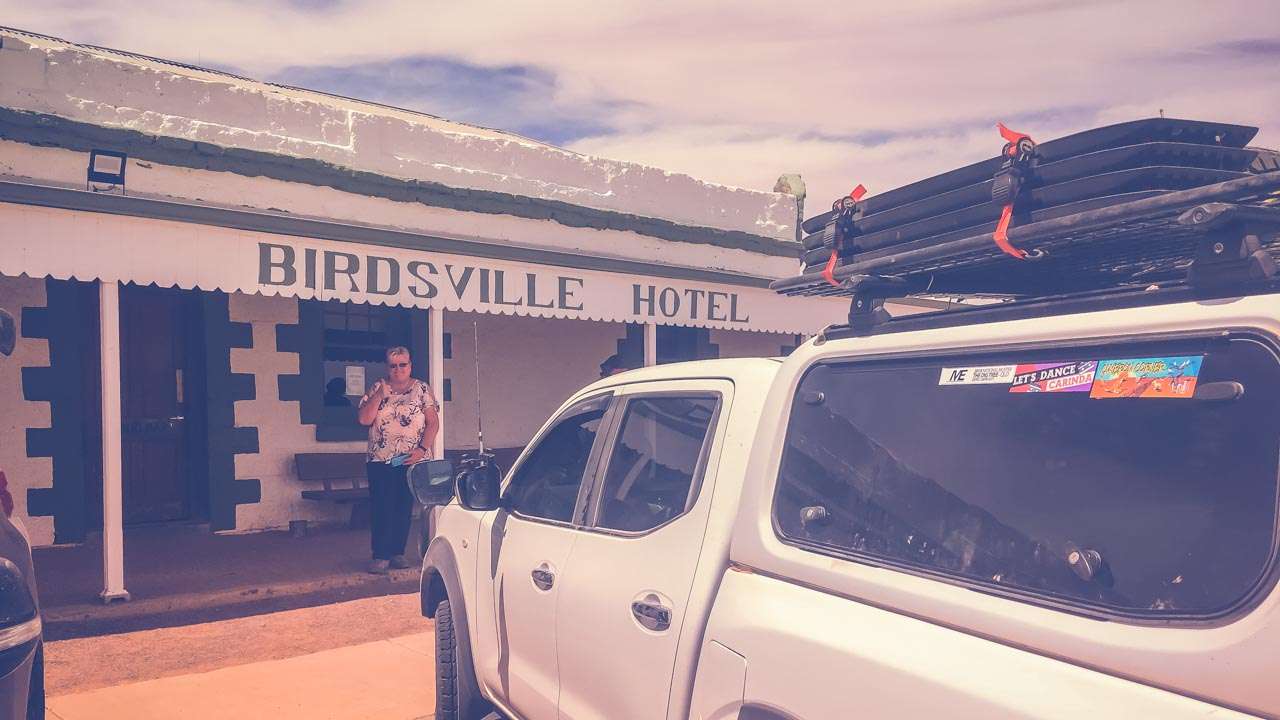
Birdsville Hotel Follow Our Travels

Birdsville Hotel Follow Our Travels

Birdsville Track: The Legendary Route

History of the Birdsville Track and Its Importance
The Birdsville Track is one of Australia’s most iconic and historically significant outback routes. Originally created as a cattle route in the 1860s, it links Birdsville in Queensland to Marree in South Australia, stretching over 500 kilometers of rugged desert terrain. It became an essential link for drovers moving livestock to the markets in South Australia and its historic significance only grew as it became the backbone of outback exploration and transport.

What to Expect When Traversing the Birdsville Track
The Birdsville Track is a challenging and rewarding experience for any adventurer. The route varies from gravel roads to sandy tracks, often requiring 4WD vehicles for safe passage. Driving the track offers stunning views of the desert landscape, with wide, open spaces, unique wildlife and towering sand dunes. Travelers should be prepared for isolation, limited services and sudden changes in weather conditions.

Where to Get the Latest Birdsville Track Conditions Information
Due to its remoteness, the Birdsville Track can be treacherous if not approached with caution. To ensure a safe journey, it is essential to check the latest road conditions and weather reports. Information can be obtained from local authorities, the Birdsville Information Centre, the Birdsville Hotel and online resources dedicated to Outback travel.

10 Facts About The Birdsville Track

  1. An Historic Outback Route
    The Birdsville Track is one of Australia’s most famous and historically significant outback roads. Stretching over 500 kilometers from Marree in South Australia to Birdsville in Queensland, it has been an essential route for settlers, explorers and traders for over a century.
  2. A Rugged Adventure
    Traversing the Birdsville Track is not for the faint of heart. With its dirt roads, remote terrain and challenging conditions, it offers an authentic outback adventure for travelers seeking a true test of endurance and resilience.
  3. A Lifeline to the Outback
    The Birdsville Track has served as a vital link for the transport of livestock and supplies, especially during the early years of settlement. For decades, it provided a crucial connection between remote stations and the rest of Australia.
  4. The Simpson Deserts’ Gateway
    The track runs along the eastern edge of the Simpson Desert, one of the most iconic and expansive desert regions in the world. As such, it offers travelers the chance to experience the vastness of the Outback and witness the raw beauty of the desert landscape.
  5. Challenging Conditions Year-Round
    The Birdsville Track is notorious for its extreme conditions. In the summer, it can be sweltering hot, while winter brings cold nights and occasional flooding during the wet season. You have to be well prepared for the changing challenges posed by the environment.
  6. Wildlife and Scenery Along the Way
    The journey along the Birdsville Track offers a unique opportunity to witness the Outback’s wildlife and dramatic landscapes. From kangaroos and emus to the occasional wild camel, the track provides a front-row seat to some of Australia’s most iconic fauna in their natural habitat.
  7. The Track Was Pioneered by John McDouall Stuart
    In 1862, explorer John McDouall Stuart famously pioneered a route through the harsh terrain of the Birdsville Track as part of his expedition to chart a path to central Australia. His journey paved the way for future exploration and settlement.
  8. A Popular 4WD Route
    Today, the Birdsville Track is one of the most popular 4WD routes in Australia, attracting adventure seekers and off-road enthusiasts who want to explore the remote heart of the Outback. Its rugged beauty, isolation and sense of challenge make it a bucket-list experience for many.
  9. Limited Services Along the Track
    Due to its remoteness, the Birdsville Track offers few services for travelers. There are limited fuel stations, basic accommodations and supplies along the way, so careful planning and self-sufficiency are essential for those attempting the journey.
  10. The Birdsville Track Conditions Change Regularly
    The condition of the Birdsville Track can change rapidly depending on weather conditions, particularly after heavy rains. Travelers are advised to check current road conditions before setting off, as some sections may be impassable during certain times of the year, especially after floods.

Iconic Landmarks

The Birdsville Hotel: A Historic Pub with Stories to Tell
The Birdsville Hotel, built in the 1880s, is one of Australia’s most iconic outback establishments. This historic pub has witnessed the passing of generations and serves as a gathering spot for travelers and locals alike. Its walls are adorned with memorabilia from the town’s colorful past, making it a must-visit for anyone exploring the area. The pub is renowned for its hearty meals, cold drinks and warm hospitality, all in the heart of the desert.

10 Facts About The Birdsville Hotel

  1. A Landmark in the Outback
    Established in 1884, the Birdsville Hotel stands as one of the most iconic and historic establishments in the Australian Outback. Serving as a refuge for travelers and locals alike, it’s a symbol of the resilience and spirit of Birdsville.
  2. The Heart of the Community
    The Birdsville Hotel is more than just a pub—it’s the social hub of the town. For many many years it’s been a gathering place where locals share stories, celebrate milestones and host events, including the legendary Birdsville Races.
  3. A Monument to History
    Stepping into the Birdsville Hotel is like stepping back in time. With its weathered façade and traditional Aussie pub features the hotel preserves the history of the region while offering a warm and welcoming atmosphere for visitors seeking a taste of Outback heritage.
  4. A Haven for Travelers
    As the only major accommodation in the area, the Birdsville Hotel provides a sanctuary for those exploring the harsh desert landscape. Its rooms, pub meals and iconic beer garden offer comfort and respite after long days in the Outback.
  5. The Pub With a Story
    The Birdsville Hotel is known for its unique collection of stories and memorabilia. From autographed photos of past patrons to quirky artifacts the hotel walls tell the tale of those who have ventured to the region over the years. Each leaving behind a piece of Outback history.
  6. The Famous Birdsville Hotel Bar
    The bar at the Birdsville Hotel is a highlight for many visitors. Serving cold drinks in an environment that’s part rustic pub, part Outback museum, it’s a place where weary travelers and adventure seekers can relax and unwind with a drink in hand, often with a bit of friendly banter.
  7. Hosting the Outback’s Biggest Events
    The Birdsville Hotel plays a pivotal role during major events such as the Birdsville Races and the Big Red Bash. As a central gathering point, it provides a space for celebrations, post-race parties and performances, making it an integral part of these iconic Outback occasions.
  8. Culinary Delights in the Desert
    The Birdsville Hotel serves up hearty Australian pub fare, with a focus on locally sourced ingredients and Outback-inspired dishes. From steak sandwiches to traditional Aussie pies, the hotel’s menu satisfies both locals and visitors seeking authentic Outback cuisine.
  9. A Steadfast Outback Icon
    Despite the harsh desert environment and the isolation of Birdsville, the hotel has remained a steadfast fixture. It has withstood floods, droughts and the test of time, maintaining its status as a beloved Outback institution.
  10. A Gateway to the Simpson Desert
    Located just on the edge of the Simpson Desert, the Birdsville Hotel offers a front-row seat to one of Australia’s most remote landscapes. For many, the hotel serves as the starting point for their Outback adventure, providing valuable information, local knowledge and a comfortable base for exploring the surrounding wilderness.

Big Red Sand Dune Birdsville: The Towering Sand Dune of the Simpson Desert
Big Red is one of the most recognisable landmarks. Standing at over 40 meters high, this massive sand dune is the tallest in the Simpson Desert. It gives fantastic panoramic views of the surrounding desert and visitors often challenge themselves to get their vehicle up its steep slopes. Big Red has become a symbol of the awesomely majestic beauty of the desert and is a really mega popular spot for tourists.

The Diamantina River and Its Role in the Region’s Ecosystem
The Diamantina River, though often dry, plays a crucial role in the ecosystem surrounding the area. When it does flow, it brings life to the otherwise barren landscape, supporting a wide range of wildlife and vegetation. The river is a critical water source for both humans and animals and is a reminder of the delicate balance required to sustain life in the desert.

Birdsville Races: The Outback’s Premier Horse Racing Event

Origins and Growth of the Birdsville Races
The Birdsville Races began in 1882 and over time, this event has grown into one of Australia’s premier horse racing festivals. Held annually in September, the races attract thousands of visitors from across the country. It started as a local event for the outback community but has since become a major drawcard for tourism, blending tradition with contemporary celebrations of the Outback.

Why the Races Are a Must-See Spectacle
The Birdsville Races are more than just a sporting event—they are a vibrant celebration of Outback culture. The races bring together horse racing enthusiasts, families and tourists all of whom get stuck into the excitement of the competition, the unique atmosphere and the camaraderie. Attendees are treated to an eclectic mix of fashion, entertainment and Australian deadset authentic Aussie larrikinism.

How the Event Brings the Outback Community Together
The Birdsville Races hold a special place in the hearts of the local community. It is an event that transcends geographic isolation, uniting people from various parts of Australia and even international visitors. For the residents of Birdsville, it is a moment of joy and celebration and it plays a vital role in the town’s economy, as well as its social fabric.

10 Facts About The Birdsville Races

  1. A Storied Tradition
    The Birdsville Races have been held annually since 1882, making it one of the oldest and most iconic horse racing events in Australia. The event has deep roots in Outback culture, symbolizing the resilience and community spirit of the region.
  2. The Ultimate Outback Spectacle
    Known as the “Melbourne Cup of the Outback,” the Birdsville Races attract thousands of attendees each year. It’s a unique opportunity to experience horse racing in one of the more remote and rugged landscapes on the planet.
  3. A Major Social Event
    The Birdsville Races are more than just a sporting event; they are a major social gathering for locals and visitors alike. The races bring together people from across Australia and the world, all eager to celebrate in true Outback fashion.
  4. Held at the Birdsville Racecourse
    Located on the edge of the Simpson Desert, the Birdsville Racecourse is an iconic venue with a unique charm. The track is made from compacted dirt and sand.
  5. A Unique Atmosphere
    Unlike traditional racing events, the Birdsville Races are characterized by their relaxed and festive atmosphere. Visitors dress in Outback-inspired outfits, while the highlight of the event is the chance to mingle with locals, share stories and celebrate under the vast, open skies.
  6. A Thriving Economy for the Region
    The Birdsville Races are a vital part of the local economy. The influx of tourists and participants generates significant revenue for the small town, supporting local businesses such as the Birdsville Hotel, the general store and the caravan park.
  7. A Test of Endurance
    The heat and dust of the Outback provide a challenging environment for both horses and jockeys. The extreme conditions make the Birdsville Races a true test of endurance, adding an element of adventure and excitement to the competition.
  8. A Celebration of Australian Horse Racing
    The races feature a mix of flat races, including the prestigious Birdsville Cup. The event attracts some of the best horses and jockeys from across Australia, making it an exciting event for racing enthusiasts.
  9. A Focus on Community and Tradition
    The Birdsville Races are deeply rooted in the traditions of the Outback. The event is a celebration of local culture, with many Indigenous communities participating and contributing to the festivities, adding a rich cultural layer to the event.
  10. A Once-in-a-Lifetime Experience
    For many, attending the Birdsville Races is a once-in-a-lifetime experience. The combination of the desert landscape, the adrenaline of horse racing and the unique sense of community makes it an unforgettable event that draws visitors from all walks of life.

Birdsville Big Red Bash: A Festival Like No Other in the Heart of the Desert

What Makes the Big Red Bash an Unmissable Event
The Big Red Bash is a unique festival that combines music, adventure and the beauty of the desert. Held annually at the base of Big Red Sand Dune, this event attracts top Australian musical acts and festival-goers who embrace the thrill of outdoor living. It’s more than just a concert; it’s a celebration of the desert landscape and a deep connection to nature.

How Music and Nature Converge at Big Red
The festival’s location at Big Red creates a mesmerizing atmosphere where music and nature seamlessly blend. With the stunning desert backdrop and the sounds of live performances echoing across the dunes, it offers an unparalleled sensory experience. The event attracts a massive crowd. The crowd is united by a love of music and a desire to experience the Outback.

10 Facts About The Birdsville Big Red Bash

  1. The Ultimate Desert Festival
    The Birdsville Big Red Bash is an extraordinary festival set against the dramatic backdrop of the Simpson Desert. Held annually near the iconic Big Red sand dune, it is Australia’s biggest and most unique music festival, combining live music with the raw beauty of the Outback.
  2. A Celebration of Music and Nature
    The event brings together a lineup of world-class artists, including major Australian acts, for an unforgettable music experience. The fusion of music with the vast, open desert landscape creates an unparalleled atmosphere that draws visitors from across the globe.
  3. Held at the Foot of Big Red
    The festival takes its name from the towering Big Red sand dune, the largest of its kind in the Simpson Desert. This iconic dune serves as the festival’s focal point, providing both a natural spectacle and a stunning stage for the performances.
  4. An Eco-Friendly Festival
    Emphasizing sustainability, the Birdsville Big Red Bash is committed to reducing its environmental footprint. From waste management to energy-efficient practices, the festival works hard to ensure that it celebrates the Outback without compromising its fragile ecosystem.
  5. A Festival Like No Other
    Unlike other music festivals, the Birdsville Big Red Bash offers attendees the opportunity to camp under the stars, enjoy the raw beauty of the desert and immerse themselves in the true spirit of the Australian Outback. It’s an experience that combines adventure with live entertainment.
  6. Accessible to All
    Despite its remote location, the festival attracts thousands of attendees each year. With accessible camping options and organized transport from nearby towns, the Big Red Bash offers a way for everyone to experience the magic of the Outback, whether they’re seasoned travelers or first-time adventurers.
  7. A Focus on Community and Fun
    Beyond the music, the Birdsville Big Red Bash fosters a strong sense of community. Visitors gather to celebrate, share stories and enjoy the camaraderie that defines life in the Outback. It’s an event that’s as much about connection as it is about entertainment.
  8. Unique Activities and Experiences
    The festival offers more than just music. Attendees can enjoy activities such as camel rides, sandboarding, 4WD adventures and stargazing, taking full advantage of the surrounding desert landscape. These unique experiences enhance the festival, making it a multifaceted event.
  9. A Family-Friendly Atmosphere
    While the Birdsville Big Red Bash is known for its vibrant music scene, it is also a family-friendly event. With plenty of activities for children and a laid-back vibe, it’s a festival that people of all ages can enjoy, making it an ideal event for families looking to explore the Outback together.
  10. A Gateway to the Simpson Desert
    The Birdsville Big Red Bash is the perfect opportunity to explore the Simpson Desert, one of the most rugged and remote regions in Australia. For those with a sense of adventure, the festival serves as a launching point for deeper exploration into the desert’s vast landscapes, offering a true Outback experience.

Outdoor Adventures

Four-Wheel Driving Across Rugged Terrain
The surrounding area offers a range of outdoor adventures, with four-wheel driving across rugged terrain being one of the most popular activities. The surrounding desert landscapes, with their vast, open spaces and challenging tracks, provide the perfect backdrop for 4WD enthusiasts. It’s an adrenaline-filled way to explore the region while encountering the raw beauty of the Australian Outback.

Sandboarding and Hiking on Big Red
For those seeking adventure beyond the wheel, sandboarding and hiking on Big Red offer a thrilling way to engage with the desert. Hiking to the top of the towering dune rewards visitors with breathtaking views, while sandboarding down its slopes provides a rush of excitement. Both activities are a way to intimately connect with the desert landscape.
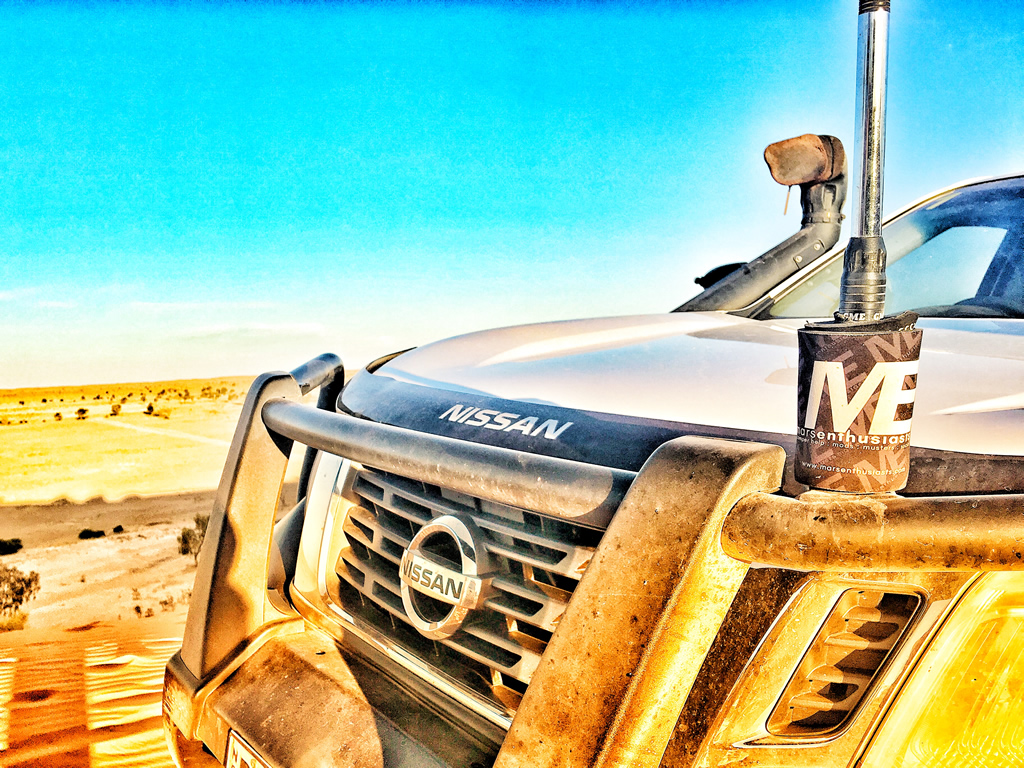
Nissan Navara NP300 Up On Top Of Big Red Birdsville

Nissan Navara NP300 Up On Top Of Big Red Birdsville

Exploring the Remote Beauty of the Simpson Desert
The Simpson Desert is a vast, arid expanse that offers unparalleled opportunities for exploration. Its ever changing sand dunes, salt lakes and rugged terrain provide a natural playground for those with an adventurous spirit. Travelers can embark on guided expeditions or go it alone, but in all cases, the desert’s remoteness and beauty are sure to leave a lasting impression.

Flora and Fauna of Birdsville

Unique Wildlife Found in the Outback
The Outback, including the Birdsville region, is home to a remarkable array of wildlife that has adapted to its harsh conditions. Kangaroos, dingoes and emus roam the landscape, while smaller creatures like reptiles and birds thrive in the arid environment. The region’s wildlife has learned to survive through ingenious adaptations to the desert’s extreme temperatures and limited water sources.

How Native Plants Thrive in Arid Conditions
In addition to its fauna, the flora of Birdsville also displays an impressive resilience to the harsh desert conditions. Native plants, including spinifex grass and saltbush, have evolved to endure long periods of drought. These hardy plants play an essential role in maintaining the region’s fragile ecosystem, providing sustenance for both wildlife and livestock.

Conservation Efforts to Preserve Birdsville’s Ecosystem
The unique flora and fauna of Birdsville are a vital part of the region’s ecological heritage. Conservation efforts are happening to preserve these species and their habitats. Local and national initiatives focus on sustainable land management practices, aimed at protecting the desert environment from overuse and degradation caused by human activities and climate change.

Cultural Heritage and Indigenous Connections

Aboriginal History and Connection to the Land
Birdsville’s history is deeply intertwined with the traditional lands of Indigenous peoples. The area has been inhabited by the Wangkangurru people for thousands of years and their connection to the land is evident in their stories, songs and art. This rich cultural heritage is an integral part of Birdsville’s identity and visitors are encouraged to learn about and respect the traditions of the region’s original custodians.

Indigenous Art and Storytelling in Birdsville
Indigenous art is a powerful form of expression that tells the stories of the land and its people. In Birdsville, local Indigenous artists and communities continue to share their culture through paintings, sculptures and oral traditions. These artworks provide valuable insight into the spiritual and cultural connections that Indigenous Australians have with the Outback.

Respecting and Learning from Local Traditions
For those visiting Birdsville, it is essential to approach the area with respect for its Indigenous heritage. Engaging with local communities, learning about the region’s history and participating in cultural experiences are meaningful ways to gain a deeper understanding of the Outback’s significance to its original custodians.

Planning Your Visit to Birdsville

Best Times of Year to Explore the Region
The best time to visit Birdsville is during the cooler months, from May to September. This period offers more comfortable temperatures for outdoor activities, such as hiking, 4WD adventures and attending the Birdsville Races. While the summer heat can be unbearable, the cooler months provide the ideal conditions for exploring the Outback.

Travel Options: By Air, Road, or 4WD Adventures
Birdsville is accessible by various means of travel. The most popular option is to drive, either by car or 4WD, along the Birdsville Track. There is also a small airstrip in Birdsville, with flights available from larger towns like Longreach and Brisbane. For those seeking adventure, a 4WD journey across the rugged Outback terrain can be an unforgettable experience.

What to Pack for an Outback Journey
When heading to Birdsville, it is essential to pack appropriately for the harsh desert environment. Items such as sunscreen, wide-brimmed hats, sturdy footwear and plenty of water are must-haves. You should bring a detailed map, a first-aid kit and reliable communication equipment to ensure a safe and enjoyable experience.

Birdsville Accommodation

Camping in Birdsville: A True Outback Experience
For those seeking an authentic Outback experience, camping in Birdsville is an ideal option. Whether pitching a tent by the Diamantina River or setting up near Big Red, camping allows visitors to fully immerse themselves in the vast desert landscape.

The Birdsville Caravan Park: Comfort in the Wilderness
The Birdsville Caravan Park offers a more comfortable option for those wishing to stay in the region. With powered and unpowered sites, as well as cabin accommodations, it provides a good balance of convenience and ruggedness for travelers. The caravan park is a great base for exploring the area.

Other Lodging Options for Different Budgets
Birdsville offers a variety of accommodations catering to different budgets. From basic to more luxurious (well for Birdsville), visitors can find suitable options that provide comfort and convenience during their stay in the desert.
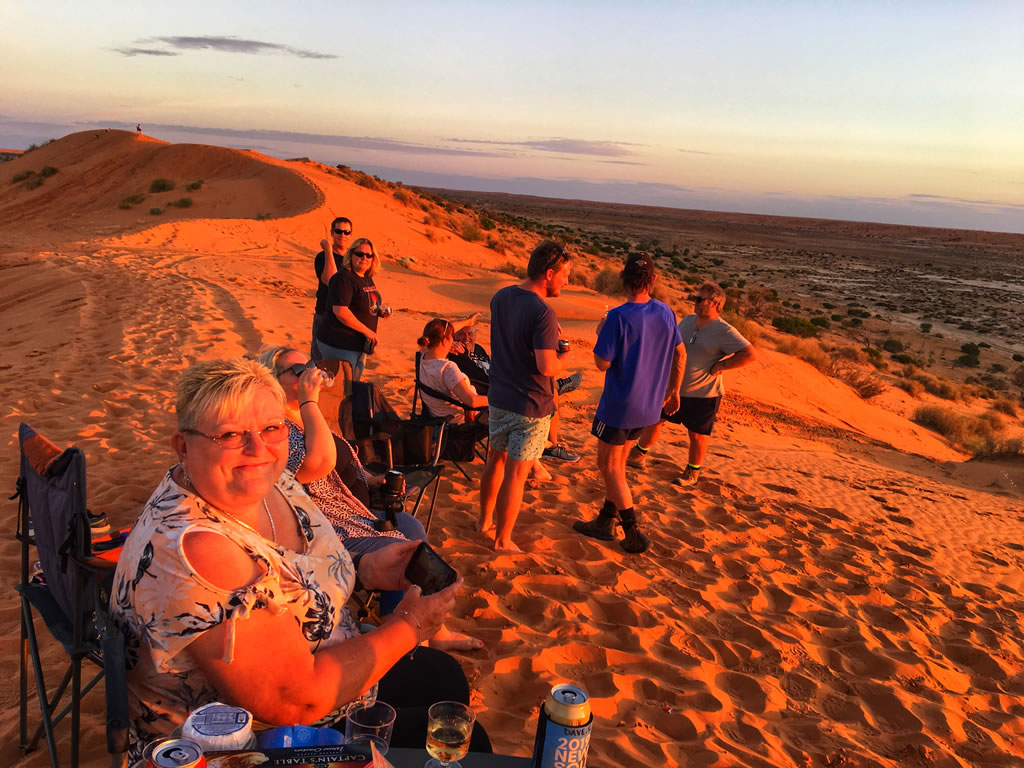
Amanda Sloane On Top Of Big Red Near Birdsville At Sunset

Amanda Sloane On Top Of Big Red Near Birdsville At Sunset

Local Food and Dining

Basically you have the Birdsville Hotel and the Birdsville Bakery. We’ve eaten at both locations and they are bloody great.

The Famous Birdsville Bakery: A Culinary Must-Visit
No trip to Birdsville would be complete without a visit to the Birdsville Bakery. Known for its delicious camel pies and freshly baked bread the bakery is a staple for both locals and travelers. It’s a perfect stop to refuel during an Outback journey and sample some of the region’s most beloved dishes.

Birdsville Hotel
The Birdsville Hotel offers more than just a place to stay; it also serves up traditional Australian pub fare. Known for its relaxed atmosphere and friendly service, it’s a great spot to unwind after a day of exploring, enjoying a cold drink and a hearty meal while swapping stories with fellow adventurers.

Where to Get Mechanical Repairs in Birdsville

The Birdsville Roadhouse
The roadhouse provides repair services for cars, caravans and 4WD vehicles, ensuring that travelers can continue their adventures without delay.

  • RACQ Roadside and Tow Operator
  • Tyres, batteries and oil
  • Fully equipped mechanical workshop
  • Phone: 07 4656 3226

Where to Buy Spare Parts for Your Vehicle and Caravan in Birdsville

Not Just Hardware

A range of basic spares can be found at the local hardware store aptly named “Not Just Hardware”.

Phone: 07 4656 4873
Opening Hours: Mon-Fri 08.30am to 05.00pm. Sat 08.30am to 12.00pm
Items Stocked: Fuel and water jerry cans, shackles, sealants, nuts and bolts, gaffer tape, electrical tape, cable ties, electrical cable, automotive fuses, anderson plugs, trailer plugs, 12v switches, wide range of camping gear, fly nets, insect repellant, uhf radios and antennas and a whole heap of other stuff.

The Roadhouse

The roadhouse also carries some basic spares as well as a limited range of tyres, batteries and oil.
Phone: 07 4656 3226

Travelers are advised to carry essential spares with them if embarking on long journeys in remote areas.

Where to Buy Tyres in Birdsville

The roadhouse also carries some basic spares as well as a limited range of tyres, batteries and oil.
Phone: 07 4656 3226.

Birdsville Supplies

Where to Buy Grocery Items in Birdsville
The Birdsville General Store provides essential grocery items for travelers. This small yet well-stocked store is a vital stop for those stocking up before heading into the desert or for locals needing everyday supplies.

Where to Buy Alcohol in Birdsville
Alcohol can be purchased at the Birdsville Hotel. As with many remote Australian towns, alcohol is regulated and licenses are required to sell it.

Birdsville Amenities

Birdsville Dump Point
Birdsville provides two dump points for caravans.

  1. Name: Birdsville Dump Point
    Location: Big Red Track, Birdsville, Queensland
    GPS: -25.903993°, 139.344741°
  2. Name: Birdsville Dump Point Near Racecouse
    Location: Birdsville Developmental Road, Birdsville, Queensland
    GPS: -25.907821°, 139.377591°

Potable Water
Clean, potable water is available in Birdsville, but visitors are encouraged to carry extra supplies when venturing out into the desert, as access to water can be scarce in remote areas. It’s available from the following locations.

  1. Name: Bronco Yards Fresh Water Taps
    Location: Birdsville Simpson Desert National Park Road, Birdsville, Queensland
    GPS: -25.910793°, 139.336735°
  2. Name: Birdsville Water Tap In Town
    Location: Birdsville Developmental Road, Birdsville, Queensland
    GPS: -25.897940°, 139.354323°
  3. Name: Water Tap
    Location: Birdsville Developmental Road, Birdsville, Queensland
    GPS: -25.900739°, 139.362184°
  4. Name: Water Tap
    Location: Birdsville Developmental Road, Birdsville, Queensland
    GPS: -25.905919°, 139.374067°

Weather in Birdsville

Birdsville’s Strategic Location in the Simpson Desert
Located on the edge of the Simpson Desert, Birdsville is subject to some of the harshest and most extreme weather conditions in Australia. The region experiences a typical desert climate—scorching hot summers and cold winters with little to no rainfall. This location provides a perfect snapshot of the unforgiving nature of Australia’s vast interior.

Understanding the Unique Climate and Seasonal Variations
Birdsville’s climate is characterized by stark seasonal contrasts. Summers, from December to February, can reach temperatures well over 40°C (104°F), while winters, from June to August, are much cooler, with daytime highs of around 20°C (68°F) and chilly nights. Rainfall is extremely rare, with the town averaging less than 150mm annually. However, when it does rain, it can be torrential, causing flash flooding and transforming the landscape dramatically.

How the Harsh Environment Shapes Life in Birdsville
Life in Birdsville is intimately tied to its extreme environment. The intense heat during summer often means that most activities take place in the early mornings or late afternoons. The sparse rainfall, while rare, is eagerly anticipated and can temporarily transform the desert into an ephemeral sea of wildflowers. The local community, accustomed to the unforgiving landscape, has developed resilient practices that help them thrive despite the challenging conditions.

10 Weather Facts About Birdsville

  1. Summer temperatures often exceed 40°C (104°F).
  2. Winters can see temperatures drop below freezing overnight.
  3. The area receives less than 150mm of rain annually.
  4. Birdsville experiences high winds during the summer months.
  5. The region is known for severe dust storms.
  6. Rainfall is highly erratic, with periods of severe drought.
  7. Birdsville is one of the hottest towns in Australia during summer.
  8. The climate is categorized as arid and semi-desert.
  9. Snow is virtually unheard of in the area.
  10. The lack of cloud cover results in extremely clear skies, ideal for stargazing.

Community Life in Birdsville

How Locals Adapt to Life in a Remote Town
The residents of Birdsville are a resilient and resourceful community. Life in such a remote location requires a unique set of skills and a strong sense of independence. Locals adapt to the challenges of isolation, relying on each other for support and maintaining a close-knit, welcoming environment.

The Strong Sense of Community in Birdsville
Despite its small size, Birdsville boasts a robust sense of community. Festivals, local events and daily interactions all contribute to the town’s strong communal spirit, making it feel like a home away from home for visitors and residents alike.

Festivals and Events That Bring Residents Together
Birdsville’s festivals, including the Birdsville Races and Big Red Bash, serve as important social events for the town. These celebrations bring together locals and visitors, fostering a sense of unity and joy that transcends the challenges of life in the Outback.

Challenges of Living in Birdsville
The isolation presents unique challenges for its residents. With the nearest major town over 600 kilometers away access to goods and services can be difficult. However, the local community has developed a culture of self-sufficiency and cooperation, ensuring that they can thrive despite their remoteness.

Nearby Attractions and Things To Do

Exploring the Diamantina National Park
Just a short distance from Birdsville, the Diamantina National Park is a stunning destination for nature lovers. With its diverse wildlife, scenic gorges and ancient river systems, the park offers a serene escape from the desert’s harshness.

Adventuring Further into the Simpson Desert
For those seeking an even deeper Outback experience, venturing further into the Simpson Desert offers endless possibilities for adventure. Whether on foot or by 4WD, the desert’s rugged beauty is sure to leave an indelible mark on anyone who dares to explore its vast expanse.

Hidden Gems Beyond Birdsville
While Birdsville is a gateway to the Outback, it is just the beginning of an extraordinary journey. From the remote corners of the Simpson Desert to nearby natural wonders, travelers can discover hidden gems that offer an authentic and untouched experience of Australia’s wilderness.

Conclusion

Why Birdsville Is a Must Visit Place
Birdsville offers a unique and enriching experience for those seeking to explore the raw beauty of the Australian Outback. With its rich history, iconic landmarks and exciting events, Birdsville is a destination that captures the essence of adventure and community.

Final Tips for Making the Most of Your Birdsville Adventure
To make the most of a visit to Birdsville, plan ahead, pack appropriately and embrace the challenges and beauty of the Outback. Whether you’re attending the Birdsville Races, exploring the Simpson Desert, or simply enjoying the company of locals, Birdsville is a place that promises an unforgettable adventure.
Dig Tree To Haddon Corner Via Planet Arrabury Road

Dig Tree To Haddon Corner Via Planet Arrabury Road

Dig Tree To Haddon Corner Via Planet Arrabury Road

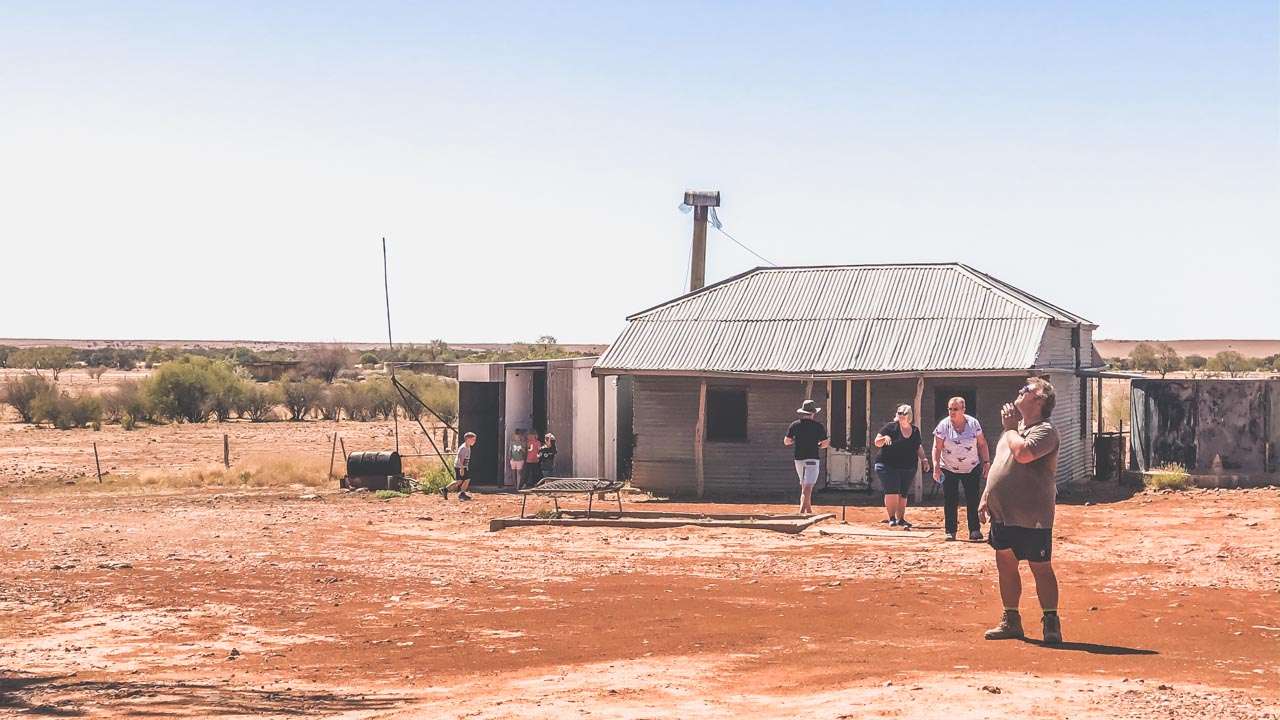
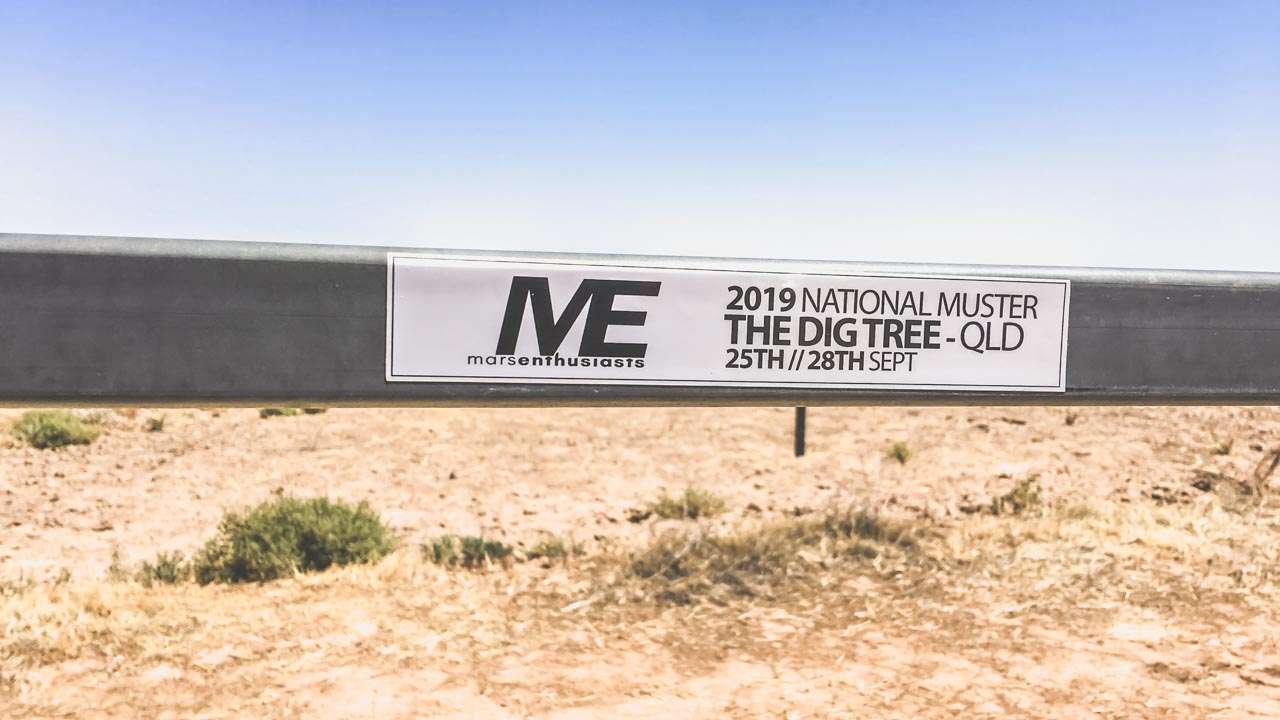
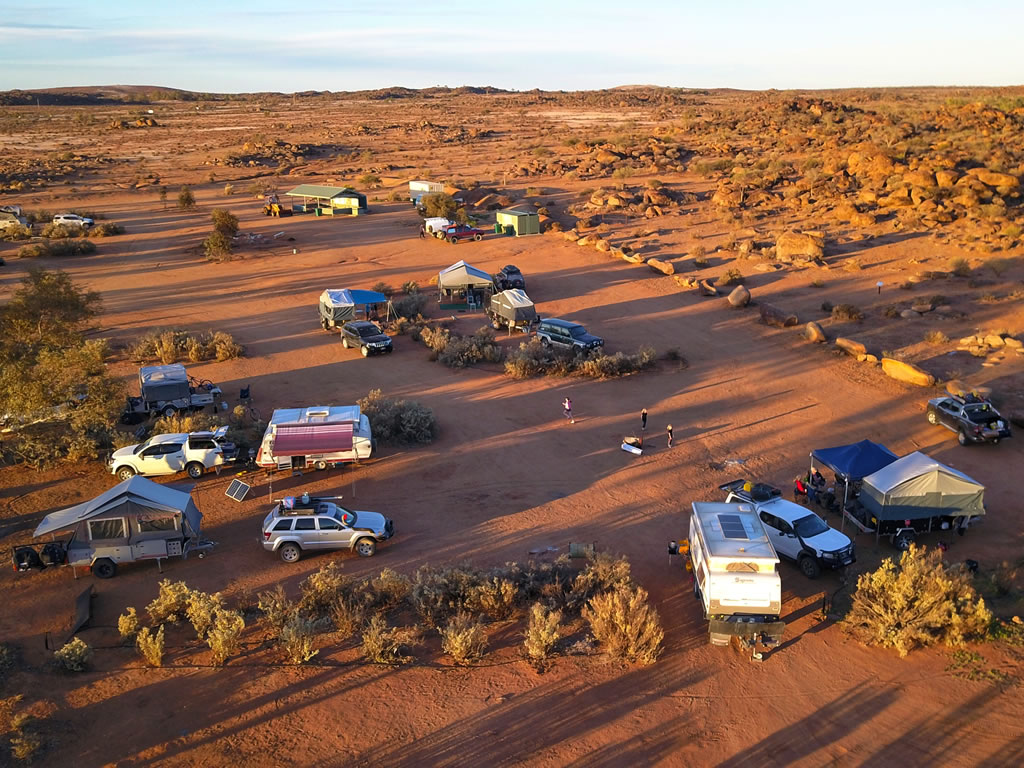
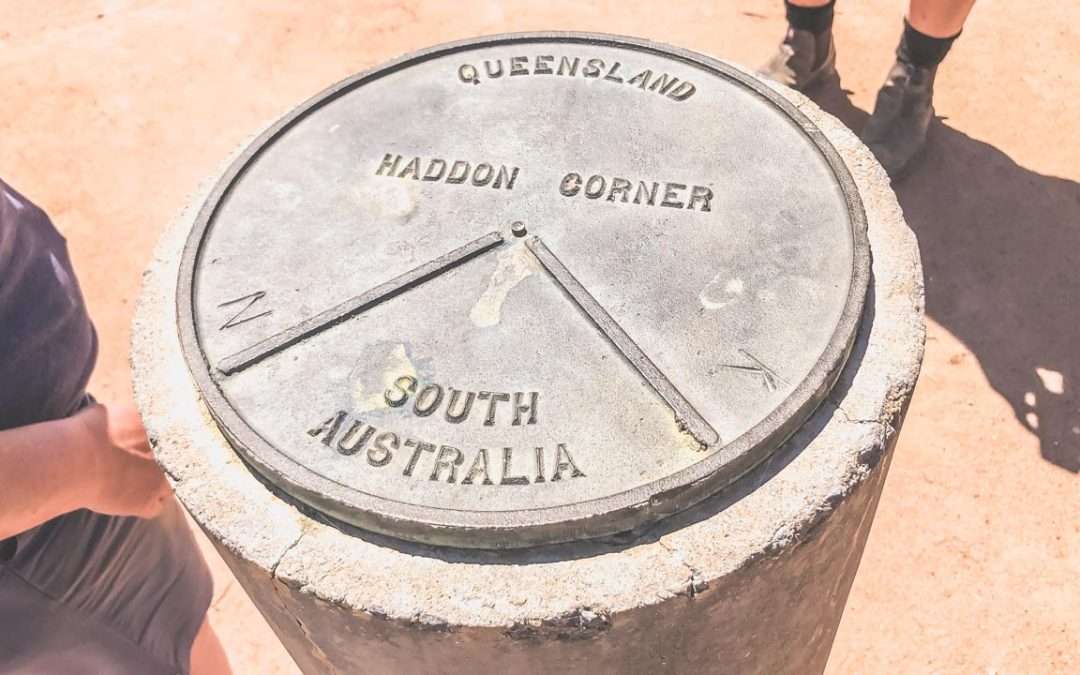
The Dig Tree to Haddon Corner via the Planet Arrabury Road. Another day on the MARS Enthusiasts 2019 National Muster. We called in at Nulla Outstation along the way. We left the dig Tree and headed north on the Planet Arrabury Road. Our final destination for the day was Birdsville however we planned to call in at Haddon Corner for a look.

The Planet Arrabury Road

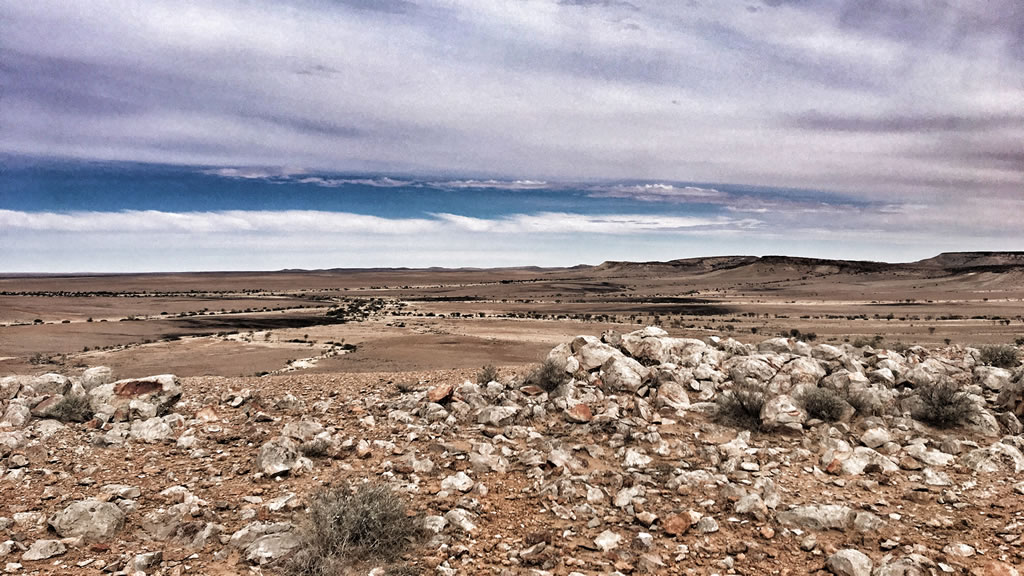
The Planet Arrabury road varies from quite rough with large stones (some big enough to end your day) though to sandy and it eventually becomes a wide gravel highway towards the northern end. The first part of the southern section was awesome. The Cooper Creek basin and northwards is an ancient valley. You are surrounded by eroded flat-topped mesas that let you see the original level of the land as it had been millions of years ago. The planet Arrabury Road follows the valley floor. You are surrounded by fantastic ochre coloured hills – it looks a lot like the painted desert out from Coober Pedy and Oodnadatta. It’d be an awesomely magical sight from the right vantage point at sunset.

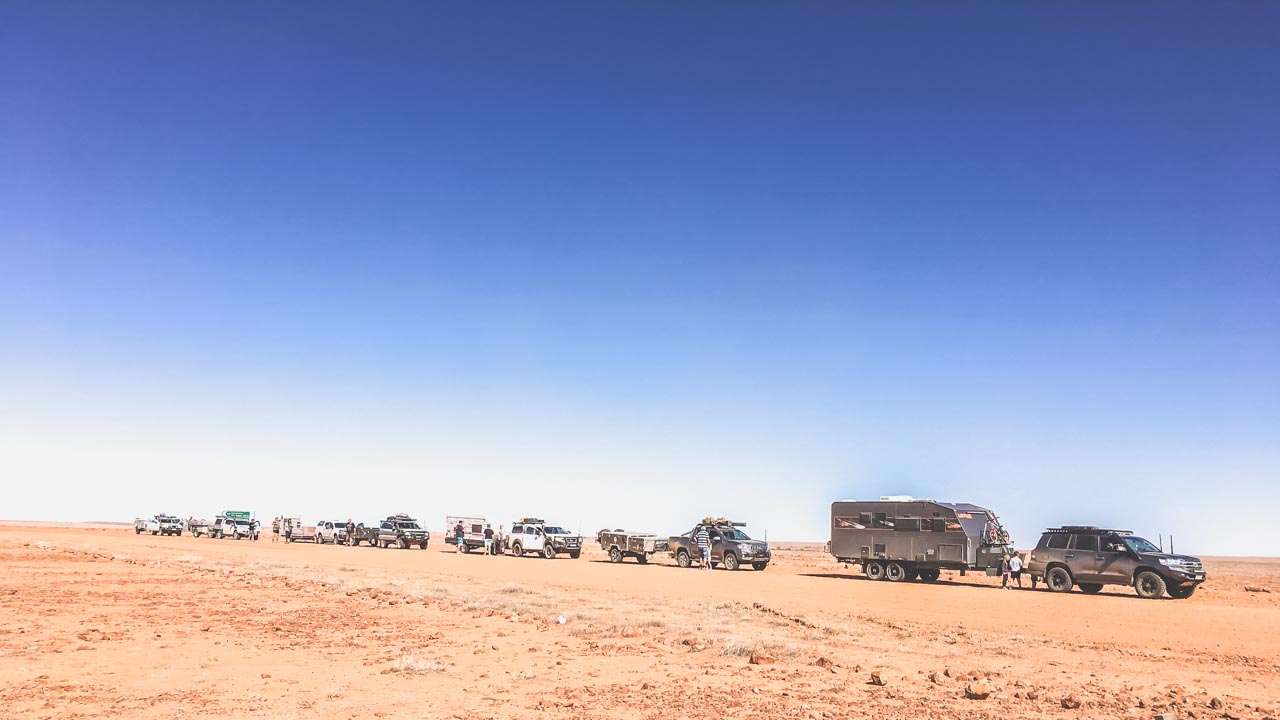
Traffic Jam On The Planet Arrabury Road

Traffic Jam On The Planet Arrabury Road

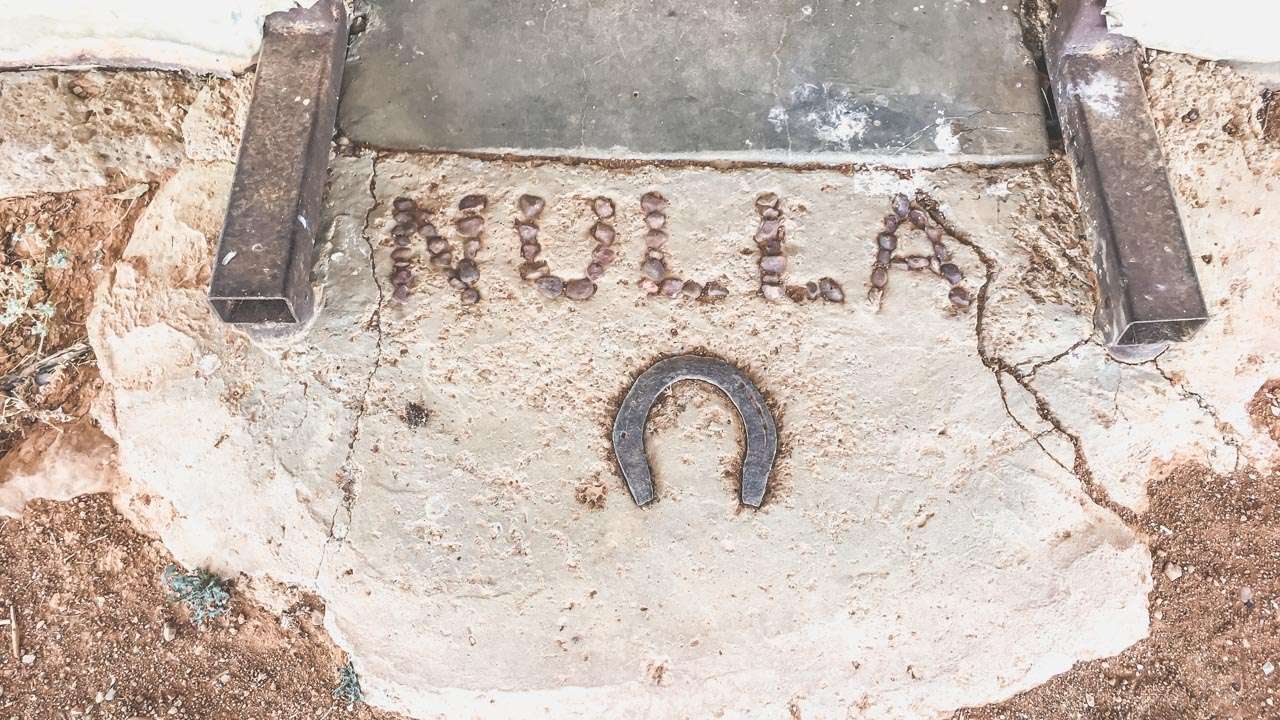
We called in at Nulla Outstation for a look and to break up the trip. What a nice little detour it was. The old outstation looks just like it must have a hundred years ago. It shows signs of recent use. There are some more modern (albeit dodgy looking dongas) alongside the old building that are probably see more use these days more than the original. On the way back out of Nulla Outstation one of our fellow MARS Enthusiasts Scott White mentioned he’d seen a nice old antique shovel on his way in and he was going to pull over and pick it up. Guess what? Turns out it was his own bloody shovel that must have fallen off his car on the way in. It gave us all one hell of a good laugh!

Nulla Outstation Bunkhouse 2019

Nulla Outstation Bunkhouse 2019

After a few hours the Planet Arrabury Rd rises up onto the tableland. From here to the end the changes are more subtle. As usual out this way there’s a lot of of gibber country and stretches of flood plains and sand country. Eventually you get to Sturt’s Stony Desert. He wasn’t mucking about when he named it either! It’s a never ending view of gibbers covering the landscape. Good old Charles Sturt walked through this country in one direction then walked back through it in the other because he was enthralled by the landscape. The bloke must have been absolutely bloody bonkers.

Entry To Nulla Station Bunkhouse

Entry To Nulla Station Bunkhouse

200km north of the Innamincka/Thargomindah Road you come to the turnoff to Haddon Corner. After we’d all come this far there was no way we weren’t calling in for a look!

Haddon Corner

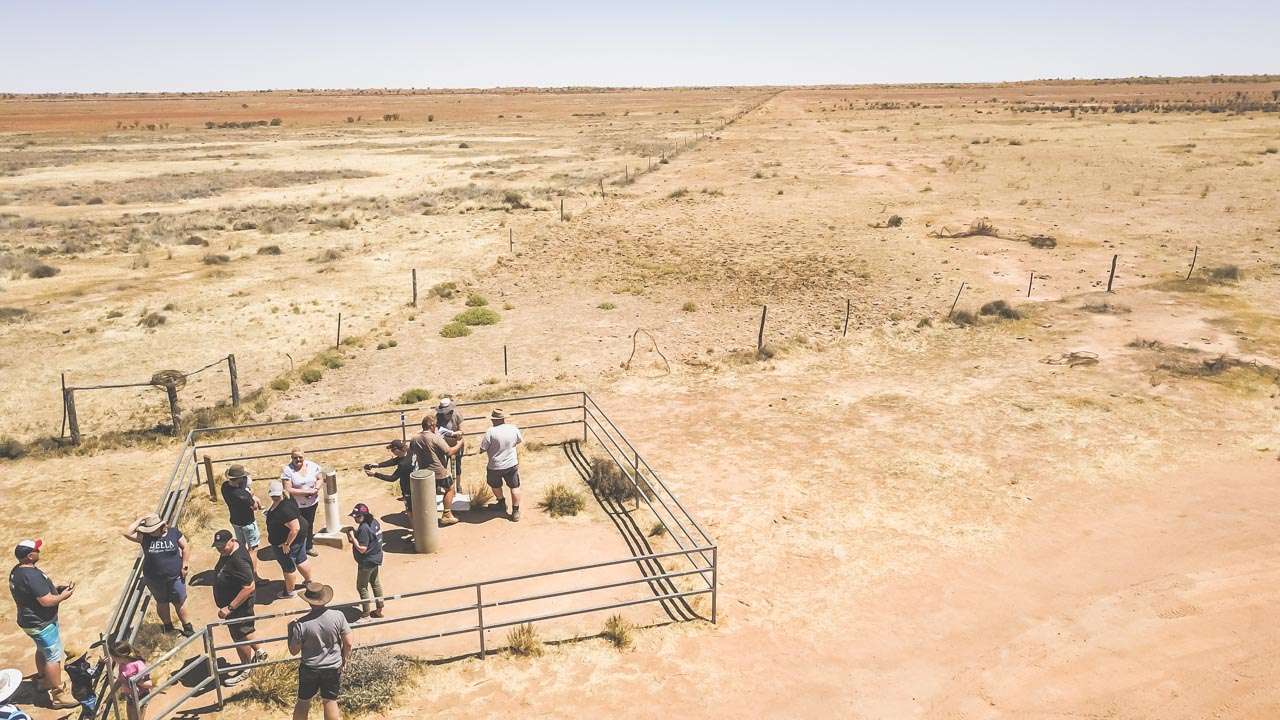
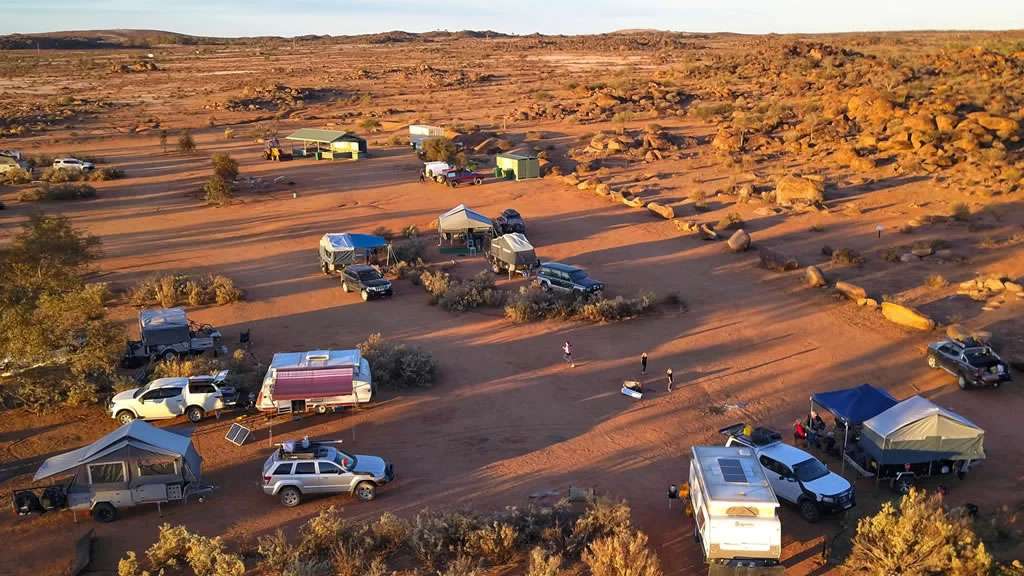
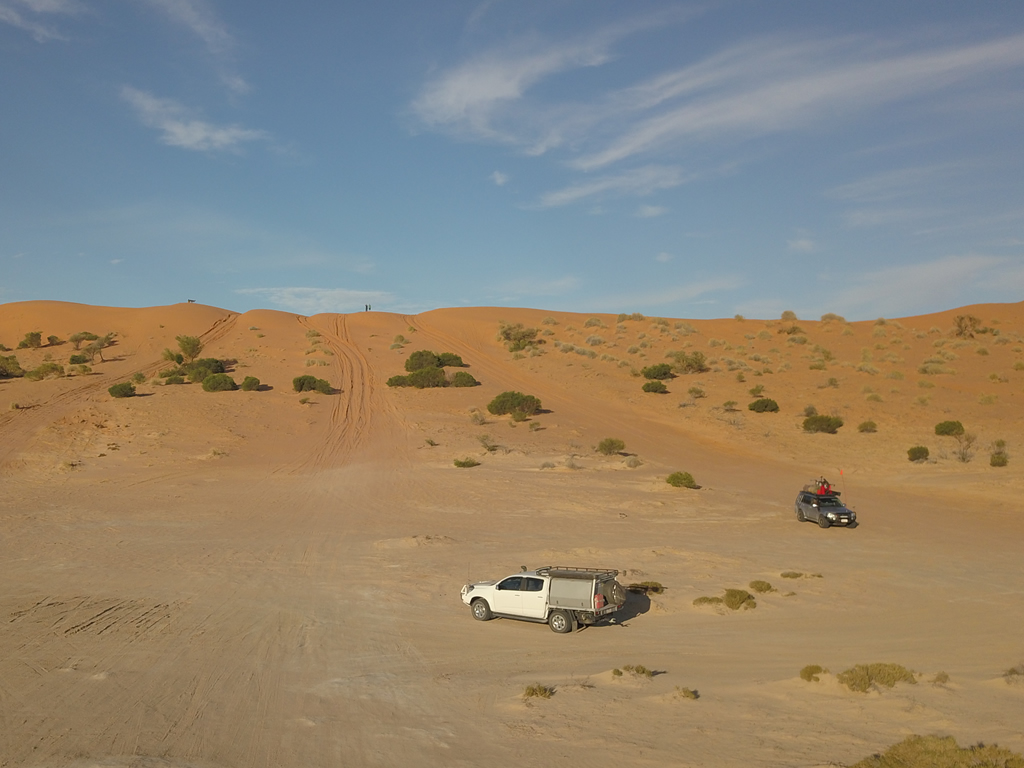
From the Arrabury road, take the Haddon Corner turn off. A green finger sign points to Haddon Corner. The road is gravel, but it’s generally in quite good shape. There will be a difference depending on whether rain has fallen recently. All roads in the region would become impassable if that were the case. A 15-km drive will take you to Haddon Corner. The final two kilometres are across two sand dunes. While these sand dunes aren’t large, dragging a caravan through them wouldn’t be a bright idea. Campers with off-road tyres could get in with reduced tyre pressures. We all unhooked our vans and camper trailers at the base of the first dune, and drove in with just our vehicles. The track across the first dune from the end of the main track is well enough – it’s both easy to find and easy to follow.

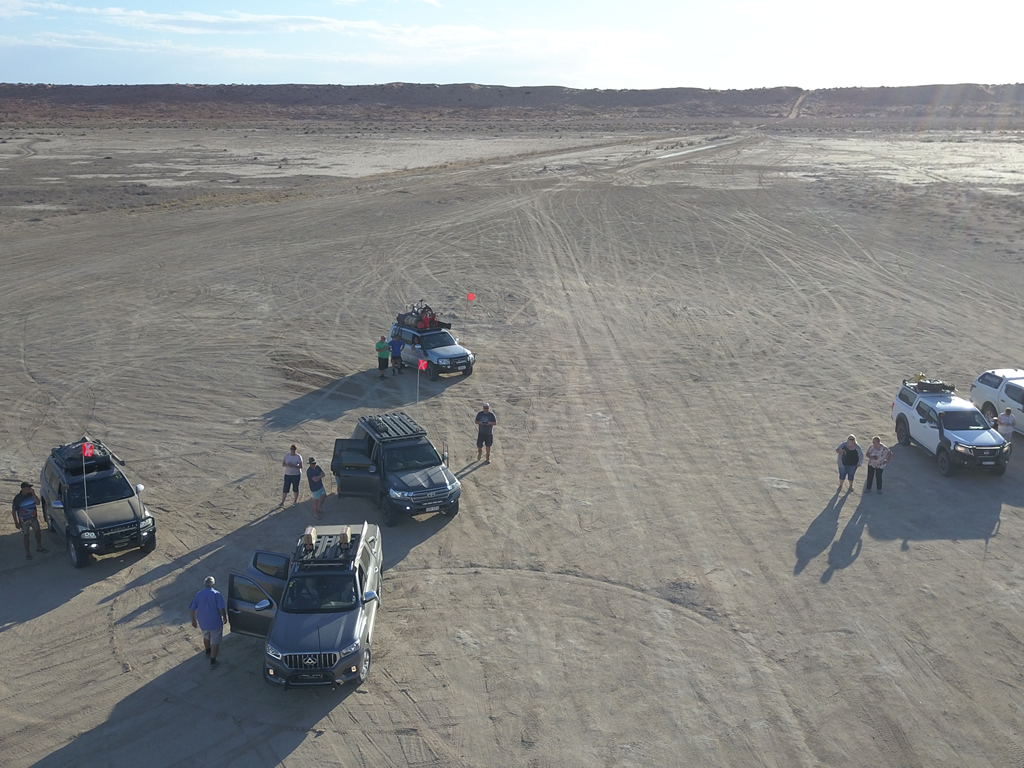
Drone Shot The Crew At Haddon Corner

Drone Shot The Crew At Haddon Corner

We all had our photos taken and signed the visitors book. El Supremo Peter Woolsey put up his drone and took some fantastic videos and photos – thanks Pete you’re a legend! Other than the corner marker there isn’t mush to see – in fact there’s nothing but that isn’t the point. The point is being there. There’s a lot of dust and wide expanses of pretty much nothing except for sand and rocks with the odd shrub having a crack at survival. There are no facilities and this really would be remote camping. There is a picnic shelter if you’re keen on spreading out the rug and munching on some cucumber sangas.

MARS Enthusiasts 2019 National Muster At Haddon Corner

MARS Enthusiasts 2019 National Muster At Haddon Corner

Camping At Haddon Corner

There’s a free camp at Haddon Corner. This free camping area is 4WD only and for tents and camper trailers only. Pets are allowed.

Haddon Corner Location

  • 165.25kms East of Birdsville
  • 178.05kms West of Windorah
  • 195.77kms North of Innamincka
  • 359.13kms South of Boulia

Haddon Corner is the north-eastern corner of the state of South Australia where it meets with Queensland. It was first surveyed by John Carruthers, Lawrence Allen Wells, and Augustus Poeppel around 1883.

4 Week Uluru Itinerary – Oodnadatta – Coober Pedy

4 Week Uluru Itinerary – Oodnadatta – Coober Pedy

4 Week Uluru Itinerary – Oodnadatta – Coober Pedy

Our Uluru itinerary. Four weeks through outback Australia is going to be our next trip. We are leaving from home in Cootamundra and travelling the Oodnadatta Track with some good friends then Coober Pedy then north to Uluru and Alice Springs then through outback Queensland.

MarreeFarinaWilliam CreekCoward SpringsAlgebuckina BridgeThe Pink Roadhouse At OodnadattaCoober PedyUluruAlice SpringsTennant CreekLongreachWintonUluru Itinerary

We will visit many iconic locations on this epic 4 week road trip. Marree, Farina, William Creek, Coward Springs, Algebuckina Bridge, The Pink Roadhouse at Oodnadatta, Coober Pedy, Uluru, Alice Springs, Tennant Creek, Longreach and Winton are just some of the bucket list locations we’ll be visiting as part of this Uluru itinerary. All up we plan on about 7,000kms and many of them will be on red dirt. We love red dirt. It’s going to be an awesome trip. Please follow us along!

Marree

We’ve been to Marree quite a few times now and it’s a favourite outback destination of ours. We can’t wait to have another burger in the pub and have a look around. Marree really is the intersection of some of our most iconic outback tracks.

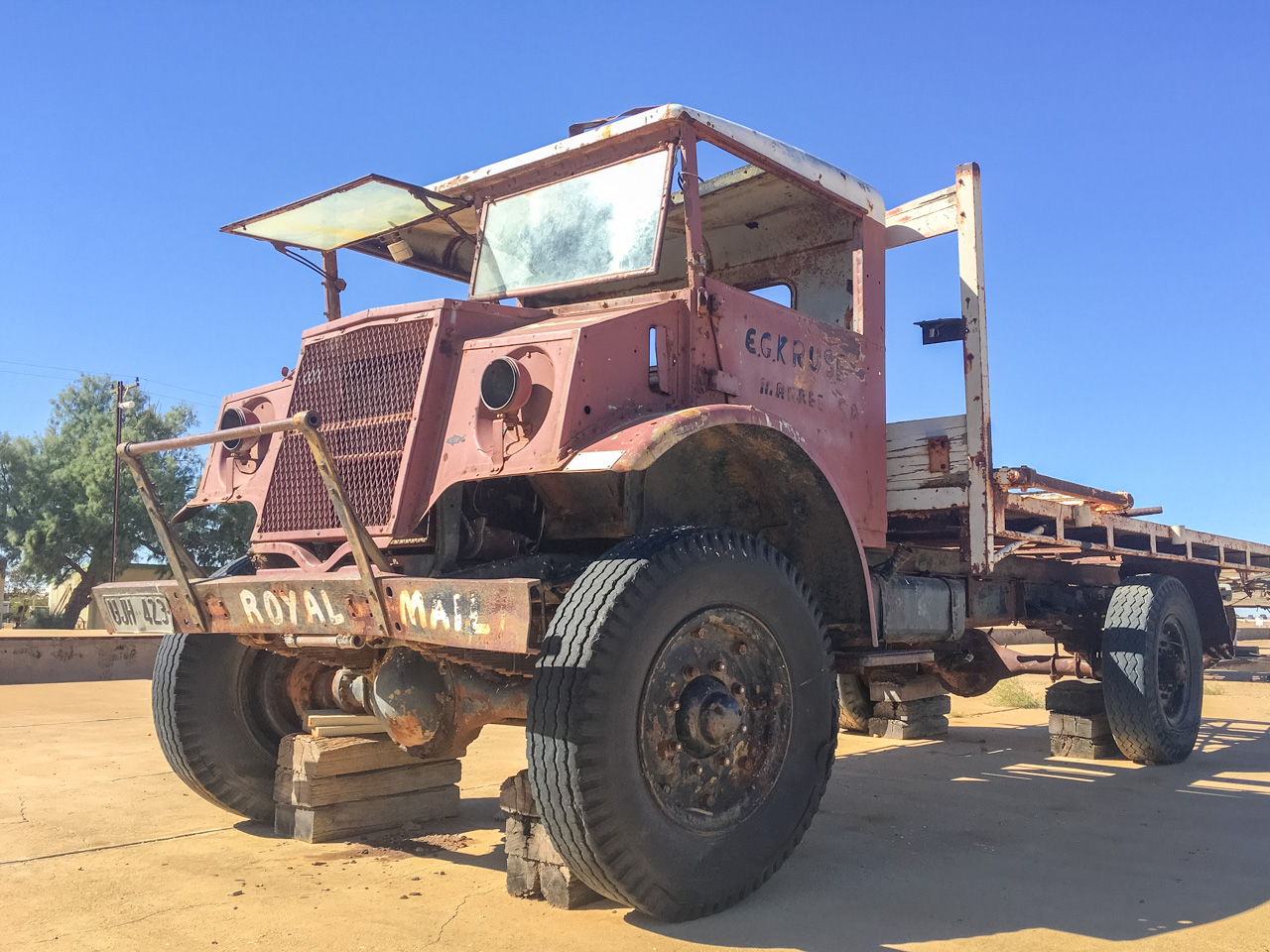
Tom Kruse Mail Truck At Marree

Tom Kruse Mail Truck At Marree

Farina

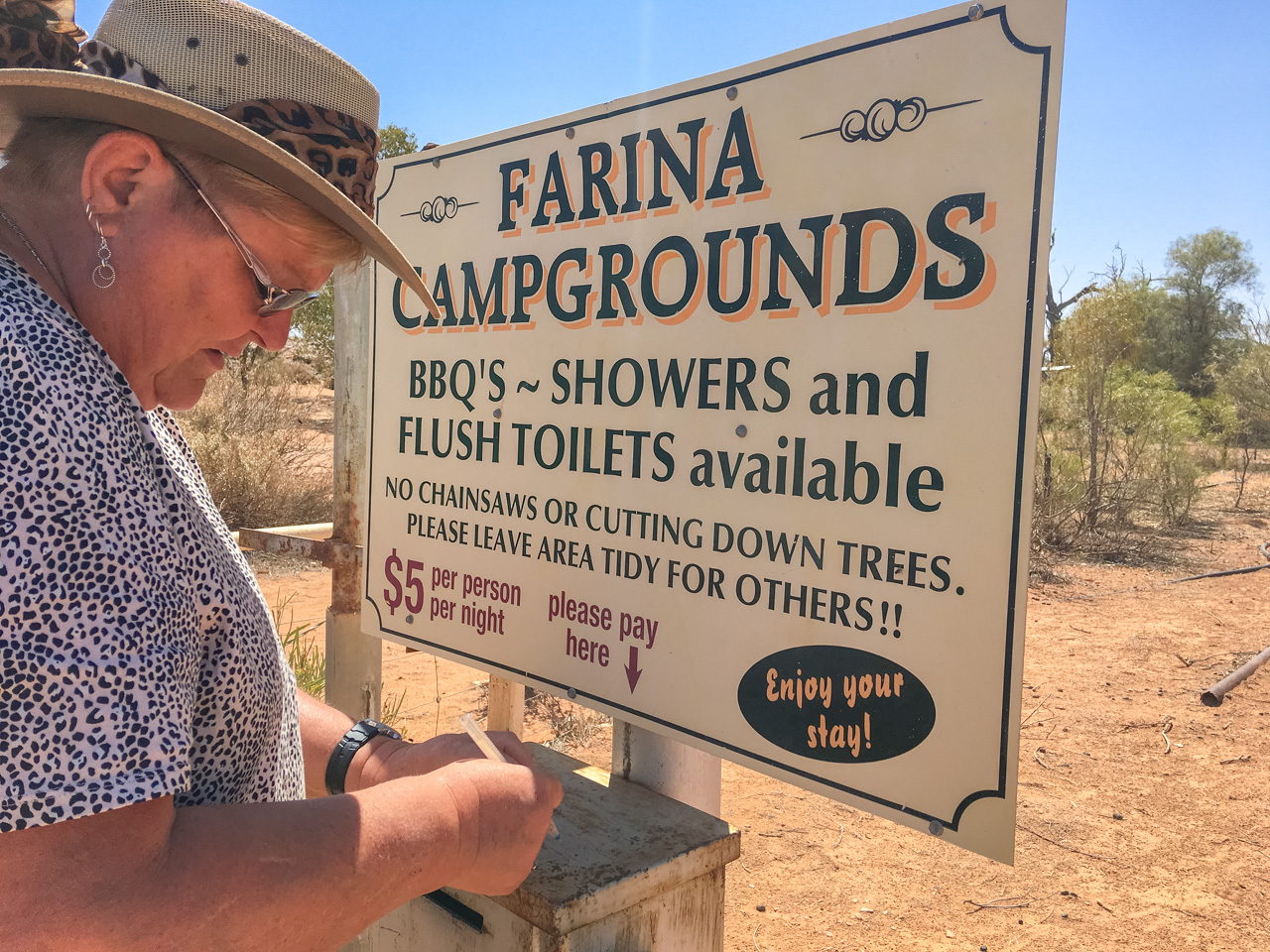
We love Farina and keep going back. It’s a great old Aussie ghost town and a fantastic place to camp. I think this trip will see us chalk up our tenth night of camping at Farina. If you haven’t been to Farina before then you should add it to your list.

Farina Campgrounds Camp Honesty Box

Farina Campgrounds Camp Honesty Box

William Creek

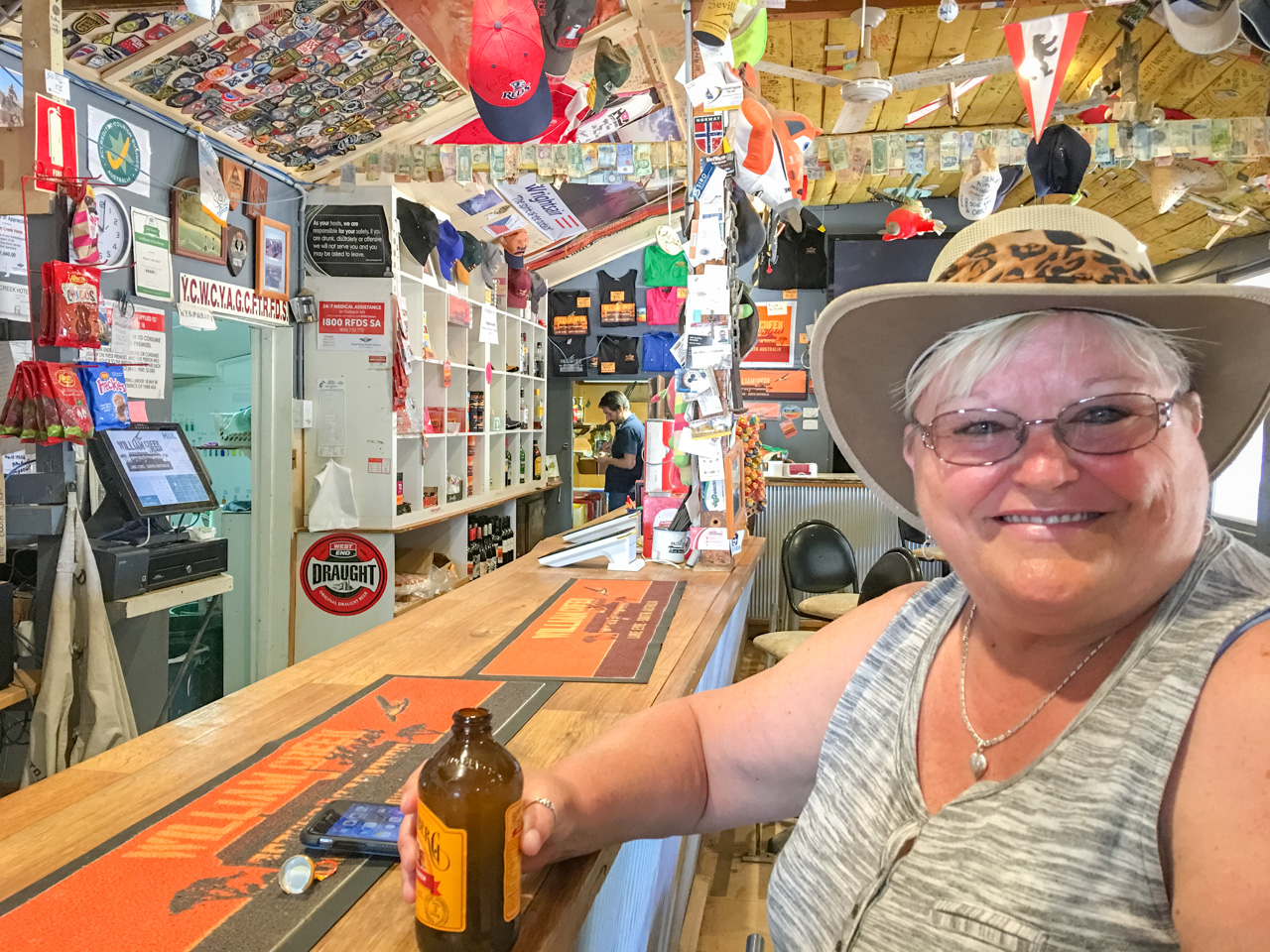
The pub at William creek is a favourite of ours and we’ve had quite a few beers there. Looking forward to camping across the road from the pub at William Creek and having a few more.

Amanda At William Creek Hotel

Amanda At William Creek Hotel

Coward Springs

Coward Springs is an oasis in the middle of the desert. We’ve camped there before and really enjoyed it. The little pool at Coward Springs is a great way to cool off after a hard days travelling – but don’t forget the fly nets!

David & Amanda In The Spring At Coward Springs

David & Amanda In The Spring At Coward Springs

Algebuckina Bridge

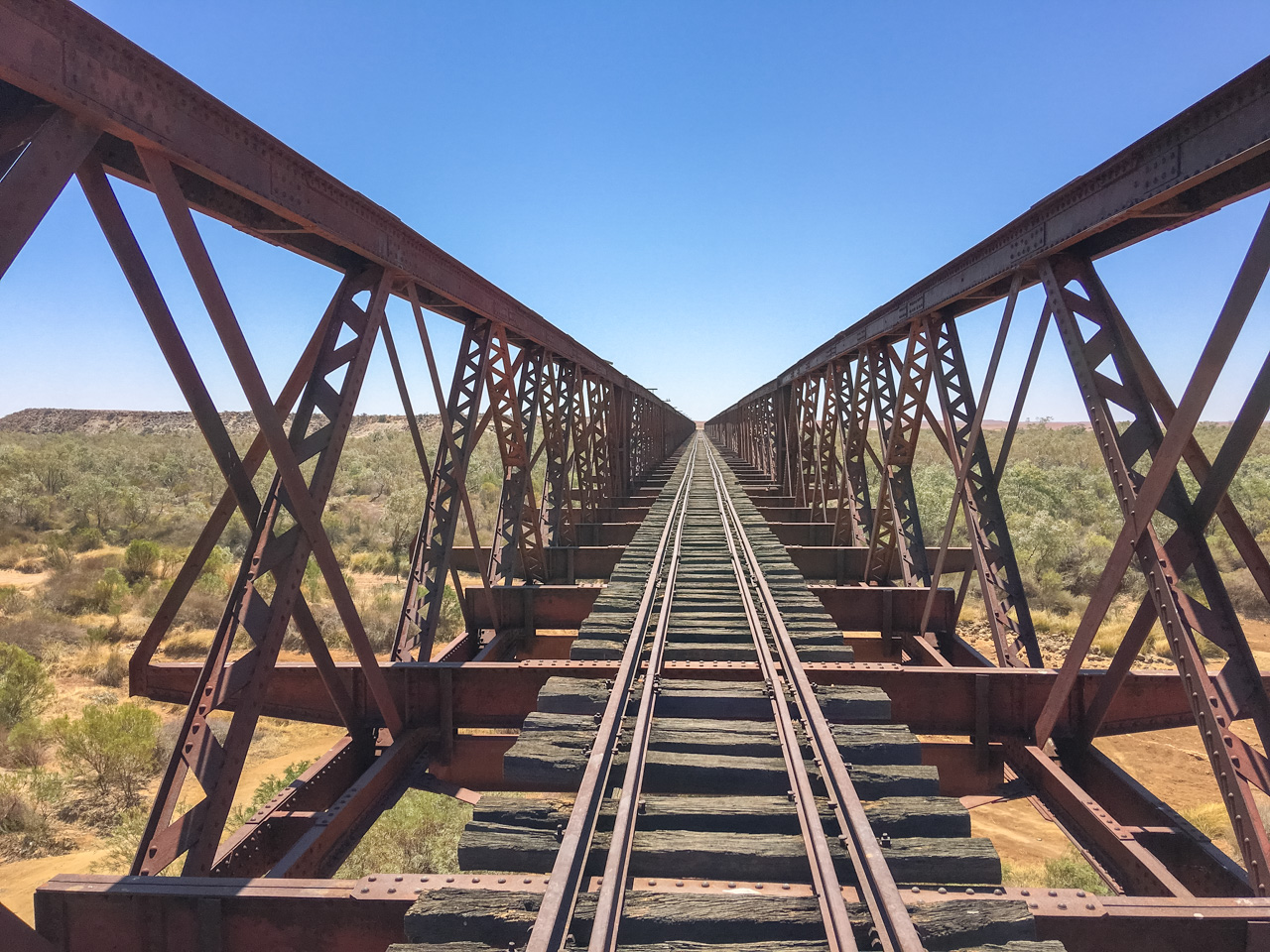
On the route of the now-closed Central Australia Railway lies the Algebuckina Bridge. The Algebuckina Bridge is an Australian Victorian era railway bridge in the state of South Australia about 55 kilometres south of the town of Oodnadatta. January 1892 marked its opening. We have stopped in here before and had a look and taken some photos but this time we plan on camping there.

Algebuckina Bridge On The Oodnadatta Track

Algebuckina Bridge On The Oodnadatta Track

The Pink Roadhouse At Oodnadatta

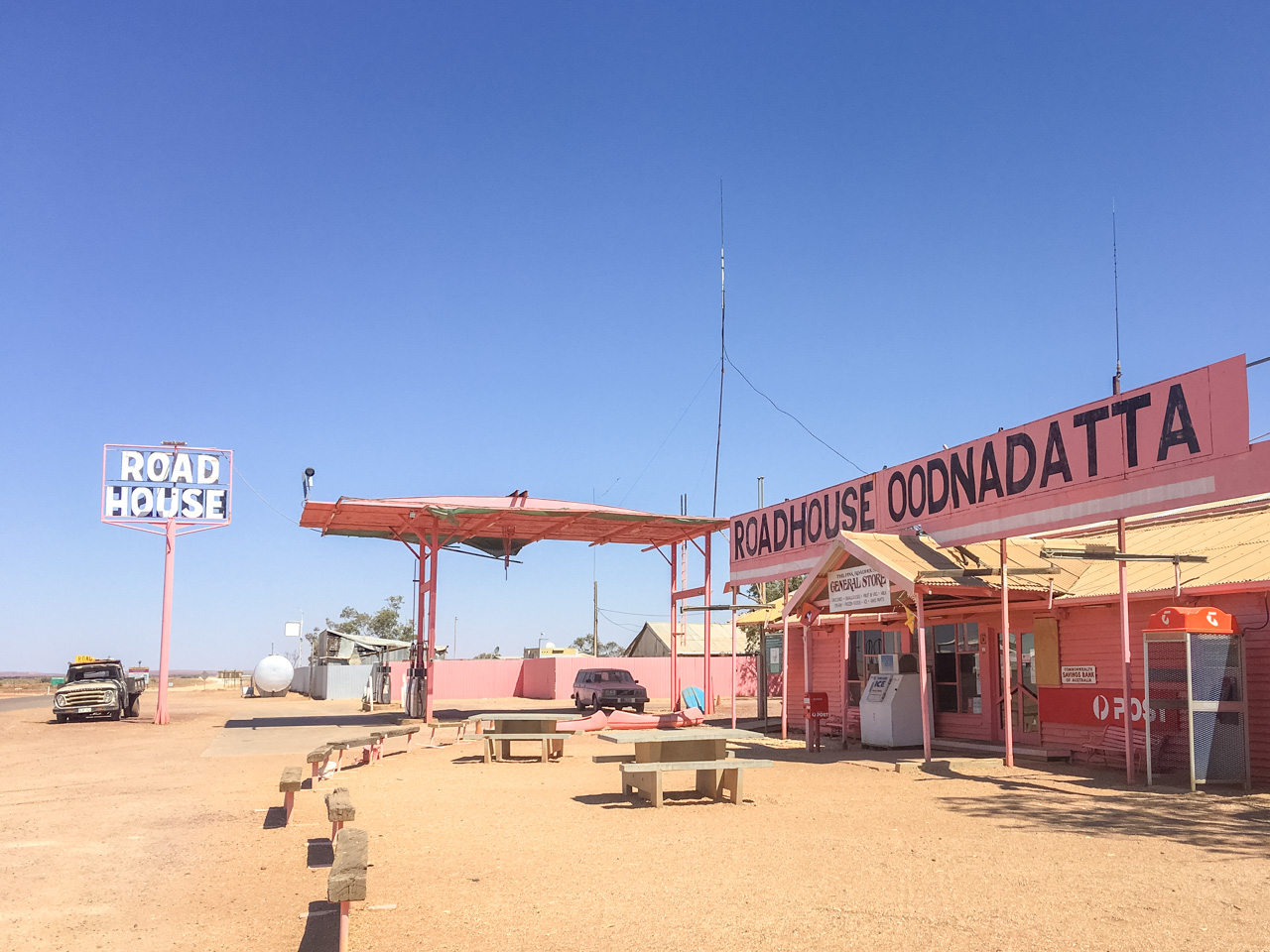
No trip along the Oodnadatta Track would be complete without calling in at the iconic Pink Roadhouse at Oodnadatta. I’m going to have one of their famous “Oodnaburgers” again – Amanda probably won’t as she didn’t like hers last time. What’s wrong with her – they’re bloody awesome! Hopefully this time we have a bit better luck and don’t get a flat tyre (Tek Screw) at the fuel bowser.

Pink Roadhouse Oodnadatta

Pink Roadhouse Oodnadatta

Coober Pedy

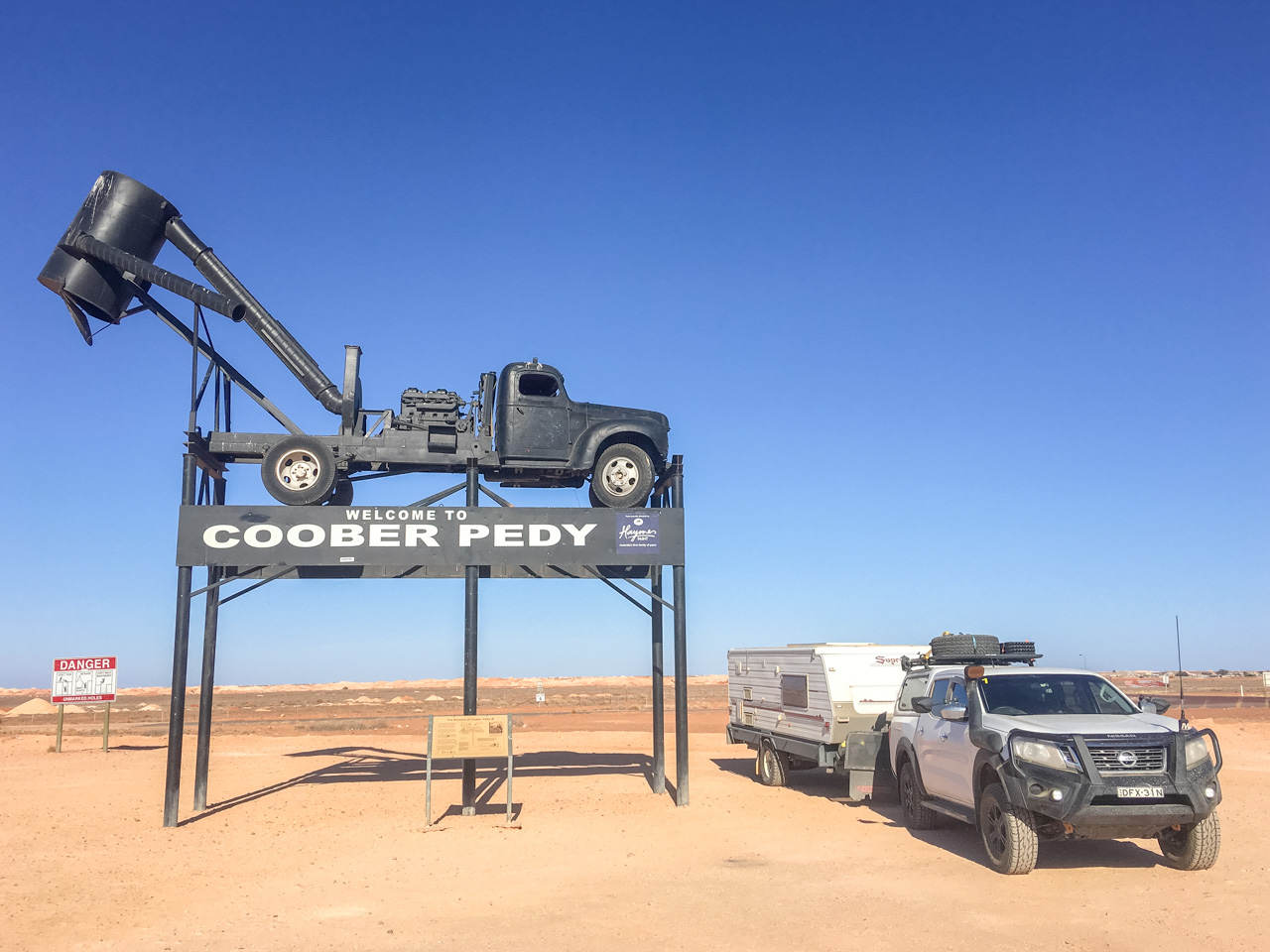
This time in Coober Pedy we’re hoping to be able to explore the town. On our last visit we had an issue with the car’s battery and it was a long weekend so nothing was open. We were limited to having a look at places we get to on foot. On our last day there after getting a replacement battery we had an explore and loved what we saw. I’m really looking forward to going out to the Breakaways and watching the sunset. We’ve been up Big Red at Birdsville to watch the sunset before and I’m hoping this is just as spectacular. We’re also planning on going to the drive in movies!

Welcome To Coober Pedy

Welcome To Coober Pedy

Uluru

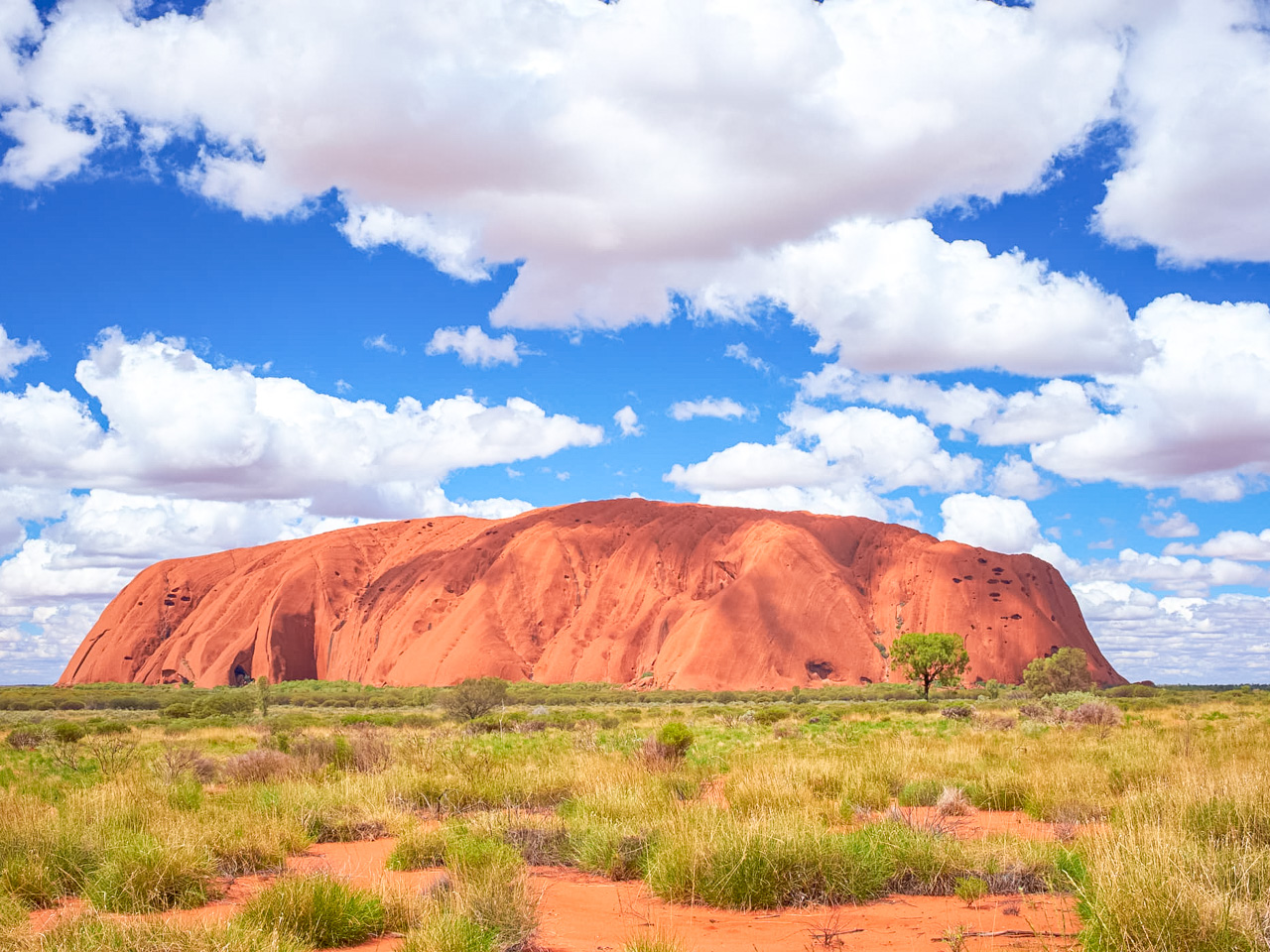
How have we never been to Uluru? We’ve been saving it for years, now it’s finally time to check it out. I really want it to be as spiritual an experience as I have been told it is. It’s been right towards the top of my bucket list since I was a little kid. Uluru is a massive sandstone monolith in the heart of the Red Centre, an arid region of the Northern Territory. It is roughly 450km from the closest large city Alice Springs. In Indigenous Australian culture, Uluru holds great spiritual significance. Around 550 million years ago, Uluru was thought to be beginning to form. The natural formation is part of Uluru-Kata Tjuta National Park, which also features 36 red-rock domes called “The Olgas”. This part of the trip is the focus of our Uluru itinerary.

Uluru

Uluru

Alice Springs

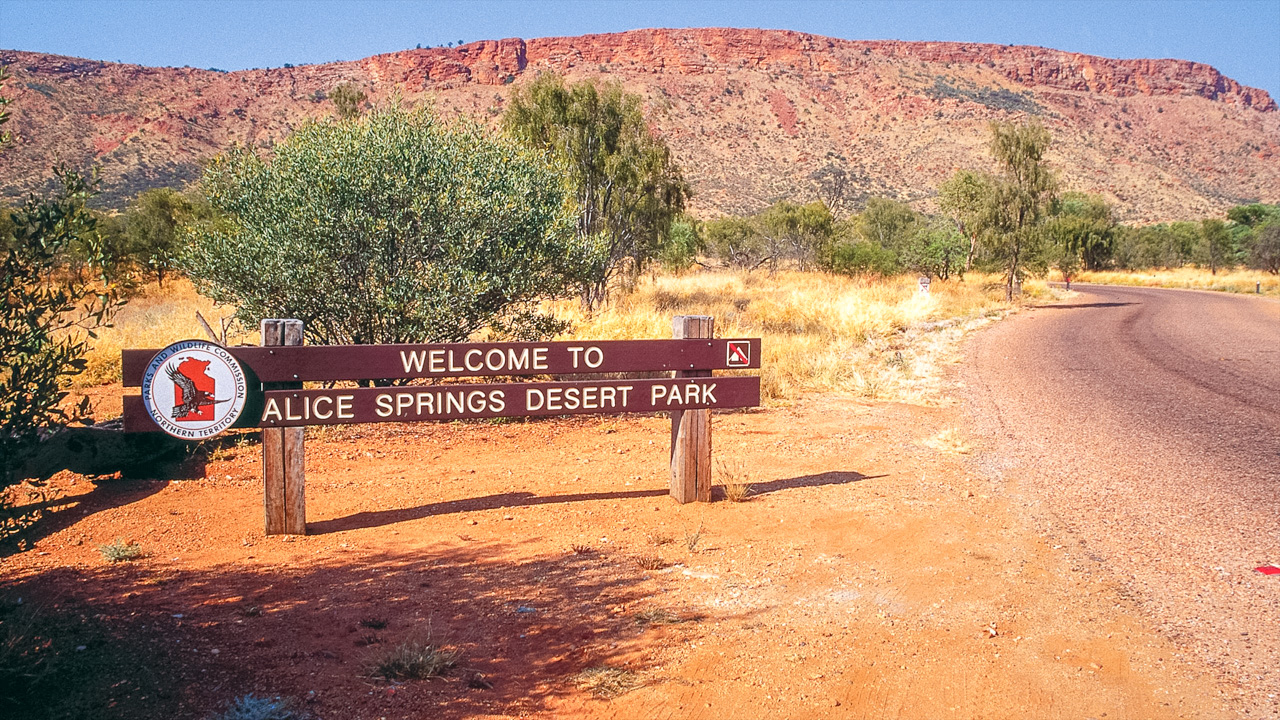
We’ve never been to Alice Springs before and it’s been on our bucket list ever since we started travelling Australia. The Northern Territory town of Alice Springs lies halfway between Darwin and Adelaide, each 1,500 km away. Visitors travel there to explore the Red Centre, the country’s interior desert region. I’m looking forward to seeing the historic buildings and equipment at the Alice Springs Telegraph Station Historic Reserve. The vintage equipment and buildings date from 1872 and were part of the Overland Telegraph Line (linking Darwin and Adelaide).

Alice Springs Desert Park

Alice Springs Desert Park

Tennant Creek

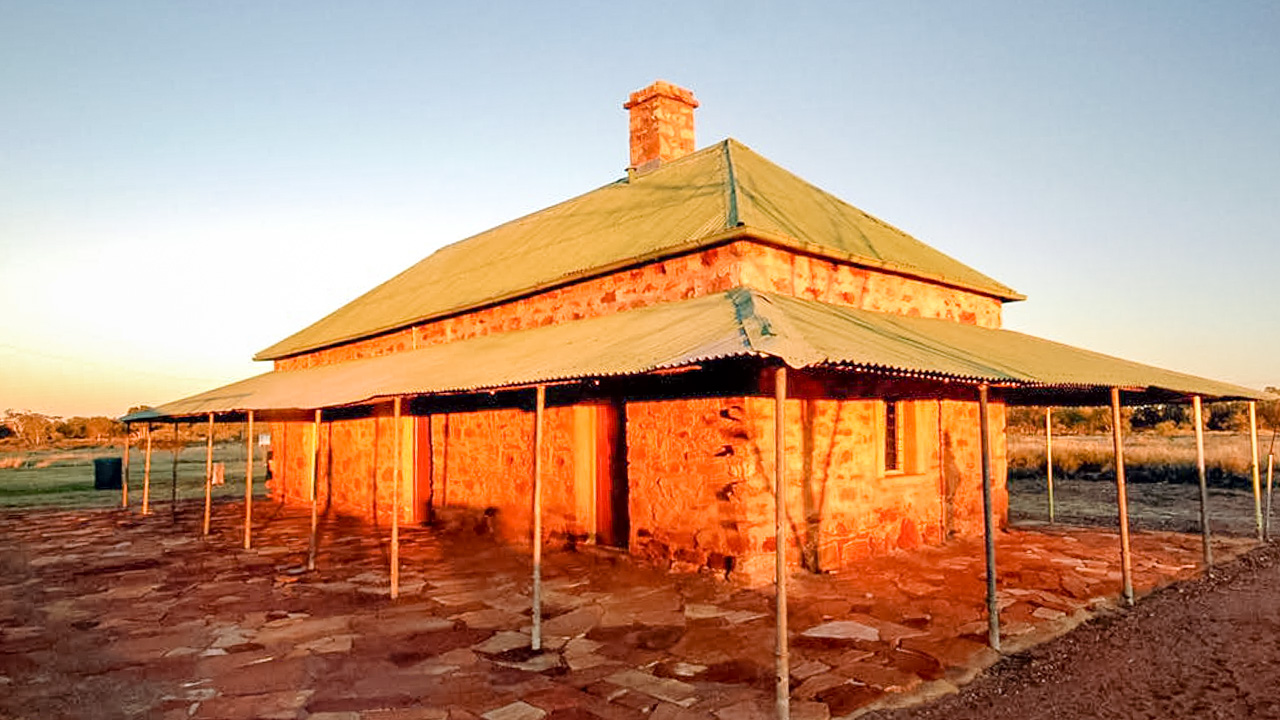
Warumungu Aboriginal people occupied the Tennant Creek region for thousands of years. Located close to the telegraph station is a very significant sacred site called “Jurnkurakurr”, where a black-nosed python called “Jalawala” resides. Tennant Creek Telegraph Station was constructed in 1872. By 1875, it had been rebuilt from locally quarried stone after first being constructed out of bush timber.

It served as a repeater station on the Overland Telegraph Line, which connected Darwin with Adelaide. In addition, it was used as a depot for government supplies. A 19th century blacksmith shop was found there, as well as a cart shed, ration store, meat house, smokehouse, and cellar. Cattlemen and slaughtermen were employed by the Warumungu at the station. In the 1890s well over 100 indigineous Australians were living at the station.

Tennant Creek Telegraph Station

Tennant Creek Telegraph Station

Longreach

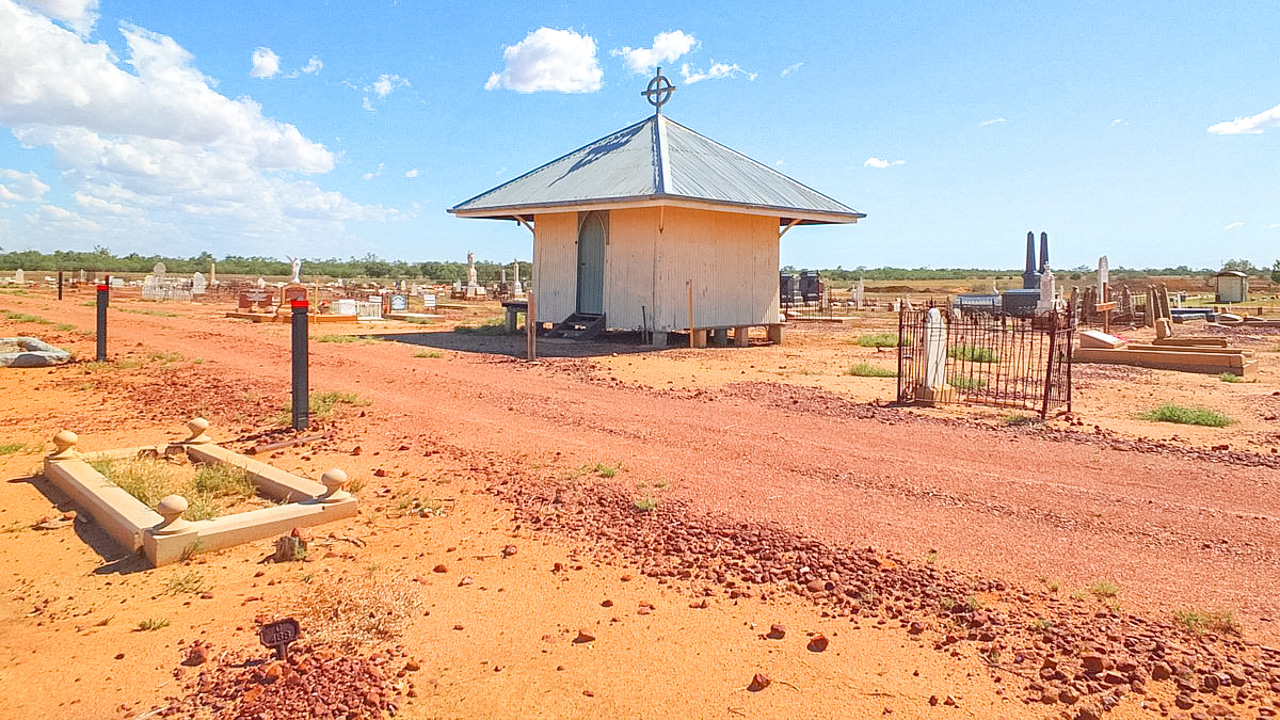
Longreach is the heart of Outback Queensland. It’s home to attractions including the Australian Stockman’s Hall of Fame and Qantas Founders Museum. We’ve never been to Longreach before and I think it will be awesome. Call us weirdos but we want to have a good walk through the cemetery. If you haven’t noticed it on our blog before visiting cemeteries is something we do a lot of. You can learn a lot about a towns history by visiting it’s cemetery.

Longreach Cemetery

Longreach Cemetery

Winton

Looking forward to visiting the pubs in Winton. I’ve heard a bit about them and want to find out for myself. Amanda wants to hit the dinosaur trail, that will be good too.

Winton Queensland We Want To Check Out The Pubs

Winton Queensland We Want To Check Out The Pubs

Uluru Itinerary

We are really looking forward to this trip. Our Uluru itinerary is outlined below with driving distances and approximate times.

Day Town State Distance Time
Saturday Cootamundra NSW 624KM 06:48
Saturday Merbein (Mildura) VIC    
Sunday Orroroo SA 464KM 05:02
Monday Farina SA 327KM 03:21
Tuesday        
Wednesday Coward Springs SA 187KM 02:11
Thursday Algebuckina Bridge SA 218KM 02:45
Friday Coober Pedy SA 240KM 03:38
Saturday        
Sunday        
Monday Ayers Range South SA 349KM 03:33
Tuesday Uluru NT 420KM 04:28
Wednesday        
Thursday        
Friday Alice Springs NT 468KM 04:58
Saturday        
Sunday        
Monday Barrow Creek NT 284KM 02:52
Tuesday Tennant Creek NT 152KM 01:32
Wednesday        
Thursday Camooweal QLD 471KM 04:53
Friday McKinlay QLD 417KM 04:37
Saturday Winton QLD 340KM 02:34
Sunday        
Monday Longreach QLD 179KM 01:51
Tuesday        
Wednesday Yandarlo QLD 360KM 03:49
Thursday Cunnamulla QLD 355KM 03:49
Friday Nyngan NSW 459KM 04:48
Saturday Cootamundra   411KM 04:36
Sunday Unpack & Clean      
      6725KM  
2021 MARS Enthusiasts National Muster Preparations

2021 MARS Enthusiasts National Muster Preparations

2021 MARS Enthusiasts National Muster Preparations

For those of us who are confirmed for this years MARS Enthusiasts 2021 National Muster it won’t be that long before we are heading off and the time will go quickly. The meet up at the Burke & Wills Camp at Lake Pamammaroo (Menindee) is on 18/09/2021 and that’s only 147 days away but who’s counting eh!

The Van

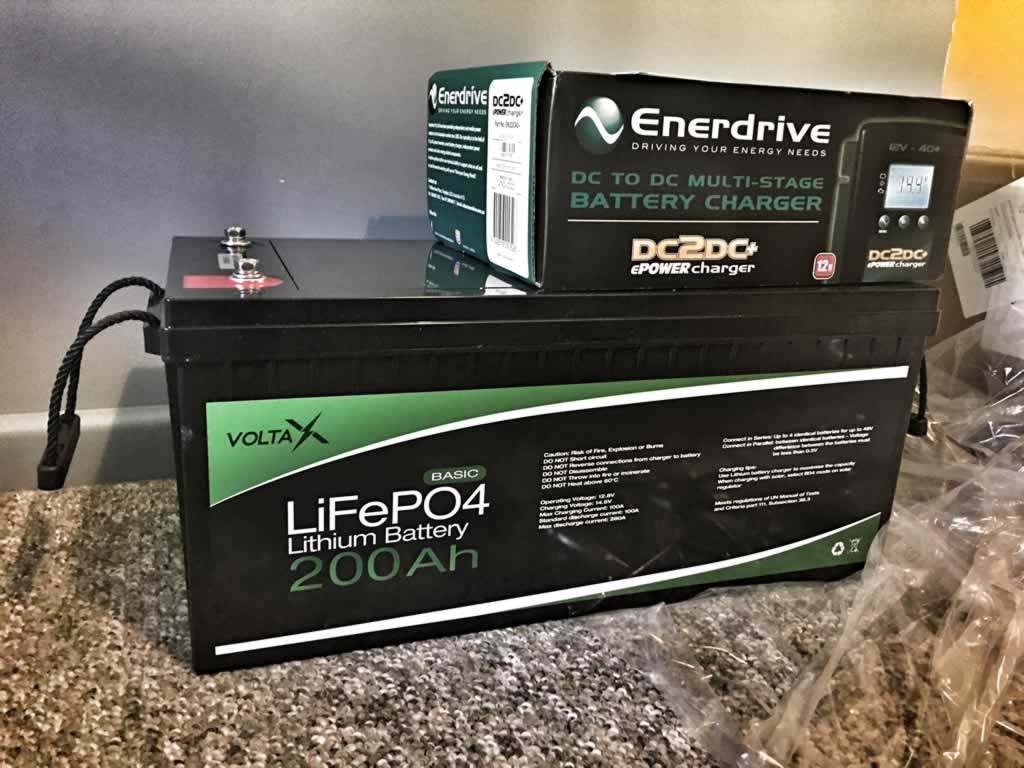
I am installing a lithium battery system and an upright 12v fridge in the caravan and I have ordered a couple of new and slightly larger water tanks for it. We’ve already had the gas fitter over to blank off the old 3way fridge we removed and he’s fitted a new gas regulator and a bayonet fitting so we can plug the BBQ in directly – he also did us a new gas compliance plate to keep it all legal. The van will be going to the mechanic in about a months time to get some new shocks fitted as well as having the suspension and brakes looked at and wheel bearings given a going over. The shocks on it have only done about 20,000ks since they were fitted but a LOT of that has been on the kind of tracks and roads we’ll be doing on this years National. On bitumen they’d probably be good for 100,000 plus!

VoltaX LiFePO4 200Ah Enerdrive DC2DC

VoltaX LiFePO4 200Ah Enerdrive DC2DC

The Ute

The ute is in pretty good nick. We’ve had it since new and it’s always been serviced at shorter intervals than recommended. It needs a new set of tyres so we’ll put some on before we go. The tyres probably have at least 20 or 30,000ks left on them but considering where we are going a new fresh set is cheap insurance. About 6 weeks before we go we’ll get our mechanic to give it a good service and we’ll get him to replace top and bottom radiator hoses as well as the turbo hose and all belts. They’re all coming up on 5 years old and the ute has 120k on it now so again I reckon it’s cheap insurance. We’ll get it done 6 weeks out to give the mechanic time to get in and fit any parts needed. We’ve already ordered some new snorkel head filters and a spare diesel prefilter elements.

A good recommendation is to join a Facebook group for your specific vehicle and read back through posts and see if it has any common issues. Most vehicles will have something that crops up regularly – better to get it looked at before you head off than to be stuck on the side of the Strzelecki Track.

Food & Meal Planning Etc

Amanda Sloane is pretty good when it comes to making sure we are always well fed and looked after. Have a go at the size of my guts, they don’t get like that by going hungry! We’ll be doing a lot of pub meals this trip so we won’t need to take as much with us as we sometimes do. Things such as powdered milk, coffee, sandwich wraps and dried and pre-packaged meals will be sorted in the weeks before we leave.

Conclusion

The National Muster Trip is coming up sooner than you think. Amanda Sloane and I have done plenty of these kind of offgrid semi remote trips so we know the mad rush that can happen in the last few weeks if you leave your preparation too long. I reckon the best way to go is to make yourself a list, whack it on the fridge with due dates then tick them off. We’re really looking forward to this!

2019 MARS Enthusiasts National Muster Tibooburra Aboriginal Land Council Camp Site

2021 MARS Enthusiasts National Muster Tibooburra Aboriginal Land Council Camp Site

Going Up Big Red At Birdsville To Watch The Sunset

Going Up Big Red At Birdsville To Watch The Sunset

Going Up Big Red At Birdsville To Watch The Sunset

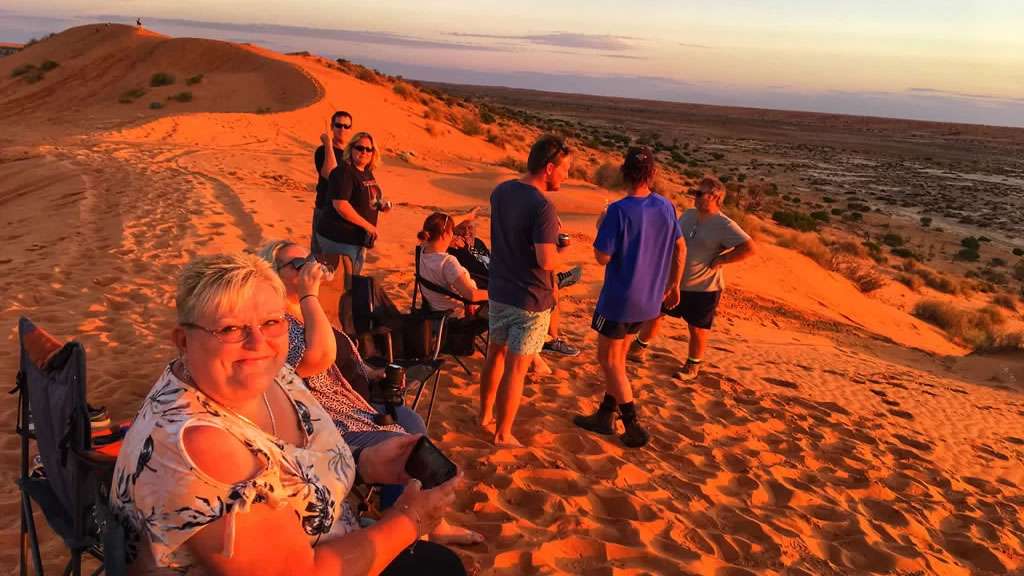
We drove up to the top of Big Red at Birdsville to watch the sunset.  Part of the  2019 MARS Enthusiasts National Muster groups adventure to the Dig Tree and Birdsville. What a drive! The view from the top of the sand dune aptly named Big Red is nothing short of incredible. And to experience it as part of a group just made it better. We even witnessed a wedding proposal between a couple of group members!

Getting Out To Big Red From Birdsville

You’ll find Big Red about 40km out of Birdsville right on the edge of the Simpson desert. The road is bitumen in a couple of short sections but mostly dirt. After about 35km you get to Little Red, a slightly smaller sand dune that you need to navigate to enter the Simpson desert. Before heading up over Little Red it’s a good idea to pull over and drop your tyre pressure to something more suitable to sandy desert driving. We went down to 18psi front and rear and it worked well. Once over Little Red you turn right. Then you drive a few more kilometres until you get to the base of Big Red.

Getting Ready To Climb Big Red At Birdsville

Getting Ready To Climb Big Red At Birdsville

Going Up Big Red The Hard Way

Most of the group members decided to have a crack at getting up Big Red head on. They all made it eventually after more than one attempt in a few cases! The techniques varied. A steady run up and climb to a launching a few kilometres back. Hitting the base of Big Red at warp speed!

Head On Climb Big Red At Birdsville

Head On Climb Big Red At Birdsville

The Chicken Track

There is an easier way to get up Big Red although it’s still not easy by any stretch of the imagination. Off to the right of the main tracks there is a track that sweeps around through a reverse curve that increases the distance you travel up the dune hence decreasing the steepness of the track. Any decent 4wd with good clearance and tyres (tyres with reduced pressure) will have no problem getting to the top in 4wd high range. Make sure you have some recovery gear, a shovel and a mate in another vehicle to lend you a hand just in case.

The View From The Top

The view from the top as the sun sets is amazing. Big Red is supposedly only 40m high but when you are up on top it feels like it’s a lot higher than that. The view back towards Birdsville in one direction and the Simpson Desert in the other is something you have to experience. All of us in the group agreed it was one of the most amazing things we’d ever done.

Amanda Sloane On Top Of Big Red Near Birdsville At Sunset

Amanda Sloane On Top Of Big Red Near Birdsville At Sunset

Nissan Navara NP300 Up On Top Of Big Red Birdsville

Nissan Navara NP300 Up On Top Of Big Red Birdsville

Conclusion

What an awesome place. If you ever get a chance to get up to Birdsville then go that little bit further and check out Big Red. It’s something you will never forget.

Save Travels!


Tibooburra to Cameron Corner via Jump Up Loop Road

Tibooburra to Cameron Corner via Jump Up Loop Road

Tibooburra to Cameron Corner via Jump Up Loop Road

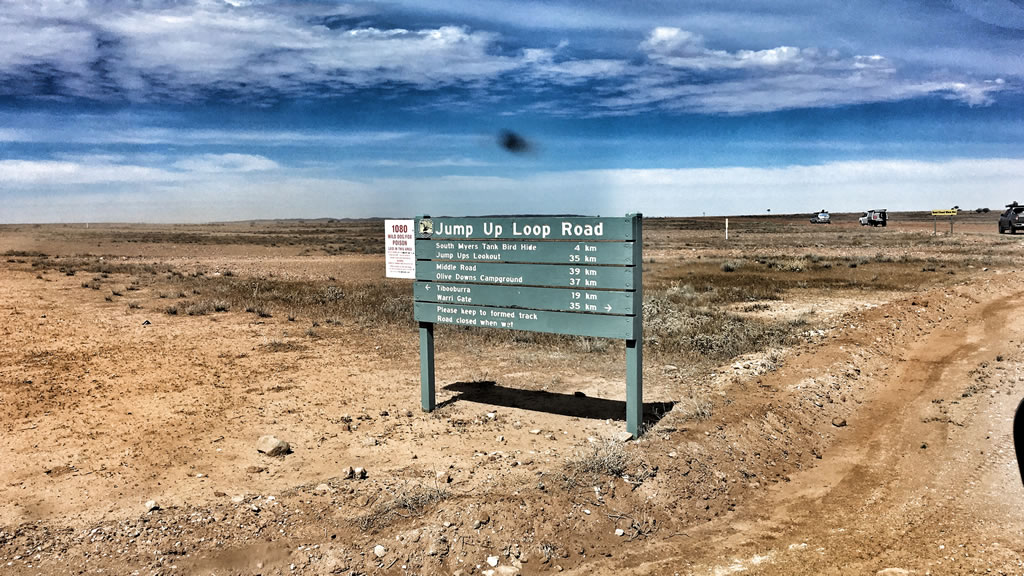
Cameron Corner via Jump Up Hills Loop Road 2019 MARS Enthusiasts National Muster. A day trip via the Jump Up Loop Road out of Tibooburra NSW during our recent 2019 National Muster adventure to the Dig Tree and Birdsville. What a drive! The Jump Up Hills Lookout is spectacular – you have to see it to believe it. The drive heads out north from Tibooburra towards the Warri Gate then 15ks out of town you turn left. You can’t miss the sign.

Here’s An Important Tip

Don’t tow your caravan along this route as it isn’t suitable. Ignore the advice if you wish but I’m going to leave it here for you. Don’t say I didn’t warn you!

Tibooburra to Cameron Corner via Jump Up Loop Road with the MARS 2019 National Muster Crew

We originally intended travelling out to Cameron Corner and and back via the Main road from Tibooburra. However when we were fuelling up at TJ’s Roadhouse in Tibooburra the lady behind the counter told us that there a nice touring route via the Jump Up Loop Road and she gave us a mud map. After a discussion outside we all agreed that it was worth a crack so off we went. What a fantastic decision!

We headed out to the north and stopped at the Pioneer Park to drop our tyre pressures. After that we carried on along the Silver City Highway towards the Warri Gate for about 15 kilometres until we reached the well signposted turnoff.

The Jump Up Loop Road Turnoff

The Jump Up Loop Road Turnoff

Jump Ups Lookout

After about an hour or so we came to the lookout. This lookout made the day 100% worthwhile. The views are magnificent. You have to see it to believe it. It’s as dry as a dead dingos’ donger for as far as you can see. And the colours. The colours are spectacular. They range from the whitest of white through to the reddest of red with all shades of brown and purple in between. It’s truly amazing. If you look closely you can see small areas where it looks like some mining has occurred in the past on a small scale. I am guessing it might have been done for the collection of clay to use for some of the road construction.

The Lookout Over The Jump Ups on The Jump Up Loop Road From Tibooburra To Cameron Corner

The Lookout – Very Awesome!

Middle Road

After the lookout we continued on along the Middle Road towards Cameron Corner. We passed a few old falling down homesteads that were pretty cool. I’d love to come back some time and camp near one of the old homesteads and have an explore. Middle Road turned in to a bit of a corrugated goat track in a few places so we just took our time and muddled along. A few vehicles picked up a bit of damage in this section. Nothing major just things rattling loose so as a result made a few short stops for repairs.

Cameron Corner

Eventually we got on to Cameron Corner Road and followed it in to Cameron Corner. The main road is in a bit better condition but it’s still a lot of fun to drive. In sections it traverses flood plains where you can see to the horizon and in other parts it is sand dune country and goes up, down, over and around sand dunes. It keeps you on your toes but it’s well worth the adventure.
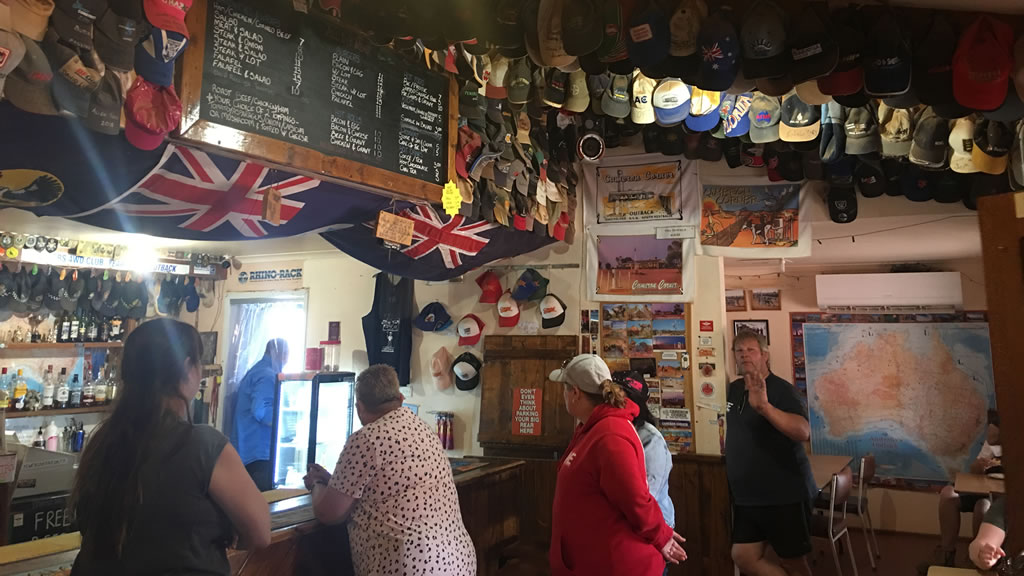
We all arrived safely at Cameron Corner and went in to the store for a look around and to have some late lunch. The store is a great old place and very welcome to arrive at out in the middle of nowhere. They server great food and have a small bar for drinks. The inside is worth stopping and having a good look at. There are probably hundreds of caps and hats stuck to the ceiling, and stickers all over the walls from past adventurers and groups.

Inside the Cameron Corner Store

Inside the Cameron Corner Store

The Corner Store can also sort you out with basic grocery needs and fuel. You can hire some golf clubs and have a round of “Tri-State Golf” at the makeshift 9 hole course. You can also camp at Cameron Corner. They have powered sites, unpowered sites and bush camping available. We’ve camped here before and the views are spectacular and the showers are nice and hot and the toilets are clean. Not much more you need is there?

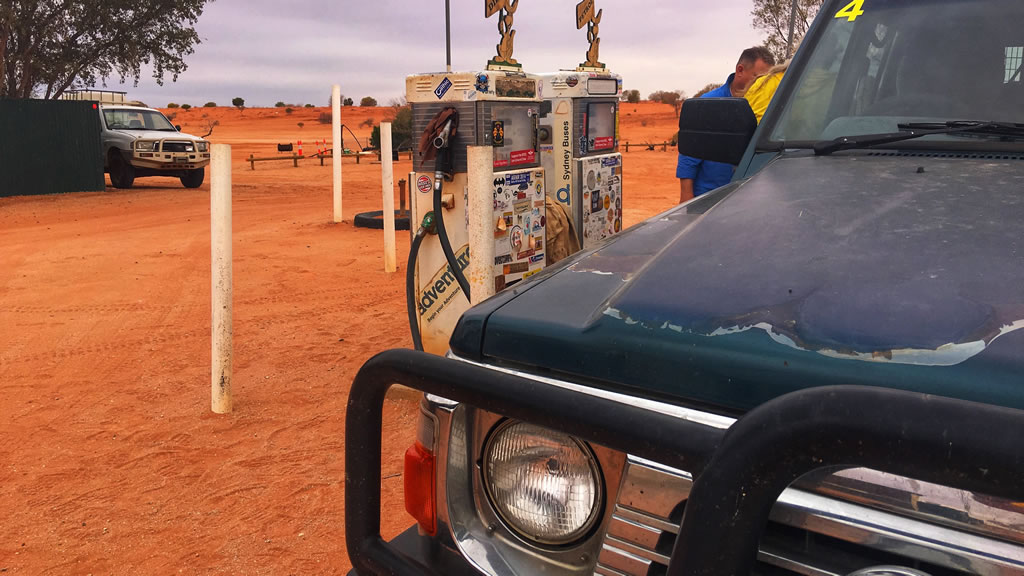
Fuel Pumps at Cameron Corner

Fuel Pumps at Cameron Corner – Are They The Most Iconic Fuel Pumps In Australia?

The Famous Cameron Corner Corner Marker

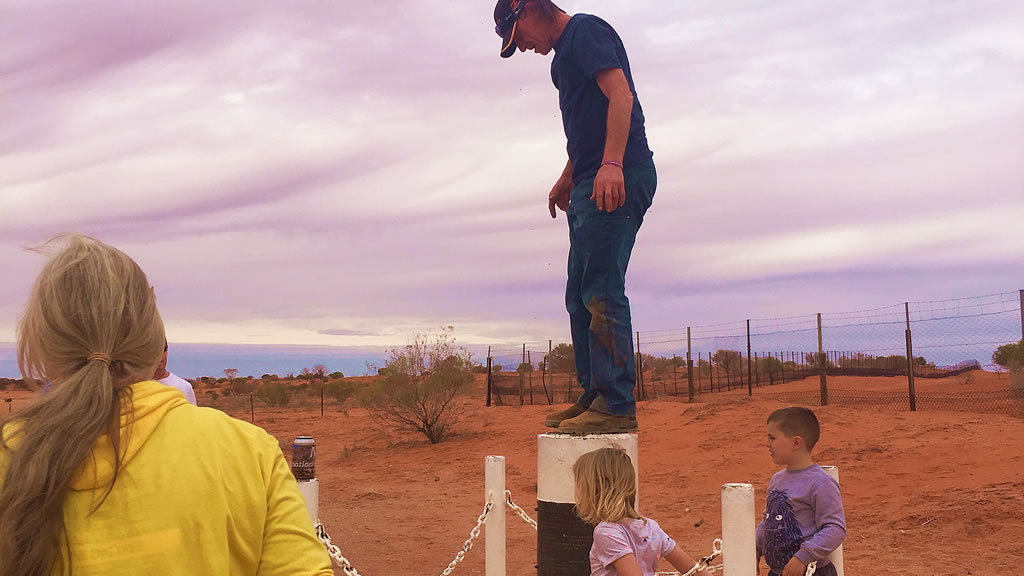
All of us headed across to have a look at the corner marker and to check out the dingo fence. The corner marker really is a special thing. I first remember seeing it on a Leyland Brothers episode about 40 years ago. That very episode is one of the things that made me want to get out and travel the bush so the marker is even more significant to me in particular!

On top Of The Corner Marker at Cameron Corner

One Of The Crew On Top Of The Corner Marker

After a bit of time at the marker we all piled back in to our vehicles and headed back to Tibooburra along the main road. It was a fun drive back, we saw plenty of kangaroos along the side of the road and a few crossed the road in front of us so that kept us on the lookout.

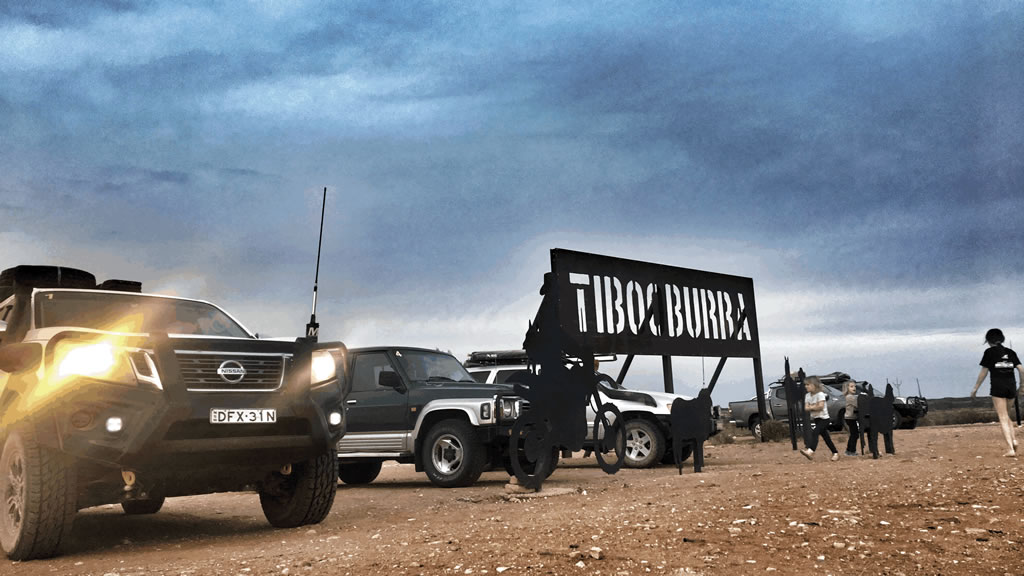
The MARS Enthusiasts Crew Back At Tibooburra In Front Of The Tibooburra Sign

The MARS Enthusiasts Crew Back At Tibooburra In Front Of The Tibooburra Sign

The roads were of varying quality, all dirt and gravel. Some of them were a bit sandy, some were pretty corrugated and some had some fairly large rocks on them that had to be avoided. All up though the roads were pretty good.

All up it was a great day out with a great bunch of people. I really wish we could do it all again tomorrow. If you ever get the chance to do this drive, make sure your vehicle is prepared for the corrugated parts and have a crack. You won’t regret doing it. It’s been one of the most fun and memorable things I have done in a long time.

The Jump Up Loop Road and Middle Roads

The Jump Up Loop Road and Middle Roads are a bit on the rough side in parts and we all copped a few small damages here and there but we made it through safely. If you’re up for a bit of adventure and some incredible scenery it’s definitely worth the effort.

The Jump-up Loop Road takes you through some impressive and harsh country. Types of terrain include desert areas, gibber rock plains and red dune country. The loop is dotted with the occasional tree and small rocky gorge. In some places landscape looks like the surface of the moon. Not that we’ve been to the moon but you know what I mean!

Be warned that this is a remote and harsh area and you will need to be well-prepared with food, water and communication just in case. There is no phone reception here. It’s best to advise someone of your travels and for safety travel with at least one other vehicle. It’s inadvisable to travel this road during the hotter months of the year as temperatures can skyrocket north of 45 degrees for days on end.

The Jump-up Loop Road heads towards the Queensland border and the Silver City Highway. 55km north of Tibooburra you’ll find the Olive Downs campground. You can camp at the Olive Downs camp ground. While camped you can explore the ruins of the derelict Olive Downs station.

Directions

Before leaving Tibooburra make sure you have fuelled up your vehicle as there is no fuel available until you reach Cameron Corner about 150km away. Also air down your vehicles tyres as the roads are corrugated in parts.

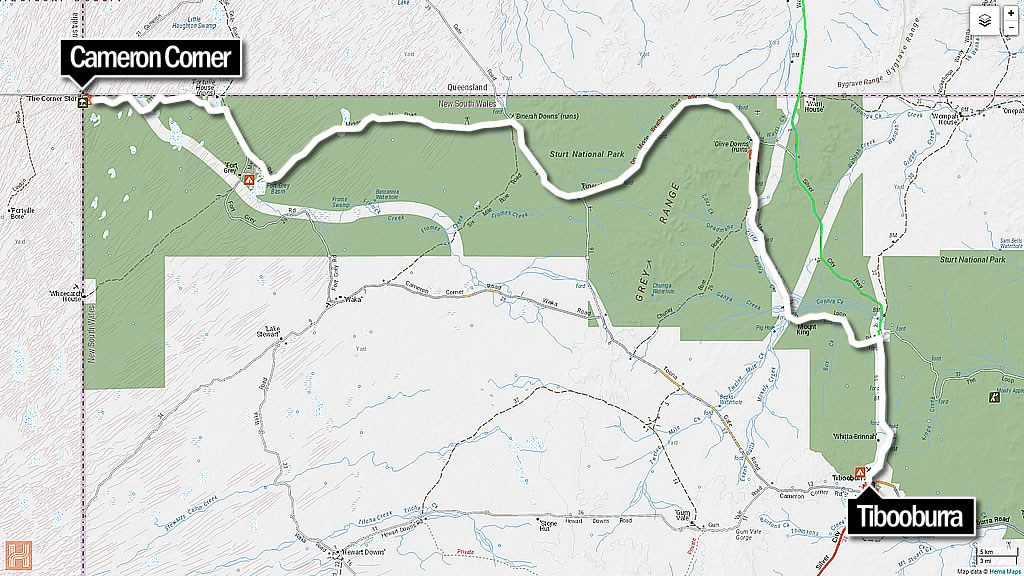
Tibooburra To Cameron Corner Ump Up Loop Road Map

Tibooburra To Cameron Corner Jump Up Loop Road Map

  • Head north out of Tibooburra past the Pioneer Park towards the Warri Gate.
  • About 15 kilometres out of town you will see a sign for the turnoff to the jump Up Loop Road on your left.
  • Follow this road for about 45 minutes and you will see the turnoff to the lookout on your left. Go up to the lookout. It is beyond spectacular.
  • After the lookout continue along the Jump Up Loop Road until you come to the Olive Downs Ruins. Continue until you reach the corner of Middle Road and Jump Up Loop Road. Turn left. This is where you need to hang on to your hat as the road gets a quite corrugated in parts from here on.
  • Keep going until you reach Binerah Well where the is a T intersection. Turn right and keep driving and you will get to Binerah Downs ruins.
  • At the Binerah Downs ruins take a left to continue along Middle Road towards Fort Grey.
  • Turn right at the next junction and follow the signs to Cameron Corner.

All up the drive took our group about four and a half hours from the Pioneer Park in Tibooburra to the Cameron Corner store. This included stopping in at the Jump Up Hills lookout and quite a few short stops to repair minor battle damage to our vehicles.

If You Need a Map

  • If you visit the roadhouse at Tibooburra and go to the counter and ask they will give you a mud map of the route
  • The HEMA Explorer app has very good coverage of this area

Vehicle Preparation

Make sure your vehicle and in particular your tyres are in good condition before attempting this route as it very corrugated and stony in parts. Also go all over everything that is bolted to your car and make 100% certain nuts are done up tight and preferable they have spring washers, Loctite or Nyloc nuts fitted. Examples of the damage we had on the trip are listed below.

  • Battery hold down bracket came adrift on our vehicle and had to be put back on
  • Shock absorber mounting bolt fell out on one vehicle resulting in the shock absorber coming apart from the vehicle on one end
  • A few bullbars came loose
  • A nudge bar came loose
  • A few vehicles had driving light mounting brackets break
  • UHF aerial snapped off on one car
  • A number plate all but fell off
  • A winch rattled loose
  • A fuel pump stopped working. Luckily this vehicle had LPG gas fitted as well so they were able to swap over to LPG to continue back to Tibooburra

Sturt National Park

Sturt National Park encompasses a huge and arid landscape of space and solitude. Starting with the Strezlecki desert rolling red sand dunes to flat topped mesas and 450 million year old granite tors near Tibooburra. A visit to this outback park is genuinely a once in a lifetime experience for anyone who goes there.

A self guided drives or guided tour with one of the tour operators that visit the park is a great way to explore what the park has to offer. For close up views of the landscape go on the short loop walks at Fort Grey or Dead Horse Gully. If you have limited time and can only do one walk check out Mount Wood hills for a walk to the summit. Stunning views of this spectacular landscape make it more than worth your while.

The Dingo Fence

Visit the historic Dingo Fence that runs east to south-west along the eastern third of Australia and along the western and northern boundary of Sturt National Park. The Dingo Fence was originally built in the 1880’s to keep dingoes away from sheep in the southern part of the country. It’s 5,614km long making it the world’s longest fence.

There are four campgrounds in Sturt National Park. They all have sites suitable for caravans and camper trailers as well as the usual barbecue and picnic facilities. Sometimes you can even be lucky enough to have the campground all to yourself although you’ll probably still have share the space with some of the parks’ many kangaroos and birdlife.

About The Jump-Ups

The Jump Ups are ancient landforms. The Jump-Ups are the remains of an ancient mountain range that has been eroded down over millions of years leaving a 150m plateau (Mesa) and the granite strewn plains which form the catchment of Connia Creek. Connia Creek follows south-east into Twelve Mile Creek.

About Cameron Corner

Short History

Charles Sturt on his expedition to find the Australias’ “inland sea” (how’d that go?) was the first European to explore the area now known as “Corner Country”.
About twenty years later the “corner” was named after John Cameron who successfully led a party to survey the NSW and Qld borders between 1879 and 1881. On arrival atthe intersection of the South Australian border in September 1880 put a wooden post in. The poost was marked “LAT 29” and “Cameron”. This post can be viewed at the National Park & Wildlife Office in Tibooburra.

Quick Facts
  • Cameron Corner is located at longitude 141° east and latitude 29°south
  • Elevation is 112m although it’s so flat it doesn’t seem like it!
  • The Corner store is in QLD and is in the Bulloo Shire.
  • The area code for phone calls is 08 (SA)
  • The Dog Fence follows the SA/NSW and NSW/Qld borders closely and can be seen right behind the corner marker
  • The best time to visit Cameron Corner is from March to October. Outside of these months it can be unbelievably (dangerously) hot
  • Time Zones! Three different states with two time zones Australian Eastern Standard Time (AEST) and Australian Central Standard Time (ACST). During summer you get a third because Qld doesn’t have daylight saving – apparently it fades the curtains
Location & Facilities
  • Phone: 08 8091 3872
  • Address: Camerons Corner Rd, Cameron Corner QLD 4492
  • Opening Hours: 7days 8am–12am
  • Fuel: Petrol and diesel. Not cheap but hey you’re in the middle of nowhere and if you need it you need it!
  • Food: They do breakfast from 8:00am and then your usual pub style meals at lunch and dinner. Burgers, steaks, schnitzels, chips and that kind of thing.All very nice. They also have a bar area where you can beer and cider. Your typical outback bar but very friendly and with excellent service
  • Groceries: Basic grocery items such as bread, milk and meat. All dependant of course on when they had their last delivery. Items are all sold frozen
  • Camping: powered sites $35 per vehicle. Unpowered sites $25 per vehicle. Bush camping $10 per vehicle (includes a $5 donation to Royal Flying Doctors). Male and female toilets and showers
  • Camp Kitchen: Sink, fire pit with hotplate and a billy post (don’t see them very often these days)
  • Accommodation: Donga style cabins in single, double and family size. Not five star, hell not even two star but they’re clean and comfortable

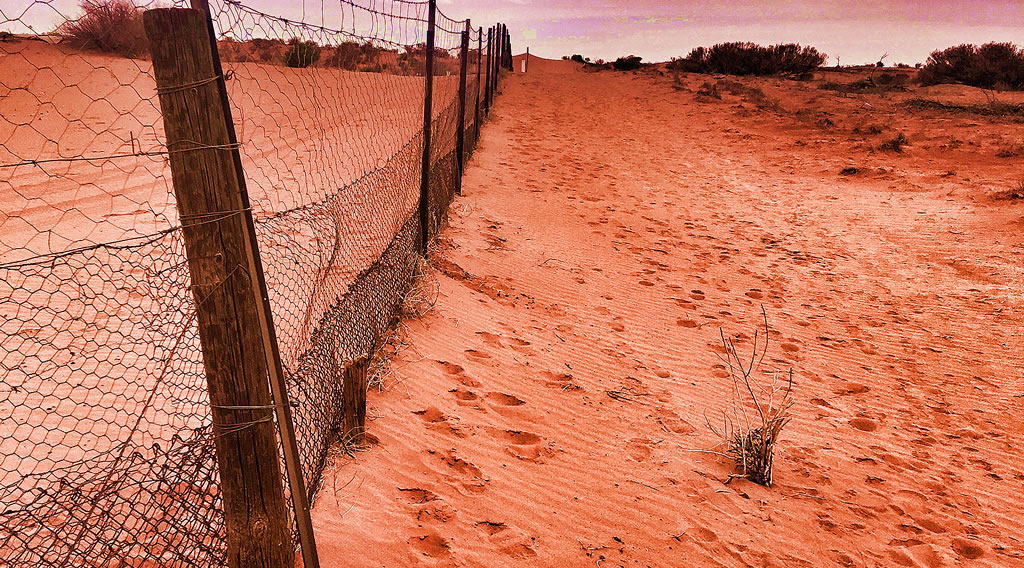
View Along The Dingo Fence @ Cameron Corner

View Along The Dingo Fence @ Cameron Corner

Pin It on Pinterest